- LET'S PLAN YOUR SAFARI
- +256 200 921 002
- +256 793 194 703
- info@pickandtransfersafaris.com

Gorilla Safaris in Bwindi Stating from Kigali Rwanda
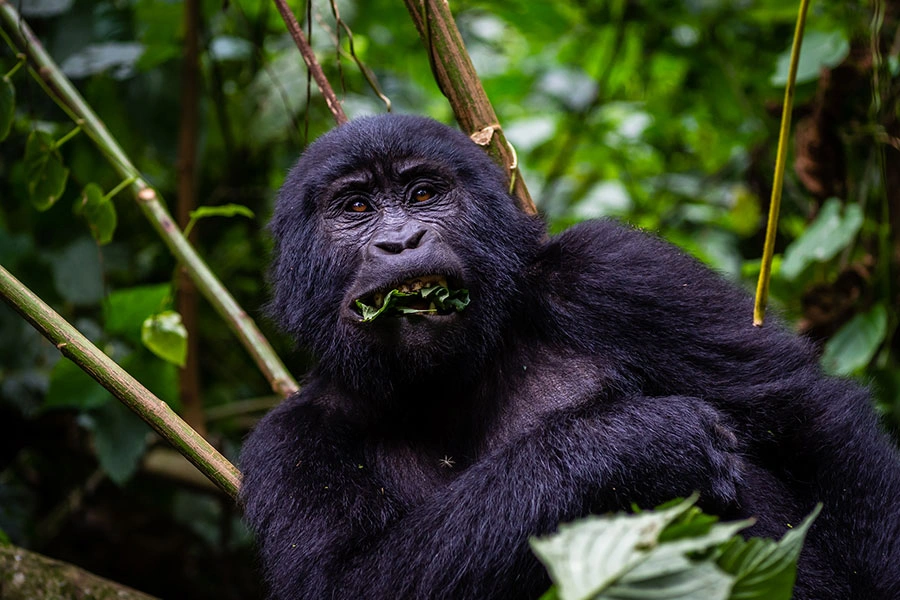
Gorilla Safaris in Bwindi Stating from Kigali Rwanda. If you’re planning a mountain gorilla trekking adventure and find yourself based in Kigali, you’re in luck — some of the easiest, fastest access to Uganda’s world-famous Bwindi Impenetrable National Park is actually through Rwanda, not Entebbe. More and more travelers are discovering that starting a Uganda gorilla safari from Kigali is not just convenient, it’s often the smarter choice. In this guide, we’ll walk you through everything you need to know about gorilla trekking in Bwindi from Kigali — the route, the permits, the experience itself, and how to plan it right.
Why Start Your Bwindi Gorilla Safari From Kigali?
Most travelers assume a Uganda gorilla safari has to begin in Entebbe or Kampala. But for anyone flying into Kigali International Airport, that assumption costs unnecessary time. The drive from Entebbe to Bwindi typically takes 9 to 11 hours on rough roads, eating up almost an entire travel day. By contrast, the drive from Kigali to Bwindi takes roughly 4 to 5 hours, including the border crossing — making it dramatically faster and more comfortable.
This is exactly why we built our Uganda Gorilla Safaris Starting from Rwanda collection at Pick and Transfer Safaris, including short options like our 1 Day Uganda Gorilla Safari Starting from Kigali, 2 Days Uganda Gorilla Tour Starting from Kigali, and 3 Days Uganda Gorilla Safari Starting from Rwanda. Each of these routes was designed around one simple insight: Kigali is a far more practical gateway to Bwindi than most travelers realize.
There’s another advantage too. Kigali is consistently ranked among Africa’s cleanest, safest, and most pleasant capital cities, making it a comfortable place to start or end a safari, with good flight connections, smooth roads, and a relaxed atmosphere that eases you into — or out of — the adventure ahead.
About Bwindi Impenetrable National Park
Bwindi Impenetrable National Park sits in southwestern Uganda and is home to nearly half of the world’s remaining mountain gorillas, a population that has been steadily recovering thanks to decades of conservation work. The park is a UNESCO World Heritage Site, covering 321 square kilometers of ancient, biodiverse rainforest — some of it over 25,000 years old — draped across a dramatic landscape of steep ridges and deep valleys.
Bwindi is divided into four trekking sectors — Buhoma, Ruhija, Rushaga, and Nkuringo — each with its own habituated gorilla families and varying levels of trekking difficulty. Buhoma, in the north, is the most established and accessible sector, while Rushaga and Nkuringo in the south offer a more remote experience and are typically closer if you’re approaching from the Rwanda border. Your guide will usually recommend a sector based on your fitness level, the length of your trip, and which gorilla families have permits available on your travel dates.
The Gorilla Trekking Experience
Gorilla trekking is unlike any other wildlife encounter in Africa. After an early morning briefing at park headquarters, you’ll be assigned to a habituated gorilla family along with a small group of fellow trekkers, accompanied by experienced trackers and armed Uganda Wildlife Authority rangers. From there, the adventure begins — hiking through dense, often steep rainforest, sometimes for an hour, sometimes for several, depending on where the gorillas have wandered to feed that day.
Then, often without much warning, the forest parts and you’re suddenly face to face with a family of mountain gorillas — a massive silverback keeping watch, mothers grooming their young, juveniles tumbling through the undergrowth. You get a full hour in their presence, watched closely but unobtrusively by your ranger team, before retracing your steps back out of the forest. It’s physically demanding, occasionally muddy, and absolutely unforgettable.
The minimum age for gorilla trekking is 15, and a reasonable level of fitness is recommended, though porters are available and strongly encouraged for anyone less confident on steep, uneven terrain.
Gorilla Permits and Costs
Gorilla trekking permits for Bwindi and Mgahinga Gorilla National Park are issued exclusively by the Uganda Wildlife Authority (UWA), the government body responsible for managing Uganda’s national parks. As of the current tariff period, a standard gorilla trekking permit costs USD 800 per person for foreign non-residents, covering one hour with a habituated gorilla family, ranger guides, trackers, and park entry for the day. Uganda has also introduced a discounted low-season rate of USD 600 per person during the wetter months of April, May, and November — a great option for travelers willing to trade a little rain for real savings.
For those wanting a deeper, more immersive encounter, Uganda also offers the Gorilla Habituation Experience in Bwindi’s southern sectors, giving you up to four hours with a semi-habituated gorilla family alongside researchers, for a higher permit fee.
Only a limited number of permits are released per day across Bwindi’s habituated families, and demand is high, especially during the June–September and December–February peak seasons. We recommend booking your trip — and your permit — at least three to six months in advance. As your operator, Pick and Transfer Safaris handles the entire permit booking process on your behalf, so there’s nothing to navigate on your own.
What a Bwindi Safari From Kigali Actually Looks Like
A typical gorilla safari starting from Kigali might run two to three days. You’re picked up from your Kigali hotel or the airport, driven across the border into Uganda, and settled into a lodge near your trekking sector the same day or the next morning. After your trek, you can either return directly to Kigali or extend your trip with cultural activities, a visit to a local Batwa community, or even add Rwanda’s own Volcanoes National Park for a second gorilla trek before flying home.
If you’d like more time in the region, consider pairing your Bwindi trek with Nyungwe Forest National Park for chimpanzee tracking, as we’ve done in our 5 Days Uganda Gorilla and Chimps Safari starting from Rwanda, or extend into a fuller cross-border circuit with our 7 Days Uganda Rwanda Safari Adventure, which combines Bwindi gorillas with Rwandan chimpanzee trekking.
Border Crossing and Visa Tips
Crossing from Rwanda into Uganda is generally straightforward through the Cyanika or Katuna border posts, both well-connected to the Bwindi region. To simplify travel between the two countries, we strongly recommend applying for the East Africa Tourist Visa, which covers Rwanda, Uganda, and Kenya on a single visa and removes the need to apply separately for each country. Your driver-guide will handle the logistics of the crossing itself, but it’s worth carrying printed copies of your visa approval and yellow fever vaccination certificate, both of which are commonly checked at the border.
Best Time to Trek Gorillas in Bwindi
Bwindi is trekkable year-round, but the dry seasons — June to September and December to February — offer the most comfortable trail conditions and easier visibility. The wetter months of March to May and October to November bring fewer crowds, lush green scenery, and, as noted above, occasionally discounted permit pricing, though trails can be steeper and muddier underfoot.
Why Book Your Bwindi Gorilla Safari With Pick and Transfer Safaris
We specialize in exactly this kind of route: fast, efficient gorilla safaris that take full advantage of Kigali’s proximity to Bwindi. Our team manages your permit booking, border crossing, accommodation, and ground transport from start to finish, so the only thing you need to focus on is the moment you come face to face with a mountain gorilla. Whether you’re looking for a quick one-day dash across the border or a longer combined Uganda-Rwanda itinerary, we’ll build it around your schedule and budget.
For official information on gorilla permits, park regulations, and entry requirements, you can also visit the Uganda Wildlife Authority directly.
Contact us today to check gorilla permit availability and start planning your Bwindi gorilla safari from Kigali.