- LET'S PLAN YOUR SAFARI
- +256 200 921 002
- +256 793 194 703
- info@pickandtransfersafaris.com

Gorilla Tracking Briefing in Bwindi
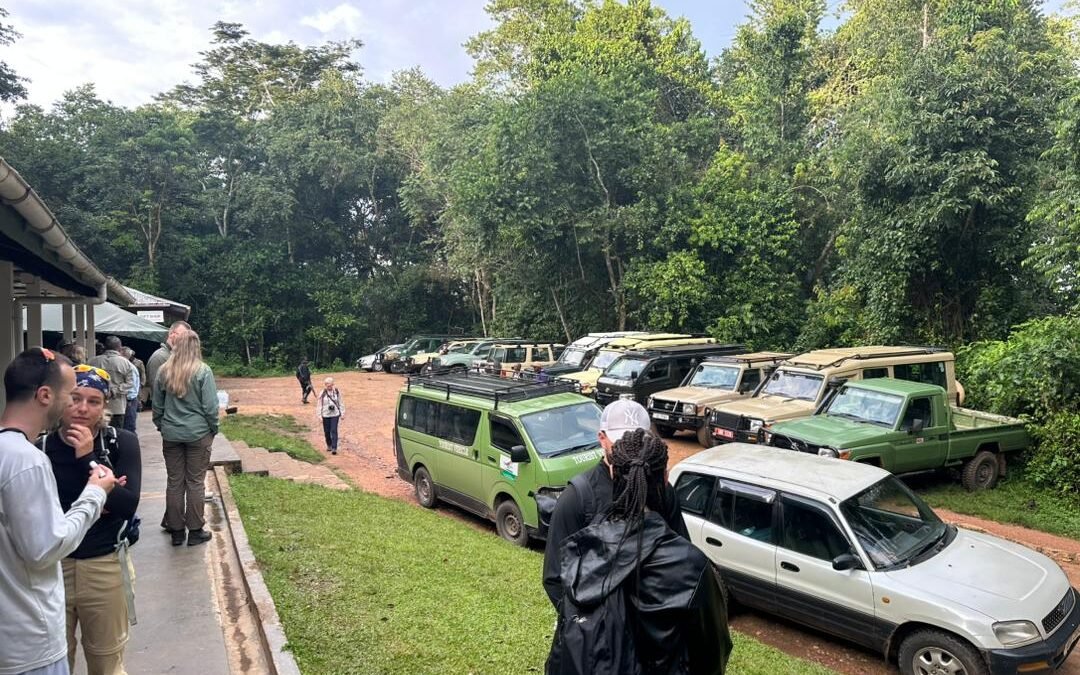
Gorilla Tracking Briefing in Bwindi. Before you set foot inside the forest, before the tracker leads you into the undergrowth, before the moment you have traveled thousands of kilometres to experience, there is the briefing. The gorilla tracking briefing in Bwindi Impenetrable Forest National Park takes place every morning at each sector’s headquarters, and it is far more than an administrative formality. It is the moment the day takes shape — when you learn who the gorillas are, what to expect in the forest, how to behave in the presence of one of the world’s most endangered primates, and why every one of the rules you are about to be given exists for a reason that matters. It is, in its own way, as memorable as the trek itself.
At Pick and Transfer Safaris, we prepare every traveler for the Bwindi briefing before they ever reach the park. Whether you are joining us for the 1 Day Uganda Gorilla Safari Starting from Kigali, the 2 Days Uganda Gorilla Tour Starting from Kigali, or a longer itinerary, knowing what to expect at the briefing helps you arrive calm, focused, and ready to make the most of every minute that follows. For permit availability and itinerary planning, email us at info@pickandtransfersafaris.com and we will get back to you promptly.
Arriving at the Sector Headquarters
The gorilla tracking briefing in Bwindi typically begins around 7:30 to 8:00 AM, and trekkers are expected to check in at the sector headquarters before that time. Bwindi is divided into four trekking sectors — Buhoma in the north, Ruhija in the east, and Rushaga and Nkuringo in the south — and each sector has its own headquarters and its own briefing. The sector printed on your permit determines where you report, so it is important to confirm your sector assignment with your operator before the trekking day. For travelers coming from Rwanda via the Cyanika border crossing, the southern Rushaga and Nkuringo sectors are the most convenient.
On arrival at the headquarters, your permit is verified and your temperature is taken. This health check is not a formality — it is a critical element of gorilla conservation. Mountain gorillas are highly susceptible to human respiratory illnesses, and a cold or flu transmitted to a gorilla family can have devastating consequences for a small, vulnerable population. If you arrive with symptoms of illness on the morning of your trek, you will not be permitted to enter the forest. This rule applies without exception, and every traveler should take it seriously. If you are feeling unwell in the days leading up to your trek, inform your operator as early as possible so that alternative arrangements can be explored.
While the check-in process takes place, some Bwindi sector headquarters offer a welcome performance by local community groups — Batwa storytelling, traditional Bakiga dances, or cultural demonstrations that connect the morning’s wildlife experience to the human communities that have lived alongside this forest for generations. It is a warm and often moving way to begin the day, and it reflects the deep relationship between conservation, community, and tourism that underpins everything that happens in Bwindi.
The Briefing: What the Rangers Cover
Once all trekkers have checked in, the lead Uganda Wildlife Authority ranger guide delivers the morning briefing to the assembled group. This is a thorough, informative, and engaging session that typically lasts between 20 and 40 minutes and covers everything you need to know before entering the forest.
The briefing begins with an introduction to Bwindi Impenetrable Forest National Park — its history, its extraordinary biodiversity, and the conservation story of the mountain gorillas whose population has grown from fewer than 600 individuals to over 1,000 today, as documented by the IUCN Red List. The ranger explains how gorilla habituation works — the careful, multi-year process through which wild gorilla families are gradually acclimatized to the presence of small human groups — and introduces the specific gorilla family you will be visiting that day, including the names and roles of key individuals such as the dominant silverback.
The ranger then covers the rules of gorilla trekking in detail. These are the guidelines set by the Uganda Wildlife Authority and they are not suggestions — they are conservation requirements that every visitor is expected to follow without exception.
The most fundamental rule is distance. You must maintain a minimum of seven to ten metres from the gorillas at all times. This distance exists primarily to protect the gorillas from human-borne diseases: mountain gorillas share approximately 98% of human DNA, making them highly susceptible to illnesses that humans carry without showing symptoms. Flash photography is strictly prohibited, as the sudden burst of light can startle and distress the gorillas. Voices must be kept low throughout the trek and during the hour with the gorillas — sudden loud noises can trigger defensive behaviour from the silverback and disrupt the family’s natural routine.
Do not mimic gorilla sounds or behaviour. What might seem playful to a visitor can carry specific meaning in gorilla communication — meanings that are unpredictable and potentially threatening from the gorillas’ perspective. Do not eat or drink in the presence of the gorillas, as food smells can attract them closer than the safe distance allows. Do not touch the gorillas under any circumstances, even if an infant approaches you — a temptation that many trekkers report as the hardest rule to follow.
If you need to cough or sneeze while in the forest, turn your head away from the gorillas, cover your mouth and nose completely, and do so as quietly as possible. If you feel the need to use the toilet in the forest, inform your ranger, who will assist you in finding an appropriate spot and digging a hole to the required depth to minimize environmental impact. Do not leave any litter in the forest — every item you bring in must come back out with you.
The ranger also covers the logistics of the trek itself: what terrain to expect, how long the gorilla tracking portion may take, what items to carry, and the role of the trackers who have been in the forest since dawn locating the gorilla family using radio communication and their expert knowledge of each family’s movement patterns. Tracker teams set out at first light — around 6:30 AM — returning to the gorillas’ last known sleeping site from the previous evening and following their morning movements until the family is located and the visitor group is radioed in. By the time you enter the forest, the trackers already know roughly where the gorillas are.
Group Assignment and the Trek Begins
After the briefing, trekkers are divided into groups of up to eight people and each group is assigned a specific gorilla family. The family assignment takes into account several factors — the location of each family within the forest that morning, the physical fitness levels of the trekkers in each group (rangers may ask about any health conditions or mobility concerns during the briefing), and the sector-specific permit allocation. If you have any concerns about fitness or terrain, the briefing is the time to raise them: rangers are experienced at matching trekkers to families and terrain in a way that maximizes both comfort and the chance of a successful encounter.
At around 8:00 AM, the trek begins. Your lead ranger guide and ranger escort lead the group into the forest, with trackers staying ahead via radio communication to shadow the gorilla family until the visitor group arrives. The Uganda Wildlife Authority maintains an extraordinarily high gorilla sighting success rate in Bwindi — trackers are expert, families are reliably located, and the commitment to a successful encounter is genuine on the part of every ranger involved.
Once the gorilla family is located, your one full hour with them begins. From this point, everything you were told in the briefing becomes immediately, viscerally important — not as rules to be followed reluctantly, but as the framework that allows the most extraordinary wildlife encounter available anywhere in the world to be possible at all.
Why the Briefing Rules Matter
Every rule delivered in the gorilla tracking briefing exists because the mountain gorilla population remains critically endangered, and every encounter with human visitors carries a degree of risk that must be managed with absolute care. The strict group size of eight people per family per day, the mandatory distance, the prohibition on flash photography, the health screening at check-in — these are not bureaucratic obstacles. They are the accumulated wisdom of decades of conservation work, community partnership, and scientific research that has brought mountain gorilla numbers back from the edge of extinction.
When you follow the briefing rules, you are not just protecting the gorillas you will meet that morning. You are contributing to the continued viability of gorilla tourism itself — the system that funds ranger salaries, anti-poaching operations, community benefit programs, and the habitat protection initiatives managed by the Uganda Wildlife Authority that make the entire experience possible. The hour in the forest is the reward. The briefing is the reason it can happen.
Plan Your Bwindi Gorilla Trek with Pick and Transfer Safaris
At Pick and Transfer Safaris, we brief our clients thoroughly before their trekking day so that the official briefing at the sector headquarters is a confirmation of things they already understand rather than a first encounter with unfamiliar rules. Our driver-guides are experienced and knowledgeable, our permit booking is handled directly with the Uganda Wildlife Authority, and our logistics — from the Kigali pickup to the Cyanika border crossing to the sector headquarters arrival — are designed to get you to your briefing on time, relaxed, and ready.
Browse our Gorilla Safaris page for the full range of itineraries, from one-day cross-border adventures to extended multi-day Uganda and Rwanda safari experiences. You can also explore our 3 Days Uganda Gorilla Safari Starting from Rwanda and 5 Days Uganda Gorilla and Chimps Safari Starting from Rwanda for travelers who want more time in the forest. A share of every booking supports the Kigezi Foundation and community development around Uganda’s gorilla parks.
Email us at info@pickandtransfersafaris.com or visit our Contact Us page to begin planning your trek. The briefing is the beginning of everything — and everything that follows is extraordinary.