- LET'S PLAN YOUR SAFARI
- +256 200 921 002
- +256 793 194 703
- info@pickandtransfersafaris.com

Tourism Attractions in Kisoro
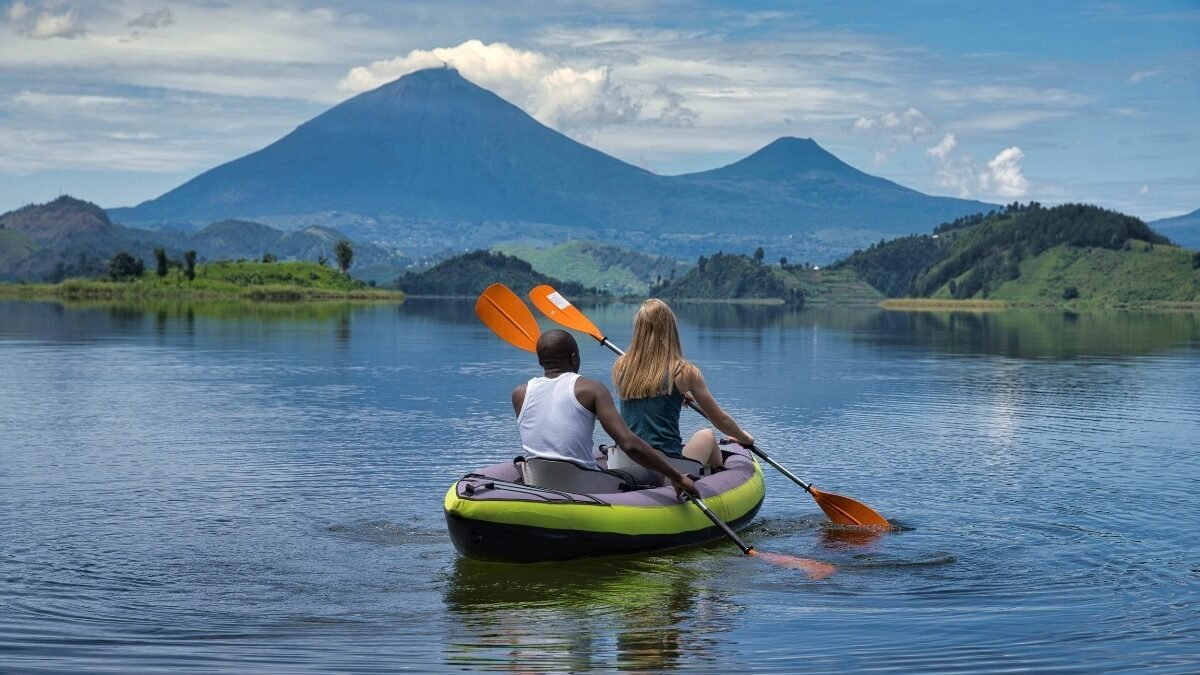
Tourism Attractions in Kisoro. Perched in the far southwestern corner of Uganda, where the country meets both Rwanda and the Democratic Republic of Congo, Kisoro district is one of East Africa’s most rewarding travel destinations. Its hilly, volcanic landscape has earned it the nickname “the Switzerland of Africa,” and its location at the foot of the Virunga Mountains makes it a natural hub for gorilla trekking, volcano hiking, and cultural tourism.
While most visitors arrive in Kisoro with gorilla trekking at the top of their list, the district has far more to offer than a single activity. From crater lakes and volcanic caves to community visits and panoramic viewpoints, Kisoro rewards travelers who take a day or two to explore beyond the trekking trail. Here’s a complete look at the top attractions in and around Kisoro.
Mgahinga Gorilla National Park and the Virunga Volcanoes
At the heart of Kisoro’s appeal is Mgahinga Gorilla National Park, Uganda’s smallest national park and part of the larger Virunga Conservation Area shared with Rwanda and the DRC. Despite covering just under 34 square kilometers, Mgahinga packs in three extinct volcanoes, montane forest, bamboo zones, and alpine moorland, making it one of the most biodiverse small parks in the region.
The park protects the northern slopes of Mount Muhabura, Mount Gahinga, and Mount Sabyinyo, and is home to forest elephants, buffaloes, golden monkeys, and one of only two habituated mountain gorilla groups in Uganda outside Bwindi. It’s a compact park, but a genuinely rewarding one, especially for travelers who want wildlife, hiking, and scenery in a single destination.
Gorilla Trekking with the Nyakagezi Family
Gorilla trekking remains Kisoro’s single biggest draw. Mgahinga is home to the Nyakagezi gorilla family, a transboundary group that has, in recent years, settled more permanently on the Ugandan side of the park. Treks begin early in the morning with a briefing at Ntebeko gate, followed by a guided hike through the forest that can last anywhere from thirty minutes to several hours depending on the gorillas’ location that day.
Because Mgahinga issues far fewer permits per day than Bwindi, trekking here tends to feel more intimate and less crowded. Travelers combining a Kisoro trip with Bwindi Impenetrable National Park often choose to trek once in each park for a chance to compare the two experiences, or add Rwanda’s Volcanoes National Park for a third encounter across the border.
Golden Monkey Tracking
Beyond the mountain gorillas, Mgahinga is one of only two places in Uganda where travelers can track the endangered golden monkey, a bright, energetic primate found only in the bamboo forests of the Virunga region. Unlike gorilla trekking, which is closer to a quiet observation experience, golden monkey tracking is fast-paced, since the monkeys move constantly through the bamboo canopy.
Treks typically last one to three hours and are considerably more affordable than gorilla permits, making this a popular add-on activity for travelers who want a second primate encounter without the higher cost of a mountain gorilla trek.
Volcano Hiking: Muhabura, Sabyinyo, and Gahinga
Kisoro sits at the base of three of the eight Virunga volcanoes, each offering a different level of challenge. Mount Muhabura, at 4,127 meters, is the tallest and steepest, rewarding hikers with a small crater lake and sweeping views across three countries. Mount Sabyinyo offers a more technical climb involving ladders near its jagged summit, where hikers can stand at the meeting point of Uganda, Rwanda, and the DRC. Mount Gahinga is the gentlest of the three, a comfortable day hike leading to a swamp-filled crater at the top.
For travelers who enjoy this guide’s earlier deep dive on timing and preparation, the best conditions for climbing any of these peaks fall during Uganda’s dry seasons, June to September and December to February, when trails are firmer and summit views are clearer.
Lake Mutanda: Canoeing, Scenery, and Relaxation
Just north of Kisoro town, the emerald waters of Lake Mutanda offer one of the most photographed views in southwestern Uganda. Framed by the Virunga volcanoes and dotted with small islands, the lake is a popular spot for canoeing, birdwatching, and simply relaxing after a day of trekking or hiking.
Canoe trips typically launch from the lake’s southern shore near the Mutanda Eco Community Centre, or from lodges on the northern side such as Chameleon Hill Lodge and Mutanda Lake Resort. Sunset cruises are especially popular, with the volcanoes silhouetted against the water as the light fades.
Batwa Community Visits and Cultural Experiences
Long before Mgahinga became a national park, the Batwa people lived within its forests as hunter-gatherers. When the park was gazetted in 1991 to protect the mountain gorillas, the Batwa were relocated outside its boundaries. Today, community-led cultural visits allow travelers to learn directly from Batwa guides about their traditional forest life, including hunting techniques, medicinal plant use, and traditional songs and dances performed on request.
These visits, along with broader Bafumbira cultural experiences, give travelers insight into the human history of the region alongside its wildlife and are widely regarded as one of the most meaningful additions to a Kisoro itinerary.
Garama Caves and Local Cave Exploration
Within Mgahinga Gorilla National Park, the Garama Caves stretch roughly 200 to 340 meters underground and hold particular significance for the Batwa, who once used the caves as a hiding place during periods of conflict with neighboring communities. Guided visits combine a short forest walk with storytelling about the caves’ history and their role in Batwa life.
Elsewhere in the district, smaller volcanic lava-tube caves, including Ruhenju, Soko, and Mwambike, add further options for travelers interested in the geological and cultural history shaped by the region’s volcanic activity.
Echuya Forest Reserve and Birdwatching
On the route between Kisoro and Kabale, the Echuya Forest Reserve is a lesser-known but rewarding stop for birdwatchers. The montane forest supports more than 100 recorded bird species, a dozen of them endemic to the Albertine Rift, along with butterflies, small mammals, and moths. Echuya was also once home to Batwa communities before conservation-driven relocation in the 1990s, adding another layer of cultural context to a visit.
Kisoro Market and Everyday Local Life
For a lower-key but genuinely local experience, the Kisoro town market runs on Mondays and Thursdays and offers a window into everyday commerce in this border district. Traditional Kitenge fabric is among the most popular items purchased by travelers, alongside fresh produce, woven baskets, and other crafts made by local artisans using papyrus harvested from the wetlands stretching toward Lake Bunyonyi.
Scenic Viewpoints Around Kisoro
Kisoro’s volcanic, hilly terrain creates natural vantage points throughout the district. Just 800 meters from the Mgahinga park gate, a viewing platform offers panoramic views over the park and surrounding countryside, complete with information panels identifying key landmarks. Further afield, Churchill’s Viewpoint on Kanaaba Hill near Echuya Forest offers a 360-degree outlook across the Kigezi hills, the twin lakes of Kayumba and Chahafi, Lake Bunyonyi, and the Virunga volcanoes spanning Uganda, Rwanda, and Congo, reportedly the very spot where Winston Churchill described Uganda as the “Pearl of Africa.”
Planning Your Trip to Kisoro
Most attractions in and around Kisoro can be combined into a well-paced three to five day itinerary, pairing gorilla trekking or a volcano climb with lighter activities like canoeing, a Batwa cultural visit, or a market walk. Because Kisoro sits so close to both Bwindi Impenetrable National Park and Rwanda’s Volcanoes National Park, it also works well as one stop within a longer regional circuit rather than a standalone destination.
If you’re building an itinerary around these attractions, our safari packages and destinations page outline how Kisoro fits alongside Bwindi and Rwanda’s gorilla parks. For official guidance on permits, park regulations, and conservation efforts, the Uganda Wildlife Authority manages Mgahinga directly, while the Uganda Tourism Board offers a broader overview of licensed attractions and experiences across the country.
Ready to explore Kisoro’s volcanoes, wildlife, and culture in one trip? Get in touch with our team and we’ll help you build an itinerary around the attractions that matter most to you.