- LET'S PLAN YOUR SAFARI
- +256 200 921 002
- +256 793 194 703
- info@pickandtransfersafaris.com

Gorilla Habituation and Batwa Cultural Experiences
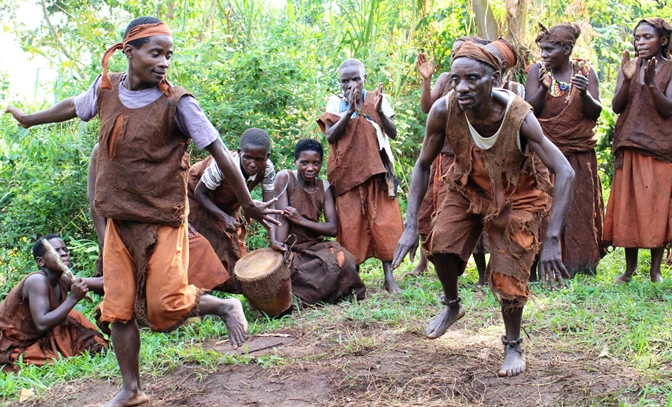
Gorilla Habituation and Batwa Cultural Experiences. Long before Rushaga’s forests became home to gorilla trekkers and researchers, they were home to the Batwa, an indigenous forest people who lived in this part of the Virunga region for generations before being evicted when Bwindi and Mgahinga were gazetted as national parks in the early 1990s. Pairing the Gorilla Habituation Experience with a Batwa cultural encounter gives travelers a fuller picture of this landscape, not just its wildlife, but the human history bound up in it. At Pick and Transfer Safaris, we regularly build this combination into Rushaga-based itineraries, and this guide explains what the Batwa experience involves and how it fits alongside a gorilla habituation day.
Who the Batwa Are
The Batwa are widely regarded as among the original inhabitants of the forests now protected as Bwindi Impenetrable National Park and Mgahinga Gorilla National Park, having lived as hunter-gatherers in these forests for generations, relying on the land for shelter, food, and medicine. When these areas were gazetted as national parks to protect the mountain gorillas within them, the Batwa were evicted from the forest entirely, losing both their homeland and their traditional way of life in the process. Today, Batwa communities live in settlements on the outskirts of both parks, in the districts of Kisoro, Kanungu, and Kabale, and cultural tourism initiatives like the Batwa Trail now represent one of the only ways they are able to legally re-enter the forest, this time as guides sharing their history with visitors.
This history is worth understanding before joining the trail rather than treating it as simply another forest walk. The Batwa themselves are candid with visitors about the difficulty of adapting to life outside the forest, and many guides describe the trail as a way of keeping their culture and knowledge alive for their children, even as their traditional way of life is no longer possible. Proceeds from the experience go some way toward addressing this, funding schools, clinics, and other community projects in the settlements surrounding both parks.
What the Batwa Trail Experience Involves
The most developed version of this experience takes place in Mgahinga Gorilla National Park, where a guided trail leads through the forest on the lower slopes of Mount Gahinga and Mount Muhabura. Led by Batwa guides, the walk demonstrates traditional forest skills, firing a bow and arrow, checking for wild honey, identifying medicinal plants, and lighting a fire without matches, alongside stories and legends passed down through generations. The experience typically runs three to four hours and costs around 80 US dollars per person, with a portion of proceeds directly supporting Batwa community projects including schools and healthcare.
The trail’s centerpiece is a descent into Garama Cave, a roughly 200-to-340-meter lava tube beneath Mount Gahinga that once served as the residence of the Batwa king, a meeting place for clan elders, and a hiding place during conflicts with neighboring communities. Inside, Batwa women perform traditional songs, often described by visitors as haunting and deeply moving, a genuinely powerful close to the experience after learning the history that preceded it.
A shorter version of the cultural experience is also available closer to Bwindi’s trekking sectors, including Rushaga, where Batwa communities living just outside the forest boundary offer a more condensed cultural visit rather than the full forest trail found in Mgahinga.
Why This Pairs Well with the Gorilla Habituation Experience
The Gorilla Habituation Experience is a physically intensive day, up to four hours in Rushaga’s steep forest terrain. The Batwa Trail, by contrast, is considered a relatively gentle activity, with well-maintained, clearly defined paths that make it accessible even to travelers who found the previous day’s gorilla trek demanding. Most operators specifically recommend scheduling the Batwa experience the day after gorilla trekking, precisely because of this difference in physical intensity, making it a natural, lower-effort complement rather than a second strenuous forest day.
Beyond the physical contrast, there’s a thematic one worth noting. Both experiences center on the same landscape, the forests and volcanic slopes of the Virunga region, but from entirely different vantage points: one focused on the mountain gorillas that now call this forest home, the other on the human community that called it home before them. Many travelers describe the Batwa experience as adding real depth and context to their overall visit, understanding something of what this land meant, and still means, to the people who lived there.
Structuring the Combined Visit
Because Rushaga and Mgahinga sit within roughly an hour to an hour and a half of each other, the fuller Mgahinga-based Batwa Trail experience pairs naturally with a Rushaga-based Gorilla Habituation Experience within a single, geographically compact trip. A reasonable structure spans four days: travel from Kigali to Rushaga, the Gorilla Habituation Experience itself, a transfer to the Mgahinga area, and a final day combining the Batwa Trail with, if time allows, golden monkey trekking, since both activities depart from similar trailheads near Mgahinga’s Ntebeko gate.
Travelers with less time can opt for the shorter Batwa cultural visit available near Rushaga itself, avoiding the transfer to Mgahinga entirely, though this comes at the cost of the full forest trail and Garama Cave experience found only in Mgahinga.
Combining This with Golden Monkeys
Since the Batwa Trail and golden monkey trekking both operate from the Ntebeko gate area of Mgahinga Gorilla National Park, many travelers combine the two into a single day, a cultural morning followed by an afternoon golden monkey trek, or the reverse depending on permit timing. This makes for an efficient final day of a Rushaga-based trip, covering both cultural and wildlife activities without requiring an additional overnight stay beyond what the Gorilla Habituation Experience and Batwa Trail already call for.
Booking Considerations
Unlike the Gorilla Habituation Experience, which requires securing one of only eight daily permits well in advance, the Batwa Trail has no comparable scarcity and can generally be arranged with considerably less lead time, often booked directly through your lodge or transfer operator closer to your actual travel dates. This makes it a genuinely flexible addition to slot in around your confirmed gorilla habituation permit, rather than a constraint requiring its own advance planning.
What to Bring
The Batwa Trail is a genuinely different kind of activity from gorilla trekking, involving less strenuous terrain but still requiring comfortable walking shoes given the gentle climbs and occasionally uneven paths. A torch is worth carrying for the descent into Garama Cave, since the interior is genuinely dark despite some lighting provided by guides, and it’s worth bringing cash for purchasing crafts or coffee directly from Batwa community members, a meaningful way to support the community beyond the base trail fee itself. Some Batwa communities near the parks have also started small coffee shops as an additional source of income since their eviction from the forest, worth a stop if your itinerary and guide allow the time.
Visa and Border Requirements
Since this itinerary typically crosses from Rwanda into Uganda, the East African Tourist Visa tends to be the most convenient option, covering multiple entries across Uganda, Rwanda, and Kenya over 90 days for 100 US dollars through Uganda’s official immigration portal. A standard single-entry Uganda Tourist Visa works just as well for travelers not planning to re-enter Rwanda. A valid yellow fever vaccination certificate is required for entry into Uganda regardless of visa type.
Planning Your Gorilla Habituation and Batwa Trail Trip with Pick and Transfer Safaris
Combining the Gorilla Habituation Experience with a Batwa cultural encounter gives travelers a fuller understanding of the Virunga region, both its extraordinary wildlife and the indigenous community whose history is inseparable from this landscape. If you would like help confirming your Gorilla Habituation Experience permit, arranging the Batwa Trail near Mgahinga or Rushaga, or coordinating your transfer between the two, get in touch through our Contact Us page. We’ll build the itinerary to give both experiences the time and context they deserve.