- LET'S PLAN YOUR SAFARI
- +256 200 921 002
- +256 793 194 703
- info@pickandtransfersafaris.com

Wildlife You’ll See During Gorilla Habituation
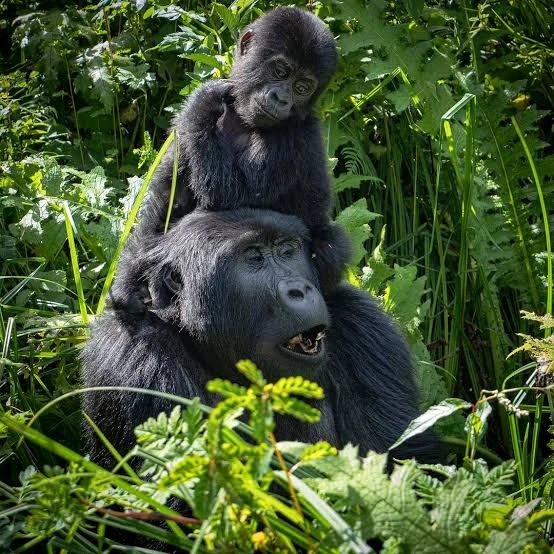
Wildlife You’ll See During Gorilla Habituation. The gorillas are, understandably, the entire point of a trip to Rushaga. But the four hours spent reaching, observing, and returning from a semi-habituated family during the Gorilla Habituation Experience pass through one of the richest forest ecosystems in Africa, home to roughly 120 mammal species, over 350 birds, and more than 200 butterfly species. Given how much more time this experience spends in the forest compared to a standard one-hour trek, travelers have a genuinely better chance than most of noticing at least some of this wider wildlife along the way. At Pick and Transfer Safaris, this is a detail we like travelers to know ahead of time, since it changes how you might approach the day. This guide covers what else lives in this forest and what you might realistically encounter.
The Gorillas Themselves
Rushaga hosts several habituated gorilla families available for standard trekking, alongside two specific families currently undergoing habituation, the focus of the Gorilla Habituation Experience itself. Depending on which family you’re assigned, you may spend your four hours with a group ranging from a handful of individuals to considerably larger families exceeding a dozen members, led by a dominant silverback. Because these families are still in the process of acclimating to human presence rather than fully habituated, behavior can feel less predictable and more genuinely wild than the calmer, more settled encounters typical of standard trekking with long-established families, which many travelers count among the most striking aspects of this particular experience.
Other Primates Sharing the Forest
Bwindi is one of the only places on earth where mountain gorillas and chimpanzees share the same forest, though Bwindi’s chimpanzees remain unhabituated, meaning sightings during a gorilla trek are possible but genuinely rare and typically brief, more often heard as distant calls echoing through the canopy than actually seen. Beyond gorillas and chimpanzees, the park holds ten primate species in total, and several are realistic sightings along Rushaga’s trails: black-and-white colobus monkeys, easily recognized by their bushy tails and striking contrast of black and white fur as they leap between branches, and L’Hoest’s monkeys, a vulnerable species with a distinctive white beard, often encountered moving in groups along forest trails.
Red-tailed monkeys, blue monkeys, vervet monkeys, and olive baboons round out the primate list, generally found closer to forest edges and clearings rather than deep interior trails, making brief sightings possible during the approach or return legs of a habituation day.
Forest Elephants and Larger Mammals
Bwindi’s forest elephants are a genuinely different animal from the savanna elephants most travelers picture, smaller in stature, with rounded ears and smaller tusks, adapted to moving through dense vegetation rather than open plains. Sightings are infrequent given how effectively the dense forest conceals them, and Ruhija is generally considered the sector with the best odds of an actual encounter, though evidence of their presence, broken branches and dung along the trail, is a more common find in Rushaga itself. Forest elephants also play a genuinely important ecological role in this landscape, dispersing seeds and clearing paths through the undergrowth as they move, shaping the structure of the forest in ways that benefit countless other species even when the elephants themselves stay hidden.
Giant forest hogs, Africa’s largest wild pig species, and bush pigs also inhabit the forest, typically more active at night or in the early morning, alongside side-striped jackals, African civets, and the elusive golden cat, one of Africa’s least-studied wild cats.
Duikers and Smaller Forest Dwellers
Several duiker species, small, secretive antelopes including the black-fronted duiker and the larger yellow-backed duiker, move through Bwindi’s undergrowth, generally spotted as a brief flash of movement darting away from the trail rather than a sustained sighting. Clawless otters inhabit the park’s rivers and streams, though encountering one requires being near water at the right moment. Bats and various rodent species round out the forest’s smaller mammal life, rarely noticed directly but part of the same dense, layered ecosystem your guide and trackers move through daily. None of these smaller mammals are the focus of a Gorilla Habituation Experience day, but their presence adds to the overall sense of moving through a genuinely intact, functioning forest ecosystem rather than a managed wildlife viewing area.
Birds Along the Trail
Bwindi’s reputation as one of Africa’s premier birding destinations, detailed further on our birdwatching guide, means the forest surrounding Rushaga’s trails hosts a genuine cross-section of the park’s roughly 350 recorded species, including regional Albertine Rift endemics like the handsome francolin and blue-headed sunbird. While a Gorilla Habituation Experience day isn’t structured as a dedicated birding outing, attentive travelers with even a passing interest often note a surprising number of species along the way, particularly during quieter stretches of the approach and return trek.
Butterflies and the Forest Floor
Bwindi holds over 200 recorded butterfly species, several endemic to the Albertine Rift region, including the striking cream-banded swallowtail. These are often genuinely easy to notice even without specifically looking for them, particularly in sunlit clearings and along stream crossings, adding a layer of color and movement to the forest floor that complements the more dramatic primate and mammal sightings higher up the food chain.
Why the Habituation Experience Offers Better Odds Than a Standard Trek
Because the Gorilla Habituation Experience extends your time in the forest to up to four hours rather than the standard trek’s combined approach-and-observation window, often totaling considerably longer once travel to and from the gorilla family is included, travelers spend genuinely more time moving through Rushaga’s forest than those on a standard one-hour trek. This extended exposure doesn’t guarantee sightings of any particular species, wildlife encounters in dense forest are inherently unpredictable, but it does mean more opportunities for the kind of incidental sightings, a colobus troop moving through the canopy, a duiker darting off the trail, a burst of butterflies near a stream, that add texture to what might otherwise be remembered purely as a gorilla-focused day.
Setting Realistic Expectations
It’s worth being honest about what’s likely versus what’s possible. Gorillas themselves are effectively guaranteed, since your ranger and trackers know the family’s approximate location before you set out. Other primates, particularly black-and-white colobus and L’Hoest’s monkeys, are reasonably likely given how much of the trek passes through their habitat. Forest elephants, chimpanzees, and the golden cat are genuine rarities that most visitors, even those trekking regularly, never encounter directly. Approaching the day with gorillas as the guaranteed centerpiece and everything else as a welcome bonus tends to produce the most satisfying experience, rather than treating the wider wildlife list as something to actively expect.
Visa and Border Requirements
Since most travelers combining a Gorilla Habituation Experience with this kind of forest wildlife interest arrive via Rwanda, the East African Tourist Visa tends to be the most convenient choice, covering multiple entries across Uganda, Rwanda, and Kenya over 90 days for 100 US dollars through Uganda’s official immigration portal. A standard single-entry Uganda Tourist Visa works just as well for travelers not planning to re-enter Rwanda. A valid yellow fever vaccination certificate is required for entry into Uganda regardless of visa type.
Planning Your Gorilla Habituation Experience with Pick and Transfer Safaris
Rushaga’s forest is a genuinely rich ecosystem well beyond its gorilla families, and the Gorilla Habituation Experience’s extended time in that forest gives travelers a better than usual chance of noticing some of it along the way. If you would like help confirming your Gorilla Habituation Experience permit, arranging a guide with strong knowledge of the sector’s wider wildlife, or coordinating your transfer from Kigali, get in touch through our Contact Us page. We’ll make sure your day is built around realistic expectations and genuine appreciation for everything Rushaga’s forest has to offer, gorillas included.