- LET'S PLAN YOUR SAFARI
- +256 200 921 002
- +256 793 194 703
- info@pickandtransfersafaris.com

How Long Does Gorilla Habituation Take?
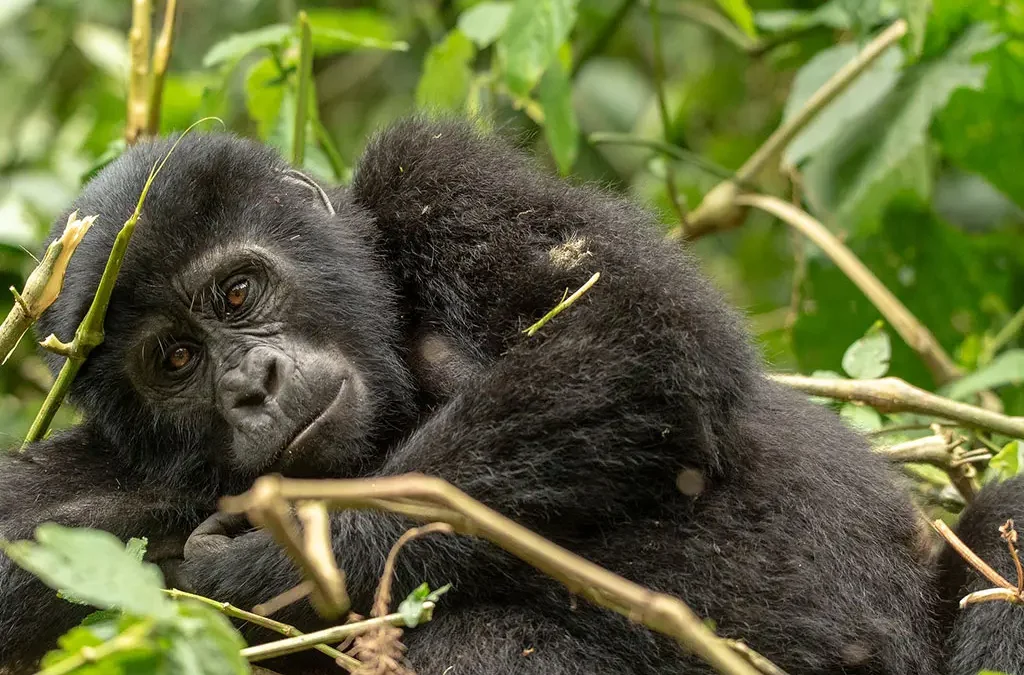
How Long Does Gorilla Habituation Take? This question actually has two different answers, depending on what “how long” you’re asking about. There’s the multi-year process of acclimating a wild gorilla family to human presence in the first place, and there’s the single, much shorter day a visitor actually spends in the forest once that process has progressed far enough to allow it. At Pick and Transfer Safaris, travelers ask us both versions of this question regularly when planning a Rushaga trip, so this guide answers them separately and explains why the distinction matters for your own planning.
The Multi-Year Process: How Long It Takes to Habituate a Family
Turning a wild, unhabituated gorilla family into one that tolerates human presence at close range is a slow undertaking, typically cited at two to three years, and by some accounts stretching to four or five, of near-daily contact by Uganda Wildlife Authority trackers and researchers. The process starts small: short visits at a distance the gorillas find tolerable, repeated day after day, with the team gradually closing that distance and extending contact time as the family grows accustomed to their presence. Progress isn’t linear. A family that seems to be settling can become wary again after a disruption, a territorial shift, an encounter with another gorilla group, or simply the natural caution of individual members adjusting at their own pace, meaning the overall timeline varies considerably from one family to the next.
Only once a family reliably tolerates close human presence, and researchers judge them ready, does the Uganda Wildlife Authority open that group to the Gorilla Habituation Experience, and eventually, once habituation is complete, to standard one-hour trekking. This is why Rushaga’s habituation program currently involves just two specific families at any given time, since the pool of groups mid-process is naturally small given how long each one takes.
The Single Visitor Day: How Long You’ll Actually Spend in the Forest
For travelers booking the Gorilla Habituation Experience itself, the more immediately relevant number is the length of a single visit day, and this breaks down into several distinct segments. The day begins with a briefing at Rushaga’s park headquarters, typically starting around 7:00 to 7:30 AM, roughly half an hour earlier than the standard trekking briefing given the more involved nature of the activity. From there, the trek into the forest itself can take anywhere from one to five hours depending on where the semi-habituated family nested the previous night, a genuinely wide range that reflects how unpredictable gorilla movement can be on any given day.
Once the family is located, your four-hour observation window begins, considerably longer than the standard trek’s fixed one hour, and this is time spent actively with the gorillas rather than time spent searching for them. After the four hours conclude, there’s a return trek back to the trailhead, roughly mirroring the approach time. Adding briefing, approach, observation, and return together, a full Gorilla Habituation Experience day typically runs somewhere between eight and ten hours from start to finish, though this can extend further if the gorilla family has moved to a particularly remote or difficult-to-reach location that day.
Why the Day Is So Much Longer Than It Sounds
It’s easy to focus purely on the “four hours with gorillas” figure and underestimate the overall length of the day, but the approach and return treks alone can consume as much time as the observation window itself, sometimes more. Combined with an earlier start than standard trekking and Rushaga’s genuinely steep, demanding terrain, the Gorilla Habituation Experience should be planned as a full-day commitment with no other activities scheduled around it, rather than a morning or afternoon slot fitted alongside something else.
Weather and season also factor into how long the day actually runs. During the rainy months, roughly March to May and September to November, slower, more cautious movement on muddy, slippery trails can extend both the approach and return legs beyond what a dry-season trek of the same distance would take. Travelers planning around a tight departure time later that same day, an evening flight out of Kigali, for instance, should build in a generous buffer given how variable this timing genuinely is.
This is also why we generally recommend building a dedicated 3-day itinerary around the experience: a travel day to reach Rushaga, the full habituation day itself with nothing else attached, and a day to recover and return, rather than trying to compress the demanding forest day into a tighter schedule.
How This Compares to Standard Gorilla Trekking
Standard gorilla trekking with a fully habituated family also involves a full day when you account for briefing, approach, and return trek, typically four to eight hours total, but the actual time spent with the gorillas is capped at a strict one hour regardless of how long the approach took. The Gorilla Habituation Experience extends only the observation portion, four hours instead of one, while the surrounding logistics, briefing, approach, and return, follow a broadly similar structure, just starting slightly earlier and often running somewhat longer overall given the semi-habituated family’s less predictable movement patterns.
Booking Timeline: How Long Before Your Trip You Should Book
There’s a third “how long” worth addressing, since it trips up many travelers: how far in advance you need to book the permit itself. Given only eight permits are available per day across Rushaga’s two habituating families, and full payment is now required at the time of booking, most operators recommend securing your permit at least six months ahead of travel, and considerably earlier for peak season dates in June through September and December through February. Low season dates, roughly March to May and September to November, can sometimes be secured with less lead time given lower overall demand, though “less” still generally means two to three months rather than a last-minute arrangement.
This booking timeline is entirely separate from both the years-long habituation process and the single-day visitor experience, but it’s just as important to plan around given how limited daily availability is.
Planning Your Day Around These Timeframes
Understanding all three timeframes, the multi-year habituation process, the eight-to-ten-hour visitor day, and the months-long booking window, helps set realistic expectations before you travel. Pack accordingly for a genuinely full day: water, snacks, rain gear, and comfortable layers, since you’ll be in the forest considerably longer than a standard trek. Build your Rushaga stay around a single dedicated day for the experience itself rather than trying to combine it with another activity, and secure your permit as early in your overall trip planning as possible, treating it as the first booking rather than something to arrange once flights and lodges are already confirmed.
Visa and Border Requirements
Since most travelers reach Rushaga via Rwanda, the East African Tourist Visa tends to be the most convenient option, covering multiple entries across Uganda, Rwanda, and Kenya over 90 days for 100 US dollars through Uganda’s official immigration portal. A standard single-entry Uganda Tourist Visa works just as well for travelers not planning to re-enter Rwanda. A valid yellow fever vaccination certificate is required for entry into Uganda regardless of visa type.
Planning Your Gorilla Habituation Experience with Pick and Transfer Safaris
Whether you’re asking how long the habituation process takes, how long your actual day in the forest will run, or how far ahead you need to book, getting these timeframes right shapes how smoothly your trip comes together. If you would like help confirming permit availability, planning an itinerary that gives the full-day experience the time it genuinely needs, or arranging your private transfer from Kigali, get in touch through our Contact Us page. We’ll help you plan around the real timeline, not just the headline four hours.