- LET'S PLAN YOUR SAFARI
- +256 200 921 002
- +256 793 194 703
- info@pickandtransfersafaris.com

Uganda Gorilla Trekking Starting from Kigali
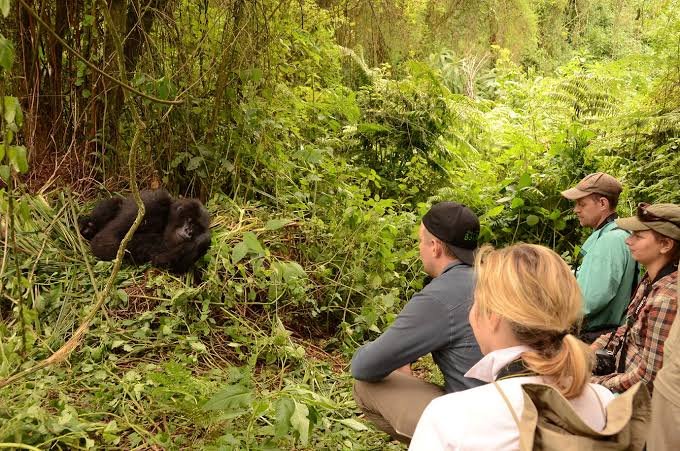
Uganda Gorilla Trekking Starting from Kigali. Most travellers researching gorilla trekking assume the decision is simply “Rwanda or Uganda,” as if the two were entirely separate trips requiring entirely separate journeys. In practice, Kigali is the starting point for both. Rwanda’s Volcanoes National Park sits two to two and a half hours from the capital, and Uganda’s gorilla parks — Mgahinga Gorilla National Park and Bwindi Impenetrable Forest — are only a few hours further beyond the same border. For travellers who happen to be in Kigali, whether for business, a stopover, or a Rwanda-focused trip that gorilla trekking has been added to, Uganda’s gorillas are genuinely within reach without ever routing through Entebbe or Kampala at all.
This is worth knowing because the two countries price the same experience very differently. A Rwanda gorilla permit costs USD 1,500 per person. A Uganda permit costs USD 800 — nearly half. For a family group or a pair of travellers, that gap is often the difference between a trip that fits the budget and one that doesn’t, and it’s the single biggest reason the “Uganda from Kigali” route has become as popular as it has.
Why This Route Exists
The geography is the whole story. Mgahinga Gorilla National Park sits on the Ugandan side of the same Virunga volcanic massif that contains Rwanda’s Volcanoes National Park, separated from Kigali by little more than the Cyanika or Gatuna border crossing and a short onward drive to the town of Kisoro. Bwindi Impenetrable Forest lies a little further west but is still only four to five hours from Kigali by road — considerably closer than it is to Uganda’s own capital, which sits eight or nine hours away from both parks. For anyone whose primary reason for visiting Uganda is the gorillas rather than the rest of the country, routing through Kigali rather than Entebbe simply makes more sense.
This isn’t an obscure workaround. It’s a well-established, heavily used route, and tour operators on both sides of the border have built entire itineraries specifically around it.
Choosing Between Mgahinga and Bwindi
The first real decision on this route is which park to trek in, and the two offer genuinely different experiences.
Mgahinga is Uganda’s smallest national park and home to a single habituated gorilla family, the Nyakagyezi group. There’s no allocation process the way there is at Bwindi — you trek the one family that’s available — and the setting is dramatic in its own right, with three extinct volcanoes rising directly from the park and giant lobelias standing above the treeline. Mgahinga is also the only place in Uganda to track golden monkeys, and its proximity to Kigali (roughly two to three hours) makes it the natural choice for the shortest possible itineraries.
Bwindi, by contrast, is Uganda’s flagship gorilla destination, with around twenty habituated families spread across four trekking sectors and a far larger, more biodiverse forest. It’s a longer drive from Kigali — typically four to five hours — but it offers considerably more choice, a wider range of accommodation, and, for travellers with a bit more time, the option of the Gorilla Habituation Experience, which extends the encounter from one hour to as much as four.
Neither is a wrong choice. Mgahinga suits travellers prioritising the shortest possible trip from Kigali; Bwindi suits those willing to add a little more travel time in exchange for greater choice and depth.
How Much Time You Need
There isn’t a single correct itinerary length for this route — it depends entirely on how much time you have and how comfortable you are with a demanding schedule.
A one-day trip is genuinely possible, almost exclusively via Mgahinga given its shorter drive time. It means a pre-dawn departure from Kigali, both border crossings and the full trek completed within a single day, and a return to your Kigali hotel that same evening. It’s intense, but it works, and it’s the option most often chosen by travellers with only a single free day in their schedule.
A two-day trip removes almost all of that time pressure by adding one overnight stay near the park. You cross the border and settle into a lodge the evening before, wake up already positioned for the early trekking briefing, and return to Kigali the following evening without having driven through the night twice in one stretch. This is, for most travellers, the more comfortable and more forgiving version of the same basic idea.
A longer stay — three days or more — opens up considerably more of what Uganda has to offer beyond the gorilla encounter itself: golden monkey tracking and the Batwa Cultural Trail at Mgahinga, a second gorilla trek or the Habituation Experience at Bwindi, or an onward journey to Queen Elizabeth National Park for tree-climbing lions and a Kazinga Channel boat cruise, or Kibale Forest National Park for chimpanzee trekking. At this point, the trip stops being a gorilla day trip from Kigali and starts becoming a proper Uganda safari that happens to begin at a Rwandan border post rather than a Ugandan airport.
What the Cost Difference Actually Buys You
The core saving is the permit itself: USD 800 in Uganda against USD 1,500 in Rwanda, a difference of USD 700 per person. Set against that saving are the additional costs specific to the Kigali route — a Uganda visa if your nationality requires one, a yellow fever vaccination certificate, and, for anything beyond a single-day trip, at least one night’s lodge accommodation on the Ugandan side of the border. Even accounting for all of these, the total cost of a Uganda gorilla trek starting from Kigali typically remains well below the equivalent Rwanda-based trip, which is why this route has become such a fixture for cost-conscious travellers who still want the full, unhurried encounter rather than a compromised version of it.
It’s worth being honest about what doesn’t change: the trekking experience itself, the one-hour encounter, and the species you’re seeing are broadly comparable whichever side of the border you choose. The price difference reflects Rwanda’s more polished infrastructure and premium positioning, not a meaningfully different wildlife experience.
The Practical Details That Matter Most
Whatever length of trip you choose, the details that most often cause problems are the same. You’ll need a valid passport and, depending on your nationality, a Uganda visa or East Africa Tourist Visa arranged before you travel rather than assumed at the border. A yellow fever certificate is generally expected for entry into Uganda. Because gorilla permits — particularly Mgahinga’s single-family allocation of eight visitors per day — are genuinely limited, booking well ahead of your travel dates matters more on this route than almost anywhere else in the region, especially across the June-to-September and December-to-February dry seasons when demand peaks in both countries.
Given how many moving parts are involved — a permit booking, a border crossing, a 4×4 transfer suited to the final approach roads, and in most itineraries a lodge reservation — working with an operator who coordinates the whole route as a single package removes most of the risk that comes with piecing it together independently. A missed permit slot or a misaligned border crossing time can be difficult to recover from once you’re already on the road.
Bringing It All Together
Uganda gorilla trekking from Kigali isn’t a compromise or a workaround — it’s simply the most direct route to one of the world’s most extraordinary wildlife encounters, priced considerably below its Rwandan equivalent, and flexible enough to be done in a single long day, a comfortable two-day trip, or the opening chapter of a much longer Uganda journey. The right length depends entirely on your schedule and how much of the rest of Uganda you want to see alongside it.
If you’re not sure which version fits your trip, get in touch with our travel experts — we’ll walk you through Mgahinga versus Bwindi, help you decide between one day, two days, or something longer, and put together the permits, transfers, and accommodation around whichever option makes the most sense for you. And if the gorillas turn out to be just the beginning, our destinations page covers everything else Uganda and Rwanda have to offer once you’re already this close.