- LET'S PLAN YOUR SAFARI
- +256 200 921 002
- +256 793 194 703
- info@pickandtransfersafaris.com

Uganda Safari Itineraries from Kigali
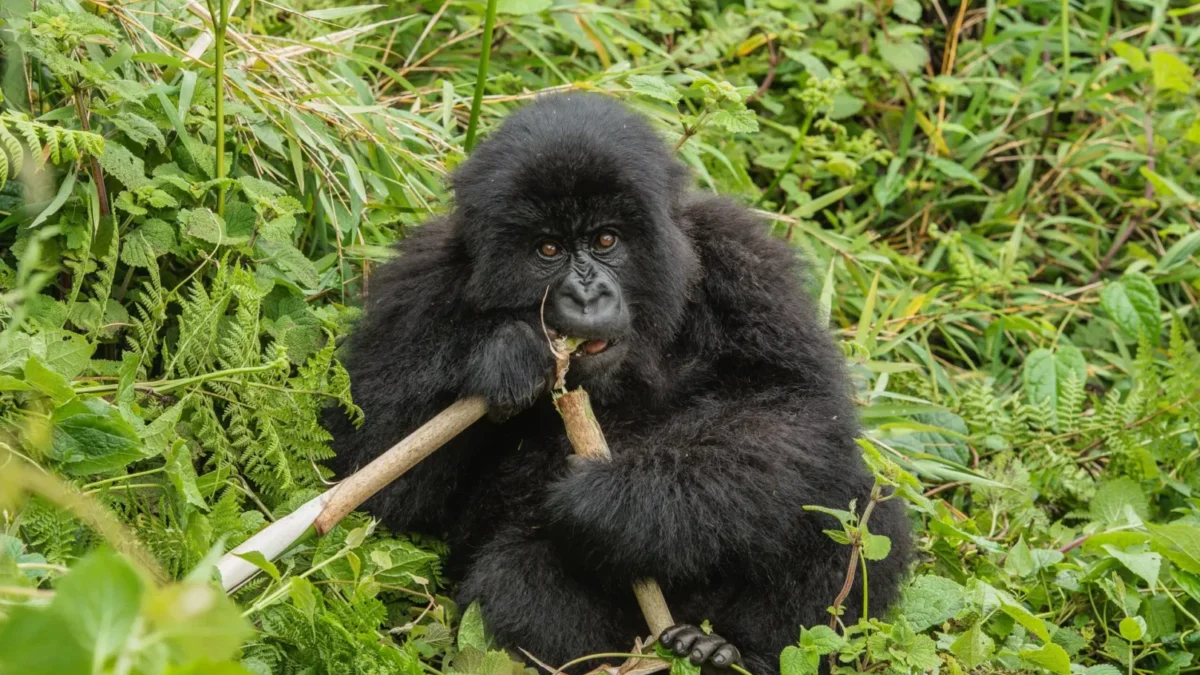
Uganda Safari Itineraries from Kigali. Most people planning a Uganda safari default to Entebbe as the starting point, without realizing that Rwanda’s capital sits considerably closer to Uganda’s best-known parks than Uganda’s own airports do. Kigali is two to three hours from Mgahinga Gorilla National Park, four to five hours from Bwindi Impenetrable Forest, and within a manageable drive of Queen Elizabeth National Park and Kibale Forest National Park beyond that. For travellers already in Kigali, or choosing where to fly into in the first place, that proximity opens up a whole range of Uganda itineraries that never need to touch Kampala or Entebbe at all.
What follows is a rough guide to how much of Uganda you can realistically see from a Kigali starting point, depending on how many days you have.
Why Start a Uganda Safari From Kigali at All
The two most common reasons are cost and geography. Uganda’s gorilla permits cost USD 800 per person, against Rwanda’s USD 1,500 for Volcanoes National Park — a saving of USD 700 that alone justifies the route for many travellers. On top of that, Kigali International Airport is often easier and cheaper to fly into than Entebbe, particularly for travellers coming from certain regions, and Rwanda’s southwestern border sits directly against Uganda’s own primate-rich southwest, meaning none of the driving involved is wasted distance. You end up in exactly the right part of Uganda for gorilla trekking, chimpanzee tracking, and savannah game drives, without ever routing through the country’s more distant capital.
One Day: A Single Gorilla Trek and Back
The shortest version of this trip is a single day dedicated entirely to gorilla trekking at Mgahinga, Uganda’s closest gorilla park to Kigali. It means a pre-dawn departure, two border crossings, a full trek, and a return to Kigali the same evening — intense, but genuinely achievable given Mgahinga’s short two-to-three-hour drive time. This suits travellers with only one truly free day, who want the gorilla encounter without adding an overnight stay in Uganda at all.
Two Days: A More Comfortable Gorilla Trek
Adding a single overnight near the park removes almost all of the time pressure from the one-day version. You cross the border and settle into a lodge the evening before, wake up already positioned for the early trekking briefing, and drive back to Kigali the following evening without having pushed through two long stretches of driving either side of a demanding trek. This is, for most travellers, the more comfortable and more forgiving version of the same basic idea, and it works equally well whether you trek at Mgahinga or opt for one of Bwindi’s southern sectors instead.
Three to Four Days: Gorillas Plus Golden Monkeys or the Habituation Experience
With three or four days, the trip stops being purely about the one-hour gorilla encounter and starts including the activities that sit alongside it. At Mgahinga, that means golden monkey tracking in the same bamboo zones the gorillas move through, or a hike up one of the park’s three volcanoes — Mount Gahinga’s crater, Mount Sabinyo’s three-country summit, or Mount Muhavura’s crater lake. At Bwindi, the equivalent extension is the Gorilla Habituation Experience in the Rushaga sector, which stretches the standard hour into as much as four spent with a semi-habituated family and the researchers who study them.
This length of trip also comfortably allows a stop at Lake Bunyonyi, the crater lake roughly midway between Mgahinga and Bwindi, which offers a genuinely restful counterpoint to the physical demands of trekking — canoeing, safe swimming, and very little else required of you.
Five to Seven Days: Adding Queen Elizabeth and the Tree-Climbing Lions
Once you have five days or more, it becomes worth continuing past the gorilla parks into Uganda’s wider primate and savannah circuit rather than turning back toward Kigali immediately. Queen Elizabeth National Park sits within a scenic drive of Bwindi’s northern sectors and adds an entirely different landscape to the trip: open savannah game drives across the Kasenyi Plains, a boat cruise along the Kazinga Channel dense with hippos and elephants, and the famous tree-climbing lions of the Ishasha sector. A week-long itinerary built around Kigali, Bwindi or Mgahinga, and Queen Elizabeth gives you gorillas, big game, and one of East Africa’s more unusual wildlife behaviours within a single loop.
Seven Days or More: Adding Kibale and Chimpanzee Trekking
With a full week or slightly more, Kibale Forest National Park becomes a realistic addition — Uganda’s primate capital, home to over a thousand chimpanzees and the option of the same kind of extended Habituation Experience that Bwindi offers for gorillas. Kibale sits within reach of Queen Elizabeth, meaning a longer itinerary can move naturally from gorillas in the south, through savannah and tree-climbing lions in the middle, to chimpanzees in the north, all without doubling back on yourself or routing through Kampala at any point.
For travellers with genuinely open schedules, Murchison Falls National Park in Uganda’s north can be added too, though its distance from the southwestern gorilla parks means it’s usually treated as a separate leg requiring its own internal flight rather than a natural continuation of the same road route.
Choosing Mgahinga or Bwindi as Your Gorilla Base
Whichever length of itinerary you settle on, the choice between Uganda’s two gorilla parks shapes everything that follows. Mgahinga is closer to Kigali, has a single habituated family, and sits within a dramatic, compact volcanic landscape that also offers golden monkeys — the natural choice for shorter itineraries. Bwindi takes a little longer to reach but offers around twenty habituated families across four sectors, denser and more varied forest, and the option of the Habituation Experience — better suited to travellers with slightly more time who want greater choice. Some longer itineraries include both, treating them as two distinct trekking experiences within the same broader trip rather than a single either-or decision.
What to Budget For
Beyond the permit cost itself — USD 800 per person in Uganda regardless of which park you choose — the main variables across these itineraries are accommodation, which ranges from simple guesthouses to genuinely world-class lodges at Mgahinga, Bwindi, and Queen Elizabeth alike, and the additional activity fees for golden monkey tracking, the Habituation Experience, or a Kazinga Channel boat cruise, all of which are charged separately from the core gorilla or chimpanzee permit. A Uganda visa or East Africa Tourist Visa, arranged in advance rather than assumed at the border, and a current yellow fever certificate are standard requirements across every version of this route.
Getting the Logistics Right
Every one of these itineraries involves at least one international border crossing, and most involve several internal transfers across Uganda’s southwest on top of that. Coordinating permits, transfers, and lodge bookings through a single operator rather than arranging each leg separately becomes more important the longer the itinerary runs, since a missed permit date or a misaligned transfer schedule has more opportunity to derail a seven-day loop than a single one-day trip.
Choosing the Right Length for Your Trip
There’s no single correct answer here — the right itinerary length depends entirely on how much time you have and how much of Uganda beyond the gorillas actually interests you. A single day delivers the core gorilla encounter and nothing more. A week or more delivers gorillas, chimpanzees, tree-climbing lions, and a genuine cross-section of Uganda’s primate and savannah landscapes, all reached from a Rwandan starting point that most travellers never think to consider.
If you’re not sure where on that spectrum your trip should sit, get in touch with our travel experts and we’ll help you build the right itinerary for your dates — whether that’s a single focused day at Mgahinga, a longer loop through Bwindi and Queen Elizabeth, or the full circuit including Kibale. Our destinations page covers every park mentioned here in more depth, so you can see exactly what each stage of the journey involves before you commit to a length.