- LET'S PLAN YOUR SAFARI
- +256 200 921 002
- +256 793 194 703
- info@pickandtransfersafaris.com

Low Budget Uganda Gorilla Safari Packages
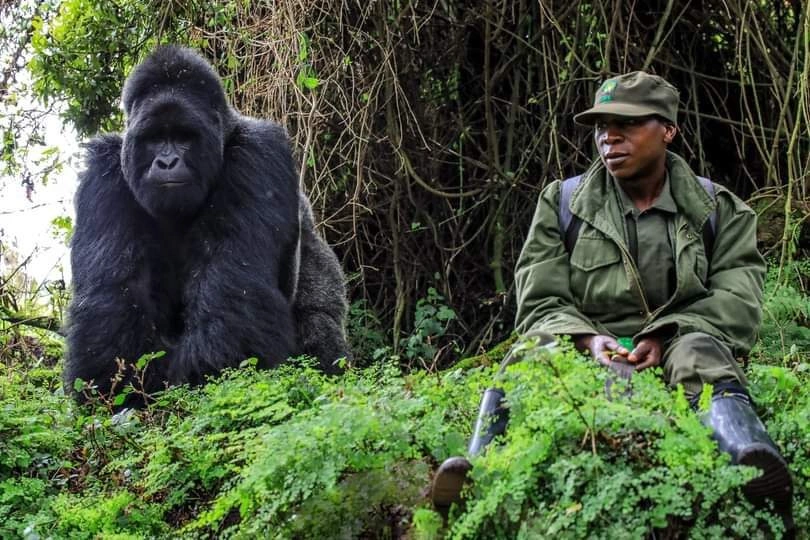
Low Budget Uganda Gorilla Safari Packages. Gorilla trekking has a reputation as an expensive, once-in-a-lifetime splurge, and for travellers pricing out Rwanda’s Volcanoes National Park, that reputation holds up — permits alone run USD 1,500 per person. Uganda tells a different story. Between a permit priced at USD 800, a shorter drive from Kigali than from Uganda’s own capital, and a genuinely wide range of budget accommodation around both gorilla parks, it’s entirely possible to put together a low-budget gorilla safari package that delivers the full trekking experience without the premium price tag typically associated with it. Below are the package structures that consistently work best for cost-conscious travellers.
The 1-Day Budget Package: Mgahinga Express
This is the leanest package available, built around a single day trip to Mgahinga Gorilla National Park — the closest gorilla destination to Kigali at just two to three hours each way. The package covers a pre-dawn departure, the border crossing, the full trek, and a same-day return to Kigali, with no Uganda lodge night required at all. Cutting out accommodation entirely makes this the cheapest way to complete a full gorilla trek from a Rwandan base, and it works because Mgahinga’s short drive time makes a genuine round trip in a single day realistic rather than punishing.
What’s included: permit, private or shared vehicle transfer, border crossing assistance, and the trek itself. What’s not included, deliberately: any Uganda accommodation, since there isn’t time for it.
The 2-Day Budget Package: Mgahinga with a Guesthouse Night
Adding one night at a budget guesthouse in Kisoro town, rather than a lodge directly at the park, keeps this package only marginally more expensive than the one-day version while removing almost all the time pressure. You cross the border the evening before, sleep in Kisoro, and are already positioned for the early trekking briefing the following morning rather than having driven through the night to reach it. Basic guesthouse accommodation in Kisoro is considerably cheaper than the flagship lodges clustered around Ntebeko Gate, and for a single overnight stay, the difference in comfort is minor compared with the difference in cost.
What’s included: permit, transfer, one night at a budget guesthouse, breakfast, and the trek. What’s not included: premium lodge amenities, private guiding beyond the standard ranger-led trek.
The 2-Day Budget Package: Bwindi Rushaga on a Budget
For travellers who’d rather trek at Bwindi Impenetrable Forest despite the longer four-to-five-hour drive, a budget version of this package is still achievable by pairing the standard permit with simple accommodation in or near the Rushaga sector rather than one of Bwindi’s higher-end lodges. Rushaga sits closest to the Cyanika border crossing among Bwindi’s four sectors and holds the greatest number of habituated families in the park, so this package still offers considerably more choice of gorilla family than the Mgahinga equivalent, at a modest cost premium for the longer transfer.
What’s included: permit, transfer via Cyanika border, one night at budget accommodation near Rushaga, and the trek. What’s not included: the Gorilla Habituation Experience, which carries a significant premium over the standard permit and is genuinely optional.
The Shared Transfer Package
Regardless of which park or itinerary length you choose, transport costs drop considerably when a vehicle is shared across a group rather than booked privately for one or two people. This package structure groups solo travellers or couples together into a shared 4×4 transfer, splitting the cost of the vehicle, fuel, and driver across everyone on board. It’s worth asking specifically about shared transfer availability when booking, since many operators on this route offer both private and shared options but tend to default to quoting the private rate unless asked.
The Off-Peak Package
Because Uganda’s gorilla permit price doesn’t change with the season, the real budget lever available to flexible travellers is timing the trip around the wetter months — March to May and October to November — rather than the busier June-to-September and December-to-February dry seasons. Accommodation rates across both Mgahinga and Bwindi drop noticeably during these quieter months, sometimes considerably, while the trekking itself remains just as rewarding. This package structure suits travellers with flexible dates more than a fixed itinerary length, and it can be layered onto any of the packages above for further savings.
The No-Frills Package: Skipping the Extras
Golden monkey tracking, volcano hikes, the Gorilla Habituation Experience, and cultural visits with the Batwa community are all genuinely worthwhile additions to a Uganda gorilla trip, but none of them are required to have a complete experience. This package strips the trip back to its essentials — permit, transfer, minimal accommodation, and the standard one-hour trek — and treats everything else as optional add-ons to be considered only if budget allows. For travellers whose priority is simply seeing wild mountain gorillas at the lowest achievable cost, this is the baseline every other package on this list builds outward from.
What Every Low-Budget Package Still Includes
However lean the package, a few things shouldn’t be cut regardless of budget. The permit itself must always be booked through the Uganda Wildlife Authority or a registered operator — there is no legitimate way to obtain a cheaper permit outside official channels, and any offer suggesting otherwise should be treated as a red flag. Vehicle condition and driver experience also matter more on this route than budget alone might suggest, given the international border crossing and the sometimes rough final approach roads into both parks. A well-maintained 4×4 and an experienced driver are worth paying for even within an otherwise tight budget.
Comparing the Packages
For a solo traveller or couple with only a single day free, the 1-Day Mgahinga Express is the cheapest complete version of this trip available. For those able to add one night, the 2-Day Mgahinga package removes most of the physical strain of the single-day version for very little extra cost, while the 2-Day Bwindi Rushaga package suits travellers specifically drawn to Bwindi’s greater choice of gorilla families and willing to accept a longer drive and slightly higher cost for it. Shared transfers and off-peak timing can be layered onto any of these to reduce costs further still.
Why Uganda Rather Than Rwanda for a Budget Trip
The entire premise of a low-budget gorilla safari rests on choosing Uganda over Rwanda’s Volcanoes National Park in the first place. The USD 700 gap between Uganda’s USD 800 permit and Rwanda’s USD 1,500 permit is larger than the total additional cost of transport and basic accommodation across any of the packages above, meaning the country choice itself is the single biggest budget decision in this entire trip — considerably more significant than which specific package or sector you ultimately choose within Uganda.
Booking a Low-Budget Package Properly
Even the leanest of these packages still involves an international border crossing, a permit booking, and, for anything beyond the single-day version, a lodge reservation timed around an early trekking briefing. Working with an operator experienced in this specific low-budget route is worth doing regardless of how tight the budget is, since a missed permit date or a poorly timed transfer can end up costing considerably more in lost time and rebooking fees than the modest coordination fee an operator charges to get it right the first time. Confirm your Uganda visa requirements and yellow fever vaccination certificate well ahead of travel as well, since both are standard expectations at the border regardless of which package you’ve chosen.
Bringing It Together
A low-budget Uganda gorilla safari package isn’t a compromised version of the full experience — it’s simply the version that spends less on transport, accommodation, and optional extras while keeping the core permit and trek fully intact. Whichever package structure suits your dates and comfort level, the one-hour encounter with a wild, habituated gorilla family at the centre of the trip remains exactly the same as it would be on the most expensive itinerary available.
Ready to put one of these packages together? Get in touch with our travel experts and we’ll help you choose between Mgahinga and Bwindi, find the right balance of cost and comfort, and time your trip to make the most of off-peak rates if your dates are flexible. Our destinations page has more detail on both parks if you’re still deciding which one fits your budget best.