- LET'S PLAN YOUR SAFARI
- +256 200 921 002
- +256 793 194 703
- info@pickandtransfersafaris.com

How to combing Gorilla Trekking with Chimpanzee In Rwanda
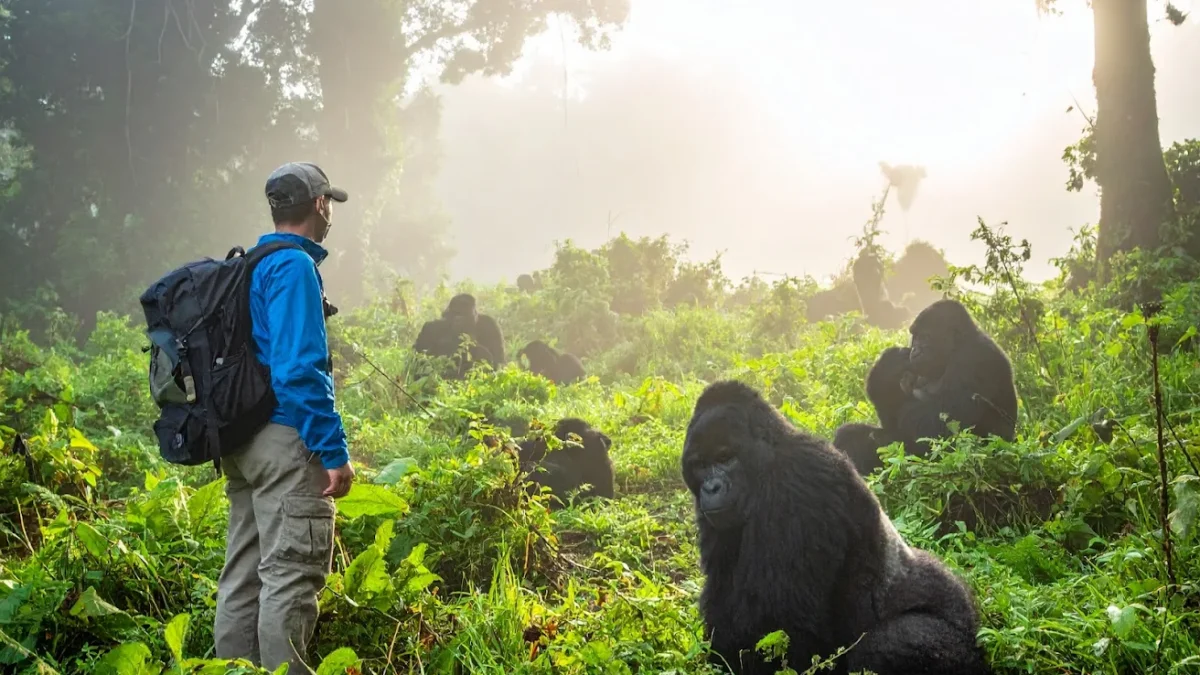
How to combing Gorilla Trekking with Chimpanzee In Rwanda. Rwanda is one of the few places on earth where a traveler can trek two different great apes without ever leaving the country. Mountain gorillas live in the volcanic highlands of the northwest, in Volcanoes National Park, while wild chimpanzees roam the ancient rainforest of Nyungwe Forest National Park in the far southwest. Combining the two makes for one of the most rewarding primate experiences available anywhere in Africa, but it also takes a bit more planning than a standalone gorilla trip, simply because of the distance involved and the different logistics each activity requires. This guide walks through exactly how to put the combination together, step by step.
Step 1: Decide Which Trek to Do First
There’s no wrong order, but each has advantages. Starting with gorilla trekking in Volcanoes National Park means tackling the more physically demanding and higher-altitude activity while you’re freshest, and it lets you fly directly into Kigali and reach Musanze within two to three hours of landing, minimizing early jet lag disruption to your first major activity. Starting with chimpanzee trekking in Nyungwe instead means beginning your trip with a longer transfer — Nyungwe sits five to six hours from Kigali — but it can work well if your flight schedule makes an early Nyungwe arrival more convenient, or if you’d rather build up to the gorilla trek as the trip’s high point rather than open with it. Most itineraries we build default to gorillas first, simply because it front-loads the single most in-demand activity in case any permit or scheduling adjustments are needed later in the trip.
Step 2: Book Both Permits Well in Advance
This is the step travelers most often underestimate. A gorilla trekking permit in Rwanda costs $1,500 per person and is strictly capped at a limited number of visitors per day across Volcanoes National Park’s habituated families. A chimpanzee trekking permit in Nyungwe Forest is considerably less expensive, typically in the $100 to $150 range, but it’s still subject to daily limits. Both permit types are issued through the Rwanda Development Board, and both should be secured at least three to six months ahead of your travel dates, particularly if you’re planning to trek during the June–September or December–February peak seasons, when gorilla permits in particular can sell out well ahead of time. Booking both permits together, on dates that account for the transfer time between parks, is one of the main things a local operator can help coordinate correctly the first time.
Step 3: Plan the Transfer Between the Two Parks
The single biggest logistical challenge in this combination is the distance between Volcanoes National Park and Nyungwe Forest — a drive of roughly six to seven hours across Rwanda’s Land of a Thousand Hills. Most itineraries break this into two shorter legs by routing through Kigali rather than attempting the full drive in one day, which also creates a natural opportunity to spend a night in the capital, tour the Kigali Genocide Memorial, and explore the city’s markets and viewpoints partway through the trip. Travelers with a generous budget and limited time sometimes charter a domestic flight between the two regions instead, which can cut the transfer down to under an hour, though this adds meaningfully to the overall trip cost. For most travelers, the overland route via Kigali strikes the best balance of cost, comfort, and the chance to see more of the country along the way.
Step 4: Choose the Right Trip Length
A minimum realistic itinerary for this combination runs about six days: one day to reach Musanze and trek gorillas, a travel day south via Kigali, a day for chimpanzee trekking in Nyungwe, and a final day or two to return and depart. Travelers with more flexibility often extend this to eight or nine days to add golden monkey tracking in Volcanoes National Park, a full extra day in Nyungwe for the canopy walkway and additional nature walks, or an overnight stop in Kigali on both legs of the journey rather than rushing through. This mirrors the structure of our broader 10 Days Uganda Rwanda Safari, scaled down to a Rwanda-only route for travelers who want both great apes without adding a second country.
Step 5: Understand What Each Trek Actually Involves
Gorilla trekking begins with an early morning briefing at Volcanoes National Park headquarters, where visitors are grouped in parties of no more than eight and matched to a specific habituated family based on fitness and the family’s last known location. The hike can range from a short thirty-minute walk to a multi-hour climb through bamboo and volcanic terrain, followed by a firmly enforced one hour observing the family once located.
Chimpanzee trekking in Nyungwe follows a similar early start but plays out differently on the ground. Chimps move quickly through the canopy and range farther than gorillas do, so rangers rely heavily on listening for calls to locate a group, and the trek itself can involve faster, less predictable movement as trackers try to keep pace. Encounters tend to be shorter and more dynamic — glimpses of chimps moving, feeding, or calling overhead rather than a settled family group at ground level — which makes it a genuinely different, complementary experience to the calmer gorilla encounter.
Step 6: Budget Realistically for the Full Trip
Because the gorilla permit alone runs $1,500 per person, it’s easy to underestimate everything built around it. A realistic budget should also account for accommodation on both ends of the trip (Musanze and Nyungwe lodges are priced separately and can vary widely between budget, mid-range, and luxury tiers), the ground transport and driver-guide fees for the long transfer between parks, the considerably cheaper chimpanzee permit, and park entrance fees at both locations. Working with an operator who can bundle these costs into a single upfront quote, rather than booking each piece independently, generally makes both the planning and the final cost easier to manage — see our gorilla safaris collection for a sense of how these combined itineraries are typically priced.
Step 7: Pack for Two Different Forest Environments
Both treks call for sturdy, broken-in waterproof hiking boots, long trousers and long sleeves to protect against nettles and biting ants, and gardening gloves if you’re prone to blisters from grabbing at vegetation on steep sections. Volcanoes National Park sits at higher altitude and can be noticeably colder in the early morning, so a warm layer for the pre-dawn briefing is worth packing even during the dry season. Nyungwe, as a genuine rainforest, sees rain more consistently throughout the year than the volcanic north, so a light, quick-drying rain shell is worth having on hand regardless of when you travel. Porters are available at both park headquarters and are well worth hiring on both treks, both for practical support on uneven terrain and as direct support for the communities living around each park.
Step 8: Time Your Trip Around the Right Season
Rwanda’s two dry seasons, June to August and December to February, generally offer the firmest trails and most comfortable trekking conditions in both parks, and are considered peak season for exactly that reason — meaning both permits and lodges book out furthest in advance during these windows. The rainier months from March to May and September to November bring muddier trails and can make chimpanzee tracking marginally harder, since the animals tend to stay higher in the canopy during wet weather, but they also mean fewer visitors and, at some lodges, lower rates. Neither park has a dramatically better rainy-season experience than the other, so this mostly affects how far ahead you should book rather than which months to avoid entirely.
Step 9: Work With an Operator Who Knows Both Parks
Because this itinerary spans two very different regions of the country with a long transfer in between, having a single driver-guide and operator manage the whole route end to end tends to make a noticeable difference — both in avoiding scheduling conflicts between the two permits and in making the long Kigali transfer feel like part of the trip rather than a logistical inconvenience to get through. At Pick and Transfer Safaris, this exact combination is one of our specialties, and we handle the permit booking, transfers, and lodge selection for both legs as a single coordinated itinerary rather than two separate trips stitched together.
Putting It All Together
Combining gorilla trekking and chimpanzee trekking in Rwanda isn’t complicated once the pieces are laid out, but it does reward early planning — particularly around permit availability and the long transfer between Volcanoes National Park and Nyungwe Forest. Done well, it’s one of the most efficient ways anywhere in Africa to see both great apes on a single, well-organized trip through one country, with a scenic cross-country drive and a stop in Kigali built into the journey rather than treated as dead time.
If you’re ready to start planning, browse our gorilla safaris collection for itinerary ideas, or contact our team directly and we’ll put together a tailored gorilla-and-chimpanzee itinerary around your travel dates and budget.