- LET'S PLAN YOUR SAFARI
- +256 200 921 002
- +256 793 194 703
- info@pickandtransfersafaris.com

Gorilla Trekking Holidays Rwanda
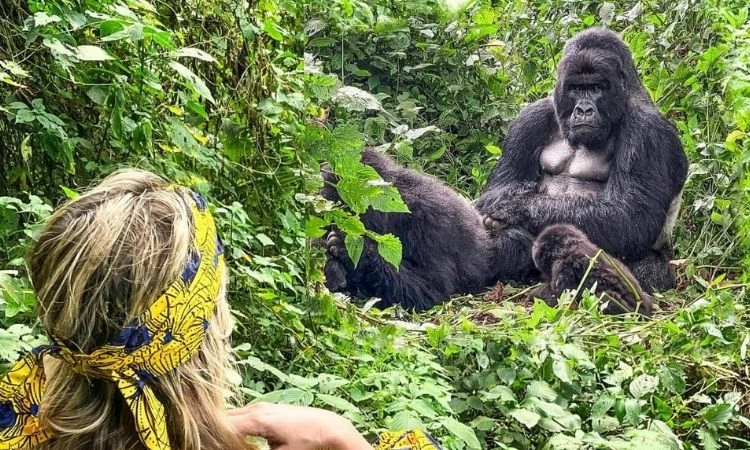
Gorilla Trekking Holidays Rwanda. Rwanda offers one of the most accessible, well-organized mountain gorilla experiences anywhere in Africa. All trekking takes place in a single park, Volcanoes National Park, part of the Virunga Mountains in the country’s northwest and once home to Dian Fossey’s original gorilla research camp. Because the park sits just two to three hours from Kigali International Airport, Rwanda is one of the few places in the world where a genuine, complete gorilla trekking holiday can be built around a short trip, without the long overland journeys that gorilla trekking in some neighboring countries requires. Add in Rwanda’s reputation for cleanliness, safety, and smooth logistics, and it’s easy to see why so many travelers choose it as their first stop for this experience.
What a Gorilla Trekking Holiday in Rwanda Actually Involves
Every gorilla trek begins with an early morning briefing at park headquarters near Musanze, where visitors are organized into small groups of no more than eight and matched to a specific habituated gorilla family based on fitness level and the family’s last known location. From there, the hike into the forest can range from a fairly easy thirty-minute walk to a strenuous multi-hour climb through bamboo and volcanic terrain, since there’s no way to know in advance exactly where a family will be on any given day. Once located, visitors spend a strictly enforced hour observing the gorillas at close range, watching the silverback, the juveniles, and the group’s everyday behavior play out just a few meters away. It’s a tightly regulated experience by design, aimed at protecting the gorillas as much as it is at giving visitors an unforgettable encounter.
How Long Should Your Trip Be
The right length depends entirely on your available time and what else you’d like to see. Travelers with only a single free day can still trek gorillas on a genuine round-trip from Kigali with our 1 Day Gorilla Trek Rwanda, though it does mean a long day on the road. A more comfortable option is our 2 Days Gorilla Trek Rwanda, which spreads the transfer and the trek across two days with an overnight near the park instead of a single marathon day. Travelers who’d also like to track golden monkeys, found in only two places on earth, should look at our 3 Days Gorilla Trek Rwanda itinerary, or the more relaxed Rwanda Gorilla Trek and Golden Monkeys version if you’d prefer a genuine rest day built in between activities. For travelers who want to add a second great ape entirely, chimpanzee trekking in Nyungwe Forest National Park can be combined into a longer Rwanda-only itinerary, and for those keen to see gorillas in both Rwanda and Uganda on the same trip, our 10 Days Uganda Rwanda Safari covers exactly that route.
Permits and Costs
A gorilla trekking permit in Rwanda currently costs $1,500 per person and is issued and strictly limited by the Rwanda Development Board, which caps the number of visitors allowed into the park each day to protect the gorillas from overexposure. Golden monkey permits, by contrast, are considerably less expensive and easier to secure, since the monkey troops are larger and their behavior more predictable than the gorillas’. Because gorilla permits sell out well ahead of peak dates, booking as early as possible, ideally three to six months in advance, is the single most important step in planning a smooth trip, particularly if you’re traveling during the June–September or December–February peak seasons.
Best Time of Year to Go
Rwanda’s two dry seasons, June to August and December to February, generally offer the firmest trails and most comfortable trekking conditions, and are considered peak season for exactly that reason, meaning permits and lodges book out furthest in advance during these months. The rainier months from March to May and September to November bring muddier, more physically demanding treks, but also fewer visitors and, at some lodges, lower accommodation rates. Neither season carries a meaningfully worse gorilla-viewing experience than the other, so the choice mostly comes down to how far ahead you’re able to book and whether you’d rather trade comfort for quiet.
Packing and Physical Preparation
Trekking in Volcanoes National Park calls for the same basic preparation regardless of trip length: sturdy, broken-in waterproof hiking boots, long trousers and long sleeves to guard against nettles and biting ants, a light rain jacket even in the dry season, and gardening gloves if you’re prone to blisters from grabbing at vegetation on steeper sections. Porters are available at the park headquarters and are well worth hiring, both for practical support on uneven volcanic terrain and as a direct way to support the local community around Musanze. A reasonable baseline level of fitness is helpful for every trip length, though shorter itineraries that combine the transfer and the trek into a single day naturally demand more stamina than a longer, more spread-out schedule.
Combining Gorilla Trekking with the Rest of Rwanda
Most travelers don’t come to Rwanda purely for gorillas. Kigali itself is worth a day or two, with the Kigali Genocide Memorial offering an essential, moving look at the country’s history and remarkable recovery, alongside the city’s markets and hilltop viewpoints. Travelers with more time often extend their trip toward Akagera National Park for Big Five game drives and a boat safari on Lake Ihema, or toward Nyungwe Forest National Park for chimpanzee trekking and a canopy walk through one of Africa’s oldest rainforests. Because Rwanda is small and its roads well maintained, combining two or three of these destinations into a single trip is far more manageable here than in many other East African countries.
Planning Your Trip
Whether you have a single day or two full weeks, the most important step is the same: book your gorilla permit early. From there, choosing the right trip length is mostly a question of pace and how much of the rest of Rwanda, or the wider region, you’d like to see along the way. Contact our team to check permit availability for your dates and put together a gorilla trekking holiday around your schedule, or browse our full gorilla safaris collection to compare all of our Rwanda itinerary options in one place.