- LET'S PLAN YOUR SAFARI
- +256 200 921 002
- +256 793 194 703
- info@pickandtransfersafaris.com

Best time to do a game drive in Queen Elizabeth
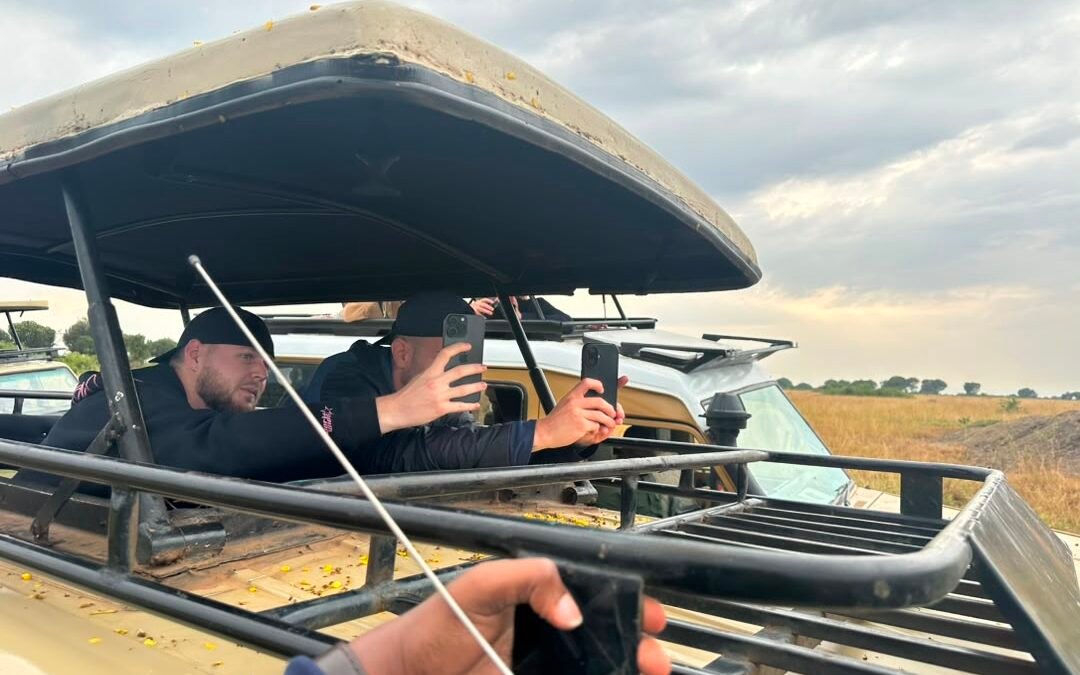
Best time to do a game drive in Queen Elizabeth. Queen Elizabeth National Park is Uganda’s most visited savannah park, and for good reason — few places in East Africa pack open plains, crater lakes, a wildlife-rich channel, and the country’s most famous predator behavior into such a compact, accessible area. But “Queen Elizabeth has great wildlife” and “you’ll have a great game drive whenever you show up” are two different things. Timing — season, time of day, and even which sector of the park you choose — genuinely shapes what you’ll see. This guide breaks all three down.
Why Timing Actually Matters Here
Best Time to Do a Game Drive in Queen Elizabeth
Queen Elizabeth isn’t a single ecosystem — it’s a patchwork of savannah grassland, wetland, forest, and volcanic crater country stretching across roughly 2,000 square kilometres between Lake Edward and Lake George. That variety is part of what makes the park special, but it also means different areas peak at different times, and wildlife visibility shifts noticeably with rainfall, grass height, and daylight. A traveller who shows up at the wrong hour or the wrong month won’t necessarily see nothing, but they’ll almost certainly see less than someone who’s timed their visit deliberately.
Dry Season vs Wet Season: The Big Picture
Uganda’s two dry seasons — June to September and December to February — are the strongest overall windows for game drives in Queen Elizabeth. Grass across the Kasenyi plains and the Mweya Peninsula is shorter during these months, which makes spotting resting lions, hyena, and antelope considerably easier from a vehicle. Roads across the park’s extensive track network are firmer and more reliably passable, including some of the rougher routes down toward Ishasha that can turn genuinely difficult after sustained rain. And because water becomes scarcer away from the Kazinga Channel and the park’s crater lakes during the dry months, wildlife concentrates more predictably in areas guides already know well — which means fewer long, empty stretches between sightings.
The wet seasons — March to May and September to November — bring their own advantages, and shouldn’t be dismissed outright. Queen Elizabeth’s wildlife is resident, not migratory, so animals don’t disappear when the rains arrive. What changes is visibility: taller grass makes a camouflaged predator or a well-hidden antelope harder to pick out at distance, and a handful of the park’s tracks become temporarily rutted or muddy. In exchange, you get lush, vividly green scenery, noticeably fewer other vehicles at any given sighting, and some of the best birding conditions of the year, as migratory species pass through alongside the park’s resident population of over 600 species.
Time of Day: Dawn, Dusk, and the Hours In Between
Within any given day, the two hours after sunrise and the two hours before sunset are consistently the most productive for game drives in Queen Elizabeth. Temperatures are cooler, and most of the park’s large mammals — lion, elephant, buffalo, and the ever-present Uganda kob — are more active during these windows than during the heat of midday, when many species retreat into shade and become far harder to spot. A dawn drive across the Kasenyi plains, in particular, tends to reward early risers with predator activity that’s largely wound down by mid-morning.
The middle of the day isn’t wasted time, though — it’s simply better used differently. This is when a Kazinga Channel boat cruise comes into its own, since the channel’s hippos, crocodiles, and waterbirds are visible regardless of the hour, and the heat that sends other wildlife into hiding tends to concentrate animals along the shoreline to drink and cool off. It’s also, somewhat counterintuitively, one of the better windows for spotting Ishasha’s famous tree-climbing lions, which tend to climb into the branches of large fig trees specifically to escape the midday heat and ground-level tsetse flies — meaning a scan of known trees around noon can outperform an earlier drive elsewhere in the sector.
The Calving Season Advantage
One detail worth knowing if predator sightings are a priority: the tail end of the dry season, particularly January and February, often coincides with peak Uganda kob calving on the Kasenyi plains. A larger number of vulnerable young draws predators into more concentrated, predictable areas at this specific time of year, meaningfully improving the odds of a lion sighting on a standard morning drive — a detail that rarely shows up in generic “best time to visit” advice.
Choosing the Right Sector for Your Timing
Queen Elizabeth’s different sectors reward slightly different approaches. The Kasenyi plains, in the park’s north, are the classic game-drive territory — open grassland, reliable predator activity, and easy access, best worked in the cooler morning and evening hours. The Mweya Peninsula offers a mix of savannah and lakeshore habitat and is a good midday option thanks to its proximity to the Kazinga Channel. Ishasha, in the far south, runs on its own clock entirely, given the heat-driven behaviour of its tree-climbing lions, and is worth a dedicated half-day or full day rather than a quick pass-through. Because Ishasha sits roughly two to three hours from the park’s northern sectors, it’s worth planning your route so the transfer itself happens outside the peak-viewing windows in Kasenyi, rather than sacrificing a prime early-morning slot to a long drive south.
Making the Most of Photography Light
For travellers prioritising photography as much as sightings, timing matters twice over — once for finding wildlife, and again for how it looks once you do. The soft, low-angle light in the hour or so after sunrise and before sunset (often called the golden hour) flatters almost every subject in the park, from a lion’s mane to the reflections on the Kazinga Channel, and conveniently overlaps with the same windows that produce the best sightings in the first place. Midday light, by contrast, tends to be harsh and flat, which is one more reason to shift that portion of the day toward a boat cruise or an Ishasha lion search rather than a conventional game drive — the animals you find at midday are often stationary enough to work with even in less flattering light, which isn’t always true of species on the move at dawn.
A Few Practical Notes
Bring binoculars regardless of season — a lion draped across a distant branch or a leopard’s tail hanging from foliage is often visible well before the animal itself is obvious to the naked eye. Ask your guide to stay in radio contact with other vehicles in the park; sightings are frequently shared in real time between guides, and a coordinated network consistently outperforms a single vehicle covering ground alone. Pack layers, too — early-morning drives across the Kasenyi plains can be genuinely cool before sunrise, even though the same afternoon will likely be hot enough that you’ll want the option to shed a jacket by mid-morning. And if predator sightings genuinely matter to your trip, build in more than one game drive at different times of day rather than relying on a single outing — wild animals are, by definition, unpredictable, and travellers who dedicate two or three drives across different hours do noticeably better than those who don’t.
Planning Your Queen Elizabeth Game Drive
Whatever season fits your schedule, the strongest overall approach combines a dry-season visit with early-morning or late-afternoon drives on the Kasenyi plains, a midday boat cruise on the Kazinga Channel, and at least one dedicated day in Ishasha timed around the heat of the day for its tree-climbing lions. Our 3 Days Safari to Queen Elizabeth National Park is built around exactly this combination, giving you a properly paced introduction to the park’s different sectors rather than a single rushed drive. If you’d like to add primates to the same trip, our 4 Days Wildlife and Primate Safari pairs Queen Elizabeth with a chimpanzee or gorilla trekking component, and our 7 Days Uganda Safari – One Week Tour takes the same wildlife-and-primate combination further, adding Kibale Forest into the route.
You can browse the full park profile, including habitats and key wildlife, on our Queen Elizabeth National Park destination page, or see our complete range of Uganda Wildlife Safaris for other ways to build the park into a longer trip.
Official Sources Worth Knowing
For current park entrance fees, activity bookings, and any last-minute changes to access ahead of your trip, the Uganda Wildlife Authority is the official body managing Queen Elizabeth National Park and the best first stop for up-to-date logistics. General destination and seasonal travel planning information for Uganda is available from the Uganda Tourism Board, the country’s official tourism authority. For those specifically interested in the park’s lions — including the Ishasha tree-climbing population — the Uganda Carnivore Program is the research organisation that has monitored and studied Queen Elizabeth’s predators since the 1990s, and a genuinely useful resource for anyone wanting to understand the science behind the sightings.
Ready to plan your Queen Elizabeth game drive around the best window for your travel dates? Get in touch with our team and we’ll help you build the right itinerary, whatever time of year you’re able to travel.