- LET'S PLAN YOUR SAFARI
- +256 200 921 002
- +256 793 194 703
- info@pickandtransfersafaris.com

Combining Game Safari with Gorilla Trek in Bwindi
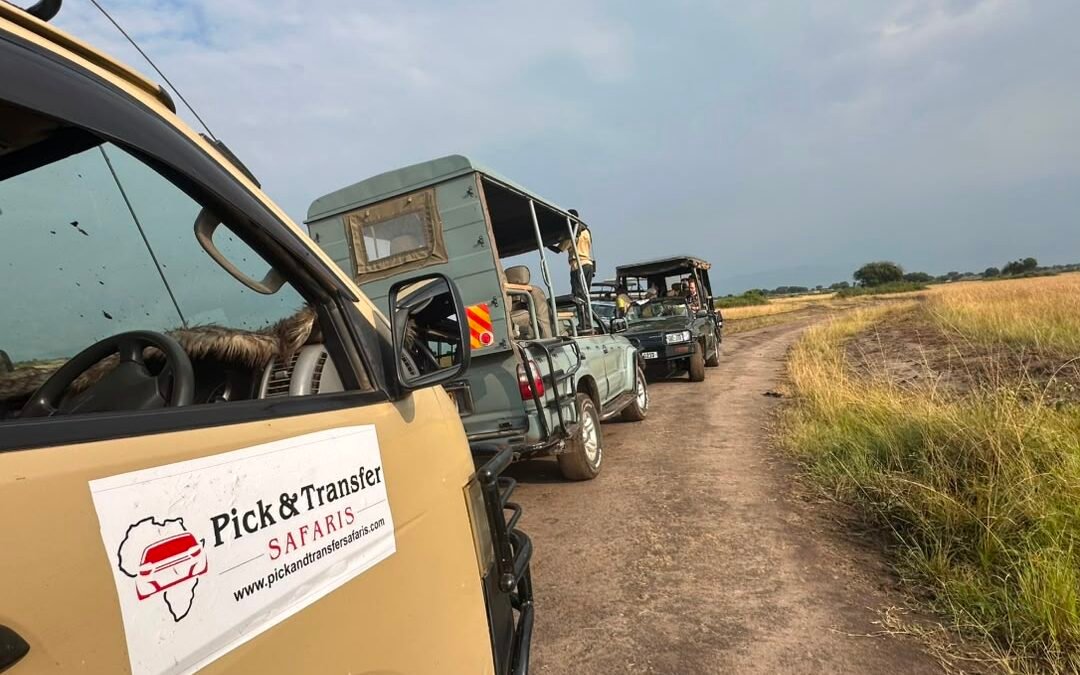
Combining Game Safari with Gorilla Trek in Bwindi. Bwindi Impenetrable National Park delivers one of the most profound wildlife encounters on the planet — a full hour spent within metres of a wild mountain gorilla family. This rainforest has survived unchanged since the last Ice Age. However, Bwindi sits in the far southwest of Uganda, largely on its own, without the open savannah that most people picture when they think “safari.” The good news is you don’t have to choose between the two. This guide looks at how to combine a proper game safari with a Bwindi gorilla trek. It also explains how to route the two together without wasting days on the road.
Why the Combination Works So Well
The Benefits of Combining Game Safari with Gorilla Trek in Bwindi
Bwindi’s location is, at first glance, a limitation. It’s tucked into the Kigezi Highlands, roughly 550km and an 8 to 9 hour drive from Kampala. There is no savannah wildlife of its own to speak of beyond forest elephant, duiker, and its exceptional primate and bird populations. Yet, that same corner of Uganda sits close to Queen Elizabeth National Park, one of the country’s best all-round game-viewing destinations. It is connected to Bwindi by a scenic few hours’ drive through the Ishasha sector. That proximity is what makes the combination so natural. Rather than treating Bwindi as an isolated add-on requiring its own dedicated trip, most well-built Uganda itineraries treat it as the final, culminating stop on a route that opens with proper savannah game drives.
The contrast between the two experiences is also part of the appeal. A game drive is wide-angle and fast-paced — an open-roofed vehicle, sweeping plains, and the chance of several species in a single morning. Gorilla trekking is the opposite: slow, on foot, deliberately unhurried, and built around a single hour with one family of animals in dense forest. Doing both on the same trip gives travellers two genuinely different registers of wildlife encounter. It’s part of why so many visitors describe a combined safari-and-gorilla itinerary as more memorable than either half on its own. There’s a psychological benefit too: building toward the gorilla trek rather than starting with it tends to make for a better-paced trip overall. The itinerary’s emotional peak lands near the end rather than being immediately followed by a long, comparatively lower-key stretch of driving.
The Classic Route: Queen Elizabeth to Bwindi via Ishasha
The most efficient and widely used route pairs Queen Elizabeth National Park with Bwindi via the Ishasha sector. It’s important to understand why this specific path has become the default. Queen Elizabeth offers game drives across the Kasenyi plains, a Kazinga Channel boat cruise among some of Africa’s densest hippo populations, and access to the Ishasha sector’s famous tree-climbing lions. This behaviour is recorded in only a handful of lion populations worldwide. From Ishasha, the drive continues south through the terraced Kigezi Highlands directly into Bwindi. This means the transfer between the wildlife and primate halves of the trip is itself scenic and productive rather than dead time to be endured.
This route generally suits a trip of five days or more comfortably. This allows enough time for a proper game drive and boat cruise in Queen Elizabeth, a half or full day around Ishasha, and at least two nights at Bwindi to accommodate the trek itself along with any travel-day buffer. Shorter versions are possible; some operators run the whole loop in four days. However, they leave far less room for delays or a second activity at either end. It’s worth being honest with yourself about how much driving you’re comfortable with in a single day. The Queen Elizabeth to Bwindi leg via Ishasha typically runs four to five hours depending on road conditions and how much time you spend stopped for game viewing along the way. Trying to compress that transfer into the same day as either the Kazinga Channel cruise or the gorilla trek itself usually makes for a rushed, less enjoyable day than splitting it out on its own.
Adding Chimpanzee Trekking to the Mix
For travelers wanting a third headline experience, Kibale Forest National Park is home to the highest concentration of primates in East Africa, including roughly 1,450 chimpanzees. It sits a comfortable few hours north of Queen Elizabeth, making it easy to open the trip with chimp trekking before heading south through the wildlife and gorilla legs of the route. This turns a two-part trip into a genuine three-part circuit: primates in Kibale, savannah wildlife in Queen Elizabeth, and the gorilla trekking finale in Bwindi. This route plays to Uganda’s particular strength as a destination. Few countries let you trek two different great ape species and run a full savannah game-viewing program within the same short itinerary. It’s worth the extra days if your schedule can absorb them. Our 4 Days Wildlife and Primate Safari is built around exactly this kind of pairing for travelers with a shorter window, while our 10 Days Uganda Primates and Wildlife itinerary gives all three legs considerably more room to breathe.
How Much Time to Budget
A reasonable minimum for a genuine combined safari is five days. Seven gives noticeably more comfort. Our 7 Days Uganda Safari – One Week Tour is a solid benchmark for what a week achieves. It allows for proper time in Queen Elizabeth for game drives and the boat cruise, a stop in Ishasha, and an unhurried couple of days around the Bwindi trek itself. This is preferable to a single overnight squeezed in before an early departure. If your schedule allows for more, extending to ten days or beyond lets you add Kibale for chimpanzees as well, without needing to compress any single leg of the trip.
Practical Considerations for a Combined Trip
A few details matter more for this kind of combined trip than for a wildlife-only or gorilla-only safari. You’re effectively planning around two very different sets of logistics within a single itinerary.
Book your gorilla permit first. Because permits are allocated to a specific date and gorilla family, it’s worth locking in your Bwindi trekking day before finalizing the rest of the itinerary. Build the game-drive portion of the trip around it. Permits are limited to eight visitors per habituated family per day and can sell out three to six months ahead during peak season. So early booking matters more for this part of the trip than for almost anything else.
Fitness varies considerably between the two halves. Game drives are effortless; you’re seated in a vehicle for most of it. Gorilla trekking is a different proposition entirely. Trails at Bwindi are steep, sometimes slippery, and hiking time can run anywhere from one to six hours depending on where the gorilla family is on a given day. It’s worth pacing the itinerary so the trek doesn’t fall immediately after a long travel day. Packing appropriately is also crucial — sturdy waterproof hiking boots with ankle support, long trousers, and a rain jacket are necessary, since the forest’s high altitude keeps temperatures cool year-round.
Season affects both halves differently. The dry seasons, June to August and December to February, offer the best conditions for both game viewing and gorilla trekking. During these months, trails are firmer and easier to navigate. The rainier months, March to May and September to November, bring lusher scenery and fewer crowds but muddier, more physically demanding trekking conditions. This is worth factoring in if you’re combining a long game-drive day with a trek shortly after.
Consider a porter for the trek. A porter, typically hired at the trailhead for around USD 15–20, is one of the best small investments on a combined trip. This is particularly true if the gorilla trek follows several days of game drives that don’t require the same physical effort. Many porters are former poachers now earning a living through conservation tourism. This makes the fee doubly worthwhile.
Planning Your Combined Safari
Whether you have four days or two weeks, combining a game safari with gorilla trekking in Bwindi is one of the most rewarding routes Uganda offers. It’s also one of the easiest to build thanks to how naturally Queen Elizabeth National Park bridges the two. Browse our Gorilla Safaris and Wildlife Safaris collections. Read more on our Queen Elizabeth National Park destination page, or get in touch with our team. We’ll help you build the right route and lock in your gorilla permit. Combining Game Safari with Gorilla Trek in Bwindi is a journey worth taking.
Official Sources Worth Knowing
Gorilla trekking permits, park entrance fees, and current access information for Bwindi Impenetrable National Park and Queen Elizabeth National Park are managed by the Uganda Wildlife Authority. This is the official body responsible for all of Uganda’s protected areas. General travel planning information for Uganda, including seasonal guidance, is available from the Uganda Tourism Board, the country’s official tourism authority.