- LET'S PLAN YOUR SAFARI
- +256 200 921 002
- +256 793 194 703
- info@pickandtransfersafaris.com

Minimum age for gorilla trekking?
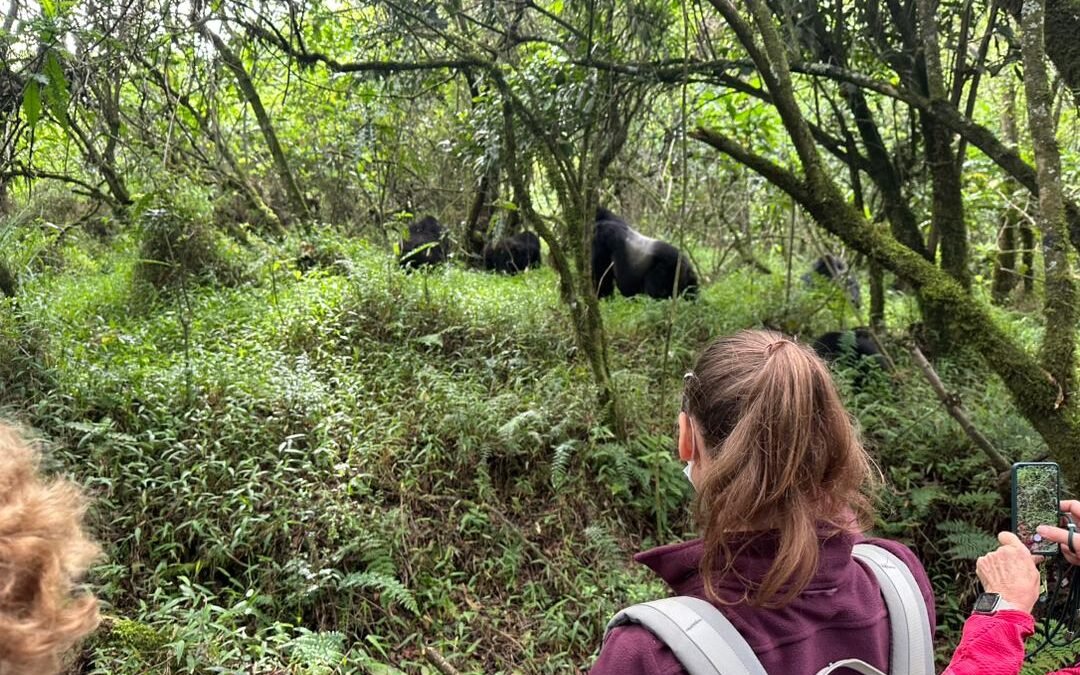
Minimum age for gorilla trekking? If you are planning a family safari to Uganda or Rwanda and hope to include a gorilla trekking experience, one of the very first things you need to confirm before booking anything else is this: what is the minimum age requirement for gorilla trekking? It is not a question with a complicated answer, but it is one that catches a surprising number of families off guard during the planning process, sometimes after flights have been booked and dates have been confirmed. The answer is clear, it is enforced without exception, and it applies in every gorilla trekking destination across East and Central Africa. Getting it right before you plan saves considerable disappointment, expense, and disruption later.
The short answer to what is the minimum age requirement for gorilla trekking is this: you must be at least 15 years old to participate in gorilla trekking in Uganda, Rwanda, or the Democratic Republic of Congo. This is the official policy of the Uganda Wildlife Authority, the Rwanda Development Board, and the Institut Congolais pour la Conservation de la Nature, the three governing bodies responsible for managing gorilla trekking access in the three countries where mountain gorillas live. There are no exceptions to this rule, regardless of a child’s size, maturity, physical fitness, or enthusiasm, and the rule is checked at the morning briefing before every single trekking group departs.
This blog post answers the question of what is the minimum age requirement for gorilla trekking in full detail, covering why the rule exists, how it is enforced, what it means for families with younger children, what alternative activities are available for under-15s on a gorilla safari, and what the experience looks like for teenagers who do meet the age requirement. By the end of this guide, you will have a complete picture of the age rules surrounding gorilla trekking and the practical implications for planning a family safari to East Africa.
At Pick and Transfer Safaris, we field this question from families planning Uganda and Rwanda gorilla safaris throughout the year, and we always address it as the very first planning step for any party traveling with children or teenagers. Read on for everything you need to know.
What is the Minimum Age Requirement for Gorilla Trekking? The Official Answer
The official, globally consistent answer to what is the minimum age requirement for gorilla trekking is fifteen years old. This applies in:
Uganda: Both Bwindi Impenetrable Forest National Park and Mgahinga Gorilla National Park set the minimum trekking age at 15, as mandated by the Uganda Wildlife Authority. This applies to standard gorilla trekking and to the Gorilla Habituation Experience available in Bwindi’s Rushaga sector.
Rwanda: Volcanoes National Park, managed by the Rwanda Development Board, also sets the minimum at 15 years of age. This applies to all gorilla families in the park without exception.
Democratic Republic of Congo: Virunga National Park and the other gorilla trekking sites in the DRC set the same minimum age of 15 years for all trekking participants.
The consistency across all three countries is not coincidental. The minimum age requirement for gorilla trekking was developed cooperatively across the range states of the mountain gorilla, reflecting a shared understanding of why the restriction is necessary and a commitment to enforcing it uniformly. A family that cannot get a child into a gorilla trek in Uganda will face the same restriction in Rwanda and the DRC, so there is no workaround by crossing a border.
Why Does the Minimum Age Requirement for Gorilla Trekking Exist?
Understanding why the minimum age requirement for gorilla trekking is set at 15 helps explain why it is enforced so strictly and why no exceptions are made.
Disease Transmission Risk
Mountain gorillas share approximately 98 percent of their DNA with humans, which makes them highly susceptible to human respiratory and gastrointestinal diseases. A cold, a cough, or a stomach illness that is minor and transient in a human can be serious and potentially fatal in a mountain gorilla. The age limit is partly a reflection of the fact that younger children tend to carry, spread, and manifest common childhood illnesses such as measles, whooping cough, chickenpox, and respiratory viruses at higher rates than older teenagers and adults, and are also less able to suppress coughs, sneezes, and other behaviours that risk disease transmission near the gorillas.
The seven-metre minimum distance rule that applies during all gorilla trekking encounters is also related to disease transmission: keeping visitors at a safe distance reduces the risk of airborne pathogen transfer. Children, who are more likely to move suddenly toward animals they are excited to see, represent a marginally higher risk in this regard. The minimum age requirement for gorilla trekking is one layer of a broader disease protection protocol that includes health screening at the briefing, mask requirements in some programmes, and the strict prohibition on trekking for any visitor showing cold or flu symptoms.
Noise and Disturbance Risk
Young children are inherently less able to maintain the quiet, controlled behaviour that gorilla trekking requires. Mountain gorillas are habituated to calm, quiet adult groups. Sudden noises, rapid movements, or crying can agitate the gorillas, disrupt the encounter for all participants, and in rare cases provoke defensive behaviour from the silverback. The minimum age requirement for gorilla trekking helps ensure that all members of a trekking group are capable of maintaining the composure and self-regulation that the encounter demands.
This is not a judgement on individual children’s behaviour. It is a population-level policy designed to protect the gorillas and the quality of the encounter for every participant. A 12-year-old who is perfectly mature and quiet still cannot join the trek, not because of any assessment of that specific child, but because the policy does not permit individual exceptions.
Physical Demands of the Trek
The minimum age requirement for gorilla trekking also reflects the physical demands of the activity. Gorilla trekking in Uganda and Rwanda involves hiking through dense, steep, often muddy forest terrain at altitude for periods ranging from under one hour to over five hours, with no guaranteed end point in advance. This is not a walk in a managed park. It involves uneven ground, slippery roots, stream crossings, dense vegetation, and sustained physical effort that is challenging even for fit adults.
Children under 15 are generally less physically equipped for this kind of sustained, unpredictable physical activity, and the remote forest setting means that medical assistance is not quickly available if a child becomes injured or exhausted. The minimum age requirement for gorilla trekking is therefore partly a safeguarding measure, ensuring that all participants have reached a developmental stage at which the physical demands of the activity are reasonably appropriate.
How is the Minimum Age Requirement for Gorilla Trekking Enforced?
The minimum age requirement for gorilla trekking is enforced at the morning briefing before every trekking group departs. Rangers check the ages of all participants, and any individual who appears to be under 15 or whose age cannot be confirmed may be asked to present identification. A passport or national identity document is the most reliable way to confirm age on a trek day, and families traveling with teenagers who are close to the age boundary are strongly advised to carry the relevant documentation.
If a child who does not meet the minimum age requirement for gorilla trekking is discovered at the briefing, they will not be permitted to join the group, regardless of whether a permit has been purchased. The permit fee is not refunded in this circumstance. This is a strict policy, and operators who allow underage participants to purchase permits are in breach of the governing authority’s terms, which can result in the permit being invalidated without refund.
This is why knowing what is the minimum age requirement for gorilla trekking before you book is not simply useful information. It is essential planning information that should be confirmed before any money changes hands. At Pick and Transfer Safaris, we ask for the ages of all planned trekking participants at the point of inquiry, and we will flag immediately if any traveler does not meet the minimum age requirement for gorilla trekking.
What is the Minimum Age Requirement for Gorilla Trekking in Uganda Specifically?
In Uganda, the minimum age requirement for gorilla trekking is 15 years for both parks where gorilla trekking takes place: Bwindi Impenetrable Forest National Park and Mgahinga Gorilla National Park. The Uganda Wildlife Authority applies this rule uniformly across all four sectors of Bwindi (Buhoma, Ruhija, Rushaga, and Nkuringo) and in Mgahinga, without variation.
The permit for gorilla trekking in Uganda costs $800 per person for foreign non-residents in 2026, reduced to $600 during the low-season months of April, May, and November. This permit price is the same regardless of the trekker’s age, provided they meet the minimum age requirement for gorilla trekking. There is no discounted permit price for teenagers.
Uganda also offers the Gorilla Habituation Experience at Bwindi’s Rushaga sector, a four-hour immersive encounter with a semi-habituated gorilla family. The minimum age requirement for the Gorilla Habituation Experience is the same as for standard gorilla trekking: 15 years. In fact, because the habituation experience is longer and more physically demanding than the standard trek, it is particularly important that all participants are physically mature enough to manage a full day in the forest.
Kenlink Tours, another Uganda-based gorilla safari specialist, confirms in their gorilla trekking Uganda guide that the 15-year minimum age requirement applies across all Uganda gorilla trekking experiences without exception, and notes that families planning Uganda safaris should factor this rule into their trip design from the very first stage of planning.
What is the Minimum Age Requirement for Gorilla Trekking in Rwanda?
In Rwanda, the minimum age requirement for gorilla trekking in Volcanoes National Park is also 15 years. The Rwanda Development Board, which manages all gorilla permits in Rwanda through the Visit Rwanda booking portal, enforces this rule at the Kinigi park headquarters briefing before every trekking group departs.
Rwanda’s gorilla permit costs $1,500 per person, nearly double the Uganda rate, which makes the financial consequences of an underage participant being turned away at the briefing particularly significant. If a family has purchased a permit for a 14-year-old in Rwanda, that $1,500 is not refundable. Understanding what is the minimum age requirement for gorilla trekking in Rwanda before booking Rwanda permits is therefore even more financially critical than in Uganda.
Families based in Kigali who want to experience gorilla trekking with teenagers who meet the age requirement have two cost-effective options: Rwanda’s own Volcanoes National Park at $1,500 per permit, or the Uganda option of crossing the border to either Mgahinga or Bwindi’s Nkuringo or Rushaga sectors, where permits cost $800 per person at the same 15-year minimum age. Our 2-Day Uganda Gorilla Tour Starting from Kigali is specifically designed for families and travelers based in Rwanda’s capital who want to experience Uganda’s gorillas at a lower permit price without a significantly longer journey.
What is the Minimum Age Requirement for Gorilla Trekking in Congo?
In the Democratic Republic of Congo, the minimum age requirement for gorilla trekking is also 15 years, applied at Virunga National Park and the other gorilla trekking sites managed by the Institut Congolais pour la Conservation de la Nature. Travel to the DRC carries additional logistical and safety considerations beyond those involved in Uganda or Rwanda, but the age rule for gorilla trekking itself is the same.
What If My Child Will Turn 15 During the Trip?
A child who will turn 15 during the trip is not eligible to trek until their actual birthday. If their birthday falls before the planned trekking day, they may join the trek. If it falls after, they may not. This is not a rule that can be negotiated at the briefing by explaining that a birthday is imminent. The minimum age requirement for gorilla trekking is assessed on the day of the trek, not the day of arrival in the country.
This is a relatively rare situation but a genuinely painful one for families who have planned their entire trip around a gorilla trekking day that falls one or two days before a 15th birthday. If this applies to your family, contact us before booking and we can help you restructure the itinerary to move the trekking day to after the birthday, where the safari schedule allows it.
What Can Children Under 15 Do on a Gorilla Safari?
The minimum age requirement for gorilla trekking does not mean that a family safari including children under 15 is impossible or even diminished. Uganda and Rwanda offer a remarkable range of wildlife and nature activities that have no minimum age requirement or a much lower one, and families with younger children can build extraordinary safaris around these experiences while ensuring that eligible adults or teenagers do their gorilla trek separately.
Golden Monkey Tracking in Mgahinga or Volcanoes National Park
Golden monkey tracking does not carry the same minimum age requirement as gorilla trekking, and families with children of various ages often find it the most engaging and entertaining wildlife encounter of their Uganda or Rwanda trip. Mgahinga Gorilla National Park is one of the only places in the world where golden monkeys can be observed at close range, and the energetic, colourful, fast-moving nature of a golden monkey encounter is immediately accessible and exciting for children in a way that the quieter, more measured gorilla encounter is not.
Golden monkey tracking permits cost $60 per person in Uganda, a fraction of the gorilla permit price, and children of most ages can participate with their ranger guide’s approval, as the activity is considerably less physically demanding than gorilla trekking.
Game Drives in Uganda’s National Parks
Queen Elizabeth National Park and Kibale Forest National Park have no minimum age for game drives, boat cruises, or nature walks. Children of all ages can participate in open-vehicle game drives, the Kazinga Channel boat cruise, and guided walks in the park grounds. These activities are often enormously popular with children, particularly the boat cruise, where hippos, crocodiles, elephants, and waterbirds appear at close range alongside the vessel.
Chimpanzee Trekking
What is the minimum age requirement for gorilla trekking is often the first question families ask, quickly followed by what is the minimum age requirement for chimpanzee trekking. In Uganda’s Kibale Forest National Park, the minimum age for chimpanzee trekking is also 15 years, for similar disease transmission and disturbance reasons. However, nature walks in Kibale, Bigodi Wetland Sanctuary guided walks, and birdwatching activities in the forest zone have no minimum age requirement and are suitable for younger children.
Batwa Cultural Experiences
Batwa cultural trail experiences near Bwindi and Mgahinga do not have the same 15-year minimum as gorilla trekking, and families with younger children often find the Batwa trail one of the most memorable parts of their entire Uganda visit. These guided cultural walks through the forest, led by members of the indigenous Batwa community, include demonstrations of traditional fire-lighting, honey gathering, music, and dance, and are engaging and educational for children of most ages.
Kigali City Tour and Genocide Memorial
Families visiting Rwanda with children of any age can include a guided tour of Kigali City, though the Kigali Genocide Memorial requires thoughtful consideration in terms of age-appropriateness. For older children and teenagers, the memorial is one of the most important and affecting educational experiences available on any Rwanda visit. For younger children, the guided city tour, Kimironko Market, and Kigali’s vibrant neighbourhoods are engaging without the weight of the memorial’s content.
Planning a Family Safari Around the Age Requirement
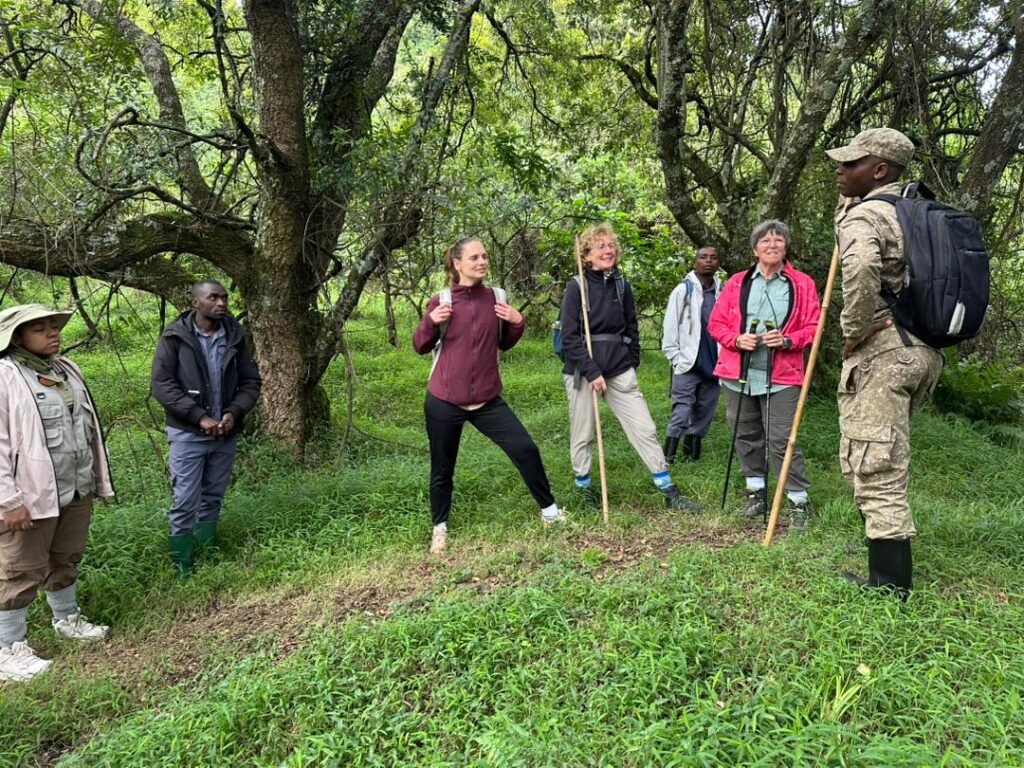
Understanding what is the minimum age requirement for gorilla trekking is the foundation of any family safari plan that includes gorilla trekking as an objective. Here is how to structure a family trip effectively around the rule.
Separate the Trekking Party from the Non-Trekking Party
On trek day, adults and teenagers who meet the minimum age requirement for gorilla trekking join the trekking group and are gone from the lodge for most of the morning. Children under 15 remain at or near the lodge with a designated non-trekking adult supervisor. Most lodges near Bwindi and Mgahinga have grounds, gardens, and natural surroundings that keep children engaged for a morning, and many offer guided nature walks, bird identification activities, or visits to neighbouring community projects.
This structure works well and should not be seen as a problem. Many families deliberately structure their gorilla trekking days this way, with one parent trekking and the other enjoying a slower morning with younger children before reuniting for lunch.
Consider the Broader Itinerary for Under-15s
If your party includes children who will not meet the minimum age requirement for gorilla trekking, design the itinerary around them as fully as around the trekking participants. A trip that is predominantly wildlife game drives, boat safaris, and cultural experiences, with gorilla trekking as one component for the eligible adults, is often more enjoyable for the whole family than a trip focused primarily on primate trekking at the expense of activities everyone can share.
Our 5-Day Uganda Gorilla and Chimpanzee Safari and 10-Day Uganda Primates and Wildlife packages both include a mix of trekking and non-trekking activities that can be structured to accommodate families with children below the trekking age.
Trekking with Teenagers: Making the Most of It
For teenagers who do meet the minimum age requirement for gorilla trekking at 15 or above, gorilla trekking is almost universally described as a profoundly impactful experience and one that many young people cite as the most memorable encounter of their lives. The physical demands of the trek are well within the capability of healthy teenagers, and the encounter with a mountain gorilla family tends to produce a quality of attention and presence in young people that is genuinely different from screen-mediated wildlife experiences.
Prepare teenagers for the physical demands of the trek with honest information rather than minimising them. A teenager who knows that the walk might be long, steep, and muddy before they start is far better prepared than one who was told it would be easy. Porter hire is as valuable for teenagers as for any other trekker, and most teenagers enjoy the porter experience as part of the cultural encounter rather than seeing it as an admission of limitation.
As Kenlink Tours notes in their guide on combining gorilla trekking with cultural encounters, the overall safari experience for teenagers is significantly enriched when cultural visits such as the Batwa Trail, local village visits, and guided forest walks are included alongside the gorilla trekking day, giving young people a broader context for what they are seeing in the forest.
Is There a Maximum Age for Gorilla Trekking?
While the question of what is the Minimum age for gorilla trekking? focuses on the lower boundary, many older travelers wonder about the upper boundary. There is none. There is no maximum age for gorilla trekking in Uganda, Rwanda, or the DRC. Travelers in their 60s, 70s, and 80s complete gorilla treks successfully every year, and the experience is not inherently more dangerous for older adults than for any other age group, provided the individual is in reasonable health.
The physical demands of gorilla trekking do mean that older travelers with cardiovascular conditions, significant joint problems, or respiratory issues should consult a doctor before planning a trek, but age alone is not a disqualifying factor. The ranger guides at both Bwindi and Mgahinga are experienced at pacing groups with older participants and at providing whatever physical assistance is needed on difficult sections of trail.
What is the Minimum Age Requirement for Gorilla Trekking: A Summary of Key Points
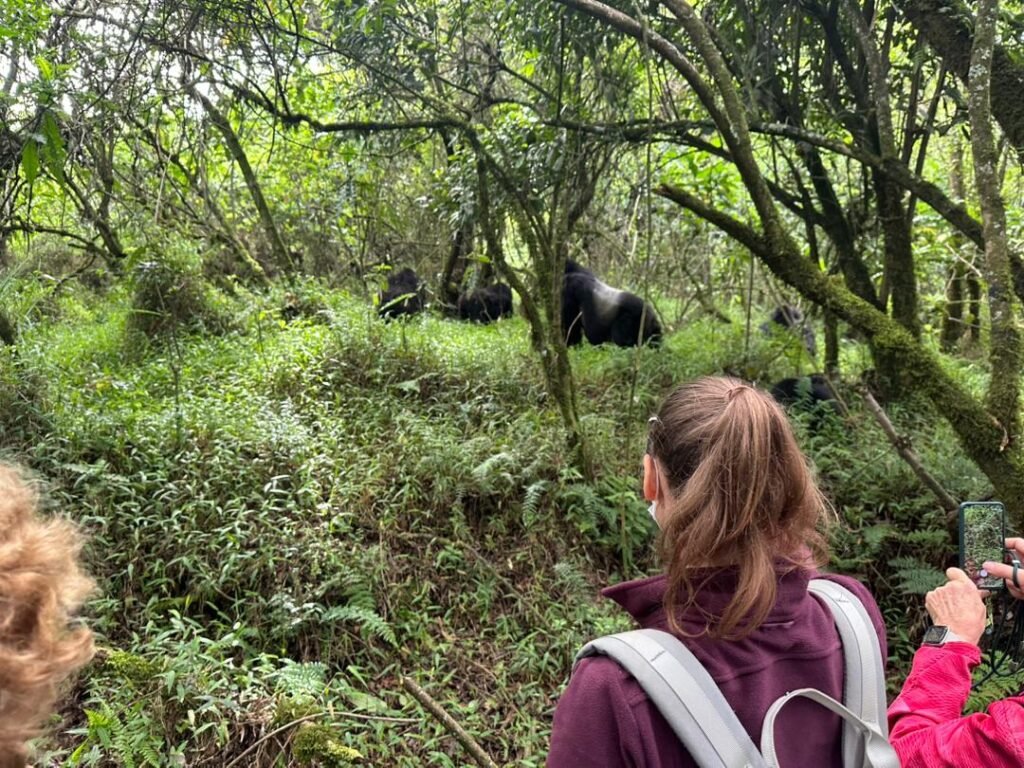
To bring together all of the information in this guide, here is a clear summary of what is the minimum age requirement for gorilla trekking across all relevant destinations and scenarios.
The Minimum age for gorilla trekking? is 15 years in Uganda, Rwanda, and the Democratic Republic of Congo. This rule applies without exception at all gorilla trekking sites in all three countries, including Bwindi and Mgahinga in Uganda, Volcanoes National Park in Rwanda, and Virunga National Park in the DRC. The minimum age requirement for gorilla trekking is enforced at the morning briefing before every trek, and permits are not refunded if an underage participant is turned away.
There is no maximum age for gorilla trekking. Golden monkey tracking and other primate encounters have no age minimum or lower thresholds. Game drives, boat safaris, cultural experiences, and nature walks are available to participants of all ages and provide excellent alternatives and complements to gorilla trekking for families with younger children.
The Minimum age for gorilla trekking? is best understood not as a bureaucratic inconvenience but as a meaningful conservation and safety measure that protects both the gorillas and the integrity of the trekking experience for everyone involved. The rule is clear, it is enforced consistently, and it is one of the foundational facts of any responsible gorilla safari plan.
Frequently Asked Questions About the Gorilla Trekking Age Requirement
My child is 14 years and 11 months. Can they trek?
No. What is the minimum age requirement for gorilla trekking is 15 years, assessed on the actual date of the trek. A child who is 14 years and 11 months on trek day is not eligible, regardless of how close their birthday is.
Can I get a refund if my child is turned away at the briefing?
No. The Uganda Wildlife Authority and the Rwanda Development Board do not issue refunds for permits where a participant is turned away for failing to meet the minimum age requirement for gorilla trekking. This underscores the importance of confirming ages before purchasing permits.
Do I need to bring proof of my child’s age?
Yes, particularly if your child is close to the minimum age. A passport is the most widely accepted form of identification at gorilla trekking briefings. Bring identification for all trekking participants.
Is the minimum age the same for gorilla habituation as for standard trekking?
Yes. The minimum age requirement for gorilla trekking applies equally to the Gorilla Habituation Experience in Uganda’s Rushaga sector. The four-hour habituation experience is actually more physically demanding than standard trekking, making the 15-year minimum even more appropriate.
Can children under 15 watch gorilla trekking from a distance?
No. The minimum age requirement for gorilla trekking applies to all participants who enter the gorilla trekking zone within the national park, not just to those who intend to see the gorillas. The entire trekking group, including any observers, must meet the age requirement.
Does the age rule apply to safari guides and support staff?
No. Licensed ranger guides, trackers, porters, and park staff are not subject to the minimum age requirement for gorilla trekking in their professional capacity.
Book Your Family Gorilla Safari with Pick and Transfer Safaris
Now that you have a complete answer to what is the minimum age requirement for gorilla trekking and all the related questions that surround it, the next step is planning a trip that works for your specific family composition. At Pick and Transfer Safaris, we build gorilla safari itineraries for families of all configurations, from adults-only trekking groups to large family parties with children spanning a wide age range, and we always address the minimum age requirement for gorilla trekking at the first planning stage.
Whether you are planning a short gorilla safari starting from Kigali, a 3-Day Uganda Gorilla Safari from Entebbe, or a longer circuit through Uganda’s national parks, our team will confirm permit eligibility for every member of your party before any deposit is paid. We also help families design the non-trekking days around younger children, ensuring that what is the minimum age requirement for gorilla trekking shapes the logistics of your trip without diminishing the experience for anyone in the group.
Browse our full range of gorilla safari packages for Uganda and Rwanda, or contact our travel team with your family’s ages, preferred travel dates, and budget, and we will design an itinerary that works for everyone.
The mountain gorillas of Bwindi and Mgahinga are waiting. And for every member of your family who meets the minimum age requirement for gorilla trekking, the encounter at the end of the trail is one that will last a lifetime.