- LET'S PLAN YOUR SAFARI
- +256 200 921 002
- +256 793 194 703
- info@pickandtransfersafaris.com

Gorilla Safaris Available for Booking Now in Uganda
Not everyone has two or three weeks to spend crossing East Africa. Some travelers have a four-day gap between business meetings in Kampala.
Others are backpacking through Rwanda and want to slip across the border for a taste of Uganda’s wildlife before moving on. Plenty of people simply want to know, before they commit to anything longer, whether Uganda lives up to its reputation as the Pearl of Africa.
The good news for all of these travelers is the same: Uganda’s best short safaris are open for booking right now.
A trip of just one to four days is more than enough time to see mountain gorillas, tree-climbing lions, or a river full of hippos.
With Gorilla Safaris Available for Booking Now in Uganda, your adventure awaits.
This guide rounds up the best short safaris currently available in Uganda.
It explains what each one actually involves, helping you match a trip length to your travel dates, budget, and bucket list.
Whether you’re chasing gorillas, chimpanzees, or classic savannah wildlife, there’s a short, well-designed itinerary waiting for you.
Gorilla Safaris Available for Booking Now in Uganda
Why Short Safaris Are Uganda’s Best-Kept Secret
Uganda has a reputation, not entirely undeserved, as a country that rewards travelers who linger.
Its ten national parks are spread widely across the country, and many of the most memorable long safaris weave together gorillas, chimpanzees, and big game across ten to fourteen days.
However, that reputation quietly obscures a simpler truth: Uganda’s parks each hold such concentrated, high-value wildlife experiences. Even a single park visited over two or three days delivers a complete, satisfying safari on its own.
A short safari to Queen Elizabeth National Park gives you tree-climbing lions, a Kazinga Channel boat cruise packed with hippos and elephants, and some of the best birding in Africa, all within 72 hours.
A short gorilla trek delivers the single most sought-after wildlife encounter on the continent in a single focused morning.
You don’t need two weeks to have a genuine, high-quality Uganda safari experience — you need the right two, three, or four days, planned well.
This is precisely why short safaris have become one of the fastest-growing categories of Uganda travel.
They fit into a long weekend, a stopover between other African destinations, or as an add-on to a Rwanda trip without requiring travelers to clear their entire calendar.
If you’re weighing your options, our full Gorilla Safaris and Wildlife Safaris collections break down every short and long itinerary we currently have open for booking.
What Counts as a “Short Safari” in Uganda?
In the Uganda travel industry, “short safari” generally refers to any itinerary lasting between one and five days, typically focused on a single national park or a tightly linked pair of destinations, rather than the multi-park circuits that define Uganda’s classic one- and two-week safaris. Within that range, there’s meaningful variation worth understanding before you book.
One-day safaris are the most compact option, usually built around a single activity such as gorilla trekking from a nearby border crossing.
They work best for travelers with genuinely limited time or those adding a quick wildlife experience onto a Rwanda-based trip.
Understanding which category fits your available time is the first real decision in planning a short Uganda safari, and it shapes everything else — which park you choose, where you fly into, and how much of Uganda’s broader wildlife you’ll actually get to see.
Uganda’s short safaris run year-round, but timing still shapes both trekking conditions and permit or lodge availability.
The two dry seasons, roughly December through February and June through September, offer the firmest trails and easiest overall travel conditions, making them the most popular booking windows.
For travelers with only a single free day, Uganda’s fastest gorilla trekking option starts and ends in Kigali, Rwanda. This itinerary takes advantage of Mgahinga Gorilla National Park’s proximity to the Cyanika border crossing, allowing visitors to depart Kigali before dawn, cross into Uganda, complete a full gorilla trek, and return to Kigali the same night.
It’s an intense day — an early start, a border crossing, the trek itself, and a long return drive — but for travelers whose schedule genuinely allows for nothing more, it delivers Uganda’s signature wildlife experience without requiring a hotel stay in Uganda at all. This makes it particularly popular with business travelers based in Kigali, honeymooners on a Rwanda-based trip who want to add Uganda gorillas without extending their stay, and adventurous travelers simply passing through the region.
Our 1 Day Uganda Gorilla Safari Starting from Kigali handles the entire logistics chain — permit reservation, border paperwork, and a private 4×4 transfer — so travelers can focus purely on the trek itself rather than the complexity of a same-day international crossing.
2-Day Uganda Gorilla Tour Starting from Kigali
The two-day version of the Kigali gorilla safari removes the single biggest source of stress from the one-day option: the same-day round trip. Instead of crossing the border, trekking, and driving back to Kigali all within 24 hours, travelers spend the night before their trek at a lodge near Mgahinga, giving them a proper rest before heading into the forest, and a second night to recover afterward before returning to Kigali.
This extra breathing room matters more than it might initially seem. Gorilla treks can be physically demanding, and arriving already road-weary from a dawn border crossing makes the hike noticeably harder. With an overnight stay built in, travelers arrive at the park headquarters rested, alert, and ready for a trek that can last anywhere from one to seven hours depending on where the gorilla family happens to be that morning.
Our 2 Days Uganda Gorilla Tour Starting from Kigali is the gentler cousin of the one-day version — same destination, same permit, but a noticeably more comfortable pace, and it remains one of our most booked short safaris for travelers routing through Rwanda.
3-Day Uganda Gorilla Safari to Bwindi
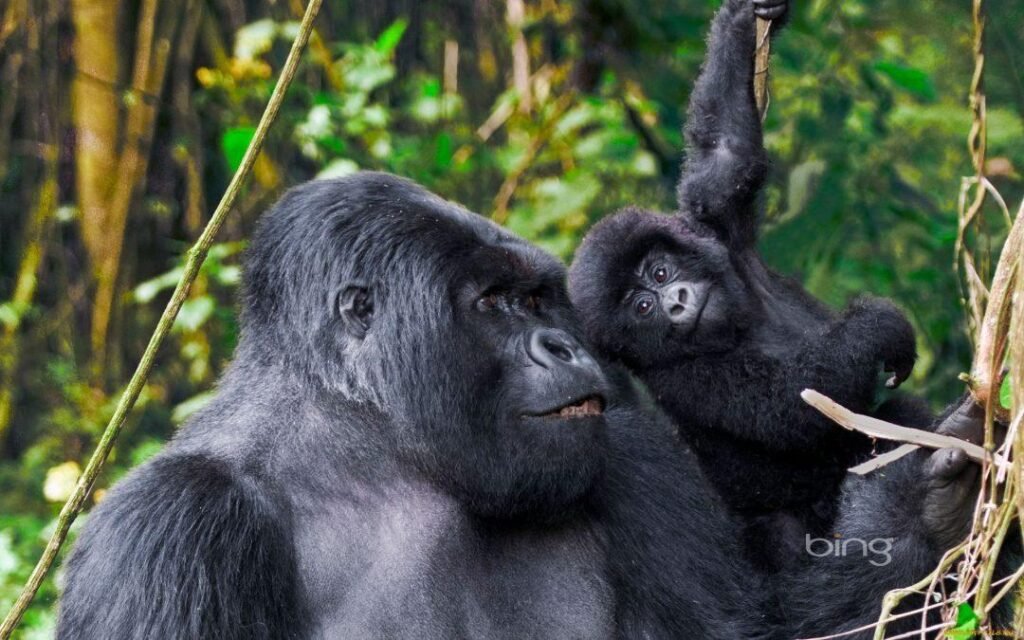
For travelers who land in Entebbe rather than Kigali, or who simply want access to Bwindi Impenetrable National Park’s wider range of trekking sectors and habituated gorilla families, a three-day gorilla safari is the most focused and rewarding short trip Uganda offers. Bwindi is home to roughly half of the world’s remaining mountain gorilla population, spread across four distinct sectors, giving travelers considerably more flexibility in permit availability than the single-family option at Mgahinga.
A typical three-day Bwindi itinerary includes a scenic drive from Entebbe or Kampala into Uganda’s southwest on day one, the gorilla trek itself on day two, and a return transfer on day three. Along the way, travelers pass through some of Uganda’s most striking landscapes — terraced hillsides, tea plantations, and the dramatic descent into the Albertine Rift Valley — turning even the transfer days into part of the experience rather than dead time.
Our 3 Days Uganda Gorilla Safari is designed specifically for travelers who arrive in Entebbe with a tight schedule and a clear ambition: to see mountain gorillas without needing to build an entire week around a single activity.
3-Day Uganda Gorilla Safari from Rwanda
Travelers who prefer to base themselves in Kigali but want more time than the one- or two-day Mgahinga options provide can opt for a three-day Uganda gorilla safari that starts and ends in Rwanda but treks in Bwindi rather than Mgahinga. This version trades a slightly longer transfer time for access to Bwindi’s broader selection of trekking sectors and habituated families, which can mean better permit availability during peak booking periods.
This itinerary typically includes an overnight stay near Bwindi both before and after the trek, giving travelers a comfortable, unhurried pace while still keeping the overall trip to a manageable three days. It’s a smart middle-ground option for travelers who want Bwindi’s advantages without committing to Uganda’s longer Entebbe-based routing.
Our 3 Days Uganda Gorilla Safari from Rwanda itinerary is one of the most popular in our Rwanda-based collection precisely because it strikes this balance between convenience and choice.
3-Day Chimpanzee Tracking Safari in Kibale Forest
Gorillas dominate the conversation around Uganda wildlife, but chimpanzee tracking in Kibale Forest National Park is one of the country’s most rewarding short safaris in its own right, and considerably more affordable than gorilla trekking. Kibale is often called the primate capital of the world, hosting thirteen primate species within a single forest, with habituated chimpanzee communities that allow visitors to spend up to an hour observing their remarkably human-like social behavior at close range.
A three-day Kibale itinerary typically includes travel time from Kampala or Entebbe, the chimpanzee trek itself, and often an add-on activity such as a guided walk through the nearby Bigodi Wetland Sanctuary, known for its birdlife and additional primate sightings. Because chimpanzee permits cost significantly less than gorilla permits, this safari is an excellent option for travelers who want a genuine primate trekking experience without the higher price tag of a gorilla trek.
Our 3 Days Chimpanzee Tour in Uganda package is frequently booked by travelers who want to sample Uganda’s primate trekking before deciding whether to add a gorilla trek to a future trip, and by budget-conscious travelers who want maximum wildlife value from a short itinerary.
3-Day Safari to Queen Elizabeth National Park
Queen Elizabeth National Park is Uganda’s most complete short safari destination for travelers who want classic big-game viewing rather than primate trekking. Known as the Medley of Wonders, the park is famous for its tree-climbing lions in the Ishasha sector, a resident population of elephants, buffalo, and Uganda kob across its open plains, and one of the richest bird lists of any park in Africa, with over 600 recorded species.
A typical three-day itinerary includes a scenic drive from Entebbe or Kampala with a stop at the Equator for photographs, a morning and evening game drive across the Kasenyi Plains in search of lions and elephants, and a two-hour boat cruise on the Kazinga Channel, where hippos, crocodiles, buffalo, and elephants congregate along the water’s edge in extraordinary numbers. Many itineraries also include an optional chimpanzee tracking excursion in the park’s Kyambura Gorge, sometimes nicknamed the “Valley of Apes.”
Our 3 Days Safari to Queen Elizabeth National Park covers all of these highlights in a single, well-paced itinerary. Kenlink Tours’ own Uganda Safari Experiences overview echoes just how much wildlife and birdlife this park packs into a short visit, making it one of the strongest short-safari choices for travelers who haven’t decided between primates and classic game viewing.
3-Day Safari to Murchison Falls National Park
Murchison Falls National Park, Uganda’s largest protected area, is built around the single most dramatic natural spectacle in the country: the point where the entire Victoria Nile forces itself through a gap barely seven meters wide before plunging 43 meters into the gorge below. A three-day safari here delivers a genuinely varied wildlife experience within a tight timeframe.
A typical itinerary includes the drive north from Entebbe or Kampala, often with a stop at Ziwa Rhino Sanctuary for rhino tracking on foot, since Uganda’s only wild rhinos live here as part of an ongoing reintroduction program. Once in the park, travelers enjoy game drives across the northern savannah in search of elephants, giraffes, lions, and buffalo, followed by a boat cruise along the Nile toward the base of the falls, with hippos and crocodiles lining the riverbanks and a chance to spot the rare shoebill stork. Many travelers finish with a hike to the top of the falls for a dramatic overlook of the Nile forcing its way through the gorge.
Our 3 Days Safari to Murchison Falls package is one of our most popular short wildlife itineraries, and it pairs particularly well with an extended stay in Kampala or as a standalone weekend trip for travelers based in East Africa.
4-Day Wildlife and Primate Safari
For travelers who have slightly more time and want to combine primates with classic game viewing rather than choosing one or the other, a four-day wildlife and primate safari is the natural next step up from the three-day single-park itineraries. These trips typically pair a savannah park like Queen Elizabeth or Murchison Falls with a primate trekking activity, either chimpanzee tracking in Kibale or a Kyambura Gorge excursion, giving travelers a broader taste of Uganda’s wildlife diversity without extending into a full week-long safari.
The extra day makes a meaningful difference in pacing. Rather than compressing a game drive, boat cruise, and primate trek into 72 rushed hours, a four-day itinerary allows each activity its own dedicated time slot, along with more relaxed transfer days that let travelers actually enjoy the passing scenery rather than treating it as dead travel time.
Our 4 Days Wildlife and Primate Safari is built specifically around this balance, and it’s a strong choice for first-time Uganda visitors who want a genuine sense of the country’s range — forest and savannah, primates and predators — without committing to a longer, multi-park circuit.
Short Rwanda Add-Ons: Volcanoes and Nyungwe
Travelers building a short Uganda itinerary around a Rwanda base often ask whether it’s worth extending their trip with a Rwanda-side activity rather than staying entirely within Uganda. The answer is frequently yes, particularly given how close Rwanda’s own gorilla and primate destinations sit to the Uganda border.
A two-day Volcanoes National Park gorilla trek offers travelers the option to compare Rwanda’s shorter, gentler trekking terrain against Uganda’s denser Bwindi forest, and some travelers choose to trek in both countries on the same trip for the sake of comparison alone. Similarly, a short Nyungwe Forest chimpanzee tracking trip pairs naturally with a Uganda-based itinerary for travelers who want chimpanzee tracking in one of Africa’s oldest rainforests, known for its canopy walk and exceptional biodiversity.
Our 2 Days Volcanoes Gorilla Trek from Kigali and 2 Days Nyungwe Chimps Tracking Trip are both designed as standalone short trips or as add-ons to a longer Uganda-Rwanda itinerary, giving travelers flexibility to build a cross-border trip that fits their exact timeline.
Short Safaris at a Glance: Matching Trip Length to Experience
It helps to see the full range of short safari options laid out side by side before deciding which one fits your trip. A one-day gorilla safari from Kigali suits travelers with a single free day and no room for an overnight stay, trading a long, intense day for the chance to trek gorillas without extending a Rwanda-based trip at all. A two-day version of the same route removes that same-day pressure, adding one night near Mgahinga so the trek itself feels less rushed and physically taxing.
A three-day Bwindi gorilla safari, by contrast, suits travelers flying into Entebbe who want access to Bwindi’s four trekking sectors rather than Mgahinga’s single habituated family, while a three-day safari from Rwanda into Bwindi offers a middle path for Kigali-based travelers who still want that broader sector choice. Three-day chimpanzee tracking in Kibale suits budget-conscious travelers or those who want a genuine primate encounter without the higher cost of a gorilla permit, and three-day safaris to Queen Elizabeth or Murchison Falls suit travelers who want classic savannah wildlife — lions, elephants, hippos, and birdlife — over primate trekking entirely.
A four-day wildlife and primate safari suits travelers who can’t decide between the forest and the savannah and want a taste of both without committing to a full week, while the two-day Rwanda add-ons suit travelers who want to compare Uganda and Rwanda’s trekking styles directly or simply want an additional primate encounter layered onto an existing itinerary. Seen this way, the “right” short safari isn’t really about which one is objectively best — it’s about which combination of park, activity, and pacing matches the days you actually have available.
How to Choose the Right Short Safari for You
With so many short safari formats available, choosing the right one comes down to answering three questions honestly: how many days do you actually have, what wildlife experience matters most to you, and which airport will you be flying into or out of.
Travelers with only one or two days and a Kigali-based itinerary should look toward Mgahinga’s short gorilla trekking options, since they’re specifically designed around that border crossing. Travelers with three days and an Entebbe-based itinerary have the widest range of choices — Bwindi gorillas, Kibale chimpanzees, Queen Elizabeth’s big game, or Murchison Falls’ dramatic scenery all fit comfortably into a three-day window. Travelers with four or five days who want to sample more than one type of wildlife experience should lean toward the combination itineraries that pair a savannah park with a primate trek.
Budget is the other major factor. Gorilla permits are considerably more expensive than chimpanzee permits or standard park entry fees, so travelers balancing cost against experience sometimes choose a chimpanzee-focused or classic game-viewing short safari over a gorilla trek, particularly if they’re planning to return to Uganda for a longer gorilla-focused trip in the future. There’s no wrong choice here — every short safari on this list delivers a genuinely complete, well-paced Uganda experience within its own timeframe.
Best Time of Year to Book a Short Uganda Safari
Uganda’s short safaris run year-round, but timing still shapes both trekking conditions and permit or lodge availability. The two dry seasons, roughly December through February and June through September, offer the firmest trails and easiest overall travel conditions, making them the most popular booking windows, particularly for gorilla and chimpanzee treks where underfoot conditions matter most.
The two rainier stretches, roughly March through May and October through November, bring lusher scenery, quieter parks, and often better lodge rates, making them a smart choice for travelers who don’t mind a bit of mud in exchange for more flexible short-notice booking. Because short safaris typically focus on a single activity or park rather than a complex multi-park circuit, they tend to be easier to arrange on shorter notice than longer safaris, even during peak season — though gorilla permits specifically should still be booked as early as possible given Uganda’s strict daily visitor caps.
If your travel dates are flexible, shoulder-season months like April, May, and November often give you the best combination of value and availability across every short safari format covered in this guide.
What’s Included (and Not) in a Short Safari Package
Most short Uganda safari packages include ground transportation in a 4×4 safari vehicle, park entry fees, accommodation for the length of the trip, meals as specified in the itinerary (commonly full board once inside the park), and the core activity itself — whether that’s a gorilla or chimpanzee trekking permit, game drives, or a boat cruise. Airport transfers are frequently included as well, particularly for gorilla-focused itineraries that begin and end at a specific airport or border crossing.
What’s typically excluded, and worth budgeting for separately, includes international flights, visa fees, travel insurance, tips for guides and porters, alcoholic beverages, and any optional add-on activities such as a Batwa cultural walk or an extra golden monkey trek. Gorilla and chimpanzee permit fees are sometimes bundled into the quoted package price and sometimes listed separately, so it’s worth confirming exactly what’s included before comparing prices between operators.
Reading the fine print on inclusions matters more for short safaris than long ones, since a seemingly cheaper three-day quote that excludes the permit fee can end up costing more overall than a package that includes it upfront. Always ask for a full breakdown before booking, and treat “permit included” as one of the most important line items on any gorilla or chimpanzee safari quote.
Budget vs Mid-Range Short Safaris
Short safaris scale across budget levels just as easily as longer trips do, and choosing the right tier depends on your overall travel style rather than any change to the core itinerary. Budget short safaris typically use comfortable guesthouses or basic tented camps near the park gate, shared or private ground transportation, and straightforward meal plans, while still delivering the exact same gorilla trek, chimpanzee encounter, or game drive as a more expensive package.
Mid-range short safaris step up to established lodges with reliable hot water, better food, and often more scenic locations overlooking the forest or savannah, without reaching the price point of the most exclusive luxury properties. This tier tends to offer the best overall value for short trips, since travelers only spend one or two nights in accommodation anyway, making the incremental cost of a nicer lodge relatively small compared to a week-long stay.
Because we specifically design our packages with budget and mid-range travelers in mind, nearly every short safari in this guide can be booked at either tier depending on your preference, without changing the underlying itinerary or activities. You can learn more about that approach on our About Us page.
Tips for Maximizing a Short Safari Itinerary
A few practical habits make a real difference when you’re working with a compressed timeframe. First, book your permit — gorilla or chimpanzee — before finalizing flights, since permit availability is the single biggest constraint on any short safari involving primate trekking. Second, choose accommodation as close as possible to your park’s entry point or trekking sector, since every hour spent on transfers is an hour taken away from an already tight itinerary.
Third, pack the night before your activity day rather than the morning of, since early starts are standard across nearly every short safari format covered here, particularly gorilla and chimpanzee treks that typically begin with a briefing between 7:00 and 8:00 a.m. Fourth, build in a small buffer day if your travel schedule allows it, since road conditions in Uganda can occasionally add unexpected time to transfers, and a same-day flight connection immediately after a trek carries more risk than most travelers realize.
Finally, communicate your priorities clearly to your operator when booking. If seeing tree-climbing lions matters more to you than a boat cruise, or if chimpanzee tracking is a bigger priority than an extra game drive, a good operator can adjust the itinerary’s balance even within a fixed three- or four-day structure.
Overlooked Short Safari Options Worth Considering
While gorillas, chimpanzees, Queen Elizabeth, and Murchison Falls dominate most short-safari itineraries, a handful of lesser-known options deserve more attention than they typically get, particularly for travelers who have already ticked off Uganda’s headline attractions or who simply want something a little different within a short timeframe.
Lake Mburo National Park, Uganda’s smallest savannah park, sits far closer to Kampala and Entebbe than any of the country’s other big-game destinations, making it possible to combine a genuine game drive, a boat cruise, and even a walking or horseback safari — a rarity in Uganda, where most parks prohibit walking among predators — into a single, easy day trip or a relaxed two-day itinerary. It’s the only place in Uganda where zebras roam freely outside of Kidepo Valley, and its manageable size means wildlife sightings tend to come quickly rather than requiring hours of searching.
Ziwa Rhino Sanctuary, roughly halfway between Kampala and Murchison Falls, offers a unique on-foot rhino tracking experience that fits naturally into a Murchison Falls itinerary as a stopover rather than a separate trip. Since Uganda’s wild rhino population was hunted to extinction decades ago, Ziwa’s guided walking encounters with a slowly growing, protected population are one of the more quietly remarkable short wildlife experiences in the country, and most three-day Murchison Falls safaris already include a stop here without adding meaningful extra time to the itinerary.
For travelers interested in scenery over wildlife checklists, a short trip to Lake Bunyonyi, near the Bwindi and Mgahinga trekking region, offers canoeing between small islands and a noticeably slower pace, often tacked onto the end of a gorilla trekking itinerary as a one- or two-night decompression stop before heading home.
Self-Drive Short Safaris for Independent Travelers
Not every short safari needs to be guided. For travelers who prefer independence and are comfortable navigating Uganda’s roads themselves, a self-drive short safari offers the same wildlife experiences — gorilla trekking, game drives, boat cruises — with considerably more control over pacing, photo stops, and route decisions along the way.
Self-drive short trips work particularly well for savannah parks like Queen Elizabeth, Murchison Falls, and Lake Mburo, where road networks within the parks are well maintained and clearly marked. Gorilla and chimpanzee trekking itself still requires a licensed ranger guide once you’re on foot in the forest, but the drive to and from the park, along with any game drives along the way, can be handled entirely independently with a reliable 4×4 rental.
This approach appeals most to experienced overland travelers, road-trip enthusiasts, and anyone who has previously found guided itineraries too rigid for their travel style. Kenlink Tours’ overview of a Uganda gorilla safari on self-drive is a useful reference point if you’re weighing whether to handle your own driving or leave the logistics to a guide, and it’s worth discussing your comfort level with Uganda’s rural road conditions honestly before committing to a fully independent short trip.
What Makes a Short Safari Feel Complete Rather Than Rushed
The biggest risk with any short safari isn’t the trip length itself — it’s poor pacing that tries to cram too much into too little time. A well-designed three-day safari feels complete precisely because it focuses on doing one or two things exceptionally well rather than skimming across five different activities without enough time to properly enjoy any of them.
The best short itineraries build in deliberate slack: an afternoon at leisure after a morning game drive, a relaxed dinner rather than a rushed transfer straight into the next activity, or an extra thirty minutes at a scenic overlook rather than a tightly timed schedule with no room for the unexpected. This is often the difference between an operator who has genuinely designed a short safari around the traveler’s experience and one who has simply compressed a longer itinerary without adjusting the pacing to match.
When comparing short safari packages between operators, it’s worth asking directly how much buffer time is built into each day, rather than assuming every three-day Queen Elizabeth or Bwindi itinerary is structured the same way. A thoughtfully paced three-day trip will almost always feel more satisfying than an overstuffed four-day one, even though it covers less ground on paper.
Getting To and From the Parks
One detail that shapes every short safari more than travelers expect is the simple question of transfer time. Uganda’s national parks are spread across a large country, and the drive from Entebbe International Airport to southwestern destinations like Bwindi or Mgahinga can take nine to eleven hours on its own, which is exactly why so many short gorilla itineraries route through Kigali instead. Kigali sits considerably closer to the Virunga region, cutting that transfer down substantially and making genuinely short trips possible in the first place.
For travelers focused on Queen Elizabeth or Murchison Falls rather than gorilla trekking, the calculus is different. Both parks sit within a five- to seven-hour drive of Entebbe or Kampala, short enough that a three-day itinerary comfortably accommodates the return journey without needing a Rwanda-based routing strategy. Some operators also offer scheduled or chartered domestic flights into airstrips near Queen Elizabeth and Murchison Falls, which can compress a three-day trip into an even more relaxed pace by removing several hours of road travel in each direction, though this typically adds cost.
Whichever park you choose, it’s worth discussing transfer logistics with your operator before finalizing dates, since the difference between a five-hour and an eleven-hour drive can be the deciding factor in whether a particular short safari actually fits your available time. Kenlink Tours’ Uganda Private Tours overview covers similar routing considerations for travelers building a custom, time-sensitive itinerary rather than a fixed package.
Health and Packing Essentials for a Short Safari
Even a short trip benefits from the same basic preparation as a longer one, since the core activities — trekking, game drives, and boat cruises — carry the same physical and practical requirements regardless of how many days you’re spending in the country. Sturdy, broken-in hiking boots matter for any itinerary involving gorilla or chimpanzee trekking, since forest trails are frequently uneven and muddy even during the drier months. A lightweight rain jacket is worth packing on every short safari, not just primate-trekking ones, since Uganda’s weather can shift quickly even in savannah parks like Queen Elizabeth and Murchison Falls.
Most nationalities need a visa to enter Uganda, and a yellow fever vaccination certificate is typically required at the border or airport, so it’s worth confirming both well before your travel dates, particularly if you’re planning a short, tightly scheduled trip with little room for delays. Travelers routing through Rwanda for a Kigali-based gorilla safari should also check whether the East African Tourist Visa, which covers both Uganda and Rwanda under a single application, simplifies their specific itinerary.
Because short safaris often involve less packing time and less room for error than longer trips, it’s worth finalizing your documents, vaccinations, and gear checklist as soon as your dates are confirmed rather than leaving them until the final week before departure.
Sample Combined Short Safari Ideas
While every itinerary in this guide works well as a standalone trip, many travelers use two short safaris as building blocks for a longer, more varied journey without committing to a full ten-day circuit. A three-day Bwindi gorilla safari followed by a three-day Queen Elizabeth safari, for instance, combines Uganda’s two most iconic wildlife experiences — primates and predators — into a single six-day trip that still feels efficient and well-paced rather than rushed.
Similarly, travelers based in Kigali sometimes pair a two-day Uganda gorilla tour with a separate two-day Volcanoes National Park trek in Rwanda, allowing them to compare Uganda’s denser Bwindi-style forest trekking against Rwanda’s gentler Virunga terrain within the same week. Others combine a three-day Murchison Falls safari with a three-day Kibale chimpanzee trek, linking Uganda’s most dramatic waterfall scenery with its richest primate diversity in a single, moderately paced week-long trip.
Building a longer trip out of two short safaris rather than booking a single long itinerary gives travelers more control over pacing and budget, since each leg can be adjusted, swapped, or dropped independently if travel plans change. If you’re weighing this approach, it’s worth discussing the full combination directly with your operator rather than booking each leg separately through different companies, since coordinated logistics between two connected short safaris are considerably smoother than two independently arranged trips.
Why Book Your Short Safari with Pick and Transfer Safaris
Short safaris demand tighter logistics than longer trips, since there’s less slack in the schedule to absorb a missed permit reservation, a delayed transfer, or a lodge booking mismatch. This is exactly where a specialist operator earns its value. At Pick and Transfer Safaris, every short safari itinerary in this guide is built around the same core principle that shapes all of our packages: reliable permit bookings, well-maintained 4×4 vehicles, and accommodation that matches your budget without cutting corners on the experience itself.
Because we operate safaris starting from both Entebbe and Kigali, we can route your short trip through whichever airport matches your flights.
This flexibility matters enormously for short trips, where an unnecessary extra transfer hour can be the difference between a relaxed itinerary and a rushed one.
We’re also committed to responsible tourism that channels part of the value of every safari back into the communities surrounding Bwindi, Mgahinga, and Uganda’s other parks. When you book a short safari with us, you’re not just getting an efficient, well-planned trip — you’re supporting the same conservation and community structures that make Uganda’s wildlife tourism sustainable in the first place.
Common Questions About Booking a Short Uganda Safari
Can I really see gorillas in just one or two days? Yes. The one- and two-day gorilla safaris starting from Kigali are specifically designed around Mgahinga’s proximity to the Rwanda border, making a genuine gorilla trekking experience possible without a longer Uganda-based itinerary.
Which short safari is best for a first-time visitor to Uganda? The three-day Queen Elizabeth or Murchison Falls safaris are excellent introductions if you want classic big-game viewing, while the three-day Bwindi gorilla safari is the best choice if a primate encounter is your top priority.
How far in advance should I book a short safari? For gorilla or chimpanzee trekking components, aim to confirm your permit at least four to eight weeks ahead, and further out during July through September or the December holiday period. Non-permit short safaris, such as Queen Elizabeth or Murchison Falls game-viewing trips, can often be arranged on shorter notice.
Is a short safari worth it compared to a longer one? For travelers with limited time, absolutely. A well-designed short safari delivers a complete, high-quality wildlife experience within its own timeframe, rather than a rushed or incomplete version of a longer trip.
Can I combine two short safaris into one trip? Yes, and many travelers do exactly this — pairing a three-day Bwindi gorilla safari with a separate three- or four-day Queen Elizabeth or Murchison Falls extension to build a longer, more varied trip out of two shorter itineraries.
Do short safaris cost less than long safaris overall? In total cost, yes, simply because fewer days mean fewer nights of accommodation and fewer park entry fees. However, per-day cost can sometimes be similar or even higher on short trips, since fixed costs like permits and transfers are spread across fewer days.
Gorilla Safaris Available for Booking Now in Uganda
Can I do a short safari with young children? It depends on the activity. Gorilla trekking has a strict minimum age of 15, so families with younger children typically choose a short game-viewing safari to Queen Elizabeth, Murchison Falls, or Lake Mburo instead, all of which are suitable for travelers of nearly any age.
What happens if bad weather disrupts my short safari? Uganda’s parks operate year-round regardless of rain, and activities like game drives and boat cruises rarely need to be cancelled outright, though gorilla and chimpanzee treks can take somewhat longer in wet conditions. Building a small buffer day into your itinerary, where possible, helps absorb any weather-related delays without disrupting onward travel plans.
Is it possible to build a fully custom short safari instead of choosing a fixed package? Yes. While the itineraries in this guide represent our most popular fixed short-safari formats, nearly all of them can be adjusted — swapping a boat cruise for an extra game drive, adding a cultural walk, or shifting the number of nights at a particular lodge — once you share your priorities and travel dates directly with our team.
Do I need travel insurance for a short safari? Yes, and this applies regardless of trip length. Given the physical nature of activities like gorilla and chimpanzee trekking, and the remote location of some parks relative to major hospitals, comprehensive travel insurance that covers medical evacuation is strongly recommended for any Uganda safari, short or long.
Ready to Book Your Short Uganda Safari?
Uganda’s short safaris prove that you don’t need weeks of vacation time to have a genuine, high-quality African wildlife experience. Whether it’s a single intense day trekking gorillas from Kigali, a focused three-day encounter with tree-climbing lions in Queen Elizabeth, or a four-day combination of primates and savannah wildlife, every itinerary in this guide is available for booking right now, with permits, lodges, and transport ready to be confirmed as soon as you choose your dates.
Kenlink Tours’ own breakdown of Uganda safari bookings echoes the same core advice: the earlier you lock in your dates, the more flexibility you’ll have over permits, lodges, and pacing. Browse our complete range of Uganda and Rwanda Gorilla Safaris or our Wildlife Safaris collection, or reach out directly through our Contact Us page to get a tailored short-safari itinerary built around your exact travel dates. Uganda’s best short safaris are ready to book today — the only decision left is which one fits your calendar.