- LET'S PLAN YOUR SAFARI
- +256 200 921 002
- +256 793 194 703
- info@pickandtransfersafaris.com

Why Flying into Kigali for a Uganda Gorilla Safari
Why Flying into Kigali for a Uganda Gorilla Safari. Every year, thousands of travelers dream of standing a few meters away from a silverback mountain gorilla in the misty forests of Bwindi. Almost all of them face the same first question before anything else gets booked: which airport should I fly into? For a long time, the automatic answer was Entebbe International Airport in Uganda. But in the last few years, a quieter shift has been happening. More and more gorilla trekkers — from solo travelers to honeymooners to family groups — are choosing to land in Kigali, Rwanda, instead, and then drive a short distance across the border into Uganda’s gorilla parks. This is not a trend built on marketing. It is built on geography, logistics, flight schedules, and simple arithmetic about time and comfort. In this guide, we break down exactly why flying into Kigali for a Uganda Gorilla Safari has become the smarter route for so many visitors, what the journey actually looks like on the ground, and how to plan it well. Why Flying into Kigali for a Uganda Gorilla Safari is a choice that many are now embracing.
Why More Travelers Are Choosing Kigali as Their Gateway to Uganda Gorilla Trekking
More travelers are realizing that Why Flying into Kigali for a Uganda Gorilla Safari offers unparalleled experiences. This method enhances their adventure significantly.
Among the many benefits of Why Flying into Kigali for a Uganda Gorilla Safari, convenience and time savings stand out the most, making it an attractive option for gorilla enthusiasts.
Travelers who choose Why Flying into Kigali for a Uganda Gorilla Safari will find that the journey to the gorillas is just as memorable as the trek itself.
Why Flying into Kigali for a Uganda Gorilla Safari allows for a broader adventure, incorporating unique experiences in both Rwanda and Uganda.
Why Flying into Kigali for a Uganda Gorilla Safari: A Smart Choice
With Why Flying into Kigali for a Uganda Gorilla Safari, travelers often report higher satisfaction and lower fatigue when reaching their desired destinations.
In summary, Why Flying into Kigali for a Uganda Gorilla Safari provides a seamless and enriching experience.
Uganda’s two mountain gorilla destinations, Bwindi Impenetrable National Park and Mgahinga Gorilla National Park, both sit in the extreme southwestern corner of the country, tucked against the borders of Rwanda and the Democratic Republic of Congo. Entebbe, Uganda’s main international airport, sits on the northern shore of Lake Victoria, hundreds of kilometers away in the opposite corner of the country. That geography alone explains most of the story. Kigali International Airport is, in straight-line terms, dramatically closer to Bwindi than Entebbe is. For travelers whose main goal is gorilla trekking rather than a broad tour of Uganda’s national parks, flying into the airport closest to the actual destination simply makes more sense.
There’s also a practical, on-the-ground reason this shift has picked up momentum: tour operators in the region have built dedicated short itineraries specifically designed around a Kigali arrival. What used to require a full extra day of driving from Entebbe can now be compressed into a same-day or next-day gorilla trek when you start from Kigali. Once operators started publishing these shorter, faster itineraries, travelers with limited vacation time — a week or less — began gravitating toward them, and the Kigali route stopped being a niche workaround and became a mainstream choice.
Kigali International Airport: Rwanda’s Modern Gateway to the Great Lakes Region
Kigali International Airport, also referred to as Kanombe Airport, has become one of the most efficient and pleasant arrival points in the Great Lakes region of Africa. It is compact, clean, well signposted, and generally fast to clear — immigration and baggage claim rarely take the drawn-out time that larger East African hubs sometimes demand. For a first-time visitor to the region, that matters more than it might sound. After a long-haul flight, walking into an orderly, well-run terminal rather than a chaotic one sets the tone for the rest of the trip.
Rwanda has also invested heavily in positioning Kigali as a regional aviation hub, and that investment shows in the passenger experience. The city surrounding the airport is frequently cited as one of the cleanest and safest capitals on the continent, which gives travelers a comfortable, low-stress base for an overnight stay before continuing onward to the gorilla parks. Many gorilla safari itineraries are now explicitly built around this reality — fly into Kigali, spend a night in the city or drive straight through, and be in gorilla territory within hours rather than an entire day of travel.
Which Airlines Fly Into Kigali in 2026
One of the more concrete, decision-driving reasons to fly into Kigali is simply the airline network available. As of 2026, around ten airlines serve Kigali International Airport from roughly two dozen cities worldwide. RwandAir remains the dominant carrier, running year-round service to hubs including London Heathrow and Paris, along with Doha and Dubai. Alongside RwandAir, travelers can find seasonal or year-round connections through Brussels Airlines, KLM, Qatar Airways, Turkish Airlines, Ethiopian Airlines, Kenya Airways, and EgyptAir, among others, covering all three global alliances — Star Alliance, SkyTeam, and Oneworld.
That breadth of options means a traveler flying from North America, Europe, the Middle East, or elsewhere in Africa usually has a reasonably convenient connection into Kigali, often with just one stopover. It’s worth noting that there are currently no direct flights to Kigali from the United States, Canada, or most of Asia and Oceania, so travelers from those regions will typically connect through Europe, the Gulf, or another African hub such as Addis Ababa, Nairobi, or Doha — but the same is broadly true of flying into Entebbe as well, so this isn’t a point in either airport’s favor specifically. What does tip the scale is what happens after landing, which we’ll get into shortly.
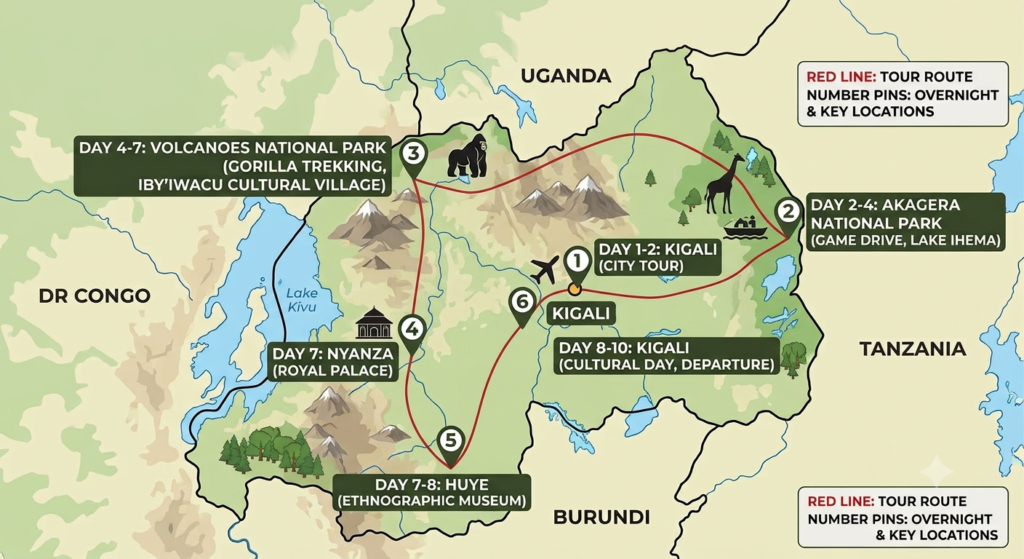
Numbers help make this concrete. Kigali sits roughly 130 to 180 kilometers from the various sectors of Bwindi Impenetrable National Park, depending on which trailhead — Ruhija, Nkuringo, Rushaga, or Buhoma — your gorilla family and permit are assigned to. In practice, that translates into a drive of around four to five hours, including the border formalities at the Cyanika or Katuna crossing points. The roads on the Rwandan side are well paved and well maintained; the Ugandan side varies by route but has improved substantially in recent years, particularly on the roads serving the southern sectors of Bwindi, Rushaga and Nkuringo, which are the sectors most commonly used for Kigali-based day trips because they sit closest to the border.
One of the most useful tools available to travelers combining Rwanda and Uganda on one trip is the East Africa Tourist Visa, a single visa shared across Rwanda, Uganda, and Kenya that allows multiple entries between the three countries within its validity period. For someone flying into Kigali specifically to cross overland into Uganda for gorilla trekking, this visa is often the cleanest option, because it removes the need to purchase two separate single-country visas and avoids any ambiguity about re-entry. It’s a detail that’s easy to overlook when the excitement is all about gorillas, but it can meaningfully simplify the administrative side of a Kigali-based itinerary, and it’s worth asking your operator to confirm eligibility and current pricing for your nationality before you fly.
One Day, Two Days or Three: Choosing the Right Gorilla Safari Length from Kigali
Perhaps the single biggest advantage of the Kigali route is the flexibility it opens up in trip length. Because the drive to Bwindi is short enough to be manageable in a single push, tour operators have been able to build genuinely workable short-format itineraries that simply don’t exist from Entebbe. A traveler with only a long weekend, or someone tacking a gorilla trek onto a business trip or a broader African journey, now has real options.
At the compressed end, there is the 1-day Uganda gorilla safari starting from Kigali, which packs an early departure from Kigali, the border crossing, the gorilla trek itself, and the return drive into a single very long but entirely doable day. It’s intense, and it isn’t for everyone, but for a traveler whose schedule genuinely allows no more than 24 hours away from Kigali, it makes an otherwise impossible bucket-list experience achievable.
A step up from that is the 2-day Uganda gorilla tour starting from Kigali, which spreads the same core experience across two calmer days with an overnight stay near the park, removing the single-day time pressure while still keeping the total trip short. And for travelers who want a bit more room to also see some of the surrounding culture or landscape, there is a 3-day Uganda gorilla safari from Rwanda, which allows for a more relaxed pace, a buffer day in case of transport delays, and often a short cultural encounter with a local Batwa community near the park.
What a 1-Day Uganda Gorilla Safari from Kigali Actually Looks Like
It’s worth walking through the mechanics of the one-day option, because it sounds ambitious until you see the schedule laid out. Departure from Kigali typically happens very early, often around 4:00 or 5:00 a.m., to allow enough daylight margin for the drive, the border crossing, the trek briefing at the park headquarters, the trek itself — which can run anywhere from two to eight hours round trip depending on where the gorilla family is located that day — and the return drive back to Kigali before or shortly after dark.
This kind of day is physically demanding, and it isn’t the right fit for every traveler, particularly those who struggle with early starts, long car rides, or physically strenuous hikes at altitude. But for the right traveler — someone reasonably fit, comfortable with a long day, and working with a tight schedule — it delivers the full mountain gorilla encounter without requiring an extra hotel night or an extra vacation day. It is also, notably, one of the most affordable ways to experience gorilla trekking, since it strips out the cost of additional accommodation near the park.
Why a 2-Day or 3-Day Itinerary Gives You More Breathing Room
For travelers who can spare even one additional day, the two- or three-day versions of the Kigali gorilla safari change the experience meaningfully. Rather than treating the trek as a single exhausting round trip, these itineraries build in an overnight stay in a lodge close to the park, which means arriving the afternoon or evening before, sleeping well, and starting the trek fresh the next morning rather than after a pre-dawn drive.
That overnight buffer also adds resilience to the trip. Mountain roads, border queues, and unpredictable weather can all introduce delays, and a same-day itinerary has very little slack to absorb them. A two- or three-day version gives the schedule room to breathe, reduces the chance of missing the trek briefing time, and typically allows for a slower, more scenic drive with stops at viewpoints or local markets along the way. For many travelers, that extra comfort is well worth the additional day and modest extra cost.
Bwindi Impenetrable Forest vs Mgahinga: Which Park to Choose from Kigali
Travelers flying into Kigali for gorilla trekking generally have two Ugandan park options to choose from, and the choice matters for both logistics and experience. Bwindi Impenetrable National Park is home to roughly half of the world’s remaining mountain gorilla population, spread across four trekking sectors, and offers the widest selection of habituated gorilla families and permit availability. Its southern sectors, Rushaga and Nkuringo, are the closest to the Rwanda border and therefore the most commonly used for Kigali-based itineraries.
Mgahinga Gorilla National Park, on the other hand, is smaller, sits directly in the Virunga volcano range shared with Rwanda’s own gorilla park, and is the closest Ugandan gorilla trekking destination to Kigali of all — often reachable in well under four hours. Mgahinga typically has only one habituated gorilla family available for trekking at any given time, so permit availability can be more limited, but for travelers prioritizing the shortest possible drive and a dramatic volcanic landscape, it’s an excellent option worth asking your operator about directly.
Gorilla Permit Prices and Availability in 2026
No discussion of gorilla trekking logistics is complete without addressing permits, since they are both the single largest cost of the trip and the item that must be secured furthest in advance. A Uganda gorilla trekking permit currently costs around USD 800 per person for foreign non-resident visitors, purchased through the Uganda Wildlife Authority, and grants one hour with a habituated gorilla family after reaching them on the trek. Permits are limited daily per gorilla family and do sell out, particularly in the July–September and December–February peak travel windows, so booking several months ahead is strongly advised regardless of which airport you’re flying into.
This is one of the practical reasons working with an established operator on the ground matters. Securing the right permit for the right date, matched to a feasible Kigali-based itinerary, requires coordination between Rwandan arrival logistics and the Uganda Wildlife Authority’s booking system — something that’s far easier to get right with local expertise handling it than trying to coordinate independently from abroad.
What to Pack and How to Prepare for the Trek
Gorilla trekking is physically demanding regardless of which airport you fly into, and a bit of preparation goes a long way toward enjoying it rather than enduring it. Sturdy, broken-in hiking boots are essential, since trails through Bwindi’s forest floor can be muddy, steep, and uneven. Long trousers and long sleeves in lightweight, quick-drying fabric help protect against nettles and biting insects in the undergrowth, and a light rain jacket is worth packing regardless of season, since Bwindi’s name — “impenetrable” — is a fair description of how thick and often damp the forest can be.
Garden gloves are a small but genuinely useful addition, since trekkers often need to grab onto vegetation for balance on steep sections. A daypack with water, snacks, and a camera with a spare battery rounds out the essentials — and porters are available to hire at the trailhead for a modest fee, which is worth doing both for the practical help on steep terrain and as direct support for the local community. Because a Kigali-based itinerary often means less time to acclimatize before the trek, especially on the one-day option, arriving reasonably well rested and hydrated matters more than it might on a longer, more leisurely trip.
Because Kigali is also the gateway to Rwanda’s own mountain gorilla population in Volcanoes National Park, many travelers flying into Kigali choose to combine both countries’ gorilla experiences in a single trip rather than choosing one or the other. This has become common enough that dedicated combination itineraries exist specifically for it, allowing a trekker to experience gorillas in both Rwanda and Uganda within the same short window of travel, along with the golden monkeys found in the same Virunga range.
For travelers weighing this option, it’s worth knowing that Rwanda’s gorilla permits are priced higher than Uganda’s, currently around USD 1,500 per person, which is part of why many international visitors choose to do their primary trek in Uganda after flying into Kigali, treating Rwanda’s side of the border more as a base and a bonus wildlife stop — golden monkey trekking, for instance, is considerably more affordable — than as the main event. Either approach works well logistically, since both experiences are reachable from the same airport within a similarly short drive.
Exploring Kigali City Before or After Your Gorilla Trek
One underrated benefit of flying into Kigali rather than Entebbe is the city itself. Kigali has earned a reputation as one of the cleanest, safest, and most walkable capital cities in Africa, and spending a day at the start or end of a gorilla safari here is time well spent rather than time lost. The Kigali Genocide Memorial offers a sobering, important, and beautifully curated look at Rwanda’s history and its remarkable path toward reconciliation. Kimironko Market and the Inema Arts Center offer a lighter counterpoint, with vibrant local crafts, textiles, and contemporary Rwandan art.
For travelers on the one-day gorilla trek option, there typically isn’t time built in for city exploration, but for anyone doing the two-day, three-day, or longer versions of a Kigali-based Uganda gorilla safari, an evening or a spare morning in Kigali rounds out the trip nicely, adding cultural depth to what would otherwise be a purely wildlife-focused itinerary.
Travelers understandably want to know what the actual drive feels like, since it makes up a significant portion of a Kigali-based itinerary. The good news is that the route is scenic rather than tedious. Leaving Kigali, the road winds through Rwanda’s famously terraced hillsides — the country’s nickname, “Land of a Thousand Hills,” is not an exaggeration — passing tea plantations, small trading towns, and sweeping valley views for much of the journey to the border.
Vehicles used for these transfers are almost always 4×4s suited to both the paved Rwandan roads and the sometimes rougher terrain closer to the park on the Ugandan side, and experienced driver-guides know the route well enough to time the border crossing and pace the drive comfortably. Most itineraries build in a stop partway through, whether for a coffee break, a photo opportunity at a scenic viewpoint, or lunch, which breaks the journey into manageable segments rather than one uninterrupted stretch behind the wheel.
Best Time of Year to Fly into Kigali for Gorilla Trekking
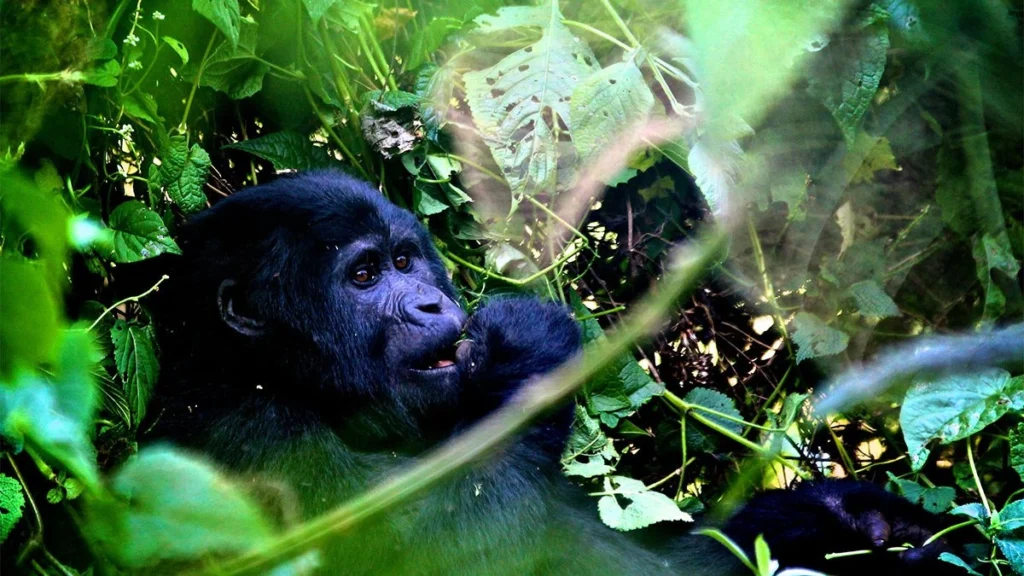
Gorilla trekking is possible year-round in both Uganda and Rwanda, since the trek happens regardless of season, but timing does affect the experience. The two dry seasons — roughly June through September and December through February — offer the firmest trail conditions and the most predictable weather, and are correspondingly the most popular and heavily booked months, which means permits and Kigali flight availability should be secured well in advance for travel in those windows.
The wetter months, particularly March through May and October through November, see fewer crowds and sometimes better airfare and lodge pricing, though trekking conditions underfoot can be muddier and the forest canopy holds more rain. Because Bwindi’s forest is dense and high-altitude regardless of season, some rain is always a possibility, and travelers flying into Kigali at any time of year should pack accordingly rather than relying solely on the calendar.
Budget Considerations: Why Kigali Fly-Ins Can Save You Money
Safety, Comfort and Why Travelers Trust the Kigali Route
Safety is understandably a top concern for anyone researching an African safari for the first time, and Rwanda consistently ranks among the safest countries in the region for travelers, with low crime rates, well-regulated tourism infrastructure, and a strong government focus on maintaining that reputation. Arriving into a calm, orderly airport and city before continuing overland into Uganda’s well-established gorilla tourism corridor gives many first-time visitors additional peace of mind compared to arriving directly into a larger, busier international hub.
The border crossing itself, handled routinely by experienced local driver-guides, is a well-worn path for tourism traffic rather than an improvised route, and the roads on both sides serving the gorilla parks are used daily by tour vehicles, park rangers, and local transport alike. None of this means travelers should skip standard precautions — travel insurance, registering with your embassy where relevant, and following your guide’s advice — but it does mean the Kigali-to-Bwindi corridor is a well-tested, well-supported route rather than an experimental one.
At Pick and Transfer Safaris, this entire route has become one of our specialties precisely because we saw how much time, money, and stress it could save travelers compared to the traditional Entebbe-based approach. Our short Gorilla Safaris starting from Kigali are purpose-built around the realities described in this guide: efficient border crossings, experienced driver-guides who know the Kigali-Bwindi corridor well, comfortable 4×4 vehicles, and itineraries scaled to fit whatever amount of time a traveler actually has, whether that’s a single intense day or a more relaxed multi-day trip.
We handle the coordination that makes this route work smoothly — securing gorilla permits for the correct dates and sectors, planning realistic timing around the border crossing, and building in sensible buffers so a delay doesn’t put the entire trek at risk. Because we’re a small, locally rooted operator with mid-range and budget travelers specifically in mind, we’re also able to keep these Kigali-based itineraries genuinely affordable without cutting corners on safety or comfort, and part of our proceeds go toward supporting local community and orphan-care projects in the areas we operate.
For travelers researching this route independently, other regional operators such as Kenlink Tours’ 2-day Uganda gorilla safari starting from Kigali and their 3-day Bwindi gorilla safari from Kigali offer a useful point of comparison for how established this itinerary style has become across the industry, and their 5-day gorilla trekking safari from Kigali to Uganda illustrates how the route also scales up comfortably for travelers who want to add more time exploring both countries rather than rushing through.
What Actually Happens During a Gorilla Trek
For travelers who have never done this before, it’s worth explaining what the trek itself involves, since it shapes how you should think about the whole Kigali-based itinerary. Trekking days begin with an early morning briefing at the park headquarters, usually around 7:30 or 8:00 a.m., where rangers organize visitors into small groups of no more than eight people, each assigned to a specific habituated gorilla family. Rangers and trackers who have been in the forest since dawn radio back updates on the family’s location, which determines how long and how strenuous your particular trek will be.
The walk itself can last anywhere from thirty minutes to six or seven hours round trip, depending entirely on where the gorillas have moved to that day, and the terrain ranges from relatively gentle forest paths to steep, muddy, vine-tangled slopes that test even reasonably fit trekkers. Once your group locates the gorilla family, you’re allowed exactly one hour in their presence, at a respectful distance, to watch, photograph, and simply take in the experience of wild mountain gorillas going about their day — feeding, grooming, playing, and occasionally approaching curious visitors far closer than a zoo enclosure ever could. For travelers on a Kigali-based itinerary, this single hour is the entire point of the long drive and early start, and virtually everyone who has done it describes it as more moving and more memorable than they expected.
Health, Fitness, and Altitude Considerations for the Trek
Because gorilla trekking happens at altitude — Bwindi’s trailheads sit anywhere from roughly 1,400 to 2,600 meters above sea level — and involves genuine physical exertion on uneven terrain, it’s worth being honest with yourself about fitness level before booking, particularly if you’re considering the more time-compressed one-day Kigali option. You don’t need to be an athlete, but a reasonable baseline of cardiovascular fitness and comfort walking for several hours makes a meaningful difference in how much you enjoy the day rather than endure it.
Travelers with knee or mobility concerns shouldn’t rule the experience out entirely — hiring a porter for support, using a walking stick (provided free at most trailheads), and requesting a gorilla family known to be less mobile that day are all reasonable accommodations rangers are used to making. It’s also worth mentioning any relevant health conditions to your operator in advance so your itinerary, sector assignment, and pacing can be planned around them. Travel insurance that specifically covers trekking and evacuation is strongly recommended for any gorilla safari, regardless of which airport you fly into, simply given the remote, forested terrain involved.
Where you stay shapes the rhythm of a Kigali-based gorilla safari almost as much as the drive itself. In Kigali, accommodation ranges from simple, comfortable guesthouses to well-regarded boutique hotels and international chains, most of them clustered conveniently close to the airport or in the central Kiyovu and Kimihurura neighborhoods, making an early departure or a late arrival equally manageable. For the one-day itinerary, many travelers choose a hotel near the airport specifically to minimize transfer time before the pre-dawn departure.
Near Bwindi itself, lodges range widely in style and price, from simple budget guesthouses run by local families to comfortable mid-range lodges with forest or valley views, up to high-end luxury properties for travelers who want to extend their stay. Because the two-day and three-day Kigali itineraries include an overnight stay near the park, your operator’s choice of lodge can meaningfully affect comfort — proximity to the trailhead, quality of the beds and hot water after a long trekking day, and the quality of the evening meal all matter more than they might on a purely city-based trip. A good operator will match the lodge to your budget and expectations rather than defaulting to whichever property is easiest to book.
Sample Day-by-Day Plan: A 3-Day Uganda Gorilla Safari Starting from Kigali
To make the logistics concrete, it helps to walk through what a typical three-day itinerary actually looks like in practice. On day one, travelers are collected from their Kigali hotel or the airport mid-morning, and the drive to the Bwindi region begins, typically with a stop along the way for lunch or a scenic break in the Rwandan countryside. After crossing the border in the early afternoon, the drive continues to a lodge near the chosen trekking sector, arriving with enough daylight left to settle in, enjoy the surrounding scenery, and rest ahead of the following day’s trek.
Day two is the main event: an early breakfast, a short transfer to the park headquarters for the trekking briefing, and then the gorilla trek itself, followed by lunch back at the lodge and a free afternoon to relax, or optionally a visit to a nearby Batwa community for a short cultural experience. Day three is the return journey to Kigali, often timed to allow a stop in Kigali city for lunch or a short visit to a market or memorial site before a late-afternoon or evening drop-off at the airport or hotel, depending on onward flight timing. This pacing — one travel day, one trekking day, one return day — has become the most popular structure precisely because it balances a meaningful, unhurried gorilla experience against a genuinely short overall trip length.
Mountain gorillas are an endangered species, and the rules governing trekking exist specifically to protect them, not merely as bureaucratic formality. Visitors are required to stay at least seven meters from the gorillas at all times, though the gorillas themselves don’t always respect that boundary and sometimes approach closer on their own initiative. Anyone feeling unwell, particularly with any respiratory illness, is asked not to trek that day, since gorillas share close enough genetic similarity with humans to be vulnerable to many of the same infections, and a cold that’s mild for a person can be dangerous for a gorilla family.
Flash photography is prohibited, eating and drinking are not allowed in the gorillas’ immediate presence, and groups are kept deliberately small — a maximum of eight visitors per gorilla family per day — to limit stress on the animals and their habitat. These rules are enforced by the Uganda Wildlife Authority rangers who accompany every trek, and a reputable operator will brief travelers on them clearly before the trek begins. Respecting these guidelines isn’t just about compliance; the long-term survival of Uganda and Rwanda’s mountain gorilla populations, one of conservation’s genuine success stories over the past few decades, depends directly on tourism being conducted responsibly.
Choosing the Right Operator for a Kigali-Based Gorilla Safari
Because a Kigali-based itinerary involves cross-border logistics, permit coordination, and tighter timing than a standard within-country safari, the choice of operator matters more here than it might for a simpler trip. Look for an operator with specific, demonstrated experience running the Kigali-to-Bwindi route rather than one simply offering it as an afterthought alongside standard Entebbe-based tours. Ask directly how they handle the border crossing, what vehicle and driver-guide arrangements they use, and how they build in timing buffers to protect against delays on trekking day.
It’s also worth asking how permits are secured and confirmed — a trustworthy operator will provide permit confirmation details well ahead of travel, not just a verbal assurance. Price is naturally a factor, but on a route with this many moving logistical pieces, the cheapest option isn’t always the one that delivers the smoothest experience; look instead for a balance of fair, transparent pricing and clear evidence of local expertise, reviews, and proper licensing with the relevant wildlife and tourism authorities in both countries.
A few questions come up again and again from travelers weighing this route for the first time, and it’s worth addressing them directly.
Is it safe to cross the Rwanda-Uganda border by road for a day trip? Yes — this is a routine, well-established crossing used daily by tourism vehicles, and your driver-guide manages the paperwork and process.
Do I need a separate visa for each country? Not necessarily. The East Africa Tourist Visa, where applicable to your nationality, covers Rwanda, Uganda, and Kenya on a single multi-entry visa, which is usually the simplest option for this specific route.
Can I do gorilla trekking in both Rwanda and Uganda on the same trip from Kigali? Yes, and many travelers do exactly this, treating Kigali as a base for both experiences given how close it sits to each country’s gorilla trekking areas.
Is the one-day option too rushed to be enjoyable? It’s intense, and it isn’t for every traveler, but for those with limited time it delivers the full trekking experience without requiring an extra day away from other travel or work commitments — the two- and three-day versions exist specifically for travelers who’d rather have a more relaxed pace.
Extending Your Trip: Pairing a Kigali Gorilla Safari with Wildlife Elsewhere in the Region
While many travelers flying into Kigali are focused purely on gorilla trekking, it’s worth knowing that the same gateway also opens the door to extending a trip into broader wildlife safari territory if time allows. From the Bwindi and Mgahinga area, it’s a relatively short additional drive north to Queen Elizabeth National Park, known for its tree-climbing lions and boat cruises along the Kazinga Channel, making it a natural add-on for travelers who want both primates and classic savannah game viewing in one trip. Itineraries such as a 5-day Uganda gorilla and chimpanzee safari are built specifically around this kind of extension, combining a Kigali-area gorilla trek with chimpanzee tracking and wildlife viewing before looping back out through Entebbe.
On the Rwandan side, travelers with an extra day or two can also add a stop at Akagera National Park, Rwanda’s own Big Five savannah reserve, which sits within a few hours of Kigali in the opposite direction from the gorilla parks and offers a genuinely different landscape and wildlife experience within the same short trip. For travelers who have the flexibility, pairing a short Kigali gorilla trek with either of these wildlife extensions is a highly efficient way to see considerably more of East Africa’s wildlife without adding excessive extra travel days, since Kigali’s central position between Uganda’s gorilla parks and Rwanda’s own attractions makes it a genuinely convenient base for a broader loop.
A Sample Budget Breakdown for a Kigali-Based Gorilla Safari
Numbers help travelers plan realistically, so it’s worth sketching out roughly where the money goes on a typical short Kigali-based gorilla safari. The single largest line item is almost always the gorilla permit itself, at around USD 800 per person for Uganda. On top of that, ground transportation — the 4×4 vehicle, driver-guide, fuel, and border-crossing logistics — is typically quoted as a package rate per person, and tends to be lower on shorter itineraries simply because there are fewer days of driving and fewer nights of accommodation to cover.
For the one-day option, accommodation costs are minimal since no extra lodge night near the park is required, which keeps the total trip cost noticeably lower than any multi-day alternative. For the two- and three-day versions, one or two nights near the park at a mid-range lodge typically add a moderate, predictable cost, usually quoted inclusive of meals as part of the overall package. International flights into Kigali are a separate, variable cost depending on origin and season, and porter fees at the trailhead, if you choose to hire one, are a small additional cost worth budgeting for separately, generally paid in cash directly to the porter. Altogether, a short Kigali-based gorilla safari is often meaningfully more affordable than an equivalent Entebbe-based trip once the reduced transit days and accommodation nights are factored in.
Why This Route Works Well for Solo Travelers, Couples, and Families Alike
One of the appealing things about the Kigali route is how well it adapts to different types of travelers rather than favoring one group over another. Solo travelers on a tight schedule benefit enormously from the compressed one-day or two-day options, which make a bucket-list gorilla encounter possible even within a short standalone trip or as an add-on to business travel elsewhere in the region. Couples, particularly those celebrating anniversaries or honeymoons, often gravitate toward the two- or three-day version, which allows for a relaxed overnight near the park and time to enjoy Kigali’s restaurants and boutique hotels without extending the trip unnecessarily.
Families traveling with older children or teenagers — gorilla trekking has a minimum age requirement of fifteen, set by the Uganda Wildlife Authority — tend to prefer the three-day itinerary specifically because it provides recovery time between the long travel day and the physically demanding trek itself, along with the flexibility to add a Batwa cultural visit or a relaxed morning in Kigali before departure. Across all of these traveler types, the common thread is the same: the shorter, more efficient Kigali route makes gorilla trekking accessible to people who might otherwise have written it off as too time-consuming or logistically complicated to fit into their travel plans.
Why Kigali Is the Smart Way In for Uganda Gorilla Trekking
Flying into Kigali for a Uganda gorilla safari is a practical choice for many travelers, as it significantly reduces transit time compared to Entebbe, facilitates short itineraries for gorilla trekking, provides access to a well-managed capital city, and often lowers overall trip costs by minimizing transit days. While Entebbe remains a suitable option for longer Uganda itineraries, Kigali offers a more efficient path for those focused on quickly experiencing mountain gorillas in Bwindi or Mgahinga.
It also helps that Rwanda and Uganda have, in effect, built the infrastructure to support this route rather than leaving it as an improvised workaround. Well-maintained roads, an established and routinely used border crossing, a growing roster of airlines serving Kigali, and tour operators who have refined these itineraries over repeated trips all mean that flying into Kigali for a Uganda gorilla safari is no longer a clever insider trick — it’s simply become one of the two standard, well-supported ways to experience Uganda’s mountain gorillas, and for a great many travelers, it’s the better one.
If you’re ready to start planning, our team can help you match the right Kigali-based itinerary to your available time, budget, and travel dates — whether that’s the fast-paced one-day option, a more relaxed two- or three-day trip, or a longer combination with wildlife viewing in Queen Elizabeth or Akagera National Park. Reach out through our contact page, tell us your travel dates and how much time you have, and we’ll take it from there, building an itinerary around your schedule rather than asking you to fit your schedule around ours.
Ultimately, Why Flying into Kigali for a Uganda Gorilla Safari is the ideal choice for many travelers looking for a remarkable wildlife experience.