- LET'S PLAN YOUR SAFARI
- +256 200 921 002
- +256 793 194 703
- info@pickandtransfersafaris.com

The Express Gorilla Trek
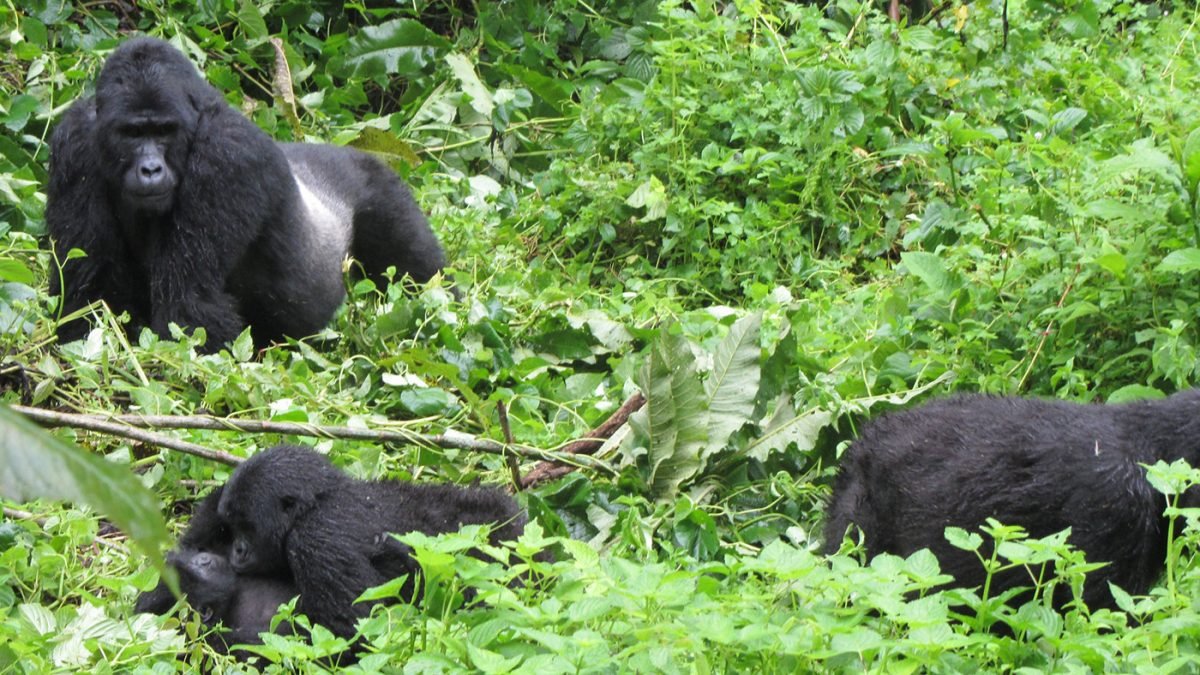
The Express Gorilla Trek. There’s a version of gorilla trekking that most travel guides barely mention, because on paper it sounds almost too ambitious to be real: flying into Kigali, crossing into Uganda, spending an hour with a wild mountain gorilla family, and being back in Rwanda before the day ends. It’s called the Express Gorilla Trek, and while it’s the most demanding way to see Uganda’s gorillas, it’s also the only itinerary shape that works for travelers who simply don’t have a spare night to give — a business trip with one open day, a Rwanda holiday with no room left in the schedule, or a bucket-list moment squeezed into a layover-length window.
This guide explains exactly what the Express Gorilla Trek involves: the hour-by-hour timeline of a single, very long day, the route and border logistics that make it possible, who it genuinely suits (and who it doesn’t), permit and cost details, and the specific preparation this compressed format demands that a two or three-day trip doesn’t. Throughout, we link to the detailed itinerary and to outside resources so you can move from reading straight into planning.
What Exactly Is the Express Gorilla Trek?
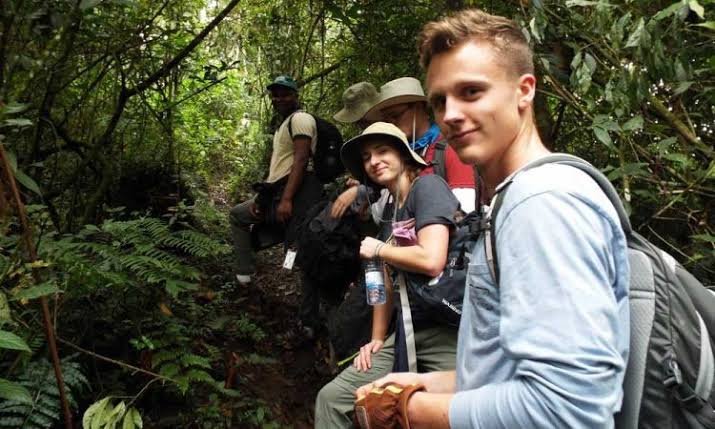
The Express Gorilla Trek is a single-day round trip from Kigali into Uganda’s Bwindi Impenetrable National Park or Mgahinga Gorilla National Park, built entirely around one goal: fitting a complete, unhurried gorilla trekking permit and encounter into one calendar day, with no overnight stay in Uganda at all.
It is not a shortened or lesser version of the trek itself — the permit, the one-hour gorilla encounter, the trained rangers and trackers, and the forest itself are all identical to what a two-day or five-day trekker experiences. What changes is everything around the trek: an extremely early Kigali departure, a same-day border crossing in each direction, and a late return, all compressed into roughly 16 to 18 hours rather than spread across two or three days. It’s the itinerary equivalent of a sprint rather than a hike — genuinely doable, but only the right choice for travelers who understand exactly what they’re signing up for.
This itinerary is detailed in full on our 1 Day Uganda Gorilla Safari Starting from Kigali page, and sits at the far efficient end of our broader Gorilla Safaris collection, alongside the two and three-day options for travelers who’d rather trade some of the intensity for a night’s rest along the way.
Why Kigali Is the Only Realistic Starting Point for a One-Day Trek
A same-day gorilla trek is only physically possible because of one specific geographic fact: Kigali International Airport sits just 2.5 to 4 hours by road from Uganda’s gorilla trekking sectors, depending on which park and sector you’re headed to. Entebbe, Uganda’s main international airport, sits 9 to 11 hours from the same trailheads. There is no version of the Express Gorilla Trek that starts in Entebbe — the math simply doesn’t work within a single day.
This is why the entire category of ultra-short gorilla itineraries — including this one — exists specifically as a Kigali phenomenon. If your trip includes Rwanda, or if you can route your flights through Kigali instead of Entebbe, the express format becomes available to you. If you’re flying into Entebbe, the shortest realistic option becomes a two or three-day trip instead, since the travel time alone would consume most of a single day even before reaching the forest.
Bwindi or Mgahinga: Which Park Fits a Single Day?
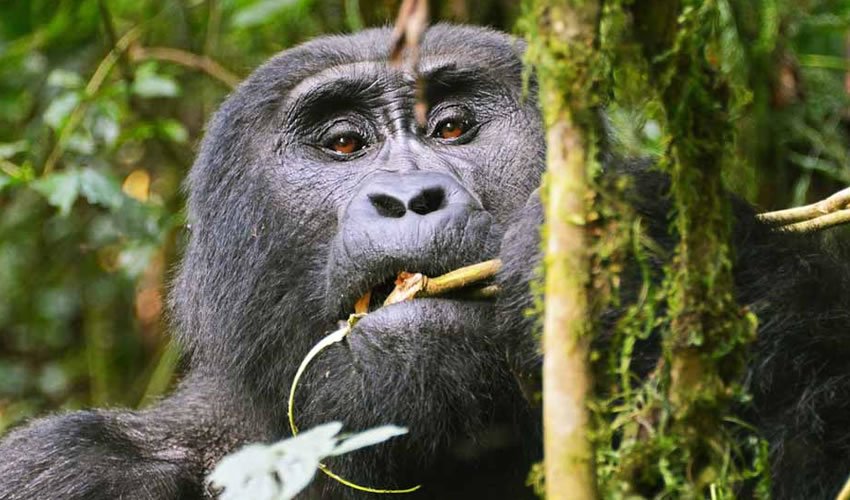
Both of Uganda’s gorilla parks are technically reachable from Kigali in a single day, but the choice matters more here than on longer itineraries, since every extra thirty minutes of driving eats directly into an already tight schedule.
Mgahinga Gorilla National Park, reached via the Cyanika border post roughly 2.5 to 3 hours from Kigali, is the park most Express Gorilla Trek itineraries are built around, simply because it’s the closest gorilla trekking destination to Rwanda. Its habituated gorilla family sits within the Virunga volcanic range, the same chain that continues into Rwanda’s own Volcanoes National Park, and the shorter drive gives the day’s schedule the largest possible buffer for the trek itself.
Bwindi Impenetrable National Park, specifically its southern Rushaga and Nkuringo sectors, is reachable via the Katuna border post in roughly 3.5 to 4.5 hours — still possible as a one-day trip, but tighter, and generally only recommended for travelers with a confirmed early gorilla family assignment and a driver-guide experienced with this exact route. Bwindi’s advantage is a wider selection of habituated families, which can matter if Mgahinga’s single family’s permits are already booked out on your date.
We help match you to whichever park gives the most comfortable timing for your specific travel dates, since permit availability shifts throughout the year.
The Hour-by-Hour Timeline of an Express Gorilla Trek Day
This is the section worth reading most carefully before committing to this itinerary — the schedule is genuinely demanding, and knowing it in advance is the difference between a thrilling, well-managed day and an exhausting scramble.
3:30–4:30 AM — Pre-dawn pickup in Kigali. Your driver-guide collects you from your hotel or the airport well before sunrise. This is, without question, the hardest part of the day for most travelers, and it’s worth planning your prior evening around an early bedtime rather than a late dinner.
Early morning — Drive to the border. The first stretch covers Rwandan road through Musanze toward Cyanika (or, for a Bwindi-bound trip, toward Katuna), aiming to reach the crossing as it opens or shortly after.
Border crossing. Passports, Uganda visas, and yellow fever certificates are checked on both sides. Because timing is critical on this itinerary, having every document ready in advance — not searched for at the window — meaningfully protects the rest of the day’s schedule.
Mid-morning — Arrival at park headquarters. The goal is to reach the ranger briefing by roughly 7:30 to 8:00 AM, the same start time used on every gorilla trekking day regardless of itinerary length.
Ranger briefing and trek assignment. Trekkers are grouped by up to eight per habituated gorilla family and briefed on distance rules and forest etiquette. Hiring a porter here is worth doing on any gorilla trek, but especially on the express version, where an already tiring day benefits from every bit of physical support available.
The trek. Trackers who entered the forest at dawn relay the gorilla family’s location, and rangers lead the group at a pace set by its slowest member. This stage has no fixed duration — anywhere from 45 minutes to four hours or more — which is the one part of the day genuinely outside anyone’s control, and the reason a one-day itinerary always carries a small amount of built-in schedule risk.
The gorilla encounter. Once located, the final approach is made quietly, without bags, for a strict maximum of one hour at a minimum seven-meter distance — identical to every other gorilla trekking itinerary regardless of length.
Early-to-mid afternoon — Return hike and certificate. The walk back to the trailhead is usually quicker than the way in, and a certificate confirming your trek is issued at park headquarters.
Afternoon — The return drive begins. With the trek complete, the group heads straight back toward the border, typically after a late lunch either at the lodge near the trailhead or a roadside stop.
Evening — Return border crossing and drive to Kigali. The day closes with the second border crossing and the final stretch back into Kigali, typically arriving between 7:00 and 9:00 PM depending on how long the trek itself took and how smoothly both crossings went.
Altogether, this adds up to roughly 16 to 18 hours from pickup to drop-off — a genuinely long day, but one that delivers the complete, standard gorilla trekking experience without requiring a single night away from Kigali.
Who the Express Gorilla Trek Genuinely Suits
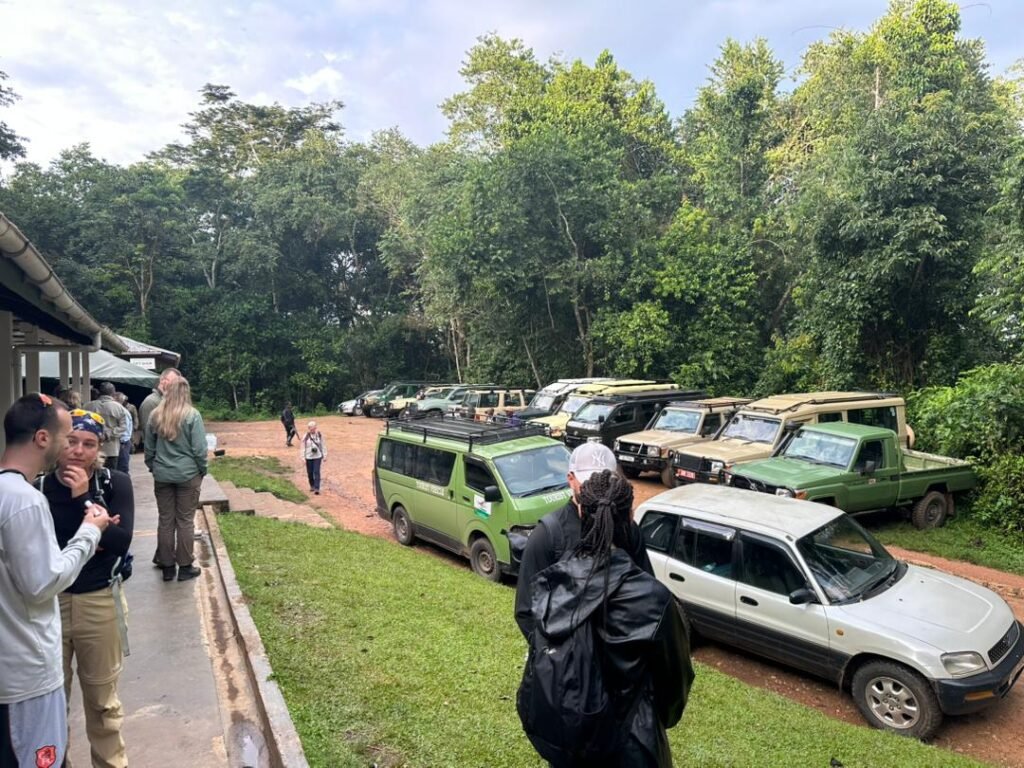
This itinerary is not the right choice for every traveler, and being honest about that upfront saves real disappointment. It suits business travelers with exactly one open day in Kigali and no flexibility to add a night, Rwanda-based tourists on a tight schedule who still want to experience Uganda’s lower-cost gorilla permit, and fit, well-rested travelers who are comfortable with a genuinely long, physically demanding day bookended by pre-dawn and late-night driving.
It does not suit travelers managing health conditions that make long days or early starts difficult, anyone hoping for a relaxed, unhurried pace around the trek itself, or travelers arriving in Kigali on an overnight flight with no chance to rest beforehand — attempting the express format on top of jet lag substantially increases the risk of a genuinely exhausting, poorly enjoyed day. For any of these situations, our 2-Day Bwindi Gorilla Safari from Kigali delivers the identical trekking experience with a full night’s rest built in on either side, at a relatively small increase in cost and time.
Gorilla Permit Costs and What’s Included
The financial logic behind the Express Gorilla Trek is the same as every Kigali-departure Uganda gorilla itinerary: a Uganda gorilla trekking permit currently costs USD 800 per person through the Uganda Wildlife Authority, substantially below the USD 1,500 charged for the equivalent Rwanda permit in Volcanoes National Park. Because this itinerary avoids an overnight stay entirely, it’s also the lowest total-cost way to experience Uganda’s gorillas from Kigali, since it removes accommodation from the budget altogether.
A standard Express Gorilla Trek package typically includes the gorilla trekking permit, private 4×4 transport for the full round trip, an experienced driver-guide, border-crossing assistance in both directions, and meals during the day including a packed trekking lunch. Typically excluded are international flights into Kigali, Uganda visa fees, travel insurance, and porter and guide tips. Because daily permits are capped per gorilla family, and because this itinerary has essentially no flexibility to reschedule if a permit isn’t available on your exact date, booking well in advance — ideally three to six months ahead for peak season — matters even more here than on longer, more flexible itineraries.
Best Time of Year for a One-Day Trek
Every consideration that applies to seasonal timing on longer itineraries applies here too, with one added factor: because there’s no buffer day to fall back on, weather and trail conditions matter more on the express format than on any other. June to September and December to February, the two dry seasons, offer firmer trails and generally faster, more predictable trekking times — a meaningful advantage when the whole day’s schedule depends on the trek not running unexpectedly long. March to May and October to November bring more rainfall and muddier trails, which can extend trekking time and put more pressure on an already tight schedule; travelers considering the express format during these months should build in extra flexibility around their evening plans in Kigali, in case the return drive runs later than expected.
Fitness Requirements: Be Honest With Yourself
Every gorilla trek, regardless of itinerary length, takes place on Bwindi or Mgahinga’s steep, often muddy terrain at elevations between roughly 1,400 and 2,700 meters. On a two or three-day trip, you tackle that terrain after a full night’s rest. On the Express Gorilla Trek, you tackle it after a 3:30 AM wake-up and several hours of driving — a meaningfully different physical challenge even though the trek itself is identical.
A genuinely honest self-assessment of your fitness and tolerance for long, disrupted-sleep days matters more here than on any other itinerary in our range. Hiring a porter is worth it on every gorilla trek, but on the express format it moves from “recommended” to “strongly advised,” since it meaningfully reduces physical strain at a point in the day when fatigue is already a factor.
What to Pack for a Single Long Day
Packing for the Express Gorilla Trek is about efficiency as much as content, since everything needs to fit into one daypack carried for the entire 16 to 18-hour day:
- Waterproof hiking boots with solid ankle support, already broken in.
- Long trousers and a long-sleeved shirt in neutral colors, tucked into boots and gloves against nettles and safari ants.
- Gardening gloves for gripping vegetation on steep sections.
- A lightweight rain jacket, regardless of season.
- A change of socks and a spare shirt for the long drive home after a physically demanding trek.
- A refillable water bottle and high-energy snacks for the drive, beyond the packed lunch provided during the trek.
- A hat and sunscreen for open sections of trail.
- A camera or phone with a capable low-light lens — flash photography is prohibited near the gorillas.
- Cash in small denominations for porter tips.
- Passport, Uganda visa confirmation, yellow fever certificate, and printed permit confirmation, kept in an easily accessible pocket for both border crossings.
- A neck pillow or light blanket for the vehicle, genuinely useful for resting during the long drives before and after the trek.
Visa and Border Logistics for a Same-Day Crossing
Because this itinerary crosses the border twice in a single day, document preparation matters more here than on any other trip. Most nationalities can obtain a Uganda visa on arrival, but applying through Uganda’s e-visa portal in advance is strongly recommended for the express format specifically, since any delay at either crossing has a direct, cumulative effect on an already tight schedule. A yellow fever vaccination certificate is mandatory for entry into both Rwanda and Uganda — carry the physical certificate, not a phone photo, and keep it with your passport rather than packed away in luggage. Our driver-guides handle vehicle paperwork and coordinate directly with border officials at both crossings, which is one of the most valuable parts of booking this itinerary through an experienced local operator rather than attempting it independently.
How the Express Compares to Longer Options
It’s worth being direct about the tradeoffs here, since the express format is a genuinely different experience from every other itinerary in this guide series, not just a shorter version of the same one.
Compared with our 2-Day Bwindi Gorilla Safari from Kigali, the express trek trades a full night’s rest for the ability to complete the entire trip without leaving Kigali overnight — the right trade for travelers with zero spare nights, and the wrong one for almost everyone else.
Compared with the 3-Day Rwanda to Uganda Gorilla Express, which despite sharing the word “express” in its name is a meaningfully more relaxed itinerary with two nights built in, the true one-day trek is the more intense option by a wide margin, reserved specifically for genuinely time-constrained travelers.
For an outside reference point on a comparably compressed itinerary, Kenlink Tours’ 2 Days Rwanda to Uganda Gorilla Trekking Safari offers a useful comparison for travelers weighing a one-day trip against the closest two-day alternative from another operator.
Private Transport Is Non-Negotiable on This Itinerary
On every other itinerary in our range, choosing between a private vehicle and a scheduled group departure is a genuine budget-versus-flexibility decision. On the Express Gorilla Trek, it isn’t — a private 4×4 with a driver-guide experienced on this exact route is effectively a requirement, not a preference. The schedule has almost no slack, and a shared vehicle waiting on other travelers, or a driver unfamiliar with the fastest reliable route through both border crossings, can turn a demanding but manageable day into a genuinely stressful one. This is one itinerary where the cost difference between private and shared transport is well worth paying for the schedule reliability alone.
Health and Safety Considerations Specific to a Long Day
Beyond the standard regional precautions — malaria prevention and a current yellow fever vaccination — the Express Gorilla Trek carries one additional consideration worth taking seriously: fatigue itself. A 16 to 18-hour day involving a demanding forest trek, two border crossings, and several hours of driving is a real physical undertaking, particularly for travelers who haven’t had a chance to rest after a long-haul flight into Kigali. If your international arrival lands within 24 hours of your planned trek date, it’s worth genuinely considering whether the two-day version might serve you better, both for enjoyment and for the practical reality of trekking on jet lag. Travel insurance covering trekking activities and emergency medical evacuation remains just as important here as on any longer itinerary, and arguably more so given the day’s overall physical demands.
A Realistic Cost Breakdown
The Express Gorilla Trek is, cost for cost, the most affordable way to see Uganda’s gorillas from Kigali, and it’s worth understanding exactly why.
Gorilla permit — USD 800 per person. Fixed by the Uganda Wildlife Authority, identical to every other itinerary in this guide series regardless of length.
Ground transport. Priced per vehicle for the full round trip rather than per person, and because this itinerary covers more total driving distance in a single day than any other option, vehicle condition and driver experience matter more here than almost anywhere else in the decision.
Meals. Typically limited to the packed trekking lunch and any roadside stops during the long drive, since there’s no overnight lodge stay to include breakfast or dinner service.
No accommodation cost at all. This is the single biggest reason the express format comes in below the two-day version — removing a night’s lodging from the budget entirely, which can represent a meaningful saving depending on which class of lodge you’d otherwise have chosen.
Tips. Budgeting roughly USD 10–20 for your porter and a similar combined amount for your guide and rangers remains standard practice regardless of itinerary length.
Because there’s no lodge cost to vary, price differences between operators on this specific itinerary usually come down almost entirely to vehicle quality and driver-guide experience — arguably the two factors that matter most on a schedule with this little room for error.
Managing Energy and Expectations Through the Day
Because the Express Gorilla Trek asks so much of a single day, a little mental preparation goes a long way toward actually enjoying it rather than just enduring it. The early wake-up and pre-dawn drive are, for most travelers, the hardest single stretch of the day — resist the urge to treat the drive to the border as dead time to catch up on messages or work, and use it instead to rest, since it’s genuinely the last real chance to do so before a physically demanding day begins.
Energy tends to dip noticeably in the mid-morning hours before the trek starts, which is exactly why a proper breakfast and steady hydration matter more here than on any relaxed-pace itinerary. During the trek itself, most travelers report that adrenaline and focus carry them through regardless of how tired they felt that morning — it’s the return drive afterward, once the excitement has settled, where fatigue tends to catch up. Planning a genuinely quiet evening in Kigali after this trip, rather than dinner plans or a late night out, is worth building into your broader schedule.
Photography Tips for a Single, High-Stakes Encounter
With only one gorilla encounter and no second day to reshoot if conditions are tricky, a little preparation matters. Flash photography is banned near the gorillas, so a lens that performs reasonably in low light is worth prioritizing over raw zoom range — a mid-range zoom paired with a camera body that handles higher ISO cleanly generally outperforms a longer, slower lens under Bwindi or Mgahinga’s forest canopy. Phone photographers should keep the camera steady, avoid digital zoom, and trust the guide’s positioning rather than chasing a better angle independently. Because the express itinerary leaves camera gear packed for most of a very long day, it’s worth doing a quick battery and memory card check the night before, rather than discovering a dead battery in the one hour that matters most.
Common Mistakes to Avoid on This Itinerary
Underestimating how demanding the full day actually is. Reading the hour-by-hour timeline above before booking, rather than after, is the single best way to avoid a mismatch between expectations and reality.
Attempting it directly after a long-haul flight. Jet lag compounds an already demanding schedule; building in even one rest day beforehand makes a real difference.
Packing a large bag. Everything needs to be carried for the full 16 to 18-hour day; a compact, well-organized daypack works far better than a larger bag packed for a longer trip.
Booking with a shared or unfamiliar driver. Given how little slack this schedule has, a private vehicle with a driver-guide experienced on this exact route isn’t a luxury upgrade here — it’s what keeps the day on track.
Skipping travel insurance because the trip is short. A demanding single day carries its own risks, and evacuation coverage remains just as important here as on any longer itinerary.
Not telling your operator about your flight schedule. Because timing is so tight, flagging your Kigali arrival and departure details in advance lets your driver-guide build the most realistic possible schedule around them.
Frequently Asked Questions About the Express Gorilla Trek
Is it actually possible to trek gorillas and return to Kigali the same day? Yes — this itinerary runs regularly and delivers the complete standard gorilla trekking experience, permit and all, within a single long day, provided the schedule is planned by an operator experienced with the exact route and border crossings involved.
What happens if the trek runs longer than expected? Because gorilla families move through the forest overnight, trek duration is never fully predictable. Experienced driver-guides build a reasonable buffer into the day’s schedule, but travelers should go in accepting that a longer-than-usual trek may push the return to Kigali later into the evening.
Is this itinerary cheaper than the two-day version? Yes, primarily because it removes a night’s accommodation from the budget entirely — the permit cost itself is identical regardless of itinerary length.
Can I do the Express Gorilla Trek right after landing in Kigali? Technically yes, but it’s not recommended. Attempting this itinerary immediately after a long-haul flight compounds jet lag with an already demanding day; a rest day beforehand, even a short one, makes a meaningful difference.
Do I need a Uganda visa for a same-day crossing? Yes — entering Uganda for any length of time, including a single day, requires a valid visa, so apply in advance through the e-visa portal rather than risk delays at the border on a schedule with little room to spare.
Which park is better for this itinerary, Bwindi or Mgahinga? Mgahinga’s shorter drive time via Cyanika generally gives the day’s schedule more breathing room, which is why most one-day itineraries default to it, though Bwindi remains possible for travelers with confirmed early permit availability there.
Booking Your Express Gorilla Trek From Kigali
The Express Gorilla Trek is not for everyone, and we say that honestly rather than as a sales caveat — but for the specific traveler it’s built for, someone with exactly one day to spare and a genuine determination to make it count, it delivers the full, unfiltered gorilla trekking experience without asking for a second night away from Kigali. At Pick and Transfer Safaris, we run this itinerary with an experienced driver-guide who knows both border crossings and both parks well enough to build in every minute of buffer the schedule allows.
To start planning, see the full itinerary on our 1 Day Uganda Gorilla Safari Starting from Kigali page, compare it against our slightly more relaxed 2-Day and 3-Day options if you’re not certain the express pace is right for you, or reach out directly through our contact page with your travel date and we’ll confirm permit availability and build the tightest, safest possible schedule around it.