- LET'S PLAN YOUR SAFARI
- +256 200 921 002
- +256 793 194 703
- info@pickandtransfersafaris.com

How to plan a Gorilla trekking safari from Kigali
How to plan a Gorilla trekking safari from Kigali. Standing a few metres from a 200-kilogram silverback mountain gorilla, in the cool mist of a Virunga forest, is one of those experiences that quietly rearranges your sense of what travel can be. It is calm, it is humbling, and for most travellers flying into East Africa, the journey to that moment now begins not in Entebbe or Kampala, but in Kigali, Rwanda.
When considering how to plan a Gorilla trekking safari from Kigali, keep in mind the importance of understanding the local terrain and conditions.
As you learn how to plan a Gorilla trekking safari from Kigali, remember that the experience is enriched by interacting with local guides.
Thinking about how to plan a Gorilla trekking safari from Kigali can often lead to unexpected yet exciting discoveries along the way.
Each detail matters when you learn how to plan a Gorilla trekking safari from Kigali, ensuring a seamless adventure.
Kigali has become the smartest launchpad for a gorilla trekking safari, whether your permit is for Rwanda’s Volcanoes National Park or across the border in Uganda’s Bwindi Impenetrable Forest and Mgahinga Gorilla National Park. This guide walks you through everything you need to plan a gorilla trekking safari from Kigali — permits, timing, routes, budgets, packing, etiquette, and which itinerary suits your travel style — so you can book with confidence and trek with zero surprises.
At Pick and Transfer Safaris, we specialise in exactly this: short, well-organised, affordable Uganda gorilla trekking safaris starting from Kigali. Everything below draws on what we’ve learned putting together hundreds of these trips for travellers who land in Rwanda and want the mountain gorilla experience without wasting days on the road.
A well-thought-out plan of how to plan a Gorilla trekking safari from Kigali can greatly enhance your overall experience.
Travelers often ask how to plan a Gorilla trekking safari from Kigali to ensure they make the most of their limited time.
Understanding how to plan a Gorilla trekking safari from Kigali means considering all elements, from pocket guides to local advice.
When exploring how to plan a Gorilla trekking safari from Kigali, be open to spontaneous moments that may arise.
Always remember how to plan a Gorilla trekking safari from Kigali involves flexibility and a willingness to adapt.
In short, knowing how to plan a Gorilla trekking safari from Kigali can make your trip more enjoyable and fulfilling.
With careful consideration on how to plan a Gorilla trekking safari from Kigali, you can ensure a memorable travel experience.
Part of learning how to plan a Gorilla trekking safari from Kigali is aligning your expectations with what is feasible.
Your journey on how to plan a Gorilla trekking safari from Kigali is as important as the destination itself.
In summary, the essence of how to plan a Gorilla trekking safari from Kigali lies in thorough preparation.
With every resource at your fingertips, understanding how to plan a Gorilla trekking safari from Kigali is attainable.
Focusing on how to plan a Gorilla trekking safari from Kigali can lead to great stories and adventures you’ll cherish forever.
Whether you’re a first-time trekker weighing up Rwanda against Uganda, a returning visitor planning a longer combined itinerary, or simply trying to work out how many days to set aside, this guide is written to be read start to finish or skimmed section by section for the exact piece of planning you’re stuck on right now.
Are you ready to dive into the process of how to plan a Gorilla trekking safari from Kigali?
Let’s take a look at how to plan a Gorilla trekking safari from Kigali and make the journey unforgettable.
Why So Many Travellers Start Their Gorilla Safari from Kigali
Ultimately, knowing how to plan a Gorilla trekking safari from Kigali ensures you enjoy the full scope of this adventure.
Kigali International Airport is one of the best-connected airports in the Great Lakes region, with direct flights from Europe, the Middle East, and several African hubs. That alone makes it an attractive entry point. But the real reason Kigali has become the default starting city for gorilla trekking has to do with geography.
As you embark on how to plan a Gorilla trekking safari from Kigali, keep your objectives clear and your plans flexible.
Being prepared on how to plan a Gorilla trekking safari from Kigali can help you uncover the magic of the wild.
The adventure of how to plan a Gorilla trekking safari from Kigali begins with the first step of your journey.
As you consider how to plan a Gorilla trekking safari from Kigali, incorporate local wisdom into your strategy.
There are many factors to weigh as you learn how to plan a Gorilla trekking safari from Kigali.
Ultimately, how to plan a Gorilla trekking safari from Kigali is about creating moments that matter.
Visualize the adventure as you strategize how to plan a Gorilla trekking safari from Kigali to include everything you desire.
To ensure a successful trip, mastering how to plan a Gorilla trekking safari from Kigali is essential.
With the right guidance, knowing how to plan a Gorilla trekking safari from Kigali can lead to an unforgettable experience.
Take the time to reflect on how to plan a Gorilla trekking safari from Kigali and watch your journey unfold beautifully.
When you’re ready, dive into how to plan a Gorilla trekking safari from Kigali and explore every avenue available to you.
If you fly into Entebbe and want to trek gorillas in Bwindi Impenetrable National Park, you are looking at a 9–11 hour drive across Uganda, or an expensive domestic flight. Kigali, by contrast, sits roughly 2–4 hours by road from the Uganda border crossing points nearest Bwindi and Mgahinga, and under 3 hours from Rwanda’s own Volcanoes National Park. For travellers with limited time — a long weekend, a stopover, a add-on to a Rwanda trip — starting from Kigali turns gorilla trekking from a multi-day expedition into a genuinely achievable short break.
This is precisely why we built our short Uganda Gorilla Safaris starting from Kigali: travellers repeatedly told us they wanted the Bwindi gorilla experience without sacrificing half their trip to transit time. A well-planned Kigali departure gets you into the forest and face-to-face with a gorilla family in as little as a single very long day, or more comfortably over two or three days.
There is joy in the process of how to plan a Gorilla trekking safari from Kigali, so embrace it with enthusiasm.
There’s a second, less obvious reason: Kigali itself is worth a stop. It is consistently ranked among Africa’s cleanest, safest, and most walkable capitals, with excellent restaurants, the sobering and important Kigali Genocide Memorial, and a compact city centre that rewards even a half-day of exploring. Building in a night in Kigali City before or after your trek is rarely a bad idea.
Knowing how to plan a Gorilla trekking safari from Kigali is more than just logistics; it is about the journey you create.
As you embark on this journey, remember how to plan a Gorilla trekking safari from Kigali for the best experience possible.
Ultimately, how to plan a Gorilla trekking safari from Kigali will create memories that last a lifetime.
Rwanda or Uganda: Choosing Where to Trek from Kigali
One of the first decisions in planning your trip is which country’s gorillas you’re actually going to see. Both Rwanda’s Volcanoes National Park and Uganda’s Bwindi Impenetrable Forest and Mgahinga Gorilla National Park are accessible from Kigali, but they offer meaningfully different experiences.
Volcanoes National Park, Rwanda, sits in the Virunga Mountains barely 2–3 hours from Kigali on excellent tarmac roads. Treks here tend to be shorter on average, the infrastructure is polished, and the park doubles as a base for golden monkey tracking. The tradeoff is price: Rwanda’s gorilla permits are considerably more expensive than Uganda’s.
Bwindi Impenetrable Forest and Mgahinga Gorilla National Park, across the border in Uganda, are home to roughly half of the world’s remaining mountain gorillas — a larger and more genetically diverse population spread across several trekking sectors. Treks can be longer and the terrain steeper and denser (Bwindi means “impenetrable” for a reason), but permits cost meaningfully less, and the broader landscape allows for combinations with chimpanzee tracking, savannah game drives, and cultural encounters with the Batwa forest communities.
Within Uganda, it’s also worth knowing that Bwindi is not a single trekking site but four separate sectors — Buhoma, Ruhija, Rushaga, and Nkuringo — each with its own network of habituated gorilla families, its own headquarters, and its own access road. Rushaga and Nkuringo, in Bwindi’s south, sit closest to the Kigali-Kisoro route and are where most Kigali-departure itineraries, including ours, focus their permits, since they cut hours off the total drive time compared with the northern sectors. Mgahinga, a smaller park adjoining the Virunga range on the Ugandan side, offers a single trekking family but has the shortest drive of all from Kigali, and doubles as a golden monkey tracking site much like its Rwandan counterpart across the border.
Golden monkey tracking, available in both Mgahinga and Volcanoes National Park, is worth mentioning here too: it’s a shorter, less physically demanding trek than gorilla tracking, costs a fraction of the price (around $100), and pairs naturally with a gorilla permit on a multi-day itinerary for travellers who want a second primate encounter without a second major expense.
The choice between Rwanda and Uganda for gorilla trekking depends on budget, trek length preference, and available time, with Uganda often favored for cost savings and wildlife diversity, while Rwanda offers convenience and shorter drives. Kenlink Tours provides a detailed comparison of permit costs, terrain, and trekking sectors to help clients make an informed decision, alongside specific itineraries like the 2 Days Volcanoes Gorilla Trek and the 3 Days Uganda Gorilla Safari.
Best Time of Year for Gorilla Trekking from Kigali
Mountain gorilla trekking happens year-round — gorilla families don’t migrate, and permits are available every month — but weather still shapes how enjoyable your trek will be.
The two dry seasons, roughly June to September and December to February, are considered the best months to trek. Trails are firmer, the forest floor is less slippery, and the humid equatorial heat is at its most manageable. These months are also the busiest and most heavily booked, so permits — especially for Rwanda — should be secured two to three months in advance, and longer during the July–August and Christmas–New Year peaks.
The wet seasons, roughly March to May and October to November, bring heavier rain, muddier trails, and steeper, slippery slopes, particularly in Bwindi’s dense forest. But they also mean fewer trekkers on the trail, lush green scenery, lower lodge rates, and — because gorillas tend to stay closer to the forest edge when it’s rainy — sometimes shorter treks. If you’re comfortable with mud and don’t mind packing serious rain gear, the wet season can actually be a rewarding and more affordable time to go.
Regardless of season, gorilla trekking sits at altitude in equatorial rainforest, which means mornings are cold, midday can be humid and warm, and rain is always a possibility no matter the month. Pack for all three in a single day.
Gorilla Trekking Permits: Cost, Booking, and Rules
The permit is the single most important — and most misunderstood — part of planning a gorilla safari. It is not simply an entrance ticket; it is a strictly limited, dated, and non-transferable authorisation to track one specific gorilla family on one specific day.
In Uganda, permits are issued by the Uganda Wildlife Authority (UWA) and currently cost around USD $800 per person for foreign non-residents, $700 for foreign residents, and a discounted rate in Ugandan shillings for East African citizens. Only eight visitors are allowed per gorilla family, per day, across the whole park system — which is why permits sell out months ahead during peak season.
In Rwanda, permits are issued by the Rwanda Development Board and cost significantly more — currently around USD $1,500 per person — reflecting the country’s premium positioning and smaller, more concentrated gorilla population in Volcanoes National Park. The same eight-visitors-per-family rule applies.
Permits should never be booked independently at the last minute if you can avoid it — they routinely sell out, particularly around July, August, and the December holidays. The safest approach is to book through a licensed tour operator who secures the permit as part of your package, well ahead of your travel dates. This is standard practice across the industry; operators on both sides of the border, including ourselves and outfits like Kenlink Tours, handle permit booking directly with UWA or RDB so you never have to navigate a foreign government booking portal yourself.
One planning detail that catches first-time visitors off guard: your permit is tied to a specific park and, in Uganda, often a specific trekking sector within that park. If your itinerary starts from Kigali and crosses into Uganda, your operator needs to time the border crossing and the overnight stay precisely so you reach the park headquarters for the mandatory briefing, which typically starts between 7:00 and 8:00 am.
Getting from Kigali to the Gorilla Trekking Starting Points
This is where the “starting from Kigali” advantage really shows up in the planning. Depending on which park you’re headed to, the drive looks like this:
To Volcanoes National Park (Rwanda): roughly 2–3 hours on paved, well-maintained roads through Rwanda’s terraced hillsides — one of the most scenic short drives in East Africa, and comfortably doable the same morning as your trek if you leave Kigali very early.
To Mgahinga Gorilla National Park (Uganda): around 3–4 hours, crossing the Cyanika or Katuna/Gatuna border post, through Kisoro. This is the closest Ugandan trekking option to Kigali, and the one we build most of our fast one- and two-day itineraries around.
To Bwindi Impenetrable National Park (Uganda): between 4 and 6 hours depending on which of Bwindi’s four trekking sectors (Buhoma, Ruhija, Rushaga, or Nkuringo) your permit is assigned to. Rushaga and Nkuringo, in the south, are the closest sectors to the Kigali/Kisoro route; Buhoma and Ruhija, in the north, add extra driving time.
Because a gorilla trek always requires an early-morning start at the park headquarters, most well-designed itineraries build in an overnight stay near the park the night before trekking, rather than attempting the drive and the trek on the same day. Our own one-day Uganda Gorilla Safari Starting from Kigali is the exception — a genuinely long but achievable single-day itinerary for travellers who simply cannot spare a second day — while our 2 Days Uganda Gorilla Tour Starting from Kigali spreads the same experience more comfortably across two days with an overnight near the park.
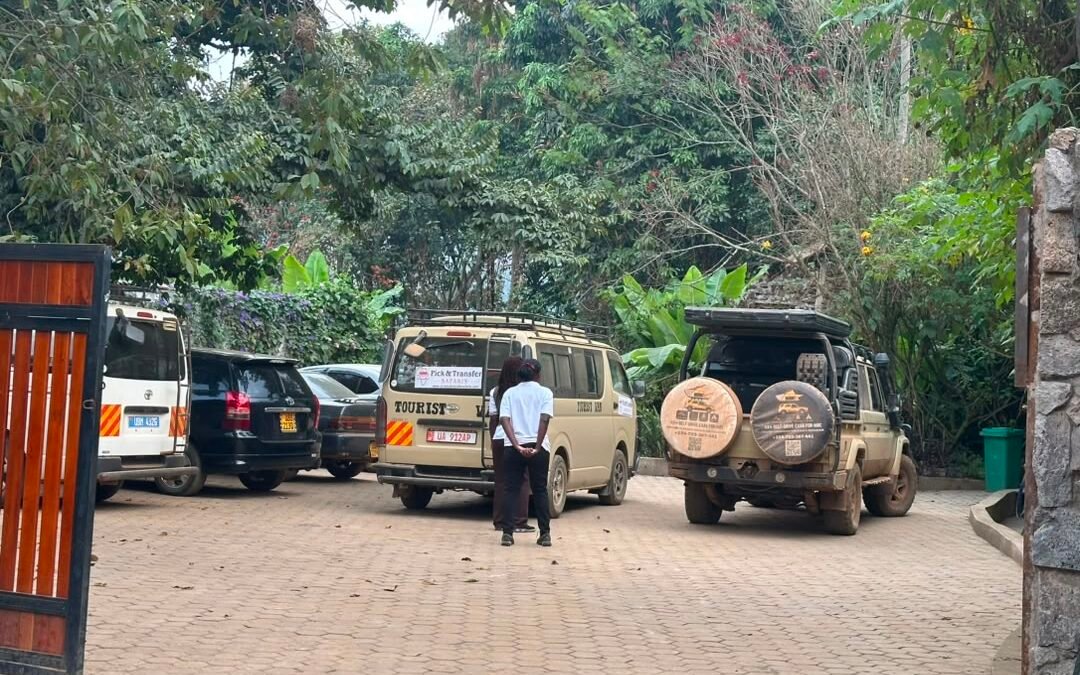
The vehicle you travel in matters more on this route than travellers sometimes expect. The tarmac road from Kigali to the Rwandan border and on toward Kisoro is generally excellent, but the final stretches into some Bwindi trekking sectors — particularly Rushaga and Nkuringo — run on unpaved, hilly murram roads that can turn slick after rain. A proper 4×4 safari vehicle with good clearance, rather than a standard sedan or minivan, is the standard and sensible choice for this route, and it’s worth confirming with any operator that this is what you’ll actually be travelling in.
If you’re travelling with a driver-guide rather than a self-drive setup, they’ll typically handle fuel stops, any checkpoint formalities on the Ugandan side, and timing the drive to arrive at the park with a comfortable buffer before the briefing cutoff — a detail that matters more than it sounds, since arriving even slightly late can mean being reassigned to a less convenient gorilla family or, in rare cases, missing the trek entirely.
What Actually Happens on Trekking Day
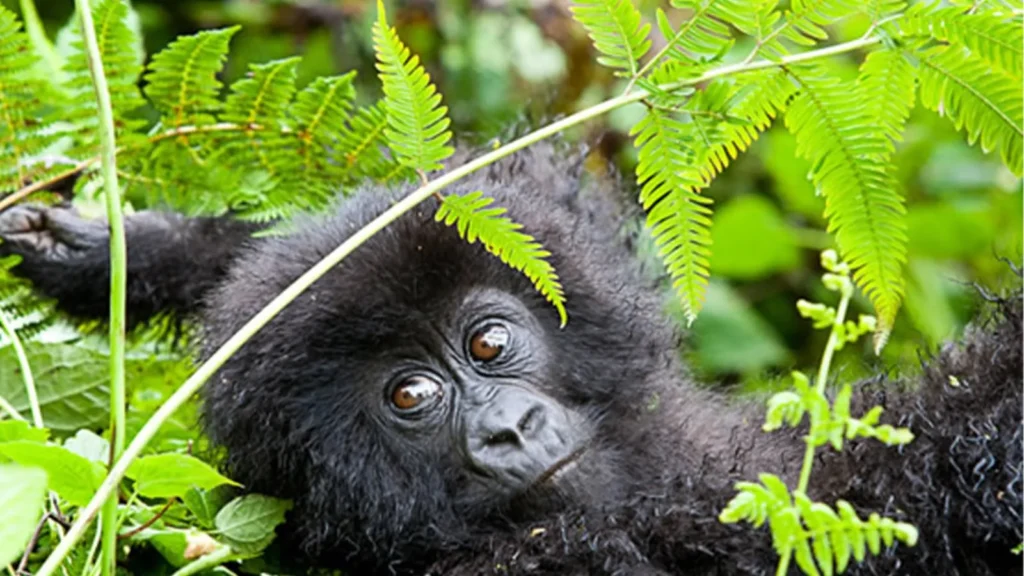
Knowing the shape of the day in advance removes most of the anxiety first-time trekkers feel, so it’s worth walking through it step by step.
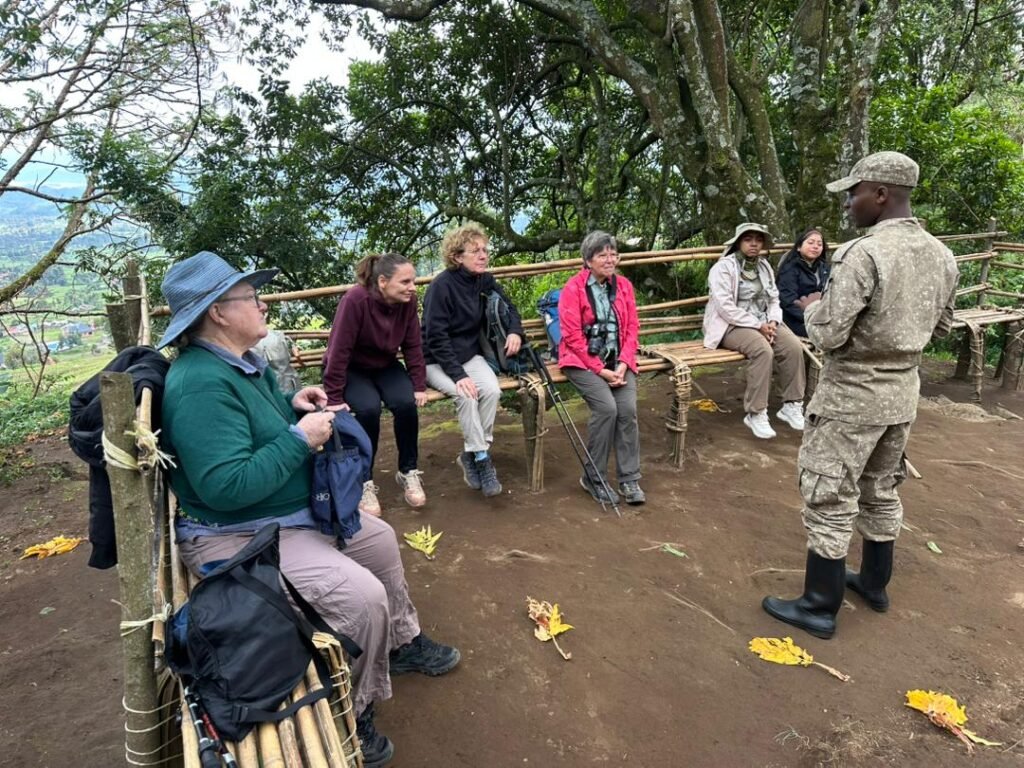
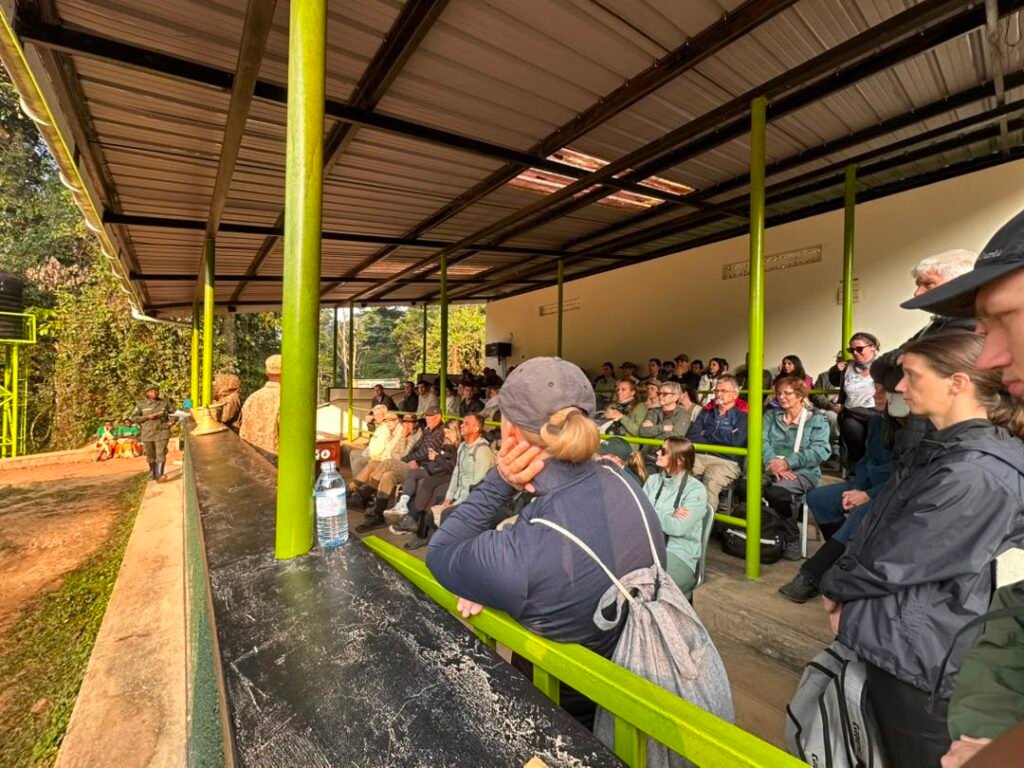
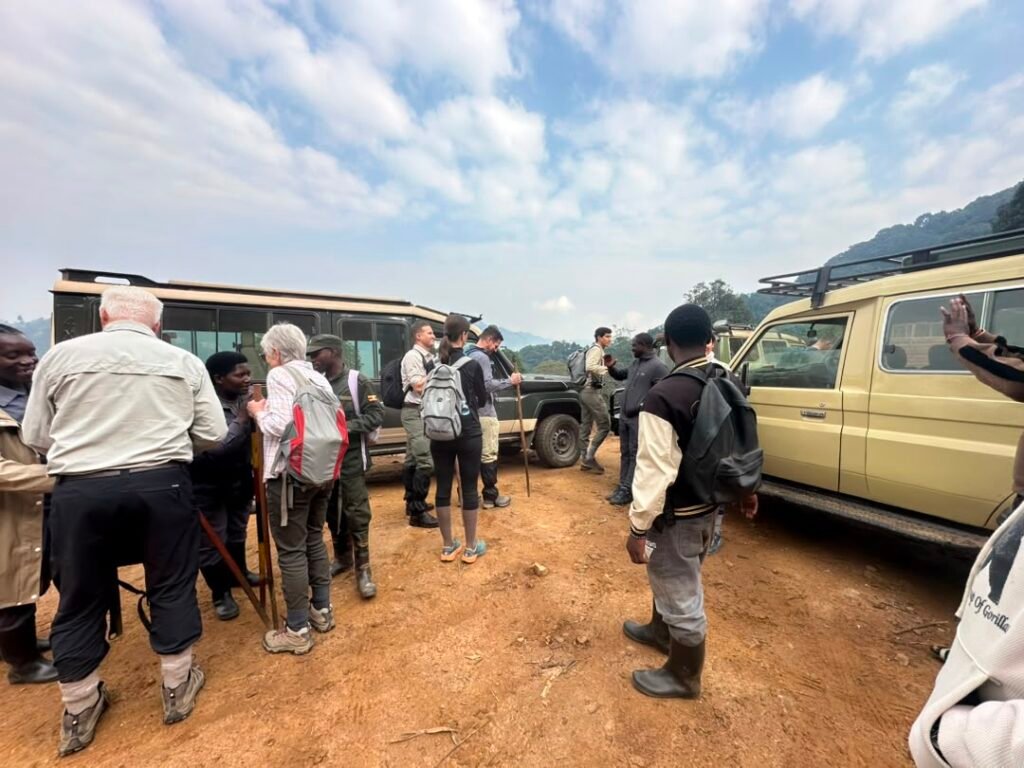
Most trekking days start early — a 5:30 or 6:00 am wake-up at your lodge, a quick breakfast (many lodges pack an early breakfast box if the drive to the park headquarters is long), and departure in time to reach the briefing point by 7:00–7:30 am. At the headquarters, rangers divide the day’s trekkers into groups of up to eight, matched loosely by fitness level and preference, and assign each group to a specific habituated gorilla family. A short briefing follows, covering the rules outlined earlier in this guide, safety procedures, and what to expect on the trail.
From there, a ranger and an armed guide (a formality, present for wildlife safety rather than any threat from the gorillas themselves) lead your group into the forest, following trackers who went ahead at dawn to locate the family based on the previous night’s nesting site. This is the unpredictable part: trekking time can run anywhere from 30 minutes to six hours depending on where the family has moved, the terrain, and the day’s weather. Guides set a pace suited to the group and take regular rest stops.
Once the trackers signal the family has been found, bags and walking poles are typically left with a support team a short distance away, and the final approach is made quietly, in single file, at the mandated distance. What follows is exactly one hour with the gorillas — watching them forage, rest, interact, and occasionally approach the group on their own terms — before the guides signal it’s time to withdraw. A certificate confirming your trek is usually issued back at park headquarters, and the group returns to lodges by early-to-mid afternoon, with the rest of the day free to rest, or continue toward your next destination.
Health, Vaccinations, and Safety Precautions
Beyond the yellow fever certificate required for entry into both Rwanda and Uganda, a few additional health precautions are worth planning ahead of a gorilla trekking trip.
Malaria is present in both countries at the altitudes surrounding the trekking parks, though risk is lower at higher elevations than in the lowland regions further from the parks; most travel health advisories still recommend antimalarial prophylaxis for the trip. Routine vaccinations (tetanus, hepatitis A and B, typhoid) are commonly recommended by travel clinics for the wider region, and it’s worth having this conversation with a doctor or travel health clinic four to six weeks before departure, since some vaccines require lead time to become effective.
Because mountain gorillas share close to 98% of human DNA, they are vulnerable to many of the same respiratory illnesses that circulate among humans, and a cold or flu that would be a minor inconvenience for a visitor can be genuinely dangerous for a gorilla family. This is why park authorities are strict about barring visibly unwell trekkers from the forest — if you develop symptoms in the days before your trek, tell your operator; permits can sometimes be rebooked for a later date or transferred rather than simply lost, though this isn’t guaranteed and depends on availability.
Travel insurance that specifically covers trekking at altitude and adventure activities is worth confirming before you go, along with checking that it covers the cost of the permit itself in case illness or an emergency forces a cancellation.
Responsible and Sustainable Gorilla Tourism
Mountain gorillas are one of conservation’s genuine good-news stories — their population has grown from under 300 individuals in the 1980s to just over 1,000 today, a recovery driven directly by the revenue and protection that regulated tourism provides. Understanding how that works helps put the cost of a permit into perspective.
A significant share of every gorilla permit fee is reinvested into park protection, anti-poaching patrols, and — in both Uganda and Rwanda — community revenue-sharing schemes that channel tourism income into schools, health clinics, and infrastructure in the villages bordering the parks. Choosing to hire a local porter, even if you don’t strictly need the physical assistance, is one of the most direct ways an individual traveller supports that community economy; porter fees go straight to local families, many of whom previously depended on the forest for farming or hunting before it became a protected national park.
Responsible trekking also means respecting the rules covered earlier in this guide not as bureaucratic inconvenience but as the actual mechanism that keeps this recovery on track — the distance limits, the one-hour cap, and the ban on trekking while unwell all exist specifically to prevent tourism from becoming the thing that undoes decades of conservation work. Operators who take this seriously, rather than treating it as a checkbox, tend to be the ones worth booking with.
Visa and Border Crossing Requirements
If your gorilla trek takes you from Rwanda into Uganda, you’re crossing an international border, and it pays to sort out the paperwork before you land in Kigali rather than at the immigration desk.
The good news is that the East Africa Tourist Visa was designed for exactly this kind of trip. A single visa, obtained in advance online, allows multi-entry travel between Rwanda, Uganda, and Kenya for 90 days, which means you can cross from Kigali into Uganda for your trek and back without needing separate visas for each country. Many nationalities can also obtain single-country visas on arrival at both the Rwandan and Ugandan borders, but applying online in advance avoids any risk of delay at a land border post, where queues can be unpredictable.
Bring a passport valid for at least six months beyond your travel dates, a yellow fever vaccination certificate (both Rwanda and Uganda require proof of yellow fever vaccination for entry), and printed or digital copies of your permit confirmation, since border officials occasionally ask to see proof of onward purpose of travel. A reliable tour operator will brief you on exactly which documents to carry and will handle the practical side of the crossing itself — most border posts used for gorilla trekking transfers are quieter, tourist-familiar crossings rather than major commercial ones, and the process with a licensed guide is typically straightforward and takes well under an hour.
How Many Days You Actually Need
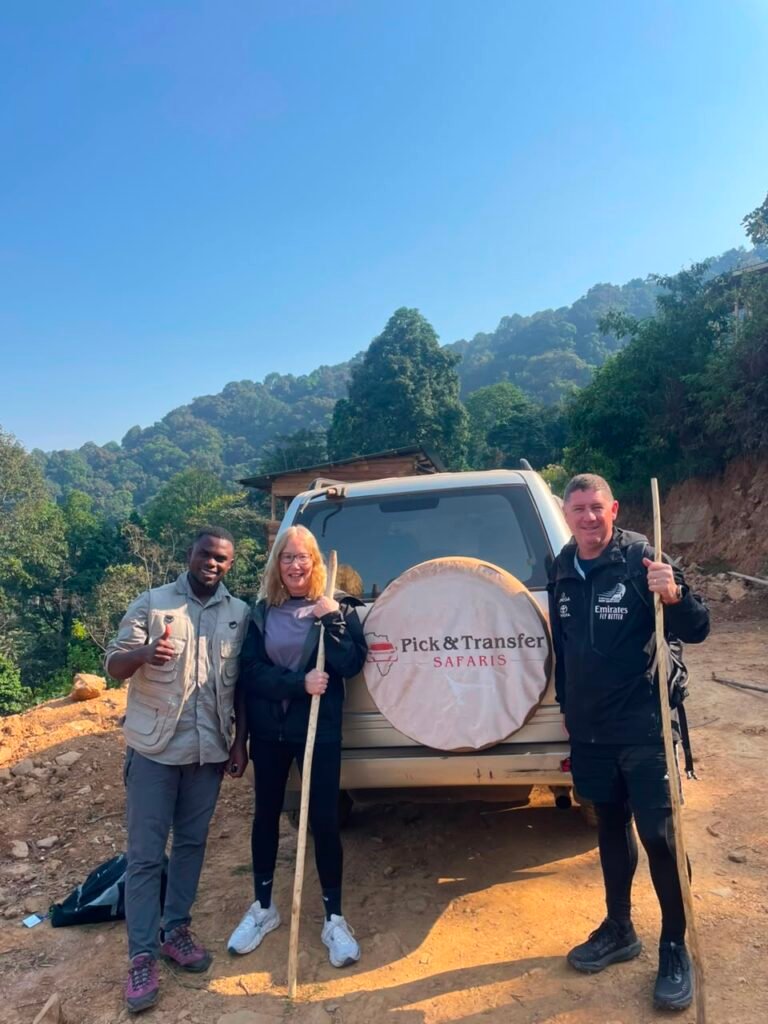
This is the question we get asked most often, and the honest answer is: it depends on how much time you have and how much you want to see beyond the gorillas themselves.
One day is possible if your permit is for Mgahinga or one of Bwindi’s southern sectors, and you’re comfortable with a very long day — an early departure from Kigali, the trek and briefing, and a return drive the same evening. It’s efficient but intense, and best suited to travellers on a tight stopover.
Two days is the sweet spot for most people trekking in Uganda from Kigali: drive and settle in on day one, trek on day two, return or continue your trip on day two evening or day three morning. It removes the pressure of a single marathon day while still being a short, affordable add-on to a broader trip.
Three to five days gives you room to combine gorilla trekking with other experiences — a second primate encounter like chimpanzee tracking, a cultural visit with the Batwa community, or a wildlife-focused stop in Queen Elizabeth National Park — without feeling rushed. Our 3 Days Uganda Gorilla Safari from Rwanda and 5 Days Uganda Gorilla and Chimps Safari starting from Rwanda are both built around this idea, and if you’d rather stay entirely within Rwanda, our 5 Days best of Rwanda Primate Safari and 3 Days Rwanda Gorilla Tracking and Cultural Tour cover the same territory without a border crossing at all.
If time genuinely isn’t a constraint, longer combined itineraries covering Uganda’s full primate and wildlife circuit — chimps, gorillas, and the Big Five — are worth considering, and you can browse the full range on our Gorilla Safaris page to compare lengths side by side.
A Sample 3-Day Itinerary: Kigali to Bwindi and Back
To make all of the above concrete, here’s roughly how a well-paced three-day gorilla trekking safari from Kigali actually unfolds in practice.
Day 1 — Kigali to Kisoro/Bwindi. An early pickup from your Kigali hotel or the airport, followed by the scenic drive south and west through Rwanda’s hills toward the Cyanika or Katuna border post. Border formalities are usually quick with a guide handling the process, and the drive continues into Uganda’s Kigezi highlands, arriving at a lodge near your assigned Bwindi trekking sector by mid-to-late afternoon. The rest of the day is free — many lodges here have views straight into the forest, and an early dinner and early night are the norm ahead of the next day’s trek.
Day 2 — The Gorilla Trek. An early breakfast and short transfer to park headquarters for the 7:00–7:30 am briefing, followed by the trek itself, the hour with the gorillas, and the return to headquarters for your trekking certificate. Afternoons are typically unstructured — rest at the lodge, a shorter nature walk, or, where the itinerary allows, an optional cultural visit with the local Batwa community, whose guided walks and performances offer insight into life in and around the forest before it became a protected park.
Day 3 — Return to Kigali (or onward). A more relaxed departure, retracing the route back across the border to Kigali, with time built in for the return crossing and a stop for lunch en route. Many travellers use this last day to build in a short stop in Kigali city itself — the Genocide Memorial or a walk through the city centre — before an evening flight out, rather than heading straight to the airport.
This same three-day structure is the backbone of our 3 Days Uganda Gorilla Safari from Rwanda itinerary, and it scales cleanly — drop the cultural visit and tighten the return drive and you have a two-day trip; add a Kibale Forest chimpanzee trek or a Queen Elizabeth National Park game drive on either end and you have a five-day one.
What to Pack for Gorilla Trekking
Gorilla trekking happens in dense, high-altitude rainforest, and the right gear genuinely changes how much you enjoy the hike itself.
- Sturdy, broken-in hiking boots with good ankle support and grip — this is not a trail for trainers.
- Gardening gloves or trekking gloves, useful for pushing through stinging nettles and gripping vegetation on steep sections.
- Long trousers and a long-sleeved shirt, tucked in, both to guard against nettles and biting insects.
- A waterproof, breathable rain jacket — rain is possible in any month.
- A warm mid-layer for the cool early morning briefing, which you’ll likely shed once the trek and equatorial humidity kick in.
- Gaiters if you have them, to keep mud and insects out of your boots.
- A daypack for water, snacks, and camera gear, ideally with a rain cover.
- A reusable water bottle — at least 1.5 to 2 litres, since treks can run from thirty minutes to several hours depending on where the gorilla family has moved.
- Insect repellent and sun protection, both needed despite the forest canopy.
- A camera with a good zoom lens; flash photography is not permitted near the gorillas.
- Cash in small denominations for porter tips — hiring a local porter (around $15–20) is strongly encouraged, both for the practical help on steep terrain and because it directly supports the communities living alongside the park.
Pack light for the trek itself; most travellers leave the bulk of their luggage at the lodge and carry only a small daypack into the forest.
Fitness Level and Trekking Difficulty
Gorilla trekking is often described as moderate to strenuous, and that range exists because trek duration is genuinely unpredictable — gorilla families move daily, and rangers track them fresh each morning before guiding your group in. Some treks reach a family within 45 minutes; others take four to six hours through steep, muddy, densely vegetated terrain at altitudes between 1,500 and 2,900 metres.
You don’t need to be an athlete, but a reasonable baseline of fitness — the ability to walk briskly uphill for an hour or more without stopping — makes a real difference to how much you enjoy the experience rather than endure it. Porters are available at every trailhead specifically to help less mobile or less confident trekkers, including support up steep or slippery sections, and sedan-chair transport can be arranged in both Uganda and Rwanda for travellers with mobility limitations who still want to reach their gorilla family. If you have any concerns about fitness, mention them to your operator when booking — permits can sometimes be matched to gorilla families known to range closer to the trailhead.
Once you reach the gorillas, the reward is the same for every visitor regardless of how hard the walk was to get there: exactly one hour in the company of a wild gorilla family, at a safe, ranger-managed distance, before the group heads back out of the forest.
A few practical fitness notes worth planning around: the altitude itself (Bwindi and Volcanoes both sit above 1,500 metres, with some trekking sectors closer to 2,500–2,900 metres) can leave even reasonably fit travellers a little more breathless than expected, particularly on the steeper opening stretches. Trekking poles, either brought from home or rented cheaply at the park headquarters, are genuinely useful on the descent as well as the climb, and are worth taking even if you don’t think you’ll need them. If you’re trekking during the wet season, expect the terrain to add a meaningful extra layer of difficulty regardless of your fitness level, simply from the mud and slippery footing rather than the incline itself — factor this into your expectations rather than your training.
Where to Stay: Kigali and the Parks
Because most gorilla safaris from Kigali involve at least one night at or near the trekking park, accommodation planning happens in two parts.
In Kigali, options range from international-standard hotels in the city centre to boutique guesthouses closer to the airport, useful if you’re arriving late or departing early. A single night here, either before you head out to the parks or after your trek, is a comfortable way to buffer against flight delays and gives you time to see Kigali City itself.
Near the parks, lodges range from budget guesthouses to luxury eco-lodges perched on the forest edge with views into the Virunga volcanoes or over Bwindi’s canopy. Mid-range lodges — comfortable, well-run, reasonably priced — are what most of our itineraries are built around, since they strike the right balance for travellers who want a good night’s sleep before an early trekking start without paying luxury-lodge prices for a one- or two-night stay. Where a trip is built around a specific park or trekking sector, the lodge recommendation is matched to minimise the drive to the park headquarters on trekking morning, since arriving late for the 7–8 am briefing risks losing your place on the trek entirely.
Photography Tips for Your Gorilla Trek
With only one hour in front of the gorillas, it’s worth thinking through your camera setup before you’re standing in the forest rather than fumbling with settings once you’re there.
Low light is the biggest technical challenge — the forest canopy filters out a lot of available light, and flash is prohibited, so a camera capable of shooting at a higher ISO without excessive noise, or a fast lens (f/2.8 or wider), makes a real difference. A mid-range zoom, roughly 70–200mm equivalent, tends to be more useful than an ultra-telephoto, since gorillas are frequently much closer than the mandated distance suggests once they move on their own accord, and a very long lens can leave you unable to focus at close range. A second, wider lens or a phone camera is worth having on hand too, for shots that capture the scene and the group rather than just the gorillas themselves.
Practical logistics matter as much as gear: bring spare batteries and memory cards, since there’s no opportunity to charge anything mid-trek, and keep your camera in a dry bag or rain cover given the near-certainty of humidity or rain at some point during the hike in. Above all, most guides encourage putting the camera down for at least part of the hour — it’s easy to spend the entire encounter looking through a viewfinder and realise afterward you barely watched the moment itself.
Gorilla Trekking Rules and Etiquette
Mountain gorillas are critically endangered and highly susceptible to human respiratory illnesses, which is why both Uganda and Rwanda enforce a strict set of rules designed to protect them as much as to protect visitors.
- Maximum group size is eight visitors per gorilla family, per day.
- Maximum time with the gorillas is one hour, regardless of how far you had to hike to reach them.
- Minimum distance of roughly 7 metres (varies slightly by park) must be maintained from the gorillas at all times, though gorillas themselves sometimes close that distance voluntarily.
- No visitors showing symptoms of illness — coughs, colds, flu — are permitted to trek, both for the gorillas’ safety and other visitors’.
- Flash photography is banned, and voices should stay low.
- Eating, drinking, and smoking are prohibited in the immediate presence of the gorillas.
- Children under 15 are generally not permitted to trek, in line with UWA and RDB policy.
- If you need to cough or sneeze, turn away from the gorillas and cover your mouth.
Rangers and guides manage the encounter closely and will position your group for the best (and safest) viewing angles. Following their instructions immediately, without exception, is part of what keeps both the gorillas and visitors safe on every trek.
It’s also worth knowing that gorillas themselves don’t always respect the 7-metre rule — a curious juvenile or a silverback moving through his usual territory will occasionally walk directly past or even through a trekking group, entirely on his own terms. When this happens, the correct response is simple: stay still, stay quiet, avoid direct eye contact with a silverback, and let the guide manage the moment. It’s one of the more startling and, for most visitors, most memorable parts of the entire experience.
Combining Gorilla Trekking with Other Experiences
Because Kigali sits within striking distance of both Rwanda’s and Uganda’s premier wildlife areas, very few travellers treat gorilla trekking as a completely standalone trip — and you shouldn’t have to either.
Popular add-ons include chimpanzee tracking in Uganda’s Kibale Forest, often billed as the primate capital of the world; a game drive and boat safari through Queen Elizabeth National Park or Rwanda’s own Akagera National Park for a Big Five experience alongside your primates; golden monkey tracking, a lighter, shorter trek available in both the Virunga and Mgahinga ranges; and cultural visits with the Batwa forest communities, who lived in these forests for generations before the parks were established and now offer guided cultural walks and performances.
Our 5 Days Uganda Gorilla and Chimps Safari starting from Rwanda pairs gorillas with chimpanzee tracking in a single well-paced week, while our 5 Days best of Rwanda Primate Safari combines Volcanoes gorillas with Akagera’s savannah wildlife entirely within Rwanda. If a broader circuit of destinations appeals to you, our full Destinations page lays out every park across Uganda and Rwanda that pairs naturally with a gorilla trek, from Queen Elizabeth National Park to Nyungwe Forest National Park.
Budgeting for a Gorilla Trekking Safari from Kigali
A realistic budget for a gorilla trekking safari from Kigali needs to account for four main cost categories: the permit itself, ground transport, accommodation, and park/park-related fees.
The permit is by far the largest single line item — around $700–800 in Uganda, or roughly $1,500 in Rwanda, per person, non-negotiable and set by the respective wildlife authority. Ground transport, including a 4×4 vehicle, driver-guide, and fuel for the Kigali-to-park transfer and return, typically forms the second-largest cost, and is one of the areas where a well-organised operator delivers real value, since a shared or well-routed vehicle spreads that cost efficiently. Accommodation ranges enormously — from around $50–80 per night at budget guesthouses near the parks to several hundred dollars a night at high-end eco-lodges — and is usually the most flexible part of the budget to adjust up or down. Finally, budget for porter tips (roughly $15–20), guide and driver gratuities, meals not included in your package, and any optional add-ons like golden monkey tracking or a cultural village visit.
All-inclusive packages, where permits, transport, accommodation, and meals are bundled into a single quoted price, are generally the most cost-effective and lowest-stress way to book — they remove the guesswork of pricing each component separately and, critically, guarantee your permit is secured well ahead of your travel dates.
As a rough working figure, a two-day Uganda gorilla trekking safari from Kigali for one person, built around a mid-range lodge, a shared 4×4 vehicle, and a single Uganda gorilla permit, tends to land somewhere in the region of $1,000–$1,400 per person all-in, with private vehicles, luxury lodges, or a Rwanda permit pushing that figure considerably higher. Travelling as a couple or small group brings per-person transport and vehicle costs down noticeably, since the vehicle and driver-guide fee is typically spread across the group rather than charged per head.
On payment logistics: most operators require a deposit at booking — largely because the permit itself must be paid for and secured with UWA or RDB well before your arrival — with the balance due closer to travel or on arrival. US dollars in cash (newer notes, ideally 2013 or later, in good condition) remain widely preferred for tips, incidentals, and some park fees across both countries, so it’s worth arriving with a reasonable supply rather than relying solely on cards, which aren’t reliably accepted at rural lodges or park headquarters.
Choosing the Right Tour Operator
Because a gorilla permit is non-refundable and tied to a specific date, and because the logistics of a Kigali-to-park transfer (and, often, an international border crossing) genuinely benefit from local expertise, the operator you choose matters more here than on most trips.
Look for an operator who is transparent about what’s included in the quoted price — permit, transport, accommodation, meals, and guide fees should all be clearly itemised rather than bundled into a vague total. Ask how they handle permit booking specifically: a reputable operator books directly with UWA or RDB and can show you confirmation once secured, rather than promising to “sort it closer to the date.” Check whether their vehicles and drivers are suited to the terrain — a proper 4×4 matters on the unpaved stretches near some trekking sectors — and whether they offer flexibility if a border crossing or trek needs to be rescheduled around weather or logistics.
A few concrete questions are worth asking any operator before you commit: Can they name the specific gorilla family or trekking sector your permit is likely to be assigned to? Do they provide a written itinerary with lodge names, not just “similar standard” placeholders? What’s their policy if a border crossing, a road, or a permit date needs to shift at short notice? And do they carry appropriate insurance and licensing to operate cross-border transfers between Rwanda and Uganda, rather than only within one country? Operators who answer these clearly, quickly, and specifically — rather than with vague reassurance — are generally the ones who’ve actually run this exact route many times before.
At Pick and Transfer Safaris, our packages are built specifically around the Kigali-departure logistics described in this guide — permit booking, border documentation, vehicle and driver, lodge selection matched to trekking-morning timing — because that combination is exactly what most Kigali-based travellers are trying to solve for. If you’d rather compare a second operator’s take on the same route and pricing, Kenlink Tours also run well-regarded Uganda and Rwanda gorilla itineraries and publish useful independent detail on permit costs and trekking sectors worth cross-checking before you book.
Frequently Asked Questions
Can I trek gorillas in Uganda if I’m based in Kigali, without flying into Entebbe at all? Yes — this is precisely the trip this guide is built around. You can fly into Kigali, drive to Bwindi or Mgahinga in a matter of hours, trek, and return to Kigali or continue onward, without ever routing through Entebbe.
How far in advance should I book my gorilla permit? At least two to three months ahead for regular travel dates, and four to six months ahead if you’re travelling during July–August or the December holiday peak, when permits for both countries sell out fastest.
Is gorilla trekking safe? Yes. Treks are led by armed park rangers, gorilla families used for trekking are habituated to human presence over years, and strict distance and group-size rules are enforced on every visit. Serious incidents are extremely rare.
What happens if it rains on my trekking day? The trek proceeds regardless of weather — permits are date-specific and non-refundable for rain. This is exactly why proper rain gear is essential packing, not optional extra.
Can I do gorilla trekking and be back in Kigali the same day? For Rwanda’s Volcanoes National Park, yes, comfortably. For Uganda’s parks, only the closest sectors (Mgahinga, or Bwindi’s southern sectors via Kisoro) make a same-day return realistic, and it makes for a very long day.
Do I need a visa to cross from Rwanda into Uganda for the trek? Most nationalities do, though the East Africa Tourist Visa covers multi-entry travel across Rwanda, Uganda, and Kenya on a single visa, which is the simplest option if your trip crosses the border.
Can I take photos and videos of the gorillas? Yes, and it’s one of the highlights of the trek — just switch off your flash. Video is generally permitted too, though check with your guide, as specific rules can vary slightly by park.
What’s the minimum age for gorilla trekking? Both Uganda and Rwanda set the minimum age at 15 years old, a rule tied to the physical demands of the trek and the need to manage close-contact behaviour reliably around the gorillas.
Is it possible to see gorillas without a strenuous hike? Sedan chairs, carried by a team of local porters, are available in both countries for travellers with mobility limitations, and some gorilla families do range closer to trailheads than others — worth flagging with your operator at booking stage.
What should I do if I can’t get a permit for my preferred dates? Consider shifting between Uganda and Rwanda — the two countries’ permit allocations are entirely separate, so a sold-out date in one country may still be open in the other — or trekking golden monkeys as a shorter, less in-demand alternative primate experience while you wait for a gorilla permit slot to open on a later date.
Final Thoughts: Planning Your Gorilla Trekking Safari from Kigali
If you’re ready to start putting dates on a calendar, our Gorilla Safaris starting from Kigali page lays out every itinerary length side by side, from a single intensive day to a full week combining gorillas, chimpanzees, and East Africa’s classic wildlife. Or, if you’d rather talk through your dates, budget, and fitness level with a real person before committing to a plan, get in touch with our team and we’ll help you build the right itinerary from Kigali, start to finish. This is how to plan a Gorilla trekking safari from Kigali.
If you’re ready to start putting dates on a calendar, our Gorilla Safaris starting from Kigali page lays out every itinerary length side by side, from a single intensive day to a full week combining gorillas, chimpanzees, and East Africa’s classic wildlife. Or, if you’d rather talk through your dates, budget, and fitness level with a real person before committing to a plan, get in touch with our team and we’ll help you build the right itinerary from Kigali, start to finish.