- LET'S PLAN YOUR SAFARI
- +256 200 921 002
- +256 793 194 703
- info@pickandtransfersafaris.com

Kigali to Rushaga for gorilla trek
Kigali to Rushaga for gorilla trek. Of all the ways to reach Uganda’s gorillas from Kigali, the route to Rushaga, in the southern reaches of Bwindi Impenetrable Forest, has become the default choice for a simple reason: it offers the widest selection of habituated gorilla families reachable from Rwanda’s capital in a single comfortable drive. For travellers weighing up where to trek from Kigali to Rushaga for gorilla trek, Rushaga consistently comes out ahead on permit availability, trekking variety, and drive time — without the premium pricing of Rwanda’s own Volcanoes National Park.
This guide covers everything involved in planning a Kigali to Rushaga gorilla trek — the route itself, the border crossing, what makes Rushaga’s gorilla families different from those in Bwindi’s other sectors, permit and visa logistics, and how to decide whether one day, two days, or longer suits this specific route best. At Pick and Transfer Safaris, Rushaga is the sector we route the majority of our Kigali-departure gorilla safaris through, precisely because it strikes the best balance of accessibility and choice for travellers starting in Rwanda.
This guide covers everything involved in planning a Kigali to Rushaga for gorilla trek — the route itself, the border crossing, what makes Rushaga’s gorilla families different from those in Bwindi’s other sectors, permit and visa logistics, and how to decide whether one day, two days, or longer suits this specific route best. At Pick and Transfer Safaris, Rushaga is the sector we route the majority of our Kigali-departure gorilla safaris through, precisely because it strikes the best balance of accessibility and choice for travellers starting in Rwanda for their gorilla trek.
Whether you’ve already settled on Rushaga for your Kigali to Rushaga for gorilla trek or you’re still comparing it against Uganda’s other trekking sectors, this guide is written to answer the practical questions that come up most in the weeks before departure — from what the drive actually looks like, to which border post you’ll cross, to what makes Rushaga’s gorilla families genuinely different from those found elsewhere in Bwindi.
The following sections will guide you through everything you need to know for your Kigali to Rushaga for gorilla trek.
For anyone planning a Kigali to Rushaga for gorilla trek, understanding the geography of Bwindi Impenetrable Forest is crucial as it influences your trekking experience.
When considering a Kigali to Rushaga for gorilla trek, permit availability is a key factor, and Rushaga offers excellent options for trekkers.
If you’re planning your Kigali to Rushaga for gorilla trek, understanding the drive time and conditions is essential to your overall experience.
The route for your Kigali to Rushaga for gorilla trek is well-defined, and knowing the details will help set expectations.
Planning for your Kigali to Rushaga for gorilla trek involves several important considerations, including travel logistics and accommodation.
The drive from Kigali to Rushaga is scenic and well worth the journey for your Kigali to Rushaga for gorilla trek.
The first leg, from Kigali to the Cyanika border, is an essential part of your Kigali to Rushaga for gorilla trek, covering beautiful landscapes.
Preparing for the trek is crucial, and ensuring you’re ready for your Kigali to Rushaga for gorilla trek makes a big difference in your experience.
Distance and road conditions are important to consider for a successful Kigali to Rushaga for gorilla trek.
Weather will play a role in your Kigali to Rushaga for gorilla trek, impacting the drive and the trek itself.
Whether you’ve already settled on Rushaga or you’re still comparing it against Uganda’s other trekking sectors, this guide is written to answer the practical questions that come up most in the weeks before departure — from what the drive actually looks like, to which border post you’ll cross, to what makes Rushaga’s gorilla families genuinely different from those found elsewhere in Bwindi.
Making sure you understand the border crossing process is essential for your Kigali to Rushaga for gorilla trek.
The crossing at Cyanika is a crucial step in your Kigali to Rushaga for gorilla trek.
Understanding the crossing formalities will make your Kigali to Rushaga for gorilla trek smoother.
Taking a break at Cyanika allows for a moment to prepare for your Kigali to Rushaga for gorilla trek.
As you approach Rushaga, the anticipation builds for your Kigali to Rushaga for gorilla trek.
With numerous gorilla families available, Rushaga offers a unique opportunity for your Kigali to Rushaga for gorilla trek.
The variety of trails and families at Rushaga enhances your Kigali to Rushaga for gorilla trek.
Why Rushaga Is the Top Choice for Kigali-Based Trekkers
When comparing Rushaga to other sectors, the reasons for choosing it for your Kigali to Rushaga for gorilla trek become clear.
Buhoma and Ruhija are alternatives, but they’re less convenient for your Kigali to Rushaga for gorilla trek.
When planning your Kigali to Rushaga for gorilla trek, consider the ease of access Rushaga provides.
Bwindi Impenetrable Forest is not a single trekking site — it’s divided into four separate sectors, each with its own headquarters, road network, and set of habituated gorilla families: Buhoma and Ruhija in the north, and Rushaga and Nkuringo in the south. For anyone starting their trip in Kigali rather than Entebbe or Kampala, this geography matters enormously, because Rushaga and Nkuringo sit dramatically closer to the Rwanda border than Bwindi’s northern sectors, cutting hours off the total drive.
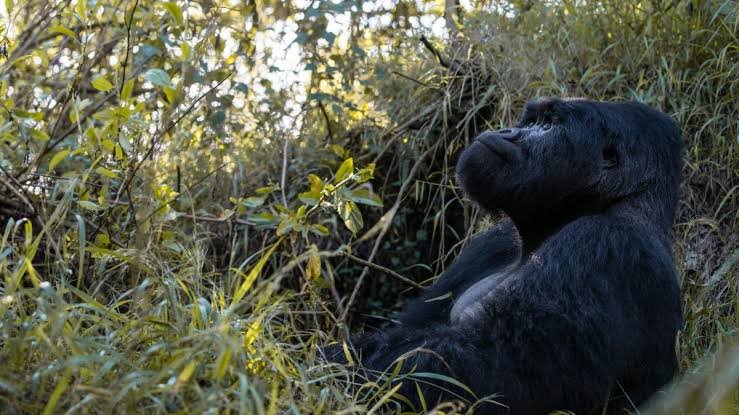
Rushaga specifically has become the preferred sector for Kigali-based trekkers for a second reason beyond proximity: it hosts more habituated gorilla families than any other single sector in Bwindi — currently eight or more, depending on the season — which means significantly better permit availability during peak months when other sectors sell out weeks or months in advance. Rushaga is also the only sector in Uganda offering the gorilla habituation experience, an extended, up-to-four-hour encounter with a gorilla family still in the process of becoming fully habituated to human presence, for travellers who want more time in the forest than the standard one-hour trek allows.
Put simply: if you’re planning a gorilla trek from Kigali and haven’t yet settled on a specific sector, Rushaga is very often where you’ll end up, and this guide is built around exactly that route.
The Route: Kigali to Rushaga Explained
Planning Your Trip: Kigali to Rushaga for Gorilla Trek
The drive from Kigali to Rushaga runs southwest out of the Rwandan capital, through the country’s terraced central highlands, toward the Cyanika border post near Kisoro, before continuing into Uganda’s Kigezi highlands and on to Rushaga’s park headquarters at Nyakagyezi.
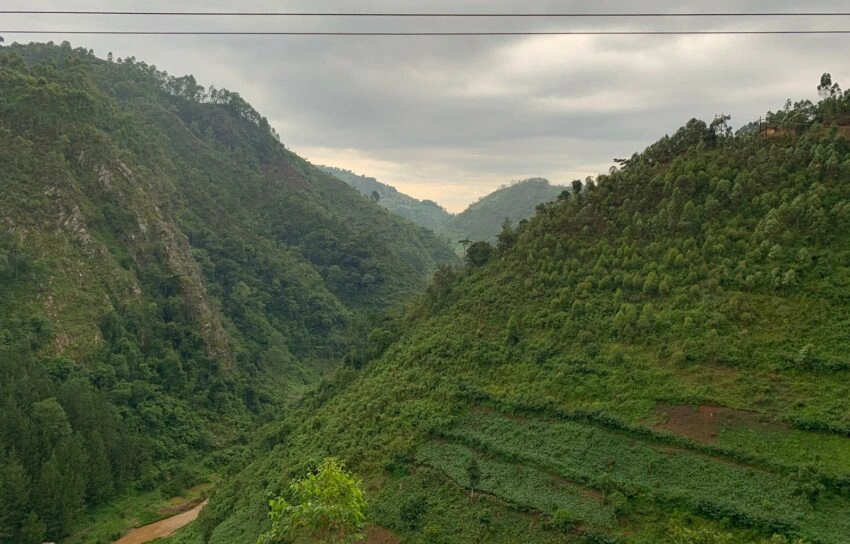
The first leg, from Kigali to the Cyanika border, covers roughly 2.5–3 hours on well-maintained, largely paved Rwandan roads through some of the country’s most scenic hill country — a drive worth enjoying in its own right, not simply enduring as transit time. After crossing into Uganda, the route continues through Kisoro town and into the hills surrounding Bwindi’s southern edge, with the final stretch to Rushaga’s headquarters running on unpaved, sometimes steep murram roads that can turn slippery in wet weather. All told, the full Kigali-to-Rushaga drive typically takes 4 to 4.5 hours, making it one of the more efficient park-access routes available from Rwanda’s capital.
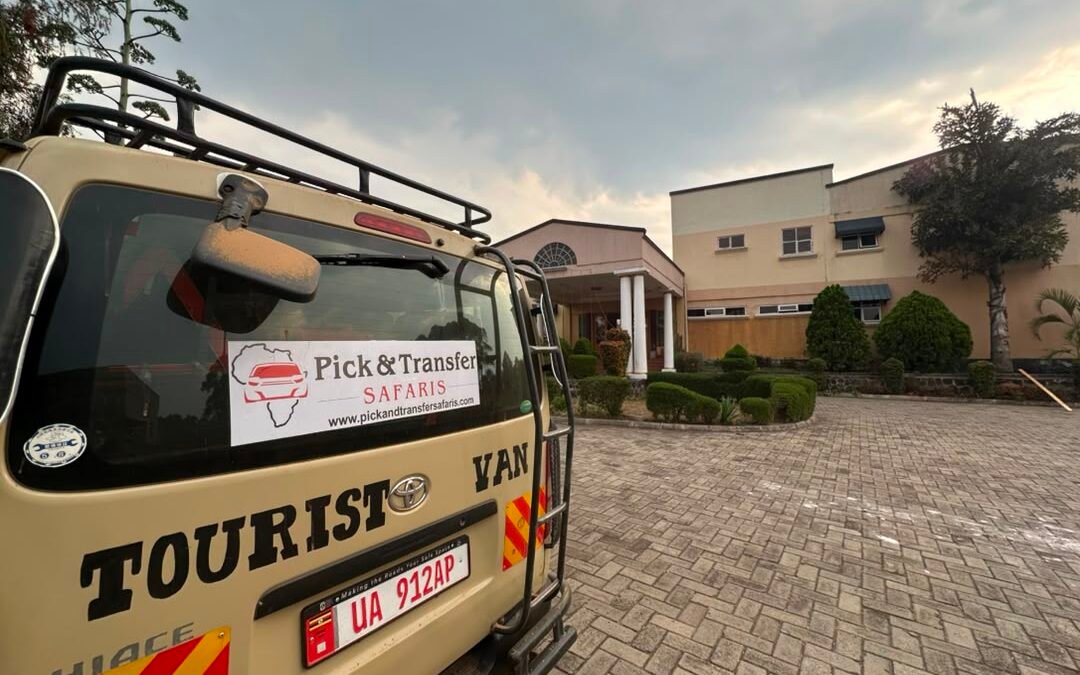
Because the final approach to Rushaga runs on unpaved terrain, the vehicle you travel in matters more on this route than on some others — a proper 4×4 with good clearance is the standard choice, and it’s worth confirming with any operator that this is genuinely what you’ll be travelling in rather than a standard minivan better suited to tarmac roads.
Distance, Driving Time, and Road Conditions
In pure distance, Kigali to Rushaga covers approximately 200–220 kilometres, but road conditions rather than distance alone determine actual travel time. The Rwandan stretch, from Kigali to the border, is fast and well-surfaced, typically covered at a steady pace with minimal delay outside of occasional roadworks. Once across the border, the drive through Kisoro town remains reasonably good, but the final 20–30 kilometres into Rushaga itself climb steeply through hill terrain on unpaved roads, where travel speed drops considerably regardless of vehicle quality.
Weather has a real effect on this final stretch specifically. In the dry seasons — June to September and December to February — the murram road into Rushaga is firm and manageable, adding only modest extra time compared with tarmac driving. In the wet seasons — March to May and October to November — the same stretch can become slick and rutted, occasionally adding 30–45 minutes to the final approach. Experienced local drivers factor this into departure timing automatically, which is one more reason to travel with an operator who runs this specific route regularly rather than one unfamiliar with Rushaga’s access road.
Border Crossing: Cyanika for the Rushaga Route
The Cyanika border post, connecting Rwanda’s Musanze district to Uganda’s Kisoro district, is the standard crossing point for the Kigali-to-Rushaga route, and it’s a smaller, quieter, more tourist-familiar post than the larger Katuna/Gatuna crossing further north — a genuine advantage for travellers heading specifically to Bwindi’s southern sectors.
Crossing typically involves standard exit formalities on the Rwandan side, a short walk or drive across the border zone, and entry formalities into Uganda, including a check of your visa or entry permit and your yellow fever vaccination certificate. With a guide handling the paperwork, the process usually takes between 20 and 45 minutes depending on how busy the post is that morning — mornings tend to be quieter than midday, which works in your favour given the early departure most Rushaga-bound itineraries require.
Because Cyanika sits so close to Kisoro, many operators use it as a natural stop for a quick break — fuel, a bathroom stop, or a coffee — before continuing the final, slower stretch into Rushaga itself.
Rushaga Sector Overview: Gorilla Families and the Habituation Experience
Rushaga’s defining feature is choice. Where some Bwindi sectors offer only one or two habituated gorilla families, Rushaga hosts eight or more, spread across several trailheads within the sector, each with its own typical trekking distance and terrain profile. This depth of choice is what makes Rushaga’s permit availability noticeably more forgiving than other sectors during peak season — even when the most popular families are fully booked, Rushaga usually has capacity somewhere within the sector.
Rushaga is also the exclusive home, within Uganda, of the gorilla habituation experience — a specialised permit, separate from the standard trekking permit, that allows a maximum of four visitors to spend up to four hours with researchers and trackers working to habituate a gorilla family that isn’t yet fully accustomed to human presence. It’s a significantly more immersive, research-oriented encounter than the standard one-hour trek, priced higher accordingly, and worth considering specifically for travellers with a genuine interest in gorilla behaviour and conservation work rather than simply the sighting itself. Because it requires more time in the forest, the habituation experience is generally better suited to a two-day itinerary from Kigali than a compressed one-day trip.
Rushaga’s trailheads are also spread across a genuinely varied landscape, from gentler lower slopes near the headquarters to steeper terrain further into the forest, which means the specific gorilla family your group is assigned to can meaningfully change how the trek itself feels on the day — a detail worth keeping in mind if you have particular preferences around trekking distance or difficulty, since guides can sometimes accommodate that preference when assigning groups at the morning briefing.
Rushaga vs. Bwindi’s Other Sectors: A Quick Comparison
Understanding how Rushaga stacks up against Bwindi’s other three sectors helps explain why it’s become the default recommendation for Kigali-based trekkers specifically, rather than simply the closest option by default.
Buhoma, in Bwindi’s north, is the park’s original and most established sector, with the widest range of lodges and the gentlest average trekking terrain — but it sits 6–7 hours from Kigali, making it far better suited to travellers arriving via Entebbe or Kampala than via Rwanda.
Ruhija, also in the north, offers a quieter, less-visited alternative to Buhoma with strong birding alongside gorilla trekking, but shares the same long drive time from Kigali, putting it outside realistic range for most Kigali-departure itineraries.
Nkuringo, Rushaga’s southern neighbour, sits at a similarly convenient distance from Kigali — often cited as marginally more scenic, with dramatic views over the Virunga volcanoes from its ridge-top headquarters — but hosts fewer habituated families than Rushaga, which can mean tighter permit availability during peak season.
Rushaga, by comparison, combines Nkuringo’s convenient distance from Kigali with the largest number of habituated gorilla families in the entire park, plus the exclusive option of the gorilla habituation experience. For travellers prioritising permit flexibility and trekking variety over scenery alone, this combination is what tips the decision toward Rushaga for most Kigali-based itineraries — though Nkuringo remains a strong alternative if your preferred Rushaga family happens to be unavailable on your travel dates.
Photography Tips for Rushaga’s Forest
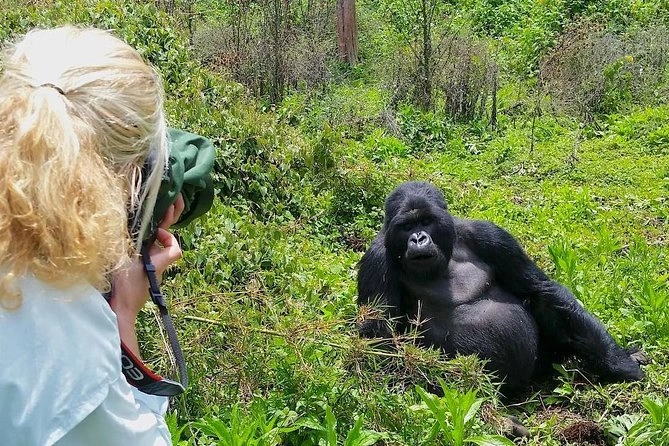
Rushaga’s dense canopy and steep terrain present unique photography challenges due to low light conditions, necessitating a camera capable of high ISO performance or a fast lens (around f/2.8). Flash photography is not allowed, so a mid-range zoom lens (approximately 70–200mm equivalent) is more practical than an ultra-telephoto lens, as gorillas often come closer than the required distance, making long lenses less effective for close-range focus.
Because Rushaga’s trails involve genuine elevation change, a lighter camera setup is worth considering over a heavier professional kit if you’re also carrying a full daypack — a single versatile zoom lens will serve you better on this terrain than switching between multiple lenses mid-trek. Bring spare batteries and memory cards regardless, since there’s no opportunity to recharge anything in the forest, and keep everything in a dry bag or rain cover given how often Rushaga’s forest interior stays damp even outside the official wet season.
Best Time of Year for the Kigali-Rushaga Route
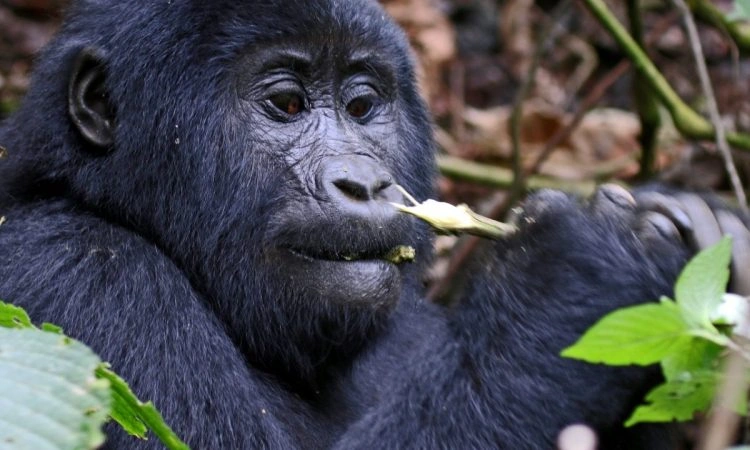
Gorilla trekking at Rushaga runs year-round, since gorilla families don’t migrate and permits are available every month, but timing still shapes both the drive and the trek itself.
The dry seasons — roughly June to September and December to February — offer the firmest conditions on Rushaga’s unpaved access road and the least slippery trails once you’re in the forest, making them the most popular and heavily booked months. Given Rushaga’s relatively strong permit availability compared with other sectors, booking two to three months ahead is usually sufficient even in peak season, though the July–August and December holiday periods can still sell out the most in-demand families closer to headquarters.
The wet seasons — roughly March to May and October to November — bring heavier rain, a slower final approach into Rushaga, and muddier, more physically demanding trekking conditions in Bwindi’s dense forest interior. In exchange, they offer quieter trails, lower lodge rates, and lush, dramatic scenery on both the Rwandan and Ugandan stretches of the drive. Rushaga’s forest terrain tends to be steep regardless of season, so wet-season trekkers should be prepared for genuinely challenging underfoot conditions rather than a minor inconvenience.
One Day, Two Days, or Longer: Matching the Route to Your Time
Because Rushaga sits closer to Kigali than Bwindi’s northern sectors, it’s one of the few Bwindi trekking areas where a genuine one-day round trip from Kigali is realistic, though still demanding.
A one-day Rushaga trek requires departure from Kigali around 3:30–4:00 am to allow for the roughly 4–4.5 hour drive, the trek itself, and the return journey, arriving back in Kigali in the early evening at the earliest. It’s achievable and increasingly popular for travellers on a tight stopover, but it leaves no real buffer for delays at the border or a longer-than-expected trek. Our one-day Uganda Gorilla Safari Starting from Kigali is built around exactly this kind of compressed single-day itinerary.
A two-day Rushaga trek removes the pre-dawn start entirely — a relaxed departure on day one, an overnight near Rushaga’s headquarters, and a well-rested trek on day two — and is the itinerary we recommend most often for this specific route, since it turns a demanding single day into two comfortable ones. Our 2 Days Uganda Gorilla Tour Starting from Kigali follows this structure closely.
A three-day or longer itinerary gives you room to add the gorilla habituation experience, a cultural visit with the local Batwa community, or a second primate encounter elsewhere in Uganda, without rushing any single element. Our 3 Days Uganda Gorilla Safari from Rwanda and 5 Days Uganda Gorilla and Chimps Safari starting from Rwanda both work well as extended versions of the same Rushaga-focused route.
Gorilla Permits for the Rushaga Sector
Standard gorilla trekking permits for Rushaga, like any Bwindi sector, are issued by the Uganda Wildlife Authority (UWA) and currently cost around $800 per person for foreign non-residents, $700 for foreign residents, and a discounted rate for East African citizens. Only eight visitors are permitted per gorilla family per day, and because Rushaga hosts multiple families, this cap applies per family rather than to the sector as a whole — one of the main reasons Rushaga tends to have more available permits on a given date than smaller single-family sectors elsewhere.
The gorilla habituation experience permit is priced separately, at roughly $1,500 per person, reflecting both the extended four-hour duration and the smaller group size of four visitors per family. Both permit types should be booked well ahead of travel — ideally two to three months out, and considerably earlier during July–August and the December holiday period — through a licensed operator who books directly with UWA, since permits are non-transferable and tied to a specific date and gorilla family.
Visa Requirements for the Kigali-Rushaga Crossing
Because the Kigali-to-Rushaga route crosses from Rwanda into Uganda via the Cyanika border post, standard cross-border visa rules apply. Most nationalities can use the East Africa Tourist Visa, which permits multi-entry travel across Rwanda, Uganda, and Kenya on a single visa and is well suited to a trip that crosses this specific border, or a single-entry Ugandan visa, obtainable online in advance or on arrival at Cyanika.
Applying for your visa online before you arrive in Kigali is strongly recommended over relying on the on-arrival option, particularly for a one-day itinerary where there’s minimal buffer for any delay. A passport valid for at least six months beyond your travel dates and a yellow fever vaccination certificate are required for entry into both countries, and it’s worth carrying printed copies of both alongside any digital versions.
What to Pack for a Kigali-to-Rushaga Trek
Rushaga’s terrain — steep, densely forested, and often muddy regardless of season — makes proper gear more important here than on gentler trekking sectors.
- Sturdy, broken-in hiking boots with strong ankle support and grip, given Rushaga’s characteristically steep trails.
- Long trousers and a long-sleeved shirt, tucked in, to guard against stinging nettles and biting insects in the dense undergrowth.
- Gardening or trekking gloves for gripping vegetation on the steeper sections.
- A waterproof, breathable rain jacket — the humid forest interior and frequent rain make this essential regardless of season.
- A warm mid-layer for the cool early-morning briefing, especially if you’re departing Kigali before dawn.
- Gaiters, if you have them, to keep mud and insects out of your boots on Rushaga’s often-wet trails.
- A daypack with a rain cover, for water, snacks, and camera gear.
- At least 2 litres of water and energy-dense snacks, since Rushaga’s trekking times can run longer than in some other sectors.
- A camera with a mid-range zoom, ideally with good low-light performance given the dense forest canopy.
- Cash in US dollars for porter tips (around $15–20), particularly valuable on Rushaga’s steep terrain.
- Trekking poles, either brought from home or rented at park headquarters, genuinely useful on Rushaga’s inclines.
Where to Stay Near Rushaga
Accommodation near Rushaga’s headquarters at Nyakagyezi ranges from simple community-run guesthouses to well-appointed mid-range and luxury eco-lodges, several of which sit directly on the forest edge with views into Bwindi’s canopy. For a two-day or longer itinerary, choosing a lodge based on genuine proximity to Rushaga’s specific headquarters — rather than a lodge that technically serves “Bwindi” but is actually closer to a different sector — matters considerably, since the morning transfer to the 7:00–7:30 am briefing needs to be short and reliable.
Mid-range lodges are what most of our Rushaga-focused itineraries are built around, striking a comfortable balance between quality and cost for a one- or two-night stay. If you’re combining the gorilla habituation experience with your trip, it’s worth confirming your lodge can accommodate the earlier departure that activity sometimes requires, since habituation permits can start slightly earlier than standard trekking permits.
What Happens on Trekking Day at Rushaga
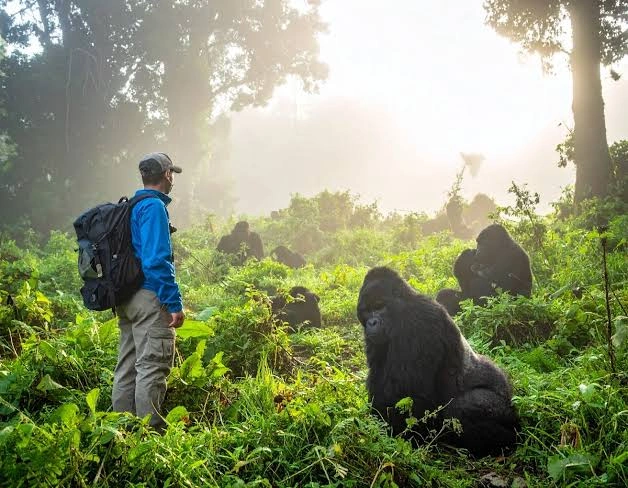
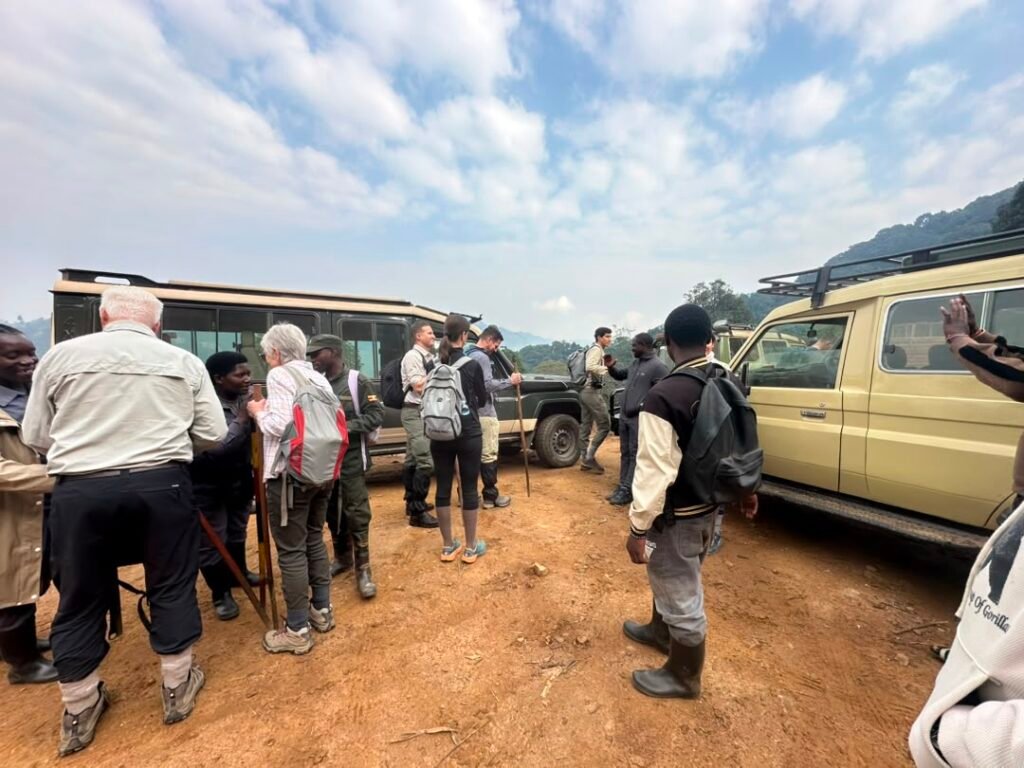
A trekking day at Rushaga follows the same broad structure as any Bwindi sector, with a few details specific to the terrain here. After an early breakfast and short transfer to Rushaga’s headquarters, rangers divide the day’s trekkers into groups of up to eight and assign each group to one of Rushaga’s several habituated families, following a briefing on the rules and safety procedures covered elsewhere in this guide.
From there, a ranger and guide lead the group into the forest, following trackers who located the family’s approximate position earlier that morning. Rushaga’s terrain is genuinely steep in places — expect real elevation change even on a “shorter” trek here — and trekking time can run anywhere from 45 minutes to several hours depending on which family your group has been assigned and how far it has moved since dawn. Once the family is located, the same one-hour encounter applies as at any Bwindi sector, followed by the hike back to headquarters and, usually, a trekking certificate presented on return.
For travellers on the gorilla habituation experience specifically, the structure differs: a longer initial trek into the forest, followed by up to four hours observing the habituation process alongside researchers and trackers, with considerably more time to watch natural gorilla behaviour unfold at a slower, more research-driven pace than the standard trek allows.
Gorilla Trekking Rules and Etiquette at Rushaga
The same rules that govern gorilla trekking across Uganda and Rwanda apply at Rushaga, and given the sector’s larger number of habituated families and busier trailheads, following them closely matters as much here as anywhere.
- Maximum group size of eight visitors per gorilla family per day (four for the habituation experience).
- Maximum time with the gorillas of one hour for standard treks, up to four hours for the habituation experience.
- Minimum distance of roughly 7 metres, though gorillas frequently close that gap on their own.
- No trekking while unwell — visitors with a cough, cold, or flu are asked not to trek.
- No flash photography, and low voices maintained throughout.
- No eating, drinking, or smoking near the gorillas.
- Minimum age of 15 for standard trekking permits.
- Turn away and cover your mouth if you need to cough or sneeze during the encounter.
Rushaga’s rangers and guides are experienced in managing multiple trekking groups heading to different families within the same sector each morning, and their instructions — particularly around trail routing and timing — should be followed exactly.
Health, Vaccinations, and Safety on the Route
Beyond the yellow fever certificate required for entry into both countries, standard travel health precautions apply to this route. Malaria is present at the elevations surrounding Rushaga, though risk is somewhat lower than in lowland regions, and most travel health advisories recommend antimalarial prophylaxis for the trip regardless. Routine vaccinations — tetanus, hepatitis A and B, typhoid — are commonly recommended for the wider region, worth discussing with a travel clinic four to six weeks before departure.
Because mountain gorillas are vulnerable to many human respiratory illnesses, park authorities strictly enforce the no-trekking-while-unwell rule, and this is worth planning for specifically on the Kigali-Rushaga route, given how far in advance the permit needs to be booked and how little flexibility there is to simply reschedule at short notice. Travel insurance covering trekking at altitude and, ideally, permit cancellation, is worth confirming before departure. It’s also worth noting that Rushaga’s genuinely steep terrain means a reasonable baseline fitness level makes a real difference to how much you enjoy the trek here specifically, more so than on some gentler sectors.
Responsible Tourism at Rushaga
Rushaga’s revenue-sharing arrangements with surrounding communities are a significant part of how the sector’s growth in habituated families has been managed sustainably. A meaningful share of permit fees, both standard and habituation, is reinvested into park protection and community programmes in the villages bordering Rushaga’s trailheads, funding schools, healthcare, and infrastructure in areas that once depended on the forest for subsistence farming and hunting before it became protected land.
Hiring a local porter for the trek — genuinely useful on Rushaga’s steep terrain regardless of fitness level — is one of the most direct ways an individual traveller supports that local economy, since porter fees go straight to community members. Respecting the standard trekking rules isn’t incidental to this system; it’s the mechanism that keeps mountain gorilla numbers recovering while allowing sectors like Rushaga to responsibly host a growing number of habituated families.
What’s Typically Included and Excluded
Understanding what a quoted price for a Kigali-to-Rushaga trek actually covers helps avoid surprises once you’re on the road. A well-packaged itinerary typically includes the gorilla permit, ground transport in a 4×4 vehicle with driver-guide for the full route, accommodation near Rushaga where a multi-day itinerary calls for it, park entrance fees, and pickup and drop-off at your Kigali hotel or the airport. It typically excludes international flights, visa fees, travel insurance, porter and guide tips, alcoholic drinks, meals not specified in the itinerary, and optional add-ons like the gorilla habituation experience or a Batwa cultural visit.
Because this route crosses an international border, it’s also worth asking specifically whether border crossing fees are included in the quoted price or handled separately at Cyanika, since practice varies between operators. A clear, itemised quote makes it far easier to compare pricing between two operators on a like-for-like basis, and it’s entirely reasonable to request that breakdown in writing before paying a deposit.
Getting to Kigali Before Your Rushaga Trek
Since every Kigali-to-Rushaga itinerary begins in Rwanda’s capital, it’s worth a brief word on arrival planning. Kigali International Airport is well connected with direct flights from Europe, the Middle East, and major African hubs, making it a genuinely convenient starting point regardless of where you’re travelling from. If your flight lands in the afternoon or evening, and particularly if you’re planning the demanding one-day version of this route, booking a night in Kigali before departure — rather than attempting a 3:30 am start straight off a long-haul flight — is worth the modest extra cost, both for jet-lag recovery and as a buffer against any flight delay.
Many travellers also use a pre-trip night to see a little of Kigali City itself, consistently ranked among Africa’s cleanest and safest capitals, with the Kigali Genocide Memorial and a walkable city centre both worth a few hours if your schedule allows. Your operator can typically arrange this pre-tour night and pickup as part of a single seamless booking, removing the need to coordinate separate hotel and transport logistics yourself.
Cost Breakdown for a Kigali-to-Rushaga Trek
A Kigali-to-Rushaga gorilla trek’s cost structure mirrors any Uganda gorilla itinerary from Kigali, with the standard gorilla permit ($700–800 per person) as the largest single expense. Ground transport — a 4×4 vehicle and driver-guide for the Kigali-Cyanika-Rushaga route and back — typically adds $150–350 per person depending on whether the vehicle is shared or private, reflecting the genuinely demanding final stretch of unpaved road. Accommodation, where needed for a two-day or longer itinerary, ranges from around $50–80 per night at a budget guesthouse near Rushaga to several hundred dollars at a luxury eco-lodge.
For a standard two-day trip, expect an all-in total somewhere in the region of $1,000–$1,400 per person; for a one-day itinerary without an overnight stay, the total often lands slightly lower, closer to $950–$1,250, since it removes the lodge cost entirely. Travellers adding the gorilla habituation experience should budget an additional $700 or more on top of a standard itinerary, given the higher permit price for that specific activity. As with any gorilla trekking trip, budget separately for porter tips (around $15–20) and guide/driver gratuities, and carry US dollars in cash, since card acceptance is unreliable once you’re outside Kigali.
Combining a Rushaga Trek with Other Experiences
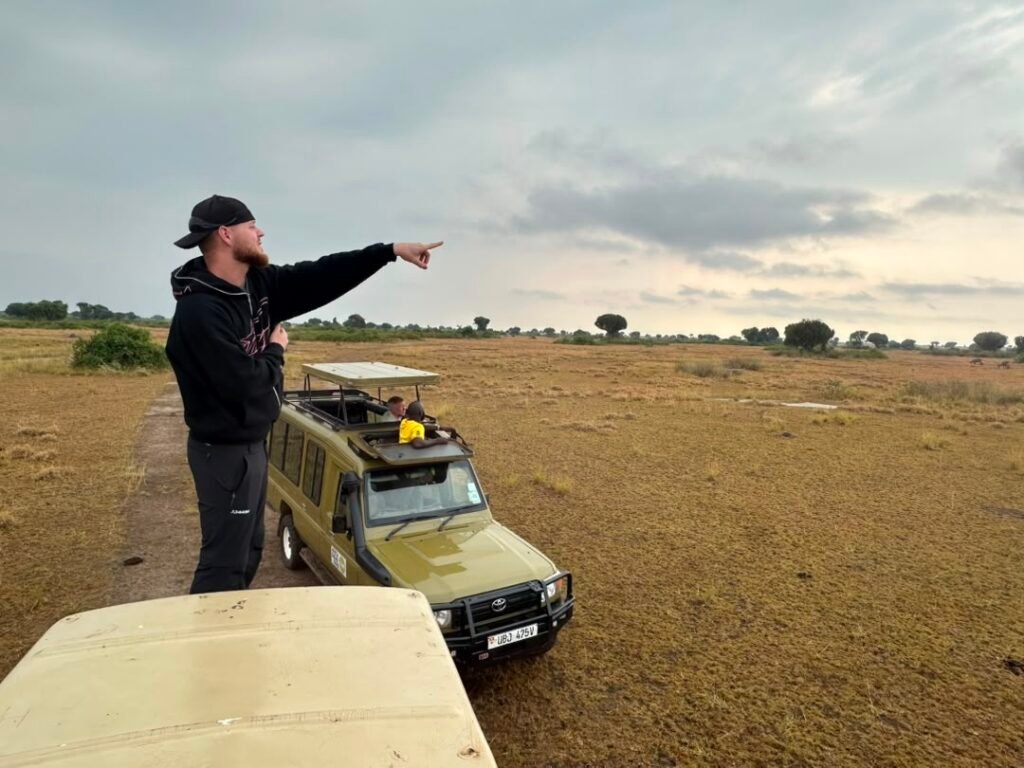
Rushaga’s location in Bwindi’s south makes it a natural anchor point for a broader Uganda-Rwanda itinerary. A cultural visit with the local Batwa forest community, offering guided walks and traditional performances, pairs naturally with a trek here and can often be fit into the afternoon following your standard trek if your schedule allows. For travellers with more time, Rushaga also connects reasonably well toward Uganda’s wider wildlife circuit, including Queen Elizabeth National Park for a Big Five game drive, or onward to Kibale Forest for chimpanzee tracking.
Our 3 Days Uganda Gorilla Safari from Rwanda and 5 Days Uganda Gorilla and Chimps Safari starting from Rwanda are both structured around a Rushaga-based trek as the anchor activity, extended with these additional experiences. If you’d rather compare Rushaga against Rwanda’s own Volcanoes National Park before committing, Kenlink Tours publish a useful independent breakdown of both countries’ trekking sectors, costs, and terrain worth reading alongside this guide.
Choosing the Right Operator for This Route
Because the Kigali-to-Rushaga route involves both an international border crossing and a genuinely demanding final stretch of unpaved road, the operator you choose matters more here than on routes closer to Kigali. Worth confirming before booking: whether the operator regularly runs this specific route rather than treating it as a one-off; whether they can name the trekking sector and likely gorilla family your permit will be assigned to; whether the vehicle is a proper 4×4 suited to Rushaga’s access road; and how they handle timing to ensure you reach the 7:00–7:30 am briefing with a comfortable buffer despite the road conditions.
At Pick and Transfer Safaris, Rushaga is one of the sectors we route most frequently from Kigali, and our packages are built specifically around its access road, permit availability, and lodge options — get in touch with our team if you’d like help matching this route to your travel dates.
Common Mistakes to Avoid on This Route
A few recurring mistakes account for most of the friction travellers encounter on the Kigali-Rushaga route specifically, and each one is straightforward to avoid with a little forward planning.
Underestimating the final stretch into Rushaga. The unpaved road from Kisoro into Rushaga’s headquarters takes noticeably longer than the distance alone suggests, especially in wet weather — build in extra buffer rather than cutting the schedule tight.
Choosing a lodge based on general “Bwindi” proximity rather than Rushaga specifically. Bwindi’s four sectors are spread widely, and a lodge marketed simply as “near Bwindi” may in fact be far closer to Buhoma or Ruhija than to Rushaga, adding hours rather than minutes to your morning transfer.
Booking a standard sedan or minivan. Rushaga’s access road genuinely requires a 4×4 with proper clearance; confirm this detail rather than assuming any tour vehicle will manage the final stretch comfortably, particularly during the wet season.
Booking permits too close to travel dates. Rushaga’s multiple families give it better availability than some sectors, but the most convenient, closest-to-headquarters families still sell out during peak season — book two to three months ahead where possible, longer around July–August and December.
Overlooking the habituation experience’s earlier departure requirements. If you’ve added this activity to your itinerary, confirm the exact start time with your operator, since it can differ from the standard trekking briefing schedule and affects how early you’ll need to leave your lodge.
Packing for the drive rather than the trek. Because the route involves a genuinely long drive before any walking begins, some travellers underprepare for the trek itself — pack full trekking gear even if the journey there feels more like a road trip than an expedition.
Frequently Asked Questions
Why is Rushaga the most recommended sector for a trek from Kigali? Rushaga combines a relatively short drive from Kigali with the widest choice of habituated gorilla families of any Bwindi sector, giving it stronger permit availability and trekking flexibility than smaller single-family sectors.
How long does the drive from Kigali to Rushaga actually take? Typically 4 to 4.5 hours, covering roughly 2.5–3 hours of paved Rwandan road followed by a slower final stretch of unpaved road into Rushaga’s headquarters, with wet weather adding extra time to that final leg.
Can I do a one-day gorilla trek at Rushaga from Kigali? Yes — Rushaga’s relative proximity makes a one-day round trip realistic, requiring a departure from Kigali around 3:30–4:00 am and a return in the early evening, though a two-day version is considerably more comfortable.
Which border crossing is used for the Kigali-Rushaga route? Cyanika, a smaller, quieter, tourist-familiar post connecting Rwanda’s Musanze district to Uganda’s Kisoro district, is the standard crossing for this specific route.
What’s the difference between a standard Rushaga trek and the gorilla habituation experience? A standard trek offers one hour with a fully habituated family for around $800; the habituation experience offers up to four hours with a family still becoming accustomed to humans, in a smaller group of four, for around $1,500.
Is Rushaga’s trekking terrain harder than other Bwindi sectors? Rushaga is known for genuinely steep trails, and while trekking difficulty varies by which specific family you’re assigned, a reasonable baseline fitness level makes a real difference on this sector’s terrain specifically.
Do I need a 4×4 vehicle for this route, or will any tour vehicle work? A proper 4×4 with good clearance is the standard and recommended choice, given the unpaved, sometimes steep final stretch into Rushaga’s headquarters — confirm this with your operator before booking.
Can I combine a Rushaga trek with Rwanda’s Volcanoes National Park on the same trip? Yes, though this typically requires a longer itinerary, since it involves trekking in two separate countries with two separate permits — worth discussing with your operator if you want to compare Uganda and Rwanda gorillas on the same trip.
How many gorilla families are available to trek at Rushaga? Currently eight or more habituated families, spread across several trailheads within the sector, though the exact number can shift slightly as UWA continues habituating new groups.
Is Rushaga suitable for a first-time trekker, or is it better suited to experienced hikers? Rushaga works well for first-timers, but its genuinely steep terrain means it’s worth being honest about your fitness level when booking — porters are available at every trailhead and are worth hiring regardless of experience, given the incline involved.
What happens if my assigned gorilla family at Rushaga has moved a long way from the trailhead? Trekking time simply extends accordingly, sometimes to several hours each way — this is factored into the day’s schedule by your guide, and it’s part of why a two-day itinerary offers more comfortable margin than a one-day dash on this specific route.
Whether you choose to compress the whole trip into one long day or spread it more comfortably across two, the fundamentals stay the same: book early, travel in the right vehicle, and work with an operator who runs this specific road regularly rather than treating Rushaga as an afterthought on a generic Uganda itinerary. Done well, the four hours spent driving into the hills south of Bwindi become as much a part of the experience as the hour spent with the gorillas themselves during your Kigali to Rushaga for gorilla trek.
If you’d like help planning your specific Kigali to Rushaga for gorilla trek, whether as a single intensive day or a more relaxed two- or three-day trip, get in touch with our team and we’ll match the route, the permit, and the lodge to your travel dates.
Are there lodges directly at Rushaga, or do I need to stay further away? Several lodges sit close to Rushaga’s Nyakagyezi headquarters specifically, ranging from community guesthouses to eco-lodges on the forest edge — it’s worth confirming genuine proximity to Rushaga rather than a lodge simply marketed as “near Bwindi.”
Final Thoughts
The route from Kigali to Rushaga for gorilla trek has become the go-to choice for gorilla trekking from Rwanda’s capital for good reason: a manageable drive, the widest permit availability of any Bwindi sector, and the added option of the gorilla habituation experience for travellers wanting more than the standard hour. Getting the details right — a proper 4×4, a lodge genuinely close to Rushaga’s headquarters, a permit booked well ahead, and a realistic expectation of the final unpaved stretch — is what turns this route from a logistical challenge into a smooth, well-paced trip.
Whether you choose to compress the whole trip into one long day or spread it more comfortably across two, the fundamentals stay the same: book early, travel in the right vehicle, and work with an operator who runs this specific road regularly rather than treating Rushaga as an afterthought on a generic Uganda itinerary. Done well, the four hours spent driving into the hills south of Bwindi become as much a part of the experience as the hour spent with the gorillas themselves.
If you’d like help planning your specific Kigali-to-Rushaga itinerary, whether as a single intensive day or a more relaxed two- or three-day trip, get in touch with our team and we’ll match the route, the permit, and the lodge to your travel dates.