- LET'S PLAN YOUR SAFARI
- +256 200 921 002
- +256 793 194 703
- info@pickandtransfersafaris.com

Astro Tourism in Africa
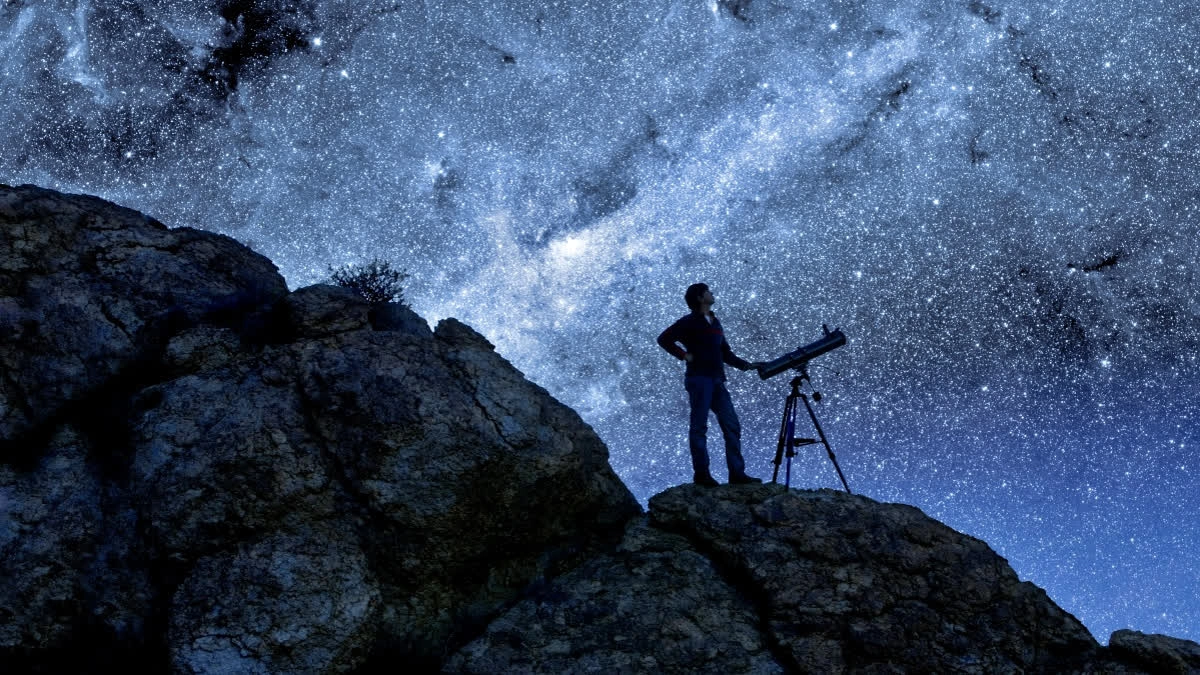
Astro Tourism in Africa is gaining momentum. A new kind of traveller is arriving in Africa — one whose itinerary is built not around what happens after sunrise, but after sunset. Astro Tourism in Africa, travel planned specifically around experiencing genuinely dark night skies, has grown from a niche interest among amateur astronomers into one of the fastest-expanding segments of global travel, and Africa — with its vast unlit wilderness, high-altitude plateaus, and near-total absence of light pollution across huge stretches of the continent — sits at the centre of that growth.
This guide takes a step back from any single destination to look at astro tourism in Africa as a whole: what the trend actually is, why it’s growing so quickly, which countries and specific reserves are investing in it most seriously, what a night beneath one of the world’s last truly dark skies actually involves, and how it pairs with the kind of gorilla trekking and wildlife safaris we run at Pick and Transfer Safaris. If you’re weighing up where to add a stargazing element to your African trip — or wondering whether it’s worth combining with a Uganda or Rwanda gorilla safari specifically — this guide is written to answer both.
Astro tourism in Africa offers an opportunity to witness the night sky in all its glory, reminding us of our place in the cosmos.
Astro tourism in Africa is something that everyone should experience at least once. The benefits of stargazing at night in Africa’s remote areas are truly unparalleled.
Many visitors are now seeking out astro tourism in Africa for its unique night sky experiences that aren’t available anywhere else.
Africa’s relationship with astro tourism is, in many ways, a direct extension of its relationship with wildlife tourism more broadly. The same protected wilderness areas, conservancies, and remote reserves that have made the continent the world’s premier wildlife safari destination for over a century turn out to double, almost by accident, as some of the best-preserved dark skies left on the planet — a coincidence of geography that the tourism industry has only recently begun to deliberately package and promote in its own right, rather than treating as an unadvertised bonus of an already-booked wildlife trip.
Astro tourism in Africa includes guided tours that enhance your experience of the universe above.
For anyone interested in astronomy, astro tourism in Africa is a dream come true, offering clarity and beauty in the night sky.
Astro tourism in Africa provides a chance to connect with both nature and the cosmos, making it a unique destination.
As more people discover the possibilities of astro tourism in Africa, the focus on preserving dark skies becomes more critical.
What Is Astro Tourism, Exactly?
Astro tourism describes travel undertaken specifically to experience the night sky — stargazing, astrophotography, guided telescope sessions, witnessing celestial events like meteor showers or eclipses, and, increasingly, cultural storytelling rooted in indigenous astronomical knowledge. It sits at the intersection of adventure travel, science tourism, and a broader, slower style of experiential travel that prioritizes reflection and genuine connection to place over ticking off sights.
At home, most people’s view of the night sky is reduced to a faint orange glow from streetlights, car headlights, and the general wash of artificial light that surrounds any populated area — a few of the brightest stars might be visible, but the fine detail, the Milky Way’s structure, the fainter constellations, are all lost beneath it. Astro tourism exists specifically to solve that problem, taking travellers to the relatively small number of places on Earth still genuinely free of this light pollution, where the night sky reveals a level of detail most people have simply never seen with their own eyes.
From Namibia to Kenya, astro tourism in Africa is transforming the way people experience the continent’s natural beauty.
Industry surveys on astro-tourism visitors consistently find stargazing itself is the most popular activity by a wide margin, with astrophotography and witnessing specific celestial events like meteor showers close behind, and a smaller but meaningful share of travellers specifically drawn to indigenous storytelling and cultural astronomy woven into guided experiences. What ties the category together isn’t any single activity but the shared requirement behind all of them: a genuinely dark sky, free of the artificial light that has erased the Milky Way from view for most of the world’s population.
Astro tourism in Africa has the potential to uplift local communities through sustainable tourism initiatives.
For those interested in the stars, astro tourism in Africa is a transformative adventure that delights the senses.
Astro tourism in Africa showcases the beauty of the night sky while offering insights into the universe’s mysteries.
Why Astro Tourism Is Growing So Fast
Astro tourism in Africa is not just about the stars; it’s about community, conservation, and the joy of shared experience.
Every night spent under the stars during astro tourism in Africa reveals something new and breathtaking.
The global nighttime tourism market — a broader category that astro tourism sits within — is currently estimated in the range of $10 billion and is projected by some industry analysts to roughly double before the mid-2030s. Several converging trends explain the speed of this growth. Light pollution continues to expand globally, meaning a genuinely dark sky is an increasingly rare experience even for travellers who don’t consider themselves astronomy enthusiasts — for a growing number of visitors, simply seeing the Milky Way with the naked eye for the first time is reason enough to travel.
Astro tourism in Africa serves as a bridge between modern science and ancient cultural practices, enriching the overall experience.
At the same time, the broader post-pandemic shift toward slower, more reflective, and more restorative forms of travel has aligned naturally with astro tourism’s inherent pace — a stargazing session can’t be rushed, and much of its appeal lies precisely in the stillness it demands. National tourism boards have taken notice: South Africa has published a formal national astro-tourism strategy running through the next decade, Kenya has launched a dedicated astro-tourism initiative centred on Samburu, and Morocco’s Sahara has developed purpose-built astronomy hotels specifically to capture this growing market.
With the growing interest in astro tourism in Africa, it is important to foster sustainable practices that protect these dark spaces.
Who Is Today’s Astro Tourist?
The traveller profile behind this growth is broader than the stereotype of a dedicated amateur astronomer with their own equipment might suggest. Industry data on astro-tourism visitors consistently shows the majority arrive with no specialist astronomy background at all — drawn instead by the simple, increasingly rare experience of seeing a genuinely dark sky, something an estimated large majority of people worldwide can no longer do from where they live given how far light pollution has spread.
Astro tourism in Africa encourages visitors to appreciate the wonders of the universe while respecting the natural environment.
In addition to stargazing, astro tourism in Africa often includes educational sessions about celestial phenomena.
This broadening of the audience explains much of the sector’s rapid growth: astro tourism no longer competes only for the relatively small pool of dedicated astronomy hobbyists, but for the much larger population of general travellers seeking meaningful, restorative experiences — a category that overlaps naturally with travellers already planning wildlife safaris, cultural trips, or slower-paced adventure travel across Africa. Safari travellers in particular represent one of the fastest-growing subsets of astro tourists specifically because the remote, low-light locations wildlife tourism already depends on happen to double as excellent stargazing sites, with little additional effort required to combine the two.
A Brief History of Africa’s Astro Tourism Movement
Formal astro tourism in Africa traces much of its modern development to Namibia, where the NamibRand Nature Reserve’s pursuit of International Dark Sky Reserve certification in the early 2010s marked one of the continent’s first deliberate efforts to package dark-sky protection as both a conservation tool and a tourism product. South Africa’s long-standing position as a global centre for professional astronomy — anchored by facilities like the South African Astronomical Observatory and, more recently, the Southern African Large Telescope — provided a natural foundation for astro tourism to grow alongside genuine scientific infrastructure already in place for decades.
The past several years have seen this early groundwork expand rapidly into a much broader continental movement: South Africa’s formal national astro-tourism strategy, published to run through the next decade, Kenya’s Samburu-centred initiative, and Morocco’s purpose-built astronomy hotels in the Sahara all represent a shift from astro tourism as an incidental bonus at existing wildlife or desert destinations toward a deliberately developed tourism category in its own right, with dedicated infrastructure, government backing, and increasingly sophisticated marketing aimed at the broader travel-planning public rather than niche astronomy circles alone.
Astro tourism in Africa allows people to disconnect from their busy lives and reconnect with the cosmos.
Understanding Dark Sky Certification
By embracing astro tourism in Africa, you contribute to the preservation of dark skies for future generations.
Much of the language around astro tourism in Africa references “Dark Sky” status, a certification system worth understanding before comparing destinations. Independent dark-sky organisations assess and certify locations — reserves, parks, and sometimes entire communities — based on measured light pollution levels and the protective lighting policies in place to preserve them, awarding tiers that range from bronze through to the rare gold standard reserved for only the very darkest, most rigorously protected sites in the world.
Namibia’s NamibRand Nature Reserve holds Gold Tier certification and was only the second site anywhere in the world to receive this top rating, making it the first African reserve to achieve gold-standard status and still the benchmark against which every other African astro-tourism destination is measured. Other categories exist too — sanctuary status, for instance, is reserved for exceptionally remote sites with minimal development, a designation South Africa’s Kgalagadi region has achieved. Countries including South Africa, Botswana, and increasingly Kenya are actively pursuing further certifications for their own remote, low-light regions, a sign of how seriously formal dark-sky status is now taken as a genuine tourism and conservation asset rather than a niche accolade.
Cost Tiers Across Africa’s Astro Tourism Destinations
Because the destinations covered in this guide vary enormously in infrastructure and exclusivity, it’s worth understanding the rough cost tiers involved before comparing them directly. Entry-level astro tourism — an informal stargazing session added to an existing safari lodge stay, without dedicated equipment or a specialist guide — typically involves no additional cost beyond your standard accommodation, making it the most accessible way to experience genuinely dark skies, and the category most gorilla trekking travellers in Uganda and Rwanda will encounter.
Mid-tier astro tourism, featuring guided sessions with portable telescopes or dedicated star bed platforms at lodges in Namibia, Kenya, and Botswana, often incurs a modest additional fee as a specialist activity rather than a major expense. In contrast, premium astro tourism, which includes access to research-grade instruments and private observatories, comes at a significantly higher price due to specialized equipment and luxury accommodations. It’s important to assess your true level of interest before opting for the most expensive choice.
Engaging in astro tourism in Africa can help foster a sense of responsibility towards the night sky.
As you explore the stars, remember that astro tourism in Africa is a celebration of both nature and humanity’s quest for knowledge.
The Top Astro Tourism Destinations in Africa, Ranked
With so many countries now actively developing astro-tourism infrastructure, it’s worth ranking the continent’s leading destinations by the depth and maturity of what they currently offer, rather than treating every option as equivalent.
NamibRand Nature Reserve in Namibia is Africa’s first certified Dark Sky Reserve, known for its untouched wilderness and limited accommodation to maintain its dark skies. The reserve offers activities like hot air balloon flights, dune safaris, and visits to ancient San rock art, along with a top-notch astronomical observatory where a resident astronomer guides guests in telescope use. While Namibia is a year-round destination, the best stargazing conditions are typically from April to September due to cooler temperatures.
Kenya’s Private Conservancies offer a unique form of astro tourism where guests can stargaze from raised wooden platforms with beds and open-air showers in scenic Laikipia, near Mount Kenya. Visitors experience breathtaking sunrises after nights spent under the stars, all while supporting a conservation legacy that includes collaboration between tribal communities and safari operators. This has led to successful black rhino reintroductions and research on elusive black leopards, allowing guests to enjoy both nighttime celestial views and daytime game drives for rare wildlife.
Further south, in the Chyulu Hills between Tsavo West and Amboseli National Parks, another well-regarded lodge on a vast group ranch takes the star bed concept a step further, building a private rooftop sleeping platform into each of its large guest suites — a glass of champagne in bed while watching the stars is, for many guests, one of the most memorable single nights of an entire Kenya safari.
Sutherland, South Africa, is home to the Southern African Large Telescope and a growing network of astro-tourism lodges, while Cape Town’s Iziko Planetarium provides urban visitors with a glimpse of the night sky. The Karoo National Park offers ideal conditions for stargazing away from city lights. The Northern Cape province is prioritized in South Africa’s national astro-tourism strategy, attracting government investment. The dry winter months from May to September offer the clearest skies, with daytime activities such as quad-biking, helicopter flights, kayaking, and sky-diving safaris available for adventurous travelers.
4. Waterberg, South Africa. A rugged, unspoilt region that feels a world away from South Africa’s major cities, home to a collection of wildlife reserves offering game drives, walking and horse-riding safaris, and cultural encounters by day. One standout lodge here, known as much for its adventurous daytime activities as for its private observatory, offers guests the option of an exclusive-use stay complete with a private astronomer — a genuinely bespoke way to experience the region’s dark skies. Waterberg has also developed a reputation for wellness-focused retreats and family-friendly safaris alongside its stargazing credentials, broadening its appeal beyond dedicated astronomy enthusiasts.
5. The Sahara Desert, Morocco. North Africa’s leading dark-sky destination, centred on the Draa Valley in the country’s south. Purpose-built astronomy hotels here operate rooftop observatories with professional-grade instruments, and the region’s northern latitude offers a genuinely different sky from anywhere in sub-Saharan Africa — circumpolar northern constellations are easier to observe here than from destinations further south, giving Morocco a distinct niche within the wider African astro-tourism landscape. The desert’s dry air and largely cloudless nights make it usable for astrophotography for most of the year, and its accessibility from Marrakech, roughly five hours by road, makes it a realistic addition even for travellers whose primary trip is centred elsewhere in Morocco.
6. Kgalagadi Transfrontier Park, South Africa/Botswana. Home to the !Ae!Hai Kalahari Heritage Park, recognised with International Dark Sky Sanctuary status — one of the more stringent categories of dark-sky certification, reserved for exceptionally remote sites with minimal development. The lodge here holding permanent lighting rights within the heritage park has retrofitted all of its outdoor lighting specifically to dark-sky-compliant standards, directly linking conservation practice to the tourism experience on offer, and champions the site’s successful sanctuary application as a genuine milestone for the wider region.
7. Samburu National Reserve, Kenya. The anchor of Kenya’s national astro-tourism initiative, combining guided telescope sessions with cultural astronomy storytelling from local Samburu communities and dedicated infrastructure including a planetarium built in traditional style. Kenya’s position on the equator adds a genuine practical draw: both northern and southern hemisphere skies are visible from the same location, a vantage point most of the world’s stargazers never experience without significant travel between hemispheres.
8. Lapalala Wilderness, South Africa. A dark-sky-compliant private reserve in Limpopo province combining serious astronomy programming — guided astronomy safaris and open-sky sleepout experiences — with genuine Big Five wildlife viewing, making it one of the strongest single destinations anywhere in Africa for travellers wanting both experiences at a high standard within one trip.
9. Makgadikgadi Pans, Botswana. One of the largest salt pan systems on Earth, offering a completely flat, unbroken horizon that makes the night sky feel genuinely all-encompassing in a way few other landscapes can match, combined with Botswana’s consistently low population density across its protected wilderness areas.
10. Kidepo Valley and Karamoja, Uganda. The best-kept secret on this list — a genuinely dark sky region within a country better known internationally for gorilla trekking than astro tourism. Uganda’s Karamoja region, sparsely populated and largely without grid electricity, offers conditions comparable to established desert observatory sites during the June–September dry season, anchored by a lodge with an open, elevated position overlooking Kidepo’s Narus Valley.
11. Egypt’s Desert Regions. Egypt’s clear desert skies, including areas around Sharm El Sheikh, offer a growing astro-tourism presence layered onto the country’s existing tourism infrastructure, appealing to travellers combining stargazing with more conventional Egyptian travel itineraries.
12. Bwindi and Volcanoes National Park, Uganda/Rwanda. Not yet a formally developed astro-tourism destination in the way the sites above are, but genuinely dark by virtue of their remote highland location — a small, growing number of lodges near both parks have begun offering informal stargazing to gorilla trekking guests, making this a worthwhile mention for anyone already planning a trip to the region rather than travelling specifically for astronomy. This is the specific pairing covered in depth later in this guide.
With every clear night, astro tourism in Africa reveals the magic of the universe, inspiring awe and wonder in all who visit.
Common Myths About Astro Tourism in Africa
With each night, astro tourism in Africa allows you to discover the beauty and vastness of the cosmos.
A handful of misconceptions consistently come up when travellers first research astro tourism, and it’s worth addressing them directly before diving further into planning specifics.
Astro tourism in Africa encourages a deeper understanding of the cosmos and our place within it.
“You need your own telescope to get anything out of it.” In practice, the majority of genuinely excellent astro-tourism experiences in Africa involve either a lodge-provided telescope, a knowledgeable guide, or nothing more than the naked eye and a genuinely dark sky — personal equipment is a bonus for enthusiasts, not a requirement for a worthwhile experience.
“It’s only worthwhile in the desert.” While Namibia’s and South Africa’s desert destinations dominate the rankings above, highland and forest-edge locations — including parts of Uganda, Rwanda, and Kenya — offer genuinely excellent conditions too, provided they sit far enough from significant population centres.
“Astro tourism means giving up daytime activities.” Nearly every destination covered in this guide pairs stargazing with substantial daytime programming — wildlife safaris, cultural encounters, hiking, or, in the case of Uganda and Rwanda, gorilla trekking itself — rather than requiring travellers to choose between the two.
“You have to travel during a specific narrow window or the trip isn’t worth it.” While the dry season and new moon periods offer optimal conditions, a clear night at almost any time of year in a genuinely remote location still delivers a dramatically better sky than most travellers will ever see at home — the “ideal” conditions improve an already worthwhile experience rather than being a strict prerequisite for having one at all.
“It’s prohibitively expensive.” While the premium tier — private observatories, purpose-built astronomy hotels, dedicated multi-day astro tours — sits at a high price point, informal stargazing added to an existing safari or gorilla trekking stay typically costs nothing beyond your standard accommodation, making genuine dark-sky access considerably more accessible than the sector’s most-publicised luxury offerings might suggest.
The Different Kinds of Astro Tourism Experiences on Offer
Astro tourism in Africa isn’t a single product — it spans a genuinely wide range of experience types, and understanding the differences helps in choosing the right destination for your own priorities. Observatory-based experiences, found at destinations like Sutherland and Morocco’s astronomy hotels, offer access to serious, often research-grade equipment and structured astronomical programming led by a resident astronomer, best suited to travellers with a genuine interest in the science itself. Lodge-based stargazing, the more common format across East and Southern African safari destinations, typically involves a portable telescope, a knowledgeable guide, and an evening session woven into a broader wildlife-focused stay.
Star bed and sleep-out experiences allow guests to sleep under the open sky, emphasizing the raw experience of darkness over structured astronomical programming, with notable examples in Kenya’s conservancies and Chyulu Hills. Cultural astronomy in Kenya’s Samburu region incorporates indigenous star knowledge and storytelling into stargazing, offering a unique alternative to telescope-focused activities. Additionally, combined night drives at savannah safari destinations enhance the experience by integrating nocturnal wildlife spotting with stargazing.
Night Drives: Where Wildlife and Astronomy Meet
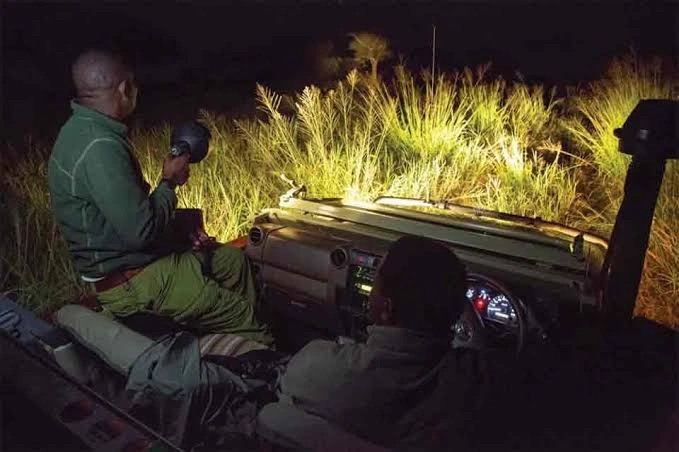
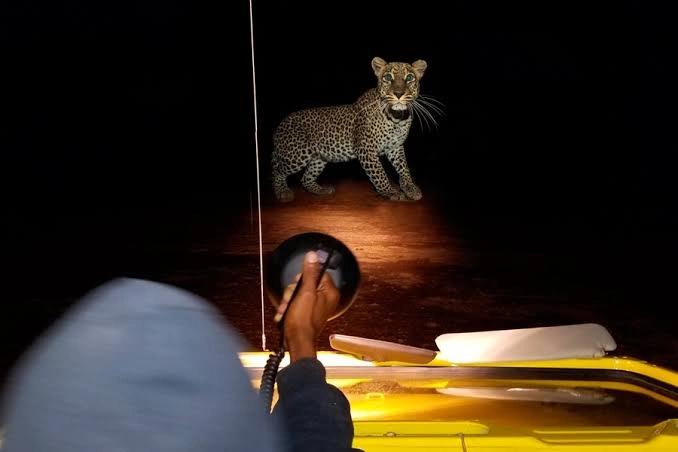
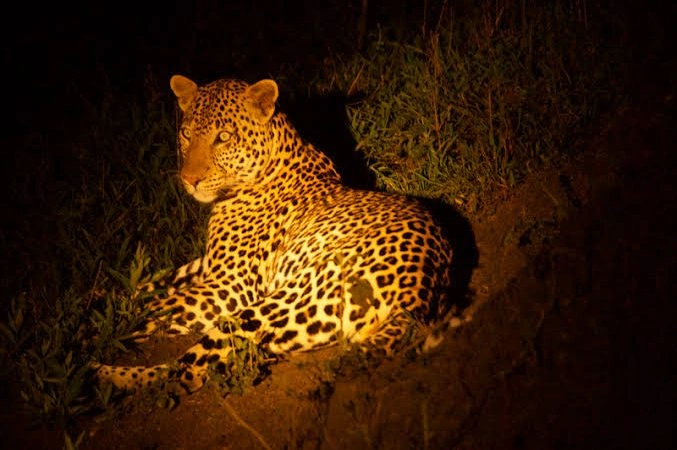
A typical night drive begins with an early dinner, followed by departure into the reserve or conservancy after dark, with a dedicated spotter using a red or amber-filtered spotlight to search for the reflective eye-shine of nocturnal wildlife while the vehicle moves slowly through the landscape. Periodically, guides will switch off the vehicle’s engine and lights entirely, allowing the darkness and silence to settle before pointing out visible constellations, planets, or the Milky Way overhead — a genuinely effective way to fold astro tourism into a wildlife-focused evening without needing a separate, dedicated stargazing excursion.
This format works particularly well at savannah and open-plains destinations, where the combination of open horizons and active nocturnal wildlife makes both halves of the activity genuinely rewarding at once. While gorilla trekking areas in Uganda and Rwanda don’t typically offer formal night drives given the density of forest terrain, savannah-based extensions to a gorilla trekking itinerary — Queen Elizabeth National Park being the most relevant example for travellers on this site — offer more open terrain where this kind of combined evening activity becomes genuinely practical, adding a further layer to a trip already covering both gorillas and dark skies.
Cultural Astronomy: Traditional Star Knowledge Across the Continent
One of the more distinctive elements of astro tourism in parts of Africa is the presence of genuine traditional astronomical knowledge, developed over generations by communities whose livelihoods — herding, navigation, seasonal planning — depended directly on reading the night sky. In Kenya’s Samburu region specifically, local cultural astronomers share ancestral knowledge of particular stars and constellations historically used for tracking seasons and guiding livestock movements, often woven directly into guided stargazing sessions alongside more conventional Western astronomical explanations.
Similar traditions exist among pastoral communities across parts of Uganda’s Karamoja region and elsewhere on the continent, where star patterns have historically informed seasonal and agricultural timing for generations, though this knowledge is less formally packaged into tourism experiences here than in parts of Kenya. For travellers with a genuine interest in this dimension of astro tourism — not just what the sky looks like, but what it has historically meant to the people living beneath it — seeking out destinations that specifically incorporate cultural astronomy alongside standard telescope sessions adds a meaningfully different layer to the experience, and represents one of the areas where the sector’s growth still has considerable room to develop further across the continent.
Accommodation Built Specifically for Astro Tourism
The sector’s growth is marked by the rise of accommodations specifically designed for night-sky access, featuring star bed platforms in premium lodges across Namibia, Kenya, and South Africa, allowing guests to enjoy stargazing from their beds. Notable examples include the Laikipia and Chyulu Hills properties, which have become bucket-list destinations. Additionally, purpose-built astronomy hotels in Morocco’s Sahara offer rooftop observatories and professional-grade equipment, serving as boutique research stations alongside traditional hotel amenities.
Private observatories built into individual luxury lodges, such as the Waterberg property discussed above, represent a further tier again — accommodation where astronomy isn’t simply an available activity but a defining architectural feature of the property itself, often paired with the option of a private astronomer for an entirely bespoke session. At the more understated end of the spectrum, a growing number of otherwise conventional safari lodges across East Africa have begun retrofitting their exterior lighting specifically to reduce light pollution on their own property, a relatively low-cost investment that meaningfully improves the stargazing conditions available directly from a guest’s own veranda without requiring any dedicated astronomy infrastructure at all.
Astro Tourism as an Economic and Conservation Tool
Beyond the traveller experience itself, astro tourism has increasingly been recognised across the continent as a genuine economic development and conservation tool, not simply a tourism novelty. Several national astro-tourism strategies explicitly link dark-sky protection to broader conservation outcomes — protecting a dark sky, in practice, requires protecting the same undeveloped, low-light landscapes that support wildlife populations and limit habitat fragmentation, meaning astro-tourism investment often reinforces conservation goals that already existed for entirely separate reasons.
Astro-tourism revenue at certified dark-sky sites increasingly supports lighting retrofits, land protection, and community programs, similar to how gorilla trekking permits fund conservation efforts in Uganda and Rwanda. The Laikipia conservancy exemplifies this synergy, where collaboration between local communities and safari operators has led to successful conservation initiatives, including the reintroduction of endangered species, alongside the development of a renowned astro-tourism experience. This model demonstrates how economic incentives can align with environmental protection in a rapidly developing continent.
Combining Astro Tourism with Gorilla Trekking in Africa
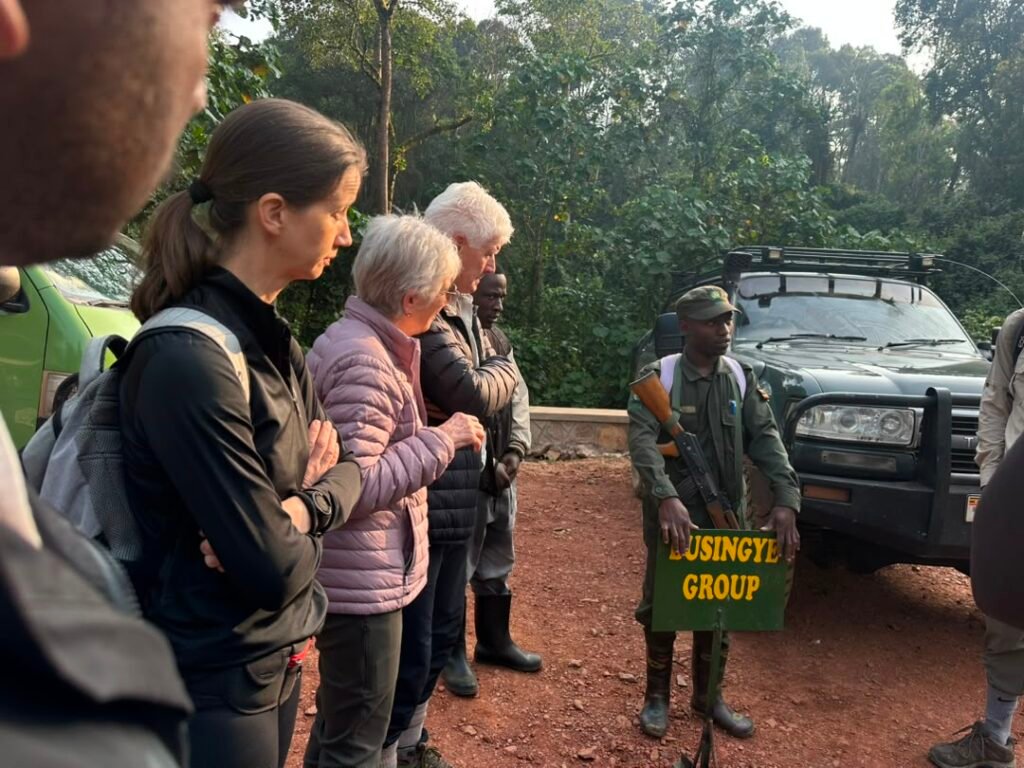
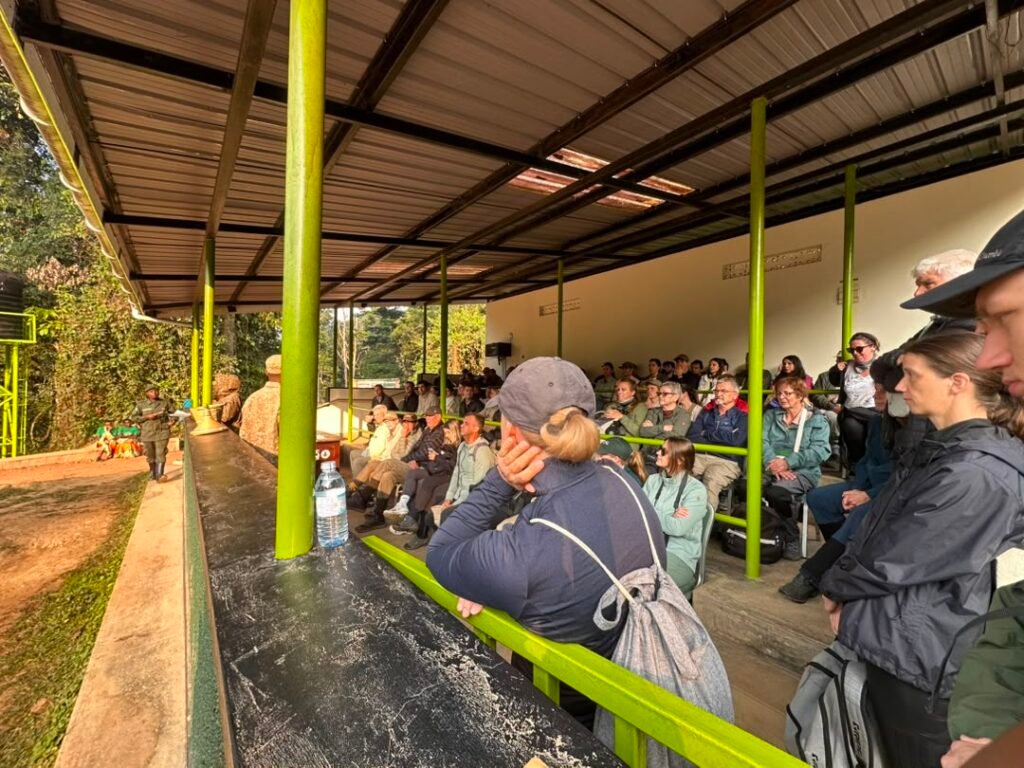
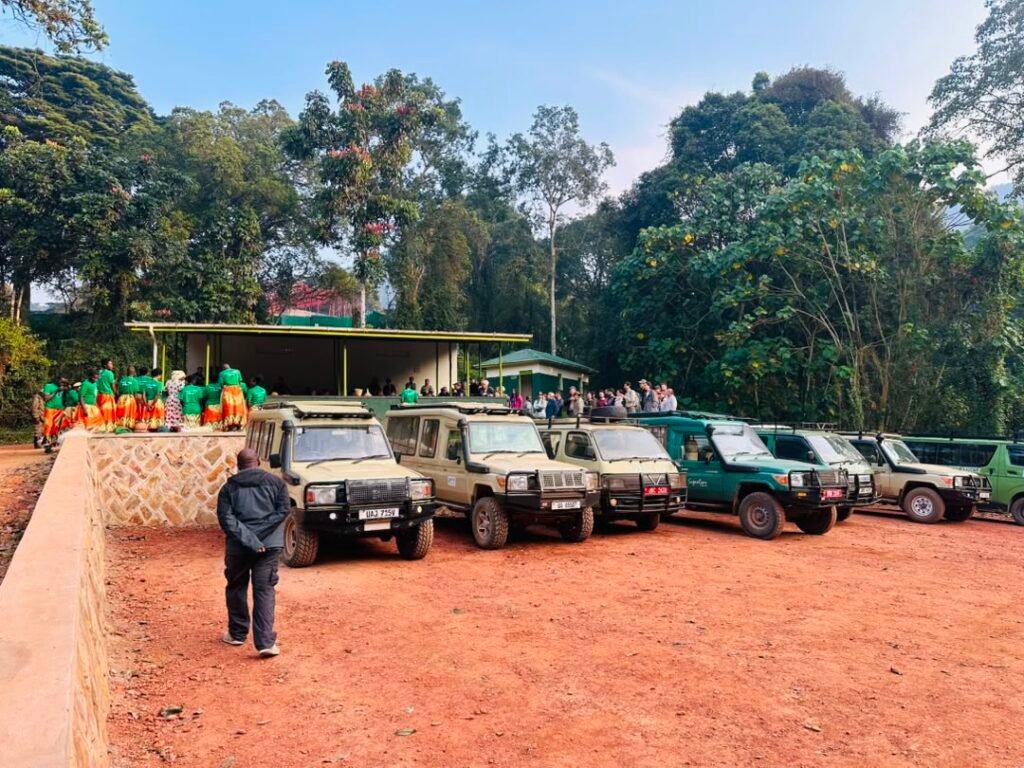
For travellers whose primary reason for visiting Africa is gorilla trekking rather than dedicated astronomy, it’s worth exploring exactly how — and how well — the two experiences fit together, since they turn out to be a genuinely natural pairing rather than an awkward compromise between two unrelated interests.
Uganda’s Bwindi Impenetrable Forest and Mgahinga Gorilla National Park, along with Rwanda’s Volcanoes National Park, are located in remote, high-altitude areas that are protected for endangered mountain gorillas. This remoteness, characterized by minimal infrastructure and low population density, also creates excellent dark-sky conditions, despite the lack of dedicated astro-tourism facilities like those in Namibia, Kenya, or South Africa. Consequently, many lodges near these parks provide memorable night skies simply by virtue of their location, allowing guests to enjoy stargazing with minimal effort on clear nights.
Setting realistic expectations. It’s worth being honest about where Uganda and Rwanda currently sit within the wider astro-tourism landscape covered in this guide: genuinely dark and promising, but considerably less developed than the destinations ranked above. You’re unlikely to find a research-grade rooftop observatory or a dedicated resident astronomer at a gorilla trekking lodge the way you would at NamibRand or in Morocco’s Sahara. What you will very often find is a clear, star-filled sky visible from your own veranda, and — at a growing number of properties — a guide or staff member able to point out major constellations, planets, and the arc of the Milky Way even without formal astronomy training.
The ideal itinerary structure. Because gorilla trekking days themselves are physically demanding and typically involve an early start the following morning, the best evenings for a dedicated stargazing session tend to fall on rest days or travel days within a longer itinerary, rather than the night immediately before a trek. Our 3 Days Uganda Gorilla Safari from Rwanda and longer options, including the 5 Days Uganda Gorilla and Chimps Safari starting from Rwanda and 5 Days best of Rwanda Primate Safari, all include enough evenings at remote, forest-edge or highland lodges to make at least one genuinely unhurried stargazing evening a realistic part of the trip, rather than squeezing it into an already tight trekking schedule.
What the combination actually feels like. Travellers who’ve experienced both elements of this pairing consistently describe a particular kind of contrast that makes the combination more than the sum of its parts: an intense, physically demanding, deeply focused hour spent within metres of a wild gorilla family during the day, followed by an entirely different kind of stillness after dark, lying back under a genuinely dark highland sky with nothing required of you but attention. Where the gorilla trek asks something of your body and your concentration, the stargazing evening that follows asks nothing at all — a natural, restorative close to one of the more intense days most travellers will spend anywhere in Africa.
After a day of gorilla trekking in Uganda or Rwanda, travelers can enjoy stargazing at lodges near Bwindi, Mgahinga, or Volcanoes National Park, where the night sky is strikingly different from what they see at home. On lighter travel days, guests can enhance the experience by requesting a telescope, seeking guidance from knowledgeable staff on visible constellations, or simply relaxing with binoculars and a blanket to admire the Milky Way.
For travellers on a longer, multi-stop itinerary that also includes time in Kigali or a broader Rwanda circuit, an evening at a well-located lodge near the Volcanoes National Park trailhead often works particularly well for this purpose, given the shorter drive from Kigali and the correspondingly more relaxed overall pace such itineraries tend to allow.
To enhance your stargazing experience during your trip, specifically request telescope availability or staff with astronomy knowledge when booking. Lodges can also advise on the best nights for clear skies based on the season and moon phase. Booking during the dry season optimizes both trekking conditions and sky clarity, aligning the planning needs for both activities.
Planning Considerations Specific to Astro Tourism
A few planning factors matter more for astro tourism than for most other forms of travel, and are worth building into your itinerary from the outset. Season is the single biggest factor — the dry months across most African astro-tourism regions, broadly May to September, offer dramatically clearer skies than wet-season months, when cloud cover can obscure the sky for days at a stretch. Moon phase matters almost as much within any given season — a full moon washes out the fainter detail in the Milky Way, so travellers specifically prioritising the darkest possible sky should plan around the new moon.
Altitude and remoteness generally correlate with better conditions, since both reduce atmospheric interference and artificial light respectively, which is part of why so many of the destinations ranked above sit in genuinely remote desert or highland terrain rather than anywhere near a populated coastline or city. Finally, temperature deserves more attention than most first-time astro-tourists expect — the same clear, dry conditions that make for excellent stargazing also allow rapid heat loss after sunset, and desert or highland nights during the dry season can be considerably colder than daytime conditions suggest.
Essential Gear for African Astro Tourism
Regardless of which tier or destination you choose, a few pieces of gear consistently improve the experience across nearly every astro-tourism setting covered in this guide. Binoculars are a genuinely underrated tool — more portable than a telescope and excellent for wide-field views of the Milky Way and major star clusters, useful even at destinations without dedicated telescope access. A red-light headlamp or flashlight preserves night vision for both you and anyone else nearby, a courtesy most guides specifically request at any serious dark-sky site.
For astrophotography enthusiasts, a sturdy tripod and a wide-angle lens with a fast aperture (f/2.8 or wider) are essential for stable night-sky shots. Additionally, travelers should prepare for cold temperatures, as clear conditions ideal for stargazing can lead to rapid heat loss after sunset, surprising first-time astro-tourists. This is particularly relevant in highland areas like Bwindi or Volcanoes National Park, where nighttime temperatures can drop significantly compared to daytime warmth.
Multi-Destination Astro Tours
Specialist operators are increasingly offering multi-day itineraries for travelers interested in dark-sky destinations across Africa. For example, a South Africa circuit may include the Sutherland observatory, the Karoo, and a private safari concession for night-sky observation within a week. Similar itineraries are emerging in East Africa, linking Kenya’s Samburu and Laikipia stargazing spots with wildlife tours, and in Namibia, where a dark-sky circuit could combine NamibRand with the Namib Desert and Sossusvlei’s dunes, all centered on astronomy.
These dedicated astro tours differ meaningfully from the safari-plus-stargazing approach most gorilla trekking travellers will take: they’re built around astronomical priorities first, with wildlife or cultural activities layered in as a secondary consideration rather than the other way around. For travellers weighing up which approach suits them better, the honest distinction is straightforward — if you’d choose a lodge based primarily on its telescope access rather than its wildlife or trekking proximity, a dedicated multi-destination astro tour is likely the better fit than a standard safari itinerary with stargazing added on.
Choosing Your Level of Astro Tourism Commitment
Not every traveller needs to choose between a full dedicated astronomy expedition and ignoring the night sky entirely — the sector’s range of experience types, from research-grade observatories to a simple lodge veranda with unusually good darkness, means there’s a genuinely appropriate entry point regardless of how central astronomy is to your travel priorities. Travellers with a serious, dedicated interest are best served by destinations like NamibRand, Sutherland, or Morocco’s Sahara, where the infrastructure and expertise match that level of commitment.
For the much larger group of travellers for whom stargazing is a meaningful but secondary interest — including most people planning a gorilla trekking safari through Uganda or Rwanda — the more practical approach is simply choosing lodges known for good night-sky access, asking about telescope availability at booking, and treating any genuinely clear evening as a bonus worth stepping outside for, rather than building an entire separate leg of the trip around it. As the combined-itinerary section above sets out, this second approach is entirely capable of delivering a genuinely memorable night-sky experience, provided you plan for it with the same modest intentionality you’d apply to any other meaningful part of your trip.
Through astro tourism in Africa, you can witness the beauty of the night and deepen your connection to the world.
Astro tourism in Africa integrates the wonders of the universe with the breathtaking beauty of the continent.
Every moment spent under the stars during astro tourism in Africa enriches the soul.
Safety and Practical Considerations for Nighttime Activities
Stargazing and night-focused activities come with a few practical safety considerations worth planning around, particularly at wildlife-adjacent destinations. Always stay within areas your guide or lodge has specifically designated as safe for evening activity — wild animals remain active at night in and around most safari destinations, and wandering beyond a lodge’s immediate grounds after dark without a guide is inadvisable regardless of how tempting a clear sky might be.
Dress for temperatures considerably colder than daytime, particularly in desert and highland destinations where clear skies — ideal for stargazing — also mean rapid heat loss after sunset. If you’re prone to motion sickness or discomfort lying flat for extended periods, consider this before committing to an extended sleep-out or fly-camping stargazing experience, since these typically involve several hours in a reclined position. Finally, altitude matters in some of the highland destinations covered in this guide, including parts of Uganda and Rwanda’s gorilla trekking regions — travellers unaccustomed to higher elevations may notice mild effects like reduced stamina or occasional headaches, worth factoring in if your stargazing evening follows a physically demanding day of trekking.
When to Book: Timing Your Astro Tourism Trip
Because so much of the astro-tourism experience depends on factors outside any traveller’s control — weather, moon phase, seasonal cloud patterns — booking with enough lead time to actually choose your dates around these factors, rather than fitting astro tourism into whatever window your broader trip happens to allow, meaningfully improves your odds of a genuinely memorable outcome. For destinations with formal astro-tourism infrastructure, such as observatory sessions in Namibia or South Africa, popular new-moon periods during the dry season can book out considerably further in advance than standard accommodation at the same properties, given how concentrated demand becomes around the optimal viewing windows.
For travellers combining astro tourism with gorilla trekking specifically, timing becomes a genuinely joint consideration rather than two separate calculations — the same dry-season months that offer the best trekking conditions in Uganda and Rwanda also happen to offer the clearest skies, meaning a single well-chosen travel window can optimise for both priorities simultaneously rather than requiring a compromise between them. This overlap is one of the more practically useful pieces of planning advice in this entire guide: travellers who simply book their gorilla trekking safari during the standard June–September or December–February dry-season windows are, without any additional effort, also booking themselves into the best conditions for a memorable stargazing evening alongside it.
Regional Climate Differences Worth Understanding
Not every African astro-tourism region shares the same seasonal pattern, and it’s worth understanding these differences if your trip spans multiple destinations or countries. Southern Africa’s desert regions — Namibia, the Karoo, and the Kalahari — experience their driest, clearest skies during the Southern Hemisphere winter, roughly May through September, with genuinely cold nights during this period despite otherwise mild daytime temperatures. East Africa’s equatorial climate, by contrast, follows a somewhat different rhythm, with two distinct dry seasons — roughly June to September and December to February — separated by two shorter wet seasons, meaning both Uganda and Rwanda’s gorilla trekking regions and Kenya’s astro-tourism destinations share broadly similar optimal windows despite sitting in a different overall climate pattern from Southern Africa.
North Africa’s Sahara operates on yet another pattern again, with the region’s desert climate offering usable stargazing conditions across most of the year, though summer heat can make daytime activities considerably less comfortable even when night skies remain excellent. Understanding which pattern applies to your specific destination — rather than assuming a single “African dry season” applies uniformly across the entire continent — is worth building into any multi-region itinerary from the outset.
Frequently Asked Questions
What exactly counts as astro tourism? Any travel undertaken specifically to experience the night sky — stargazing, astrophotography, guided telescope sessions, celestial events like meteor showers, and cultural astronomy storytelling all fall under the category.
Which African country is investing most seriously in astro tourism? South Africa has published the most formal, government-backed national astro-tourism strategy on the continent, though Namibia remains the most internationally recognised destination by sheer sky quality and certification status.
Is astro tourism only relevant to serious astronomy enthusiasts? No — while dedicated destinations like Sutherland and Morocco’s astronomy hotels cater to serious enthusiasts, most astro-tourism experiences, including those layered onto safari lodges across East and Southern Africa, are designed for general travellers with no prior astronomy background.
How does astro tourism relate to wildlife conservation? Protecting genuinely dark skies generally requires protecting the same undeveloped, low-light landscapes that support wildlife habitats, meaning astro-tourism investment frequently reinforces existing conservation priorities rather than competing with them.
Can I combine astro tourism with a gorilla trekking safari in Uganda or Rwanda? Yes, and the two pair naturally — while neither country has developed dedicated astro-tourism infrastructure comparable to Namibia or Kenya, the same remote, highland terrain that shelters mountain gorillas also produces genuinely dark, clear skies, and many lodges can arrange a telescope or knowledgeable guide on request.
What’s the best time of year across most African astro-tourism destinations? Broadly May to September, corresponding to the dry season across most of the continent’s leading destinations, when skies are driest, clearest, and least likely to be obscured by cloud cover — and, conveniently, the same window that offers the best gorilla trekking conditions in Uganda and Rwanda.
Do I need specialist equipment to enjoy astro tourism in Africa? No — naked-eye viewing at any genuinely dark site is a rewarding experience on its own, though binoculars, a tripod-mounted camera, or access to a lodge telescope all meaningfully enhance the experience for travellers who want to go further.
Is astro tourism growing faster in Africa than elsewhere in the world? Africa is one of several regions seeing rapid growth, driven by the continent’s genuine advantage in remaining dark sky area, though the broader global nighttime tourism trend is expanding at a similarly fast pace worldwide.
How much does a dedicated astro tourism trip typically cost compared with a standard safari? It varies enormously by tier — informal stargazing added to a standard lodge stay costs nothing extra, mid-tier guided sessions or star bed platforms add a modest premium, while premium destinations with research-grade instrumentation or private observatories sit at a considerably higher price point reflecting their specialist positioning.
What’s the difference between a multi-destination astro tour and adding stargazing to a wildlife safari? A dedicated astro tour is planned around astronomical priorities first, typically visiting several leading dark-sky sites in sequence; adding stargazing to a wildlife safari treats it as a secondary, valuable bonus layered onto an itinerary planned primarily around wildlife or trekking.
Do I need to travel during a new moon to have a good astro tourism experience? It genuinely improves the experience, since a full moon washes out fainter detail in the Milky Way, but a clear night at any moon phase still offers a dramatically better sky than most travellers experience at home — new moon timing matters most for serious astrophotography rather than casual enjoyment.
Can beginners get meaningful value from astro tourism, or is it really only for enthusiasts? Beginners make up the clear majority of astro tourists globally, and most destinations — particularly lodge-based stargazing across East and Southern Africa — are specifically designed around guided, accessible experiences requiring no prior knowledge.
Which evening of a gorilla trekking trip is best for stargazing? A rest day or travel day rather than the night immediately before a trek, since trekking days require an early start and travellers are generally too tired for an extended stargazing session after a full day on the trail.
Do I need to book stargazing in advance when planning a gorilla safari, or can I arrange it on arrival? It’s worth mentioning your interest when booking your itinerary, since not every lodge near Bwindi or Volcanoes National Park offers a telescope or knowledgeable guide as standard, and your operator can match you with properties known for better night-sky access if you flag this ahead of time.
Do East Africa and Southern Africa share the same best travel months for astro tourism? Broadly yes, though the underlying climate patterns differ — East Africa has two separate dry seasons roughly split by shorter wet periods, while Southern Africa’s dry season aligns with its winter months, but both regions’ optimal astro-tourism windows fall within a similar May-to-September and December-to-February range overall.
Is it worth visiting multiple astro-tourism destinations on a single African trip? For travellers with a genuinely dedicated interest and enough time, yes — a multi-destination circuit within a single country, such as South Africa’s Sutherland-Karoo-Kruger combination, offers meaningfully different experiences within one relatively compact itinerary; for most other travellers, a single well-chosen destination or a stargazing add-on to an existing safari delivers most of the value with considerably less logistical complexity.
Can astro tourism be a family-friendly activity? Yes, generally — unlike gorilla trekking, which has a strict minimum age requirement, most stargazing activities suit travellers of all ages, making it a good complementary evening activity for families travelling with younger children who can’t yet join a gorilla trek during the day.
Finally,
Astro tourism in Africa has moved well beyond a niche interest for dedicated amateur astronomers — it’s becoming a genuine pillar of the continent’s broader tourism offering, backed by national strategies, purpose-built accommodation, and a growing recognition that dark skies, much like wildlife populations, are a finite resource worth protecting and sharing responsibly. Whether your priority is a dedicated astronomy expedition to Namibia’s Gold Tier reserve, a Kenyan night spent beneath a mosquito net and nothing else, or simply a memorable clear evening layered onto a Uganda or Rwanda gorilla trekking safari, the continent now offers a genuine spectrum of ways to experience it.
For most travellers arriving in Africa specifically for gorilla trekking, the combination covered in this guide — a demanding, focused day with the gorillas followed by an unhurried evening beneath a genuinely dark sky — represents one of the most naturally complementary pairings available anywhere on the continent, requiring little more than the right lodge and a little forward planning to bring together well. Neither activity needs to be sacrificed for the other, and in the case of Uganda and Rwanda specifically, the same dry-season timing that gives you the best trekking conditions also gives you the best chance at the sky-filled evening that so often becomes, for many travellers, the quieter but equally memorable half of the trip.
If you’re planning a Uganda or Rwanda safari and want to build genuine stargazing time into your itinerary alongside gorilla trekking, get in touch with our team and we’ll help match your trip to lodges and evenings with the best night-sky conditions available.