- LET'S PLAN YOUR SAFARI
- +256 200 921 002
- +256 793 194 703
- info@pickandtransfersafaris.com

Gorilla Trekking Starting from Kigali Airport
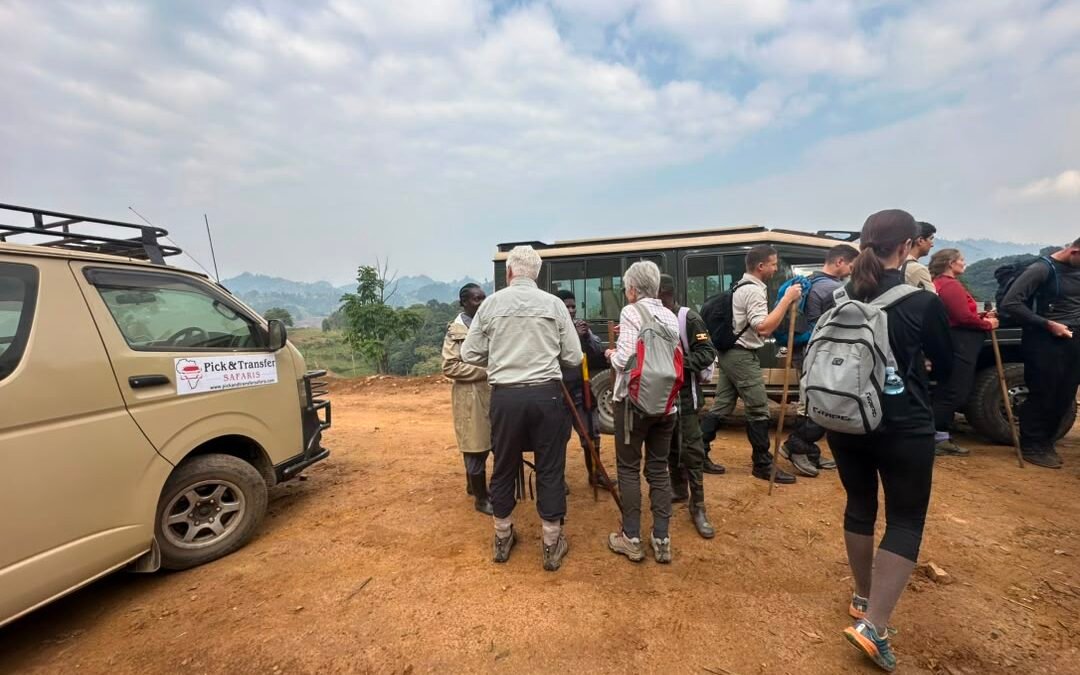
Gorilla Trekking Starting from Kigali Airport is the actual first step for many travelers heading to Uganda. With Bwindi Impenetrable Forest being closer to Rwanda’s capital than Entebbe Airport, Gorilla Trekking Starting from Kigali Airport has become the preferred route for those seeking efficiency and comfort. This guide outlines what to expect from the moment you arrive at KGL through immigration, your first transfer, and to the trailhead, ensuring a smooth gorilla trek starting from Kigali Airport.
Whether you have a single free day between flights or a full week to spend in the region, the logistics of starting your trip at Kigali Airport are largely the same, and getting them right up front saves you hours of confusion once you land. If you already know which part of Bwindi you want to trek, our dedicated guides on the Bwindi Impenetrable Forest destination go deeper on sector-specific planning; this guide focuses squarely on the airport-to-trailhead journey itself.
For anyone curious about Gorilla Trekking Starting from Kigali Airport, understanding the logistics in advance can greatly help in planning. The typical journey includes Gorilla Trekking Starting from Kigali Airport and ensures you enjoy the breathtaking views and experiences that await.
Considering Gorilla Trekking Starting from Kigali Airport can make your journey more memorable and enjoyable.
Most of the confusion first-time trekkers run into does not come from the trek itself, but from the handful of decisions that need to be made before they even board their outbound flight: which visa to buy, whether to book a night in Kigali, how to time a flight against a permit date already fixed months in advance, and who exactly is meeting them at arrivals. Answer those questions before you fly, and the rest of the journey — the drive, the border, the trek — tends to take care of itself.
The growing trend of Gorilla Trekking Starting from Kigali Airport showcases the region’s beauty and accessibility.
Gorilla Trekking Starting from Kigali Airport provides insights into the local ecosystem and conservation efforts.
Many choose Gorilla Trekking Starting from Kigali Airport to maximize their experience in the region.
Embrace the adventure of Gorilla Trekking Starting from Kigali Airport for an unforgettable wildlife experience.
The route of Gorilla Trekking Starting from Kigali Airport leads you through stunning landscapes and rich cultural experiences.
For those planning Gorilla Trekking Starting from Kigali Airport, be sure to book in advance for the best experience.
Why Kigali Airport Is the Best Gateway for Uganda Gorilla Trekking
A thorough understanding of Gorilla Trekking Starting from Kigali Airport can enhance your trip significantly.
Bwindi Impenetrable Forest sits in Uganda’s extreme southwest, a region that is, geographically, simply closer to Kigali than to Kampala or Entebbe. Flying into Kigali International Airport typically shaves several hours off your overland journey compared to routing through Uganda’s own international gateway, while often costing the same or less on airfare from major hubs in Europe, North America, and the Middle East. That combination — shorter drive, comparable or cheaper flights — is exactly why Kigali has become the preferred entry point for so many gorilla trekkers, even though their entire trek takes place in a different country.
Gorilla Trekking Starting from Kigali Airport has become easier than ever, with detailed planning available online to help you navigate your trip.
Your journey will be enhanced by the knowledge gained from Gorilla Trekking Starting from Kigali Airport.
The thrill of Gorilla Trekking Starting from Kigali Airport is unmatched in the travel community.
Travelers often choose Gorilla Trekking Starting from Kigali Airport due to the convenience of reaching Bwindi faster than going through Entebbe.
Quick Overview: What a Gorilla Trek from Kigali Airport Looks Like
In its simplest form, the journey runs: land at Kigali International Airport, clear immigration and collect your visa on arrival, meet your driver-guide, drive 4 to 6 hours to Bwindi crossing at either Cyanika or Katuna border, spend the night near your trekking sector, trek the following morning, then either return to Kigali or continue onward. Most travelers complete this as a 3 to 4 day round trip, though it can be compressed into a tighter itinerary or extended into a much longer Uganda-Rwanda combination depending on how much time you have.
The version of this trip that goes smoothly and the version that feels chaotic usually differ in exactly one respect: whether the traveler treated the airport arrival as a fully planned handoff to a waiting driver-guide, or as something to figure out after landing. The sections below walk through every decision point along that journey in the order you will actually encounter them, starting with the airport itself.
Kigali International Airport: Code, Location, and Facilities
Kigali International Airport carries the IATA code KGL and sits in the Kanombe area, roughly 5 kilometers east of Kigali’s central business district, typically 10 to 20 minutes away by road depending on traffic. The airport has 24-hour ATMs and currency exchange booths handling USD, EUR, and Rwandan francs, free Wi-Fi throughout the terminal, SIM card kiosks from providers like MTN and Airtel, several cafés and restaurants, duty-free shopping, and a premium Pearl Lounge for eligible passengers. For a gorilla trekking trip, the most relevant of these is the SIM card kiosk, since a local number makes coordinating with your driver-guide considerably easier once you land.
Visa on Arrival at Kigali Airport
Rwanda has offered visa-on-arrival access to nationals of every country since 2018, which removes one common source of pre-trip stress. A single-entry 30-day visa costs $50, while a multiple-entry option runs $70, both payable on arrival in USD. If your itinerary involves crossing into Uganda and back into Rwanda — which almost every Kigali-based gorilla trek does — it is generally more cost-effective to purchase the East Africa Tourist Visa instead, covering Uganda, Rwanda, and Kenya for $100 and up to 90 days with multiple crossings, rather than paying for Rwandan and Ugandan entry separately.
Planning Your Trip: Gorilla Trekking Starting from Kigali Airport
Immigration and Customs Process at KGL
After landing, passengers proceed through immigration with a passport valid for at least six months beyond their arrival date, a process that typically takes 15 to 30 minutes depending on how many flights have landed around the same time. Baggage claim follows at clearly marked carousels, then a straightforward customs screening before you reach the arrivals hall where ground transport awaits. Travelers arriving from a yellow fever endemic country need to present a valid vaccination certificate at this stage, so keep it easily accessible in your carry-on rather than packed away in checked luggage.
Which Airlines Fly Into Kigali International Airport
Kigali is served by a genuinely broad set of international carriers, including RwandAir’s own long-haul and regional network, along with connections through major hubs via Qatar Airways, Brussels Airlines, Turkish Airlines, Ethiopian Airlines, and Kenya Airways, among others. This breadth of options is part of why Kigali makes such a convenient gateway: travelers from Europe, the Middle East, and increasingly North America can usually find a one-stop connection into KGL, whereas reaching Entebbe from the same origins sometimes requires an extra leg.
Best Flight Arrival Times for a Same-Day Departure to Bwindi
Because the drive to Bwindi runs 4 to 6 hours depending on your sector, an early morning arrival into Kigali gives you the best chance of reaching your lodge before dark on the same day. Many long-haul flights from Europe and the Middle East land in Kigali between 6 a.m. and noon local time, which works well for this purpose. If your flight lands in the afternoon or evening instead, it is generally wiser to spend one night in Kigali and depart for Bwindi early the next morning, rather than pushing a long overland drive plus a border crossing into the last few hours of daylight.
Airport Meet-and-Greet and Transfer Pickup
A properly organized gorilla trekking operator will have a driver-guide waiting in the arrivals hall holding a name board, ready to help with luggage and walk you straight to your vehicle. This meet-and-greet service is typically included as part of your transfer booking rather than charged separately, and it removes any need to negotiate with airport taxi touts or figure out ride-hailing apps in an unfamiliar country the moment you land. Confirming your exact flight number and arrival time with your operator a few days ahead ensures your driver is tracking any delays and waiting at the right terminal exit.
SIM Cards, Currency Exchange, and Connectivity at the Airport
The experience of Gorilla Trekking Starting from Kigali Airport is enhanced by local guides and their knowledge.
Gorilla Trekking Starting from Kigali Airport is a unique opportunity that should not be missed.
Picking up a local SIM card at the airport kiosk before you leave the terminal is a small step that pays off throughout your trip, since mobile data coverage along the Kigali-to-Bwindi route is generally reliable on the Rwandan side and increasingly good on the Ugandan side too. Currency exchange booths and ATMs are available 24 hours a day at the airport, making it a sensible place to withdraw or exchange the bulk of the cash you will need for your permit, tips, and incidentals before ATMs become scarce past Kisoro town.
Should You Spend a Night in Kigali Before Heading to Bwindi?
Whether to overnight in Kigali before departing largely comes down to your arrival time and how tightly scheduled your trekking permit date is. An early morning arrival with a permit scheduled two days out gives you a comfortable buffer to push straight through to Bwindi the same day. A late arrival, jet lag, or a permit scheduled further out all argue in favor of a night in Kigali first, giving you time to rest, pick up any last-minute gear, and start the long drive fresh rather than exhausted. Our Kigali City destination guide covers where to stay and what to see if you do build in a night or two.
Choosing Your Bwindi Sector Before You Land
Bwindi has four trekking sectors — Buhoma, Ruhija, Rushaga, and Nkuringo — and which one your permit is allocated to directly affects your drive time and border crossing from the airport. Rushaga and Nkuringo, reached via the faster Cyanika border, generally mean a 4 to 5 hour drive from Kigali, while Buhoma and Ruhija, reached via Katuna, typically run 5 to 6 hours. Deciding on your sector before booking your flight and transfer, rather than after, lets you plan your arrival time and overnight stops with much more precision.
Gorilla Trekking Permit Cost (2026)
Regardless of which Bwindi sector you trek or which airport you fly into, the Uganda Wildlife Authority permit costs the same: $800 per person for foreign non-residents in 2026, $700 for foreign residents, $500 for other African nationals, and around UGX 300,000 for East African Community citizens. This fee covers park entrance, a ranger guide, trackers, and a community development contribution, but not transport, accommodation, meals, or tips, all of which are shaped heavily by how you structure your airport-to-Bwindi journey.
Visa Costs: Uganda Single-Entry vs East Africa Tourist Visa
A single-entry Uganda visa costs roughly $50 and covers one crossing into the country, which works fine if you are flying home from Entebbe rather than returning to Kigali. The East Africa Tourist Visa, at $100, covers Uganda, Rwanda, and Kenya for 90 days with unlimited crossings between them, and is almost always the better value for travelers flying into and out of Kigali, since it covers both the outbound crossing into Uganda and the return crossing back into Rwanda under a single fee.
Distance and Driving Time from Kigali Airport to Bwindi (by Sector)
Measuring specifically from the airport rather than central Kigali adds only 15 to 20 minutes to the drive times most guides quote from the city. In practical terms, expect roughly 4 hours to Rushaga, 4 to 5 hours to Nkuringo, and 5 to 6 hours to both Buhoma and Ruhija, each including border processing time. Kenlink Tours’ distance guide from Kigali to Bwindi breaks these figures down sector by sector in more detail if you want a second reference point while planning.
Cyanika vs Katuna Border Crossing
The Cyanika border crossing, reached via Musanze and Kisoro, is the standard route for Rushaga and Nkuringo and is generally the faster of the two options. The Katuna (Gatuna) crossing, reached via Kabale, serves Buhoma and Ruhija and typically adds an extra hour or so to the overall journey. Both crossings are free beyond your visa fee and typically add 30 to 60 minutes of processing time to your drive, though Cyanika tends to see less traffic and moves marginally faster on most days.
Private Airport Transfer Costs to Bwindi
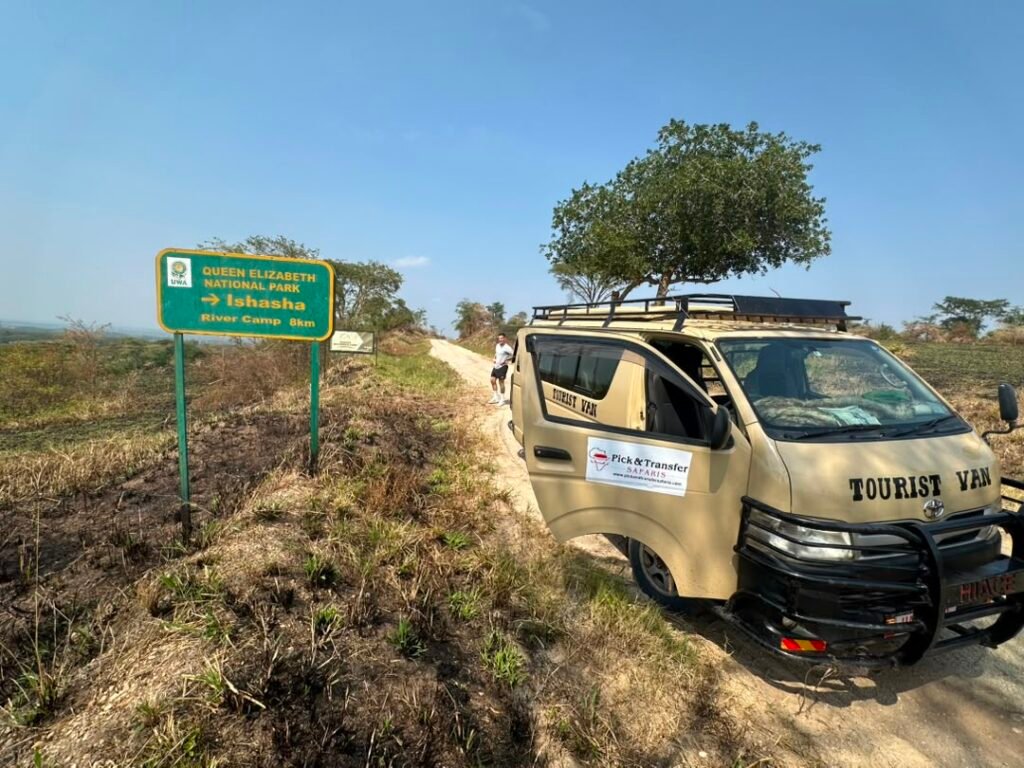
A private 4×4 transfer direct from Kigali Airport to Bwindi typically costs $200 to $380 one-way, priced per vehicle, with the exact figure depending on your specific sector and vehicle type. Booking this transfer as part of a single package with your permit and accommodation, rather than arranging airport pickup separately from your onward transport, generally works out both cheaper and considerably less stressful. You can request a quote for your exact arrival details through our contact page.
Group Shuttle and Budget Transport from the Airport
Budget-conscious travelers can take a taxi or ride-hailing service from the airport into central Kigali for $4 to $10, then connect with a shared shuttle or public minibus toward Kisoro or Kabale for $10 to $25, before arranging local transport for the final stretch to their lodge. This route can save significantly compared to a private transfer but adds real complexity on your very first day in the country, particularly if jet lag or an unfamiliar currency system is already working against you.
Gorilla Trekking Starting from Kigali Airport allows you the chance to engage with local communities and their culture.
Self-Drive from Kigali Airport: Pros and Cons
Renting a vehicle directly at the airport and self-driving to Bwindi is possible, but most rental agreements charge an extra cross-border fee of $50 to $100, and few first-time visitors are eager to navigate an unfamiliar border crossing, an unfamiliar currency, and several hours of driving in an unfamiliar country within hours of landing. For a one-off gorilla trekking trip, the marginal savings rarely outweigh the value of a driver-guide who already knows the route, the border officials, and the road conditions on both sides.
Luggage Storage and Left-Luggage Options at Kigali Airport
Travelers with an onward international flight some days later, or those doing a very short gorilla trek before continuing elsewhere, sometimes want to leave a suitcase behind rather than hauling it to Bwindi and back. Formal left-luggage facilities at Kigali International Airport are limited, so most travelers instead leave excess bags at their Kigali hotel for the duration of their Bwindi trip, arranging to collect them on return. If this applies to your itinerary, mention it to your hotel and operator in advance so both ends of the arrangement are confirmed before you set off.
What Documents to Print Before You Fly
Before boarding your flight to Kigali, print or download offline copies of your flight confirmation, permit confirmation letter, hotel and lodge bookings, travel insurance policy, and yellow fever vaccination certificate. Airport Wi-Fi and mobile data are generally reliable in Kigali, but having physical or offline copies means you are not dependent on a signal at the exact moment an immigration officer or ranger asks to see your paperwork, which speeds up both your airport arrival and your later border crossing into Uganda.
Weather in Kigali and Bwindi: What to Expect Across Your Trip
Kigali sits at a moderate elevation with a pleasant, spring-like climate year-round, typically 12°C to 27°C, so arrival day itself rarely requires much more than light layers. Bwindi, by contrast, sits higher and is considerably cooler and wetter, with rain possible in any month regardless of the official dry or rainy season. Packing for both climates in a single carry-on and checked bag means bringing at least one warm layer and a proper rain shell, even if your Kigali arrival day feels comfortably mild.
Packing List Overview for a Trip That Starts at Kigali Airport
Beyond the trekking-specific gear covered elsewhere in this guide, a few Kigali-Airport-specific items are worth including. A universal power adapter, since Rwanda and Uganda both use the same plug type but travelers from many countries will still need one, a portable charger for a long travel day, and a printed luggage tag with your operator’s contact details in case bags are delayed are all small additions that smooth out the first day of the trip. Beyond that, the same waterproof boots, rain jacket, gardening gloves, and gaiters recommended for any Bwindi trek apply here as well.
Photography Gear and Customs Considerations at the Airport
Standard camera equipment, including DSLR and mirrorless bodies with multiple lenses, passes through Kigali Airport customs without issue for personal use, though very large amounts of professional equipment can occasionally draw a question from customs officers about commercial intent. Carrying camera gear in your carry-on rather than checked luggage protects it from handling damage and keeps it accessible if you are asked to declare it. Once you reach Bwindi itself, remember that flash photography is prohibited during the actual gorilla trek, regardless of what equipment you have brought.
Sample 3-Day Itinerary: Airport Arrival to Gorilla Trek and Departure
Considerations for Gorilla Trekking Starting from Kigali Airport include knowing what to pack and how to prepare.
A tight but workable structure runs: Day 1, land at Kigali Airport in the morning, clear immigration, and drive straight to Bwindi, arriving at your lodge by early evening. Day 2, gorilla trek in the morning, with the rest of the day free to rest or take a short cultural walk. Day 3, drive back to Kigali, arriving in time for an evening flight out. This itinerary works well for the early-morning international arrivals discussed earlier, but leaves little margin for flight delays, so build in some buffer if your incoming flight has a history of running late.
Sample 4-Day Itinerary with a Buffer Day
Adding a single extra day gives you meaningful breathing room: Day 1, arrive and overnight in Kigali rather than pushing straight through. Day 2, drive to Bwindi and settle into your lodge. Day 3, gorilla trek followed by a relaxed afternoon. Day 4, return to Kigali with time to spare before departure. This structure is considerably more forgiving of jet lag, flight delays, or simply wanting to see a little of Kigali itself, and it is the itinerary most first-time trekkers end up preferring once they weigh the modest extra cost against the reduced stress. Our 2-day gorilla tour from Kigali and 3-day gorilla safari from Rwanda packages can both be adapted to either structure depending on your flight schedule.
Your adventure with Gorilla Trekking Starting from Kigali Airport will be filled with breathtaking moments and encounters.
Sample Budget for a Trip Starting at Kigali Airport
Bringing all the pieces together for a solo traveler on a 4-day itinerary: permit $800, private airport transfer round trip $400 to $600, one night in Kigali plus two nights near Bwindi at a midrange lodge $350 to $700, meals not included in lodge packages $60, porter and tips $60, visa $50 to $100, and a local SIM card and incidentals $20. All-in, this typically lands between $1,740 and $2,340 for a solo traveler, or noticeably less per person once transfer and accommodation costs are split between two or more travelers.
Accommodation Options: Kigali City vs Straight to Bwindi
If your flight timing allows a same-day push to Bwindi, skipping a Kigali hotel entirely saves both money and a night’s worth of extra driving later in your trip. If you are building in a buffer night, Kigali offers everything from $25 budget guesthouses to $250-plus luxury hotels, most of them a short drive from the airport. Deciding this ahead of time — rather than improvising after you land — lets your operator book the right combination of Kigali and Bwindi accommodation as a single, coordinated package.
What to Pack in Your Carry-On for a Same-Day Border Crossing
If you are pushing straight from the airport to Bwindi on arrival day, pack your passport, yellow fever certificate, visa payment cash, a change of clothes, and any trekking essentials like rain gear in your carry-on rather than checked luggage, in case of any baggage delay. A portable phone charger and a printed or downloaded copy of your permit confirmation are also worth having accessible, since border crossings move faster when documentation is easy to produce rather than buried at the bottom of a suitcase.
Health and Visa Documentation to Have Ready at the Airport
Beyond your passport and visa payment, keep your yellow fever vaccination certificate, a copy of your travel insurance policy, and any malaria prophylaxis documentation easily accessible for both the Kigali immigration desk and the Uganda border crossing later the same day. Rwanda and Uganda both check yellow fever certificates at their respective entry points, and travelers who have this paperwork ready to hand over, rather than searching for it, generally clear both checkpoints noticeably faster.
By emphasizing Gorilla Trekking Starting from Kigali Airport in your plans, you ensure a rich and rewarding experience.
Best Time of Year to Fly In for Gorilla Trekking
The dry seasons, June through August and December through February, offer the easiest trekking conditions but also the busiest immigration queues and the highest flight and lodge prices, since this is peak travel season across the region. The rainier shoulder seasons, March through May and September through November, mean a quieter airport, more flight availability, and often discounted lodge rates, at the cost of muddier trekking trails. If flexibility is on your side, flying in during a shoulder month can meaningfully reduce your overall trip cost without materially affecting your chances of a successful gorilla sighting.
Travel Insurance for Your Kigali Airport Gorilla Trip
Gorilla Trekking Starting from Kigali Airport combines adventure with the chance to see incredible wildlife.
Comprehensive travel insurance covering medical evacuation, trip cancellation, and adventure trekking activities typically costs $60 to $150 for a two-week trip. Given that your gorilla permit is non-refundable and your entire itinerary hinges on a specific flight arriving on time, insurance that also covers flight delay and trip interruption is worth the modest premium, particularly for travelers on a tight same-day connection from the airport to Bwindi.
Gorilla Trekking Starting from Kigali Airport opens doors to unique experiences in the wild, making it a trip of a lifetime.
Currency: How Much Cash to Carry From the Airport
Withdraw or exchange the bulk of your trip cash at Kigali Airport’s 24-hour ATMs and forex booths before you leave the terminal, since reliable ATMs become scarce once you pass Kisoro or Kabale en route to Bwindi. Plan to carry enough US dollars and Rwandan francs to cover your visa fee, permit balance if applicable, tips, porter fees, and any incidentals for your entire trip, since arriving near the park short of cash with no easy way to top up is a genuinely awkward position to be in.
Age Limit and Fitness Requirements for the Trek
The Uganda Wildlife Authority enforces a minimum age of 15 for gorilla trekking permits across every Bwindi sector, a rule aimed at protecting both younger children and the gorillas themselves. There is no strict upper age limit, though the trek can involve several hours of hiking on steep, sometimes muddy terrain, so a reasonable baseline fitness level is recommended regardless of which sector your permit lands you in. None of this changes because you started your trip at Kigali Airport rather than Entebbe, but it is worth confirming with your operator well before you fly if you have any mobility concerns, since a porter-carried sedan chair can be arranged in advance for an additional fee.
Money-Saving Tips When Starting from Kigali Airport
Flying in during the rainy shoulder seasons often means both cheaper airfare into Kigali and discounted lodge rates once you reach Bwindi. Traveling with at least one companion splits your private airport transfer cost meaningfully, since it is priced per vehicle rather than per person. Booking your airport pickup, transfer, permit, and accommodation as a single coordinated package, rather than arranging each piece separately, typically secures a better combined rate than piecing your trip together à la carte after you land.
Booking Through a Local Ground Operator vs an International Agency
International booking platforms and global tour wholesalers often mark up airport transfers, permits, and lodges by 20 to 40 percent, since they are reselling services actually delivered by ground operators based in Rwanda and Uganda. Booking your airport pickup and onward transfer directly with a locally based operator that owns its own vehicles typically removes that markup, and it also means the same company managing your airport meet-and-greet is the one responsible for getting you safely to Bwindi and back, rather than two disconnected providers handing you off mid-trip.
Comparing Kigali Airport to Entebbe Airport as Your Gateway
Entebbe International Airport is Uganda’s own main gateway and remains the better choice for travelers building a Uganda-only itinerary that never touches Rwanda. For a trip focused specifically on Bwindi gorilla trekking, though, Kigali usually wins on both convenience and cost: the drive from Kigali to Bwindi runs 4 to 6 hours versus 8 to 10 hours from Entebbe, and airfares into Kigali from Europe and the Middle East are frequently comparable to or cheaper than Entebbe fares from the same origins. Unless you have a specific reason to fly into Uganda directly, Kigali remains the more efficient gateway for this particular trip.
What If You Have a Long Layover in Kigali? Day-Use Options
Travelers with an unusually long gap between their inbound and onward flights sometimes wonder whether a quick taste of Kigali is worthwhile. A day-use hotel room near the airport, typically $40 to $100 for a few hours, offers a place to shower and rest between flights, while a short guided city tour covering the Kigali Genocide Memorial and central markets can be arranged for $30 to $60 per person if your layover stretches to a half day or more. Neither of these is essential to a gorilla trekking trip, but both are worth considering if your flight schedule hands you unplanned time in the city.
For safety and enjoyment, Gorilla Trekking Starting from Kigali Airport should involve adequate preparation and research.
Gorilla Trekking Starting from Kigali Airport is not just about the destination; it’s about the entire journey.
Solo Travelers vs Couples vs Groups: Cost From the Airport
Group size affects your total cost meaningfully from the very first leg of the trip. A solo traveler absorbs the full private airport transfer fee alone, typically $200 to $380 one-way, while a couple splits that cost in half and a group of four can bring the per-person transfer cost under $100. The same logic extends to your Kigali hotel room and Bwindi lodge, most of which price by room rather than by bed. If you are traveling solo, ask your operator whether other travelers are booked on a similar arrival date and sector, since joining a shared departure can meaningfully reduce your airport-to-Bwindi transfer cost.
Gorilla Habituation Experience: Booking It From the Airport
Experiences like Gorilla Trekking Starting from Kigali Airport can change your perspective on travel and nature.
If you specifically want the extended four-hour gorilla habituation experience rather than the standard one-hour trek, this permit is only available in Bwindi’s Rushaga sector and costs $1,500 per person in 2026, nearly double the standard fee. Because habituation slots are capped at a handful of visitors per day, this permit needs to be booked well ahead of your flight, ideally at the same time you are confirming your Kigali Airport arrival date, since the two need to align on your calendar months in advance rather than being arranged after you land.
Sample 7-Day Itinerary: Kigali Airport, Bwindi, and Volcanoes National Park
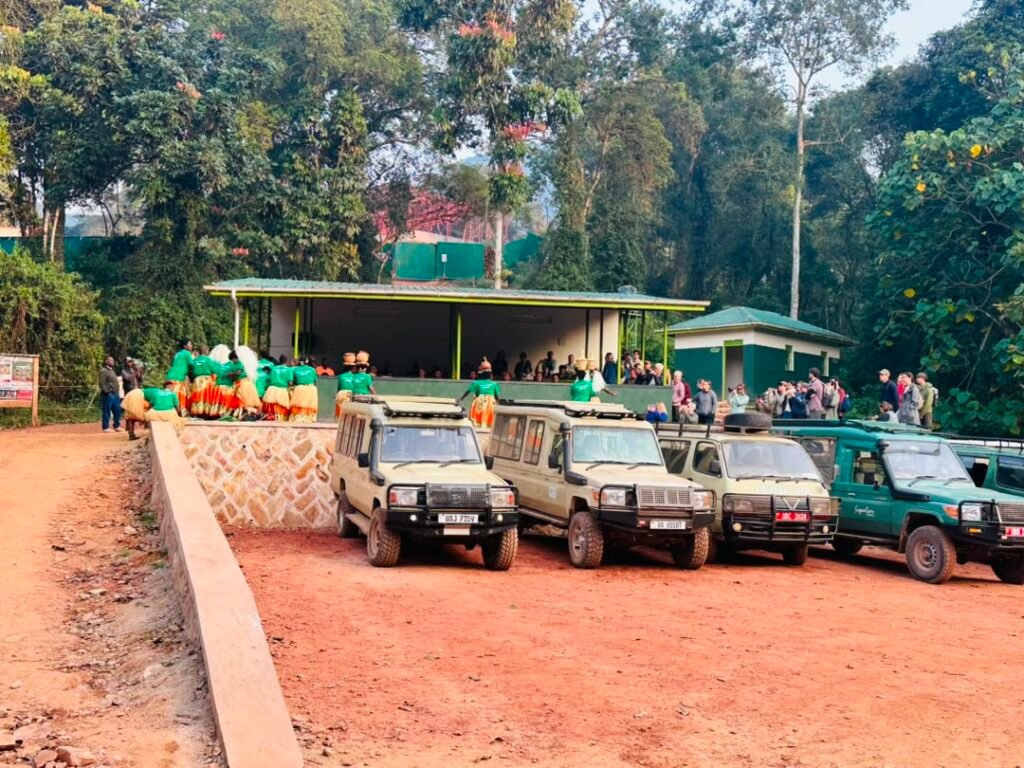
Travelers with a full week often use their Kigali Airport arrival to combine a Bwindi gorilla trek with Rwanda’s own Volcanoes National Park. A typical structure runs: Day 1, land at Kigali Airport and overnight in the city; Day 2, transfer to Bwindi via Cyanika; Day 3, gorilla trek in Bwindi; Day 4, transfer back toward Musanze and the Volcanoes area; Day 5, gorilla or golden monkey trekking in Volcanoes National Park; Day 6, return to Kigali with time for city sightseeing; Day 7, departure from the same airport you landed at a week earlier. All-in, this combined itinerary typically runs $3,200 to $4,200 per person. Our 7-day Uganda-Rwanda safari adventure is built around exactly this route, and Kenlink Tours’ 5-day gorilla trekking safari from Kigali to Uganda is a useful shorter comparison if a full week is more than your schedule allows.
Common Mistakes Travelers Make Starting from Kigali Airport
The most frequent misstep is booking a tight same-day connection to Bwindi without any buffer for flight delays, leaving travelers stressed and racing daylight on their very first day in the region. Another common error is failing to confirm meet-and-greet pickup details with the operator in advance, resulting in confusion in a crowded arrivals hall after a long flight. Arriving without local currency or a plan to get it, then discovering that ATMs become scarce past Kisoro, is a third avoidable headache. Finally, some travelers purchase a single-entry Uganda visa without realizing they will need to cross back into Rwanda, only to face an unexpected second visa fee at the border.
Combining Your Airport Arrival with Rwanda’s Volcanoes National Park
Since you are already landing in Rwanda, it is worth considering a Volcanoes National Park gorilla trek as part of the same trip, either before or after your Bwindi crossing. Volcanoes National Park sits just a two to three hour drive from Kigali Airport, making it a natural bookend to a longer itinerary that also includes Uganda. Our 2-day Volcanoes gorilla trek from Kigali and 7-day Uganda-Rwanda safari adventure are both built around exactly this kind of combined arrival, and Kenlink Tours’ Rwanda safaris overview is a useful reference if you want to compare how a similar dual-country trip is structured elsewhere.
Group Tour vs Private Tour From the Airport: Which Costs Less
Joining a scheduled group departure that shares an airport pickup, vehicle, and transfer cost among several unrelated travelers can meaningfully undercut a fully private tour, particularly for solo travelers. The trade-off is flexibility: a group tour runs on a fixed schedule set by the departure date, while a private tour lets you set your own pace, choose your own lodge tier, and adjust your itinerary around your actual flight times rather than someone else’s. For most travelers whose main goal is simply reaching the gorillas affordably, a scheduled group departure from Kigali Airport is worth asking about, while those prioritizing comfort and flexibility should stick with a private arrangement.
How Kigali Airport Fits Into a Wider East Africa Trip
Because Kigali sits within easy reach of both Uganda and Rwanda’s major wildlife circuits, many travelers use it as a hub for a broader East Africa itinerary rather than a single-purpose gorilla trekking stop. From Kigali, it is straightforward to continue on to Uganda’s Queen Elizabeth National Park or Kibale Forest for chimpanzee tracking, or to stay on the Rwanda side for Akagera National Park’s big-five game drives. If you are considering extending your trip beyond gorillas alone, Kenlink Tours’ Uganda travel overview is a useful starting point for scoping out what else the region offers once your Bwindi trek is booked.
Why Book Your Kigali Airport Transfer with Pick and Transfer Safaris
The single biggest factor in a smooth gorilla trekking trip that starts at Kigali Airport is having one coordinated operator managing your meet-and-greet, your border crossing, your permit, and your accommodation, rather than juggling several disconnected bookings on your first day in the region. Pick and Transfer Safaris arranges airport meet-and-greet pickup, private cross-border transfers to every Bwindi sector, and direct permit coordination with the Uganda Wildlife Authority — browse our full range of gorilla safari packages from Kigali or reach out through our about us page to share your flight details and start planning.
Do I need to reconfirm my airport pickup before I fly?
It is worth sending your operator your final flight number, arrival terminal, and estimated arrival time two to three days before departure, even if you confirmed these details when you first booked. Airlines occasionally adjust schedules in the days leading up to departure, and a quick reconfirmation message ensures your driver-guide is tracking the correct flight rather than an earlier itinerary version.
Can I go gorilla trekking the same day I land at Kigali Airport?
Trekking the very same day you land is not possible, since permits require a scheduled date and the drive to Bwindi alone takes 4 to 6 hours. What is possible is landing in the morning and driving straight to Bwindi the same day, then trekking early the following morning — a structure many operators build itineraries around specifically for travelers on a tight schedule.
Do I need a visa before I arrive at Kigali Airport?
No advance visa is required for most nationalities, since Rwanda has offered visa-on-arrival access to all countries since 2018. You can purchase either a standard Rwandan visa or, if you are also crossing into Uganda, the East Africa Tourist Visa directly at the airport immigration desk on arrival.
How early should I book my airport transfer to Bwindi?
Booking your transfer alongside your permit and accommodation, ideally three to six months ahead for dry-season dates, gives your operator time to confirm your exact flight details, arrange the right vehicle for your sector, and hold your preferred lodge before availability tightens.
What happens if my flight into Kigali is delayed?
A properly briefed operator will track your flight status and adjust your driver’s arrival time accordingly, so a delayed flight generally does not derail your trip as long as you have communicated your flight number in advance. If a significant delay pushes your border crossing into the evening, your operator may recommend an overnight stop in Kigali rather than continuing in the dark, which is worth discussing as a contingency before you travel.
Is it better to fly into Kigali or Entebbe for gorilla trekking in Bwindi?
For a trip focused specifically on Bwindi, Kigali is generally the better choice, offering a shorter 4 to 6 hour drive compared to Entebbe’s 8 to 10 hours, along with frequently comparable or cheaper international airfares. Entebbe remains the more sensible choice only if your itinerary is exclusively Uganda-based and does not touch Rwanda at all.
Can Pick and Transfer Safaris arrange my Kigali Airport pickup even if I book my flight separately?
Yes. Sharing your flight number and arrival time with your operator ahead of time is all that is needed to arrange a meet-and-greet pickup, regardless of which airline or booking channel you used for your flight. Your driver-guide will track your flight status and be waiting in the arrivals hall when you land.
Final Thoughts on Starting Your Gorilla Trek from Kigali Airport
Starting a Uganda gorilla trekking trip from Kigali Airport is, for most international travelers, simply the most efficient way to reach Bwindi, and the logistics involved — visa on arrival, a border crossing, a several-hour drive — are entirely manageable once you know what to expect and have a single operator coordinating the pieces. Get your flight timing, visa choice, and transfer booking right before you even board your outbound flight, and the rest of the trip becomes a matter of enjoying the drive rather than worrying about it.
The travelers who look back on this trip fondly are rarely the ones who improvised each piece as they went; they are the ones who treated the airport arrival as the true starting line of the itinerary, lined up their visa, transfer, and accommodation before takeoff, and left themselves enough buffer that a delayed bag or a late flight was a minor inconvenience rather than a crisis. Kigali Airport is, in that sense, less a stopover on the way to the gorillas and more the first stage of the trek itself. When you are ready to share your travel dates, reach out through our contact page and we will build your airport pickup, transfer, permit, and accommodation into a single, coordinated itinerary.