- LET'S PLAN YOUR SAFARI
- +256 200 921 002
- +256 793 194 703
- info@pickandtransfersafaris.com

Private Gorilla Trek from Kigali
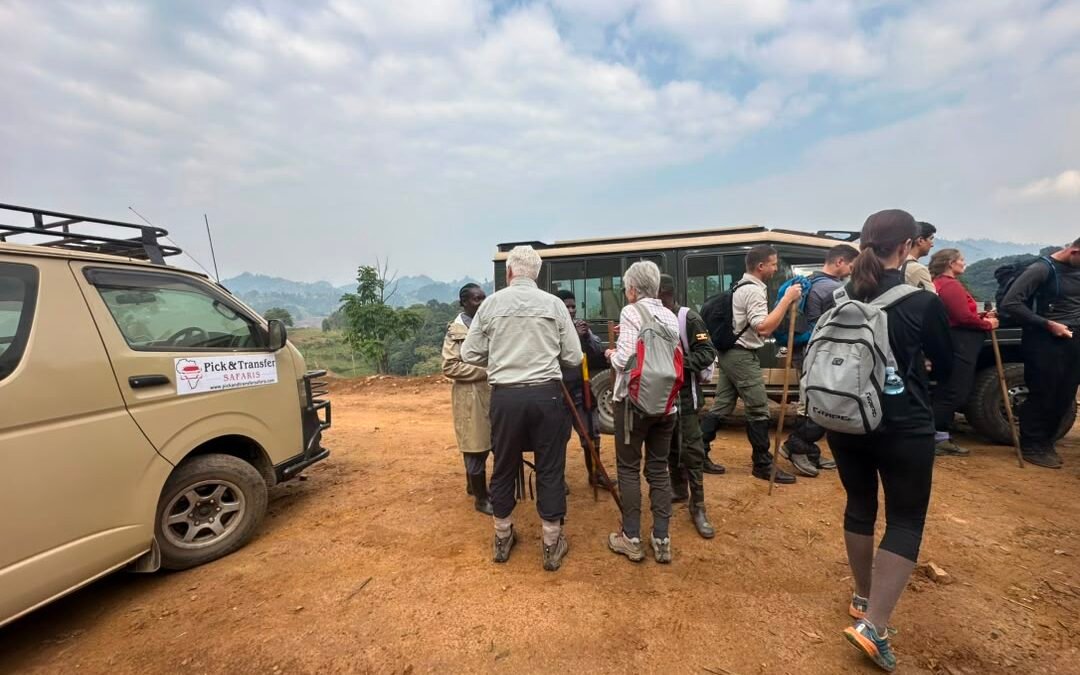
Private Gorilla Trek from Kigali. A private gorilla trek from Kigali means exactly what it sounds like: your own vehicle, your own driver-guide, and an itinerary built around your schedule rather than a fixed departure date shared with strangers. For travelers who value flexibility, pace, and a bit more personal attention over the lowest possible price, this is the way the vast majority of Kigali-based gorilla trips are actually arranged. This guide covers what “private” really means in practice, how much more it costs compared to a group or scheduled departure, and how to build a private itinerary that fits your exact travel dates, whether you have two days or two weeks.
If you already know you want a private trip and just need the logistics, our full Kigali gorilla safari packages page lists every private itinerary length we run. If you are still weighing private against group travel, read on — the difference matters more than most first-time trekkers expect.
This guide walks through exactly what changes and what stays the same when you book privately, since the two get conflated constantly online. The permit price, the trek itself, and the gorillas you encounter are identical no matter how you arrange your transport. What differs is everything around that core experience — and for a trip that already involves an international flight, a cross-border transfer, and a genuinely significant financial commitment, that surrounding experience is worth understanding in detail before you book.
What Does “Private” Actually Mean for a Gorilla Trek?
A private gorilla trek means your vehicle, driver-guide, and itinerary are dedicated entirely to your party — whether that is one traveler or a family of six — rather than shared with other travelers you have never met. It does not mean a private gorilla family or a private ranger during the actual trek itself, since gorilla trekking groups are capped and organized by the Uganda Wildlife Authority regardless of how you booked your transport. What “private” changes is everything around the trek: your transfer schedule, your rest stops, your accommodation choices, and your pace, all of which you control rather than a group itinerary controlling for you.
Private vs Group vs Scheduled Departure: What’s the Real Difference?
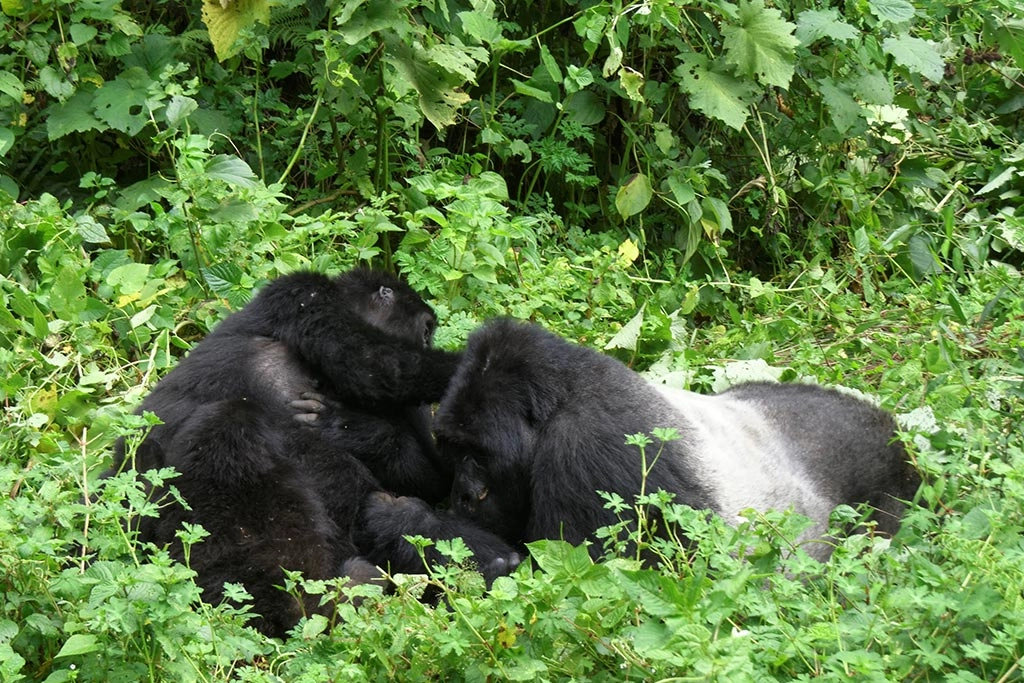
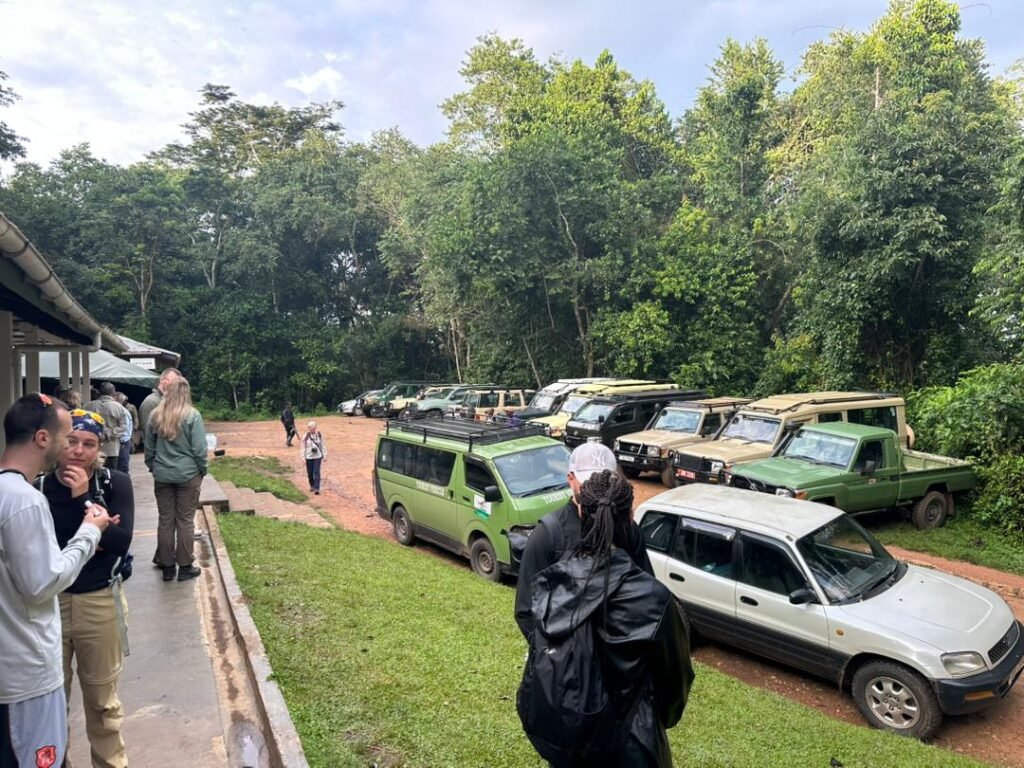
A scheduled group departure runs on a fixed calendar date set by the operator, pools several unrelated travelers into one vehicle to split costs, and follows a pre-set itinerary with little room for individual preference. A private tour, by contrast, departs on your chosen date, uses a vehicle reserved solely for your group, and can be adjusted at almost any point before or during the trip. Some operators also offer semi-private arrangements, joining two or three parties who have already agreed to travel together, which splits cost while retaining more flexibility than a large scheduled group. Understanding which of these three models a quoted price refers to is the first step to comparing offers accurately.
Why Most Kigali-Based Gorilla Trekkers Choose Private Over Group
Because Kigali-to-Bwindi trips involve an international border crossing, most travelers doing this route already have a fairly specific, individual schedule shaped by international flights, other travel plans, or a limited number of vacation days, which makes fitting into someone else’s fixed group departure date considerably harder than it would be for a domestic day trip. Combined with the fact that a private vehicle is priced per vehicle rather than per person, meaning a couple or small family splits the same fee, private transport ends up being the practical default for this specific route rather than a pure luxury upgrade.
Gorilla Trekking Permit Cost (2026) — Same Whether Private or Group
Regardless of how you arrange your transport, the Uganda Wildlife Authority permit costs the same: $800 per person for foreign non-residents in 2026, $700 for foreign residents, $500 for other African nationals, and roughly UGX 300,000 for East African Community citizens. Booking privately does not change this fee in either direction — it only affects your transfer, accommodation, and overall itinerary flexibility, which is where the real cost and experience differences between private and group travel actually show up.
Private Transfer Costs from Kigali to Bwindi
A private 4×4 transfer from Kigali to Bwindi typically runs $180 to $380 one-way depending on your sector, priced per vehicle rather than per person. Since this cost is fixed regardless of group size up to the vehicle’s capacity, two or three travelers sharing a private vehicle often end up paying less per person for a fully private, flexible transfer than they would for a seat on a shared shuttle with a rigid schedule. You can request a private transfer quote for your exact dates through Pick and Transfer Safaris’ contact page.
How Much More Does a Private Tour Cost Than a Group Departure?
For a solo traveler, a fully private tour typically costs $150 to $400 more than joining a scheduled group departure, largely reflecting the difference between splitting a vehicle among six strangers versus reserving one for yourself. For couples and families, this gap narrows considerably or disappears entirely, since the private vehicle cost splits across your own group rather than being an added premium on top of a shared fare. In practice, most travelers booking as a pair or family find private transport costs roughly the same as, or only slightly more than, a comparable group booking, while gaining complete control over their schedule.
Choosing Your Sector on a Private Trek
One of the clearest advantages of private travel is genuine input into which Bwindi sector you trek. Rushaga and Nkuringo, reached via the faster Cyanika border, generally mean a 4 to 5 hour private transfer, while Buhoma and Ruhija, via Katuna, run 5 to 6 hours. On a group departure, your sector is often assigned by whichever permits the operator has already secured for that fixed date; on a private trip, you can request a specific sector, a specific gorilla family preference, and even the gorilla habituation experience in Rushaga, subject to availability, since your itinerary is built around your permit rather than the other way around.
Private Accommodation Choices: Budget, Midrange, and Luxury
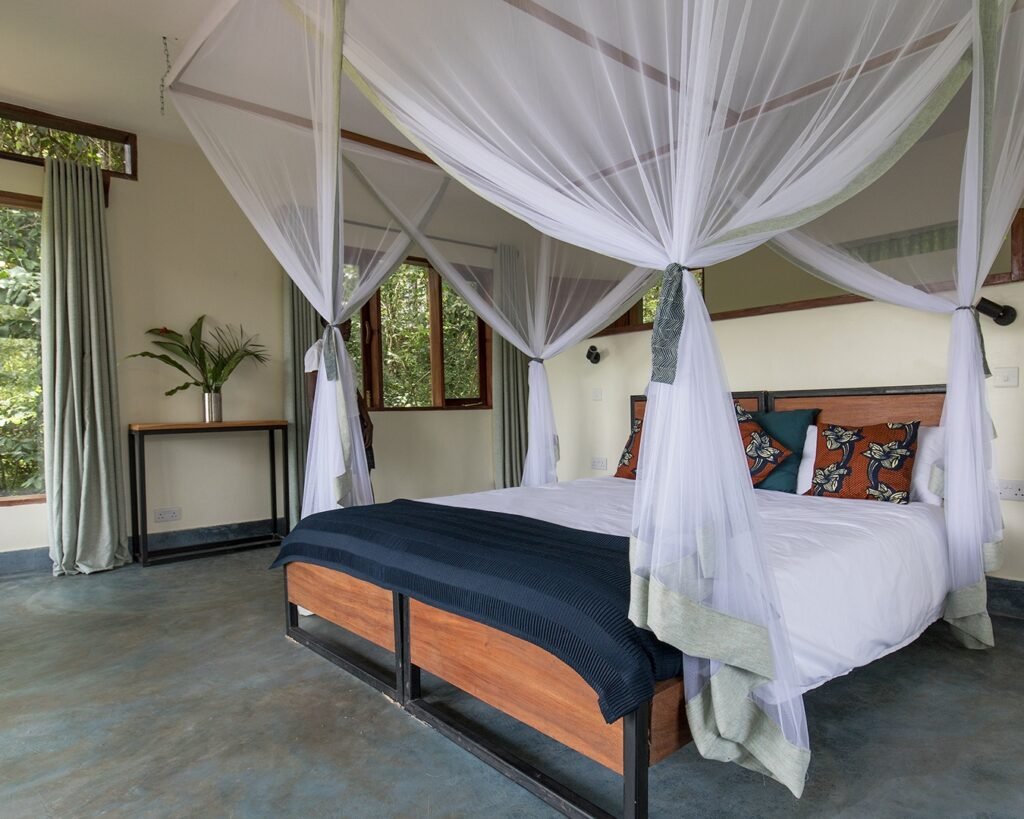
Private travel also means choosing your own accommodation tier rather than accepting whatever a group package has pre-booked. Budget lodges near Bwindi run $60 to $150 per person per night, midrange properties $200 to $450, and luxury lodges $500 to $1,500 and up. A private itinerary lets you mix tiers across a longer trip too — a midrange lodge near Bwindi paired with a splurge night in Kigali, for instance — in a way that a fixed group package generally does not accommodate.
Sample Private Itinerary: 1-Day Gorilla Trek from Kigali
For travelers with only a very tight window, a private 1-day structure covers a single overnight near Bwindi bookending the trek itself, timed entirely around your own arrival and departure rather than a shared group schedule. Our 1-day Uganda gorilla safari starting from Kigali is built specifically as a private itinerary for exactly this kind of compressed timeline, and Kenlink Tours’ 2-day Uganda gorilla safari from Kigali is a useful comparison point if you want to see how a similar short private structure is priced elsewhere.
Sample Private Itinerary: 2-Day Gorilla Trek from Kigali
A 2-day private itinerary adds a buffer night, giving you a private vehicle and driver for the full round trip without racing the clock on arrival day. Our 2-day gorilla tour from Kigali follows this structure and can be timed to depart on literally any date you choose, rather than waiting for a fixed group calendar slot.
Sample Private Itinerary: 3-Day Gorilla Trek from Kigali
A 3-day private trip is the sweet spot for most first-time trekkers, offering a genuine rest day either before or after the trek itself without extending the trip unnecessarily. Our 3-day Uganda gorilla safari from Rwanda and Kenlink Tours’ comparable 3-day Bwindi gorilla safari from Kigali both illustrate how this length is typically structured, whether booked with us or elsewhere.
Sample Private Itinerary: 5-Day Gorilla and Chimpanzee Safari
Travelers wanting to pair gorilla trekking with chimpanzee tracking on a single private trip often extend to 5 days. Our 5-day gorilla and chimps safari from Rwanda combines both primate experiences into one private, fully customizable route, and Kenlink Tours’ 5-day gorilla trekking safari from Kigali to Uganda offers a similar structure worth comparing if you are shopping this specific trip length.
Sample Private Itinerary: 7-Day Uganda-Rwanda Combination
For travelers with a full week, a private 7-day itinerary can weave together a Bwindi gorilla trek, a Rwanda-side Volcanoes National Park visit, and time in Kigali, all on a schedule built entirely around your own flights. Our 7-day Uganda-Rwanda safari adventure is designed as a private, fully bespoke route, and Kenlink Tours’ 7-day gorilla and wildlife safari in Uganda is a comparable structure if you are weighing a Uganda-only alternative.
Sample Private Itinerary: 10-Day and Longer Combinations
Travelers with two weeks or more increasingly favor private touring simply because a group departure covering such a specific, personalized route rarely exists. Our 10-day Uganda-Rwanda safari and 15-day Rwanda-Uganda safari packages are both built entirely around private transport and a bespoke day-by-day plan, and Kenlink Tours’ 10-day Rwanda-Uganda tour is a useful benchmark for comparing a similarly long private route.
Private Gorilla Habituation Experience Booking
The gorilla habituation experience, available only in Rushaga at $1,500 per person, is booked exactly the same way regardless of private or group travel, but a private itinerary gives you far more control over timing it precisely, since the extended four-hour experience needs to align cleanly with your transfer and accommodation schedule rather than a fixed group departure date. If a habituation permit is central to your trip, private booking is strongly recommended simply for the scheduling precision it allows.
Private Vehicle Types: What You Actually Get
Private transfers typically use a 4×4 safari vehicle such as a Land Cruiser or similar, seating four to six passengers comfortably with room for luggage, rather than a larger shared minibus used for group departures. This matters particularly on Bwindi’s rougher final approach roads, where a properly equipped 4×4 handles conditions considerably better than a standard shuttle van, and where having the vehicle entirely to yourself means no waiting on other passengers at rest stops or border crossings.
Private Driver-Guides: What to Expect
A private driver-guide travels with your group for the full journey, handling border paperwork, recommending stops, and often sharing genuinely useful local knowledge that a large group tour’s rotating drivers cannot offer in the same way. Many travelers find that their driver-guide becomes one of the most memorable parts of the whole trip, since a private arrangement allows a much more personal, ongoing relationship with one person across several days rather than brief interactions with different staff at each stage.
Visa Costs for a Private Kigali-to-Bwindi Trip
Visa requirements are identical whether you travel privately or in a group: a single-entry Uganda visa costs roughly $50, while the East Africa Tourist Visa, covering Uganda, Rwanda, and Kenya for $100, is usually the better value for travelers crossing the border more than once, as almost every Kigali-based itinerary does. Private travel does not change these costs, but it does give your driver-guide more flexibility to help you navigate the border process at your own pace rather than shepherding an entire group through at once.
Border Crossing on a Private Trip: Cyanika vs Katuna
The Cyanika border crossing, serving Rushaga and Nkuringo, and the Katuna crossing, serving Buhoma and Ruhija, work exactly the same for private travelers as for group tours, but a private schedule allows your driver-guide to time your crossing around quieter periods when queues are shorter, something a fixed group departure has far less flexibility to do. Our Bwindi destination guide covers both crossings in more detail if you want to compare them before choosing your sector.
Private Airport Meet-and-Greet from Kigali International Airport
A private tour includes a dedicated meet-and-greet at Kigali International Airport, with your driver-guide waiting in arrivals holding a name board, ready to help with luggage the moment you land. This is timed entirely around your specific flight rather than a group’s shared arrival window, which matters considerably if your flight is delayed or arrives outside a group tour’s typical pickup hours.
Customizing Your Itinerary: What Private Travel Actually Lets You Change
Beyond sector and lodge choice, private travel lets you adjust departure times, add or remove rest stops, extend a stay if you fall in love with a particular lodge, or insert an extra activity like a Batwa community walk or an additional wildlife park visit, often with only a day or two of notice. Our wildlife safaris and destinations pages are worth browsing if you want to see the full range of add-ons a private itinerary can incorporate beyond the gorilla trek itself.
Private Family Gorilla Treks: What to Know
Families traveling with children aged 15 and above, the minimum age for gorilla trekking permits, often specifically prefer private travel, since it allows the itinerary pace, rest stops, and lodge choice to accommodate a family’s particular needs rather than a mixed group of unrelated adult travelers. A private vehicle also means a family is not splitting a shared shuttle with strangers on what is, for many, a genuinely significant family trip.
Private Honeymoon and Anniversary Gorilla Treks
Couples celebrating a honeymoon or anniversary make up a significant share of private gorilla trekking bookings, typically pairing a private transfer with a luxury lodge and sometimes the gorilla habituation experience for an especially memorable day in the forest. Private booking removes any awkwardness of sharing an intimate trip with strangers in a group vehicle, and lets couples set their own pace for the entire journey from Kigali to the trailhead and back.
Combining a Private Bwindi Trek with Rwanda’s Volcanoes National Park
Since a private itinerary is not tied to a group’s fixed route, many travelers use their flexibility to combine a Bwindi trek with a Volcanoes National Park gorilla or golden monkey trek on the same trip. Our 2-day Volcanoes gorilla trek from Kigali and 3-day Rwanda gorilla tracking and cultural tour both slot naturally onto a private Bwindi itinerary, and Kenlink Tours’ Rwanda safaris overview is worth a look if you are scoping out the Rwanda side of a combined private route.
Combining a Private Gorilla Trek with Uganda’s Other Wildlife Parks
A private itinerary also makes it easy to extend beyond primates entirely. Our 3-day safari to Queen Elizabeth National Park and 3-day safari to Murchison Falls are both popular private add-ons for travelers wanting a big-game safari alongside their gorilla trek, and our 4-day wildlife and primate safari package shows how the two experiences are often combined into a single private route.
Private Extended Safaris: Two Weeks or More Across Uganda and Rwanda
Travelers building a genuinely long East Africa itinerary typically default to private touring by necessity, since no fixed group departure realistically covers a bespoke multi-country route. Our 18-day Kenya-Rwanda-Uganda safari and 20-day East Africa tour illustrate just how far a private itinerary can be extended when it is built entirely around one traveler’s or one family’s own schedule and interests rather than a shared group calendar.
Private vs Group Cost Comparison: A Worked Example
Consider a solo traveler doing a 3-day Kigali-to-Bwindi trip. On a scheduled group departure, transport might be priced around $120 to $180 per person, shared with several other travelers on a fixed date. Booking privately instead, the same traveler pays the full $250 to $350 one-way transfer alone, adding roughly $150 to $250 to the total trip cost. For a couple, this gap narrows to $0 to $75 per person, since the private vehicle cost splits between two rather than one, and for a group of four, private transport can end up costing about the same as a scheduled group fare while delivering complete schedule control.
When Group Travel Still Makes Sense
Solo travelers on a strict budget, with genuinely flexible dates that happen to align with an existing scheduled departure, are the clearest case where group travel remains the more cost-effective choice. If your dates are fixed by an international flight, if you are traveling as a couple or family, or if you want a specific sector or gorilla habituation slot that a group package cannot guarantee, private travel is almost always the better fit despite the modest cost premium for solo travelers.
Booking Your Private Permit, Transfer, and Lodge as One Package
The single biggest advantage of private travel is the ability to coordinate your permit, transfer, and accommodation as one seamless package built around your own dates, rather than piecing together separate bookings from different providers. Reach out through our about us page to learn how we handle this coordination, or go straight to our contact page to share your travel dates and get a private itinerary built around them.
Health and Visa Documentation for a Private Trip
A yellow fever vaccination certificate is required for entry into both Rwanda and Uganda regardless of how you booked your transport, so budget time for this at least ten days before departure if you do not already hold a valid certificate. Malaria prophylaxis is strongly recommended for the region as well. None of this changes with private travel, but a private driver-guide can generally allow a little more flexibility at border checkpoints to sort out paperwork than a large group tour rushing several travelers through at once.
Travel Insurance Considerations for Private Travel
Comprehensive travel insurance covering medical evacuation, trip cancellation, and adventure trekking activities typically costs $60 to $150 for a two-week trip, and is worth arranging regardless of whether you book privately or in a group. Since a private itinerary is often more customized, with add-on activities and extended stays layered onto the core gorilla trek, it is worth double-checking that your policy explicitly covers every activity in your final itinerary, not just the standard trekking day.
What to Pack for a Private Gorilla Trek
Essential gear is identical whether you travel privately or in a group: waterproof hiking boots, a rain jacket, gardening gloves, gaiters, and layered clothing for Bwindi’s variable, often cool and misty conditions. One genuine advantage of private travel is luggage flexibility — since you are not sharing vehicle space with strangers, you generally have more room for extra bags, camera equipment, or souvenirs picked up along the way than a shared shuttle would comfortably allow.
Best Time of Year for a Private Gorilla Trek
The dry seasons, June through August and December through February, offer the easiest trekking conditions but the highest demand and prices for both permits and lodges. The rainier shoulder seasons, March through May and September through November, bring muddier trails but noticeably better lodge availability and often discounted rates. Private travel gives you the freedom to choose exactly which week or even which specific day works best for your schedule, rather than waiting for a group departure date that happens to fall in your preferred season.
Tipping on a Private Tour: Who to Tip and How Much
Tip your ranger guide $10 to $20 per person after the trek, your porter $15 to $20, and your private driver-guide $10 to $15 per day across the length of your trip. Because a private driver-guide typically stays with you for the entire journey rather than rotating between groups, many travelers find they develop enough rapport over several days together that tipping toward the higher end of the range feels natural by the end of the trip.
Porter Fees on a Private Trek
Hiring a porter to carry your daypack and assist over steep or muddy sections costs $15 to $20 for the day, paid directly at the trailhead regardless of whether you arrived by private or group transport. This fee goes straight to a member of the local community and is one of the most directly impactful costs on the entire trip, well worth including in your private itinerary’s budget from the outset.
Weather and Trail Conditions Across Bwindi’s Sectors
Rain is possible in Bwindi in any month, and trail conditions vary meaningfully by sector — Nkuringo’s steep ridges are considerably more demanding than Buhoma’s gentler paths, for instance. A private itinerary lets you factor this into your sector choice ahead of time based on your group’s actual fitness level, rather than accepting whichever sector a fixed group package happens to be allocated for that date.
Private Tours for Photographers: Why Flexibility Matters
Photographers in particular benefit from private travel, since flash photography is prohibited during the actual gorilla trek and lighting conditions in Bwindi’s dense canopy change throughout the day. A private schedule allows an early departure timed to the best light, extra time at scenic stops along the drive, and the flexibility to linger at a viewpoint without holding up a group of unrelated travelers on a fixed schedule.
Comparing Private Tour Operators: What to Ask Before Booking
Before booking, ask any operator you are considering whether they own their vehicles directly or subcontract to a third-party ground handler, since subcontracted private tours sometimes carry an extra markup without an extra layer of quality. It is also worth asking how quickly they can adjust your itinerary if your flight changes, and whether your driver-guide is dedicated to your group for the whole trip or reassigned partway through, since continuity with one driver-guide is part of what makes private travel feel genuinely personal.
Sample Private Budget Breakdown by Trip Length
| Trip Length | Solo Traveler | Per Person, Couple |
|---|---|---|
| 2 days | $1,300 – $1,700 | $1,050 – $1,400 |
| 3 days | $1,800 – $2,400 | $1,500 – $2,000 |
| 7 days | $3,600 – $4,800 | $3,000 – $4,000 |
These figures assume a private transfer, midrange accommodation, standard permit, and typical tipping allowance, and illustrate how the per-person cost of private travel narrows considerably once a second traveler is added to split the vehicle and often the room cost as well.
Private Tours and Rwanda’s Nyungwe Forest Add-On
Travelers extending their private itinerary sometimes add a stop at Rwanda’s Nyungwe Forest for chimpanzee tracking or canopy walk activities, easily layered onto a Kigali-based route thanks to private scheduling flexibility. Our 3-day Nyungwe safari and 5-day best of Rwanda primate safari both show how this kind of add-on typically fits into a broader private route alongside a Bwindi gorilla trek.
Private Vehicle Rentals vs a Fully Guided Private Tour
Some travelers ask whether renting their own vehicle and driving themselves counts as a form of “private” touring. Technically yes, but self-drive rentals generally carry cross-border fees of $50 to $100 and place the entire navigation and border-paperwork burden on the traveler. Kenlink Tours’ car hire service is worth a look if self-driving genuinely appeals to you, though most travelers find a fully guided private tour, with a driver-guide handling the route and border crossing, delivers the same flexibility with considerably less personal logistical risk.
What to Expect on Day One of a Private Kigali-to-Bwindi Trip
Your driver-guide meets you at Kigali International Airport or your hotel at a time you agree on together, rather than a group’s fixed pickup slot. From there, the drive to Bwindi runs 4 to 6 hours depending on your sector, with rest stops timed to your preference rather than a group itinerary’s schedule. This level of control over even the smallest logistical details is often what private travelers say they appreciated most once the trip is over.
Age Limit and Fitness Requirements for a Private Trek
The Uganda Wildlife Authority enforces a minimum age of 15 for gorilla trekking permits across every Bwindi sector, a rule that applies identically whether you book privately or through a group. There is no strict upper age limit, though the trek can involve several hours of hiking on steep, sometimes muddy terrain. Private travel offers a genuine advantage here for families or groups with mixed fitness levels, since your driver-guide and operator can help select a gentler sector like Buhoma specifically to accommodate less experienced hikers, something a fixed group package cannot always guarantee.
Private Tours for Multi-Generational Family Trips
Families traveling across generations — grandparents, parents, and older teenagers — often find private touring the only realistic option, since itinerary pace, rest stop frequency, and accommodation choices need to flex around the group’s least mobile member rather than a fixed schedule designed for an average traveler. A private driver-guide can build in extra rest breaks on the drive, choose a lodge with easier terrain to the room, and adjust trek sector recommendations specifically around the group’s overall fitness profile.
Private Chimpanzee Tracking Add-Ons in Kibale Forest
Uganda’s Kibale Forest, home to some of Africa’s highest primate density, is a popular private add-on for travelers wanting chimpanzee tracking alongside their gorilla trek. Our 3-day chimpanzee tour in Uganda and Kibale Forest destination guide both illustrate how easily this experience layers onto a broader private Kigali-based itinerary, and Kenlink Tours’ 3-day chimpanzee tracking safari offers a useful point of comparison for pricing this specific add-on elsewhere.
Private Tours to Akagera National Park for a Big-Five Safari
Travelers wanting to pair their gorilla trek with a classic big-five game drive often add Rwanda’s own Akagera National Park to their private route, since it sits within a manageable drive of Kigali and requires no additional border crossing. Our 3-day Akagera National Park safari from Kigali and Akagera destination guide show how this add-on typically fits into a longer private itinerary alongside Bwindi.
Currency and Payment on a Private Tour
Private tours are typically paid via a deposit at booking and a balance due before or on arrival, often accepted by bank transfer or card payment, with the remaining cash needs — tips, porter fees, and incidentals — settled locally in US dollars or local currency. Since a private itinerary is built specifically around your dates rather than pooled with a group’s payment schedule, operators can generally offer more flexibility on payment timing than a fixed group departure with a hard cutoff date for full parties to be confirmed.
How Private Tours Handle Flight Delays and Schedule Changes
One of the clearest practical advantages of private travel is how it handles disruption. If your inbound flight to Kigali is delayed, a private driver-guide simply adjusts your pickup time accordingly, and your entire onward schedule shifts with you rather than a group tour departing without you or forcing you to catch up separately. This flexibility alone is, for many international travelers juggling long-haul flights and tight connections, worth the modest cost premium private travel carries for solo bookings.
Group Tours Compared: Scheduled Departure Options
If budget is the overriding priority and your dates happen to be genuinely flexible, it is worth comparing a private quote against a scheduled group departure before committing either way. Kenlink Tours’ scheduled departure safari and group tours pages are useful references for understanding how a fixed-date, cost-shared alternative to private travel is typically structured, so you can weigh the trade-off between cost and flexibility with real numbers in front of you rather than in the abstract.
Common Misconceptions About Private Gorilla Trekking
Many first-time trekkers assume “private” means a private encounter with the gorillas themselves, which is not the case — trekking groups in the forest are still capped and organized by the Uganda Wildlife Authority regardless of how your transport was arranged. Others assume private travel is always dramatically more expensive than group travel, which, as the cost comparison above shows, is true mainly for solo travelers and much less true for couples, families, and groups sharing a vehicle.
Private Tours to Murchison Falls and Queen Elizabeth National Park
Travelers with more time sometimes extend their private Kigali-based itinerary all the way into Uganda’s northern and western wildlife circuits. Our Murchison Falls National Park destination guide and Queen Elizabeth National Park destination guide both cover parks that pair naturally with a Bwindi gorilla trek on a longer private route, offering boat cruises, tree-climbing lions, and classic savannah game drives well beyond what the primate-focused sectors of the trip can offer on their own.
Why a Dedicated Driver-Guide Matters More on Longer Private Trips
The longer your private itinerary runs, the more the value of a single, dedicated driver-guide compounds. On a 10-day or longer route spanning multiple parks and possibly two countries, having one person who already understands your preferences, pace, and travel style by day three saves real friction compared to being handed off between different drivers at each new destination, which is far more common on group or segmented tour structures. This continuity is part of why so many long-haul East Africa travelers specifically request private touring rather than piecing a trip together from separate regional operators.
Private Tours and Local Community Impact
A private tour’s cost structure, particularly the porter fees, tips, and community-linked activities like a Batwa cultural walk, channels a meaningful share of your spending directly into the communities living around Bwindi and Volcanoes National Park, regardless of whether you booked privately or in a group. What private travel does add is the flexibility to build in more of these community-linked stops without needing a whole group’s buy-in, since a private itinerary can simply include an extra cultural visit or artisan market stop wherever your own interests lead.
Why Book Your Private Kigali-to-Bwindi Trek with Pick and Transfer Safaris
Coordinating a fully private permit, transfer, and lodge itinerary across two countries benefits enormously from a single experienced operator managing every piece rather than several disconnected bookings. Pick and Transfer Safaris arranges private door-to-door transfers from Kigali to every Bwindi sector, coordinates permits directly with the Uganda Wildlife Authority, and builds accommodation into whichever tier fits your travel style — browse our full gorilla safari packages or explore our Bwindi Impenetrable Forest destination guide to see the full range of private itineraries available.
Does a private tour mean I get a private gorilla family?
No. Gorilla trekking groups inside the forest are capped and organized by the Uganda Wildlife Authority regardless of how your transport was booked, typically limited to eight visitors per gorilla family per day. “Private” refers to your vehicle, driver-guide, and itinerary outside the trek itself, not the trekking group composition once you are inside the park.
Is a private tour worth it for a solo traveler?
It depends on your priorities. A solo traveler pays a genuine premium, typically $150 to $400, for the flexibility and comfort of private transport compared to a scheduled group departure. If your dates are fixed and align with an existing group tour, that option can save money; if flexibility, pace, and comfort matter more to you than the lowest possible price, private remains worth it even solo.
Can I change my private itinerary after booking?
Generally yes, with reasonable notice. Because a private itinerary is not shared with other travelers, most operators can accommodate date shifts, added activities, or accommodation upgrades even close to departure, subject to permit and lodge availability, which is one of private travel’s core advantages over a fixed group package.
How far in advance should I book a private gorilla trek from Kigali?
Three to six months ahead is recommended for peak dry-season dates, given how far ahead permits and popular lodges can sell out. Private bookings do offer more flexibility on short notice than a group departure, but the underlying permit and accommodation availability constraints apply regardless of how you book your transport.
Can I add extra destinations to my private itinerary after it is already booked?
In most cases yes, provided you give your operator reasonable notice and the additional destination’s permits, activities, or lodges have availability. This is one of private travel’s core strengths — since your itinerary was never shared with other travelers in the first place, extending or adjusting it rarely requires renegotiating anyone else’s plans, unlike a group tour where every change affects the whole party.
Does booking privately mean I get better customer service than a group tour?
Not necessarily better in an absolute sense, but it is generally more personalized, since your driver-guide and operator are focused on one group’s specific needs and preferences rather than managing a larger party with mixed expectations. Group tours from reputable operators can still deliver excellent service; private travel simply removes the need to compromise your experience around other travelers’ preferences.
Final Thoughts on Booking a Private Gorilla Trek from Kigali
A private gorilla trek from Kigali costs a modest premium for solo travelers and often costs about the same as group travel for couples and families, in exchange for complete control over your sector choice, pace, accommodation, and schedule. For a trip that already involves an international flight, a border crossing, and a genuinely significant financial and physical commitment, that flexibility is worth having.
The travelers who look back most fondly on this trip are rarely the ones who found the single cheapest transfer quote available; they are the ones whose schedule, sector, and lodge choices actually matched what they wanted from the experience, down to the small details a shared group itinerary has no room to accommodate. Whether that means an early departure timed to perfect morning light, an extra rest stop for a tired traveler, or a last-minute lodge upgrade because a particular property caught your eye along the drive, private travel is what makes those small, personal decisions possible. When you are ready to build your own private itinerary, reach out through our contact page and we will put together a permit, transfer, and lodge combination scheduled entirely around your dates.