- LET'S PLAN YOUR SAFARI
- +256 200 921 002
- +256 793 194 703
- info@pickandtransfersafaris.com

Best Parks for Children in Uganda
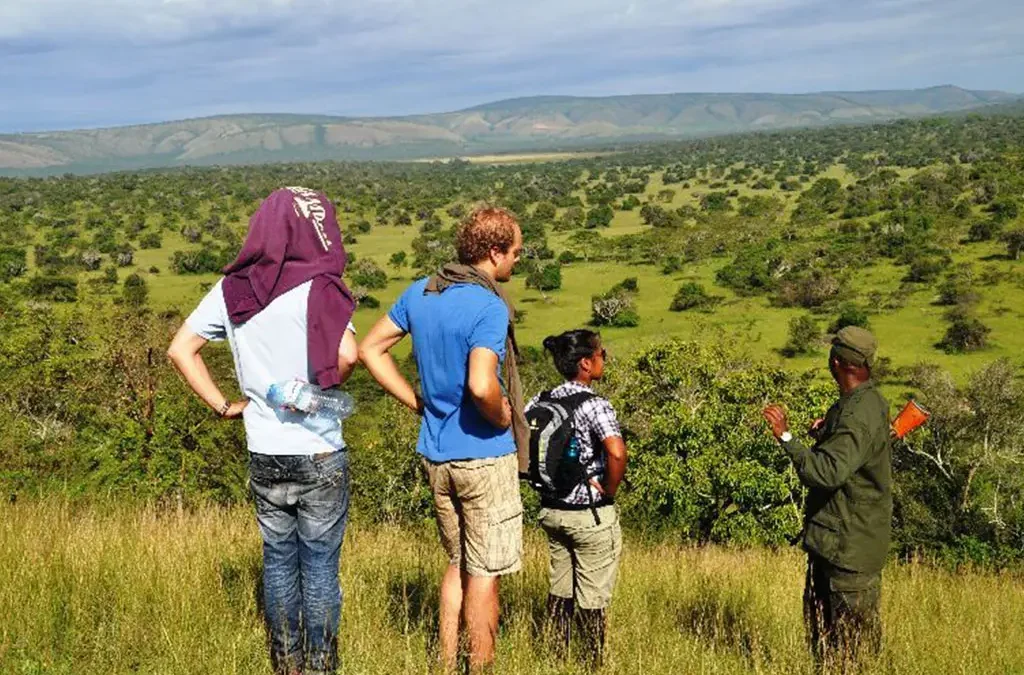
Best Parks for Children in Uganda. Uganda has a reputation as a gorilla trekking country first and a family destination a distant second, and on paper that reputation makes sense: the headline activity, gorilla trekking, carries a strict minimum age of 15, which rules out a large share of travelling families before they even open a brochure. Look past the gorillas, though, and Uganda turns out to be one of the more genuinely rewarding family safari destinations in East Africa, with parks built around gentle game drives, boat cruises with no age limit at all, walking safaris among zebras rather than lions, and a rescue centre just outside the capital that lets a three-year-old meet a chimpanzee at eye level with zero trekking required. This guide works through the best national parks for children in Uganda park by park, matched to specific age brackets, with the rules, the realistic logistics, and the alternative activities that let every member of a family safari, not just the teenagers, have a genuine wildlife encounter.
We plan and operate family safaris across Uganda and Rwanda every season at Pick and Transfer Safaris, and the single most common planning mistake we see is families building an itinerary around the gorillas first and the children’s ages second. Flip that order, start from what your youngest child can actually and safely do, and the rest of the trip falls into place far more easily than most first-time planners expect.
If you are also weighing Rwanda alongside Uganda for a family trip, our companion guides on the gorilla trekking versus chimpanzee trekking decision and what gorilla trekking actually costs both cover ground that applies directly to Uganda’s age-restricted activities as well, and are worth reading alongside this one.
Why Uganda Works Better for Families Than Its Reputation Suggests
The gorilla-trekking-only image of Uganda safari travel misses most of what actually makes the country good for children. Queen Elizabeth National Park and Murchison Falls National Park both centre their best wildlife viewing around boat cruises, gliding slowly along the Kazinga Channel or the Victoria Nile with no walking, no age limit and near-guaranteed close sightings of hippos, elephants and buffalo from the safety of a boat deck, which is about as low-stress a wildlife experience as exists anywhere on the continent. Lake Mburo National Park goes a step further and allows walking and horseback safaris inside the park itself, something almost no other savannah park in East Africa permits, because it has no resident lions to make walking dangerous. And Entebbe, the small lakeside town most families already pass through on arrival, is home to a proper wildlife rescue centre where very young children can see chimpanzees, lions, rhinos and shoebill storks without a single restriction on age.
Layered on top of that is Uganda’s short flight geography. Nowhere else in East Africa packs primates, savannah game, a major waterfall and a Rift Valley lake into drive times measured in hours rather than days, which matters enormously with children, who tolerate a Uganda-scale country far better than the multi-day transfers a comparable trip in Tanzania or a fly-in Kenya circuit would demand.
What to Know Before Planning a Uganda Safari with Kids
The single most important planning fact is that Uganda’s headline primate activities carry hard age minimums enforced by park rangers at the trailhead, not just recommended by tour operators. Gorilla trekking in Bwindi Impenetrable National Park and Mgahinga Gorilla National Park requires a minimum age of 15, checked against a passport on trekking day, with Uganda occasionally granting a written exception for a child turning 15 within the same calendar year who is accompanied by a parent and judged physically fit, though this is the exception rather than the rule and should never be assumed without confirming directly with the operator in advance. Chimpanzee trekking in Kibale Forest National Park is generally accepted from age 12, based on the consistent guidance from local guides and park-based operators, though a small number of sources describe a stricter 15-year threshold, so families with a child near either age should confirm the current policy with their operator at the time of booking rather than relying on any single source, including this one. Golden monkey trekking in Mgahinga, a shorter and gentler primate trek than gorillas, commonly accepts children from around 12 as well.
Below those age thresholds, none of this rules out a wildlife-rich Uganda trip. Game drives, boat cruises, guided nature walks, cultural visits and the Ziwa Rhino Sanctuary all carry no meaningful age restriction, and several are genuinely better suited to young children than to grown adults chasing a single dramatic encounter, because they reward patience and short attention spans about equally well.
Queen Elizabeth National Park — The Best All-Round Park for Families
Queen Elizabeth National Park is the single easiest recommendation for a Uganda family safari, and the reason comes down to the Kazinga Channel boat cruise, a two-hour float along the narrow channel connecting Lake Edward and Lake George that reliably delivers some of the densest hippo and elephant viewing anywhere in Africa, all from the safety and comfort of a boat deck with no walking, no vehicle bumping over tracks, and no age restriction whatsoever. Children who find a three-hour game drive tiring generally sit through the Kazinga cruise happily, partly because the animals come to the boat rather than the other way around, and partly because the crocodiles basking on the banks and the fish eagles diving for prey give even a short attention span something new every few minutes. Kenlink Tours runs a dedicated 3-day wildlife encounter to Queen Elizabeth National Park built around exactly this combination of boat cruise and game drives, and it is a useful reference point for pacing a first family visit to the park.
Game drives in Queen Elizabeth cover open savannah where lions occasionally climb into fig trees in the Ishasha sector, a behaviour rare enough elsewhere that it is worth building a full day around if travelling with children old enough to sit through a longer drive, while the crater lakes region near Katwe offers a shorter, scenic detour better suited to a morning with younger children in the vehicle. The park’s proximity to Kyambura Gorge also opens up a shorter chimpanzee tracking option than Kibale for families short on time, though the same age-12 guidance applies here as elsewhere in Uganda. We cover the full destination in more depth on our Queen Elizabeth National Park page, and pair a Queen Elizabeth stop with Murchison Falls and Kibale in our wildlife safaris collection.
Lake Mburo National Park — The Best Park for Very Young Children
Lake Mburo is Uganda’s smallest savannah park and, for families with children under ten, arguably its most useful one, because it is the only major park in the country where walking safaris and horseback safaris are permitted inside the park boundary without a ranger escort carrying a rifle for lion protection, simply because Lake Mburo has no resident lion population. That single fact changes the entire character of a visit: children can walk within a few metres of zebra and impala on foot, guided by a ranger focused on interpretation rather than danger, an experience that tends to land far more vividly with a young child than watching the same animals from behind a vehicle window at a distance. The park’s boat cruise on Lake Mburo itself adds hippos, crocodiles and a healthy population of fish eagles and kingfishers to the walking and horseback options, giving families three distinct low-intensity activities inside a single small, easily covered park.
Lake Mburo also sits directly on the main road between Kigali or southern Uganda and Queen Elizabeth National Park, which makes it a natural, low-effort stop to break up a longer drive rather than a dedicated multi-day destination, a pattern that suits younger children who tire of long stretches in a vehicle. Families building a longer Uganda-Rwanda combination route often find our best road trips in Rwanda guide useful for thinking through how a Uganda stop like Lake Mburo connects to a broader regional itinerary, since many of the same driving and pacing principles apply on the Uganda side of the border.
Murchison Falls National Park — Uganda’s Most Dramatic Family Day Out
Murchison Falls delivers the single most photogenic moment on any Uganda family itinerary: the point where the entire Victoria Nile forces itself through a gap in the rock barely seven metres wide before crashing more than 40 metres down into the gorge below, a spectacle most children remember more vividly than almost any wildlife sighting elsewhere in the country. The park offers two ways to experience it, a boat cruise from the base that motors right up to the foot of the falls with the spray visible from the deck, and a short hike to the top of the falls for those who want to look down into the gorge itself, and both are appropriate for children old enough to hold a handrail confidently and follow a guide’s instructions, typically from around six or seven upward with reasonable supervision. Kenlink Tours’ 8-day Uganda gorilla, chimpanzee and wildlife safari includes Murchison Falls alongside the primate parks for families with a mix of ages able to combine both.
Game drives on the northern bank of the Nile inside Murchison Falls National Park cover genuine Big Five territory, with elephant, buffalo, giraffe and lion all regularly sighted, and the park’s proximity to the Ziwa Rhino Sanctuary, covered separately below, makes a Murchison-based itinerary one of the few in Uganda where a family can realistically tick off all of the country’s flagship large mammals inside a single, well-organised loop. We detail the full destination on our Murchison Falls National Park page, and a dedicated 3-day safari to Murchison Falls package covers the boat cruise, top-of-the-falls hike and a game drive within a family-manageable three days.
Ziwa Rhino Sanctuary — The Best Rhino Encounter for Children of Any Age
Ziwa Rhino Sanctuary, roughly midway between Kampala and Murchison Falls, is home to Uganda’s only population of rhinos, reintroduced after the species was hunted to local extinction in the country during the 1980s, and it offers one of the gentlest wildlife-tracking experiences anywhere in the region. Rhino tracking at Ziwa is done entirely on foot across flat, open grassland with a ranger who typically brings groups to within around 20 metres of a resting or grazing rhino, a distance judged safe precisely because these white rhinos are habituated and generally placid, and the walk itself rarely exceeds 30 to 45 minutes even when the rhinos have moved some distance from the entry point. Unlike gorilla and chimpanzee trekking, rhino tracking at Ziwa carries no strict age minimum, making it one of the very few genuine tracking experiences in Uganda that a family with children of any age can do together as a single group rather than splitting up by age eligibility.
Because Ziwa sits directly on the main Kampala-to-Murchison Falls road, it works naturally as a half-day stop on the drive north rather than requiring a dedicated overnight, which keeps a family itinerary efficient without sacrificing one of Uganda’s most rewarding and least physically demanding wildlife encounters. Combining Ziwa with Murchison Falls itself is close to the default routing for any Uganda safari heading north from Kampala or Entebbe, and our extended safaris collection includes multi-day itineraries built around exactly this northern circuit.
Kibale Forest National Park — The Best Park for Tweens and Teenagers
Kibale Forest National Park holds the highest density of primates of any park in East Africa, and for families with children in the roughly 12-to-15 age bracket, too old for the youngest-child activities but not yet old enough for gorilla trekking, it is often the single best-fit destination in the entire country. Chimpanzee trekking here typically runs two to four hours through dense, humid forest before reaching a habituated community, and while it demands real physical effort, more than either the Ziwa rhino walk or a Kazinga boat cruise, it rewards that effort with close, often extended sightings of chimpanzees feeding, grooming, calling and moving through the canopy, a genuinely different category of encounter from a savannah game drive. Kenlink Tours runs a dedicated 3-day chimp tracking safari to Kibale National Park and a standalone 3-day chimpanzee tracking safari, either of which works well as a focused Kibale-only trip for a family in this age range.
Families travelling with a mix of younger and older children can also split activities inside Kibale itself: while the eligible children trek chimpanzees, younger siblings below the age threshold can join the guided Bigodi Wetland Sanctuary walk nearby, a community-run reserve known for monkeys, birdlife and a boardwalk trail gentle enough for most children, keeping the whole family occupied and engaged rather than leaving anyone waiting at the lodge. We cover the full destination, including this kind of split-activity planning, on our Kibale Forest National Park page.
Bwindi Impenetrable National Park and Mgahinga — For Teens 15 and Older, With Alternatives for Younger Siblings
Bwindi Impenetrable National Park is home to roughly half of the world’s remaining mountain gorillas, and for families with a child who has just turned 15 or is old enough to trek, it delivers what is consistently described as one of the most profound wildlife encounters available anywhere on the planet. The trek itself varies enormously in length and difficulty, anywhere from under an hour to over six hours of steep, often muddy hiking depending on where the assigned gorilla family happens to be that morning, so a realistic level of fitness matters more here than at almost any other family activity in this guide. Kenlink Tours’ 3-day Uganda gorillas safari and longer 7-day gorilla and wildlife safari both build in the buffer days that make a Bwindi trek realistic alongside travel and rest.
For families where only the older teenagers are eligible to trek, Bwindi’s surrounding area offers genuinely worthwhile alternatives for younger children rather than an empty morning at the lodge: guided nature walks through the forest fringe, a Batwa cultural walk that teaches traditional forest skills and storytelling in an engaging, hands-on format most children respond well to, and community visits to nearby villages. Mgahinga Gorilla National Park, Uganda’s smallest park, offers a comparable split, with gorilla trekking for the 15-and-older group and golden monkey trekking, generally open from around age 12, as a gentler primate option for younger teens in the same family. We detail both parks on our Bwindi Impenetrable National Park and Mgahinga Gorilla National Park pages, and our gorilla safaris collection lists the full range of trip lengths built around both.
Uganda Wildlife Education Centre, Entebbe — The Best Introduction for Toddlers and Very Young Children
For families travelling with children too young for any trekking activity at all, typically under six, the Uganda Wildlife Education Centre in Entebbe, commonly known simply as Entebbe Zoo, is the single most useful stop on this entire list. It is a rescue and rehabilitation centre rather than a traditional zoo, home to chimpanzees, lions, leopards, rhinos, shoebill storks and a wide range of other Ugandan wildlife that would otherwise be difficult or impossible for a very young child to see safely, all within enclosures reachable on foot along shaded, stroller-friendly paths, with no age restriction, no physical demands and no risk of a long day derailing a toddler’s nap schedule. Because Entebbe sits directly beside Entebbe International Airport, where the vast majority of Uganda trips begin and end, the centre works naturally as either a first-morning activity to burn off arrival energy or a final-day outing before a departure flight, without adding any extra driving to the itinerary.
Feeding sessions, keeper talks and a behind-the-scenes tour option all add structure to a visit for children who respond better to a guided activity than free wandering, and the shoebill enclosure in particular, home to one of Uganda’s most sought-after and otherwise elusive birds, consistently ranks as a highlight for children and adults travelling together. Families planning their first days in the country around Entebbe often build the wider trip outward from here using our about us page and contact us page to start a conversation about pacing a family itinerary around exactly this kind of gentle opening day.
Age-by-Age Guide: Matching Uganda’s Parks to Your Children’s Ages
For children under six, the Uganda Wildlife Education Centre in Entebbe, the Kazinga Channel boat cruise in Queen Elizabeth National Park, and the Murchison Falls boat cruise cover the most rewarding low-demand activities in the country, all involving little to no walking and no age restriction. For children roughly six to eleven, Lake Mburo’s walking and horseback safaris, standard game drives in any of the savannah parks, and the Ziwa Rhino Sanctuary walk add a genuine sense of adventure without the physical or attention-span demands of forest trekking. For children twelve to fourteen, Kibale Forest’s chimpanzee trekking and Mgahinga’s golden monkey trekking open up real primate encounters, generally the first age bracket where forest tracking becomes realistic, though families should always confirm current age policy directly with their operator given some variation in how strictly individual parks apply the guideline. From fifteen upward, the full range of Uganda’s activities becomes available, including gorilla trekking in Bwindi and Mgahinga, the single experience most families ultimately build the whole trip around.
Mixed-age families do not need to choose a single bracket and stick to it for the whole trip. The most successful Uganda family itineraries we plan generally sequence activities from gentlest to most demanding, opening with Entebbe or a boat cruise, building through Lake Mburo or Ziwa, and finishing with Kibale or Bwindi for the children old enough to trek while younger siblings take a shorter alternative activity nearby, which spreads both the physical demands and the excitement across the full length of the trip rather than front-loading everything into a single difficult day.
How Long Should a Family Safari in Uganda Be?
Most families comfortably cover two or three of the parks in this guide, plus Entebbe, within seven to ten days, a pace that leaves enough slack for a slow morning, a rained-out activity, or simply a day where a tired child needs to skip the plan without derailing the rest of the trip. A shorter five- or six-day version focused on Entebbe, Lake Mburo and Queen Elizabeth National Park works well for families prioritising savannah game and boat cruises over primate trekking, while a longer twelve-to-fourteen-day version can realistically add Kibale and, for families with eligible teenagers, Bwindi as well, without the daily pace feeling rushed. As a general rule, we recommend building in roughly 20 to 30 percent more time than the equivalent adult-only itinerary would need, since transitions, meals, rest breaks and shorter activity windows all take longer with children along, a principle that applies whether the base itinerary is our own 7-day Uganda safari or the longer 10-day Uganda primates and wildlife itinerary.
Families with more time available, or grandparents and extended relatives joining part of the trip, sometimes extend well beyond the two-week mark, and reference itineraries like Kenlink Tours’ 18-day adventure to Africa or their 20-day wildlife and nature experience illustrate just how much of Uganda a genuinely unhurried family trip can cover once the constraint of a standard one- or two-week holiday is removed. These longer formats are rarely necessary for a satisfying family trip, but they are worth knowing about for families who have the flexibility, since they allow every park in this guide to be visited at a genuinely relaxed pace with rest days built in throughout rather than concentrated at the end.
Practical Tips for a Uganda Safari with Young Children
Malaria prophylaxis is a genuine consideration across most of Uganda’s parks, and families should discuss age-appropriate options with a travel health professional well before departure rather than assuming any single medication suits every age, since some common prophylactics carry their own age or weight restrictions. Long, lightweight, neutral-coloured clothing helps manage both sun exposure and insect bites during game drives and forest walks alike, and a wide-brimmed hat and high-SPF, child-safe sunscreen matter more in Uganda’s equatorial sun than most first-time visitors expect, even on overcast days. Vehicle time adds up quickly on a Uganda itinerary given the driving distances between parks, so packing a stock of familiar snacks, a refillable water bottle per child, and simple entertainment for long stretches on unpaved roads pays off far more than most families anticipate before their first long transfer day.
Front-row or window seating in the safari vehicle noticeably improves a young child’s engagement during game drives, since sightings register far more vividly when a child can see clearly without craning around an adult, and most reputable operators, including ours, will actively arrange seating with this in mind once informed that children are travelling. Building in a genuine rest day, or at minimum a slow half-day with no scheduled activity, roughly every three or four days of a longer itinerary also meaningfully reduces the fatigue-driven meltdowns that derail an otherwise well-planned family trip, particularly for children under eight.
Where to Stay: Family-Friendly Lodges and Camps in Uganda
Family-friendly accommodation in Uganda ranges considerably more than most first-time planners expect, from simple, comfortable tented camps with family units sharing a canvas wall to full lodges with dedicated family cottages, private plunge pools and supervised kids’ activity programmes during the day. Queen Elizabeth National Park and Murchison Falls National Park both have the widest range of genuinely family-oriented options in the country, reflecting how frequently families already choose these two parks, while accommodation around Bwindi and Kibale tends to skew slightly more toward standard double or twin rooms, since the primate-trekking crowd historically leans adult and couples-focused, though family rooms and connecting rooms are increasingly available at the better-established lodges in both areas as demand has grown. Booking accommodation with a swimming pool for at least part of a longer itinerary is one of the more underrated ways to keep children genuinely happy on a multi-day safari, giving them a predictable, low-stakes activity to look forward to between the higher-intensity park days.
Combining Uganda with Rwanda for a Longer Family Trip
Uganda and Rwanda sit close enough together, roughly a four-to-six-hour drive between Kigali and the Ugandan border towns depending on the specific crossing and destination, that many families combine the two countries into a single longer trip rather than choosing one over the other. Rwanda brings its own set of family-manageable activities to the combination, including the Big Five plains of Akagera National Park, covered in detail in our Big Five in Akagera guide, and the same 15-and-older gorilla trekking age rule that applies across the border in Uganda, meaning families do not lose or gain flexibility on the primate-age question by adding Rwanda to the itinerary. For families weighing a full two-country trip, our ultimate 2-week Rwanda itinerary and 10-day Rwanda itinerary both illustrate pacing principles that transfer directly to a combined Uganda-Rwanda family route, and a 15-day Rwanda-Uganda safari package covers the full combination as a single planned trip.
Sample 8-Day Family Safari Route Through Uganda
A workable eight-day family route begins with a first day at the Uganda Wildlife Education Centre in Entebbe to settle in after the flight, followed by a drive to Lake Mburo National Park for a two-night stay built around a walking safari, a horseback outing and a boat cruise on the lake. From Lake Mburo, the route continues to Queen Elizabeth National Park for a two-night stay anchored by the Kazinga Channel boat cruise and a morning game drive, before a final leg to Kibale Forest National Park for families with children twelve or older who want to add chimpanzee trekking, or an extra Queen Elizabeth night for families without an eligible trekker, closing with a drive back through Kampala to Entebbe for departure. This same basic shape scales up naturally toward ten or twelve days by adding Murchison Falls and Ziwa Rhino Sanctuary to the north, or down toward five or six days by dropping Kibale and focusing purely on the boat-cruise-and-game-drive parks, and our 1-day Uganda gorilla safari from Kigali and 3-day Uganda gorilla safari packages both show how a Bwindi extension can be bolted onto a route like this for families with eligible teenagers.
Getting Around Uganda with Kids: Self-Drive vs Private Driver-Guide
Uganda’s driving distances between parks are longer and its roads generally rougher than a first-time visitor expects from looking at a map, particularly the unpaved stretches into Kibale, Lake Mburo’s back roads and the final approach to Bwindi, which climbs and switchbacks through the Kigezi highlands for well over an hour regardless of which side of the park you enter from. For families travelling with children, a private driver-guide is almost always the better choice over self-drive car hire, not only because Uganda’s park access requires the same kind of licensed vehicle arrangement common across the region, but because a driver-guide frees both parents to actually watch the road for wildlife, manage children in the back seat and handle the inevitable unscheduled stop, rather than one adult being fully occupied with navigation and road conditions for hours at a stretch. Families who do want the flexibility of self-drive for a portion of the trip, typically the flatter, well-paved Kampala-to-Entebbe or Kampala-to-Lake-Mburo legs, can review options through Kenlink Tours’ car hire page, though we generally recommend reserving self-drive for short, paved legs only and defaulting to a driver-guide for anything involving park access or unpaved roads with children aboard.
Whichever approach a family chooses, building in more driving time than the raw distance suggests is essential with children in the vehicle. A stretch that a solo adult driver might cover briskly in three hours often takes four with children aboard once bathroom stops, snack breaks and the occasional unplanned photo stop for a roadside troop of baboons are factored in, and itineraries that ignore this tend to arrive at each park tired and behind schedule rather than relaxed and ready for the next activity.
Working with a Local Operator to Plan a Family Safari
Age restrictions, permit availability, seasonal road conditions and accommodation suitability all shift enough from year to year that planning a Uganda family safari purely from generic online research carries real risk of arriving at a park gate to discover a child does not meet that day’s enforced age policy, or that a lodge advertised as family-friendly online does not, in practice, have an available family room for the requested dates. A local operator with current, on-the-ground knowledge of exactly which lodges suit which age groups, which park rangers currently apply which age tolerances, and how to sequence activities to keep a mixed-age group engaged throughout removes nearly all of that risk, and is worth the modest added cost of working through a specialist rather than a generic online booking platform. Kenlink Tours’ Uganda safaris collection and group tours page both offer useful reference points for how a Uganda-based operator structures multi-park itineraries, and our own team at Pick and Transfer Safaris plans family-specific routes across both Uganda and Rwanda every season, reachable through our contact page for a tailored recommendation based on your children’s specific ages.
How This Guide Connects to Our Other Rwanda and Uganda Itineraries
This guide sits alongside our broader library of Rwanda and Uganda planning content, and is worth reading together with several of our other posts depending on what a family is weighing next. Families deciding between gorilla and chimpanzee trekking for eligible teenagers should read our gorilla trekking versus chimpanzee trekking comparison, while families budgeting a longer combined trip will find our gorilla trekking cost guide, 5-day Rwanda safari itinerary, 7-day Rwanda itinerary and 10 best places to visit in Rwanda useful for pricing and pacing the Rwanda side of a combination trip against the Uganda parks covered here.
Frequently Asked Questions About the Best Parks for Children in Uganda
What is the best Uganda park for very young children? The Uganda Wildlife Education Centre in Entebbe, followed closely by the Kazinga Channel boat cruise in Queen Elizabeth National Park, both involve no walking, no age restriction and consistently close, engaging wildlife viewing suited to toddlers and pre-schoolers.
Can children do gorilla trekking in Uganda? Only from age 15, a rule enforced by park rangers checking passports at the trailhead on trekking day, with occasional written exceptions in Uganda for a child turning 15 within the same calendar year who is fit and accompanied by a parent, though this should never be assumed without confirming with an operator in advance.
What is the minimum age for chimpanzee trekking in Uganda? Local guides and park-based operators in Kibale Forest generally accept children from age 12, though some sources describe a stricter policy, so families with a child near this age should confirm current requirements directly with their chosen operator when booking.
Which Uganda park is best for a family with children of very different ages? Queen Elizabeth National Park and Kibale Forest National Park both work well for split-age families, since younger children can join a boat cruise or the Bigodi Wetland walk while older siblings trek chimpanzees or track lions in Ishasha, keeping everyone engaged without anyone waiting idle at the lodge.
Is Uganda safe for a family safari with young children? Yes, with sensible precautions around malaria prevention, sun protection and following ranger instructions during any walking activity. Lake Mburo and Ziwa Rhino Sanctuary in particular are considered among the gentlest, lowest-risk wildlife-tracking activities in the country specifically because they were designed around walking safely among non-predatory or well-habituated animals.
Plan Your Family Safari in Uganda
Uganda rewards families who plan around their children’s actual ages rather than around the country’s gorilla-trekking reputation, and the parks covered in this guide, from Entebbe’s rescue centre to Lake Mburo’s walking safaris to Kibale’s chimpanzee forest, offer a genuinely full itinerary for every age bracket long before anyone in the family turns 15. Get in touch with our team at Pick and Transfer Safaris to build a Uganda or combined Uganda-Rwanda family itinerary matched to your children’s specific ages, or explore our wildlife safaris and gorilla safaris collections for existing packages to adapt to your family’s trip.
7 Days Uganda Safari – One week tour
This 7-day itinerary is the classic one-week introduction to Uganda, covering the country’s three most iconic wildlife experiences: chimpanzee tracking in Kibale Forest National Park, Big Five game drives and a boat cruise in Queen
Tour Details →
10 Days Uganda Primates and Wildlife
This 10-day Uganda Grand Safari is the most complete Uganda itinerary we offer at Pick and Transfer Safaris. It begins with a scenic northward drive from Entebbe to the vast open plains of Murchison
Tour Details →
2 Days Uganda Gorilla Tour Starting from Kigali
This is the gentler cousin of our 1-Day Uganda Gorilla Safari Starting from Kigali — same idea, twice the breathing room. Instead of squeezing a 3,000-metre forest trek and two border crossings into a single very long day
Tour Details →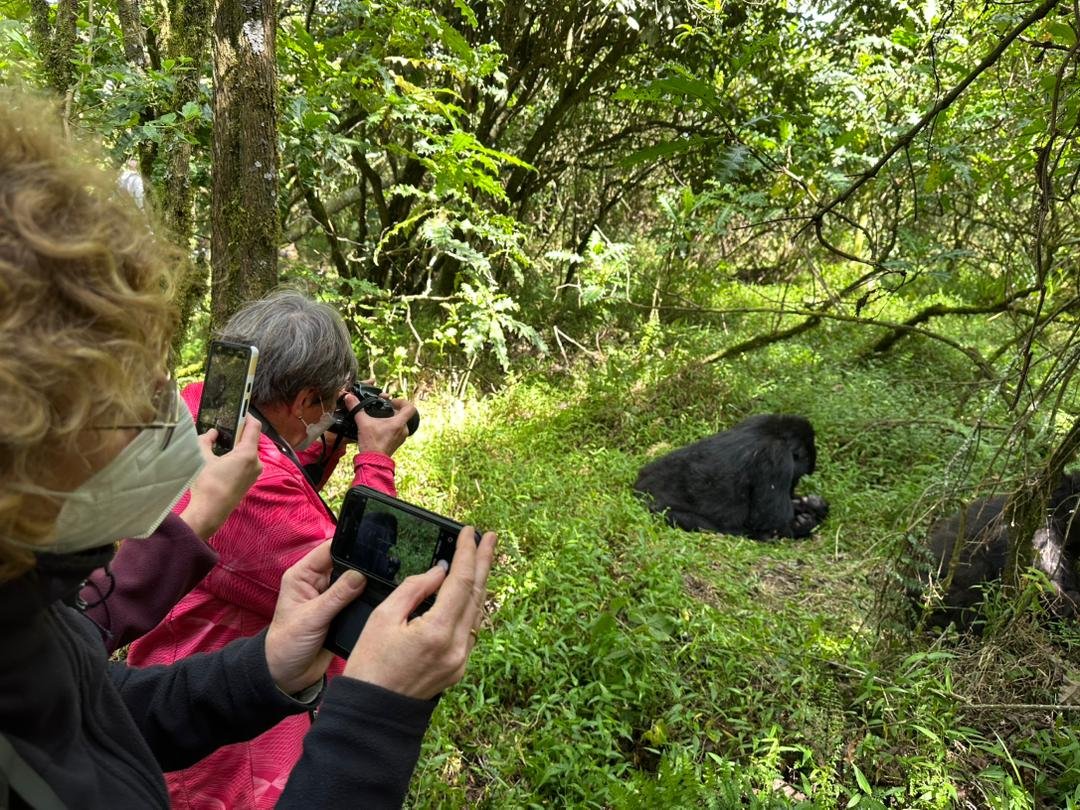
5-Day Uganda Gorilla and Chimpanzee Safari
This itinerary can be combined with a Rwanda extension or a wildlife-focused add-on through Queen Elizabeth National Park — browse our Uganda & Rwanda Safaris and Primate Safaris collections for ideas.
Tour Details →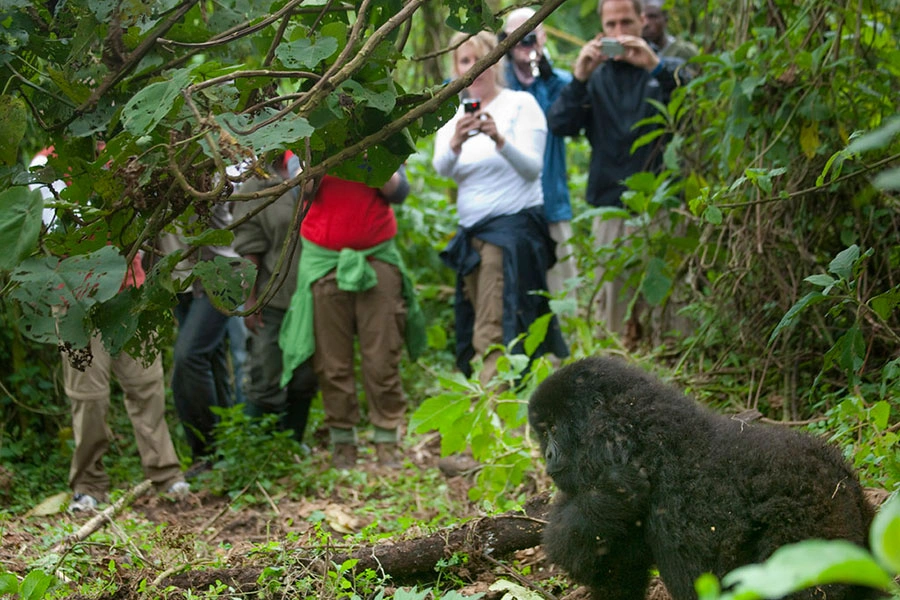
5 Days Rwanda Wildlife and Gorillas
This 5-day itinerary brings together Rwanda’s two flagship wildlife experiences: open savannah game drives and a boat safari in Akagera National Park, followed by a face-to-face encounters
Tour Details →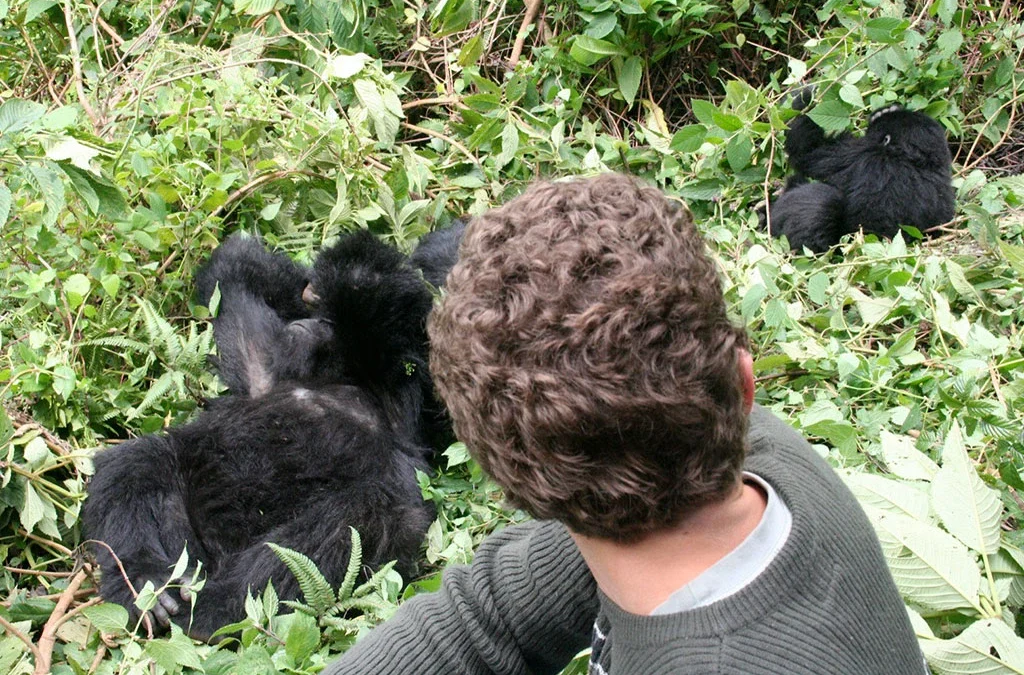
3 Days Uganda Gorilla Safari
For travelers who arrive in Entebbe with a tight schedule and a clear ambition, a 3-day gorilla safari to Bwindi Impenetrable Forest National Park is the most focused and rewarding short trip the country has to offer.
Tour Details →