- LET'S PLAN YOUR SAFARI
- +256 200 921 002
- +256 793 194 703
- info@pickandtransfersafaris.com

Gorilla Trekking in Mgahinga from Kigali
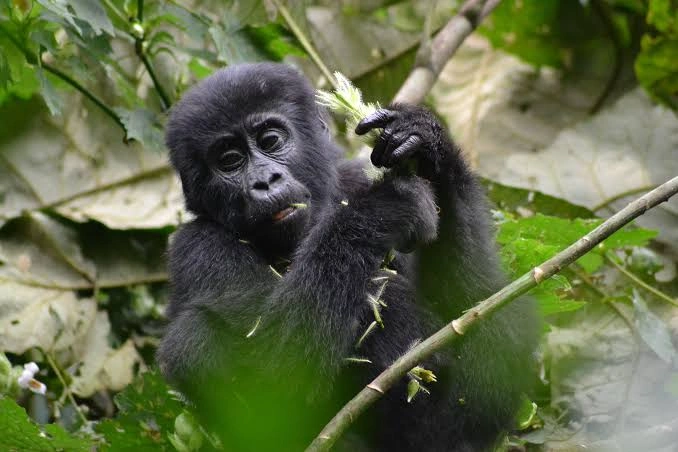
Gorilla Trekking in Mgahinga from Kigali. Gorilla trekking in Mgahinga Gorilla National Park is one of the most accessible wildlife encounters on the African continent when you start your journey in Kigali, Rwanda. Tucked into the Virunga Volcanoes in Uganda’s far southwest corner, Mgahinga sits only a few hours’ drive from Rwanda’s capital, making it possible to combine a Kigali city stay with a genuine mountain gorilla trek without the long domestic flights or multi-day drives usually associated with African safaris. This guide covers everything you need to plan a Mgahinga gorilla trekking trip from Kigali in 2026: the route, the permits, the wildlife, the itinerary options, and the practical details that make the difference between an average trip and an unforgettable one.
Whether you are weighing Mgahinga against Uganda’s larger Bwindi Impenetrable Forest, deciding between a one-day dash and a relaxed multi-day safari, or simply trying to understand what a day of gorilla trekking actually involves, this article is designed to answer it all in one place.
We wrote this guide the way we brief our own clients before they travel: covering the logistics first (distance, borders, permits) so there are no surprises, then the experience itself (the trek, the rules, the wildlife) so you know what to expect, and finally the practical extras — packing, budgeting, seasons, and add-on activities — that turn a good trip into a great one. Read it end to end if you are planning from scratch, or jump to the section most relevant to where you are in your planning.
Where Is Mgahinga Gorilla National Park?
Mgahinga Gorilla National Park lies in Kisoro District, in the extreme southwestern corner of Uganda, at the point where Uganda, Rwanda, and the Democratic Republic of Congo meet. Covering just 33.7 square kilometres, it is Uganda’s smallest national park, but its location inside the Virunga Volcanoes range — sharing three volcanic peaks, Mount Muhabura, Mount Gahinga, and Mount Sabinyo, with Rwanda’s Volcanoes National Park and DRC’s Virunga National Park — makes it part of one of the most important gorilla conservation landscapes on earth.
The park’s small footprint is deceptive. Because it sits directly against two international borders, Mgahinga functions as a single connected ecosystem with its Rwandan and Congolese neighbours, and wildlife, including the resident gorilla family, moves freely across all three countries as terrain and season dictate. This cross-border character is unusual among Africa’s protected areas and is part of what makes conservation cooperation between Uganda, Rwanda, and the DRC so important to the mountain gorilla’s long-term survival.
Why Kigali Is the Best Base for Mgahinga Gorilla Trekking
Most international travelers find it easier and cheaper to fly into Kigali International Airport than Uganda’s Entebbe Airport, thanks to strong connections from Europe, the Middle East, and other parts of Africa. Because Mgahinga sits so close to the Rwandan border, Kigali has become the natural starting point for this specific trek, even though the gorillas themselves are on Ugandan soil. This is very different from trekking at Bwindi Impenetrable Forest National Park, which is much farther from Kigali and better accessed as part of a longer Uganda-focused itinerary.
Getting From Kigali to Mgahinga: Route and Border
The driving distance from Kigali to Mgahinga is approximately 134 kilometres, covered in roughly 3 to 4 hours including border formalities. The route runs from Kigali through Musanze, Rwanda’s own gateway town for Volcanoes National Park, to the Cyanika border post, and then a further 30 to 45 minutes on the Uganda side to Ntebeko, Mgahinga’s park headquarters. This is dramatically shorter than the 9 to 11 hour drive required from Entebbe or Kampala, which is exactly why Kigali-based itineraries, including our own 2-day Uganda gorilla tour from Kigali, route travelers this way instead.
The Nyakagezi Gorilla Family
Mgahinga has one habituated gorilla family available for trekking: the Nyakagezi group. This family has been monitored for years and is known for its tendency to roam across the shared volcano slopes into Rwanda or the DRC from time to time, since mountain gorillas do not recognize international borders. Because there is only one family, Uganda Wildlife Authority issues a maximum of eight trekking permits per day for Mgahinga, which makes advance booking especially important compared with Uganda’s other gorilla destination.
The Nyakagezi group is also unusual for its size and composition, historically including several silverbacks within the same troop rather than the more typical single dominant male structure seen in many other habituated families. Rangers who have followed the group for years describe it as a particularly active family, prone to longer daily movements across the steep volcanic terrain, which is part of why some guides consider a Mgahinga trek slightly more physically demanding on an average day than trekking in Bwindi’s gentler forest sectors, even though there is no guaranteed rule about which will be easier on any given day.
What Makes Mgahinga Different From Bwindi
Uganda’s other gorilla park, Bwindi Impenetrable Forest, has more than twenty habituated families spread across four trekking sectors, offering far more permit availability and lodge choice. Mgahinga, by contrast, offers a smaller, more intimate experience with a single well-known family, a shorter drive from Kigali, and the bonus of golden monkey trekking and volcano hiking in the same park. Many travelers choose Mgahinga specifically for its proximity to Kigali, while those with more time and flexibility often prefer Bwindi for its wider choice, a trade-off explored in depth in our dedicated guide comparing Uganda’s national parks.
Gorilla Trekking Permit Prices and What They Include
A standard Uganda gorilla trekking permit costs $800 per person during high season, dropping to around $600 per person during the low-season months of April, May, and November. This fee applies equally at Mgahinga and Bwindi, since both parks fall under the same Uganda Wildlife Authority pricing structure. The permit covers park entry, a ranger-led trek, and one hour observing the gorillas once located; it does not include transport, accommodation, or meals, which is why most travelers book a complete package through an operator such as Pick and Transfer Safaris rather than arranging each piece separately.
It is worth comparing this figure directly against Rwanda’s own gorilla permit, priced at a flat $1,500 regardless of season, since the price gap is the main reason so many Kigali-based travelers choose to cross into Uganda in the first place. For a couple, that difference works out to $1,400 in savings during Uganda’s high season, or as much as $1,800 during Uganda’s discounted low-season months — often enough to cover an entire extra night of lodging, a golden monkey permit, or a volcano hike add-on without stretching the overall trip budget.
How to Book a Mgahinga Gorilla Trekking Permit
Permits are issued by Uganda Wildlife Authority and are typically reserved through a licensed tour operator on your behalf, since the booking process requires a passport copy, payment in full, and coordination with park schedules. Given that only eight permits are available per day at Mgahinga, we recommend booking 2 to 3 months ahead for high season dates (June to September and December to February) and at least 4 to 6 weeks ahead for quieter months. You can check current availability through Kenlink Tours’ gorilla tour booking page or by contacting our team directly.
Choosing Your Itinerary: One-Day, Two-Day, or Three-Day Options
There is no single “correct” way to structure a Mgahinga gorilla trek from Kigali — it depends entirely on how much time you have. A one-day round trip is possible given Mgahinga’s short drive time, though it involves a 3:00 a.m. departure and a 14 to 16 hour day, as detailed in our one-day Uganda gorilla safari from Kigali. A more relaxed 2-day Uganda gorilla tour removes the overnight drive by adding one night near the park. A 3-day version, such as our 3-day Uganda gorilla safari from Rwanda, allows time to add golden monkey trekking or a volcano hike alongside the gorilla trek itself.
What a Typical Trekking Day Looks Like
Regardless of which itinerary you choose, trekking day itself follows a consistent structure. You arrive at Ntebeko park headquarters for a briefing around 7:30 a.m., where rangers assign you to the Nyakagezi family and share an update on their likely location based on overnight movement. Trekking time varies from 30 minutes to several hours depending on where the gorillas have gone, followed by a strict one-hour viewing window once they are found, and then the hike back down to the trailhead.
An armed ranger typically accompanies each trekking group, a standard precaution rather than a sign of danger, since the same rangers patrol the park daily against poaching and know the terrain intimately. Trackers often leave before the main group to locate the gorillas’ overnight nesting site and follow fresh signs from there, radioing updates back so your guide can plan the most direct route. This coordination is a large part of why average trekking times have become more predictable over the years, even though a genuinely long day is still always possible.
Rules and Regulations During the Trek
Uganda Wildlife Authority enforces a consistent set of rules to protect both gorillas and visitors: a maximum group size of eight trekkers per family per day, a minimum age of 15, a mandatory seven-metre distance from the gorillas at all times, no flash photography, and a requirement to postpone your trek if you are showing signs of a cold, flu, or other communicable illness, since gorillas share around 98% of human DNA and are highly vulnerable to human respiratory diseases. Your ranger guide will brief you thoroughly on these rules before entering the forest.
Physical Fitness and Preparing for the Trek
Mgahinga’s terrain includes steep volcanic slopes, and the Nyakagezi family often ranges at higher elevations than gorilla groups in Bwindi, so a reasonable level of fitness will make your day considerably more enjoyable. You do not need to be an athlete, but regular walking or hiking practice in the weeks before your trip helps, as does packing light and using a walking stick, available for hire at the park gate. Porters can also be hired for a small fee to carry your daypack and assist on steeper sections, a service well worth using both for comfort and to support the local community.
If you know in advance that you have limited hiking experience, mention this when booking so your operator can flag it to the park rangers, who sometimes take fitness levels into account when assigning trekking routes on a given morning. It is also worth building in a rest day either before or after your trek if your overall itinerary allows it, particularly if you are combining Mgahinga with other physically demanding activities such as volcano hiking or a long safari drive elsewhere in the region. Altitude alone — Mgahinga sits above 2,200 metres at its lowest points — can leave some visitors more short of breath than expected, even on relatively gentle sections of trail.
What to Pack for Mgahinga Gorilla Trekking
Essential packing items include waterproof hiking boots with good ankle support, a rain jacket, long trousers and long-sleeved shirts (to protect against stinging nettles and insects), gardening-style gloves, a wide-brimmed hat, a daypack, drinking water, energy snacks, and a basic first-aid kit. A change of clothes left in the vehicle is also a good idea, since forest trekking is muddy work regardless of season. Binoculars and a camera with a reasonably fast lens will help you make the most of your hour with the gorillas once you are in position.
A few less obvious items are worth adding to your list. Gaiters, if you own a pair, keep mud and biting ants out of your boots far better than trousers tucked into socks alone. A dry bag or waterproof phone case protects electronics during sudden downpours, and a lightweight, packable poncho works as a useful backup if your main rain jacket gets soaked through on a longer trek. Sunscreen and insect repellent are easy to forget given the forest’s shaded canopy, but exposed ridgelines near the volcano slopes get direct sun, and biting insects are present throughout the year regardless of season.
Best Time of Year to Trek Gorillas at Mgahinga
Gorilla trekking at Mgahinga is possible year-round, but the two dry seasons — December to February and June to September — offer firmer trails and generally easier hiking conditions. The rainier months of March to May and October to November bring fewer crowds, lush scenery, and the discounted $600 low-season permit price in April, May, and November specifically. Because Mgahinga sits in genuine rainforest and volcanic terrain, some rainfall is possible at any time of year, so waterproof gear is worth packing regardless of when you travel.
Golden Monkey Trekking as an Add-On
Mgahinga is one of only a few places on earth where endangered golden monkeys can be tracked on foot, and a golden monkey permit costs a fraction of the gorilla trekking fee. Because golden monkey trekking involves its own briefing and trekking window, it generally requires a two-day-or-longer itinerary to combine comfortably with a gorilla trek. Our 5-day gorilla and chimps safari from Rwanda can be adapted to include golden monkeys, and Kenlink Tours runs a dedicated 4-day golden monkey and gorilla trekking package worth comparing.
Golden monkeys are smaller, faster, and far more numerous per troop than gorillas, often moving in groups of forty or more through the park’s bamboo zones, which makes for a very different kind of wildlife encounter — livelier and more visually chaotic than the calm, grounded presence of a gorilla family. Trekking time is usually shorter than for gorillas, often under an hour to locate a troop, and the viewing window is also generally more relaxed given how mobile and numerous the monkeys are. For travelers who enjoy primate behaviour and photography, pairing the two treks on consecutive mornings offers a genuinely rewarding contrast.
Volcano Hiking: Mount Muhabura, Mount Gahinga, and Mount Sabinyo
Beyond primates, Mgahinga’s three volcanoes offer some of the best hiking in the region for travelers with an extra day to spare. Mount Sabinyo’s jagged summit trail is famous for its three-country viewpoint, marking the meeting point of Uganda, Rwanda, and the DRC on a single ridge. Mount Muhabura is a longer, steeper full-day hike rewarded with a crater lake at the top, while Mount Gahinga offers a gentler half-day route through bamboo forest suitable for less experienced hikers.
Mount Sabinyo’s summit hike is the most technically demanding of the three, involving a series of ladders bolted onto near-vertical sections near the top, and it typically takes 7 to 8 hours round trip. Mount Muhabura, at over 4,100 metres, is Mgahinga’s tallest peak and the most physically taxing due to altitude rather than technical difficulty, usually requiring a full day and an early start similar to gorilla trekking morning. Mount Gahinga, by contrast, can often be completed in half a day and ends at a swampy crater lake ringed by giant lobelia and other Afro-alpine vegetation found nowhere else in the world. None of these hikes require a separate permit beyond the standard park entrance fee, making them an efficient way to add an extra day of activity to a Mgahinga-based itinerary without a second major expense.
Cultural Experiences Near Mgahinga
The Kisoro area around Mgahinga is also home to Batwa communities, once forest-dwelling hunter-gatherers who lived inside what is now the national park before conservation policy relocated them. Several community-run cultural experiences near the park allow visitors to learn about Batwa traditions, music, and forest knowledge, directly supporting community income alongside the region’s broader conservation and tourism economy. If you have a spare afternoon before or after your trek, Kenlink Tours has put together a helpful roundup of things to do in Kisoro town before or after your trek, ranging from craft markets to local eateries.
A Detour to Lake Mutanda
A short drive from Kisoro, Lake Mutanda offers a scenic, low-key contrast to the intensity of gorilla trekking day. Framed by the Virunga Volcanoes on one side, the lake is popular for canoe trips, birdwatching, and simply relaxing after a strenuous morning in the forest. Some travelers extending their stay by even half a day add a stop here, and a few lodges sit directly on the shoreline, including the private Icyangushu Island retreat on Lake Mutanda, a memorable place to unwind before the drive back to Kigali.
Coffee, Food, and Small-Town Comforts in Kisoro
Kisoro town itself, the main gateway settlement for Mgahinga, has grown into a comfortable little hub for travelers passing through on gorilla safaris. The Kigezi highlands are also a notable coffee-growing region, and a handful of cafes in and around Kisoro serve genuinely good, locally grown coffee — Kenlink Tours keeps an updated list of the best coffee shops around Kisoro and Mgahinga National Park, including the well-regarded Gorilla Highlands Cafe, both worth a stop either before your early trekking start or on the drive back toward the border.
Where to Stay Near Mgahinga
Accommodation near Mgahinga is concentrated around Kisoro town and the road leading to Ntebeko gate, ranging from simple guesthouses to comfortable mid-range lodges with volcano views, including options such as Ichumbi Gorilla Lodge. Because lodge location affects how early you need to leave for the morning briefing, it is best to confirm your accommodation only after your permit is secured, something the team at Pick and Transfer Safaris coordinates as a single booking to avoid mismatched logistics.
Budget travelers will find simple guesthouses in Kisoro town itself priced well below international lodge rates, though these typically require a 20 to 30 minute drive to reach Ntebeko gate on trekking morning. Mid-range and upscale properties positioned closer to the park boundary cost more but shave valuable minutes off your pre-dawn or early-morning departure, which matters more on a one-day itinerary than a multi-day one. If you are also planning a stop at Lake Mutanda, several properties there make an equally scenic, slightly more relaxed base, provided your operator accounts for the extra drive time to the park gate the next morning. A local operator familiar with the full spread of properties in the Kisoro area, such as the options listed by Kenlink Tours’ Kisoro operator directory, can help match your budget and priorities to the right location.
Combining Mgahinga With Other Uganda Parks
Mgahinga’s location in Uganda’s far southwest connects naturally to other major parks if you have more time. Many travelers extend their trip to include Queen Elizabeth National Park for game drives and boat cruises, or Kibale Forest National Park for chimpanzee tracking. Our 7-day Uganda-Rwanda safari adventure and 10-day Uganda-Rwanda safari both build in these extensions around a Kigali start and end point.
Combining Mgahinga With Rwanda’s Volcanoes National Park
Because Mgahinga and Rwanda’s Volcanoes National Park share the same Virunga mountain range, separated only by the Cyanika border, some travelers choose to trek gorillas on both sides for a deeper comparison of the two experiences. Our 3-day Rwanda gorilla tracking and cultural tour can be extended by a day to add a second, more affordable trek across the border in Uganda, while Kenlink Tours offers a similar combined route with their Rwanda and Uganda gorilla trekking and culture itinerary.
Visa and Border Requirements
Most nationalities need either a Uganda single-entry visa, obtainable online in advance, or the East Africa Tourist Visa, which covers unlimited travel between Rwanda, Uganda, and Kenya for 90 days on one visa — the more convenient option if you are crossing back and forth for gorilla trekking on both sides of the border. Make sure your passport has at least six months’ validity and carry your yellow fever vaccination certificate, which is checked at land borders including Cyanika.
Health and Safety Considerations
Gorilla trekking takes place in remote forest terrain at altitudes above 2,200 metres, so travel insurance covering trekking activities and emergency evacuation is strongly recommended. Malaria prophylaxis is generally advised for the wider region, and it is worth carrying rehydration salts, basic first-aid supplies, and any personal medication, since pharmacies are limited once you are away from Kigali or Kisoro town. As noted above, anyone showing symptoms of a cold or flu should postpone their trek to protect the gorillas’ health as well as their own trip.
Photography Guidelines
Flash photography is strictly prohibited during gorilla trekking, since sudden bright light can startle wild gorillas, so plan to shoot with a higher ISO setting or a wider aperture instead. Keep your camera or phone easily accessible rather than packed away, since your hour with the gorillas passes quickly, and consider a lens in the 24-105mm range if you shoot with interchangeable lenses, as there is rarely room to step back for a wider composition in dense forest.
Cost Breakdown: Budgeting Your Mgahinga Trip From Kigali
| Item | Approximate Cost (per person, high season) |
|---|---|
| Gorilla trekking permit | $800 |
| Ground transport from Kigali (2-day trip) | $150-250 |
| Mid-range lodge, 1 night near Kisoro | $80-150 |
| Meals | $30-50 |
| Porter fee (optional) | $15-20 |
| Visa (Uganda single-entry or East Africa Tourist Visa) | $50-100 |
These are approximate figures that vary by season, group size, and lodge category. A tailored quote from Pick and Transfer Safaris will reflect your exact travel dates and preferences.
Sustainable and Community Tourism Impact
A portion of every gorilla permit fee funds ranger patrols, anti-poaching efforts, and veterinary monitoring that have helped the mountain gorilla population grow from fewer than 300 individuals in the 1980s to over 1,000 today, making it one of the only great ape species with a growing wild population. Choosing operators and lodges that hire local guides, porters, and staff, and that support community revenue-sharing schemes around Mgahinga and Kisoro, extends that positive impact well beyond the park boundary.
Uganda Wildlife Authority also operates a formal revenue-sharing program that channels a percentage of park earnings directly to neighbouring parish communities for schools, clean water projects, and small infrastructure improvements, a model credited with reducing human-wildlife conflict by giving local residents a direct stake in the park’s success rather than viewing it purely as land lost to conservation. Tipping porters and guides fairly, buying locally made crafts in Kisoro town, and choosing community-run cultural experiences over purely commercial alternatives are all small ways individual travelers reinforce this same system on a personal level.
Common Mistakes to Avoid
The most common mistakes travelers make when planning this trip include underestimating drive times and booking too little buffer before their flight home, failing to book permits far enough in advance given Mgahinga’s limited eight-permit daily allocation, packing inadequate rain gear despite trekking in genuine rainforest, and assuming a Bwindi trek can be done as a Kigali day trip in the same way as Mgahinga — it cannot, given the extra distance involved. Working with an experienced ground operator such as Pick and Transfer Safaris helps avoid each of these pitfalls.
Another frequent misstep is arranging transport and permits through two separate, uncoordinated providers, which can leave you with a permit dated for one day and a driver booked for another, or a vehicle that arrives at your Kigali hotel without knowing which border post or park sector you are actually headed to. Reviews from past companies that specialize in this exact route, such as those cataloged by Kenlink Tours’ overview of Rwanda-to-Uganda transfer operators, are a useful sanity check before committing to any single provider, whichever one you ultimately choose.
Why Book Through a Local Ground Operator
While it is technically possible to book a permit directly with Uganda Wildlife Authority, coordinating transport, border logistics, accommodation, and permit timing independently is difficult for most first-time visitors. A local ground operator secures your exact permit date, matches your lodge to the correct location, provides an experienced driver-guide familiar with the Cyanika border, and can respond quickly if plans change. This is the core value that companies like Pick and Transfer Safaris and Kenlink Tours provide for cross-border gorilla trips originating in Kigali.
Ready to plan your Mgahinga gorilla trek? Explore our full range of gorilla safaris from Kigali or contact our travel team for a tailored itinerary and permit booking.
Sample Itinerary: Two-Day Mgahinga Gorilla Trek From Kigali
Day 1: Morning departure from Kigali, cross at the Cyanika border, arrive in Kisoro by early afternoon, check into your lodge, and relax with volcano views or an optional cultural visit. Day 2: Early breakfast, drive to Ntebeko for the 7:30 a.m. briefing, trek the Nyakagezi family, afternoon drive back across the border to Kigali. This follows the structure of our 2-day Uganda gorilla tour from Kigali and is comparable to Kenlink Tours’ 2-day gorilla safari starting from Kigali.
Sample Itinerary: Three-Day Mgahinga and Golden Monkey Safari
Day 1: Depart Kigali, cross at Cyanika, arrive in Kisoro, afternoon at leisure. Day 2: Gorilla trekking with the Nyakagezi family in the morning, golden monkey trekking or a half-day volcano hike in the afternoon. Day 3: Optional Batwa cultural visit or extra hike, then the drive back to Kigali. A similar structure is offered through Kenlink Tours’ golden monkey and gorilla trekking itinerary, extended by a day for full flexibility.
Frequently Asked Questions
How far is Mgahinga from Kigali?
Approximately 134 km, taking around 3 to 4 hours by road including the Cyanika border crossing.How much does a Mgahinga gorilla trekking permit cost?
$800 per person in high season, or around $600 in the low-season months of April, May, and November.How many gorilla families can I trek at Mgahinga?
Only one — the Nyakagezi family — which limits the park to eight trekking permits per day.Can I combine gorilla trekking with golden monkey trekking at Mgahinga?
Yes, but this generally requires at least a two-day itinerary, since each activity has its own separate briefing and trekking window.Is Mgahinga or Bwindi better for a Kigali-based traveler?
Mgahinga is closer and simpler for short trips, while Bwindi offers more gorilla families and sectors for those with an extra day to spare.
Final Thoughts on Gorilla Trekking in Mgahinga From Kigali
Gorilla trekking in Mgahinga from Kigali combines two things that rarely go together in African travel: a genuinely wild, close-up encounter with mountain gorillas, and a trip short enough to fit into a limited schedule. With careful planning around permits, border logistics, and the right itinerary length for your available time, it is one of the most rewarding and accessible wildlife experiences available from any capital city on the continent.
Every element covered in this guide — the Cyanika border crossing, the $800 permit fee, the single Nyakagezi family, the volcano hikes, the Kisoro lodges — fits together into a trip that, done properly, feels far less complicated than it might sound on paper. The travelers who enjoy this trip most tend to be the ones who plan a few weeks ahead rather than at the last minute, choose an itinerary length that genuinely matches their available time rather than squeezing into the shortest possible option out of habit, and work with a ground team that handles the Rwanda-Uganda border crossing as routine business rather than a novelty.
Gorilla Trekking in Mgahinga from Kigali
Start planning today by browsing our full collection of gorilla safaris from Kigali, exploring other Uganda and Rwanda destinations, or reaching out through our contact page for a tailor-made quote. For further comparison, Kenlink Tours also maintains a useful guide to Uganda safaris from Kigali. However you choose to structure your itinerary, the single most important step is booking your permit and transport early, since Mgahinga’s limited daily allocation and Kigali’s popularity as a gateway city both mean the best dates fill up faster each year.
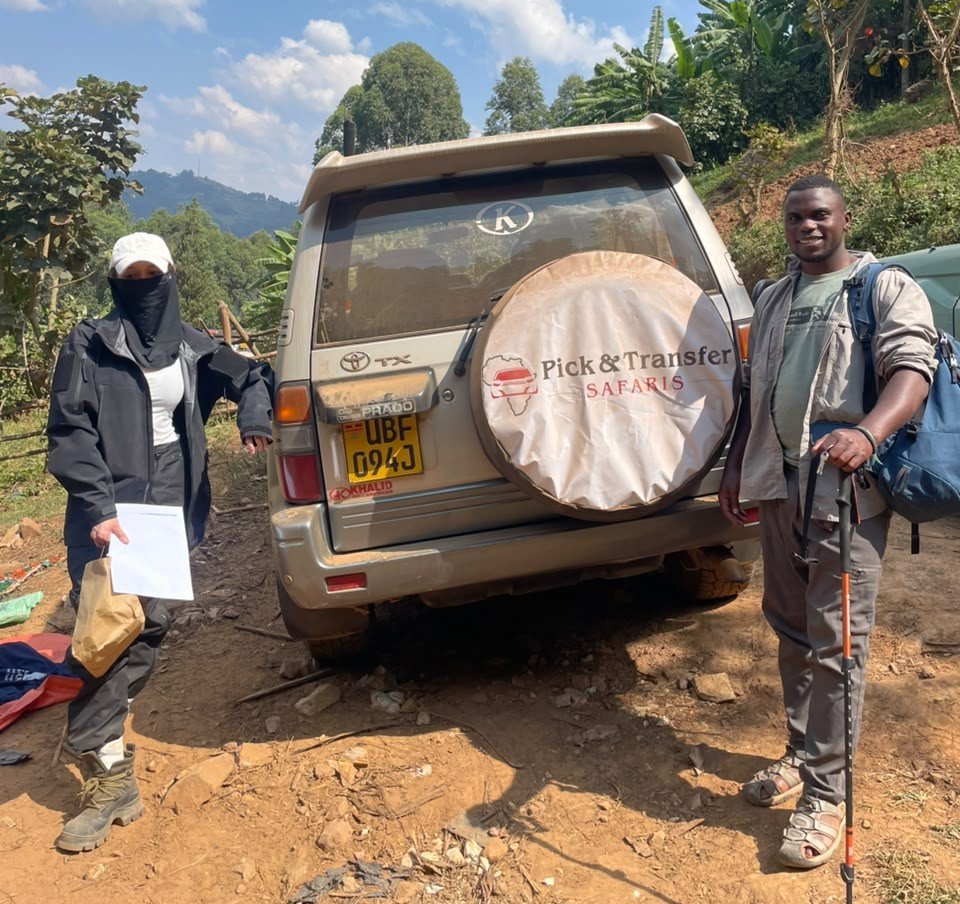
7 Days Uganda Safari – One week tour
This 7-day itinerary is the classic one-week introduction to Uganda, covering the country’s three most iconic wildlife experiences: chimpanzee tracking in Kibale Forest National Park, Big Five game drives and a boat cruise in Queen
Tour Details →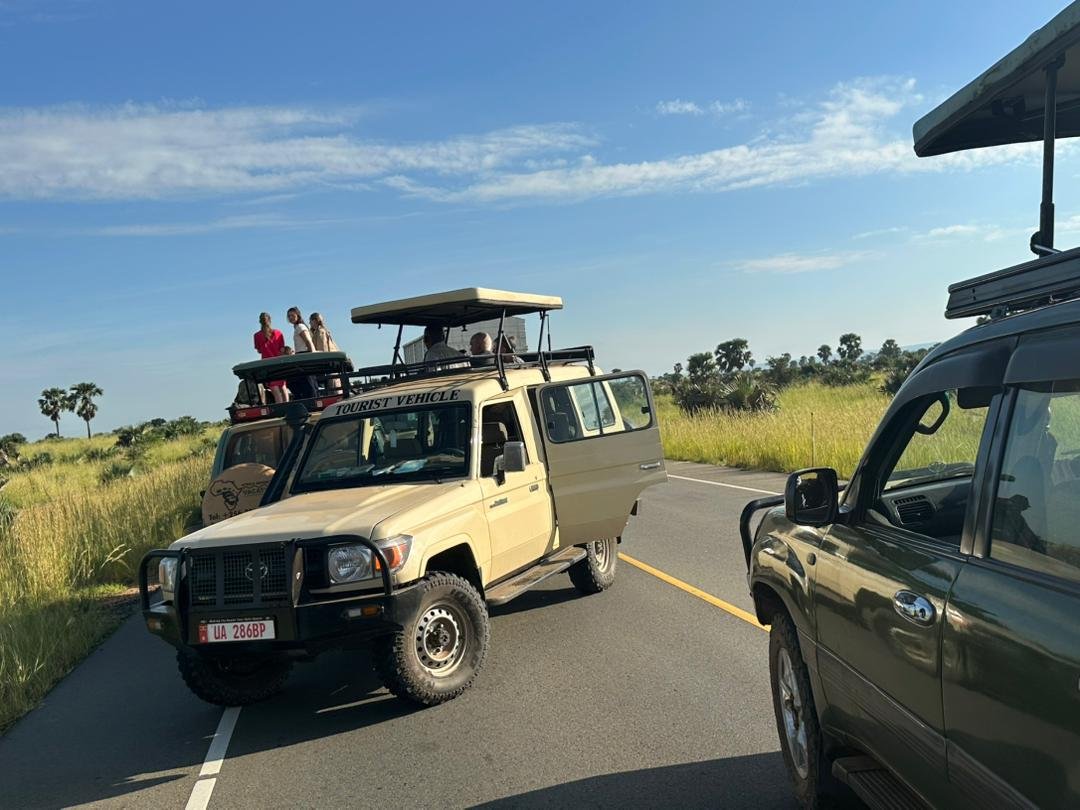
10 Days Uganda Primates and Wildlife
This 10-day Uganda Grand Safari is the most complete Uganda itinerary we offer at Pick and Transfer Safaris. It begins with a scenic northward drive from Entebbe to the vast open plains of Murchison
Tour Details →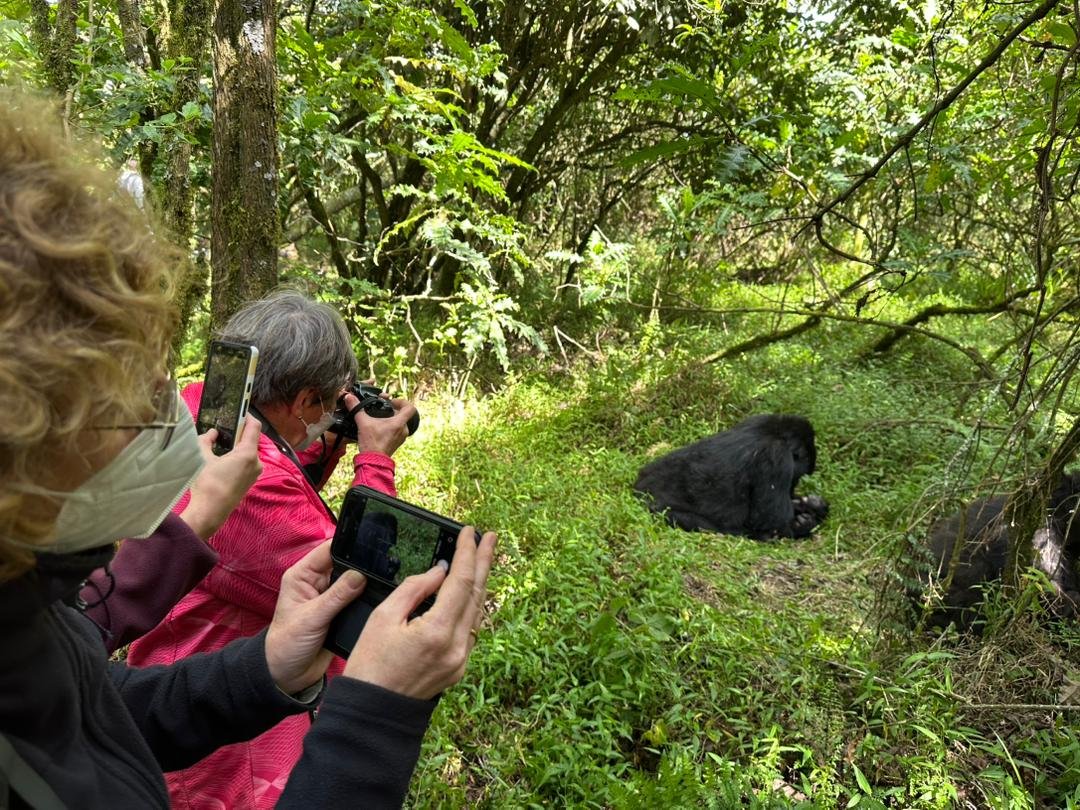
2 Days Uganda Gorilla Tour Starting from Kigali
This is the gentler cousin of our 1-Day Uganda Gorilla Safari Starting from Kigali — same idea, twice the breathing room. Instead of squeezing a 3,000-metre forest trek and two border crossings into a single very long day
Tour Details →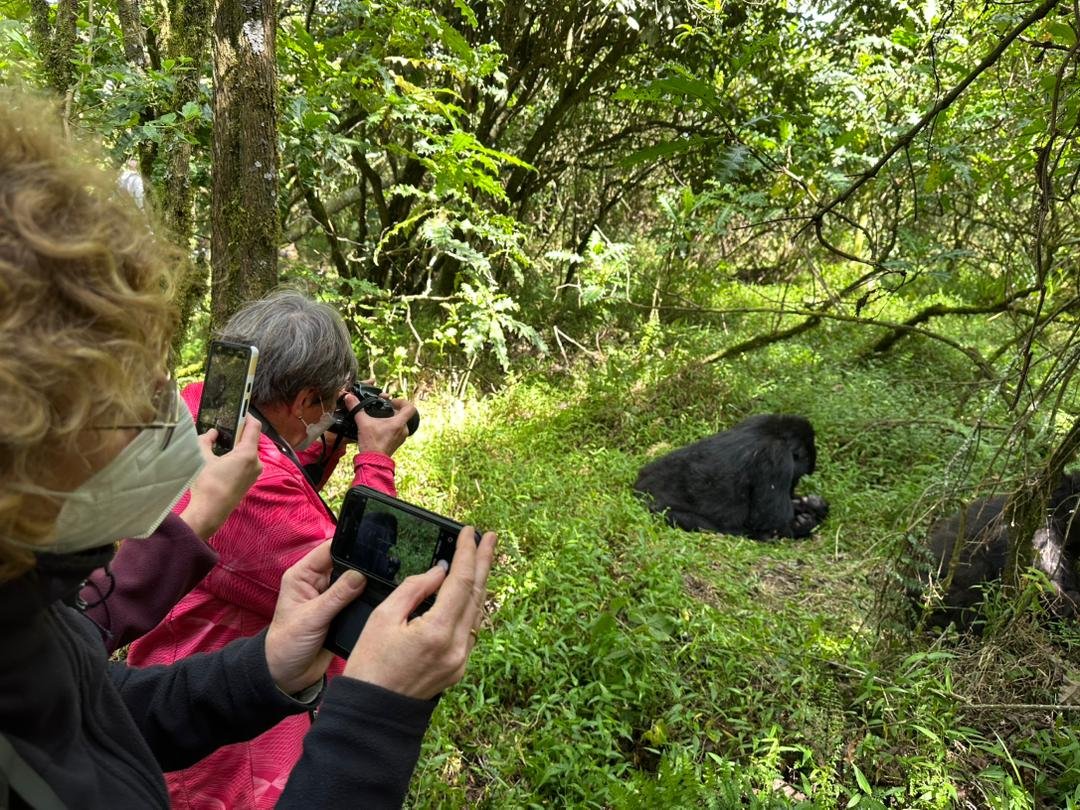
5-Day Uganda Gorilla and Chimpanzee Safari
This itinerary can be combined with a Rwanda extension or a wildlife-focused add-on through Queen Elizabeth National Park — browse our Uganda & Rwanda Safaris and Primate Safaris collections for ideas.
Tour Details →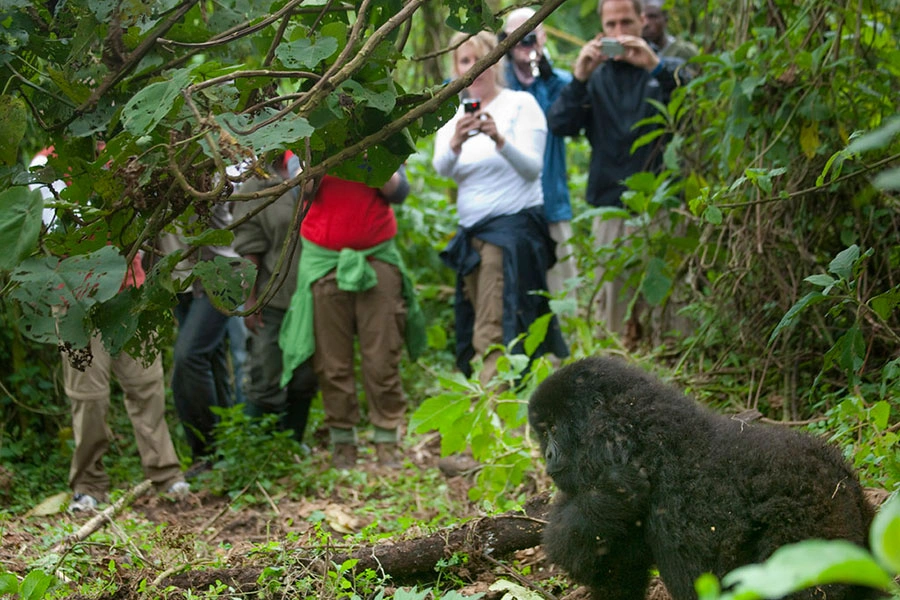
5 Days Rwanda Wildlife and Gorillas
This 5-day itinerary brings together Rwanda’s two flagship wildlife experiences: open savannah game drives and a boat safari in Akagera National Park, followed by a face-to-face encounters
Tour Details →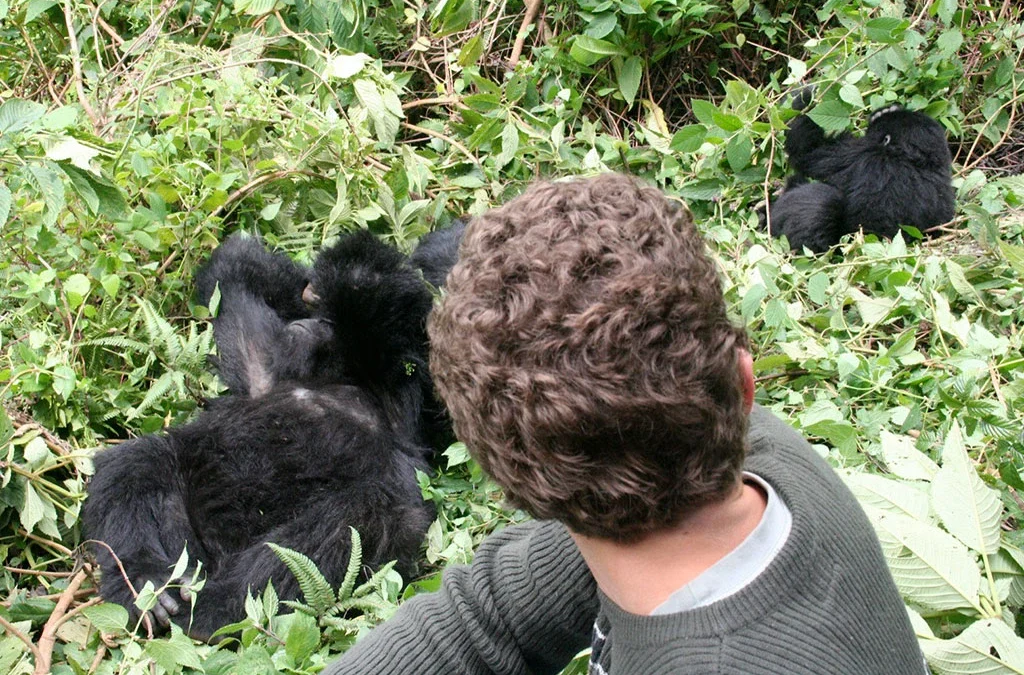
3 Days Uganda Gorilla Safari
For travelers who arrive in Entebbe with a tight schedule and a clear ambition, a 3-day gorilla safari to Bwindi Impenetrable Forest National Park is the most focused and rewarding short trip the country has to offer.
Tour Details →