- LET'S PLAN YOUR SAFARI
- +256 200 921 002
- +256 793 194 703
- info@pickandtransfersafaris.com

How much is a transfer from Kigali to Lake Bunyonyi
How much is a transfer from Kigali to Lake Bunyonyi. If you are planning a trip to Uganda’s “Switzerland of Africa” and searching for a straight answer to one question, this guide is for you: how much is a transfer from Kigali to Lake Bunyonyi actually going to cost? The honest answer is that it depends on the vehicle you choose, the number of people travelling, the season, and whether you book a private transfer, a shared shuttle, or a self-drive rental. But the good news is that every one of those variables is predictable once you understand how pricing works on this route. Below, we break down real distance and driving-time figures, current price ranges for every transport option between Kigali and Lake Bunyonyi, the border crossing process at Cyanika, visa costs, and the practical factors that push a quote up or down, so you can budget accurately and book with confidence.
Quick Answer: What a Kigali to Lake Bunyonyi Transfer Costs
For readers short on time, here is the short version. A private one-way transfer from Kigali to Lake Bunyonyi in a comfortable saloon car typically costs somewhere in the region of 150 to 200 US dollars, while a private 4×4 or SUV, better suited to the final stretch of unpaved road in places, generally runs from around 180 to 260 US dollars one way. A shared shuttle or scheduled bus service between Kigali and Kabale, the nearest town to the lake, costs far less, typically in the 10 to 25 US dollar range per person, though it takes longer and offers less flexibility. Self-drive car hire adds its own costs, including cross-border permit fees that not every rental company offers. These figures are indicative ranges drawn from typical regional operator rates rather than a fixed price list, since exact quotes depend on your vehicle, dates, and group size; the most reliable way to get an accurate number for your specific trip is to request a quote through our contact page, where you can specify your exact dates, vehicle preference, and group size and receive a firm figure rather than a rough estimate.
Where Is Lake Bunyonyi and Why Travelers Go There from Kigali
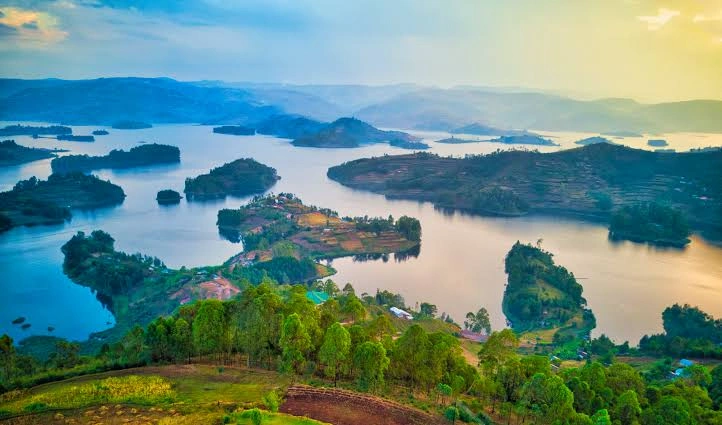
Lake Bunyonyi sits in southwestern Uganda’s Kabale district, close to the Rwanda border and within easy reach of Bwindi Impenetrable Forest National Park, home to roughly half the world’s remaining mountain gorillas. With its 29 islands, terraced hillsides, and cool highland climate, Lake Bunyonyi has become one of the most popular stopovers for travellers combining a Rwanda visit with Uganda gorilla trekking, or simply looking for a relaxing lakeside break after days of hiking and game drives. Because Kigali International Airport is the closest major international gateway for many travellers heading into this corner of East Africa, a huge share of visitors to Lake Bunyonyi begin their journey with a transfer from the Rwandan capital rather than flying all the way into Uganda first, since Kigali’s international connections are often more frequent and more affordable than flying directly into Uganda’s regional airstrips near the lake. The steady rise in gorilla trekking tourism on both sides of the border over the past decade has also made this specific overland corridor increasingly well served by experienced transfer operators, which is part of why pricing on this particular route has become more standardised and predictable than on some of the country’s more remote roads.
The Route: How Do You Actually Get From Kigali to Lake Bunyonyi
The standard route from Kigali to Lake Bunyonyi runs west out of the city along Rwanda’s well-maintained KN1 road, through the rolling hills of Rwanda’s Northern and Western Provinces, before reaching the Rwanda-Uganda border crossing at Cyanika, known as Kyanika on the Ugandan side. After clearing immigration and customs, the road continues into southwestern Uganda through Kisoro district and on to Kabale town, from where a short final drive brings you to the shores of Lake Bunyonyi itself. This is the same general corridor used by travellers heading onward to Bwindi Impenetrable Forest National Park, which is one reason so many itineraries combine a Lake Bunyonyi stopover with gorilla trekking in the same trip.
Distance and Driving Time From Kigali to Lake Bunyonyi
Distance estimates for this route vary slightly depending on the source and the exact endpoints measured, but a reasonable working figure is around 200 kilometres from central Kigali to Lake Bunyonyi, made up of roughly 120 kilometres from Kigali to the Cyanika border and another 80 kilometres or so from the border through Kisoro to Kabale and the lake. Some online route calculators show shorter figures closer to 140 kilometres depending on which specific points they use, so treat any single number as an approximation. In terms of time, most private transfers complete the journey in three and a half to five hours, including the border crossing, though this can stretch longer during heavy rain, market days in border towns, or unusually busy immigration queues. Travellers should always build in a comfortable time buffer rather than planning a tight same-day connection on either end.
Crossing the Rwanda-Uganda Border at Cyanika
The Cyanika-Kyanika border post is the most direct crossing point for travellers heading between Kigali and Lake Bunyonyi, and it is generally a straightforward process for tourists with the correct documentation. You will need to disembark on both the Rwandan and Ugandan sides to complete exit and entry formalities, which typically takes anywhere from fifteen minutes to just over an hour depending on how busy the post is at the time. It is worth carrying your passport, any visa documentation, and proof of yellow fever vaccination if requested, along with a small amount of US dollars in cash in case any fees need to be settled on the spot. A private transfer driver who regularly works this route will usually help guide you through the process, which is one of the practical advantages of booking a private transfer rather than crossing independently on public transport.
Visa Requirements: East Africa Tourist Visa vs Single-Country Visas
Your visa choice affects both your budget and your border crossing experience. The East Africa Tourist Visa, priced at 100 US dollars, allows 90 days of travel across Kenya, Uganda, and Rwanda on a single visa, and is usually the most convenient and cost-effective option for travellers planning to cross between Rwanda and Uganda more than once, since it avoids paying for two separate single-country visas. Alternatively, travellers can apply for individual visas for Uganda and Rwanda; Uganda’s single-entry tourist visa has commonly been priced around 50 US dollars, while Rwanda offers visa-free or visa-on-arrival entry to many African nationalities and a paid visa-on-arrival option for many other passport holders. Because visa policies and fees do change from time to time, it is worth confirming current requirements for your specific nationality directly with Rwandan and Ugandan immigration authorities, or with your safari operator, before you travel.
Health and Vaccination Requirements Before You Travel
Both Rwanda and Uganda require proof of yellow fever vaccination for travellers arriving from, or having transited through, countries where yellow fever is endemic, and immigration officers at Cyanika do sometimes ask to see this certificate, so carry it with your passport rather than packed away in checked luggage. Malaria risk exists throughout this region, including around Lake Bunyonyi despite its cooler highland climate, so most travel health advisories recommend appropriate antimalarial medication alongside standard precautions such as insect repellent and covered clothing in the evenings. It is also sensible to carry a basic travel health kit and any personal medications in your daypack rather than your main luggage, given the several hours you will spend in the vehicle and at the border before reaching your accommodation. As with visa rules, health requirements can change, so checking current guidance from a travel health clinic or your home country’s foreign travel advisory shortly before departure is worthwhile.
Private Transfer Costs: Saloon Car vs 4×4 vs Minivan
Vehicle type is one of the biggest factors behind any quote for this route. A standard saloon car, comfortable and fuel-efficient on the paved sections in Rwanda, typically sits at the lower end of the price range, often between 150 and 200 US dollars one way for up to three passengers with moderate luggage. A 4×4 or SUV, which handles the Ugandan side of the route and any unpaved detours more comfortably, usually costs somewhat more, generally in the 180 to 260 US dollar range one way, and is the vehicle most operators recommend for this specific journey given the mixed road conditions. For larger groups, a minivan or small safari bus spreads the cost per person considerably, with total one-way pricing often in the 200 to 300 US dollar range depending on capacity, which can work out cheaper per head than two separate saloon cars.
One-Way vs Round-Trip Transfer Pricing
Booking a round trip rather than two separate one-way transfers can sometimes bring a modest discount, but not always in the way travellers expect. If your vehicle and driver simply return to Kigali empty after dropping you at Lake Bunyonyi and then come back for you days later, you will likely pay close to double the one-way rate to cover the extra driving. If instead the driver waits at or near Lake Bunyonyi for the duration of your stay, expect a daily waiting fee to cover their accommodation and meals on top of the transfer cost itself, which can still work out more economical than two fully separate bookings, particularly for shorter stays. It is always worth asking your operator to lay out exactly how a round-trip quote is structured before you book, since this is one of the areas where pricing details differ most between companies.
Shared Shuttle and Public Bus Costs From Kigali to Kabale
For budget-conscious travellers, scheduled bus and shared shuttle services connect Kigali directly to Kabale, the nearest town to Lake Bunyonyi, at a fraction of private transfer costs. Fares are commonly reported in the 10 to 25 US dollar range per person, making this by far the cheapest way to cover the route. The trade-offs are real, though: fixed departure times, shared space with other passengers, limited luggage allowance, and the need to handle immigration formalities and onward transport from Kabale to your specific lakeside accommodation on your own. For travellers with more time than money, or those comfortable navigating independently, this remains a completely viable option; for anyone prioritising comfort, flexibility, or door-to-door convenience, especially with gorilla trekking gear or family members in tow, a private transfer is generally the better fit.
Self-Drive Car Hire Costs and Considerations
Self-driving from Kigali to Lake Bunyonyi is possible but comes with its own cost structure and complications worth understanding before you commit. Rental rates for a suitable 4×4 in the region often run somewhere between 50 and 120 US dollars per day depending on the vehicle age and specification, but that is only part of the picture: not every Rwandan rental company permits its vehicles to cross into Uganda, and those that do typically charge an additional cross-border permit fee, which can add another 50 to 100 US dollars or more to the total cost. You will also need to factor in fuel, your own confidence navigating unfamiliar roads and a border crossing without a local guide, and the fact that road signage in rural sections can be inconsistent. For most first-time visitors, the cost difference between self-drive and a private guided transfer is smaller than it first appears once permits and fuel are included, which is why many travellers ultimately choose a private transfer instead.
Factors That Affect Your Transfer Price
Beyond vehicle type, several other variables shape the final number on your quote. Group size matters, since a larger group sharing one vehicle lowers the effective cost per person even if the total quote is higher. The season plays a role too, with rainy season sometimes adding a premium to reflect slower driving speeds, higher fuel consumption, and increased vehicle wear on muddy sections. Timing within the day can matter, since very early morning or late evening departures sometimes carry a small surcharge tied to driver scheduling. Finally, any additional stops you request along the way, whether for photographs, a border-town lunch, or a detour to another attraction, will typically add time-based charges on top of the base transfer rate.
Group Size and Cost-Sharing: Solo Travelers vs Families vs Groups
Solo travellers naturally bear the full cost of a private vehicle themselves, which is why many choose the shared shuttle option to keep costs down, or join a scheduled group departure where costs are split among several unrelated travellers. Families and small groups of three to five people generally find that a private saloon car or 4×4 transfer becomes very cost-competitive once divided per person, often landing in a similar range to, or even below, the shared shuttle fare while gaining door-to-door convenience and a flexible departure time. Larger groups of six or more usually do best with a minivan or small safari bus, where the per-person cost of a private, comfortable, direct transfer can drop to a genuinely attractive figure while still avoiding the fixed schedules and shared seating of public transport.
Seasonal Price Variations: Dry Season vs Rainy Season
Uganda and Rwanda’s dry seasons, roughly December to February and June to September, generally offer the most predictable driving conditions and, in turn, the most stable transfer pricing, since journey times are shorter and vehicle wear is lower. During the rainier months of March to May and October to November, some operators apply a modest premium to reflect slower travel speeds, higher fuel usage from driving in low gear on wet or muddy stretches, and the increased likelihood of minor delays at the border or on unpaved sections near Kabale. None of this makes travel during the rains impractical, since Lake Bunyonyi’s scenery is arguably at its greenest and most photogenic in these months, but it is worth building a little extra budget and time flexibility into a rainy-season transfer booking.
Traveling With Children or Elderly Family Members on This Route
Families travelling with young children or older relatives should factor in a few extra considerations beyond simple cost. The three-and-a-half to five-hour drive, plus a border crossing that requires disembarking the vehicle, can be tiring for very young children or anyone with mobility limitations, so building in an extra rest stop or two is often worth the modest time cost. A private transfer generally suits these travellers far better than a shared shuttle, since you control the pace, can stop when needed, and are not constrained by a fixed departure or a full bus of other passengers. Some operators can also arrange a child seat on request, though this should be confirmed in advance rather than assumed, since availability varies by vehicle and company.
Night Transfers and Early Morning Departures: Extra Costs
Because most travellers prefer to cross the Cyanika border in daylight, both for safety and for the immigration process itself, very early morning departures from Kigali, sometimes as early as four or five in the morning to reach the lake by early afternoon, are common on this route, and a number of operators apply a small early-departure surcharge to cover the driver’s extended working day. Genuine overnight transfers are rare and generally discouraged on this route given road conditions and border operating patterns, so if your flight into Kigali lands late at night, it is usually more practical, and often no more expensive overall, to spend one night in Kigali before setting off the next morning rather than requesting an immediate onward night transfer.
What’s Usually Included in a Private Transfer Quote
A well-structured private transfer quote from a reputable operator should include the vehicle and driver for the full journey, standard fuel for the distance travelled, and basic assistance navigating the border crossing process. Bottled water for the journey is a common inclusion with many operators, and a driver experienced on this specific route will typically know good, safe stopping points for a bathroom break or light refreshments along the way. What is not usually included, and worth asking about directly, are your own visa fees, any meals or snacks beyond bottled water, and optional detours or sightseeing stops beyond the direct route, all of which should be clarified before you confirm a booking so there are no surprises on arrival.
Hidden Costs to Watch For: Border Fees, Fuel Surcharges, Tips
A handful of smaller costs can catch first-time travellers off guard if they are not planned for in advance. Visa fees, as discussed earlier, are paid separately from your transfer cost and should be budgeted independently. Some operators build a fuel surcharge into their quotes during periods of higher fuel prices, so it is reasonable to ask whether your quoted price is fixed or subject to adjustment closer to your travel date. Tipping your driver, while not obligatory, is customary in the region for good service on a long cross-border journey, and many travellers set aside somewhere in the region of ten to twenty US dollars for this. None of these costs are large individually, but adding them up in advance avoids any awkward surprises on transfer day.
Currency and Payment: Rwandan Francs, Ugandan Shillings, or US Dollars?
You will cross through two currencies on this journey, Rwandan francs and Ugandan shillings, but in practice most transfer operators, lodges, and gorilla trekking services in this corridor quote and accept payment in US dollars, which remains the most useful currency to carry for tourism-related costs. That said, small local purchases such as roadside snacks, tips, or a coffee during a rest stop are usually easier to pay for in the local currency of whichever side of the border you happen to be on, so changing a modest amount of Rwandan francs before you leave Kigali and picking up a small amount of Ugandan shillings after crossing is a sensible middle ground. Note that US dollar bills printed before 2013, or that are torn, marked, or otherwise worn, are frequently rejected in both countries, so bring newer, crisp notes wherever possible, and confirm with your transfer operator in advance whether they accept card payment or require cash settlement.
Weather and What to Expect Climate-Wise Along the Route
The climate changes noticeably over the course of this drive. Kigali sits at a relatively moderate elevation with a pleasant, fairly consistent climate year-round, while Kabale and the Lake Bunyonyi area climb to a considerably higher altitude, giving the lake region a distinctly cooler, sometimes almost chilly climate, particularly in the early morning and evening, that surprises travellers expecting typical equatorial heat. Rain can fall at any time of year in this part of East Africa, though it is markedly more frequent during the March to May and October to November wet seasons, when short, heavy downpours are common in the afternoon. Packing layers rather than relying purely on warm-weather clothing is the simplest way to stay comfortable across the full range of conditions you will encounter between Kigali and the lake.
Comparing Transfer Costs: Kigali-Bunyonyi vs Kigali-Bwindi vs Kigali-Volcanoes
Placing the Kigali-Bunyonyi transfer cost alongside comparable routes helps put the numbers in perspective. A transfer from Kigali to Bwindi Impenetrable Forest National Park, roughly two hours further along the same general corridor past Lake Bunyonyi, commonly costs somewhat more than the Bunyonyi transfer given the extra distance and time involved. By contrast, a transfer from Kigali to Volcanoes National Park in Rwanda’s Northern Province, which does not require an international border crossing at all, is typically a shorter and less expensive journey than either Uganda-bound route. Travellers planning a combined itinerary across our Volcanoes National Park and Bwindi Impenetrable Forest National Park pages will find that Lake Bunyonyi sits at a genuinely convenient midpoint, both geographically and in terms of transfer pricing, between these two destinations.
Combining Your Transfer With a Gorilla Trekking Safari
Most travellers do not book a Kigali to Lake Bunyonyi transfer as a standalone journey; they build it into a broader gorilla trekking itinerary, since Lake Bunyonyi makes an excellent overnight stop either on the way to or from Bwindi’s gorilla trekking sectors. Rather than pricing the transfer separately, many find better overall value booking a complete package such as our 1-Day Uganda Gorilla Safari Starting from Kigali, our 2-Day Uganda Gorilla Tour Starting from Kigali, or the more immersive 3-Day Uganda Gorilla Safari from Rwanda, each of which bundles transport, permits, and accommodation logistics into a single transparent price rather than leaving you to calculate transfers and lodging separately.
Combining Your Transfer With a Wider Uganda-Rwanda Safari
If your trip extends well beyond a single gorilla trekking day, the Kigali to Lake Bunyonyi corridor fits naturally into a longer circuit. Our 3-Day Uganda Gorilla Safari and 5-Day Uganda Gorilla and Chimps Safari Starting from Rwanda both route through this same general area, and travellers wanting to add more Rwandan wildlife to the trip often pair it with a stop at Akagera National Park or Nyungwe Forest National Park. For a broader look at everything reachable from this corridor, our full destinations page and our long trips collection are useful starting points for building a complete itinerary rather than booking transfers and stops piecemeal.
Booking Through a Local Operator vs Independent Arrangement
Some travellers weigh whether to book a transfer through an established local operator or arrange transport independently once they arrive in Kigali. Booking in advance through an operator familiar with the Cyanika crossing offers real advantages: a fixed, confirmed price agreed before you travel, a driver who knows the route and border process well, and someone to call if a flight delay or itinerary change requires last-minute adjustment. Arranging transport independently on arrival can occasionally be cheaper in isolated cases, but it introduces more uncertainty around vehicle quality, driver experience with the border crossing, and price negotiation on the spot, which is why most first-time visitors to this region prefer the predictability of a pre-arranged transfer, particularly for a cross-border journey rather than a purely domestic one.
What to Expect During the Journey: Scenery and Stops
The drive itself is one of the more scenic border crossings in East Africa, passing through Rwanda’s terraced, densely cultivated hillsides before opening into the greener, hillier landscape of southwestern Uganda near Kisoro. Most private transfers include at least one short stop, whether for a bathroom break, a coffee, or simply to stretch your legs before or after the border crossing, and experienced drivers usually know reliable, comfortable spots to do this rather than stopping at random. As you approach Lake Bunyonyi itself, the road winds down through terraced hillsides with increasingly striking views over the lake’s scattered islands, a scenic payoff that many travellers say is worth the journey on its own, and one that photographs particularly well in the soft late-afternoon light of an early departure timed to arrive in the hours before sunset.
Where to Stay at Lake Bunyonyi After Your Transfer
Lake Bunyonyi’s accommodation is spread across the mainland shoreline and a number of its islands, ranging from simple budget guesthouses to comfortable mid-range lodges and a handful of more upscale island retreats reachable only by canoe or motorboat. Where your accommodation sits matters for your transfer planning, since some island properties require your driver to drop you at a specific landing point followed by a short boat transfer arranged separately by the lodge, which is worth confirming with your accommodation before your transfer day so the timing lines up smoothly. Booking your transfer and your Lake Bunyonyi accommodation through the same operator, or at least making sure both parties know your arrival window, avoids the common problem of arriving at the shoreline with no boat waiting to complete the final leg to an island lodge.
Mobile Connectivity and SIM Cards for the Journey
Mobile network coverage is generally reliable along most of the paved Rwandan section of the route and around Kabale town, though it can weaken or drop out entirely in the hillier stretches near the border and in more remote areas immediately around Lake Bunyonyi. Travellers who want to stay connected throughout the journey typically pick up a local SIM card in Kigali before departure, since Rwandan networks are widely available and affordable, and then either rely on international roaming or purchase a Ugandan SIM after crossing the border if extended connectivity in Uganda is a priority. It is worth downloading offline maps and saving your accommodation’s contact details before you leave Kigali, simply as a backup for the stretches where signal is patchy.
Best Time of Day to Depart Kigali for Lake Bunyonyi
An early departure from Kigali, generally between five and seven in the morning, is the most common and most sensible choice for this route, since it allows plenty of daylight for the drive itself, the border crossing, and any onward transfer from Kabale to your specific lakeside lodge, many of which are only reachable by a further short drive or a short boat ride across the lake. Departing later in the day increases the risk of arriving at your accommodation after dark, which is best avoided given the rural roads around the lake’s edge. If you are arriving into Kigali on an international flight the same day you intend to travel onward, build in a comfortable buffer, or plan to overnight in Kigali first, rather than risking a same-day connection straight through to Lake Bunyonyi.
Safety Tips for the Kigali-Bunyonyi Road Trip
This is a well-travelled tourist corridor and generally a safe route, but a few sensible precautions make the journey smoother. Always use a licensed, reputable transfer operator or well-reviewed shuttle service rather than an unmarked vehicle offering a suspiciously cheap ride at the border. Keep your passport, visa documentation, and valuables on your person rather than in checked luggage during the border crossing itself. Carry a small amount of US dollars in cash for any incidental fees, since card payment is not always reliable at border posts or in smaller towns along the way, and keep a photo or scanned copy of your passport and visa stored separately from the originals as a backup.
What to Pack for Your Transfer Day
Because this journey involves several hours in a vehicle plus a border crossing on foot, pack a small daypack with your passport, visa documents, phone charger, snacks, and a bottle of water kept easily accessible rather than buried in checked luggage. A light jacket or fleece is worth having on hand, since Kabale and the Lake Bunyonyi area sit at a notably cooler, higher altitude than Kigali and temperatures can dip more than travellers expect, especially in the early morning and evening. If you are continuing onward to Bwindi for gorilla trekking, it is worth having your trekking gear reasonably accessible too, in case your transfer schedule has you departing for the forest soon after arriving at the lake.
Alternative Routes: Via Katuna/Gatuna Border
While Cyanika is the most direct crossing for Lake Bunyonyi specifically, some transfers use the Katuna-Gatuna border further east instead, particularly when the itinerary also includes destinations closer to Kampala or when road conditions on one route are temporarily better than the other. Katuna generally adds extra driving time and distance for a Lake Bunyonyi-specific trip, so it is not the default choice for this route, but it remains a useful backup option, and an experienced operator will know which crossing makes more sense for your specific dates and any other stops on your itinerary.
Extending Your Trip: Lake Bunyonyi to Bwindi and Beyond
Very few travellers treat Lake Bunyonyi as an endpoint in itself; it is far more common to use it as a scenic overnight stop on the way to Bwindi Impenetrable Forest National Park for gorilla trekking, only a further one and a half to two hours away by road. From there, some itineraries continue on to Uganda’s other major parks, and travellers building a longer circuit often look at our Queen Elizabeth National Park or Murchison Falls National Park pages, or extend westward into Uganda’s primate country via Kibale Forest National Park. Others loop back into Rwanda afterwards through Mgahinga Gorilla National Park on the Uganda side or across to Gishwati-Mukura National Park before returning to Kigali city to fly home, making the Kigali-Bunyonyi transfer just the opening leg of a much larger East African journey.
Supporting Local Communities Along the Cyanika Corridor
The towns and villages along the Kigali-Bunyonyi corridor, particularly around the Cyanika border post and Kisoro district, depend significantly on the steady flow of tourism traffic passing through en route to Lake Bunyonyi and Bwindi. Choosing operators who employ local drivers and guides, stopping to buy snacks or crafts from roadside vendors rather than only from larger towns, and treating border officials and local staff with patience and courtesy all contribute in a small but real way to the local economy along this route. Given how central this corridor is to gorilla trekking tourism, which in turn funds a significant share of conservation work in both Bwindi and the Virunga Massif, even a routine transfer booking is part of a much larger economic chain that supports both communities and wildlife protection in the region.
Comparing Notes With Other Operators: Kenlink Tours’ Uganda and Rwanda Routes
If you are researching this route across multiple safari companies before booking, it is worth comparing notes on itineraries and inclusions rather than price alone. Sister operator Kenlink Tours runs a similar Kigali-based departure structure through its 2-Day Uganda Gorilla Safari Starting from Kigali and 3-Day Bwindi Gorilla Safari Starting from Kigali, both of which pass through the same Cyanika border corridor described above. Their broader Uganda safaris collection and Rwanda safaris collection are useful reference points for comparing how different operators structure transfer-inclusive packages versus standalone transport, and their Uganda travel guide offers a helpful general primer on regional road conditions and logistics.
Group Departures and Self-Drive Alternatives Worth Comparing
Travellers weighing a private transfer against other formats may also want to look at scheduled group options. Kenlink Tours’ group tours page and their scheduled departure safari both illustrate how joining a fixed-date group itinerary can lower per-person transport costs compared with a fully private, custom-dated transfer. For travellers seriously considering self-driving instead, Kenlink Tours’ car hire service is worth a look for comparison on rental rates and cross-border permit policies, since terms vary meaningfully between rental providers in the region. Reviewing a second operator’s pricing structure alongside your own research is generally a healthy step before committing to any cross-border transfer booking, and Kenlink Tours’ own contact page is a straightforward way to request a comparison quote if you would like a second opinion before booking with us.
How Pick and Transfer Safaris Prices Its Kigali-Bunyonyi Transfers
We are frequently asked why transfer prices are not published as a single fixed number on our website, and the honest answer is that a genuinely accurate quote depends on details that vary from one traveller to the next. Vehicle availability on your specific travel date, current fuel prices, group size, whether you need a round trip or a one-way journey, and any additional stops you would like along the way all factor into a fair, transparent price. Rather than publishing a generic figure that might undersell a larger group’s needs or oversell a solo traveller’s simpler trip, we prefer to gather these details through our contact page and respond with a specific, honest quote for your exact circumstances, usually within a working day.
Common Mistakes Travelers Make When Booking This Transfer
A handful of avoidable mistakes come up repeatedly with first-time travellers on this route. Booking a transfer time that is too tight against an onward flight or gorilla trekking briefing leaves no margin for border delays or rain-slowed driving, and is one of the most common sources of stress on this journey. Assuming a shared shuttle will be significantly faster than it actually is, or that a self-drive rental automatically includes cross-border permission, both lead to unpleasant surprises. Failing to confirm whether a quoted price is one-way or round trip, or whether a driver waiting fee applies for a multi-day stay, is another frequent point of confusion that a short clarifying question before booking easily resolves. Reading your booking confirmation carefully, and asking questions upfront rather than assuming, remains the simplest way to avoid all of these pitfalls.
Reviews and What Past Travelers Say About This Route
Travellers who have completed this journey consistently mention two things in their trip reports: how much smoother a private transfer feels compared with navigating buses and the border independently, and how striking the scenery becomes in the final stretch as the road descends toward Lake Bunyonyi’s terraced hills and scattered islands. Common feedback also highlights the value of an experienced driver at the Cyanika border, where familiarity with the immigration process visibly speeds up the crossing compared with travellers attempting it for the first time on their own, and where a driver who greets border staff by name tends to move a queue noticeably faster than one who does not. While individual experiences vary by operator, the overall pattern in traveller reviews of this specific route reinforces the same practical advice covered throughout this guide: book with a driver who knows the corridor well, build in a reasonable time buffer, and confirm exactly what your quote includes before you travel.
Frequently Asked Questions About How much is a transfer from Kigali to Lake Bunyonyi
How long does the transfer actually take? Most private transfers complete the journey in three and a half to five hours including the border crossing, though delays are possible during heavy rain or busy immigration periods. Do I need a separate visa for Uganda and Rwanda? Not necessarily; the East Africa Tourist Visa covers both countries plus Kenya for 90 days on one 100 US dollar visa, though single-country visas remain an option if you are only visiting one side. Is it cheaper to take a bus than a private transfer? Yes, considerably, with bus and shared shuttle fares generally in the 10 to 25 US dollar range per person compared with 150 US dollars or more for a private vehicle, though at the cost of flexibility and door-to-door convenience. Can I combine my transfer with gorilla trekking permits? Yes, and doing so through a single operator booking is usually simpler and better value than arranging transfers, permits, and lodging separately.
How to Book Your Kigali to Lake Bunyonyi Transfer Today
Now that you have a clear picture of realistic pricing across every transport option, the next step is locking in a firm quote for your specific travel dates and group size. Reach out through our contact page for a personalised transfer quote, or browse our gorilla safaris collection and wildlife safaris collection if you would rather bundle your Lake Bunyonyi transfer into a complete Uganda or Rwanda itinerary from the outset. You can also learn more about our team and local expertise on our about us page. Whichever option you choose, private transfer, shared shuttle, or self-drive, understanding the real cost drivers behind this route means you can budget with confidence and spend less time worrying about logistics and more time enjoying the journey from Kigali’s rolling hills to the shimmering islands of Lake Bunyonyi. Safe travels, and we look forward to helping you plan a smooth, well-priced crossing from Rwanda into southwestern Uganda’s most scenic lakeside escape.