- LET'S PLAN YOUR SAFARI
- +256 200 921 002
- +256 793 194 703
- info@pickandtransfersafaris.com

Combining Uganda Gorillas with Rwanda Safari
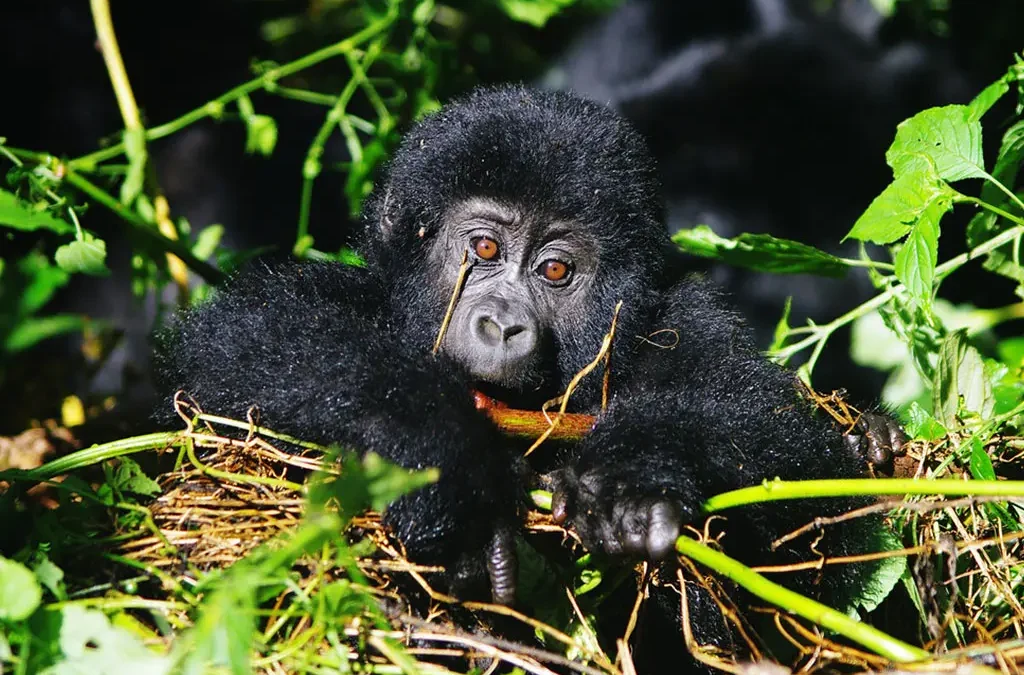
Combining Uganda Gorillas with Rwanda Safari. Uganda and Rwanda share a border, a language of trade, and — most importantly for travelers — the same population of mountain gorillas roaming the Virunga volcanic range. Combining Uganda gorillas with a Rwanda safari has become one of the most popular ways to experience East Africa’s primates, letting travelers take advantage of Uganda’s lower permit costs and larger habituated gorilla population alongside Rwanda’s shorter transfer times, polished tourism infrastructure, and vibrant capital city. This guide walks through exactly how the two countries connect, what a combined itinerary looks like in practice, and everything you need to plan the trip with confidence.
For many travelers, the decision isn’t Uganda versus Rwanda at all — it’s how to sequence both countries into a single, well-paced trip. Because the same Virunga gorilla population spans the border, a combined itinerary isn’t a compromise between two destinations; it’s simply the most complete way to experience this specific ecosystem, from Uganda’s larger, more affordable permit pool to Rwanda’s more compact, easily accessible park infrastructure and increasingly polished capital city.
Why Combine Uganda Gorillas with a Rwanda Safari?
The case for combining the two countries starts with simple geography. Uganda and Rwanda border each other directly, and both protect sections of the same Virunga range where mountain gorillas live — meaning a traveler who treks in one country and skips the other is only seeing half of a single, continuous ecosystem. Trekking in Uganda’s Bwindi Impenetrable National Park or Mgahinga Gorilla National Park, then crossing into Rwanda for Volcanoes National Park, golden monkey tracking, and time in Kigali, gives travelers the full regional picture rather than a partial one.
There’s also a strong practical argument. Uganda’s gorilla permits are priced significantly lower than Rwanda’s, which makes it the more affordable base for the trekking portion of a trip, while Rwanda’s more compact geography and shorter drive times from Kigali make it easy to add on without losing days to travel. Combining the two lets a traveler capture the best of both — value in Uganda, convenience in Rwanda — on a single, well-sequenced itinerary.
There’s a third, less obvious reason as well: variety. Uganda’s side of the trip typically involves more driving and a broader mix of habitats — dense rainforest, savannah, and volcanic highland — while Rwanda’s compact size means less time in transit and more time at the destinations themselves. A combined trip therefore delivers two distinct travel rhythms in a single itinerary, which many repeat visitors to East Africa specifically seek out after having already done a single-country gorilla trek on a previous trip.
Uganda’s Gorilla Parks: Bwindi and Mgahinga
Most combined itineraries begin on the Uganda side, since permits here, issued by the Uganda Wildlife Authority, are more affordable and more widely available than Rwanda’s. Bwindi Impenetrable National Park hosts the majority of Uganda’s habituated gorilla families across four trekking sectors — Buhoma, Ruhija, Rushaga, and Nkuringo — each a different driving distance from the Rwandan border. Mgahinga Gorilla National Park, sitting directly at the tripoint of Uganda, Rwanda, and the Democratic Republic of Congo, is the more natural starting point for travelers planning an immediate crossing, since it sits closest to the border of any Ugandan gorilla park.
Our gorilla safari packages cover both parks in depth, and travelers beginning in Kigali specifically should look at itineraries built around that exact route, such as our 3 Days Uganda Gorilla Safari from Rwanda.
Bwindi’s four sectors differ meaningfully in both driving distance from the border and typical trekking difficulty. Rushaga and Nkuringo, in the park’s south, sit closest to the Rwandan crossing and are the most commonly used sectors for cross-border itineraries, while Buhoma and Ruhija, further north, are more often paired with a Queen Elizabeth National Park extension instead. Discussing sector preference with your operator in advance — particularly if a smooth, short onward crossing matters to your schedule — is one of the more overlooked planning details on a combined trip.
Rwanda’s Volcanoes National Park
Once across the border, Volcanoes National Park offers gorilla trekking, golden monkey tracking, and considerably shorter drive times from Kigali than Uganda’s parks require from Entebbe — often just ninety minutes to two hours. This makes Rwanda the more convenient side of the trip logistically, even though its permits cost more. Kenlink Tours’ own 3 Days Rwanda Gorilla Safari illustrates how compact this side of a combined trip can be, fitting a full gorilla trekking experience into a short window that pairs easily with a longer Uganda leg.
Volcanoes National Park’s single trekking sector system also simplifies logistics considerably compared with Bwindi’s four-sector structure — every gorilla family here is reached from broadly the same park headquarters, which means lodge selection matters less on the Rwanda side than it does in Uganda. This is part of why Rwanda has developed such a strong reputation for a smooth, well-organized trekking experience, even though it comes at a higher permit price than its Ugandan counterpart.
The Shared Virunga Gorilla Population
The Virunga Massif — a chain of eight volcanoes spanning Uganda, Rwanda, and the Democratic Republic of Congo — is home to a single interconnected population of mountain gorillas that moves across all three countries’ borders without regard for the lines on a map. This is the core reason combining Uganda and Rwanda makes such intuitive sense: a gorilla family trekked in Rwanda one month might range into Ugandan territory the next, and the conservation story behind the species’ slow recovery is a genuinely shared one between the two countries’ wildlife authorities, alongside the Democratic Republic of Congo’s Virunga National Park, which forms the third leg of the same protected massif even though it rarely features on a standard tourist itinerary given ongoing regional security considerations. Understanding this shared ecosystem also helps set expectations — the gorillas themselves, their group structures, and their behavior are broadly similar on both sides of the border, so the choice between countries comes down mostly to logistics, cost, and travel style rather than a meaningfully different wildlife experience. This is also why cross-border conservation cooperation between the two wildlife authorities has become increasingly important — anti-poaching patrols, veterinary monitoring, and habituation programs are coordinated to some degree across the range, since a gorilla family’s health and safety in one country directly affects the population as a whole.
Crossing the Border Between the Two Countries
The most common land crossing for this route is Gatuna–Katuna, roughly two to three hours from Kigali and a similar distance from Bwindi’s southern trailheads. Processing is generally straightforward for travelers holding a valid visa and yellow fever certificate, though border wait times can vary, so it’s worth building a buffer into your schedule rather than cutting a crossing close to a same-day trekking permit. Kenlink Tours addresses this exact logistics question directly in its article “Can I trek gorillas in Bwindi and drive to Kigali same day?”, which is worth reading before committing to a tightly scheduled cross-border itinerary.
Carrying printed or digital copies of your visa approval, yellow fever certificate, and safari booking confirmation is worth doing on both legs of the crossing, since these are commonly checked at immigration on either side. A driver-guide experienced with this specific border crossing will also know which side has better facilities for a quick break, and how border traffic tends to vary by day and time.
It’s also worth understanding what happens on either side of the crossing itself. Exiting Rwanda involves a straightforward passport check and exit stamp, while entering Uganda typically requires presenting your visa approval and yellow fever certificate before a similar passport check. Vehicles occasionally undergo a brief inspection, and travelers carrying significant amounts of camera equipment or drones should be prepared to declare them, since drone use inside Uganda’s national parks requires separate permission that’s rarely granted to tourists.
Comparing Gorilla Permit Costs: Uganda vs. Rwanda
Permit pricing remains the single biggest cost difference between the two countries, with Uganda’s permits priced notably lower than Rwanda’s. Because rates are periodically revised by each country’s wildlife authority, always confirm current pricing directly with your operator before finalizing your budget. Many travelers use this price gap deliberately — trekking twice in Uganda for roughly the cost of one Rwanda permit, or trekking once in each country specifically to compare the experience and support conservation efforts in both places.
Beyond the permit itself, overall trip costs tend to diverge too. Rwanda’s shorter distances are often offset by a more upmarket lodge and transport market, particularly around Volcanoes National Park, while Uganda offers a wider spread of budget, mid-range, and luxury options across a longer, more varied route. A combined itinerary lets travelers balance the two — a more premium night or two in Rwanda bookended by better-value stays in Uganda.
A useful way to benchmark this in practice is to request two separate quotes from your operator — one weighted toward more nights in Uganda, one weighted toward Rwanda — and compare the total cost difference directly rather than assuming either country is automatically cheaper overall. In many cases, a Uganda-heavy itinerary with a short, efficient Rwanda add-on delivers the best value, since it front-loads the trip with the lower-cost permit and reserves Rwanda for a shorter, more curated finale.
Best Combined Uganda-Rwanda Itineraries
Several ready-made itineraries illustrate how this combination typically works in practice. Our 10 Days Uganda Rwanda Safari is a solid mid-length option balancing both countries’ highlights, while the 15 Days Rwanda Uganda Safari allows for a considerably more relaxed pace with time for Rwanda’s other parks alongside the gorilla trekking itself. Travelers who want to extend even further can consider the 20 Days Uganda Rwanda Burundi Combo Safari, which folds a third country into the same regional circuit.
On the Kenlink Tours side, a comparable range of options exists — its multi-park tour covering Bwindi, Queen Elizabeth, Kibale, and Bunyonyi shows how a Kigali-based trip can extend deep into Uganda’s western circuit before returning, which is a useful structure to compare against a more Rwanda-centered itinerary when deciding how to split your time.
When comparing itineraries like these across different operators, look closely at the day-by-day breakdown rather than the headline duration alone. Two ten-day combined packages can allocate their time very differently — one might spend two full days purely in transit between countries, while another balances driving with genuine wildlife-viewing time at each stop. The strongest itineraries are explicit about drive times, border-crossing logistics, and exactly which lodge you’ll stay at each night, which makes it far easier to compare similarly priced packages on their actual merits rather than on marketing language alone.
Short Cross-Border Options from Kigali
Not every traveler has two or three weeks available, and several shorter options exist specifically for travelers based in Kigali who want a fast, efficient gorilla trekking add-on. Our 1 Day Uganda Gorilla Safari starting from Kigali and 2 Days Uganda Gorilla Tour starting from Kigali both deliver a same-day or next-day cross-border trek without requiring an extended stay in Uganda. Kenlink Tours offers directly comparable structures with its own 2 Days Rwanda to Uganda Gorilla Trekking and slightly longer 5-Day Gorilla Trekking Safari from Kigali to Uganda, the latter of which adds a Lake Bunyonyi stop and cultural village visits alongside the trek itself.
These shorter itineraries are especially popular with travelers who are primarily visiting Rwanda for business or a separate Rwanda-focused holiday and want to add Uganda’s more affordable gorilla trekking as a well-organized side trip rather than a major second leg of the journey.
For business travelers or conference attendees based in Kigali with only a weekend free, a same-day or overnight crossing is often the only realistic way to fit gorilla trekking in at all, and it’s precisely this segment of the market that has driven demand for tightly organized, single-night Uganda add-ons over the past several years. Confirming permit availability well ahead of a fixed, non-negotiable travel window is especially important for this kind of trip, since there’s little room to shift dates if a preferred permit isn’t available.
Extended Multi-Country Circuits
Travelers with more time available often use a Uganda-Rwanda gorilla trip as the anchor for a considerably longer regional circuit. Our 10 Days Uganda Primates and Wildlife package can be extended with a Rwanda leg for travelers who want deeper primate coverage across both countries, while the full 20 Days Uganda Rwanda Burundi Combo Safari represents the most complete version of this kind of circuit, weaving gorilla trekking, savannah wildlife, and multi-country cultural stops into a single extended trip.
When planning an extended circuit like this, sequencing matters. Most well-built itineraries place the most physically demanding trekking days early, before travel fatigue accumulates, and treat later legs — particularly time in Kigali or a Rwandan lake stop — as a deliberate wind-down rather than squeezing relaxation in wherever it happens to fit.
Multi-country circuits also benefit from grouping similar activities together rather than alternating constantly between forest trekking and savannah game drives. A well-sequenced twenty-day itinerary might spend its first week entirely on primates — chimpanzees, gorillas, and golden monkeys across both countries — before shifting fully into savannah wildlife mode for the second half of the trip. This kind of thematic grouping tends to feel more coherent to travelers than a route that zigzags between habitats every two or three days, even when the total distance covered is similar.
Adding Rwanda’s Other Highlights: Akagera, Nyungwe, and Kigali
Rwanda offers considerably more than gorilla trekking alone, and a well-rounded combined itinerary often includes at least one additional Rwandan destination. Akagera National Park, in Rwanda’s east, offers classic savannah game drives and Big Five wildlife viewing, a useful contrast to the forest-heavy gorilla trekking portion of the trip — our 3 Days Akagera National Park Safari from Kigali covers this addition well. Nyungwe Forest National Park, meanwhile, offers chimpanzee tracking and a network of canopy walkways through one of Africa’s oldest rainforests, detailed in our 3 Days Nyungwe Safari.
Kigali itself is worth a half-day stop regardless of how the rest of your itinerary is structured, offering genocide memorial sites, an increasingly polished restaurant scene, and craft markets that give travelers a meaningful cultural counterpoint to two countries’ worth of wildlife trekking. Our 4 Days Rwanda Wildlife and City Tour combines a Kigali stop with wildlife viewing for travelers who want both in a shorter window, and travelers interested in Rwanda’s lesser-known parks can also consider Gishwati-Mukura National Park as a quieter, off-the-beaten-path addition, Rwanda’s newest national park and a good option for travelers who want a genuinely uncrowded forest walk without the higher permit cost of primate trekking.
Deciding how many of these additional stops to include mostly comes down to how much time you have rather than any strict itinerary rule. A one-week trip usually has room for gorilla trekking plus one Rwandan add-on — Kigali or Akagera being the most common choices — while a two-week or longer trip can comfortably fit Nyungwe’s chimpanzees and canopy walk alongside everything else without feeling rushed.
Golden Monkey Tracking in Both Countries
Golden monkey tracking is one of the most underrated add-ons to a combined gorilla trip, available in both Mgahinga on the Uganda side and Volcanoes National Park in Rwanda. Because golden monkeys are considerably more active and easier to photograph than gorillas — bounding through bamboo forest rather than sitting largely still — many travelers find the experience a fun, lower-intensity complement to a gorilla trek rather than a lesser substitute. Our 2 Days Volcanoes Gorilla Trek from Kigali can be extended with a golden monkey add-on for travelers who want both primate experiences on the Rwandan side of a combined trip.
Golden monkey permits are also considerably cheaper than gorilla permits in both countries, which makes the activity an easy addition even on a tighter budget. Treks typically last two to three hours and involve less demanding terrain than gorilla trekking, since golden monkeys favor lower-altitude bamboo forest rather than the steeper slopes gorillas sometimes range into. For families traveling with children too young for gorilla trekking’s minimum age requirement, golden monkey tracking has no such restriction, making it a genuinely useful alternative activity for the whole group to share.
Best Time of Year for a Combined Uganda-Rwanda Trip
Both countries share the same two dry seasons — June to September and December to February — which offer the firmest trekking trails and easiest hiking conditions on both sides of the border. Because a combined itinerary typically spans a week or more, it’s worth checking the shoulder-season transition carefully if your trip falls near the edges of these windows, since conditions can shift meaningfully over a two or three week trip. The wetter months of March to May and October to November bring fewer crowds and occasionally discounted rates, though trekking becomes noticeably more physically demanding in both countries during these periods.
One timing consideration specific to combined itineraries is that a trip spanning two or three weeks will almost inevitably cross from one season into another around the shoulder months. Travelers departing in late May, for example, may begin their trip in fading rains and finish it in the early dry season, which means packing and expectations should account for both conditions rather than assuming a single weather pattern will hold throughout. Because Rwanda and Uganda’s rainfall patterns are broadly similar given their shared geography, this consideration applies fairly evenly across the whole itinerary rather than favoring one country over the other.
Visa and Entry Requirements for Both Countries
Most nationalities need a visa for both Uganda and Rwanda, and requirements vary depending on nationality and length of stay. It’s worth confirming current entry rules directly with each country’s immigration authority well before booking rather than relying on outdated third-party information, since visa policy is periodically revised. A yellow fever vaccination certificate is generally required for entry into both countries, and travelers should keep this documentation accessible throughout the trip rather than packed away, since it can be requested at either border crossing or at either country’s international airport.
It’s also worth thinking through your entry and exit points before booking flights. Most combined itineraries either fly into Entebbe and out of Kigali, or the reverse, since looping back to the starting airport wastes a half-day or more of driving that could otherwise be spent at a destination. Confirm this routing with your operator early in the planning process, since it affects which airline alliances and connections make sense from your home country, and mismatched routing is one of the more common — and avoidable — planning mistakes on a cross-border trip.
General travel advisories and updated safety guidance for both countries are also worth checking periodically in the months before departure, since conditions in border regions can shift. This is a routine part of trip planning for any international itinerary and shouldn’t be treated as a red flag specific to this particular route — Uganda and Rwanda are both well-established, popular tourism destinations with mature safari infrastructure.
Where to Stay Along the Route
Accommodation choice on a combined trip should follow the same logic on both sides of the border — prioritize proximity to your trekking sector or park entrance over chasing a specific luxury tier, particularly for the nights immediately before an early-morning trek. On the Uganda side, lodges near Bwindi’s various sectors or close to Bwindi itself minimize pre-dawn driving, while Rwanda’s shorter distances from Kigali to Volcanoes National Park make lodge selection somewhat less critical, though still worth planning around your specific trekking start time.
Accommodation style also differs somewhat between the two countries. Uganda offers a wider spread of options, from simple community guesthouses to high-end forest-edge lodges, giving budget-conscious travelers considerably more room to control costs. Rwanda’s lodge market around Volcanoes National Park skews more heavily toward the mid-range and luxury end, reflecting the park’s higher permit pricing and more curated tourism positioning — worth factoring into your overall budget if you’re planning to spend several nights on that side of the border.
Choosing a Safari Company for a Cross-Border Trip
A combined Uganda-Rwanda itinerary demands more from an operator than a single-country trip, since it involves an international border crossing, permits from two separate wildlife authorities, and coordination across a longer, multi-stop route. Look for operators with clearly documented cross-border itineraries — such as Pick and Transfer Safaris, whose about page outlines a business built specifically around this exact Kigali-to-Uganda corridor — rather than a generic listing that vaguely promises to “include” both countries without specifying how the logistics actually work.
It’s also worth reviewing a broader regional operator such as Kenlink Tours, whose about page and Uganda safari experiences overview give a useful sense of how a different company structures similar cross-border routes, and its Uganda destination overview is a helpful comparison point when deciding how much time to allocate to each country. Travelers who prefer more flexibility can look at Kenlink Tours’ car hire service for the option of self-driving portions of the route rather than committing to a fully guided package. For a personalized quote built specifically around a cross-border itinerary, reach out through our contact page.
A few warning signs are worth flagging when comparing operators for this specific type of trip. Be cautious of any company that cannot clearly explain how the border crossing is handled, that quotes a single lump sum without breaking out Uganda and Rwanda permit costs separately, or that has no verifiable local presence or landline contact in either country. A cross-border itinerary has more moving parts than a single-country trip, and an operator who can’t answer detailed logistics questions confidently is a real risk to the smoothness of your specific travel dates.
What to Pack for a Combined Trip
Packing for a combined Uganda-Rwanda trip means preparing for genuine forest trekking on both sides of the border, plus whatever additional activities you’ve added — savannah game drives, a Kigali city stop, or a Rwandan lake excursion. A few essentials worth prioritizing include waterproof hiking boots with good ankle support, gardening-style gloves to protect against stinging nettles, a lightweight rain jacket regardless of season, and a daypack carried by a hired porter rather than yourself on the trek itself. A telephoto or zoom lens is worth packing for photography, since flash photography is prohibited near the gorillas in both countries.
Layering is particularly important on a combined trip given the range of altitudes involved — Rwanda’s Volcanoes National Park and Uganda’s Mgahinga both sit noticeably higher than Bwindi’s lower sectors, and evenings across the whole route can feel cool regardless of season. A warm fleece or light jacket earns its space in your bag even on a trip that otherwise feels equatorial. A universal power adapter is also worth packing, since Uganda and Rwanda use slightly different plug standards in some accommodations despite their geographic proximity.
Because the trip crosses an international border, it’s also worth keeping a small amount of both Ugandan shillings and Rwandan francs on hand, since informal money changers operate around most East African land borders and official currency exchange facilities aren’t always available on either side.
Responsible Tourism Across Both Countries
Mountain gorillas remain an endangered species, and both Uganda and Rwanda cap trekking groups at a maximum of eight visitors per gorilla family per day specifically to minimize stress and disease transmission risk. Reputable operators on both sides of the border brief clients thoroughly on the mandatory seven-meter viewing distance, mask requirements near the gorillas, and the rule against trekking while visibly unwell — standards that should apply consistently regardless of which country you’re trekking in on a given day.
Choosing operators and lodges that channel meaningful economic benefit back into the communities bordering these parks — hiring local guides and porters, sourcing from community lodges, and supporting cross-border conservation initiatives — is a genuinely meaningful way to support the shared Virunga ecosystem rather than treating the two countries as separate, unconnected destinations.
Wildlife-viewing etiquette also carries over meaningfully between the two countries. The same discipline expected around gorilla families in Bwindi — keeping a respectful distance, minimizing noise, following ranger instructions — applies identically in Volcanoes National Park, and travelers who maintain that same standard throughout the whole trip, rather than relaxing it once they’ve crossed a border, help protect the shared population that makes both countries’ tourism industries possible in the first place.
Frequently Asked Questions About Combining Uganda and Rwanda Gorilla Trekking
Is it better to trek gorillas in Uganda or Rwanda first?
Most travelers trek in whichever country they arrive in first, though starting in Uganda for its lower permit cost and larger family pool, then finishing in Rwanda for convenience, is a common and logical sequence.
How long does the border crossing between Uganda and Rwanda take?
Processing at Gatuna–Katuna typically takes thirty minutes to an hour, though it’s worth building in extra time given occasional unpredictable delays.
Can I use the same gorilla permit in both countries?
No. Uganda and Rwanda issue separate permits through their own wildlife authorities, and each permit is valid only for trekking within that specific country.
Do I need two visas for a combined Uganda-Rwanda trip?
In most cases yes, though requirements vary by nationality — confirm current visa rules for both countries well before booking.
What’s the minimum number of days needed for a combined trip?
A tight but workable combined itinerary can be done in four to five days, though seven to ten days allows for a considerably more comfortable pace with time for Rwanda’s other highlights.
Is golden monkey tracking worth adding to a gorilla-focused itinerary?
Yes for most travelers — it’s shorter, less physically demanding, and offers a livelier, more active wildlife encounter that complements a gorilla trek well.
Should I start my trip in Uganda or Rwanda?
Most travelers start wherever their international flight lands. Starting in Uganda and finishing in Rwanda is slightly more common, since it front-loads the trip with the lower-cost permit and ends on Rwanda’s more convenient, shorter transfers.
Can I combine gorilla trekking with a Kenya or Tanzania safari as well?
Yes, though this requires additional flights and a considerably longer overall trip. Most travelers treat Uganda and Rwanda as a self-contained regional pairing before considering a separate East African safari leg.
Planning Your Combining Uganda Gorillas with Rwanda Safari
Combining Uganda gorillas with a Rwanda safari isn’t a compromise between two destinations — it’s simply the most complete way to experience a single shared ecosystem that happens to straddle an international border. Whether you choose a fast one or two-day cross-border add-on, a balanced ten-day circuit, or an extended multi-country expedition, the planning fundamentals stay the same: confirm your gorilla permits first, since they’re the least flexible part of any itinerary, then build the border crossing and everything else around those fixed dates. Get that sequencing right, and the border crossing itself becomes a minor logistical detail rather than a source of stress — leaving you free to focus on what the trip is actually about: two countries’ worth of gorillas, golden monkeys, savannah wildlife, and culture, experienced as the single connected region it has always been.
Ready to plan a combined Uganda-Rwanda gorilla safari? Explore our gorilla safari packages, browse Uganda and Rwanda destinations, or get in touch for a personalized cross-border itinerary tailored to your travel dates.
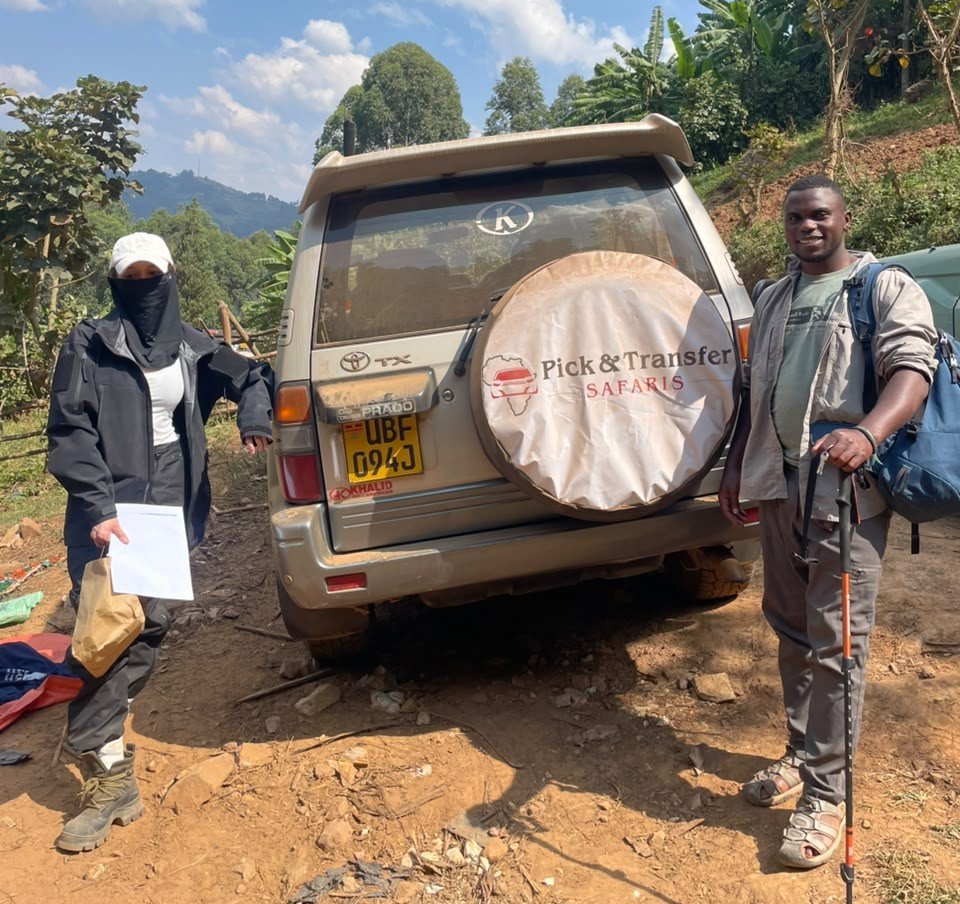
7 Days Uganda Safari – One week tour
This 7-day itinerary is the classic one-week introduction to Uganda, covering the country’s three most iconic wildlife experiences: chimpanzee tracking in Kibale Forest National Park, Big Five game drives and a boat cruise in Queen
Tour Details →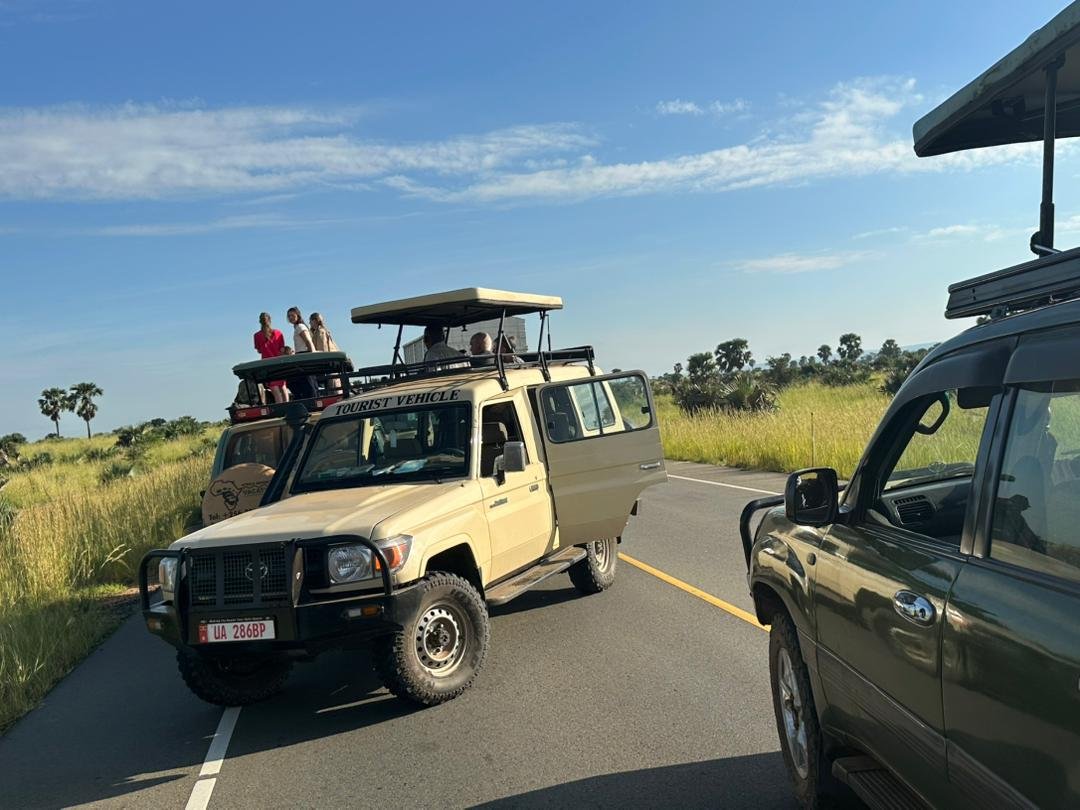
10 Days Uganda Primates and Wildlife
This 10-day Uganda Grand Safari is the most complete Uganda itinerary we offer at Pick and Transfer Safaris. It begins with a scenic northward drive from Entebbe to the vast open plains of Murchison
Tour Details →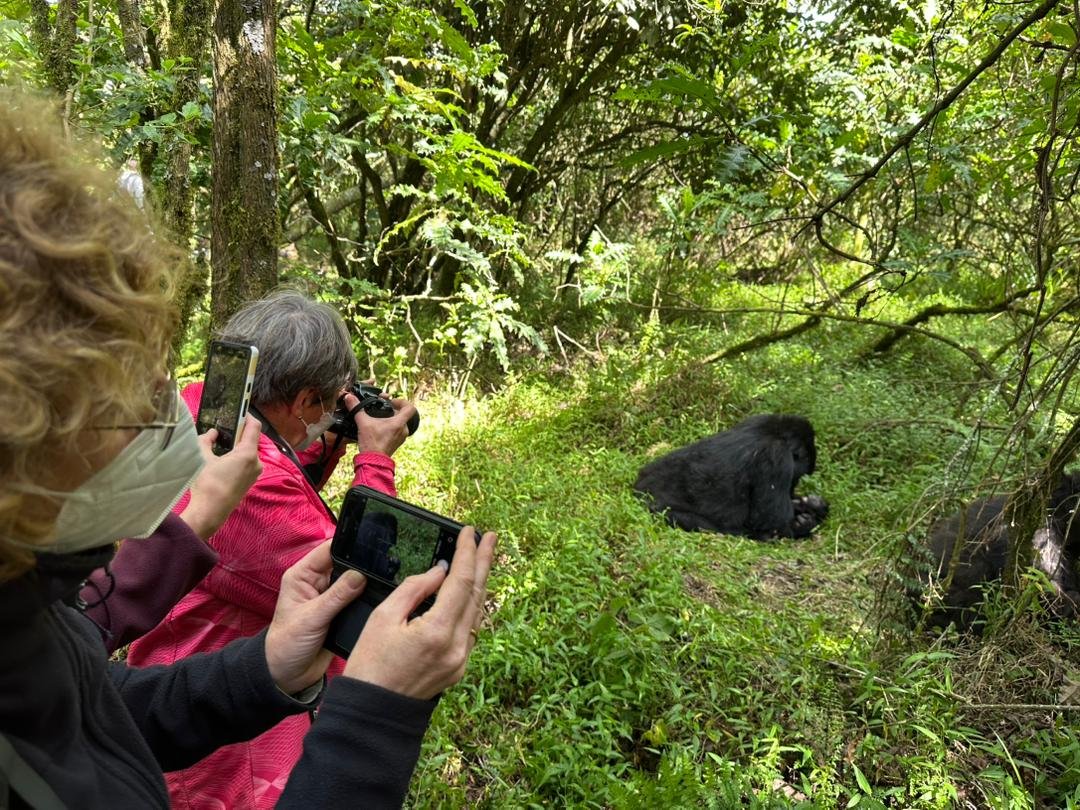
2 Days Uganda Gorilla Tour Starting from Kigali
This is the gentler cousin of our 1-Day Uganda Gorilla Safari Starting from Kigali — same idea, twice the breathing room. Instead of squeezing a 3,000-metre forest trek and two border crossings into a single very long day
Tour Details →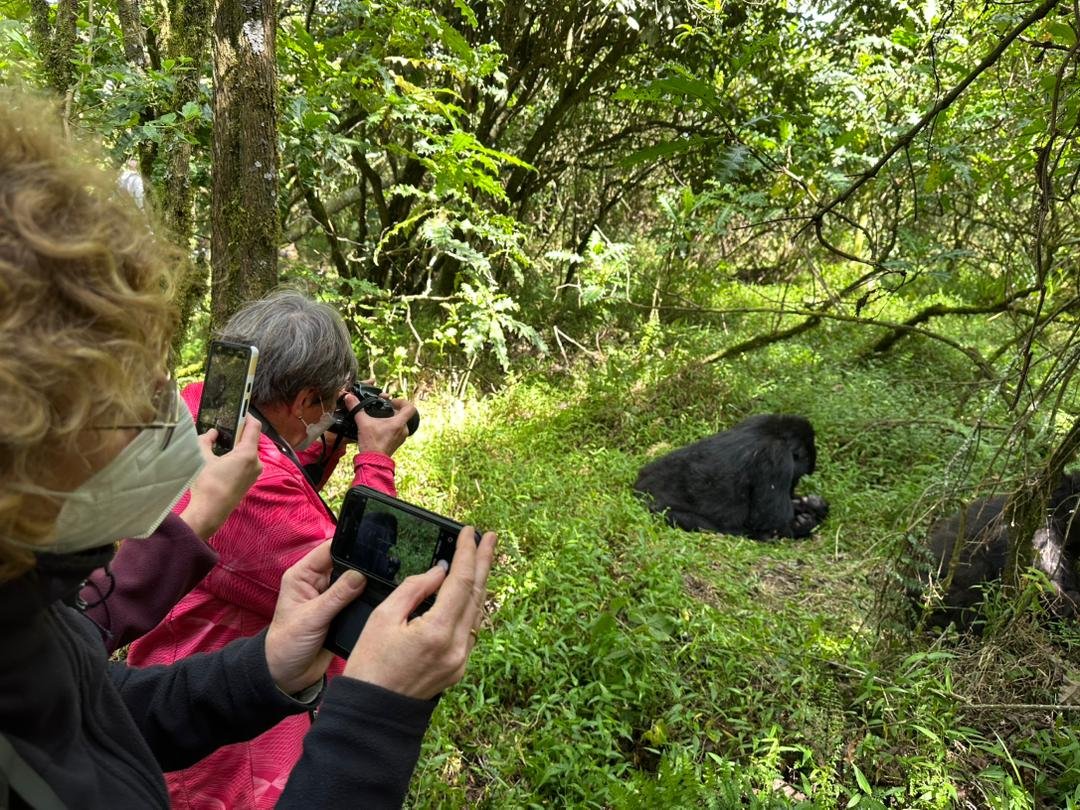
5-Day Uganda Gorilla and Chimpanzee Safari
This itinerary can be combined with a Rwanda extension or a wildlife-focused add-on through Queen Elizabeth National Park — browse our Uganda & Rwanda Safaris and Primate Safaris collections for ideas.
Tour Details →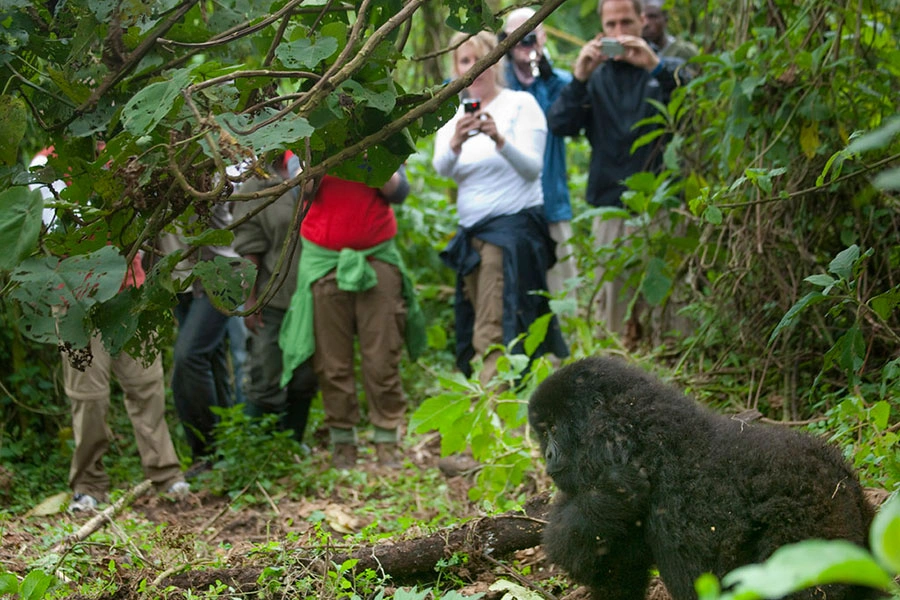
5 Days Rwanda Wildlife and Gorillas
This 5-day itinerary brings together Rwanda’s two flagship wildlife experiences: open savannah game drives and a boat safari in Akagera National Park, followed by a face-to-face encounters
Tour Details →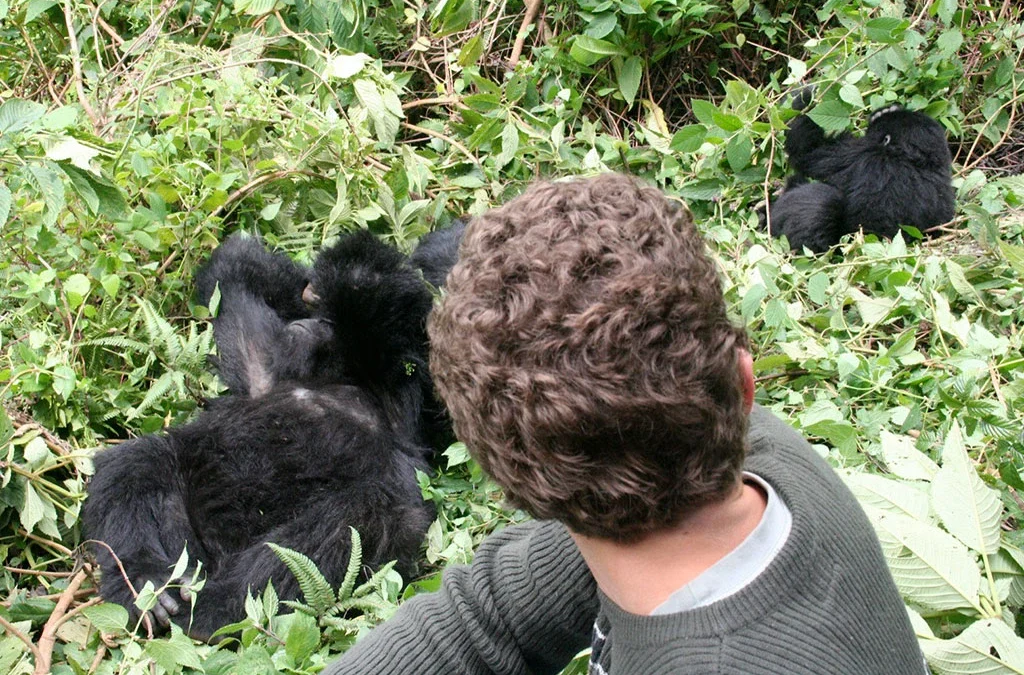
3 Days Uganda Gorilla Safari
For travelers who arrive in Entebbe with a tight schedule and a clear ambition, a 3-day gorilla safari to Bwindi Impenetrable Forest National Park is the most focused and rewarding short trip the country has to offer.
Tour Details →