- LET'S PLAN YOUR SAFARI
- +256 200 921 002
- +256 793 194 703
- info@pickandtransfersafaris.com

Best 2-Day Gorilla Trekking Package from Kigali
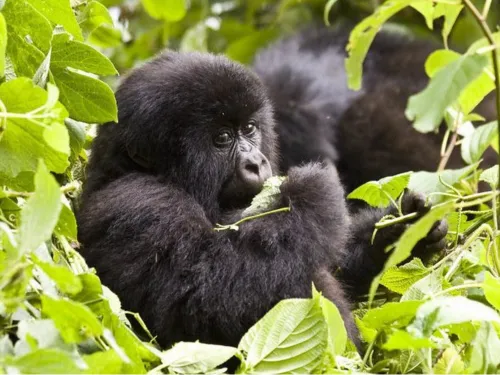
Best 2-Day Gorilla Trekking Package from Kigali. If you have landed in Rwanda’s capital with your heart set on standing a few metres from a silverback mountain gorilla, you are almost certainly searching for the best 2-day gorilla trekking package from Kigali. It is, without question, the most efficient way to have a genuine, bucket-list encounter with mountain gorillas without needing a full week off work. In just two days you fly into Kigali, transfer to gorilla country, spend a morning tracking a habituated gorilla family through misty volcanic forest, and fly home changed. No other wildlife experience on the planet compresses so much wonder into so little time.
This guide walks you through everything a first-time trekker needs to know about a 2-day gorilla trekking package from Kigali in 2026 — the realistic itinerary, permit costs, fitness and age requirements, what to pack, visa rules, where to sleep, and how to pick the right operator. We built our own 2-Day Volcanoes Gorilla Trek from Kigali package around exactly these questions, so consider this both an independent planning resource and a behind-the-scenes look at how the trip is actually run.
We have written this as a genuinely practical planning tool rather than a generic marketing page, because the travellers who message us are usually juggling real constraints — a long-haul stopover in Kigali, a conference that only allows a weekend either side, or a honeymoon itinerary that already includes several other countries. Every section below is written with that traveller in mind: what actually happens hour by hour, what things really cost once every fee is added up, and where a shortcut is safe to take and where it genuinely is not.
Why a 2-Day Gorilla Trekking Package from Kigali Is the Smartest Safari Choice
Kigali is one of the few African capitals with a genuinely convenient international airport sitting less than three hours’ drive from a mountain gorilla habitat. That single fact is what makes the 2-day itinerary possible, and it is why so many business travellers, stopover passengers, and time-strapped honeymooners choose it over longer safaris. You do not need ten days of annual leave to see a mountain gorilla in the wild; you need two, and a well-organised operator who has done the transfer a thousand times before.
The 2-day format also removes the guesswork of self-planning. Instead of juggling park bookings, permit applications, transport, and lodging separately, a packaged trip like our 2-day Volcanoes gorilla trek bundles the permit, private 4×4 transfer, briefing, trek, and accommodation into one predictable price. For travellers who are short on time but not on ambition, that predictability is worth a great deal. If two days still feels rushed once you see the itinerary, our 3-day Rwanda gorilla tracking and cultural tour adds a cultural village visit without stretching your schedule too far.
What’s Included in the Best 2-Day Gorilla Trekking Package from Kigali
Not every “2-day gorilla package” advertised online is built the same way, and the difference usually shows up on the day you actually need something to go right. A properly built package should include your Volcanoes National Park gorilla permit (reserved in your name well in advance), airport pickup in Kigali, a private vehicle and driver-guide for the round trip to Musanze, one night’s accommodation near the park, all park briefings, and a return transfer to Kigali International Airport or your next destination.
What it typically excludes — and what you should budget for separately — is porter fees at the trailhead (a small, worthwhile tip that also supports the local community), gratuities for your guide and driver, and any meals not specified in your chosen lodge’s package. Comparing packages side by side on these details, rather than on headline price alone, is the single best way to avoid a disappointing surprise on the mountain. Our own 2-day Volcanoes gorilla trek from Kigali itemises all of this before you pay a deposit, and the team at Kenlink Tours’ Volcanoes National Park guide breaks down a similar inclusions list if you want a second point of comparison.
Day 1: Kigali Pick-Up and the Scenic Transfer to Volcanoes National Park
Your 2-day gorilla trekking package from Kigali begins the moment you clear immigration at Kigali International Airport, where your driver-guide will be waiting with a name board. From here it is a roughly 100 to 116-kilometre drive north-west to Musanze (formerly Ruhengeri), the small town that serves as the gateway to Volcanoes National Park. On good tarmac roads, the transfer takes between two and two-and-a-half hours, and it is genuinely one of the most scenic drives in East Africa — Rwanda’s famous “thousand hills” unfold in a patchwork of tea plantations, terraced farmland, and volcano silhouettes on the horizon.
Most operators build in a stop along the way, whether that is a coffee-washing station, a roadside viewpoint over the Virunga volcanoes, or a quick detour into Kigali city for a genocide memorial visit before departure, depending on your flight arrival time. You will check into your lodge in the Kinigi area by early afternoon, leaving time to rest, review the trekking briefing materials your guide provides, and pack your day bag for the following morning. An early night is genuinely part of the itinerary — trekking days start before dawn.
Day 2: The Gorilla Trekking Day Itself
This is the day the whole package exists for. You will wake before sunrise for a light breakfast and depart for Volcanoes National Park headquarters in Kinigi, arriving by 7:00 a.m. for registration and the official briefing. Park rangers divide trekkers into groups of no more than eight people, with each group assigned to track one of the park’s habituated gorilla families. This is also when your guide factors in your fitness level — some families are a short, gentle walk from the trailhead, while others require several hours of climbing through dense, muddy vegetation.
Trekking time genuinely varies: some visitors reach their gorilla family within an hour, while others trek for three to five hours, and in rare cases up to eight. Once trackers who have been following the gorillas since dawn radio in a location, your ranger guide will brief you on the final approach — quiet voices, no sudden movements, and a mandatory seven-metre distance from the animals. Then you get your hour. It genuinely does feel like both the longest and shortest hour of the trip: long enough to watch a silverback interact with his family, juveniles tumble through the undergrowth, and mothers groom their infants; short enough that you will want to book a second trek before you have even left the forest. Afterwards, you are driven back to Kigali, arriving in the evening in time for an onward flight, or you can extend into our 2-day Nyungwe chimps tracking trip if primates have become an obsession.
How Much Does a 2-Day Gorilla Trekking Package from Kigali Cost in 2026?
The single biggest cost driver is the Rwanda gorilla trekking permit itself, which the Rwanda Development Board prices at USD 1,500 per person for non-East African visitors, discounted for East African Community citizens and residents. That permit fee covers your park entrance, your ranger-guided trek, and up to one hour with the gorillas — it does not cover transport, accommodation, meals, or tips.
On top of the permit, expect to budget for a private vehicle and driver-guide for the Kigali–Musanze round trip, one night of accommodation (which can range from comfortable mid-range lodges to ultra-luxury properties overlooking the volcanoes), meals, porter fees (roughly USD 10–20, well worth it), and guide/driver gratuities. A realistic all-inclusive 2-day package therefore typically lands somewhere between USD 1,800 and USD 2,600 per person depending on your lodge category — permit prices are fixed by the government, but accommodation and vehicle choice are where the final number moves. For a full cost comparison across our primate itineraries, our 5-day best of Rwanda primate safari and 5-day Rwanda wildlife and gorillas pages show how the per-day cost drops the longer you stay, while Kenlink Tours’ 3-day Rwanda gorilla safari is a useful external reference for a slightly longer version of the same route.
Rwanda Gorilla Permits vs Uganda Gorilla Permits: Which Route Wins for a 2-Day Trip?
Travellers planning a short trip from Kigali often ask whether it is smarter to trek in Rwanda’s Volcanoes National Park or cross the border into Uganda’s Bwindi Impenetrable Forest or Mgahinga Gorilla National Park. Both are genuinely excellent, and the honest answer depends on your timeline and budget. Rwanda’s permit costs roughly USD 1,500, but Volcanoes National Park sits only two to two-and-a-half hours from Kigali, meaning almost your entire two days is spent enjoying the experience rather than travelling.
Uganda’s gorilla permit costs considerably less — around USD 800 — but reaching Bwindi or Mgahinga from Kigali involves a border crossing and typically four to five hours of additional driving each way, which makes a genuine 2-day itinerary tight, though not impossible if you cross the evening before. Our 2-day Uganda gorilla tour starting from Kigali and one-day Uganda gorilla safari from Kigali are both built for travellers who want the lower Uganda permit price and are willing to trade a little extra road time for it. If you would rather compare both countries side by side before deciding, Kenlink Tours’ Uganda and Rwanda gorilla safaris comparison and their 2-day Rwanda-to-Uganda gorilla trekking route lay out the trade-offs from the Uganda-first perspective.
Volcanoes National Park vs Bwindi Impenetrable Forest: Choosing Your Trekking Destination
Beyond permit price and drive time, the two parks feel genuinely different underfoot. Volcanoes National Park sits at higher altitude on the slopes of the Virunga volcanoes, with more open bamboo and hagenia forest that generally makes for shorter, though steeper, treks — typically two to five hours round trip. Bwindi Impenetrable Forest, true to its name, is dense, tangled rainforest with a far larger and more varied terrain, where treks can run anywhere from two to eight hours depending on where your assigned gorilla family is that morning.
Neither park is objectively “easier” — Rwanda’s altitude gain can be tough on the lungs, while Bwindi’s undergrowth can be tough on the legs. What matters for a 2-day package is predictability, and Volcanoes National Park’s shorter average trek times and closer proximity to Kigali make it the more forgiving choice when your entire schedule hinges on being back at the airport by evening. If Bwindi is still calling to you, our 3-day Uganda gorilla safari from Rwanda gives that trek the extra buffer day it deserves, and Kenlink Tours’ 3-day Bwindi gorilla safari from Kigali is worth reading for a Uganda-focused itinerary of similar length.
Best Time of Year to Book Your 2-Day Gorilla Trek from Kigali
Mountain gorillas can technically be trekked year-round, since permits are capped daily regardless of season, but timing still matters for comfort and visibility. Rwanda’s two dry seasons — roughly June through September, and a shorter window from December through February — bring firmer trails, less mud, and generally easier underfoot conditions, which is exactly what you want when your trek has to fit inside a single tight day.
The long rainy season (March to May) and shorter rains (October–November) bring lusher, greener forest and noticeably fewer crowds at the park headquarters, which some travellers actually prefer, but trails become slippery and treks can run longer than average. If your 2-day window is fixed by flight dates rather than choice, do not panic about travelling in the rains — a good pair of trekking boots and gaiters solve most of the problem, and your ranger guide adjusts the route accordingly. Whichever season you choose, book your permit as early as possible; Volcanoes National Park sells only 96 permits per day across its habituated families, and high season slots disappear months in advance.
Gorilla Trekking Age Limit, Fitness Level, and Health Rules You Must Know
Rwanda strictly enforces a minimum age of 15 for gorilla trekking — there is no exception, and no maximum age, though the activity is physically demanding at altitude. Families travelling with younger children should look instead at golden monkey tracking or a game drive in Akagera National Park, both of which have no age restriction and can be added to a slightly longer itinerary such as our 3-day Akagera National Park safari from Kigali.
Health screening happens at the trailhead every morning: anyone showing symptoms of a cold, flu, or any contagious illness will be asked to sit out that day’s trek, because mountain gorillas share roughly 98% of human DNA and are highly susceptible to our diseases. Groups are capped at eight trekkers per gorilla family, a seven-metre minimum distance is maintained at all times, flash photography is banned, and there is no touching the gorillas under any circumstance. None of this should be intimidating — it simply means arriving rested, being honest with your guide about how you are feeling, and packing a reasonable level of fitness for two to five hours of uneven, sometimes steep, walking.
What to Pack for a 2-Day Gorilla Trekking Safari
Because your entire trip is compressed into two days, packing efficiently matters more than usual. Prioritise waterproof hiking boots with good ankle support, gardening gloves (genuinely useful for pushing through stinging nettles), a long-sleeved shirt and trousers in neutral colours, a light rain jacket regardless of season, and a small daypack for water and snacks. Gaiters are a small investment that keeps mud and biting ants out of your boots on wetter trails.
Bring a zoom lens if you are serious about photography — you will not be able to get physically closer than seven metres — along with spare camera batteries, since cold, humid mornings drain them faster than expected. A walking stick (often provided free at the park gate) takes real pressure off your knees on the descent, and a small tip in local currency for your porter and guide goes a long way. If you are combining your trek with a stop in Nyungwe Forest National Park for chimpanzee tracking, pack for two microclimates rather than one, since Nyungwe’s canopy trails are noticeably wetter than the Volcanoes region.
Visa and Entry Requirements for Rwanda (and a Uganda Border Crossing)
Most nationalities can now obtain a Rwanda visa on arrival at Kigali International Airport for a standard fee, and many travellers qualify for the East Africa Tourist Visa, which covers Rwanda, Kenya, and Uganda on a single visa if your 2-day gorilla trek is part of a longer regional trip. Applying online in advance is faster than doing it at the airport counter and is strongly recommended during peak trekking months.
A yellow fever vaccination certificate is required for travellers arriving from, or having transited through, a country with risk of yellow fever transmission, and immigration officers do check this at entry, so keep the certificate with your passport rather than packed away. If your itinerary crosses into Uganda for a Bwindi or Mgahinga trek — as with our Rwanda gorilla tracking and cultural tour or a dedicated Uganda add-on — confirm whether your East Africa Tourist Visa covers the crossing or whether a separate Uganda visa is needed for your nationality; requirements are updated periodically, so always verify against the current government guidance before you travel.
Where to Stay: Accommodation Near Kinigi and Volcanoes National Park
Accommodation near the park gate ranges from comfortable, well-run mid-range lodges to some of the most celebrated luxury properties in Africa, several of which overlook the Virunga volcanoes from private cottages with fireplaces — a genuinely welcome touch after a chilly, muddy trekking morning. Because your 2-day itinerary only allows for one night here, most travellers choose a lodge based on proximity to the park headquarters in Kinigi (to shave precious minutes off an early start) rather than on amenities alone.
Whichever category you choose, book well ahead during June–September and December–February, when both permits and the best rooms in Kinigi sell out first. Our team at Pick and Transfer Safaris works with a shortlist of vetted properties across every budget band and can match your lodge choice to your onward itinerary, whether that is a same-day flight home or an extension into our 5-day Uganda gorilla and chimps safari starting from Rwanda.
Meeting the Mountain Gorillas: What Actually Happens During Your One Hour
Nothing quite prepares you for the moment your ranger guide raises a hand for silence and points into the undergrowth. The first thing most visitors notice is not the silverback but the sound — the low rumble of contented feeding, branches snapping, infants squabbling somewhere out of sight. Then the forest seems to simply open, and there they are: a family of eight to twenty individuals going about an entirely ordinary morning, utterly unbothered by your presence after years of careful habituation by park staff.
Your guide narrates quietly throughout — who is the dominant silverback, which juveniles are siblings, which female recently gave birth — while rangers keep a discreet watch on the seven-metre buffer. Sixty minutes disappears remarkably fast; most trekkers describe it less as watching wildlife and more as being cautiously welcomed into someone else’s family gathering. Afterwards, many travellers find they want to repeat the experience within the same trip, which is exactly why our 3-day Uganda gorilla safari and 5-day Uganda gorilla and chimpanzee safari build in a second trekking day or a chimpanzee-tracking follow-up.
Which Gorilla Family Will You Track in Volcanoes National Park?
Volcanoes National Park manages twelve habituated gorilla families available for trekking, each with its own personality, size, and typical location on the mountain slopes. Some families, like the long-studied Susa group made famous by primatologist Dian Fossey’s original research station, are large — sometimes over twenty members — and tend to range higher up the slopes, meaning a longer, steeper walk. Others sit much closer to the park boundary and are better suited to travellers who want a shorter, gentler morning.
Park wardens assign trekkers to families on the morning of the trek itself, largely based on your stated fitness level during registration, though they cannot guarantee a specific family in advance. Being honest about your fitness during the briefing is not a formality — it is how rangers keep the experience safe and enjoyable for everyone in your group of eight. If you have a specific family you are hoping to see because of a documentary or a friend’s recommendation, mention it to your guide the evening before; while nothing is guaranteed, guides can sometimes make a request to park headquarters on your behalf.
Conservation and Community Impact of Your Gorilla Permit
It is worth understanding, before you pay it, exactly what that USD 1,500 permit fee accomplishes. A significant share of Rwanda’s park revenue is channelled directly into the Rwanda Development Board’s tourism revenue-sharing programme, which funds schools, health centres, and infrastructure in the communities bordering Volcanoes National Park. This model is widely credited as one of the reasons Rwanda’s mountain gorilla population has continued to grow over the past two decades, at a time when so many other great ape populations worldwide are in decline — a rare genuine conservation success story built almost entirely on tourism revenue.
Choosing a 2-day gorilla trekking package from Kigali is therefore not just a personal bucket-list trip; it is a direct, measurable contribution to habitat protection and to the livelihoods of the guides, porters, and lodge staff who depend on responsible tourism. Operators who take this seriously will typically be transparent about porter wages and community fees rather than treating them as an afterthought — a point covered well by Kenlink Tours’ about us page, which outlines a similar community-first operating philosophy from a Uganda-based perspective.
Add-On Experiences to Extend Your Kigali Gorilla Trekking Trip
If your schedule loosens up even slightly, a handful of add-ons pair beautifully with a Kigali-based gorilla trek. Golden monkey tracking in the bamboo zones of Volcanoes National Park is a lighter, shorter morning activity with no age restriction, ideal the day after your main trek. A game drive through Akagera National Park adds the “big five” savannah experience that Rwanda’s volcanic north cannot offer, while a boat trip on Lake Kivu is the ideal way to decompress before flying home.
Travellers who fall in love with primates often extend into chimpanzee tracking in Nyungwe Forest National Park, or the newer Gishwati-Mukura National Park for a quieter, less-visited canopy walk. For a genuinely comprehensive combination, our 4-day Rwanda wildlife and city tour and 10-day Uganda primates and wildlife itineraries show how far a Kigali-based trip can stretch once the gorilla trek is locked in as day one.
Why Pick and Transfer Safaris Is the Right Partner for Your Gorilla Trek
A 2-day gorilla trekking package lives or dies on logistics — a missed airport pickup, a permit booked under the wrong name, or a lodge that is an hour further from Kinigi than advertised can genuinely ruin the tight schedule you are working with. We built our 2-day Volcanoes gorilla trek from Kigali around removing exactly those failure points: your permit is confirmed in writing before you fly, your driver-guide tracks your flight in real time, and your lodge is chosen specifically for its distance from the park gate rather than for marketing photos alone.
We also believe a good operator should be transparent about the whole region, not just its own packages, which is why we regularly point travellers to trusted regional resources such as Kenlink Tours and their detailed Rwanda safaris overview when a traveller’s dates or budget genuinely suit a different itinerary shape. You can read more about how we operate on our About Us page, or explore the full range of options on our destinations page before reaching out through our contact page.
Common Mistakes First-Time Gorilla Trekkers Make (And How to Avoid Them)
The most common mistake is booking international flights before the gorilla permit is actually confirmed, only to discover that the desired date is sold out and the whole itinerary has to be rebuilt around a different week. The fix is simple: treat the permit reservation as the fixed anchor of your trip and build flights, visas, and lodge bookings around it, not the other way around. A close second mistake is underestimating the drive time between Kigali and Musanze when flights are scheduled tightly on either end — arriving on a red-eye and expecting to trek the same morning almost never works, and a good operator will tell you so before you book rather than after.
Packing mistakes are just as common as scheduling ones. Trekkers regularly arrive with brand-new, unbroken-in hiking boots, which is a reliable way to end a bucket-list morning with blisters. Others skip the gardening gloves and regret it the first time they grab a branch to steady themselves on a muddy slope. A surprising number of travellers also forget cash for porter tips, assuming card payment is available at the trailhead — it generally is not, so carry small denominations of Rwandan francs or US dollars for this specifically.
Finally, many first-timers underestimate how physically demanding even a “short” trek can feel at altitude, especially if they have flown in within the previous 24 hours without any acclimatisation. Building in a rest afternoon on Day 1, as our 2-day Volcanoes gorilla trek from Kigali itinerary does, rather than squeezing in extra sightseeing before an early trekking start, is a small adjustment that makes a genuine difference on Day 2. If you are unsure whether your fitness level suits a shorter or longer add-on itinerary, comparing notes with an operator that also runs longer routes — such as Kenlink Tours’ car hire and self-drive options for travellers building their own pace — can help calibrate expectations before you commit to dates.
Booking Tips: How to Secure Your Gorilla Permit and Avoid Disappointment
Because Volcanoes National Park caps daily permits, the single most common mistake travellers make is booking flights before securing a permit reservation. Work backwards instead: confirm your permit and lodge availability first, then book flights into Kigali around those fixed dates. Peak months fill up six to twelve months ahead, so if your travel window is flexible, ask your operator which weeks still have permit availability rather than fixing a date and hoping.
Always request written confirmation of your permit reservation with your exact name as it appears on your passport, since names are checked at the park gate and cannot be transferred to another traveller. If you are booking a shoulder-season date, ask specifically about refund and rescheduling terms — a full-day trek without a gorilla sighting typically qualifies for a 75% refund, and permits can usually be rescheduled with sufficient notice, but policies vary by circumstance and are worth confirming in writing. For a wider look at how permit-first planning works across the region, Kenlink Tours’ travel news section and their group tours page both cover seasonal booking patterns worth knowing before you commit to dates.
A Sample Hour-by-Hour Timeline for Your 2-Day Gorilla Trek
Because so much of this trip’s appeal is its efficiency, it helps to see the schedule laid out hour by hour. On Day 1, expect airport pickup on arrival, a 9:00–11:30 a.m. transfer window to Musanze depending on your flight, lunch and check-in at your lodge by early afternoon, a short rest or optional local walk, an evening briefing from your guide on the next day’s logistics, and an early dinner followed by lights-out well before 9:00 p.m.
Day 2 typically runs: 5:00–5:30 a.m. wake-up and light breakfast, 6:00 a.m. departure for park headquarters, 7:00–7:30 a.m. registration and the official ranger briefing in Kinigi, 8:00 a.m. departure into the forest with your assigned group, anywhere from 9:00 a.m. to 1:00 p.m. reaching your gorilla family (trek time varies genuinely by family location), one hour with the gorillas, a return trek of similar length, a late lunch back at the lodge, and a 3:00–5:30 p.m. transfer back to Kigali in time for evening flights. Building in this kind of buffer is exactly why our 2-day Volcanoes gorilla trek from Kigali recommends booking an evening or next-morning departure flight rather than a same-afternoon one.
Frequently Asked Questions About the 2-Day Gorilla Trekking Package from Kigali
Is two days really enough time to see mountain gorillas from Kigali?
Yes. Because Volcanoes National Park is only two to two-and-a-half hours from Kigali, a well-planned 2-day itinerary comfortably fits airport pickup, an overnight near the park, the full trekking morning, and a return transfer in time for an evening flight.
How much does the gorilla permit cost in Rwanda in 2026?
The standard permit for non-East African visitors is USD 1,500 per person, covering park entry, a ranger-guided trek, and up to one hour with a habituated gorilla family. Transport, accommodation, and tips are separate.
Can beginners with average fitness manage the trek?
Most travellers of reasonable fitness manage comfortably. Trek duration ranges from roughly one to five hours depending on where your assigned gorilla family is that morning, and porters are available to carry your bag and offer a supportive hand on steeper sections.
What is the minimum age for gorilla trekking?
Rwanda enforces a strict minimum age of 15, with no exceptions. Younger children can instead join a game drive in Akagera National Park, which has no age restriction.
Should I trek in Rwanda or Uganda if I only have two days from Kigali?
Rwanda’s Volcanoes National Park is the more time-efficient choice for a strict 2-day window because of its short drive from Kigali. Uganda’s lower permit price is attractive, but the additional border-crossing time makes a true 2-day round trip tighter, which is why most travellers choosing Uganda from Kigali opt for our 2-day Uganda gorilla tour or a 3-day version instead.
Do I need a Uganda visa if my trip is entirely inside Rwanda?
No. If your 2-day itinerary stays within Rwanda — flying into Kigali, trekking in Volcanoes National Park, and flying back out of Kigali — you only need your Rwanda entry visa or East Africa Tourist Visa. A separate Uganda visa is only relevant if your itinerary crosses the border, as with our 3-day Uganda gorilla safari from Rwanda.
Can I extend a 2-day gorilla trek into a longer safari later?
Yes, and many travellers do exactly this once they see how much of East Africa is within reach of Kigali. Options range from a quick 4-day add-on through to multi-week itineraries such as our 15-day Rwanda Uganda safari or 18-day Kenya Rwanda Uganda safari, both of which can be booked with the same operator that arranged your original gorilla permit.
Ready to Book the Best 2-Day Gorilla Trekking Package from Kigali
A 2-day gorilla trekking package from Kigali is proof that you do not need weeks of leave to have one of the most profound wildlife encounters on Earth — you need a well-planned itinerary, a permit booked in your name, and a partner who has run the Kigali-to-Kinigi transfer often enough to make it feel effortless. Whether this is your first trip to Rwanda or you are folding a gorilla trek into a longer regional journey through Uganda and Rwanda or even an extended East Africa tour, the itinerary above gives you everything you need to plan with confidence.
Explore our full 2-Day Volcanoes Gorilla Trek from Kigali package, browse related itineraries on our destinations page, or get in touch through our contact page and our team will build a permit-first schedule around your travel dates. However tight your calendar looks right now, two days is genuinely enough — thousands of travellers have proven it on this exact route, and with the permit, transfer, and lodge already sorted, the only thing left for you to do is show up, follow your ranger guide into the forest, and let the encounter speak for itself.
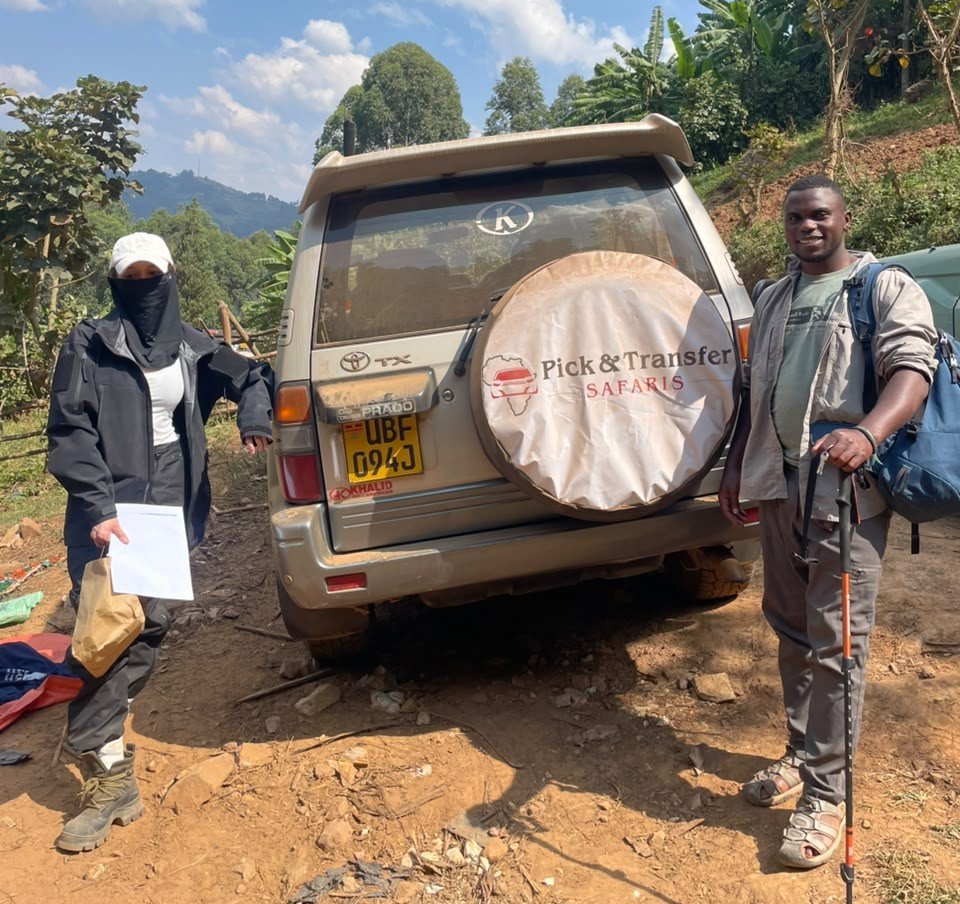
7 Days Uganda Safari – One week tour
This 7-day itinerary is the classic one-week introduction to Uganda, covering the country’s three most iconic wildlife experiences: chimpanzee tracking in Kibale Forest National Park, Big Five game drives and a boat cruise in Queen
Tour Details →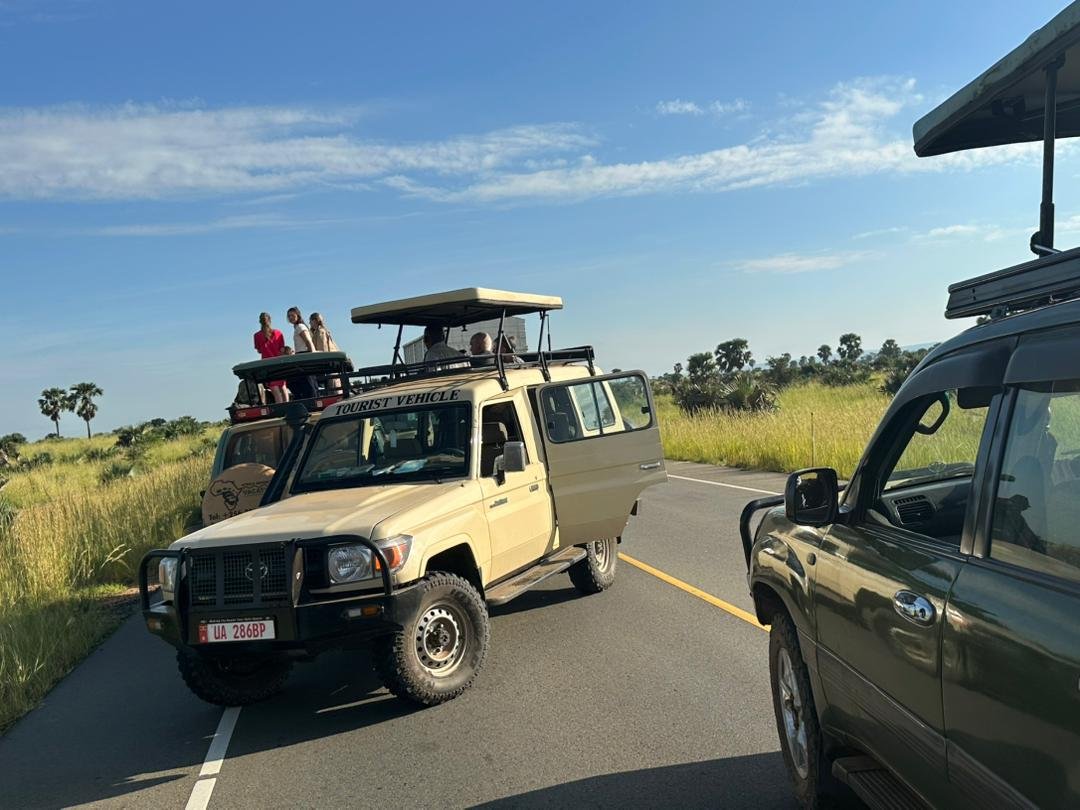
10 Days Uganda Primates and Wildlife
This 10-day Uganda Grand Safari is the most complete Uganda itinerary we offer at Pick and Transfer Safaris. It begins with a scenic northward drive from Entebbe to the vast open plains of Murchison
Tour Details →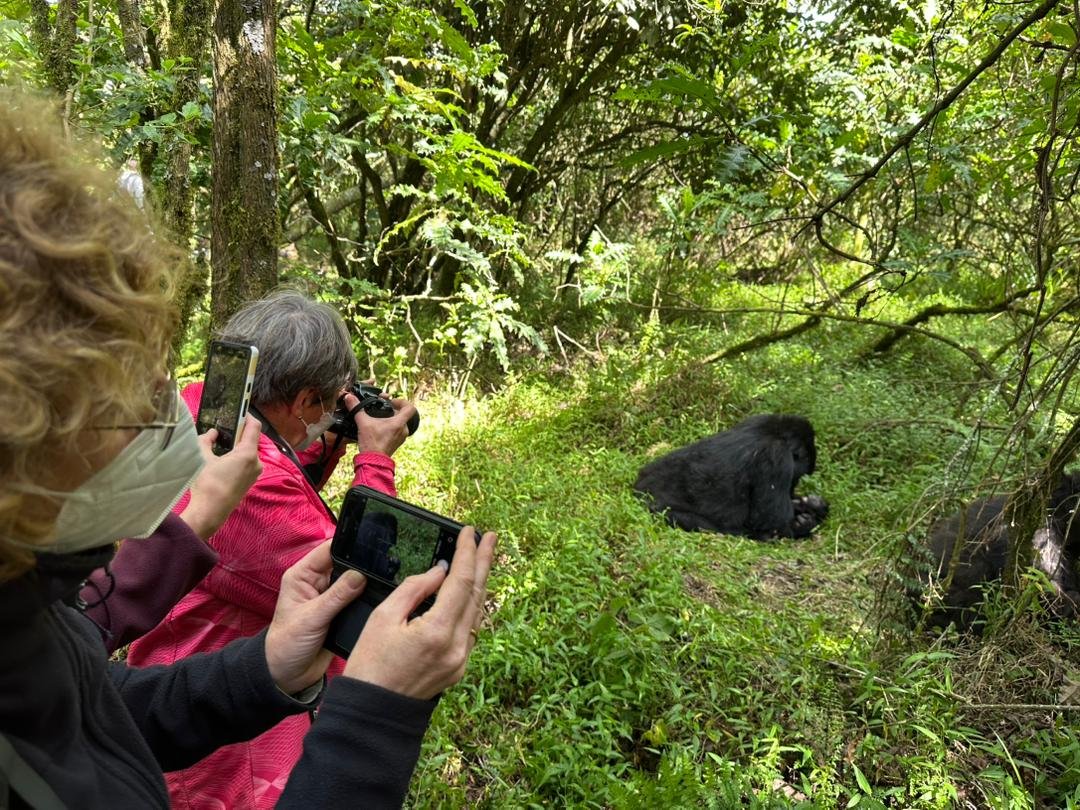
2 Days Uganda Gorilla Tour Starting from Kigali
This is the gentler cousin of our 1-Day Uganda Gorilla Safari Starting from Kigali — same idea, twice the breathing room. Instead of squeezing a 3,000-metre forest trek and two border crossings into a single very long day
Tour Details →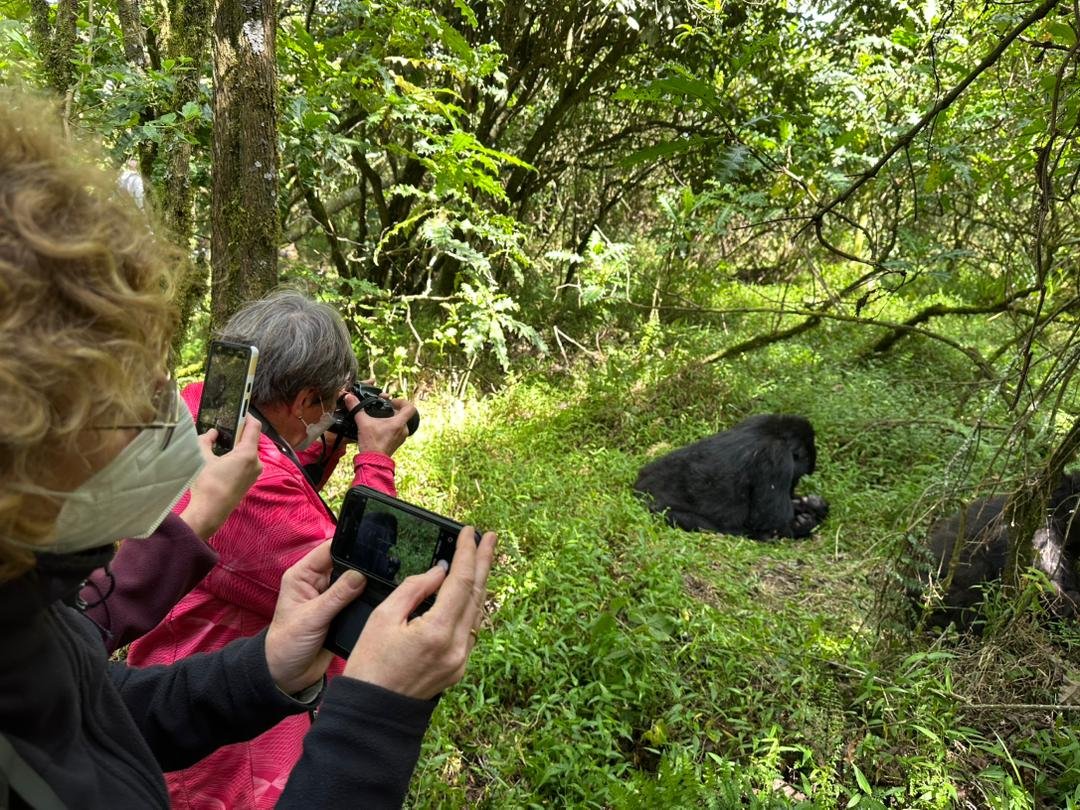
5-Day Uganda Gorilla and Chimpanzee Safari
This itinerary can be combined with a Rwanda extension or a wildlife-focused add-on through Queen Elizabeth National Park — browse our Uganda & Rwanda Safaris and Primate Safaris collections for ideas.
Tour Details →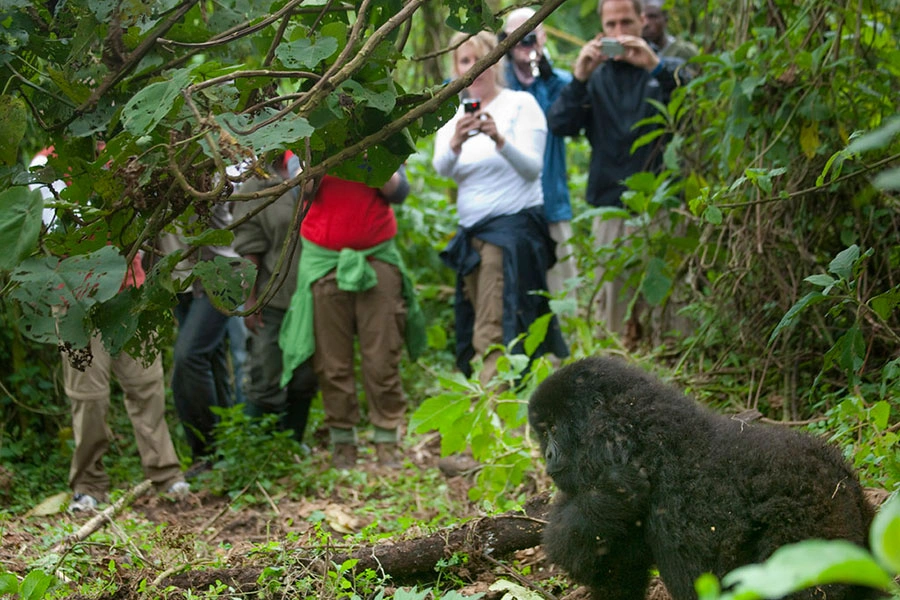
5 Days Rwanda Wildlife and Gorillas
This 5-day itinerary brings together Rwanda’s two flagship wildlife experiences: open savannah game drives and a boat safari in Akagera National Park, followed by a face-to-face encounters
Tour Details →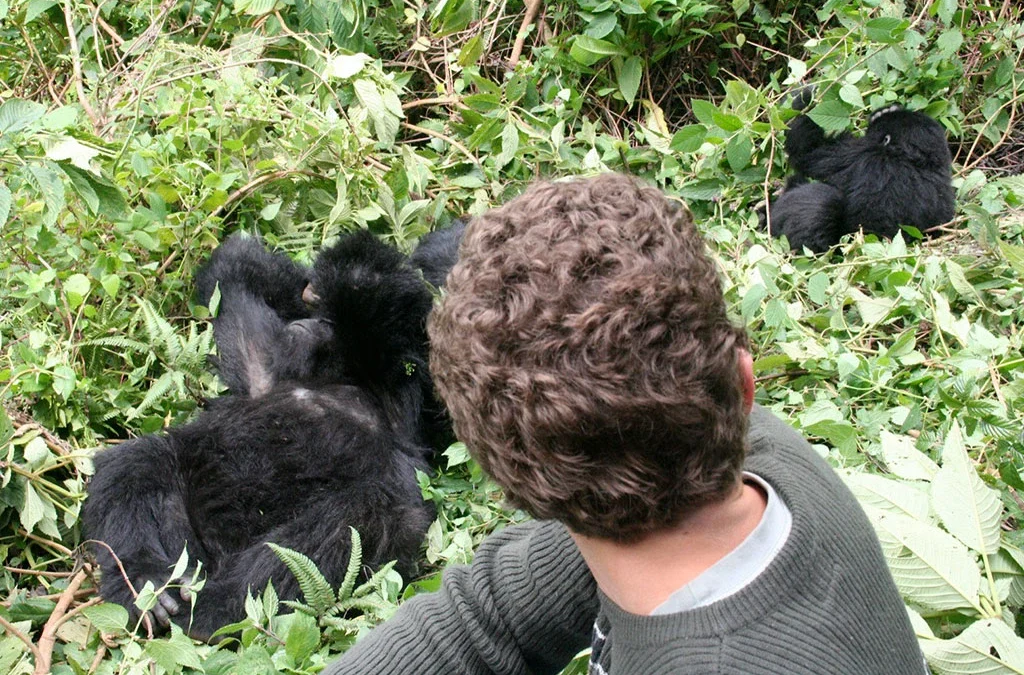
3 Days Uganda Gorilla Safari
For travelers who arrive in Entebbe with a tight schedule and a clear ambition, a 3-day gorilla safari to Bwindi Impenetrable Forest National Park is the most focused and rewarding short trip the country has to offer.
Tour Details →