- LET'S PLAN YOUR SAFARI
- +256 200 921 002
- +256 793 194 703
- info@pickandtransfersafaris.com

Chimps and Gorilla Trips in Uganda
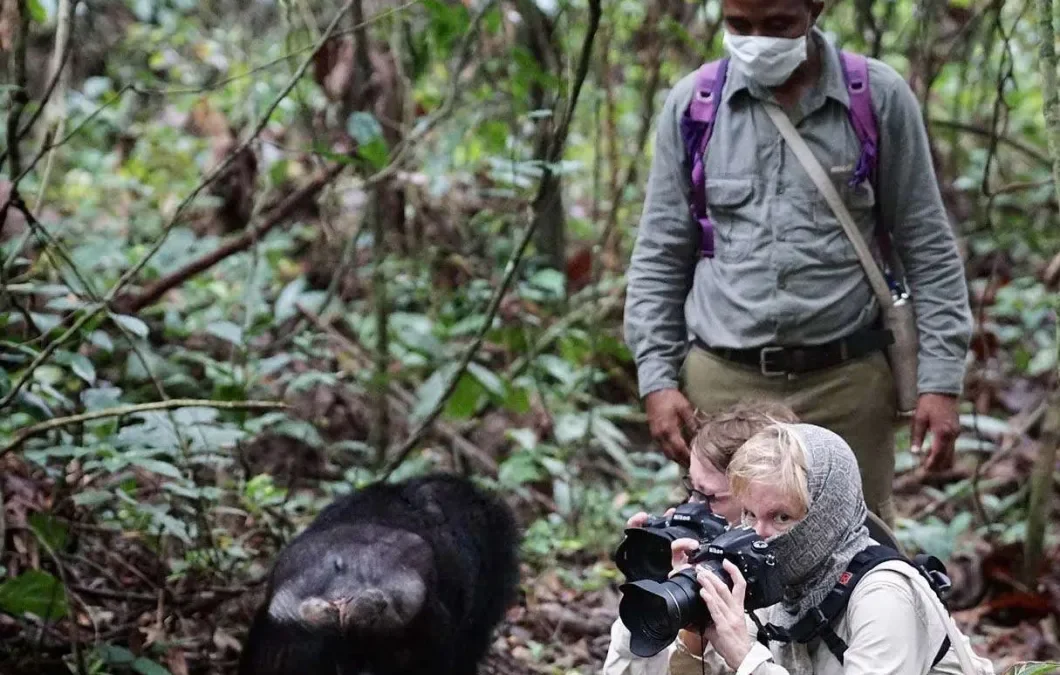
Chimps and Gorilla Trips in Uganda. Few destinations on earth let you track two different great ape species on the same trip, and Uganda does it better than anywhere else in Africa. A combined chimps and gorilla trip pairs the raw, high-energy chaos of a wild chimpanzee community with the calm, almost meditative presence of a mountain gorilla family, and the contrast between the two encounters is part of what makes the trip so memorable. Rather than choosing one primate experience over the other, travelers who book a chimps and gorilla safari with Pick and Transfer Safaris get both, typically within the space of five to seven days, without excessive backtracking across the country. This guide covers everything you need to plan a combined trip: where each species lives, how many days you realistically need, what permits cost in 2026, and how to weave in classic savannah parks or a Rwanda extension if you have extra time.
Uganda: The Only Place You Can Track Both Great Apes and Chimpanzees So Easily
Mountain gorillas survive in only three countries — Uganda, Rwanda, and the Democratic Republic of Congo — while wild chimpanzees are more widely distributed but still confined to a shrinking set of forest ecosystems across equatorial Africa. Uganda is the one country where both species live within a manageable driving distance of each other: Bwindi Impenetrable Forest, home to nearly half of the world’s remaining mountain gorillas, sits nine to ten hours south of Kibale Forest, Uganda’s premier chimpanzee tracking site, both connected by a scenic but perfectly driveable route through the southwestern highlands. Rwanda offers gorillas in Volcanoes National Park and chimps in Nyungwe Forest, but the distances and border logistics involved make Uganda’s single-country combination noticeably simpler to arrange. For a broader sense of how the country’s geography supports this kind of itinerary, Kenlink Tours’ Uganda overview is a useful independent primer on the parks and terrain involved.
Understanding the Difference — Gorillas vs Chimpanzees in the Wild
Before booking, it helps to understand just how different these two encounters actually feel on the ground. Mountain gorillas live in tight, hierarchical family units led by a dominant silverback, move relatively short distances each day, and spend much of their time resting, feeding, and grooming at a slow, observable pace — trekkers often spend their full hour just metres away from a calm, seated family group. Chimpanzees, by contrast, are fast, loud, and highly social across large territories, communicating through dramatic pant-hoots and displays, climbing swiftly through the canopy, and rarely staying still for long. Gorilla trekking tends to feel like a quiet, almost reverent audience with a family; chimp tracking feels more like following an unpredictable, high-energy story as it unfolds. Seeing both within the same week gives travelers a genuinely educational, side-by-side comparison that neither experience delivers on its own. The physical settings differ too — Bwindi’s gorilla families are often found on steep, forested hillsides where trekkers may need to duck under vines or scramble over roots to reach a viewing spot, while Kibale’s flatter forest floor makes the chase for a mobile chimp community feel more like a brisk, purposeful walk than a climb. Guides in both parks are quick to point out that no two treks are ever quite the same, since gorilla families and chimp communities range across different parts of their territory day to day, which is part of what keeps repeat visitors coming back even after their first successful trek.
Bwindi Impenetrable Forest — Home to Uganda’s Mountain Gorillas
Bwindi Impenetrable Forest National Park covers 321 square kilometres of ancient montane and lowland rainforest along the Albertine Rift in southwestern Uganda, bordering the Democratic Republic of Congo. The park’s name is well earned — the forest is dense, tangled, and genuinely impenetrable in places — but its network of habituated gorilla families and trained trekking guides make it entirely accessible to visitors with a reasonable level of fitness. Bwindi alone hosts nearly half of the world’s remaining mountain gorilla population, spread across four distinct trekking sectors that each offer a slightly different experience, terrain, and travel time from the park gate.
The Four Gorilla Trekking Sectors of Bwindi: Buhoma, Ruhija, Rushaga, Nkuringo
Buhoma, in the north of the park, is Bwindi’s most developed sector and home to the Mubare family, Uganda’s very first habituated gorilla group, making it a natural choice for travelers who want strong infrastructure alongside their trek. Ruhija sits at higher altitude in the east, offering excellent birding along the Mubwindi Swamp trail in addition to gorilla trekking. Rushaga, in the south, has the greatest concentration of habituated families of any sector and is the exclusive home of Bwindi’s Gorilla Habituation Experience. Nkuringo, also in the south, delivers the most dramatic and demanding terrain of the four sectors, rewarded with sweeping views toward the Virunga volcanoes on a clear day. Our 3-Day Uganda Gorilla Safari can be tailored to any of the four sectors depending on your fitness level and travel dates.
Mgahinga Gorilla National Park — Uganda’s Other Gorilla Destination
Tucked into the far southwestern corner of Uganda along the Virunga volcanic range, Mgahinga Gorilla National Park is Uganda’s smaller and less-visited gorilla destination, sharing its volcanic slopes with Rwanda’s Volcanoes National Park and Congo’s Virunga National Park. Mgahinga typically has only a single habituated gorilla family available for trekking at any given time, which means permit availability can be limited, but the park compensates with dramatic volcanic scenery, golden monkey tracking, and considerably fewer crowds than Bwindi. For travelers building a combined chimps and gorilla itinerary who also want to fold in a Rwanda border crossing, Mgahinga’s proximity to Kisoro and the Cyanika border post makes it a convenient, if less predictable, alternative gorilla trekking base. Golden monkey tracking is also offered in Mgahinga as a lower-cost add-on activity, and travelers researching this volcanic border region alongside their gorilla planning may find Kenlink Tours’ Rwanda safaris a useful independent reference point, since several of their itineraries cover the Rwandan side of the same volcano range.
Kibale Forest National Park — Where the Chimp Half of Your Trip Begins
On the chimpanzee side of a combined itinerary, nearly every trip begins at Kibale Forest National Park, a 795-square-kilometre block of rainforest near Fort Portal that holds Uganda’s largest and most reliably viewed chimpanzee population — over 1,500 individuals across multiple communities. Standard treks depart from the Kanyanchu Visitor Centre each morning, and beyond chimps, the forest holds twelve other primate species and over 370 bird species, giving the chimp half of your combined trip plenty of additional wildlife value beyond the headline encounter. Most of our combined itineraries pair a Kibale chimp trek with an afternoon walk through the neighbouring Bigodi Wetland Sanctuary before continuing south toward gorilla country.
Budongo Forest and Kyambura Gorge — Alternative Chimp Tracking Sites
While Kibale is the default chimp tracking location for most combined itineraries, it is not the only option. Budongo Forest, accessible from Kaniyo Pabidi along the approach road into Murchison Falls National Park, offers a quieter chimp trekking experience for travelers already exploring northern Uganda’s savannah and Nile River scenery. Kyambura Gorge, the “Valley of the Apes” inside Queen Elizabeth National Park, offers a smaller but still viable chimp community set in a dramatic river-carved ravine. Either can substitute for Kibale on an itinerary that already routes through northern or western Uganda’s wildlife parks, giving us flexibility when designing a custom chimps and gorilla trip around your specific route. If you are researching chimp tracking independently of a gorilla combination, our earlier guide to short chimp tracking safaris covers Kibale, Budongo, and Kyambura in more depth, and Kenlink Tours’ dedicated chimpanzee tracking safari offers a useful independent comparison for pacing and pricing.
How Long Do You Need for a Combined Chimps and Gorilla Safari?
The honest minimum for a genuinely comfortable chimps and gorilla trip is five days, and most of our clients find that five to seven days strikes the right balance between covering both experiences properly and not spending the entire trip in transit. Because Kibale and Bwindi sit roughly six to eight hours apart by road, a rushed three- or four-day version is technically possible but leaves very little breathing room if a flight is delayed or a trek runs long, and in our experience a compressed itinerary is one of the most common sources of traveler stress on an otherwise well-run trip. Building in a spare half-day buffer, even on a five-day itinerary, gives room for a trek that runs longer than expected, a road delayed by weather, or simply the chance to rest before an early gorilla briefing rather than arriving at the trailhead already tired from a long drive the same morning. Travelers with more time available naturally get more value from extending the trip to include a wildlife park or two, or a Rwanda extension, but five days remains the practical floor for doing both primate treks without feeling permanently rushed between destinations.
5-Day Uganda Gorilla and Chimpanzee Safari — Our Most Popular Combo
Our 5-Day Uganda Gorilla and Chimpanzee Safari remains the single most booked combined itinerary we run. Day one covers the drive from Entebbe to Kibale Forest. Day two delivers the chimpanzee trek at Kanyanchu followed by an afternoon walk through Bigodi Wetland Sanctuary. Day three is the long but scenic drive south to Bwindi Impenetrable Forest. Day four is dedicated to the gorilla trekking expedition itself, followed by an afternoon Batwa cultural experience with the indigenous forest community that once called Bwindi home. Day five wraps with the return transfer to Kampala or Entebbe. The package includes both trekking permits, private 4×4 transport with a driver-guide, accommodation, and meals, giving travelers a fully organized introduction to both species without having to coordinate logistics themselves.
7-Day and 10-Day Extended Chimps and Gorilla Itineraries
Travelers with a week or more available can extend the standard five-day combo to weave in additional wildlife parks between the two primate treks. Our 7-Day Uganda Safari One Week Tour loops through Kibale, Queen Elizabeth National Park, and Bwindi, adding tree-climbing lions, a Kazinga Channel boat cruise, and — if routed through Kyambura Gorge — a second chimp tracking opportunity along the way. For travelers who want the fullest possible primate-and-wildlife circuit, the 10-Days Uganda Primates and Wildlife itinerary and the more leisurely 14-Days Uganda Wildlife and Primates both fold Murchison Falls National Park into the route as well, giving travelers gorillas, chimps, tree-climbing lions, and the Nile’s biggest waterfall on a single, well-paced trip. Travelers considering an even longer, fully immersive Uganda journey can also review Kenlink Tours’ 20-Day Wildlife and Nature Experience as an independent example of how a multi-week itinerary spreads primate tracking across a much wider set of parks and activities.
Extending Further: Rwanda and Multi-Country Primate Circuits
Travelers with two weeks or more sometimes choose to extend a Uganda-based chimps and gorilla trip into Rwanda, adding a second gorilla trek in Volcanoes National Park or a Nyungwe Forest chimp walk to compare against the Uganda experience. Because both countries share the same Albertine Rift ecosystem, the wildlife themes stay consistent even as the border changes, and the Kigali–southwest Uganda corridor described earlier makes the crossing straightforward. For an independent sense of how this kind of multi-country primate circuit is typically structured, Kenlink Tours’ 5-Day Uganda-Rwanda Double Gorilla Safari and their longer 10-Day Uganda-Rwanda Combining Safari are worth reviewing for pacing and route ideas, even if you ultimately travel with our team instead.
Combining Chimps and Gorillas with Classic Wildlife Parks
Because Kibale sits roughly midway between Murchison Falls in the north and Bwindi in the south, and because Queen Elizabeth National Park lies directly on the route between Kibale and Bwindi, a combined chimps and gorilla itinerary rarely needs a dedicated detour to add classic savannah wildlife. Our 4-Day Wildlife and Primate Safari demonstrates how efficiently a shorter trip can blend primate tracking with vehicle-based game drives, while longer itineraries such as our 7-Day Uganda Safari or the 3-Day Safari to Queen Elizabeth National Park as a standalone add-on show how naturally lions, hippos, and elephants slot into the same route as your two primate treks.
Starting Your Chimps and Gorilla Trip from Kigali, Rwanda
Not every traveler flies into Entebbe first. For visitors already in Rwanda, several of our itineraries are built to start the chimps and gorilla journey from Kigali instead, crossing into southwestern Uganda for gorilla trekking before continuing north to Kibale for chimps. Our 5-Day Uganda Gorilla and Chimps Safari Starting from Rwanda is purpose-built for this routing, while travelers who only have time for the gorilla half of the trip from Kigali can look at our 2-Day Uganda Gorilla Tour Starting from Kigali, our One-Day Uganda Gorilla Safari from Kigali, or the slightly longer 3-Days Uganda Gorilla Safari from Rwanda. For comparison while researching this route, Kenlink Tours’ 2-Day Uganda Gorilla Safari from Kigali and their 3-Day Bwindi Gorilla Safari from Kigali illustrate how other operators structure the same Kigali-to-Bwindi crossing.
Gorilla Trekking vs Gorilla Habituation Experience
As with chimpanzees, Uganda offers two distinct ways to experience mountain gorillas. Standard gorilla trekking grants visitors one hour with a habituated family once located, in groups of up to eight trekkers per family, departing on a fixed morning schedule from one of Bwindi’s four sectors or from Mgahinga. The Gorilla Habituation Experience, available only in Bwindi’s Rushaga sector, extends that encounter to up to four hours with a semi-habituated family still being acclimatised to human presence, in much smaller groups of four visitors accompanied by researchers as well as ranger-guides. The habituation experience costs significantly more and requires a higher level of fitness and patience, but rewards travelers with a longer, more research-oriented encounter — mirroring the same trade-off chimp trackers face when choosing between standard Kibale trekking and the chimpanzee habituation experience.
Chimpanzee Trekking vs Chimpanzee Habituation Experience — A Quick Recap
On the chimpanzee side of your combined trip, the same standard-versus-habituation choice applies at Kibale. Standard trekking offers one hour with a habituated community after a search that can last anywhere from 30 minutes to three hours, while the chimpanzee habituation experience extends that to four hours or more, starting before dawn alongside researchers following a semi-habituated group through its full morning routine. Travelers assembling a combined itinerary sometimes choose the standard option for chimps to save time and budget for the gorilla habituation experience instead, or vice versa — either combination works, and our team can help weigh the trade-off based on your available days and interests.
Permit Costs for Combined Gorilla and Chimp Trips in 2026
Budgeting accurately for a combined trip starts with understanding that gorilla and chimpanzee permits are priced very differently. A standard Bwindi gorilla trekking permit for foreign non-residents currently runs around $800 during peak and shoulder season, dropping to roughly $600 during the low season months of April, May, and November, while the Gorilla Habituation Experience is priced at approximately $1,500 per person. On the chimpanzee side, a standard Kibale trekking permit runs roughly $200 to $250 per person, with the chimpanzee habituation experience priced at around $300. That means a standard five-day combined trip with one gorilla trek and one chimp trek carries a permit cost of roughly $1,000 to $1,050 per person before accommodation, transport, and meals are added, while upgrading either or both treks to the habituation experience raises that figure substantially. Because permit rates are set by the Uganda Wildlife Authority and revised periodically — including a 2026 shift toward cashless, pre-cleared payment at park gates — we always confirm the exact live rate for your travel dates when you book through our contact page, and every quoted package price on our Gorilla Safaris collection already bundles both permits into a single upfront figure. It is also worth budgeting separately for tips, which are customary but not included in permit pricing — ranger-guides, porters, and driver-guides are typically tipped in cash at the end of each activity, and your safari consultant can advise on appropriate amounts so you are not caught off guard on trekking day itself.
Rules and Fitness Requirements for Gorilla and Chimp Trekking
Both gorilla and chimpanzee trekking share a minimum age requirement of 15 years old, a strict Uganda Wildlife Authority rule with no exceptions, and both require visitors to be free of visible cold, flu, or other communicable illness symptoms on trekking day, since both species are highly susceptible to human respiratory disease. Group sizes differ slightly — gorilla families permit up to eight trekkers per group, while chimpanzee communities are capped at six — and both activities require maintaining a minimum distance of roughly seven metres from the animals, speaking quietly, and avoiding flash photography. Gorilla trekking in Bwindi’s steeper sectors, particularly Nkuringo, can be considerably more physically demanding than Kibale’s comparatively flat chimp trekking trails, so travelers with limited hiking experience should discuss sector selection with their safari consultant before booking, and porters are available in every sector to help carry gear on steeper terrain. Hiring a porter is genuinely worth the modest fee even for fit travelers — beyond carrying your daypack, porters are typically local community members for whom trekking-season work provides an important source of income, so the fee doubles as a direct, practical form of community support alongside the conservation funding built into the permit price itself.
Best Time of Year for a Chimps and Gorilla Trip
Both gorilla and chimpanzee trekking operate year-round in Uganda, but the two dry seasons — June to September and December to February — offer the firmest trails and the highest permit availability for both activities, making them the busiest and most heavily booked travel windows. The wetter months of March to May and October to November bring muddier trails and a higher chance of rain interrupting a trek, but also thinner crowds, easier last-minute permit availability, and lush, vibrant forest scenery that many photographers actually prefer. Because a combined trip involves booking two separate sets of permits months in advance during peak season, travelers with fixed holiday dates should prioritize early booking over chasing ideal weather, since permit availability is typically the binding constraint rather than the forecast.
What to Pack for Gorilla and Chimp Trekking
Packing for a combined trip is largely the same for both treks, which simplifies preparation considerably. Sturdy, waterproof hiking boots with good ankle support are essential for Bwindi’s steeper, often muddier terrain, paired with long trousers and long-sleeved shirts in neutral colours to guard against stinging nettles and biting ants on both forest floors. A lightweight rain jacket, gardening gloves for gripping vegetation on steep sections, insect repellent, and a daypack for water and snacks round out the essentials, while a walking stick — usually provided free at both Bwindi and Kanyanchu — is genuinely useful on Bwindi’s steeper trails in particular. A camera with a good zoom lens is worth prioritizing over a wide-angle lens for both encounters, since flash photography is prohibited around both species. It is also worth packing a lightweight change of clothes to leave in the vehicle for the drive back to your lodge, since both treks can leave boots and trousers genuinely muddy, and a dry set of clothes for the journey home makes the rest of the day considerably more comfortable. Binoculars, while not essential for either primate encounter itself, are well worth carrying given the exceptional birdlife in both Kibale and Bwindi.
Where to Stay: Lodges Near Bwindi and Kibale
Because Bwindi and Kibale sit roughly six to eight hours apart, a combined itinerary always involves at least one change of lodge, and choosing accommodation near each trailhead makes a meaningful difference to how early you need to wake up on trekking days. Near Kibale, forest-edge lodges cluster close to the Kanyanchu Visitor Centre, while Bwindi’s four sectors each have their own nearby lodge options — Buhoma and Ruhija tend to offer the most established properties, while Rushaga and Nkuringo have a smaller but growing selection. Our team selects lodges in both locations based on your budget, sector assignment, and preferred style, from rustic eco-lodges to more polished properties with mountain or forest views. Because gorilla permits are assigned to a specific sector on a specific date, it is worth confirming your Bwindi lodge only after your sector assignment is finalized, since a lodge that is perfectly placed for a Buhoma trek may add well over an hour of extra driving if your permit ends up allocated to Rushaga or Nkuringo instead — another reason we handle lodge and sector booking together rather than as two separate decisions.
Getting Between Kibale and Bwindi
The overland drive between Kibale Forest and Bwindi Impenetrable Forest takes roughly six to eight hours depending on the specific Bwindi sector and road conditions, typically routed through Queen Elizabeth National Park, which conveniently allows for a game drive or Kazinga Channel boat cruise to break up the journey rather than a straight transit day. Travelers short on time can instead fly between the two regions using light aircraft connecting Kasese airstrip, near Kibale, with Kihihi or Kisoro airstrips near Bwindi, cutting a full day of driving down to roughly an hour in the air. All of our combined itineraries include private 4×4 transport with an experienced driver-guide as standard, with a flight upgrade available on request for travelers who prefer to save the road time for additional park activities instead. The road route itself is far from a dead stretch of driving — the highway skirts the northern edge of Queen Elizabeth National Park, where it is common to spot elephants, buffalo, and even the occasional pride of lions from the vehicle window well before you have officially begun any game drive, and most drivers are happy to pull over for photos whenever wildlife appears close to the road.
Batwa Cultural Experience — A Meaningful Add-On
Many of our combined gorilla and chimp itineraries, including the 5-day combo above, include an afternoon Batwa cultural experience near Bwindi. The Batwa are an indigenous forest community who lived within Bwindi for generations before the park’s creation, and the experience — led by Batwa guides themselves — offers a window into traditional forest survival skills, music, and storytelling that adds meaningful cultural depth to what is otherwise a wildlife-focused itinerary. It is a natural fit for travelers who want their trip to support local communities directly rather than only the tourism economy around the parks themselves. The experience typically includes a guided walk through a recreated forest homestead, demonstrations of traditional hunting and fire-making techniques, and a music and dance performance, and proceeds go directly to the Batwa community rather than through the park authority. Many travelers who add this experience tell us afterward that it was one of the most unexpectedly moving parts of the entire trip, offering a human and cultural dimension that neither the gorilla trek nor the chimp trek can provide on its own.
Chimps and Gorillas for Families and First-Time Trekkers
Combined trips work well for families, though the gorilla half of the itinerary — particularly steeper sectors like Nkuringo — demands more physical stamina than the comparatively gentle chimp trekking at Kibale. Families with teenagers who meet the 15-year minimum age for both activities often find the chimp trek an easier, more engaging introduction before tackling the more demanding gorilla trek later in the trip. For first-time safari travelers unsure whether they want a private itinerary or a set-date group departure, comparing options such as Kenlink Tours’ scheduled departure safaris alongside our own custom-built combined trips can help clarify which style of trip fits your comfort level and budget best.
Why Book Your Chimps and Gorilla Trip with Pick and Transfer Safaris
Coordinating a combined chimps and gorilla trip means managing two separate sets of non-refundable permits, two distinct forest regions, and a multi-hour transfer between them — logistics that reward working with an operator who handles this routing regularly. Pick and Transfer Safaris secures both gorilla and chimpanzee permits directly, pairs each itinerary with vetted driver-guides and forest-edge lodges suited to your budget, and builds every combined trip as a custom itinerary rather than a rigid package, so pacing, sector selection, and any wildlife park extensions can all be adjusted to fit your available days. Our full range of options is listed across our Gorilla Safaris and Wildlife Safaris pages, and our team is available through our contact page to help shape a chimps and gorilla trip around your dates. For travelers comparing multiple operators before booking, itineraries such as Kenlink Tours’ 7-Day Gorilla and Wildlife Safari and their longer 25-Day Wildlife, Gorilla and Chimps Adventure offer a useful independent benchmark for how a combined itinerary can be structured at different lengths.
Frequently Asked Questions About Chimps and Gorilla Trips in Uganda
How many days do I need to see both gorillas and chimps in Uganda? Five days is the practical minimum for a comfortable trip; seven to ten days allows you to add classic wildlife parks along the same route.
Which should I do first, gorillas or chimps? Either order works logistically; many of our itineraries start with chimps at Kibale before continuing south to Bwindi simply because it fits the driving route more naturally, but the reverse order is equally possible.
Is gorilla trekking harder than chimp trekking? Generally yes, particularly in Bwindi’s steeper sectors like Nkuringo, though fitness demands vary by sector and porters are available throughout to help with steeper terrain.
Can I do the habituation experience for both species on the same trip? Yes, though it significantly raises both the cost and the physical demands of the itinerary, since both experiences run four or more hours; most travelers choose the habituation upgrade for one species and standard trekking for the other.
What is the total permit cost for a combined trip? Budget roughly $1,000 to $1,050 per person for one standard gorilla permit and one standard chimp permit at current 2026 rates, before accommodation, transport, and meals.
Can I add Murchison Falls or Queen Elizabeth to a chimps and gorilla trip? Yes — both parks sit naturally along the route between Kibale and Bwindi, and our 10-Days Uganda Primates and Wildlife itinerary is built specifically around this fuller circuit.
Do I need separate visas or paperwork for the gorilla and chimp portions of the trip? No — both treks take place entirely within Uganda on a standard Uganda visa, so no additional paperwork beyond your permits and passport is required unless you are also crossing into Rwanda.
Can children under 15 join any part of the trip? Children under 15 cannot join either gorilla or chimp trekking itself, but they are welcome on accompanying activities such as the Bigodi Wetland walk or Batwa cultural experience while an accompanying adult treks; we can help arrange supervised alternatives for younger family members.
Is it better to fly or drive between Kibale and Bwindi? Driving is more affordable and allows for a wildlife-viewing stop in Queen Elizabeth National Park along the way, while flying saves the better part of a day for travelers on a tighter schedule — either option is available on our combined itineraries.
Final Thoughts — Start Planning Your Chimps and Gorilla Trip
A combined chimps and gorilla trip is, for many travelers, the single best way to experience Uganda’s wildlife in one journey — two great ape species, two dramatically different forest encounters, and often a classic savannah park or two woven in along the way. Whether you have five focused days or two full weeks to explore, Uganda’s compact geography makes this pairing far more achievable than it might first appear. Ready to build your itinerary? Explore our 5-Day Uganda Gorilla and Chimpanzee Safari, browse our full Gorilla Safaris collection, or reach out directly through our contact page and let our team turn your chimps and gorilla trip into a fully planned reality.
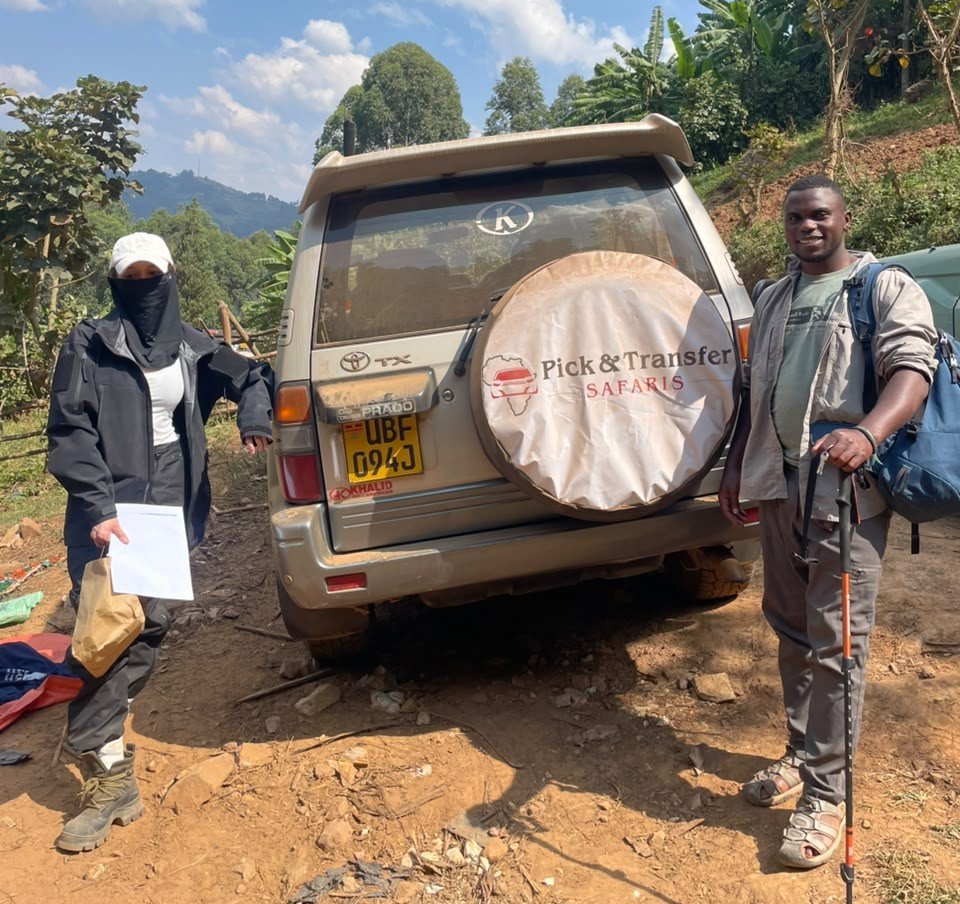
7 Days Uganda Safari – One week tour
This 7-day itinerary is the classic one-week introduction to Uganda, covering the country’s three most iconic wildlife experiences: chimpanzee tracking in Kibale Forest National Park, Big Five game drives and a boat cruise in Queen
Tour Details →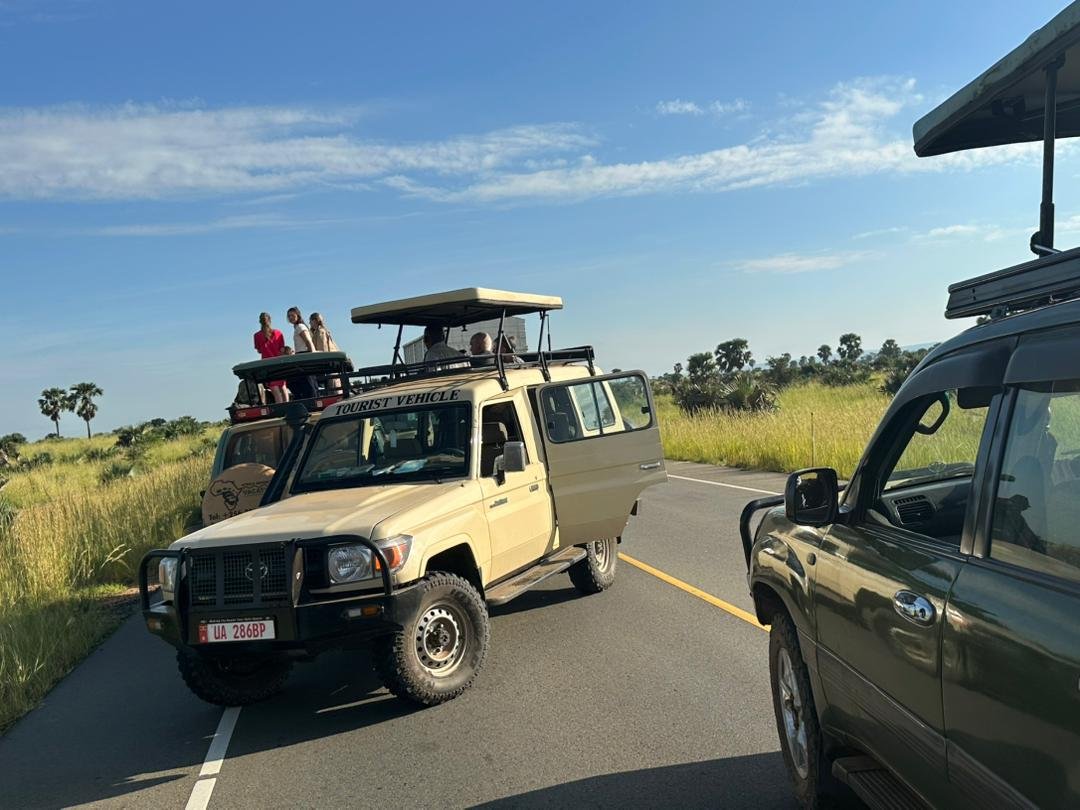
10 Days Uganda Primates and Wildlife
This 10-day Uganda Grand Safari is the most complete Uganda itinerary we offer at Pick and Transfer Safaris. It begins with a scenic northward drive from Entebbe to the vast open plains of Murchison
Tour Details →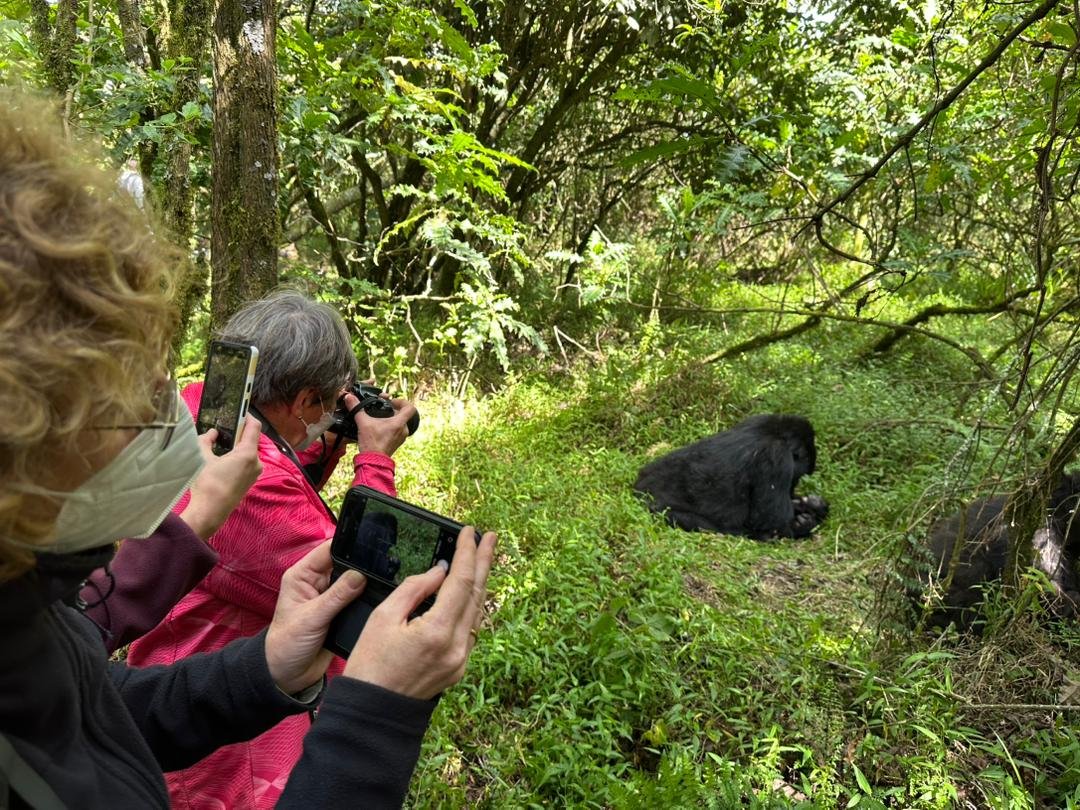
2 Days Uganda Gorilla Tour Starting from Kigali
This is the gentler cousin of our 1-Day Uganda Gorilla Safari Starting from Kigali — same idea, twice the breathing room. Instead of squeezing a 3,000-metre forest trek and two border crossings into a single very long day
Tour Details →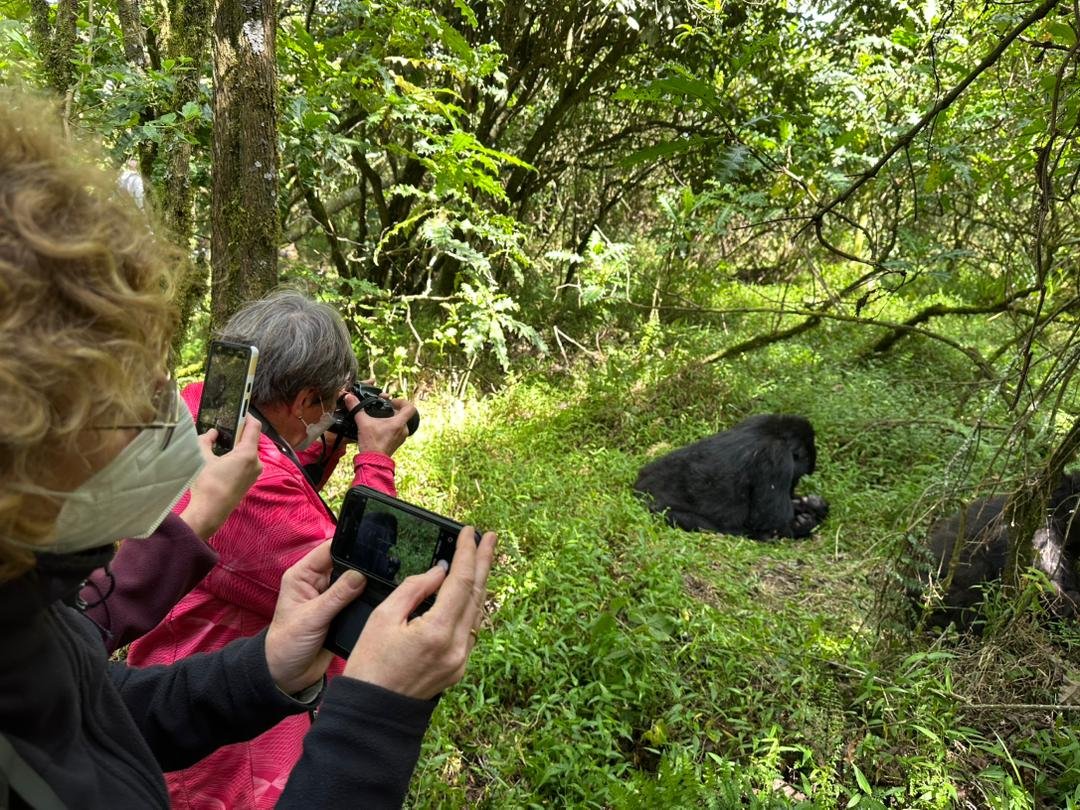
5-Day Uganda Gorilla and Chimpanzee Safari
This itinerary can be combined with a Rwanda extension or a wildlife-focused add-on through Queen Elizabeth National Park — browse our Uganda & Rwanda Safaris and Primate Safaris collections for ideas.
Tour Details →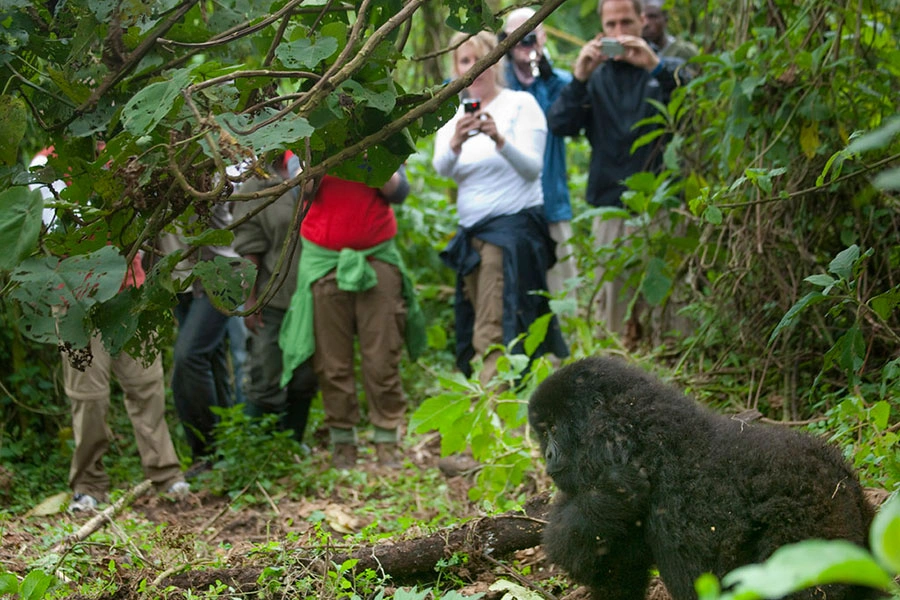
5 Days Rwanda Wildlife and Gorillas
This 5-day itinerary brings together Rwanda’s two flagship wildlife experiences: open savannah game drives and a boat safari in Akagera National Park, followed by a face-to-face encounters
Tour Details →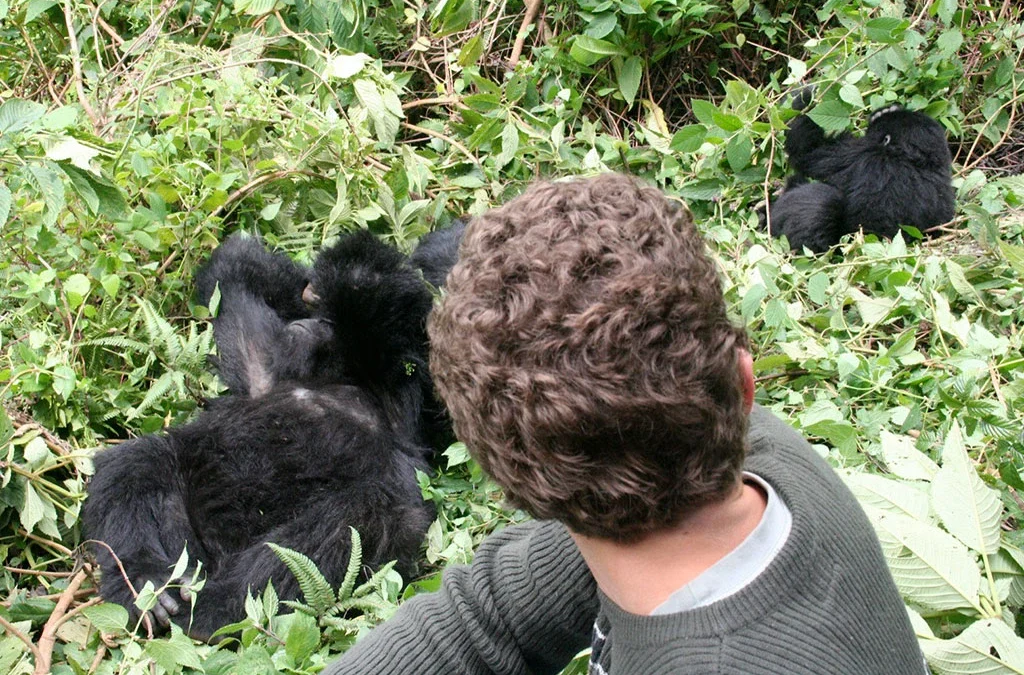
3 Days Uganda Gorilla Safari
For travelers who arrive in Entebbe with a tight schedule and a clear ambition, a 3-day gorilla safari to Bwindi Impenetrable Forest National Park is the most focused and rewarding short trip the country has to offer.
Tour Details →