- LET'S PLAN YOUR SAFARI
- +256 200 921 002
- +256 793 194 703
- info@pickandtransfersafaris.com

How to buy a gorilla permit in Uganda
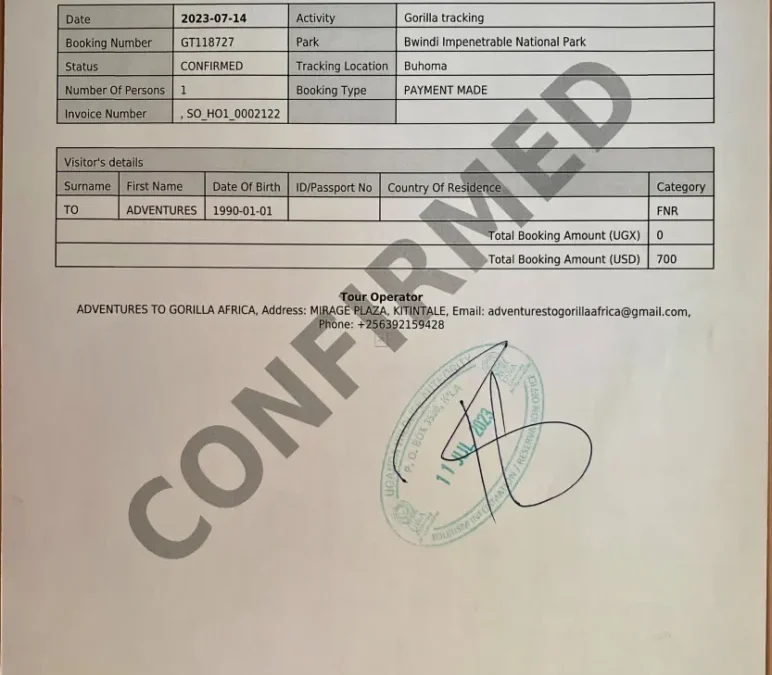
How to buy a gorilla permit in Uganda. Buying a Uganda gorilla trekking permit is not as simple as clicking “checkout” online — it involves a government-controlled reservation process, full upfront payment, and a strict daily quota that sells out months in advance during peak season. Get it right and you will spend a full hour just meters from a wild mountain gorilla family; get it wrong — book too late, pay incorrectly, or miss a document requirement — and you risk losing your entire trip’s centerpiece. Every year, travelers who assumed they could simply “sort it out on arrival” discover that gorilla trekking is one of the few wildlife experiences in Africa that genuinely cannot be arranged last minute, and by the time they realize this, their preferred dates are already gone. This guide walks through exactly how the Uganda Wildlife Authority (UWA) permit system works in 2026, what it costs, the step-by-step buying process, and how working with a specialist operator like Pick and Transfer Safaris removes most of the risk from what is otherwise a fairly unforgiving booking process.
What Exactly Is a Uganda Gorilla Trekking Permit?
A gorilla trekking permit is an official document issued by the Uganda Wildlife Authority that grants one visitor a single day’s access to track one specific habituated mountain gorilla family in either Bwindi Impenetrable Forest National Park or Mgahinga Gorilla National Park. It is not a general park entry ticket — it is tied to a specific date, a specific sector, and increasingly a specific gorilla family, and it cannot simply be purchased at the park gate on the day of your visit. The permit fee funds park operations, ranger salaries, and community conservation programs, making it one of the primary reasons Uganda’s mountain gorilla population has grown rather than declined over the past three decades, a genuine conservation success story given how few great ape populations worldwide have trended upward rather than continuing to decline. A meaningful share of the permit fee is reinvested directly into park management, anti-poaching patrols, and veterinary monitoring of habituated families, while a further portion funds community revenue-sharing programs in villages bordering the park, meaning every genuine permit purchase contributes materially to the same conservation outcome that makes the trek worth taking in the first place.
Why Gorilla Permits Are Strictly Limited
Uganda deliberately caps the number of gorilla permits issued each day to protect both the gorillas and the quality of the trekking experience. Only eight visitors are permitted per habituated gorilla family per day, and with roughly 176 standard permits available across Bwindi’s sectors plus a further eight Gorilla Habituation Experience permits in Rushaga, total daily capacity is tightly fixed regardless of demand. This scarcity is precisely why gorilla permits sell out during June to September and December to February, and why understanding the buying process in advance matters so much more here than for almost any other wildlife activity in Africa.
Who Issues Gorilla Permits — Understanding UWA
All Uganda gorilla permits are issued exclusively by the Uganda Wildlife Authority, the government body responsible for managing the country’s national parks and wildlife. No other organization, agent, or park office has the authority to issue a genuine permit, which is worth knowing given how many informal resellers and unofficial-looking booking sites appear in search results. Whether you buy directly from UWA or through a licensed tour operator such as Pick and Transfer Safaris, the permit itself is always ultimately issued by UWA under the same rules and the same price.
Uganda Gorilla Permit Prices in 2026
As of 2026, a standard gorilla trekking permit for foreign non-resident visitors costs approximately $800 during peak and shoulder season, dropping to roughly $600 during the low season months of April, May, and November. This fee covers the permit itself only — transport, accommodation, park entrance where applicable, and porter services are all separate costs layered on top. Because pricing can shift with UWA policy updates, we always confirm the live rate for your specific travel dates when you book through our contact page rather than relying on any single published figure, our own guide included.
Foreign Non-Resident, Foreign Resident and East African Citizen Rates
UWA prices gorilla permits differently depending on visitor category. Foreign non-residents pay the highest rate, around $800 in peak season and $600 in low season. Foreign residents — travelers holding a valid Uganda work permit or residency status — pay a discounted rate of roughly $700 peak and $500 low season. East African Community citizens pay a further discounted rate priced in Ugandan shillings rather than US dollars, while visitors from the rest of Africa outside the EAC pay a flat rate of approximately $500 year-round. Knowing which category you fall into before you buy is important, since booking under the wrong category can cause delays or complications at the payment stage.
The Gorilla Habituation Experience Permit
Beyond standard trekking, Bwindi’s Rushaga sector offers the Gorilla Habituation Experience, a longer, more intensive alternative priced at approximately $1,500 per person. Instead of the standard one-hour visit with a fully habituated family, habituation experience permits allow up to four hours with a semi-habituated family still being acclimatised to human presence, in much smaller groups of four visitors accompanied by researchers as well as ranger-guides. Because only eight of these permits are available per day, and exclusively in Rushaga, they sell out even faster than standard permits and are worth booking as far in advance as possible if this is the experience you want.
Bwindi’s Four Sectors and Mgahinga — Where Your Permit Is Used
When you buy a gorilla permit, you are not just buying access to “Bwindi” in general — you are buying access to one of four distinct sectors, each with its own habituated families, trailheads, and access roads. Buhoma in the north is the park’s most established sector; Ruhija sits at higher altitude with strong birding alongside gorilla trekking; Rushaga in the south has the greatest concentration of habituated families and the exclusive Habituation Experience; and Nkuringo offers the most demanding terrain and some of the best volcano views. Mgahinga Gorilla National Park, Uganda’s smaller gorilla destination near Kisoro, offers a fifth option with a single habituated family, the Nyakagyezi group, and permits priced identically to standard Bwindi trekking.
Step 1: Choose Your Trekking Dates and Sector
The buying process begins well before any payment changes hands: deciding on your travel dates and, ideally, your preferred sector. Because sector assignment affects everything from driving distance to accommodation choice, this decision is worth making with your full itinerary in mind rather than in isolation — a permit assigned to Rushaga suits a Kisoro-based itinerary, while one assigned to Buhoma suits a northern approach. Our 3-Day Uganda Gorilla Safari and other gorilla itineraries are built around this decision from the outset rather than treating sector choice as an afterthought.
Step 2: Check Permit Availability
Once dates and a preferred sector are chosen, the next step is checking actual availability with UWA, since permits are allocated on a first-come, first-served basis and popular sectors during peak months can be fully booked months out. This check is typically done by email between UWA’s booking office and either the traveler directly or their tour operator, and response times can vary — a further reason booking early, ideally three to six months ahead for peak season travel, makes the entire process considerably less stressful.
Step 3: Secure a Temporary Reservation
If your requested date and sector are available, UWA typically issues a temporary hold on the permit for a short window, usually just a few days, during which full payment must be received to confirm the booking. This temporary reservation is not a guarantee — if payment is not received within the hold period, the permit can be released back into general availability and offered to another traveler. This tight window is one of the most common places independent travelers run into trouble, particularly when relying on international bank transfers that can take several business days to clear.
Step 4: Make Full Payment
Unlike many travel bookings that accept a deposit, UWA requires full payment before a gorilla permit is confirmed — a partial payment does not secure your place. Payment is generally made via bank transfer to UWA’s official accounts, and as of the 2026 cashless policy, cash is no longer accepted at the park gates themselves for any balance, making advance payment through the proper channel essential rather than optional. This is precisely the stage where booking through an established operator like Pick and Transfer Safaris removes the most risk, since we handle the transfer and confirmation directly rather than leaving individual travelers to navigate international banking timelines against a hard deadline.
Step 5: Submit Traveler Details
Alongside payment, UWA requires accurate personal details for every permit holder — full name exactly as it appears on your passport, passport number, nationality, and date of birth, since travelers must be at least 15 years old to trek. Errors here, even small ones like a misspelled name, can cause complications when your printed confirmation is checked against your passport on trekking day, so this step is worth double-checking carefully rather than rushing through. It is worth noting that most nationalities are also asked to provide their passport number and expiry date at this stage, since permits are increasingly cross-checked against passport records on arrival day rather than name alone — another reason to submit these details from the passport itself rather than from memory, and to update your operator promptly if you renew your passport between booking and travel.
Step 6: Receive Your Official Confirmation
Once payment clears and traveler details are confirmed, UWA issues an official confirmation document — your actual gorilla permit — which should be printed and carried with your passport on the day of your trek. This document is checked at the briefing point before groups are assigned to their gorilla family, and without it, entry to the trek is not possible regardless of proof of payment. We provide this confirmation to every client well ahead of travel as part of arranging your permit through our Gorilla Safaris collection.
Buying Direct from UWA vs Booking Through a Tour Operator
Travelers can, in principle, buy a gorilla permit directly from UWA without going through an operator at all, communicating and paying independently. This path gives you direct control over the process, but it also means handling availability checks, payment timing, and documentation entirely yourself, with no buffer if something goes wrong at any stage. Booking through a licensed tour operator instead means someone else manages the availability check, payment, and confirmation on your behalf, alongside coordinating the accommodation and transport your trek also requires — for most travelers, especially first-time visitors to Uganda, this trade-off firmly favours using an operator.
Why Most Travelers Book Through a Tour Operator
Beyond simply reducing hassle, booking your gorilla permit through an operator matters because a permit purchased in isolation, without matching transport and accommodation, is of limited use — you still need to physically reach your assigned sector on the correct morning, which for sectors like Nkuringo can involve a genuinely demanding drive requiring an experienced 4×4 driver. Pick and Transfer Safaris bundles permit purchase with private transport, vetted accommodation, and a driver-guide who already knows exactly which trailhead your specific gorilla family briefing uses that morning, turning a purchased permit into a fully organized trekking day rather than just a piece of paper. There is also a practical safety net worth considering: if an operator’s client faces an unexpected issue — a delayed flight, a sudden illness, a permit-day mix-up — an established company with local relationships and staff on the ground is simply better positioned to adapt in real time than an independent traveler working entirely on their own from a hotel room or an overseas email inbox.
How Far in Advance Should You Buy Your Permit?
For peak season travel — June through September and December through February — we recommend securing your gorilla permit at least three to six months in advance, and earlier still for December and August specifically, when demand from both individual travelers and group tours is highest. Low season months, particularly April, May, and November, tend to have more last-minute availability and lower prices, making them a genuinely good option for travelers with flexible dates who would rather avoid the advance-booking pressure of peak season entirely.
Payment Methods and the 2026 Cashless Policy
As of the 2026 policy update, UWA no longer accepts cash payment for any balance at the park gates, meaning the full permit fee must clear through an approved channel — typically bank transfer — before your trekking date. This shift makes advance planning even more important than before, since a traveler arriving at Bwindi expecting to settle an outstanding balance in cash will simply not be permitted to trek. When you book your permit through our contact page, payment is handled entirely in advance as part of your itinerary cost, removing this risk from your trekking day altogether.
What Happens If You Cancel or Need to Reschedule
Gorilla permit refund policies are generally unforgiving, and the closer to your trekking date you cancel, the less of your payment you are likely to recover — late cancellations frequently result in the full loss of the permit fee. Because of this, travel insurance that specifically covers pre-paid, non-refundable trekking permits is genuinely worth the cost, and we recommend it to every client booking a gorilla trek regardless of how firm their dates seem at the time of booking. If your dates do need to shift, contacting your operator as early as possible gives the best chance of a rebooking rather than an outright loss.
Common Mistakes When Buying a Gorilla Permit
The most common mistake independent travelers make is booking their permit and their accommodation separately without checking that the two align — securing a permit for Nkuringo, for example, while booking a lodge that is genuinely convenient only for Buhoma. A close second is underestimating how quickly peak-season permits sell out and starting the process too late to secure a preferred date. Sending an international bank transfer too close to the payment deadline, misspelling a name on the confirmation, and assuming cash will be accepted on arrival under the 2026 cashless policy round out the most frequent, and most avoidable, errors we see. A less obvious but still common mistake is booking a gorilla permit without first confirming that every traveler in the group meets the 15-year minimum age requirement — family trips occasionally run into this only after a permit for a younger teenager has already been paid for, at which point rebooking under a different activity or itinerary structure becomes considerably more complicated than it would have been to check beforehand. Another frequent issue is underestimating how physically demanding a particular sector’s terrain will be relative to a traveler’s actual fitness level, leading to a mismatch that a short conversation with an experienced operator before booking could easily have avoided.
Currency, Exchange Rates and Budgeting for Your Permit
Because gorilla permits are priced in US dollars but paid via bank transfer, it is worth budgeting for the possibility of bank fees and exchange rate fluctuations between the time you agree a price and the time your payment actually clears. International wire transfers typically carry a fixed fee plus, in some cases, a currency conversion spread, so the amount that lands in UWA’s account can differ slightly from the amount you sent unless this is accounted for in advance. When you book through Pick and Transfer Safaris, this is handled as part of your overall package cost, removing the need to calculate transfer fees and exchange rate buffers yourself.
What Your Permit Does and Doesn’t Include
A gorilla permit covers exactly one thing: your one-day access to trek a specific gorilla family in a specific sector on a specific date. It does not include park entrance fees where these are charged separately, transport to and from the trailhead, accommodation, meals, porter fees, or tips for your ranger-guide and porter, all of which need to be budgeted for on top of the permit price itself. Every quoted package price on our Gorilla Safaris collection bundles the permit together with these additional costs into a single upfront figure, so there is no ambiguity about what is and isn’t covered once you book.
Combining Your Gorilla Permit with a Chimp Tracking Permit
Because gorilla and chimpanzee permits are booked separately through the same general UWA process, many travelers buy both together as part of a combined itinerary rather than choosing one species over the other. Our 5-Day Uganda Gorilla and Chimpanzee Safari bundles a Kibale chimp trekking permit with a Bwindi gorilla permit into one itinerary, and our 3-Day Chimpanzee Tour in Uganda works well as a standalone add-on for travelers who want to book each permit type separately but still travel on the same overall trip.
Combining Your Gorilla Trek with Other Uganda Wildlife Parks
A gorilla permit alone is rarely the entire trip for most travelers — Queen Elizabeth National Park sits directly on the route between Bwindi and Kibale, while Murchison Falls National Park extends a trip north for travelers with more time available. Our 10-Days Uganda Primates and Wildlife itinerary folds all three destinations into one route, so the permit-buying process described here becomes just one part of a larger booking your operator manages on your behalf.
Buying a Gorilla Permit as Part of a Kigali-Based Trip
Travelers arriving via Kigali rather than Entebbe follow exactly the same UWA permit process, since the permit itself is issued by Uganda’s wildlife authority regardless of which airport a traveler enters through. Itineraries such as our 2-Day Uganda Gorilla Tour Starting from Kigali, our One-Day Uganda Gorilla Safari from Kigali, and the slightly longer 3-Days Uganda Gorilla Safari from Rwanda all include permit purchase as part of the package, alongside the border crossing logistics that a Kigali-based trip adds on top of the standard buying process. For travelers researching this route independently, Kenlink Tours’ 2-Day Uganda Gorilla Safari from Kigali and their 3-Day Bwindi Gorilla Safari from Kigali illustrate how other operators structure the same cross-border permit and travel arrangement.
Buying a Permit for a Combined Uganda-Rwanda Gorilla Trip
Some travelers choose to split their gorilla trekking between Uganda and Rwanda on the same trip, tracking one family in Bwindi and another in Volcanoes National Park across the border. Each country’s permit is bought entirely separately, through its own national wildlife authority, at its own price point, so a combined trip effectively means running the buying process described here twice rather than once. For independent research on how this kind of split itinerary is typically structured, Kenlink Tours’ 3-Day Rwanda Gorilla Safari and their longer 5-Day Uganda-Rwanda Double Gorilla Safari illustrate the general shape of a two-country gorilla itinerary, while their more extensive 10-Day Uganda-Rwanda Combining Safari shows how it can be extended further with wildlife parks on both sides of the border. Our own team can coordinate both permit purchases as part of a single itinerary when you book through us, so you are not managing two separate booking timelines on your own.
What Happens on the Day You Use Your Permit
On the morning your permit is valid, you will present your printed confirmation and passport at the briefing point for your assigned sector — typically Kanyanchu-style briefing centres for chimps do not apply here, but each Bwindi sector and Mgahinga’s Ntebeko Gate run a similar 8:00am registration process. Rangers confirm your identity against the permit, assign trekking groups of up to eight visitors per gorilla family, and provide a safety and etiquette briefing before the trek itself begins, which can last anywhere from thirty minutes to several hours depending on where the gorillas have moved overnight.
Age, Health and Fitness Requirements for Permit Holders
A gorilla permit can only be used by a visitor who is at least 15 years old on the day of the trek, a strict UWA rule applied without exception regardless of a younger traveler’s fitness or maturity. Permit holders must also be free of visible symptoms of cold, flu, or other communicable illness on trekking day, since mountain gorillas are highly susceptible to human respiratory disease, and anyone showing symptoms will be asked to forfeit that day’s trek for the safety of the gorilla family — a rule enforced without exception, since a single respiratory infection introduced into a habituated family can spread quickly through a group with no natural immunity to human pathogens. Travelers who wake up on trekking day feeling genuinely unwell should disclose this honestly at the briefing rather than trying to push through the trek; UWA and tour operators generally make reasonable efforts to accommodate a rescheduled trek where the itinerary allows, but this is far easier to arrange when flagged early rather than discovered midway through the forest. Reasonable physical fitness is expected but not formally tested — porters are available in every sector to assist travelers who want extra support on steeper terrain, particularly in Nkuringo. There is no upper age limit for gorilla trekking, and travelers well into their seventies and eighties complete the trek successfully every season, provided they arrive reasonably prepared and are honest with their guide about their pace and stamina from the outset, so a porter can be arranged in advance rather than as a last-minute scramble at the trailhead.
Documents to Carry Alongside Your Printed Permit
Beyond the permit confirmation itself, trekkers should carry their passport, a copy of their travel insurance policy details, and, where applicable, proof of any pre-arranged porter or special assistance request. Rangers check the printed permit against your passport at the morning briefing, and a mismatch between the name on your permit and the name in your passport — even a minor spelling difference — can cause delays that are entirely avoidable with a careful check before travel. We recommend keeping both a printed and a digital copy of your confirmation, since printers are not always readily available at remote lodges near Bwindi or Mgahinga.
How Pick and Transfer Safaris Handles Your Permit Purchase
Because the UWA process rewards early, accurate, fully-paid bookings and punishes delay or error, we treat permit purchase as the first and most time-sensitive step in planning any gorilla trip. Pick and Transfer Safaris checks live availability directly with UWA, manages full payment through our established channels well ahead of any hold-period deadline, verifies every traveler’s details against their passport before submission, and hands you a printed confirmation alongside a fully organized itinerary covering transport, accommodation, and sector logistics. Browse our full Gorilla Safaris collection or reach out through our contact page, and we will secure your permit as the first step in planning your trip. For independent comparison while researching operators, Kenlink Tours’ 3-Day Uganda Gorilla Safari, their 7-Day Gorilla and Wildlife Safari, and their general Uganda travel guide are worth a look, as is their about us page for background on how other operators structure their permit-inclusive packages. Self-drive travelers weighing whether to handle their own transport between sectors can also review Kenlink Tours’ car hire page for a general sense of rental options, and travelers considering a scheduled group departure rather than a fully private itinerary may find Kenlink Tours’ group tours page and contact page useful starting points for comparison before booking with us.
Frequently Asked Questions About Buying a Gorilla Permit in Uganda
Can I buy a gorilla permit on the day of my trek? No — permits must be booked and fully paid for in advance; walk-up purchases at the park gate are not possible.
How much does a Uganda gorilla permit cost in 2026? Approximately $800 per person in peak and shoulder season for foreign non-residents, dropping to around $600 in low season, with discounted rates for foreign residents and East African citizens.
Is it cheaper to book directly with UWA than through an operator? The permit price itself is identical either way; an operator’s fee covers the transport, accommodation, and logistics coordination that a permit alone does not include.
Can I get a refund if I cancel my gorilla permit? Refunds depend heavily on how far in advance you cancel, and late cancellations typically result in losing the full payment, which is why travel insurance is strongly recommended.
Do I need to choose a specific sector when I buy my permit? Yes — your permit is tied to a specific sector and, in most cases, a specific gorilla family, not general access to the park.
How early should I book for peak season travel? At least three to six months in advance for June through September and December through February, and earlier still for December and August specifically.
Can two people share one gorilla permit? No — each permit covers exactly one visitor for one trek; groups must purchase one permit per person regardless of family relationship or group size.
What happens if the gorilla family moves out of the park during my trek? Ranger-guides track each family’s overnight movements before groups depart, and while distances vary day to day, your permit remains valid for that day’s trek regardless of how far the trackers need to walk to locate the family.
Is travel insurance required to buy a gorilla permit? It is not formally required by UWA, but given the strict, largely non-refundable nature of permit payments, we strongly recommend it for every gorilla trekking booking.
Can I upgrade from standard trekking to the Habituation Experience after booking? Only if habituation permits remain available for your date, since the two permit types draw from separate, much smaller daily quotas — it is far easier to decide before booking than to try switching afterward.
Planning Your Permit Purchase Around Your Full Trip Budget
Because the gorilla permit is typically the single largest line item in a Uganda safari budget, it makes sense to plan it as the anchor around which the rest of your trip is built rather than an afterthought layered on top of an already-finalized itinerary. Once your permit dates and sector are locked in, accommodation, transport, and any additional parks or activities can be planned to fit naturally around that fixed point, rather than risking a mismatch where your lodge or flights are booked before your permit availability is even confirmed. This is exactly the order in which we build every gorilla itinerary at Pick and Transfer Safaris — permit first, everything else built around it — precisely because reversing that order is one of the more expensive mistakes a traveler can make when planning independently. A well-sequenced booking also gives you room to add extras once the anchor is secure — an extra night at Ikoro Hotel in Kisoro, a side trip to Mgahinga, or a chimp trek tacked onto the same route — without the risk of any of it colliding with a permit date that was never actually confirmed in the first place.
How to buy a gorilla permit in Uganda
Buying a Uganda gorilla trekking permit is a straightforward process on paper — choose your dates, check availability, pay in full, and receive confirmation — but each of those steps carries a real risk of delay, error, or lost availability for travelers navigating it alone against UWA’s strict timelines and cashless payment rules. Working with an established operator turns that risk into a background detail handled well before you ever board a flight. Ready to secure your gorilla permit? Browse our Gorilla Safaris collection or reach out through our contact page and let us handle the booking process from the first step to your printed confirmation.
7 Days Uganda Safari – One week tour
This 7-day itinerary is the classic one-week introduction to Uganda, covering the country’s three most iconic wildlife experiences: chimpanzee tracking in Kibale Forest National Park, Big Five game drives and a boat cruise in Queen
Tour Details →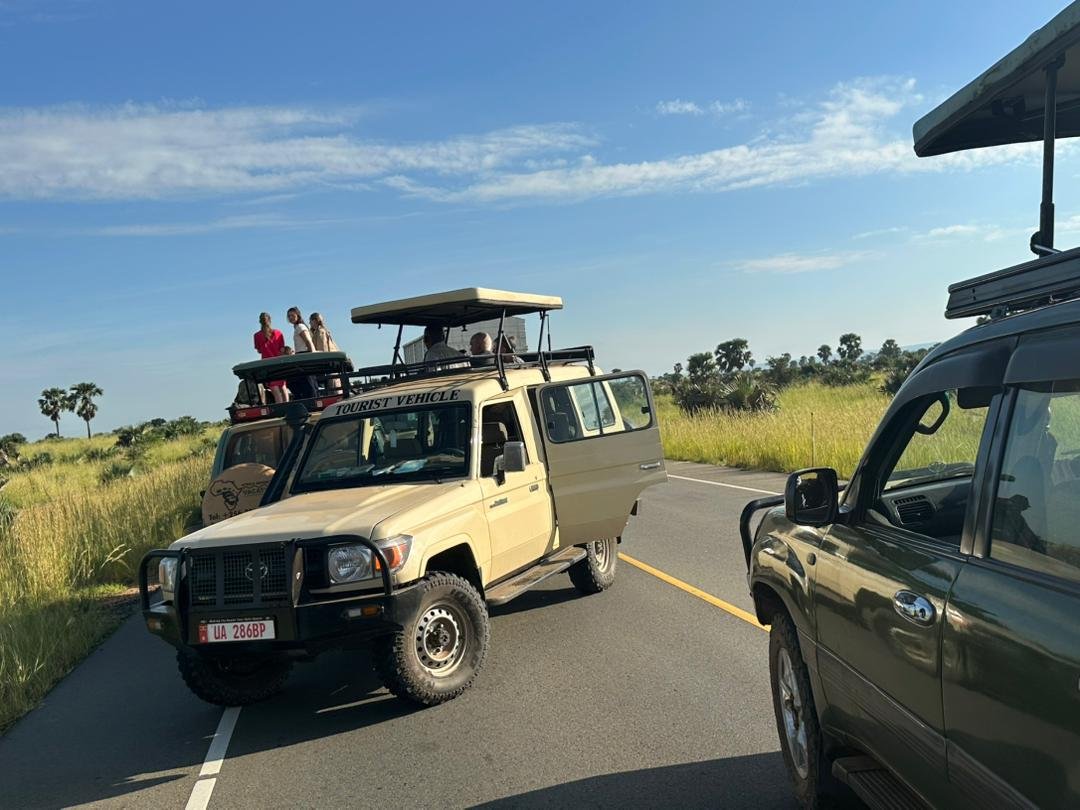
10 Days Uganda Primates and Wildlife
This 10-day Uganda Grand Safari is the most complete Uganda itinerary we offer at Pick and Transfer Safaris. It begins with a scenic northward drive from Entebbe to the vast open plains of Murchison
Tour Details →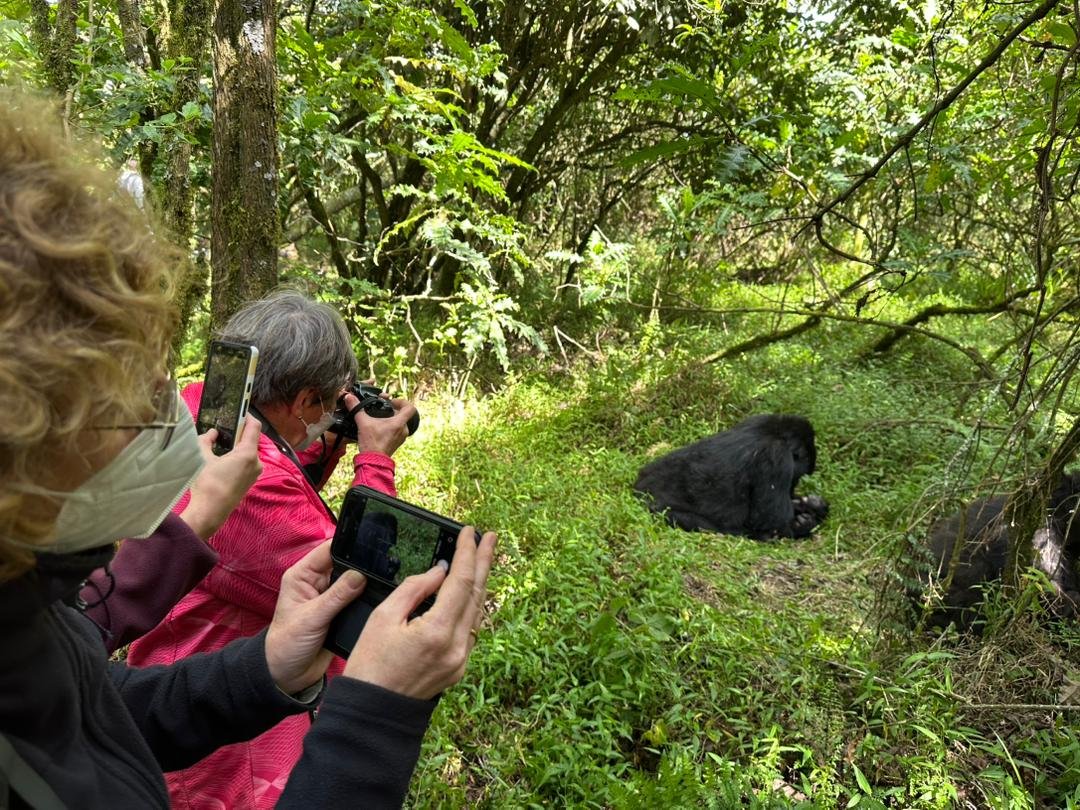
2 Days Uganda Gorilla Tour Starting from Kigali
This is the gentler cousin of our 1-Day Uganda Gorilla Safari Starting from Kigali — same idea, twice the breathing room. Instead of squeezing a 3,000-metre forest trek and two border crossings into a single very long day
Tour Details →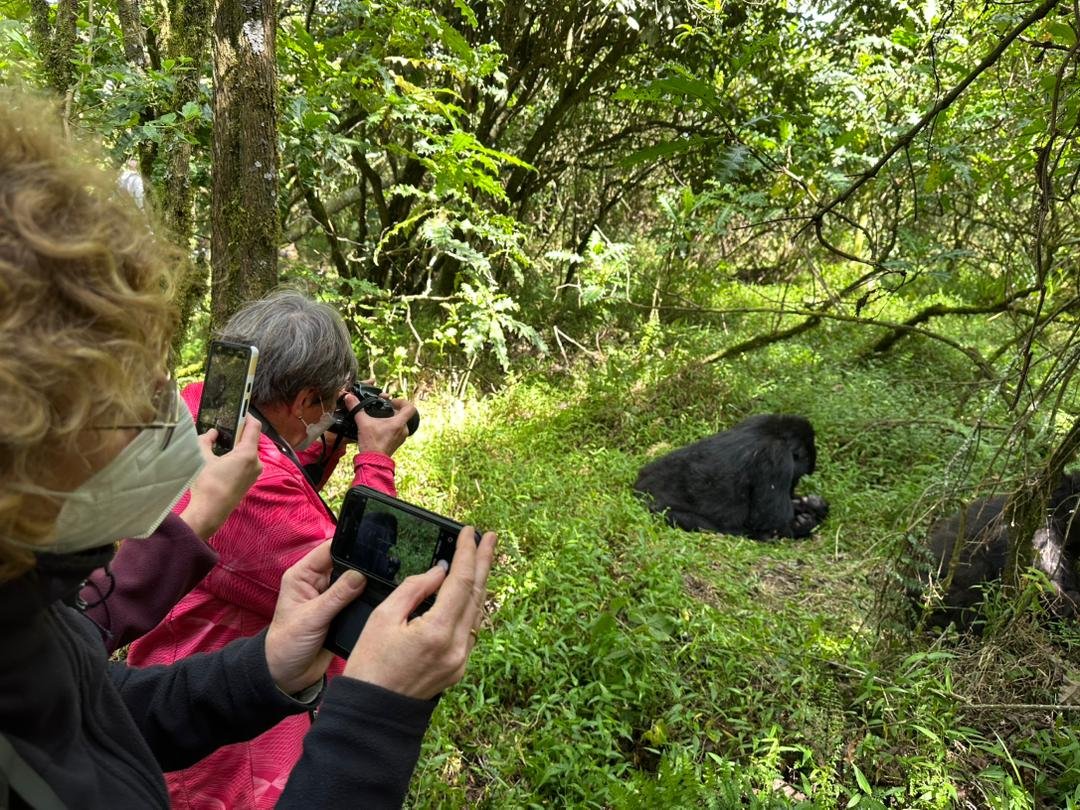
5-Day Uganda Gorilla and Chimpanzee Safari
This itinerary can be combined with a Rwanda extension or a wildlife-focused add-on through Queen Elizabeth National Park — browse our Uganda & Rwanda Safaris and Primate Safaris collections for ideas.
Tour Details →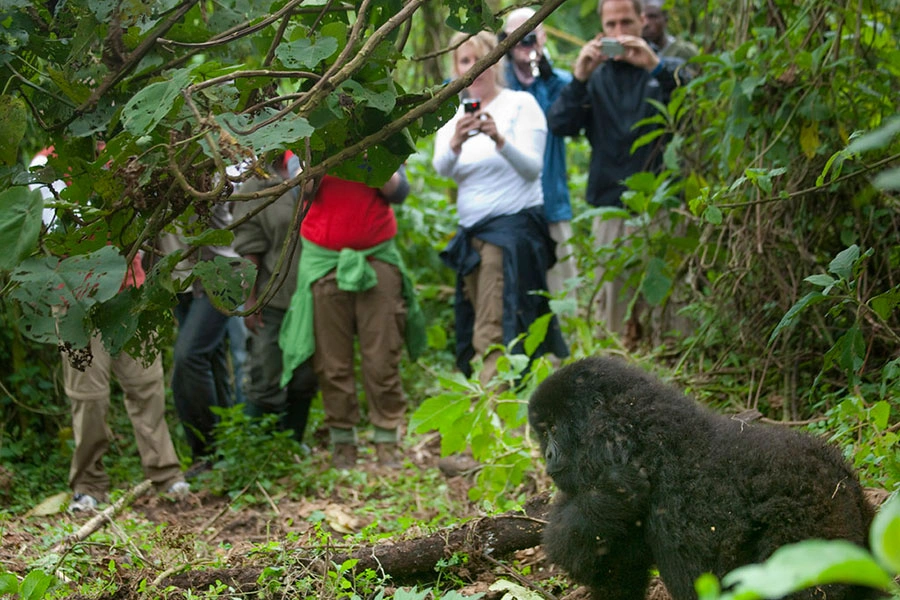
5 Days Rwanda Wildlife and Gorillas
This 5-day itinerary brings together Rwanda’s two flagship wildlife experiences: open savannah game drives and a boat safari in Akagera National Park, followed by a face-to-face encounters
Tour Details →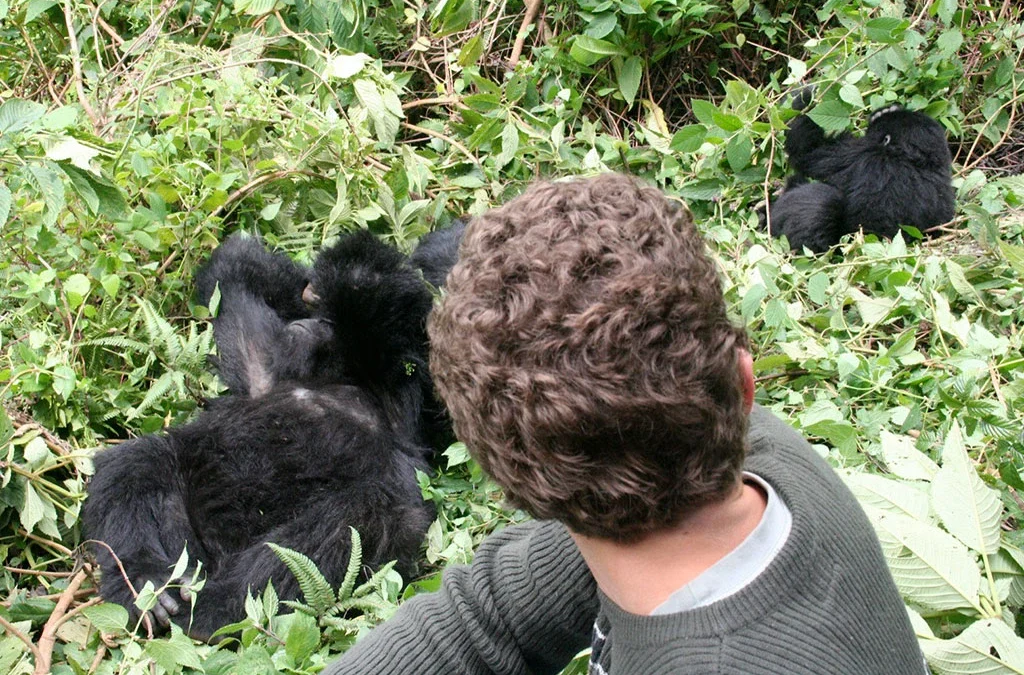
3 Days Uganda Gorilla Safari
For travelers who arrive in Entebbe with a tight schedule and a clear ambition, a 3-day gorilla safari to Bwindi Impenetrable Forest National Park is the most focused and rewarding short trip the country has to offer.
Tour Details →