- LET'S PLAN YOUR SAFARI
- +256 200 921 002
- +256 793 194 703
- info@pickandtransfersafaris.com

Uganda Best Group Tours
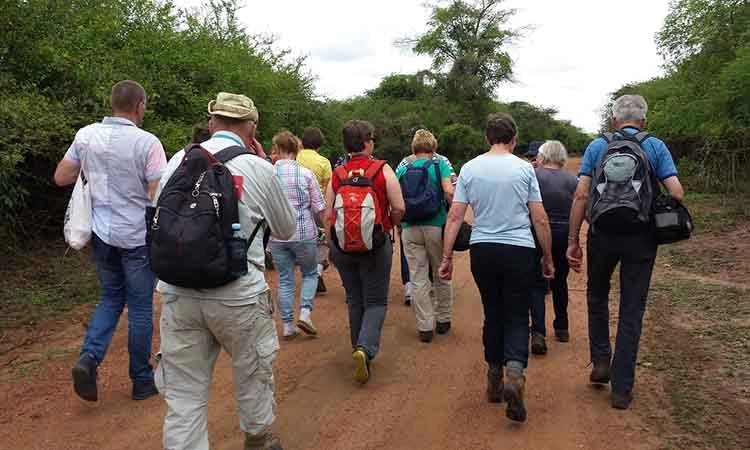
Uganda Best Group Tours. Search for Uganda best group tours and you will quickly find that the phrase means two genuinely different things depending on who is asking. For some travelers, it means joining a scheduled departure alongside other travelers they have never met, splitting the cost of a vehicle, guide, and permits across a fixed group. For others, especially families, friends, and colleagues traveling together, it simply means booking a private safari for their own group, with no strangers involved at all. Both are valid, well-established ways to safari through Uganda, and both come with genuinely different tradeoffs worth understanding before you book.
At Pick and Transfer Safaris, our own specialty is the second kind: private, tailor-made safaris built around your own group, whether that is two people or twelve, with your own vehicle and driver-guide rather than a fixed departure shared with strangers. This guide covers both models honestly, including how scheduled group departures work elsewhere in the region, so you can decide which approach genuinely fits your trip.
Popular Uganda Safari Packages Well Suited to Groups
Before the full breakdown, here is a quick look at some of our private safari packages that work particularly well for a family, friend group, or small delegation traveling together.
| Safari Package | Duration | Highlights |
|---|---|---|
| 3-Day Safari to Queen Elizabeth National Park | 3 Days | Compact wildlife introduction for a short group trip |
| 4-Day Wildlife and Primate Safari | 4 Days | Gorillas plus savannah game viewing |
| 5-Day Uganda Gorilla and Chimpanzee Safari | 5 Days | Both great ape species, popular with small groups |
| 7-Day Uganda One-Week Tour | 7 Days | The most common group trip length |
| 10-Day Uganda Primates and Wildlife Safari | 10 Days | Full circuit, ideal for larger family groups |
| 14-Day Uganda Wildlife and Primates Safari | 14 Days | Relaxed pace for larger or multi-generational groups |
What “Group Tour” Actually Means in Uganda
It is worth untangling the two meanings before going any further, since they lead to genuinely different booking decisions. A scheduled group tour, sometimes called a joined safari or fixed departure, combines individual travelers or small parties who do not know each other into one shared vehicle and itinerary on a pre-set date, splitting the cost of the vehicle, driver, and sometimes permits across the whole group. A private group safari, by contrast, is booked exclusively for your own party, whether that is a couple, a family, or a dozen friends, on dates you choose, with no other travelers sharing your vehicle or schedule.
Both fall under the umbrella of “group tours” in everyday search terms, and this guide covers each in turn, since the right choice depends entirely on whether your priority is minimizing cost by sharing with strangers or maximizing flexibility and privacy for your own group.
Joining a Scheduled Group Tour: How It Works
Scheduled group tours operate on fixed departure dates set in advance, typically requiring a minimum group size, often around five travelers, before the tour is confirmed to run. Operators offering this model, including our regional partner site Kenlink Tours, publish a calendar of confirmed departures across the year covering popular itineraries such as gorilla trekking, wildlife and Nile-focused circuits, and birding-specific tours, with per-person pricing that drops as costs for the vehicle, guide, and shared logistics are spread across more travelers.
This model works well for solo travelers or couples who want the cost efficiency of group travel without needing to organize their own party, and it has become a well-established part of the East African safari market for exactly that reason.
Private Group Safaris: Touring With Your Own Group
The alternative, and the model we specialize in, is booking a private safari exclusively for your own group, whether that is a family reunion, a group of friends, or a small corporate or church delegation. The trip runs entirely on your schedule rather than a fixed calendar, your vehicle carries only your own party, and the itinerary can be adjusted to match your group’s specific interests, fitness levels, and budget without needing to accommodate strangers’ preferences at the same time.
Our extended safari packages are frequently booked this way by larger groups wanting a longer, fully private circuit, since the per-person cost of a private vehicle and guide naturally decreases as more of your own group’s members share the same trip.
Which Option Is Right for You?
If your priority is the lowest possible per-person cost and you do not mind sharing your vehicle and schedule with other travelers, a scheduled group tour through an operator offering fixed departures is worth considering. If you are traveling with your own family, friends, or colleagues and value control over your dates, pace, and itinerary, a private group safari is generally the better fit, and often costs surprisingly similarly per person once your own group reaches four to six travelers, since a private vehicle’s fixed costs are then spread almost as efficiently as a scheduled group tour’s shared costs would be.
Gorilla Trekking Permits and Group Size Limits
Regardless of which booking model you choose, one detail applies universally and is worth understanding upfront: gorilla trekking groups themselves are capped at a maximum of eight visitors per habituated family per day, a rule set by Uganda Wildlife Authority to protect the gorillas, not by individual tour operators. This means that whether you book through a scheduled group tour or a fully private safari, your actual trekking group in the forest will never exceed eight people, and a private booking for a smaller party is simply joined with other permit holders at the trailhead to fill out that same eight-person trekking group. The distinction between scheduled and private booking therefore affects your vehicle, guide, and itinerary, not the size of the group you ultimately trek gorillas alongside.
Cost Savings: How Group Travel Reduces Per-Person Cost
The financial logic behind group travel is straightforward: a private vehicle, driver-guide, and fuel cost roughly the same regardless of whether one person or six are riding in it, so spreading that fixed cost across more travelers reduces the per-person share considerably. Scheduled group tours apply this logic across strangers pooled together by an operator, while a private group safari applies the identical logic across your own party. Gorilla and chimpanzee permits themselves are priced per person regardless of group size and do not become cheaper with more travelers, so the savings from group travel apply specifically to transport, guiding, and often accommodation, rather than to the region’s most expensive fixed costs.
Meeting Fellow Travelers on a Scheduled Group Tour
Beyond the cost savings, one of the most commonly cited reasons travelers choose a scheduled group tour is the social element it adds to what can otherwise be a fairly solitary trip, particularly for solo travelers. Sharing a vehicle, meals, and the shared anticipation of a gorilla trek with other travelers often turns into one of the more memorable parts of the trip itself, with many scheduled group tours seeing genuine friendships form over the course of a week or more spent together in close quarters. This social dimension is difficult to replicate on a private safari, where your group is limited to whoever you traveled with in the first place.
That said, the flip side is worth acknowledging honestly: a shared group also means shared compromises, whether that is a fellow traveler’s photography habits slowing down game drives, differing fitness levels affecting trekking pace, or simply personality differences among people who did not choose each other as travel companions. Travelers who value the social element should embrace this as part of the experience rather than expecting a scheduled group tour to feel identical to traveling privately with friends.
Best Uganda Group Tour Itineraries
Certain itinerary lengths have become particularly well established for group travel in Uganda, largely because they balance a genuinely comprehensive experience against the practical limits of coordinating a larger party’s schedules. A 3-day itinerary focused on a single park, typically Queen Elizabeth National Park, suits groups with limited time wanting a taste of Uganda’s wildlife without a major time commitment. A 5-day gorilla-focused itinerary remains the most popular structure for groups specifically prioritizing gorilla trekking, while 7 to 10 day itineraries combining gorillas, chimpanzees, and savannah wildlife represent the most comprehensive standard group trip length, long enough to cover Uganda’s highlights without demanding the multi-week commitment a full birding or exploratory circuit requires.
Fixed Departure Dates: What to Expect
For travelers considering a scheduled group tour specifically, fixed departure dates are generally published months in advance and confirmed once the minimum group size is reached, meaning your travel dates are set by the operator’s calendar rather than your own preference. Popular itineraries and peak season months tend to fill their minimum group size fastest, while quieter months or less common itineraries occasionally risk cancellation or postponement if too few travelers sign up by the confirmation deadline. This tradeoff, cost savings against schedule flexibility, is the core decision every traveler considering a scheduled group tour needs to weigh against their own trip constraints.
Best Time of Year to Join a Group Tour
The two dry seasons, roughly June to September and December to February, are both the most popular trekking months and the months when scheduled group tours are most reliably confirmed, since demand is highest and minimum group sizes fill fastest. Travelers with flexible dates who are specifically drawn to the cost savings of a scheduled group tour should target these windows, while those booking a private group safari can choose any time of year that suits their own group’s schedule, trading the wetter season’s muddier trails for quieter parks and, in some years, discounted gorilla permit pricing.
Vehicle Types and How They Scale With Group Size
Vehicle choice is one of the more practical, less glamorous details that meaningfully affects the comfort of any group safari. Smaller groups of two to four travelers are typically accommodated in a standard 4×4 safari vehicle with pop-up roof hatches for game viewing, while larger groups of five to seven generally move to a bigger safari van or land cruiser with additional seating, and parties beyond seven or eight often require two separate vehicles traveling in convoy to maintain comfortable seating and clear sightlines for every member of the group during game drives.
Scheduled group tours generally assign vehicle size based on the confirmed group for that specific departure, which travelers do not control, while private group safaris let you specify vehicle preferences upfront, useful for groups with particular comfort requirements, mobility considerations, or simply a strong preference for extra space during long transfer days. We size every private group booking specifically to the party’s needs rather than defaulting to a one-size-fits-all vehicle assignment.
Accommodation Considerations for Larger Groups
Accommodation logistics shift meaningfully once a group grows beyond a handful of travelers, since not every lodge along a given route has enough rooms, or the right mix of room configurations, to comfortably house a larger party together. Family groups with children often need a mix of family rooms and standard doubles, while larger friend groups may prefer clustering in rooms close to one another rather than being scattered across a property. Scheduled group tours generally pre-book a fixed accommodation tier for the whole party with limited room to customize, while private group safaris allow more flexibility to mix room types, request specific proximity, or upgrade individual rooms within the same overall trip.
Booking accommodation well in advance matters even more for larger groups, since popular lodges near Bwindi, Queen Elizabeth, and Murchison Falls have a limited number of rooms and can sell out for a specific set of dates faster than a solo traveler or couple’s booking would.
What’s Typically Included in a Group Tour Package
Whether scheduled or private, a well-structured Uganda group safari package generally bundles accommodation, a 4×4 safari vehicle and driver-guide, all meals during the itinerary, park entrance fees, and gorilla or chimpanzee permits where the itinerary includes them, along with airport transfers at the start and end of the trip. Scheduled group tours typically publish these inclusions clearly against a fixed per-person price, while private group safaris are quoted based on your specific group size, chosen accommodation tier, and exact itinerary, giving more room to adjust individual components to your group’s preferences.
Private Family or Friends Group Safaris With Pick and Transfer Safaris
For groups traveling together, whether an extended family, a group of university friends reuniting, or a small corporate team, a private safari removes the compromises that come with sharing a vehicle and schedule with strangers. Your own group sets the pace, chooses whether to trek gorillas twice or focus purely on wildlife, and travels on dates that suit your own calendars rather than an operator’s published departure schedule. Our team regularly arranges exactly this kind of trip, scaling vehicle size, accommodation, and itinerary complexity to match groups ranging from small families to parties of a dozen or more.
Sample Itinerary: 7-Day Uganda Group Safari
A typical 7-day group itinerary opens with an arrival transfer and a drive toward Bwindi Impenetrable Forest, positioning the group for a gorilla trek on day two. Day three moves to Queen Elizabeth National Park, with day four covering a morning game drive and an afternoon Kazinga Channel boat cruise, ideal for larger groups since the boat itself comfortably accommodates a full party together. Day five continues to Kibale Forest for chimpanzee tracking, with day six allowing an optional nature walk before the return transfer to Entebbe on day seven, an itinerary closely mirroring our 7-day Uganda one-week tour.
Sample Itinerary: 10-Day Comprehensive Uganda Group Circuit
For larger groups or those wanting a fuller circuit, a 10-day itinerary adds Murchison Falls National Park to the standard Bwindi, Queen Elizabeth, and Kibale route, giving the group extra nights throughout for a genuinely relaxed pace better suited to a mixed-age or larger party. This is the structure behind our 10-day Uganda primates and wildlife safari, and groups with two weeks available can extend further still through our 14-day Uganda wildlife and primates safari.
Solo Travelers: Why Group Tours Make Sense
Solo travelers are often the group most naturally drawn to a scheduled group tour, since traveling alone on a fully private safari means bearing the full per-person cost of a vehicle and guide without anyone to split it with. Joining a scheduled departure lets a solo traveler access the same itineraries at a considerably reduced cost, with the added social benefit of trekking and dining alongside other travelers rather than experiencing the trip entirely alone. Solo travelers who specifically want a private experience despite traveling alone can still book one through us, though the per-person cost will naturally be higher than joining a shared group departure elsewhere.
Group Tours vs Private Safaris: A Side-by-Side Comparison
With both models genuinely viable depending on your priorities, a direct comparison helps clarify the real tradeoffs involved.
| Factor | Scheduled Group Tour | Private Group Safari |
|---|---|---|
| Travel dates | Fixed by operator’s calendar | Chosen by your group |
| Who you travel with | Other booked travelers, often strangers | Only your own party |
| Per-person cost (solo) | Lower | Higher |
| Per-person cost (group of 4-6+) | Similar | Similar |
| Itinerary flexibility | Fixed, standardized route | Fully customizable |
| Pace and stops | Set for the whole group | Adjusted to your group’s needs |
| Gorilla trekking group size | Max 8 (UWA rule, same either way) | Max 8 (UWA rule, same either way) |
Budgeting for a Uganda Group Tour
Whichever model you choose, budgeting for a Uganda group tour starts with the same fixed costs: gorilla permits at around 800 US dollars per person, chimpanzee permits at a considerably lower cost, and park entrance fees, none of which change based on group size. What varies is transport, guiding, and accommodation, where a scheduled group tour spreads these costs across a pooled group of strangers, and a private group safari spreads them across your own party. For groups of four or more traveling together privately, the gap between the two models narrows considerably, often making a fully private, flexible trip the better overall value once the benefits of a customized schedule are factored in.
Packing and Preparation Tips for Group Travel
Beyond the standard gorilla trekking and game-drive packing list covered elsewhere in our guides, group travel specifically benefits from a few extra considerations. Coordinating a shared packing list for group activities, such as binoculars or a shared first aid kit, can reduce redundant weight across the party, while agreeing in advance on a general daily pace and wake-up time helps larger groups avoid the friction that can arise when some members want an earlier start than others. For groups spanning a wide range of fitness levels, discussing gorilla trekking sector assignments with your operator in advance, since sectors vary in difficulty, helps ensure the whole group has a positive experience rather than the fittest members waiting on the rest.
Managing Group Dynamics During Gorilla Trekking Sector Assignment
Because Bwindi’s four trekking sectors, Buhoma, Ruhija, Rushaga, and Nkuringo, vary noticeably in average trekking difficulty, larger groups spanning a wide range of fitness levels benefit from discussing sector assignment with their operator well before arrival rather than leaving it entirely to on-the-day ranger discretion. Some operators can request that a group be assigned to a gentler sector or a family known to range closer to the trailhead, though this cannot be guaranteed since gorilla location on any given day ultimately governs trek difficulty regardless of sector reputation.
Groups traveling with a genuine mix of fitness levels sometimes choose to split across two trekking permits in different sectors on the same day, allowing fitter members to attempt a more demanding sector while others take a gentler option, before reuniting afterward to share stories over dinner. This kind of flexible planning is considerably easier to arrange through a private group booking than through a scheduled group tour, where the whole party is generally assigned to the same permit and sector together.
Combining a Group Safari With Optional Add-On Activities
Group trips often benefit from a shared menu of optional activities that not every member needs to join, giving the group flexibility without forcing a single itinerary on everyone. A community walk or cultural visit near Bwindi, an optional golden monkey trek for travelers who have already done a gorilla trek on a previous visit, or a relaxed half-day at a crater lake or hot springs stop are all commonly offered as opt-in additions to a core group itinerary. Structuring a trip this way lets a larger group stay together for the core experiences, gorilla trekking, chimpanzee tracking, and the major game drives, while allowing some flexibility around the edges for members with different interests or energy levels.
Private group safaris handle this kind of flexibility far more naturally than scheduled group tours, since the itinerary is built specifically around your party from the outset rather than adjusted after the fact within a fixed, pre-published route.
Payment and Booking Logistics for Larger Groups
Coordinating payment across a larger group traveling together is worth planning early, since gorilla and chimpanzee permits in particular are generally non-refundable once booked and need to be paid for well in advance of travel to secure availability during peak season. Many groups designate one member to handle the overall booking and collect individual contributions, while others prefer splitting invoices directly with the operator, an option most established tour companies, including our own team, can accommodate for group bookings. Whichever approach your group prefers, confirming the payment structure and cancellation policy upfront avoids awkward conversations later if a member’s plans change closer to departure.
Scheduled group tours typically require full payment by a set deadline ahead of the confirmed departure date, with less flexibility for individual payment arrangements, while private group bookings generally allow more room to negotiate deposit structures and payment timelines suited to a specific group’s circumstances.
Common Mistakes to Avoid When Booking a Uganda Group Tour
The most frequent mistake is assuming a scheduled group tour’s advertised price includes everything, when gorilla and chimpanzee permits, entrance fees, and certain meals are sometimes quoted separately; always confirm exactly what is bundled into the per-person price before booking. A second mistake, specific to scheduled departures, is booking without confirming the tour has already reached its minimum group size, risking a late cancellation if too few other travelers sign up. A third mistake, common to private group bookings, is underestimating how vehicle size needs to scale with group size, since larger parties need either a bigger vehicle or multiple vehicles to travel comfortably, a detail worth confirming with your operator well before departure.
Frequently Asked Questions
What is the minimum group size for a scheduled Uganda group tour? This varies by operator, but a minimum of around five travelers is a common threshold before a scheduled departure is confirmed to run, as reflected in regional operators offering this model.
Does a private group safari cost more than a scheduled group tour? For a solo traveler or couple, yes, generally. For groups of four or more traveling together, the per-person cost gap narrows considerably, and the added flexibility of a private itinerary often outweighs the modest cost difference.
Is the gorilla trekking experience different on a group tour versus a private safari? No. Uganda Wildlife Authority caps every gorilla trekking group at eight visitors per family regardless of how you booked, so your actual forest experience is governed by this rule rather than your booking type.
Can I book a private safari for a large group, such as 10 or more people? Yes, our team regularly arranges private safaris for larger groups, scaling vehicle numbers and accommodation to match your party size while keeping the itinerary unified across the whole group.
Are scheduled group tours a good option for families? They can be, though families specifically wanting control over pace and activities, particularly with children or a wide range of fitness levels in the group, often find a private group safari better suited to their needs than sharing a fixed schedule with unrelated travelers.
How far in advance should a group book a Uganda safari? For any itinerary including gorilla or chimpanzee trekking, we recommend booking permits four to six months ahead of travel, and earlier still for larger groups during peak season, since securing enough permits for a bigger party on the same date becomes harder the closer you get to popular travel months.
Can a group split across different activities on the same trip? Yes, particularly on a private group safari, where some members can opt into activities like a second gorilla trek or a golden monkey walk while others join a lighter alternative, reuniting for the core shared itinerary.
What happens if one member of a scheduled group tour cancels? This depends on the specific operator’s policy, but scheduled group tours generally do not adjust the per-person price for remaining travelers if one member cancels, since the vehicle and guide costs were already fixed based on the confirmed group size at booking, unlike a private safari where your group’s own cancellation policy is negotiated directly with your operator.
Corporate and Special Interest Group Safaris
Beyond families and friend groups, Uganda’s group safari market also serves a steady stream of corporate teams, university alumni groups, church congregations, and special interest groups such as birding clubs or photography societies, each with its own specific needs beyond a standard leisure itinerary. Corporate groups often value a structured, predictable schedule that respects work-adjacent constraints such as reliable communication access along the route, while special interest groups, birders in particular, often want an itinerary weighted more heavily toward specific parks or activities than a standard first-time visitor circuit would include.
Private group bookings are almost always the better fit for these more specialized groups, since a scheduled group tour’s fixed, general-audience itinerary rarely matches the specific priorities of a birding club wanting extra time in Kalinzu Forest, or a photography group wanting flexibility to linger at a single sighting rather than moving on to the next stop on a preset schedule. Our team has experience tailoring itineraries to exactly these kinds of specialized group interests, adjusting park selection, pacing, and activity emphasis to match what the group actually came for.
Multi-Generational Family Groups: Special Considerations
Family groups spanning multiple generations, grandparents traveling alongside adult children and grandchildren, present a particular planning challenge worth addressing directly. Gorilla and chimpanzee trekking’s minimum age of fifteen means younger children cannot join these specific activities, while older family members may have their own fitness or mobility considerations affecting which trekking sectors or hiking activities are realistic for them. A well-planned multi-generational itinerary often builds in activities that do not require the same physical demands as forest trekking, savannah game drives, boat cruises, and cultural visits in particular, giving every generation something to genuinely participate in rather than sitting out entire days of the trip.
Splitting the group for specific activities, with some members trekking while others enjoy a game drive or a relaxed morning at the lodge, is a common and entirely practical solution for multi-generational groups, and one that a private safari accommodates far more naturally than a scheduled group tour built around a single shared itinerary for the whole party.
Further Reading on Uganda Group Tour Options
Travelers specifically interested in joining a scheduled group departure may find this group tours overview and this scheduled departure safari page useful further reading, both outlining confirmed departure dates and fixed group pricing for various Uganda itineraries. For travelers comparing broader Uganda itinerary options regardless of booking style, this Uganda safaris overview, this 7-day amazing gorilla and wildlife safari in Uganda, and this 8-day Uganda gorilla, chimpanzee and wildlife safari are useful comparisons.
Additional planning resources, including this 3-day wildlife encounter to Queen Elizabeth National Park, this 7-day birdwatching safari in Uganda, this Uganda travel overview, and this practical regional car hire guide, round out the additional reading worth reviewing when comparing group travel options.
Why Book Your Uganda Group Safari With Pick and Transfer Safaris
Whether your group is a family reunion, a group of longtime friends, or a small delegation traveling together for the first time, our team builds private safaris around your specific party rather than fitting you into someone else’s fixed schedule. We coordinate gorilla and chimpanzee permits, vehicle sizing, and accommodation to match your group’s size and pace, and we are equally happy to advise on scheduled group tour options elsewhere in the region for travelers specifically prioritizing the lowest possible per-person cost over full itinerary control.
Whether you want a focused gorilla safari, a wildlife safari for your group, or a longer extended itinerary, our team can tailor the route, vehicle, and pace to your party. Browse our full range of safari packages and destination guides on our destinations page, learn more on our about us page, and when you are ready to start planning, get in touch with our team for a tailored group quote.
Uganda Best Group Tours
Uganda’s best group tours come in two genuinely different forms, scheduled departures that pool travelers together for cost savings, and private safaris built entirely around your own group’s dates and preferences. Neither is objectively better; the right choice depends on whether your priority is the lowest possible per-person cost as a solo traveler or couple, or full control over pace and itinerary as a family, friend group, or larger party traveling together.
If you are ready to start planning a private group safari built around your own party, our team at Pick and Transfer Safaris is ready to help. Explore our full range of safari packages to see how your group’s own Uganda adventure could take shape.
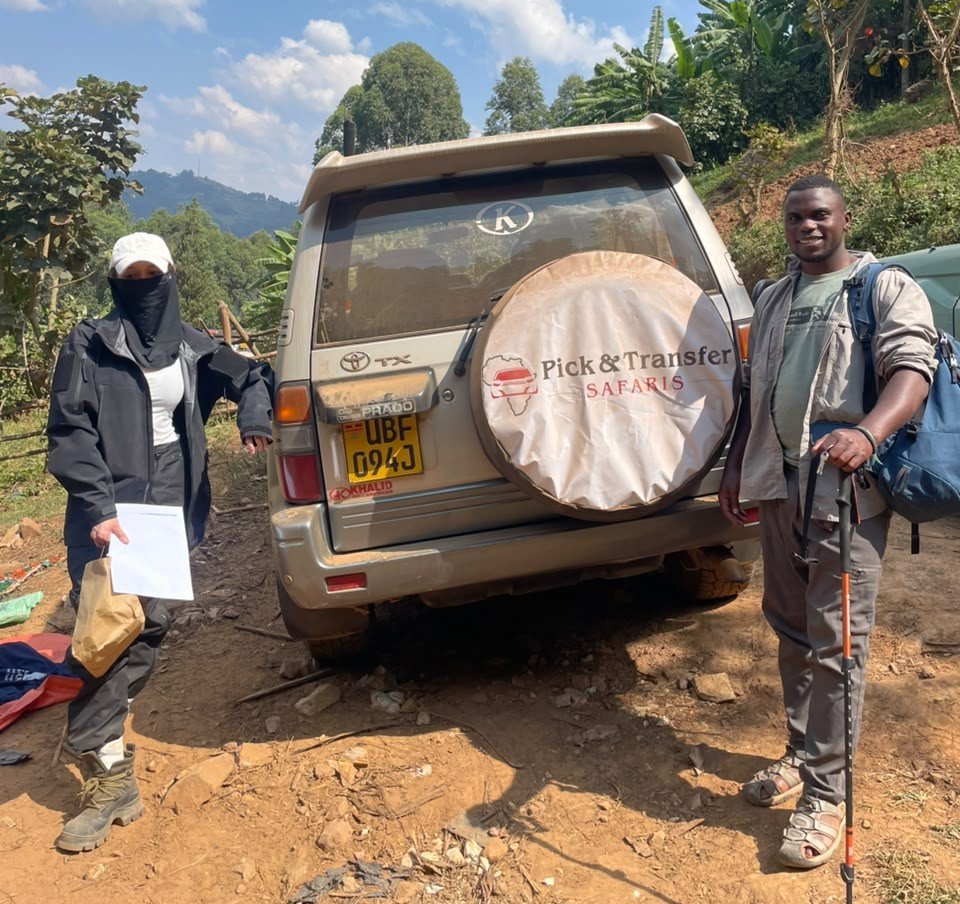
7 Days Uganda Safari – One week tour
This 7-day itinerary is the classic one-week introduction to Uganda, covering the country’s three most iconic wildlife experiences: chimpanzee tracking in Kibale Forest National Park, Big Five game drives and a boat cruise in Queen
Tour Details →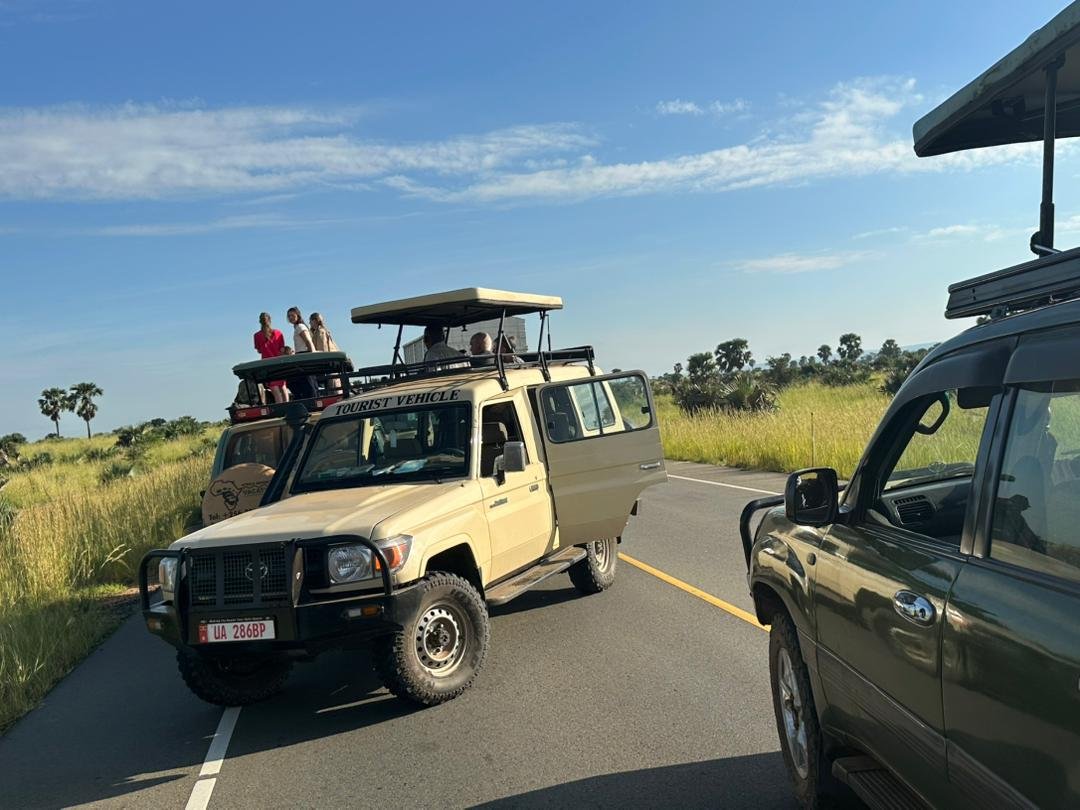
10 Days Uganda Primates and Wildlife
This 10-day Uganda Grand Safari is the most complete Uganda itinerary we offer at Pick and Transfer Safaris. It begins with a scenic northward drive from Entebbe to the vast open plains of Murchison
Tour Details →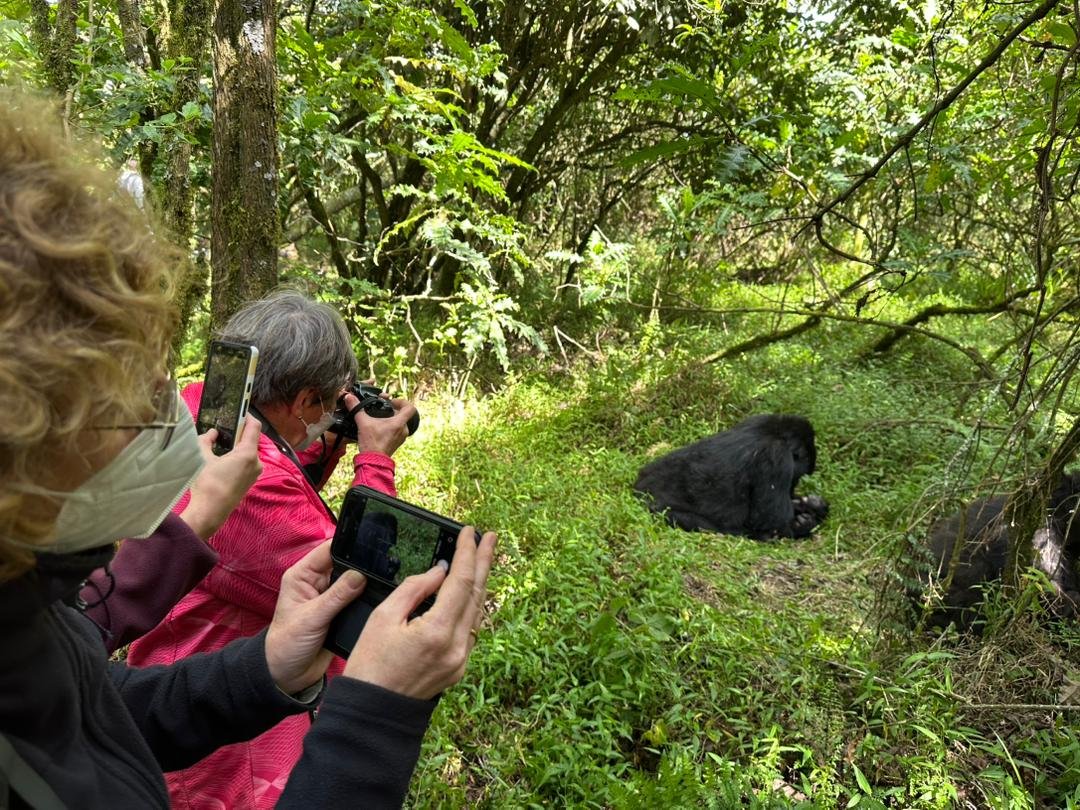
2 Days Uganda Gorilla Tour Starting from Kigali
This is the gentler cousin of our 1-Day Uganda Gorilla Safari Starting from Kigali — same idea, twice the breathing room. Instead of squeezing a 3,000-metre forest trek and two border crossings into a single very long day
Tour Details →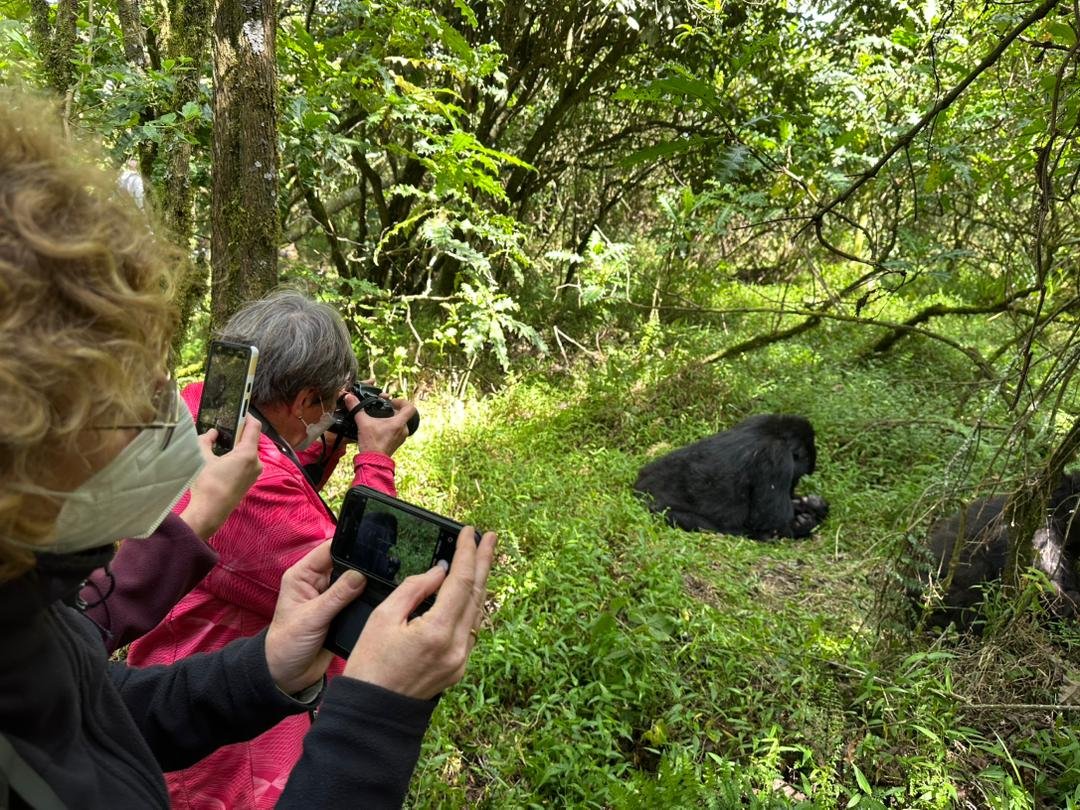
5-Day Uganda Gorilla and Chimpanzee Safari
This itinerary can be combined with a Rwanda extension or a wildlife-focused add-on through Queen Elizabeth National Park — browse our Uganda & Rwanda Safaris and Primate Safaris collections for ideas.
Tour Details →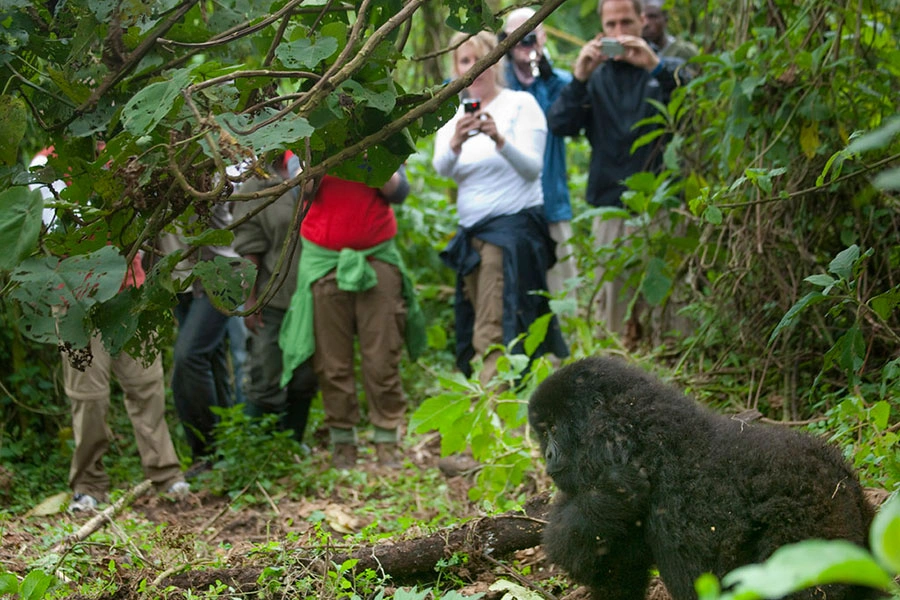
5 Days Rwanda Wildlife and Gorillas
This 5-day itinerary brings together Rwanda’s two flagship wildlife experiences: open savannah game drives and a boat safari in Akagera National Park, followed by a face-to-face encounters
Tour Details →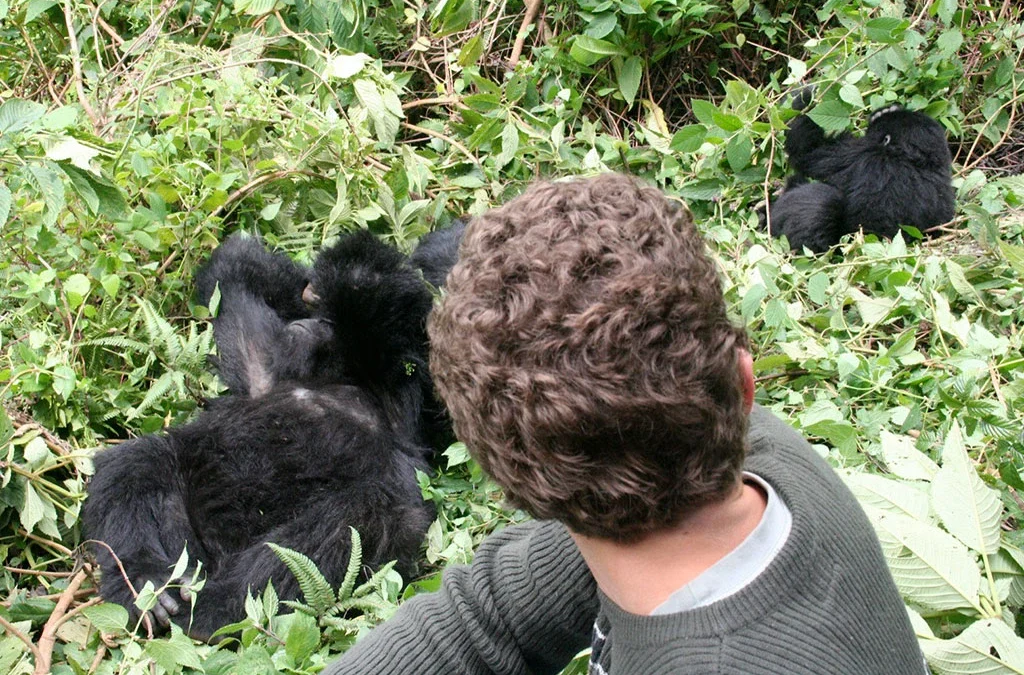
3 Days Uganda Gorilla Safari
For travelers who arrive in Entebbe with a tight schedule and a clear ambition, a 3-day gorilla safari to Bwindi Impenetrable Forest National Park is the most focused and rewarding short trip the country has to offer.
Tour Details →