- LET'S PLAN YOUR SAFARI
- +256 200 921 002
- +256 793 194 703
- info@pickandtransfersafaris.com

1 Day Gorilla Trekking from Kigali
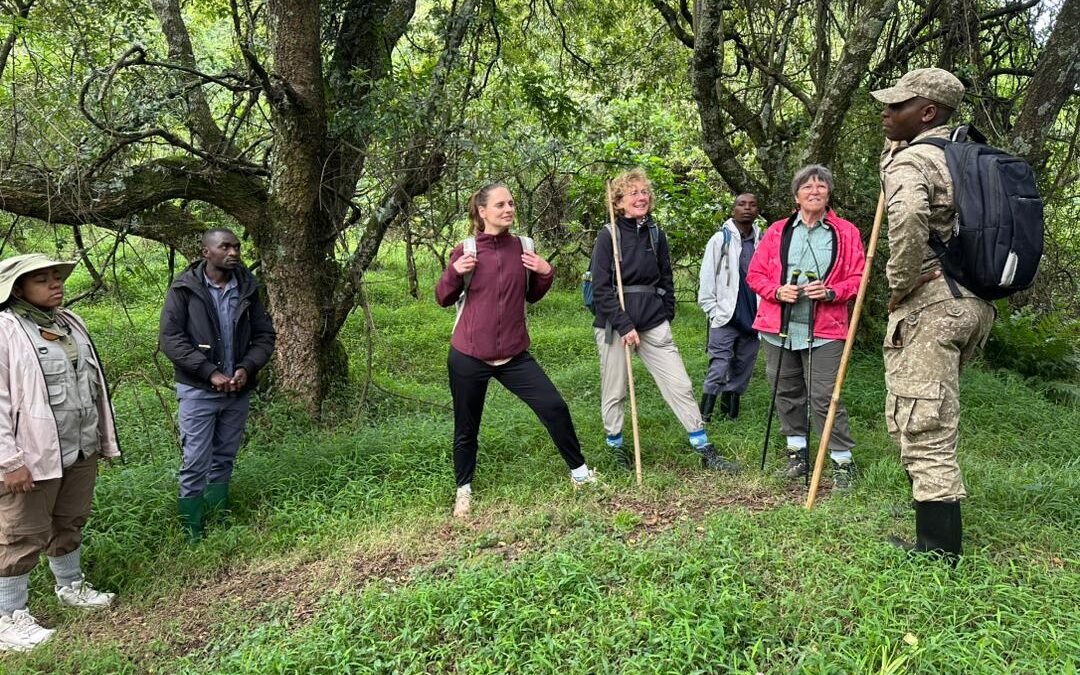
1 Day Gorilla Trekking from Kigali. Standing three feet from a 400-pound silverback in a rainforest clearing is one of those experiences that rearranges how you think about wildlife travel. What surprises most visitors to Rwanda is that this encounter does not require a week off work or a complicated multi-country itinerary. A well-organized 1 day gorilla trekking from Kigali tour lets you leave your hotel before sunrise, track a wild mountain gorilla family across the border in Uganda, and be back in your own bed in Kigali the same night.
This guide walks through exactly how a one day gorilla trek from Kigali works in 2026: the park you will visit, the permit costs, the border crossing procedure, what to pack, who this trip is realistically suited for, and how to book it properly so nothing is left to chance on trekking day. If you are short on time in Rwanda but unwilling to leave without seeing mountain gorillas, this is the itinerary built for you, and it is exactly the safari Pick and Transfer Safaris runs for travelers every week of the year.
What Is 1 Day Gorilla Trekking from Kigali?
A one day gorilla trek from Kigali is a single-day safari that departs from your Kigali hotel or Kigali International Airport in the very early hours of the morning, crosses the Rwanda-Uganda border, and delivers you to Mgahinga Gorilla National Park in time for a briefing and a guided trek to a habituated mountain gorilla family. Because Rwanda does not currently issue same-day gorilla permits for Volcanoes National Park that can realistically be combined with a return drive to Kigali, operators structure the one-day version of this trip around Mgahinga, which sits just across the border in southwestern Uganda and is close enough to Kigali to make a day trip genuinely feasible.
The whole experience, door to door, typically runs 14 to 16 hours. It is long, but it is also efficient: you do not pay for a Ugandan hotel room, you do not need to repack a bag for an overnight stay, and you sleep in the same bed in Kigali both before and after the trek. For travelers stitching gorilla trekking into a broader Rwanda itinerary, that efficiency is the entire appeal.
Why Choose a One-Day Gorilla Trek Over a Multi-Day Safari
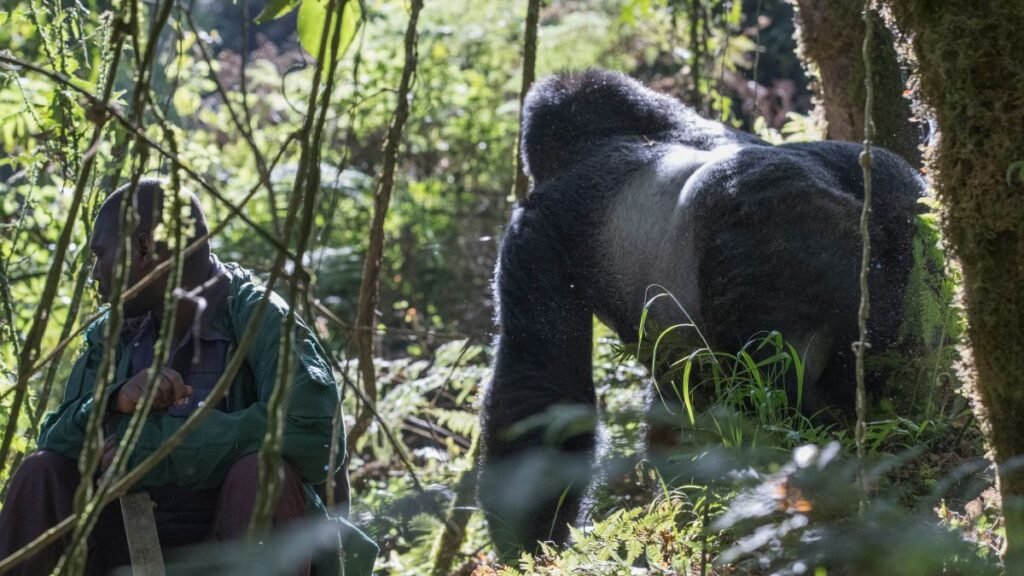
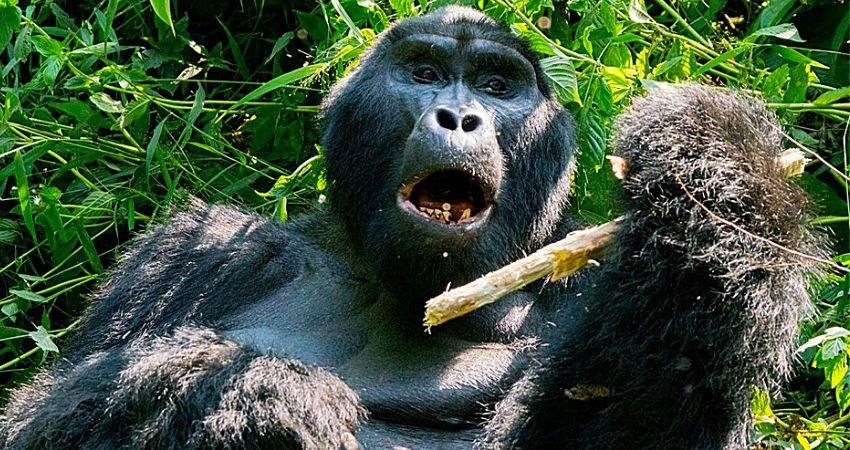
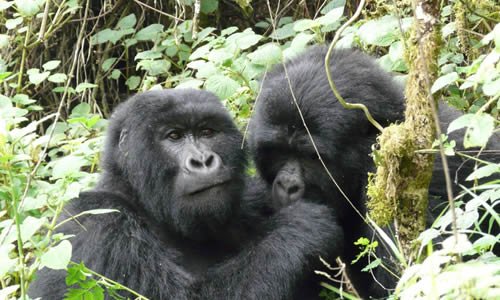
Most people picture gorilla trekking as a two or three day affair, and for good reason: it usually is. But a single-day trip from Kigali makes sense for a specific kind of traveler. If your Rwanda itinerary is already tight, if you are attending a conference or event in Kigali with only one free day, or if you simply want to test whether gorilla trekking is for you before committing to a longer safari, the one-day format removes the biggest barrier, which is time.
It also removes a logistical headache. Crossing into Uganda for an overnight stay means arranging accommodation, managing a second set of luggage, and often paying for a hotel room you barely use since you are out trekking most of the day anyway. A one-day trip consolidates all of that into a single well-planned outing. That said, it is not for everyone. Travelers who want more time with the gorillas, who prefer not to spend 6 to 7 hours in a vehicle in a single day, or who want to explore Bwindi Impenetrable National Park’s larger network of habituated families should look at the 2 day Uganda gorilla tour from Kigali or the 3 day Uganda gorilla safari instead.
Mgahinga Gorilla National Park: The Trekking Destination
Mgahinga Gorilla National Park is Uganda’s smallest national park, tucked into the Virunga Massif alongside three extinct volcanoes: Mgahinga, Muhabura, and Sabinyo. It shares this volcanic range with Rwanda’s Volcanoes National Park and the Democratic Republic of Congo’s Virunga National Park, meaning the mountain gorillas that roam this landscape move freely across all three countries’ borders, unaware of the international lines drawn through their habitat.
What makes Mgahinga distinct from Uganda’s better-known Bwindi Impenetrable Forest is its accessibility from Rwanda. Where Bwindi sits several hours further from the Cyanika border crossing, Mgahinga’s park headquarters are close enough that a day trip from Kigali is genuinely achievable without an unreasonable start time. The terrain here is steep, and the vegetation is thick bamboo forest interspersed with montane rainforest, so the trek itself is a proper hike rather than a gentle stroll, but that is part of what makes reaching the gorillas feel earned.
The Nyakagezi Gorilla Family
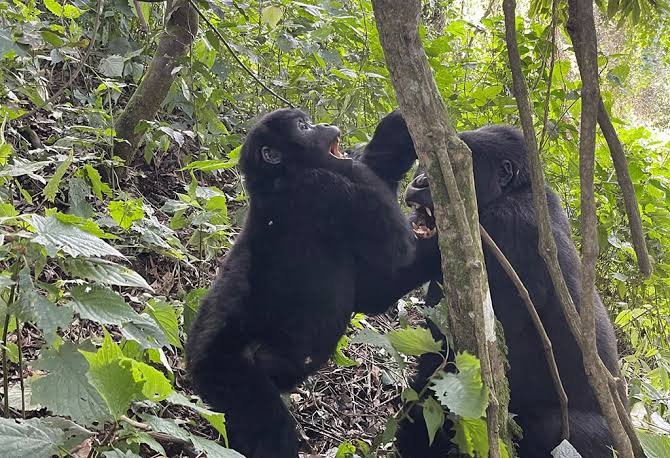
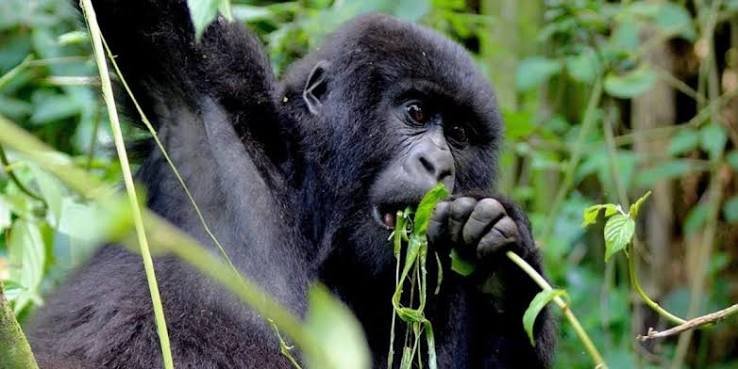
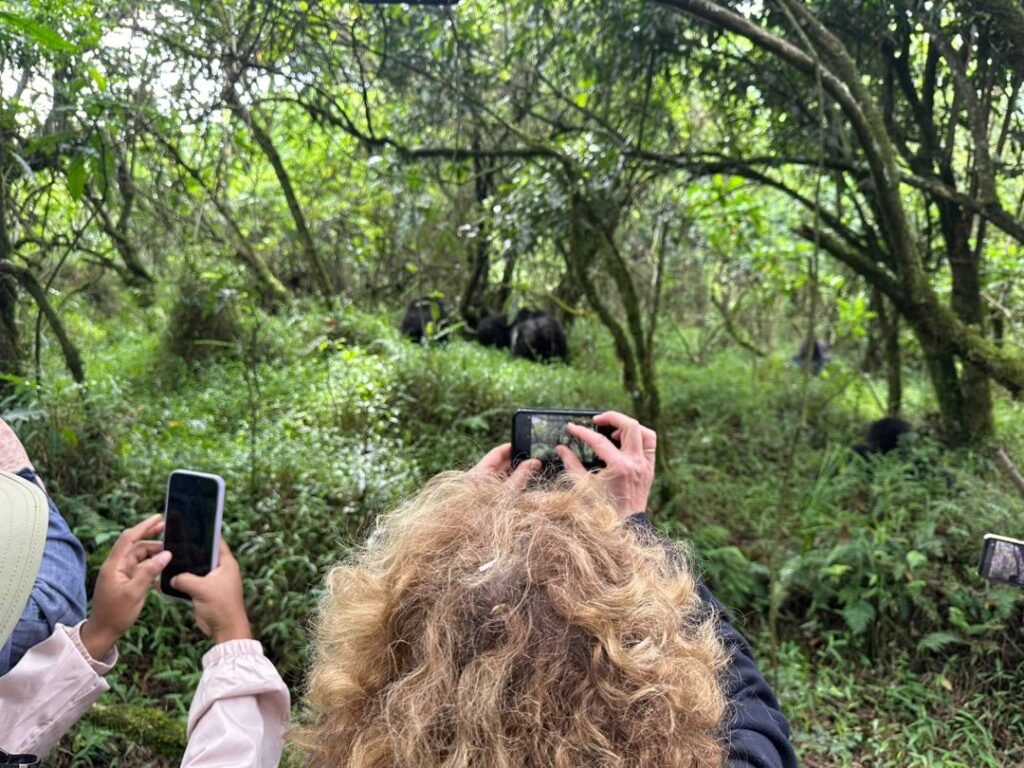
Mgahinga is currently home to a single habituated gorilla group, the Nyakagezi family, which has an unusual reputation among East Africa’s gorilla groups: it moves around more than most, occasionally wandering across the border into Rwanda or Congo for stretches of time, which is why booking a Mgahinga permit always carries a small amount of uncertainty that a good operator will explain to you upfront. When the family is in the park, which is the case for the vast majority of the year, trekkers get an intimate encounter, since only eight permits are issued per day and the group is typically watched by a single small party rather than being split across several visiting groups as happens in busier sectors of Bwindi.
The Nyakagezi family is led by several silverbacks and includes juveniles and infants, making it a rewarding group to observe for an hour once you reach them. Because permit numbers are so limited, booking well in advance through an established operator matters more here than almost anywhere else in the region.
Full Itinerary: Hour-by-Hour Breakdown of Your Day
Every operator’s timing varies slightly depending on your hotel location and the specific date, but a representative one day gorilla trekking itinerary from Kigali looks like this:
- 3:00-3:30am – Pickup from your Kigali hotel or Kigali International Airport in a private 4×4 vehicle.
- 3:30-6:30am – Drive west through Rwanda toward the Cyanika border post, with a short stop possible en route.
- 6:30-7:00am – Rwanda exit formalities and Uganda entry formalities at Cyanika.
- 7:00-7:30am – Short drive from the border to Mgahinga National Park headquarters.
- 7:30-8:00am – Registration and the pre-trek briefing from Uganda Wildlife Authority rangers.
- 8:00am-1:00pm – The trek itself, including the search for the Nyakagezi family and one hour of observation once they are found.
- 1:00-2:00pm – Lunch and rest near the park headquarters.
- 2:00-6:00pm – Return drive to Kigali, including the reverse border crossing.
Search time for the gorillas varies enormously; some groups find the Nyakagezi family within 45 minutes, others trek for three or four hours before locating them, since gorillas range widely through the forest overnight. A good driver-guide will build in a comfortable buffer so a longer search does not put your return to Kigali at risk.
Crossing the Cyanika Border Between Rwanda and Uganda
The Cyanika border post is the crossing used for this route, and it is a well-established, relatively efficient post connecting Rwanda’s Burera district to Uganda’s Kisoro district. On a one-day gorilla trek, your driver-guide handles the practical side of the crossing: parking, guiding you to the correct immigration windows, and managing the paperwork for the vehicle. Your responsibility is simply having the right travel documents ready, which is covered in more detail below.
Crossings at Cyanika are typically quick outside of peak holiday periods, often taking 20 to 30 minutes total for both exit and entry formalities. Because your one-day itinerary is timed tightly, operators generally schedule the crossing for the early morning when the post is quietest, which is another reason the very early departure from Kigali matters.
Gorilla Permit Costs and What’s Included in Your Package
Uganda’s gorilla permit pricing for 2026 is tiered by residency status. Foreign non-resident visitors pay 800 US dollars per permit in the high season, dropping to 600 US dollars during the low season months of April, May, and November. Foreign residents pay 700 US dollars in high season and 500 US dollars in low season, while East African citizens pay a heavily discounted rate of roughly 80 US dollars year-round. As of March 2026, Uganda Wildlife Authority also requires permits to be paid in full at the time of booking, since the previous seven-day reservation hold without payment has been eliminated, which makes early, fully-committed booking essential.
Pick and Transfer Safaris’ one day Uganda gorilla safari from Kigali is priced from 1,100 US dollars per person, and that figure bundles the Mgahinga gorilla trekking permit, round-trip private 4×4 transport with an English-speaking driver-guide, fuel and ground transport costs, bottled water, a packed lunch, and applicable government taxes. Not included are your Rwanda and Uganda visa fees, travel insurance, tips for your guide and any porters, and personal expenses. You can see the full inclusions and exclusions, along with current availability, on the official 1 Day Uganda Gorilla Safari from Kigali page.
Rwanda vs Uganda Gorilla Permits: A Cost Comparison
Travelers researching gorilla trekking from Kigali often assume Rwanda’s Volcanoes National Park is the only option, since it is the park physically closest to the capital. It is worth understanding the cost difference clearly before you book. A Rwanda gorilla permit for Volcanoes National Park costs 1,500 US dollars per person, more than double Uganda’s high-season non-resident rate of 800 US dollars. That price gap is a major reason many travelers choose the Uganda route via Mgahinga for a shorter or lower-budget trip, while still saving Rwanda’s own Volcanoes National Park for a future, more leisurely visit.
The trade-off is logistics rather than cost. Trekking in Rwanda means no border crossing and generally shorter drive times from Kigali hotels, whereas the Uganda route through Mgahinga adds the Cyanika crossing but nearly halves your permit cost. If your priority is value and you are comfortable with an early start and a border crossing, Mgahinga is the more economical way to see mountain gorillas from a Kigali base. If you would rather stay within Rwanda entirely, our 2 Days Volcanoes Gorilla Trek from Kigali is the right alternative, and it is worth reading a broader breakdown of Rwanda’s 2026 gorilla permit costs and booking rules if you want the full picture before deciding.
How Mgahinga Compares to Bwindi Impenetrable Forest
Uganda’s mountain gorillas live in two separate protected areas: Mgahinga Gorilla National Park, where this one-day itinerary treks, and the much larger Bwindi Impenetrable Forest, which sits further from the Rwanda border. Bwindi is home to the vast majority of Uganda’s habituated gorilla families, spread across four trekking sectors, which gives visitors far more permit availability and a wider choice of gorilla groups. Mgahinga, by contrast, has just one habituated family, the Nyakagezi group, and issues only eight permits per day.
The trade-off is entirely about distance and time. Because Mgahinga sits closer to the Cyanika border, it is the only Ugandan gorilla park realistically reachable from Kigali within a single day. Bwindi’s sectors are simply too far from the border to allow a same-day return to Kigali once you account for trekking time, which is why travelers who want to visit Bwindi generally book our 3 day Uganda gorilla safari instead, allowing an overnight stay near the park. If your schedule allows for it, Bwindi’s greater permit availability and larger number of habituated families make multi-day trips worth considering, but for a genuine one-day option from Kigali, Mgahinga is the only park that works.
Gorilla Trekking and Conservation: Where Your Permit Fees Go
Mountain gorillas were once projected to face extinction within decades, yet sustained conservation efforts across Uganda, Rwanda, and the Democratic Republic of Congo have helped their population grow to just over a thousand individuals today, one of the few real conservation success stories among the world’s great apes. Permit fees are central to that success. A significant share of Uganda’s gorilla permit revenue funds park ranger salaries, anti-poaching patrols, veterinary monitoring of habituated families, and community revenue-sharing programs that give villages bordering the park a direct financial stake in the gorillas’ survival.
That revenue-sharing model matters more than most visitors realize. Communities living alongside Mgahinga and Bwindi historically faced real costs from living near gorilla habitat, including crop damage from wildlife, so channeling tourism revenue directly back into those communities has been essential in building local support for conservation rather than resentment toward it. Every trekker who books a permit, in a very direct sense, is funding the infrastructure that keeps this species alive, which is worth remembering on the harder stretches of the hike. For a broader look at the wildlife conservation work happening across the region beyond gorillas alone, our partner site’s wildlife safaris page covers some of the other species and parks benefiting from the same tourism-funded model.
Tipping Guide: Rangers, Porters, and Drivers
Tipping is not mandatory but is a well-established and genuinely appreciated part of gorilla trekking, since a meaningful share of ranger and porter income comes from visitor gratuities rather than base wages alone. As a general guideline, most trekkers tip their lead ranger guide somewhere between 15 and 20 US dollars, with a smaller amount for supporting trackers if the group includes them. Porters, who are often drawn from villages bordering the park and who provide real physical assistance on the steeper sections, are typically tipped between 10 and 15 US dollars, and hiring one is worth doing for the community income alone, not just the practical help.
Your driver-guide for the day, who manages the border crossing, the long drive, and often much of the day’s logistics, is usually tipped separately at the end of the trip, with 10 to 20 US dollars per day being a reasonable range depending on service quality. Carrying small denomination US dollars in cash for these tips is worth planning for before you leave Kigali, since neither the park headquarters nor the border post are reliable places to break large bills.
What Happens If Weather Disrupts Your Trek
Rain in the Virunga highlands rarely cancels a trek outright, since gorilla trekking proceeds in light to moderate rain as a matter of course, but heavy storms can occasionally delay a start time or make certain trail sections temporarily impassable. Because a one-day itinerary has less built-in flexibility than a multi-day trip, a well-prepared operator builds a time buffer into the schedule specifically to absorb weather delays without jeopardizing your return crossing at Cyanika before the border post’s operating hours end.
If a trek is genuinely disrupted by conditions on the day, Uganda Wildlife Authority policy generally allows rebooking of the permit for a future date rather than a straightforward refund, which is another reason travel insurance is worth having in place before your trip. Discuss contingency planning directly with your operator at the time of booking so you understand exactly what happens in the rare case that weather affects your specific trekking day.
Best Time of Year for a Day Trip Gorilla Trek
Mgahinga’s trails are usable year-round, since gorilla trekking never fully closes, but conditions vary noticeably by season. Uganda’s dry seasons, running roughly from June to September and again from December to February, bring firmer, less slippery trails and generally easier hiking conditions, though these months also coincide with high permit pricing and higher demand for the limited eight daily permits. The shorter dry spells in January and February can be excellent windows if you can secure a permit.
The wetter months, particularly April, May, and November, bring lower permit prices and thinner crowds, but also muddier, more physically demanding terrain and a higher chance of rain interrupting your trek. Mgahinga’s vegetation stays lush and green through the wet season, which photographers often appreciate, but you should pack accordingly if you book during these months. Whichever season you choose, the gorillas themselves are visible year-round, so timing is really a decision about trail conditions, crowd levels, and price rather than whether you will see gorillas at all.
Physical Fitness and Age Requirements
Uganda Wildlife Authority sets a minimum trekking age of 15 years old, a rule enforced consistently at Mgahinga and applied for the safety and wellbeing of both younger children and the gorillas themselves, since young children can be more vulnerable to the physical demands of the trek and to disease transmission risk. There is no upper age limit, and trekkers in their sixties and seventies complete the hike regularly, though a reasonable baseline level of fitness is genuinely recommended.
The terrain around Mgahinga is steep and can be muddy or slippery depending on recent rainfall, and trekking duration to reach the Nyakagezi family can range from under an hour to over three hours each way. If you have any concerns about your fitness level, hiring a local porter, which typically costs a modest fee paid directly in the park, is worth doing regardless of fitness, since porters also assist with balance on difficult sections and support the local community economically. Being honest with your driver-guide about your fitness level in advance helps them brief the park rangers appropriately, since slower trekkers can sometimes be paired with gorilla groups that are foraging closer to the trailhead on a given day.
What to Pack for Your One-Day Gorilla Trek
Because you are moving between two countries and two very different terrains in a single day, packing smart matters more on this trip than on a standard multi-day safari. At minimum, bring:
- Waterproof, ankle-supporting hiking boots that are already broken in
- Long-sleeved shirts and long trousers in neutral colors, to protect against nettles, thorns, and biting insects
- A lightweight rain jacket, since mountain weather in the Virunga region shifts quickly
- Gardening-style gloves for gripping vegetation on steep sections
- A hat and sunscreen for the exposed portions of the drive and trailhead
- Insect repellent
- Your passport, yellow fever certificate, and any visa documentation, kept easily accessible for the border crossing
- A small daypack for water, snacks, and a camera
Because the round trip involves 6 to 7 hours of driving on the same day as the trek, packing light and keeping essentials within reach in the vehicle, rather than buried in checked luggage, will make the long day considerably more comfortable.
Visa Requirements for Rwanda and Uganda
Because this itinerary physically crosses from Rwanda into Uganda and back, visa planning needs attention well before your trekking date. Many nationalities can apply for the East Africa Tourist Visa, a single visa that covers Rwanda, Uganda, and Kenya and is designed precisely for multi-country trips like this one, allowing same-day border crossings without needing to apply for a separate Ugandan visa. If you already hold a single-entry Rwanda visa without the East Africa option, you will need to arrange a separate Uganda visa, which can typically be obtained online in advance or, depending on your nationality, at the border itself.
Because visa rules and eligible nationalities can change, and because arriving at Cyanika without the correct documentation can derail your entire trekking day, it is worth confirming your specific visa requirements with your operator at the time of booking rather than assuming your existing visa covers the crossing. This is one of the most common points of confusion for first-time visitors, so raise it directly when you book through our contact page.
Health and Safety Considerations
A yellow fever vaccination certificate is required for entry into both Rwanda and Uganda for most travelers, so confirm this well before your trip and carry the physical certificate with you, since border officials do check it. Malaria prophylaxis is also strongly recommended for this region, and it is worth discussing options with a travel health professional several weeks before departure.
Because you will be in close proximity to mountain gorillas, which share roughly 98 percent of human DNA and are susceptible to many human illnesses, park rules require a minimum distance of seven meters from the gorillas at all times, and anyone with a cough, cold, or other contagious illness on the day of trekking should disclose this to rangers, who may adjust the group accordingly to protect the gorillas’ health. This is not a bureaucratic formality; habituated gorilla families have suffered serious illness outbreaks traced to human contact in the past, and responsible tourism depends on trekkers taking this rule seriously.
Rules and Etiquette During Gorilla Trekking
Once you reach the Nyakagezi family, you are permitted one hour of observation time, a rule set by Uganda Wildlife Authority to limit stress on the gorillas from human presence. During that hour, visitors are asked to keep voices low, avoid sudden movements, and not use flash photography, since a sudden flash can startle a silverback at close range. Eating, drinking, and smoking are not permitted while you are with the gorillas.
Groups are capped at eight trekkers per gorilla family per day, which is precisely why Mgahinga permits sell out well in advance despite the park’s relatively low profile compared to Bwindi. Rangers accompany every group and will position you safely if a gorilla approaches closely of its own accord, which does happen occasionally and is one of the most memorable moments trekkers describe. Following the ranger’s instructions immediately, without hesitation, is the single most important rule of the entire experience.
What to Expect During the Actual Trek
After your briefing at Mgahinga headquarters, you set off with your ranger team and, if you have hired one, your porter, following the trail of the gorilla family’s overnight movements. The terrain shifts from open agricultural land near the park boundary into dense bamboo forest and then montane rainforest, with the path becoming progressively steeper and less defined the further you go. Trackers who left earlier in the morning radio updates on the family’s location back to your guide, which is how the group narrows in on the gorillas.
The moment of first contact is almost always described the same way by first-time trekkers: a sudden hush falls over the group as a shape moves in the foliage, and then a silverback or a juvenile gorilla comes into full view, entirely unbothered by your presence. The following hour, spent watching the family feed, groom each other, and interact, tends to pass remarkably quickly. The walk back to the trailhead, by contrast, often feels much shorter than the walk in, partly due to relief and partly because you are no longer stopping to track signs of the family’s movement.
Photography Tips for Gorilla Trekking
Light inside Mgahinga’s forest canopy is often low and dappled, so a camera capable of shooting at a higher ISO without excessive noise will serve you far better than one that depends on flash, which is prohibited near the gorillas in any case. A mid-range zoom lens, roughly 70-200mm equivalent, strikes a good balance between capturing full-body shots and tighter portraits without needing to physically close the mandatory seven-meter distance.
Because you will be hiking uneven, sometimes muddy terrain for several hours, keep your camera setup as light as reasonably possible, and consider a rain cover for both camera and bag given the region’s unpredictable mountain weather. Many trekkers find that setting their camera to a faster shutter speed in advance, before the gorillas are located, saves precious seconds once the family is finally in view, since your one hour of observation time will pass quickly and you do not want to spend it adjusting settings.
How to Book Your One-Day Gorilla Trek from Kigali
Because Mgahinga issues only eight permits per day for its single habituated family, and because Uganda Wildlife Authority now requires full payment at the time of booking, securing your date early is the single most important step in planning this trip. Peak season dates, particularly June through September and December through February, can sell out six to ten months ahead, while shoulder season availability is generally easier to secure with three to six months’ notice.
Ready to book? Reach out through our contact page with your preferred trekking date, or browse the full 1 Day Uganda Gorilla Safari from Kigali itinerary and pricing directly. Our team will confirm permit availability with Uganda Wildlife Authority, handle the paperwork, and arrange your private transport and driver-guide from your Kigali hotel or the airport.
When booking, share your passport details, nationality, and current visa status upfront, since this affects both permit processing and border crossing requirements. You can also read more about our company and how our safaris are run on our about us page.
Step-by-Step Booking Timeline
A smooth booking process generally follows a predictable sequence. First, you contact the operator with your preferred trekking date, group size, and nationality, so availability and visa requirements can be checked against Uganda Wildlife Authority’s permit calendar. Second, once a date is confirmed as available, full payment for the permit is submitted, since the 2026 rule change means permits are no longer held without payment. Third, your operator confirms pickup time and location, based on your specific hotel and the border conditions expected for your travel date.
Fourth, in the days before your trek, you should confirm your yellow fever certificate, visa documentation, and packing list are all in order, ideally laying everything out the evening before your early departure. Fifth, on the day itself, your driver-guide manages the entire logistics chain, from the drive and border crossing through to the trek and return, leaving you free to focus on the experience rather than the planning. Following this sequence, rather than trying to arrange permits, transport, and border logistics separately through different providers, is the most reliable way to avoid the common mistakes covered earlier in this guide.
Combining Your Day Trip with Other Rwanda Experiences
Because a one-day gorilla trek consumes a full day of your itinerary and leaves you fairly tired the following morning, most travelers pair it with lighter activities on the days immediately before and after. A relaxed city tour and genocide memorial visit in Kigali, a coffee or tea plantation tour in the surrounding hills, or a day trip to Lake Kivu are all popular ways to round out a short Rwanda visit without overloading your schedule around the trekking day itself.
If you find that one day with the gorillas leaves you wanting more, it is entirely possible to add a second wildlife experience later in the same trip. Golden monkey trekking in Rwanda’s own Volcanoes National Park is a shorter, less physically demanding half-day activity that pairs well with a Kigali-based itinerary and does not require crossing any border, since the park sits entirely within Rwanda. You can explore that park in more depth on our Volcanoes National Park destination page, and our partner site’s Volcanoes National Park guide offers additional background on golden monkey permits and timing if you want a second opinion while planning.
Alternative Multi-Day Gorilla Safari Options from Kigali
A one-day trek is not the only way to see mountain gorillas from a Kigali base, and it is worth knowing your alternatives even if you ultimately choose the day trip. Our 2 Days Uganda Gorilla Tour from Kigali adds an overnight stay near the border, reducing the single-day driving burden and allowing a more relaxed pace. The 3 Days Uganda Gorilla Safari extends further into Uganda’s Bwindi region, opening access to a wider range of habituated gorilla families beyond Mgahinga’s single group.
For travelers who want to combine gorillas with chimpanzee tracking, our 5 Days Uganda Gorilla and Chimps Safari starting from Rwanda is built specifically for that purpose. And if staying entirely within Rwanda is your preference, both the 2 Days Volcanoes Gorilla Trek from Kigali and the more comprehensive 5 Days Rwanda Wildlife and Gorillas itinerary are worth comparing before you commit to a Uganda-based day trip. You can browse every option side by side on our main gorilla safaris page, and our partner site’s gorilla safaris overview is another useful reference point if you want to compare short Kigali-based trips against longer Uganda and Rwanda primate itineraries.
Private Trekking Versus Joining a Shared Group
Because Mgahinga’s Nyakagezi family is tracked by at most eight trekkers on any given day, and because most independent travelers booking this route are traveling in pairs or small groups, it is common to be paired with other trekkers you have never met, all sharing the same ranger team and the same hour of observation time. This is standard practice across East African gorilla trekking and rarely detracts from the experience, since the group dynamic tends to be friendly and everyone present shares the same sense of anticipation.
Travelers who specifically want a fully private trekking day, with no other parties sharing their permit slot, can request this when booking, though it depends on overall demand for that date and does not change the permit price itself, since Uganda Wildlife Authority sets a single per-permit rate regardless of group composition. What private booking does guarantee is your own dedicated vehicle and driver-guide for the drive itself, which is already standard with our one-day package, so the shared element is really limited to the hour spent with the gorillas alongside the rest of your assigned trekking party.
Packing List Recap: A Quick Checklist Before You Leave Kigali
Because this itinerary begins so early in the morning, it helps to lay out everything the night before rather than packing under time pressure at 3am. Beyond the hiking gear already covered, double check that you are carrying your passport and yellow fever certificate in your daypack rather than checked luggage, that your visa documentation matches the nationality and entry route you disclosed at booking, and that your phone or camera is fully charged, since charging opportunities are limited once you leave your hotel.
It is also worth carrying a modest amount of Ugandan shillings or US dollars in small denominations for tipping and any incidental purchases at the park, since card payment is not reliably available at Mgahinga headquarters. A printed or downloaded copy of your permit confirmation and booking reference, kept alongside your passport, will also speed up registration at the park gate considerably.
Common Mistakes to Avoid When Booking a Day Trip
The most common mistake travelers make is booking their permit too close to their travel date, only to discover the eight daily Mgahinga slots are already gone for their preferred window, particularly in July, August, and the December holiday period. The second most common mistake is underestimating the physical demands of a single day that combines several hours of driving with several more hours of steep hiking, leading to a much more exhausting experience than anticipated.
A third mistake is arriving at the border without the correct visa documentation, which can cause delays that ripple through the entire day’s schedule and, in the worst case, cause a trekker to miss their allotted time slot at the park. A fourth is skimping on rain gear because the trip departs from Kigali on a clear morning, without accounting for how quickly weather shifts in the volcanic highlands. Working with an established operator who manages permit booking, border logistics, and timing buffers removes nearly all of these risks, which is the entire reason a fully guided package tends to be worth the cost over attempting to self-arrange the logistics.
What Past Trekkers Say About the Experience
Travelers who complete a one day gorilla trek from Kigali consistently describe two things: how physically demanding the day was, and how completely that difficulty faded from memory the moment the Nyakagezi family came into view. The combination of an early wake-up, a long drive, a border crossing, and a genuinely challenging hike creates a sense of earned achievement that many say deepens the encounter itself, compared to wildlife experiences that require little effort to reach.
The single-day format also gets frequently praised for its efficiency by business travelers and travelers on tight schedules, who describe it as the only way they were able to fit gorilla trekking into an otherwise packed Rwanda itinerary without extending their trip by an extra night. The trade-off, most agree, is worth it for a bucket-list wildlife encounter that would otherwise have been left off the itinerary entirely.
Frequently Asked Questions About Gorilla Trekking from Kigali
Can you really do gorilla trekking from Kigali in one day? Yes. The trip crosses into Uganda’s Mgahinga Gorilla National Park via the Cyanika border and returns to Kigali the same night, typically within a 14 to 16 hour window door to door.
How much does it cost? Pick and Transfer Safaris’ one day Uganda gorilla safari from Kigali starts from 1,100 US dollars per person, inclusive of the Mgahinga permit, private transport, driver-guide, fuel, water, and lunch.
Do I need a visa for both countries? Most travelers use the East Africa Tourist Visa, which covers Rwanda, Uganda, and Kenya for same-day crossings. Confirm your specific requirements with your operator before booking.
Is one day enough, or should I book a longer trip? One day is enough to see a habituated gorilla family and is ideal for travelers with limited time. Those who want more flexibility, a gentler pace, or access to Bwindi’s larger network of gorilla families should consider a 2 day or 3 day itinerary instead.
What is the minimum age for gorilla trekking? Uganda Wildlife Authority sets the minimum age at 15 years old for all trekkers.
How fit do I need to be? A reasonable baseline fitness level is recommended, since the trek involves steep, sometimes muddy terrain for anywhere from one to several hours each way. Hiring a local porter is a sensible option for most trekkers regardless of fitness level.
Will I definitely see the gorillas? Uganda Wildlife Authority and its rangers track the Nyakagezi family’s movements daily, and sightings are extremely reliable, though not formally guaranteed, since the family occasionally roams into neighboring Rwanda or Congo for a period. Your operator can advise on recent sighting patterns before you book a specific date.
Can I bring children on this trip? Children under 15 are not permitted to trek under Uganda Wildlife Authority rules, though they are welcome to remain with a driver near the park headquarters while other members of the group trek, or you can plan a different, less physically demanding activity for that day instead.
Should I book directly with the park or through an operator? Booking through an established operator like Pick and Transfer Safaris ensures your permit, transport, border logistics, and timing are all coordinated together, which matters enormously on a single-day itinerary where any one delay can jeopardize the whole schedule. Self-arranging each piece independently is possible but leaves far less room for error.
What happens to my booking if I need to cancel? Cancellation policies are generally set by Uganda Wildlife Authority for the permit itself and by the operator for the transport and service components separately, so review both sets of terms at the time of booking and consider travel insurance that explicitly covers trip cancellation and gorilla permit loss.
Final Thoughts: Is a One Day Gorilla Trek from Kigali Right for You?
A one day gorilla trek from Kigali is not the most relaxed way to see mountain gorillas, but it may be the most efficient one available anywhere in East Africa. For travelers who have limited time in Rwanda, who want to keep their base in Kigali throughout their trip, or who are simply drawn to the idea of crossing into Uganda’s Virunga foothills and back in a single remarkable day, this itinerary delivers a full, authentic gorilla trekking experience without the added time and cost of an overnight stay across the border.
If the idea of an early departure, a border crossing, and a challenging but rewarding hike through bamboo forest to sit with the Nyakagezi gorilla family sounds like the trip you want, our team at Pick and Transfer Safaris handles every part of the logistics, from permit booking to the drive itself. Get in touch through our contact page, explore the full 1 Day Uganda Gorilla Safari from Kigali itinerary, or browse our complete range of Rwanda and Uganda destinations to start planning your trip today.