- LET'S PLAN YOUR SAFARI
- +256 200 921 002
- +256 793 194 703
- info@pickandtransfersafaris.com

2 Days Gorilla Trek from Kigali
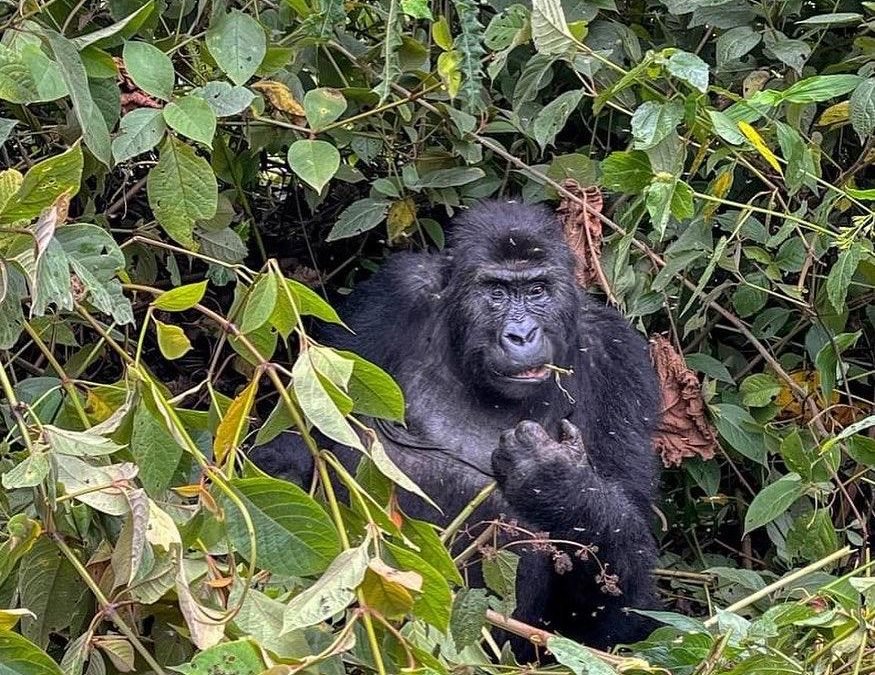
2 Days Gorilla Trek from Kigali. Few wildlife experiences on earth compare to locking eyes with a 200-kilogram silverback mountain gorilla in the misty forests of the Virunga Mountains. And the good news for travelers with limited time is that you do not need two weeks to make this dream a reality. A 2 days gorilla trek from Kigali packs everything that makes Rwanda famous — jaw-dropping volcanic scenery, thrilling primate encounters, warm Rwandan hospitality, and a genuinely life-changing hour with a gorilla family — into a short, beautifully organized getaway from the capital.
At Pick and Transfer Safaris, we have guided hundreds of travelers, from solo adventurers to honeymooners and corporate teams on layovers, through exactly this itinerary. This guide walks you through everything you need to know about the 2 Days Volcanoes Gorilla Trek from Kigali — cost, logistics, packing, permits, best travel season, and how to combine it with other unforgettable experiences in Rwanda. Whether you found us through a Google search for “gorilla trekking Rwanda short safari” or a friend’s recommendation, by the end of this article you will know exactly what to expect and how to book with confidence.
Why a 2-Day Gorilla Trek from Kigali Should Be on Your Bucket List
Rwanda has become the gold standard for gorilla tourism in Africa, and for good reason. Volcanoes National Park sits barely two hours from Kigali International Airport, which means you can land in the morning, transfer into the park by afternoon, trek the following day, and be back in the capital in time for an evening flight home. No other gorilla trekking destination on the continent offers this kind of efficiency without sacrificing the quality of the experience.
Unlike longer expeditions that require days of overland travel through Uganda or the Democratic Republic of Congo, Rwanda’s compact geography and excellent road network mean your entire trip is smooth, comfortable, and predictable. This makes the 2 days gorilla trek from Kigali the perfect add-on for business travelers extending a work trip, honeymooners short on time, or safari veterans ticking Rwanda off their list before heading to the savannahs of the Maasai Mara or Serengeti. If you already have a longer East Africa itinerary planned, our extended safaris page shows how easily this short trek slots into a bigger journey.
Beyond the convenience, there is the sheer emotional weight of the encounter itself. Mountain gorillas share roughly 98 percent of their DNA with humans, and spending sixty minutes just a few meters from a family unit — watching juveniles tumble over each other, mothers grooming infants, and a silverback surveying his territory with quiet authority — is an experience that stays with travelers for the rest of their lives. It routinely tops “best travel experience” lists from guests who have also been on safari in the Serengeti, Kruger, or the Okavango Delta.
What Makes Volcanoes National Park Rwanda’s Gorilla Trekking Capital
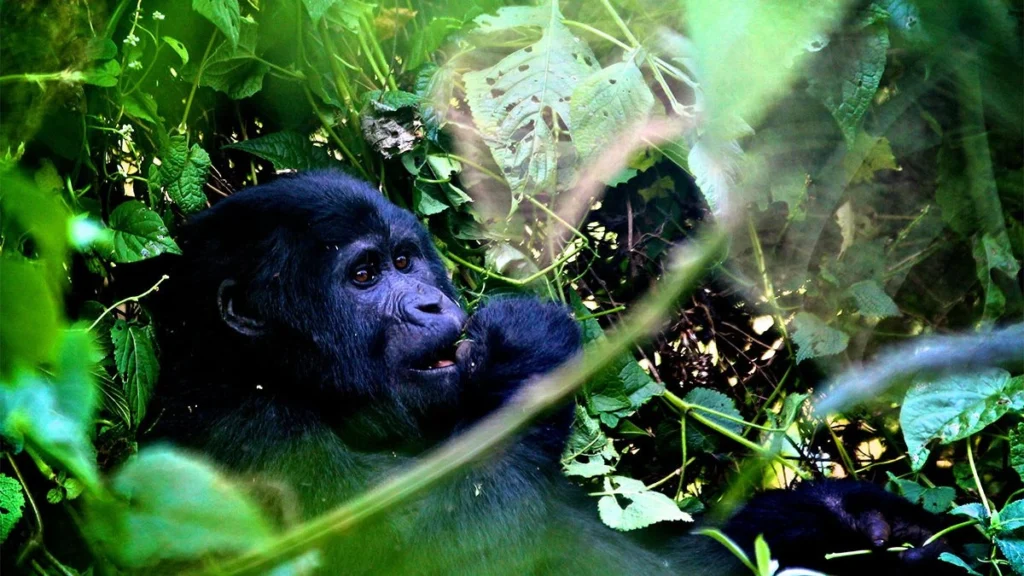
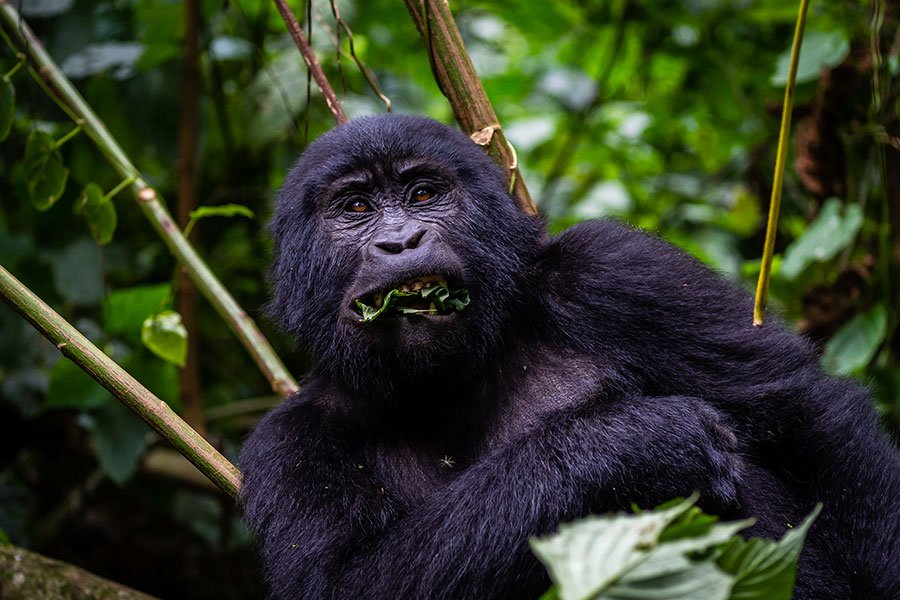
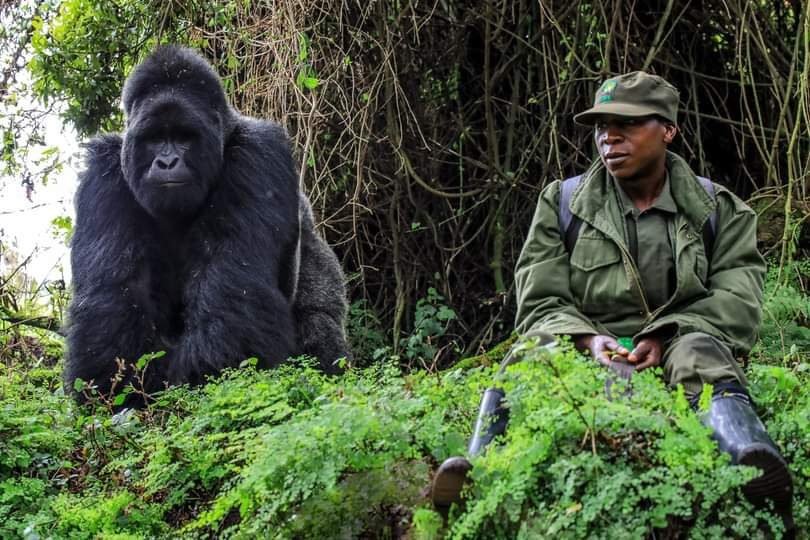
Volcanoes National Park, known locally as Parc National des Volcans, is the Rwandan section of the Virunga Massif, a chain of eight volcanoes shared between Rwanda, Uganda, and the Democratic Republic of Congo. This is the very forest where primatologist Dian Fossey conducted her groundbreaking research in the 1960s and 70s, and her legacy is still deeply felt at the park’s research center near Kinigi.
Today, the park protects around a dozen habituated gorilla families, each monitored daily by trackers and guides who know individual gorillas by name, personality, and family history. The dramatic backdrop of five volcanoes — Karisimbi, Bisoke, Muhabura, Gahinga, and Sabyinyo — rising out of a patchwork of bamboo forest and farmland makes this one of the most visually stunning national parks in Africa, rivaling the scenery you would find in the Bwindi Impenetrable National Park across the border in Uganda.
What sets Volcanoes National Park apart from other gorilla destinations is accessibility. Because it sits so close to Kigali, and because Rwanda has invested heavily in tourism infrastructure — paved roads, comfortable lodges, and an efficient permit system managed by the Rwanda Development Board — a short, well-organized trip is genuinely feasible here in a way it simply is not in more remote corners of the region. You can browse the full profile of the park, including its wildlife, terrain, and access routes, on our dedicated Volcanoes National Park destination page.
Beyond the mountain gorillas, the park’s bamboo and hagenia forests shelter golden monkeys, forest elephants, buffalo, and more than 178 recorded bird species, making it a rewarding destination even between gorilla treks. Guests with an extra free hour before or after their trek often add on golden monkey tracking, a livelier and slightly less strenuous encounter with playful, acrobatic primates found nowhere else on earth outside the Virunga and Gishwati ecosystems. This variety is part of why so many first-time visitors to Rwanda leave describing Volcanoes National Park as one of the most complete wildlife destinations they have ever visited, gorillas included.
Understanding the 2-Day Gorilla Trek Itinerary from Kigali
A well-planned two-day itinerary maximizes your time without leaving you exhausted. Here is how our 2 Days Volcanoes Gorilla Trek from Kigali itinerary typically unfolds, though we tailor timing to your flight schedule and preferences.
Day 1: Kigali to Volcanoes National Park
Your driver-guide picks you up from your Kigali hotel or directly from Kigali International Airport in a comfortable 4×4 safari vehicle. The drive north to Musanze and on to Kinigi, the gateway town for Volcanoes National Park, covers roughly 104 kilometers and takes about two to three hours, passing through Rwanda’s famous “land of a thousand hills” — a landscape of terraced farms, banana plantations, and rolling volcanic ridges.
Along the way, many guests stop to visit a local cultural village or the Ntaruka area for photographs of Lake Burera and Lake Ruhondo, two stunning twin lakes tucked between the volcanoes. By afternoon you will check into your lodge near the park headquarters in Kinigi, have a relaxed dinner, and receive a full briefing from your guide on what to expect the next morning. Early to bed is highly recommended, since trekking day starts before sunrise.
Day 2: Gorilla Trekking and Return to Kigali
You will wake before dawn for an early breakfast, then head to Kinigi Park Headquarters to arrive by 7:00 a.m. sharp for registration and the pre-trek briefing, which includes traditional Intore dancers, coffee, and an introduction from park rangers. Guests are then divided into small groups of a maximum of eight people and assigned to a specific gorilla family based on fitness level and trekking difficulty.
The trek itself can last anywhere from thirty minutes to several hours depending on where your assigned gorilla family is located that day, followed by a magical, strictly timed sixty minutes in the presence of the gorillas. After the trek, you will return to your lodge for a late lunch, freshen up, and begin the drive back to Kigali, arriving in the evening in time for dinner or a connecting flight. For travelers who want to extend the adventure by even one more day, our 3 Days Rwanda Gorilla Tracking and Cultural Tour adds a cultural village visit and more breathing room into the schedule.
Gorilla Trekking Permit Costs and What They Include
Gorilla trekking permits are the single largest cost of this trip, and understanding what they include helps you appreciate the value. As of the current tariff structure, a gorilla trekking permit in Volcanoes National Park costs USD 1,500 per person for foreign non-residents, USD 500 for foreign residents of East Africa, and a heavily discounted rate for East African Community citizens. This fee is set and collected by the Rwanda Development Board, and permit numbers are strictly limited to protect the gorillas from overcrowding and stress.
Your permit covers park entrance, an armed ranger escort, professional trackers, a certified guide, and a full hour with a habituated gorilla family. Ten percent of park revenue is reinvested directly into surrounding communities, funding schools, health clinics, and infrastructure — meaning your trek genuinely contributes to conservation and local development, not just a memorable photograph.
During the low season (November, and April through May), Rwanda occasionally offers discounted combination permits for travelers pairing Volcanoes National Park with a visit to Akagera National Park or Nyungwe Forest National Park. Because permits sell out weeks or months in advance, especially during peak season, we strongly recommend booking your trek through an established operator well ahead of your travel dates. Our team handles the entire permit reservation process for every guest who books the 2 Days Volcanoes Gorilla Trek from Kigali, so you never have to worry about availability or paperwork.
Best Time of Year for Gorilla Trekking in Rwanda
Rwanda’s equatorial climate means gorilla trekking is possible year-round, but timing still affects your comfort and, to a lesser extent, your budget. The two dry seasons — mid-December to mid-February, and June to September — offer the best trekking conditions, with firmer trails, lower rainfall, and easier visibility through the forest. June through September, in particular, is peak season and aligns with the Kwita Izina gorilla naming ceremony, an annual celebration honoring newborn gorillas that draws visitors from around the world.
The long rainy season from March to May and the shorter rains in November bring lush, dramatically green scenery and thinner crowds, along with the occasional discounted permit rate mentioned earlier. Trails can be muddy and slippery, so sturdy waterproof boots become essential, but many photographers actually prefer this period for the richer, more vibrant forest colors. Whichever season you choose, the gorilla families remain active and visible throughout the year, since, unlike safari game viewing, trekking does not depend on migration patterns or seasonal water sources.
Who Can Go Gorilla Trekking? Age Limits and Fitness Requirements
Rwanda enforces a strict minimum age of 15 years for gorilla trekking. This rule exists for the safety of both visitors and gorillas: young children may struggle with the noise discipline required during the trek, and a sudden cry or shout could startle a wild gorilla family, creating a genuinely dangerous situation. Travelers under 15 are welcome to join alternative activities in the area, such as guided nature walks, golden monkey tracking (permitted from age 12), or a visit to a local cultural village, while the rest of the family treks.
There is no strict upper age limit, and trekkers well into their seventies and eighties complete the hike successfully every year, but a reasonable level of fitness is genuinely important. The terrain includes steep volcanic slopes, dense vegetation, and sometimes muddy or uneven ground, and trek duration is unpredictable — some gorilla families are found within thirty minutes of the trailhead, while others require several hours of hiking. Park rangers do their best to match less physically able guests with the closer, more accessible gorilla families, and porters are available for hire at the trailhead to carry your daypack and offer a helping hand on steeper sections, a service we always recommend regardless of fitness level, since it also supports the local Kinigi community economically.
What to Pack for Your 2-Day Gorilla Trek
Packing correctly makes an enormous difference to your comfort on trekking day. At minimum, bring sturdy waterproof hiking boots with good ankle support, since volcanic soil becomes slick after rain. Long trousers and a long-sleeved shirt tucked into gloves or wrist coverings protect against stinging nettles and biting insects common in the undergrowth, while a light rain jacket is essential no matter the season, since mountain weather changes quickly.
Other trekking day essentials include a daypack with at least two liters of water, energy snacks, gardening gloves for gripping vegetation on steep sections, a hat and sunscreen, insect repellent, and a camera with a fully charged battery — flash photography is prohibited around the gorillas, so a camera that performs well in low forest light is a bonus. Binoculars enhance the wider wildlife viewing experience if you extend your trip with a stop at Akagera National Park or Nyungwe Forest National Park. For a full downloadable packing checklist tailored to Rwanda’s climate and terrain, feel free to reach out through our contact page before you travel.
Getting from Kigali International Airport to Volcanoes National Park
Most travelers begin their 2 days gorilla trek from Kigali the moment they land at Kigali International Airport. Our drivers meet guests directly at arrivals, so there is no need to book a separate transfer or navigate taxis in an unfamiliar city. From the airport, it is roughly a two to three hour drive to Kinigi, and many guests choose to break up the journey with a short stop in Kigali city itself, perhaps visiting the Kigali Genocide Memorial or grabbing a coffee in the vibrant Kimihurura neighborhood — you can read more about things to see in the capital on our Kigali City destination page.
Because gorilla trekking requires arrival at Kinigi Park Headquarters by 7:00 a.m. sharp, timing your international flight matters. Guests landing the evening before trekking day have the smoothest experience, since it allows for a relaxed overnight stay near the park rather than an early pre-dawn departure from Kigali. If your flight schedule does not allow for an overnight near the park, our team can still arrange an early departure from Kigali, though we always recommend at least one night near Kinigi to enjoy the briefing, rest properly, and avoid the fatigue of a 5:00 a.m. departure from the capital.
Where to Stay: Accommodation Options Near Volcanoes National Park
The Kinigi and Musanze area has grown into a genuinely impressive lodging hub, with options spanning every budget. Budget and mid-range travelers will find comfortable guesthouses and small lodges offering warm hospitality, hot showers, and hearty meals within a short drive of the park headquarters. Mid-range lodges add volcano views, cozy fireplaces for the cool mountain evenings, and often a pool or spa area to relax tired legs after the trek.
At the luxury end, Rwanda is home to some of the most celebrated eco-lodges in Africa, with private cottages overlooking the volcanoes, personalized butler service, and farm-to-table dining using ingredients grown on-site. We match accommodation to your budget and travel style when you book the 2 Days Volcanoes Gorilla Trek from Kigali, and because we work with lodges across every price bracket, we can often secure better rates and availability than booking independently, especially during the busy June to September season when rooms near Kinigi fill up months in advance.
Meeting the Gorilla Families of Volcanoes National Park
Volcanoes National Park is home to roughly a dozen habituated gorilla families available for trekking, each with its own personality, size, and history. Susa Group, made famous by Dian Fossey’s original research, is one of the largest families and also one of the most physically demanding treks, often located high on the slopes of Karisimbi or Bisoke. Sabyinyo Group, by contrast, is known for its relatively easy access and features one of the largest silverbacks in the park, a gentle giant named Guhonda.
Other well-known families include Agashya, Kwitonda, Hirwa (notable for a rare set of gorilla twins born into the group), Umubano, and Amahoro. Rangers assign trekkers to families each morning based on fitness level, group size preferences, and current family location, so you will not know exactly which family you are visiting until the morning briefing. Regardless of which family you are assigned, the hour you spend observing their social dynamics — the tender care mothers show newborns, the boisterous games of juveniles, and the calm dominance of the silverback — delivers the same profound sense of connection to our closest living relatives in the animal kingdom.
Gorilla Trekking Etiquette and Rules You Must Follow
Rwanda takes gorilla conservation extremely seriously, and strict rules protect both visitors and the gorillas themselves. Trekkers must maintain a minimum distance of seven meters from the gorillas at all times, though the animals themselves often do not know this rule and may approach visitors out of curiosity — in that case, guides instruct guests to stay calm, avoid direct eye contact, and never run. Groups are capped at eight visitors per gorilla family, and the total time with the gorillas is strictly limited to one hour to minimize stress and disease transmission risk.
Flash photography is banned, loud talking and sudden movements are discouraged, and anyone displaying symptoms of a cold, flu, or other communicable illness will be asked not to trek, since gorillas are highly susceptible to human respiratory illnesses. Eating, drinking, and smoking are not permitted near the gorillas, and any waste, including tissue paper, must be carried back out of the forest. Following these guidelines is not just a formality; it is essential to the long-term survival of a species that numbers only around a thousand individuals worldwide, split between the Virunga Massif and Uganda’s Bwindi forest.
Combining Your Gorilla Trek with Other Rwanda Experiences
While a 2 days gorilla trek from Kigali is a complete and satisfying trip on its own, many guests choose to extend their stay to experience more of what Rwanda offers. Nyungwe Forest National Park, roughly a five-hour drive south of Kigali, is one of Africa’s oldest rainforests and home to chimpanzees, thirteen species of primates, and a thrilling canopy walkway suspended sixty meters above the forest floor. Our 2 Days Nyungwe Chimps Tracking Trip pairs beautifully with a gorilla trek for travelers wanting a broader primate experience, and the 3 Days Nyungwe Safari gives even more time to explore the canopy walk and tea plantations.
For classic savannah game viewing closer to Kigali, Akagera National Park delivers the Big Five within a two-hour drive of the capital, making it an easy add-on before or after your trek. Explore options like the 3 Days Akagera National Park Safari from Kigali or the more comprehensive 5 Days Rwanda Wildlife and Gorillas itinerary, which blends gorilla trekking with wildlife safari and a Kigali city tour. Travelers who want to cross into Uganda for a second gorilla trekking experience, or to see gorillas alongside golden monkeys, might also enjoy our 3 Days Uganda Gorilla Safari from Rwanda, which starts and ends in Kigali.
2 Days Gorilla Trek vs Longer Rwanda Safaris: Which Is Right for You
Deciding between a short trek and a longer safari comes down to time, budget, and how deeply you want to experience Rwanda beyond the gorillas. The two-day option is ideal if you are on a layover, extending a business trip, or simply want the single, unforgettable gorilla encounter without committing an entire vacation to it. It is efficient, cost-effective in terms of time, and still delivers the full, unhurried hour with the gorillas that longer trips offer.
If you have more time available, extending to four or five days opens up Akagera’s savannah wildlife, Nyungwe’s rainforest primates, and deeper cultural experiences like a visit to a local Iby’Iwacu cultural village. Our 4 Days Rwanda Wildlife and City Tour and 5 Days Best of Rwanda Primate Safari are both popular upgrades for travelers who fall in love with the country after researching the shorter option. For those planning a much bigger regional trip spanning Rwanda and Uganda, our 10 Days Rwanda Wildlife Gorilla Tour is worth a look, and our full wildlife safaris collection gives a sense of everything on offer across the region.
It is also worth comparing Rwanda’s trekking experience with Uganda’s, since some travelers base themselves in Kigali and cross the border for a lower-cost Ugandan permit. Options like the sister company Kenlink Tours’ 2-Days Uganda Gorilla Safari Starting from Kigali or their 2-Days Rwanda to Uganda Gorilla Trekking Safari illustrate how flexible this region can be for travelers weighing permit costs against convenience.
How Pick and Transfer Safaris Makes Your 2-Day Gorilla Trek Seamless
Planning a gorilla trek involves more moving parts than most travelers expect: securing a limited-availability permit, coordinating airport transfers, choosing the right lodge for your budget and travel dates, and ensuring your guide understands your fitness level and preferences well enough to advocate for you during gorilla family assignment. This is exactly where a dedicated local operator adds real value over booking each piece independently.
Our team at Pick and Transfer Safaris has spent years building relationships with the Rwanda Development Board, lodge owners in Kinigi and Musanze, and experienced driver-guides who know these roads and forests intimately. When you book through us, we handle permit reservations the moment your dates are confirmed, since availability can disappear weeks or months in advance during peak season. You can learn more about our story and our commitment to responsible, community-focused tourism on our About Us page, or explore our full range of gorilla safaris if you are still comparing itinerary lengths before committing to the two-day option.
We also believe strongly in supporting the communities surrounding the national parks we operate in, from hiring local porters and guides to partnering with cultural villages that give visitors a genuine, respectful window into Rwandan life. Every trek we organize contributes, even in a small way, to the long-term conservation success story that Rwanda has become — a country that went from a handful of surviving mountain gorillas decades ago to a thriving, carefully protected population today.
Photography Tips for Your Gorilla Trekking Day
Capturing a great photograph of a wild mountain gorilla is one of the most rewarding parts of the trek, but forest lighting and strict park rules make it a little more technical than an ordinary wildlife shoot. Because flash photography is banned to avoid startling the gorillas, it pays to bring a camera or smartphone that performs well in low light, and to set your ISO higher than usual before you enter the forest so you are not fumbling with settings once you are face to face with a silverback. A fast prime lens, if you shoot with an interchangeable-lens camera, will serve you far better under the dense forest canopy than a slow zoom.
Because you will be hiking through mud, undergrowth, and occasionally light rain, protect your gear in a dry bag or rain cover and keep your camera easily accessible rather than buried at the bottom of your daypack, since gorilla sightings can happen suddenly and you will not want to miss the moment fumbling with zippers. Guides generally allow a few minutes at the start of your hour with the family to get settled and take photographs before encouraging guests to put the cameras down and simply absorb the experience, a balance most of our guests come to appreciate deeply once they are actually standing in front of a gorilla family. If travel photography is a major part of why you are visiting, our guides are always happy to help position you for the best light and angles once you are with the group, drawing on years of experience escorting photographers through Volcanoes National Park.
Responsible Tourism and Gorilla Conservation in Rwanda
Every gorilla permit sold in Rwanda plays a direct role in one of the greatest conservation comeback stories in modern history. In the 1980s, the mountain gorilla population had dwindled to a few hundred individuals and faced a very real risk of extinction due to poaching, habitat loss, and civil conflict in the region. Thanks to decades of dedicated conservation work, strict permit-based tourism, and community engagement around Volcanoes National Park, the mountain gorilla is now the only great ape species in the world with a growing wild population, a genuinely remarkable achievement worth understanding before you trek.
Rwanda channels a meaningful share of park revenue back into the communities bordering Volcanoes National Park, funding schools, clean water projects, and healthcare facilities, while also employing local trackers, porters, and guides who bring generations of forest knowledge to every trek. Choosing a responsible operator matters here just as much as the trek itself, since operators who follow strict guiding standards, pay fair wages, and support local conservation initiatives help ensure this success story continues for future generations. Regional operators across the Rwanda-Uganda gorilla trekking corridor, including comparable multi-day itineraries like Kenlink Tours’ 5-Day Volcanoes Gorillas Akagera Park Wildlife Safari and their 6-Day Rwanda Adventures: Great Apes and Lake Kivu itinerary, reflect this same growing regional commitment to conservation-minded travel, and it is worth asking any operator you consider how their trips give back to the parks and people that make gorilla trekking possible in the first place.
If you would like to see how a short two-day trek can be paired with a broader conservation-focused journey, it is also worth comparing group travel formats, since traveling with a small group can reduce your per-person costs on vehicles and guiding fees while still keeping the gorilla trek itself an intimate, capped experience. Options like Kenlink Tours’ Group Tours page or learning more about their operations can offer a useful point of comparison as you weigh operators and itinerary formats across the region before booking.
Frequently Asked Questions About the 2-Day Gorilla Trek from Kigali
Is two days really enough time for gorilla trekking in Rwanda?
Yes. Because Volcanoes National Park sits just two to three hours from Kigali, a two-day itinerary comfortably includes the drive up, an overnight near the park, the full trekking experience the next morning, and the return journey, all without feeling rushed. Many of our guests specifically choose this itinerary because they only have a short window between flights or work commitments.
How much does a 2-day gorilla trek from Kigali cost in total?
The largest cost is the USD 1,500 gorilla permit for foreign non-residents, on top of which you should budget for accommodation, ground transportation, meals, and guiding fees. Costs vary depending on the lodge category you choose, from comfortable budget guesthouses to five-star eco-lodges, so we recommend requesting a tailored quote through our contact page based on your travel dates and preferred comfort level.
Can I do a same-day gorilla trek from Kigali without an overnight stay?
While technically possible given the roughly two-hour drive each way, we do not recommend it. The 7:00 a.m. registration deadline in Kinigi means departing Kigali before 5:00 a.m., which adds significant fatigue before a physically demanding trek. An overnight near the park the evening before makes for a far more enjoyable and safer experience.
What happens if I do not see a gorilla during the trek?
This is extremely rare in Rwanda, where trackers head into the forest before dawn to locate each family’s location before trekkers even begin their hike. The success rate for spotting gorillas in Volcanoes National Park is well above 95 percent, and in the unlikely event a family cannot be located, the Rwanda Development Board’s policy typically allows for a follow-up trek.
Do I need travel insurance for gorilla trekking?
Yes, and we require proof of travel insurance with medical evacuation coverage for all trekking guests. Given the remote forest terrain and physical demands of the activity, comprehensive insurance is a standard, sensible precaution recommended by every reputable operator in the region, including the itineraries offered by Kenlink Tours for their own Rwanda departures.
Can I extend my trek into a longer regional safari?
Absolutely. Many guests who book the two-day option later add on Akagera, Nyungwe, or even a Uganda extension. Compare options like the 3-Day Rwanda Gorilla Safari, 3-Day Akagera Game Drive Safari, or the 4-Day Rwanda-Uganda Golden Monkey and Gorilla Trekking itinerary for inspiration on how to extend your Rwanda experience.
Is Rwanda safe for solo and female travelers doing a short gorilla trek?
Rwanda is consistently ranked among the safest countries in Africa for travelers of all backgrounds, including solo and female travelers. Kigali is famously clean and orderly, and the gorilla trekking industry is tightly regulated with armed ranger escorts on every trek, professional guides, and vetted, licensed tour operators handling ground logistics from arrival to departure.
What is the difference between Rwanda and Uganda gorilla permits?
Rwanda’s permit costs more, at USD 1,500 per person, but trekking is generally faster and more accessible from Kigali, with well-paved roads throughout. Uganda’s permits are more affordable, and its Bwindi Impenetrable Forest offers a slightly wilder, denser forest experience, though travel from Kigali takes considerably longer. For travelers curious about the Uganda option while still starting from Kigali, our 2 Days Uganda Gorilla Tour Starting from Kigali and 1 Day Uganda Gorilla Safari lay out exactly what that alternative involves, alongside comparable options like Kenlink Tours’ car hire service for independent travelers crossing the border themselves.
Ready to Book Your 2-Day Gorilla Trek from Kigali?
A 2 days gorilla trek from Kigali delivers one of the most extraordinary wildlife encounters on the planet without demanding weeks of vacation time or a complicated overland journey. From the moment you land at Kigali International Airport to the instant you lock eyes with a wild silverback deep in the bamboo forests of Volcanoes National Park, every part of this journey has been refined by Rwanda’s world-class tourism infrastructure to be smooth, safe, and unforgettable.
Whether this is your first African safari or you are a seasoned traveler adding Rwanda to a growing list of wildlife destinations, our team at Pick and Transfer Safaris is ready to design an itinerary around your travel dates, budget, and interests. Explore the full 2 Days Volcanoes Gorilla Trek from Kigali itinerary, browse our wider collection of destinations across Rwanda and Uganda, or get in touch with us today to check permit availability and start planning the trip of a lifetime.
Permits for peak months disappear quickly, so the single most useful thing you can do after reading this guide is reach out early, even if your travel dates are still tentative. Our team will walk you through availability, help you decide whether the classic two-day format or a slightly longer combination itinerary suits your trip best, and take care of every logistical detail from airport pickup to lodge selection so that all you need to focus on is the forest, the climb, and the quiet, extraordinary hour you will spend with a family of mountain gorillas. The gorillas of Volcanoes National Park are waiting, and with the right planning, meeting them is far closer and easier than you think.