- LET'S PLAN YOUR SAFARI
- +256 200 921 002
- +256 793 194 703
- info@pickandtransfersafaris.com

2 Days Uganda Gorilla Trekking from Kigali
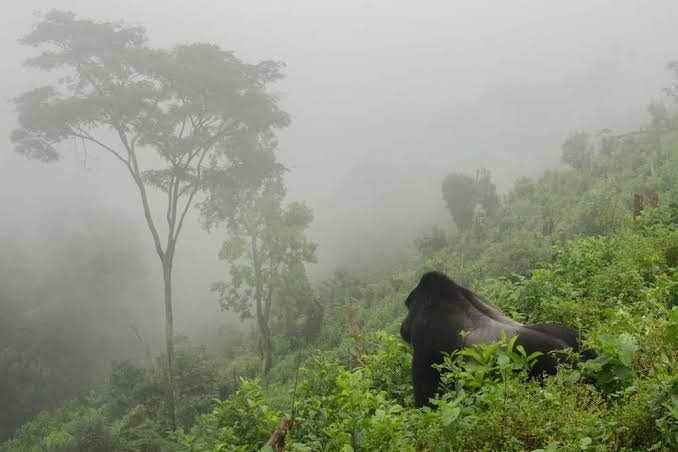
2 Days Uganda Gorilla Trekking from Kigali. For travellers based in Kigali who want the gorilla encounter without the compressed, dawn-to-dusk sprint of a single-day crossing, two days is the sweet spot. It adds one overnight stay in Uganda — just one — and in exchange removes almost all of the time pressure that makes the one-day version such a demanding day out. You still save significantly against a Rwanda-based trek, you still get a full, unhurried hour with a wild mountain gorilla family, and you get to do it without racing the clock on both sides of the border in a single stretch.
This itinerary is built around Mgahinga Gorilla National Park, Uganda’s smallest park and the closest gorilla destination to Kigali, though the same two-day structure works equally well if you’d rather trek in Bwindi Impenetrable Forest instead, at the cost of a slightly longer drive each way.
Why Two Days Instead of One
The one-day version of this trip is entirely possible, and plenty of travellers do it. But it means a 3:00 am start, two border crossings squeezed either side of a physically demanding forest trek, and a late arrival back in Kigali the same night. Adding a single overnight near the park changes the entire rhythm of the trip. You cross the border the evening before, sleep near the trailhead, and wake up already in position for the early-morning briefing rather than having driven through the night to reach it. The trek itself doesn’t change — you’re tracking exactly the same gorilla family, for exactly the same permitted hour — but the two days around it feel like a trip rather than an ordeal.
It also buys you a genuine margin for error. Border posts can be slow, mountain roads can be muddy, and gorilla families don’t always cooperate with a tight schedule. A second day absorbs all of that without threatening to unravel the whole plan.
Day One: Kigali to the Foot of the Volcanoes
Your day starts at a civilised hour rather than in the middle of the night. After breakfast in Kigali, the drive southwest toward the Ugandan border takes you through some of Rwanda’s most photogenic terraced countryside before reaching the Cyanika or Gatuna crossing. Immigration formalities on both sides are usually straightforward provided your visa and yellow fever documentation are in order, and from the Ugandan side of the border it’s a short run into Kisoro town, then on to Ntebeko Gate at the foot of the Virunga volcanoes.
With the whole afternoon free and no trekking to prepare for until the following morning, this is the point in the trip where a bit of flexibility pays off. Many travellers use the remaining daylight for a gentler introduction to the area — a walk around the lodge grounds with views of Mount Gahinga, Mount Sabinyo, and Mount Muhavura rising directly overhead, or a visit to a nearby community project. Dinner and an early night at a lodge near the park entrance sets you up properly for the next morning, which is the entire point of not trying to do this in a single day.
Day Two: The Trek Itself
Briefings for gorilla trekking begin early — typically around 7:00 or 8:00 am — with rangers assigning groups and outlining the rules of the encounter before sending small parties into the forest. In Mgahinga’s case, there’s only one habituated family, the Nyakagyezi group, so there’s no waiting to find out which family you’ve been allocated: everyone treks the same group, and the variable is simply how far they’ve moved since the previous evening.
The walk itself can last anywhere from thirty minutes to several hours through bamboo forest and steep volcanic terrain, and once the family is located, the encounter is capped at a strict one hour — enough time to watch silverbacks resting in dappled light, juveniles wrestling and tumbling through the undergrowth, and the unhurried, almost domestic rhythm of a wild gorilla family going about an ordinary morning. After the hour ends, it’s back down to Ntebeko Gate, a shower and lunch at the lodge, and the drive back through the border to Kigali, arriving in the evening with the whole experience behind you and no early alarm still to come.
What It Costs and Why the Savings Add Up
The financial logic here is the same as the one-day version, just spread across two days instead of one. A Uganda gorilla permit costs USD 800 per person, against Rwanda’s USD 1,500 for Volcanoes National Park — a difference of USD 700 per person that, for a couple or small group, comfortably covers the cost of an overnight lodge stay near Mgahinga with money to spare. The trekking experience itself, the species, the forest, and the one-hour encounter are broadly comparable across both countries, which is precisely why so many Kigali-based travellers choose the Uganda route on cost grounds alone.
The one additional expense this itinerary carries that the single-day version doesn’t is a night’s accommodation near the park, plus a Uganda visa if your nationality requires one arranged in advance rather than on arrival. Both are modest costs relative to the permit saving, and both add considerably to the comfort of the trip.
Making the Most of the Extra Time
Because you’re not racing back to Kigali the same evening, a two-day Mgahinga itinerary also opens the door to a few extras that the one-day version simply can’t accommodate. Golden monkey tracking, available only in Mgahinga’s bamboo zones on the Ugandan side of the Virunga range, pairs naturally with a gorilla trek and is considerably more affordable than a second gorilla permit. A guided walk with the Batwa community, the forest’s original inhabitants, adds a cultural dimension to what would otherwise be a purely wildlife-focused visit. And for travellers with a genuine appetite for more time in Uganda rather than a swift return to Rwanda, this two-day structure can easily be extended into a longer loop taking in Queen Elizabeth National Park or Kibale Forest National Park for chimpanzee trekking, rather than turning straight back toward the border.
Getting the Planning Right
The parts of this trip most likely to cause problems are the same as with the one-day version: documentation and timing. A valid passport, the correct Uganda visa arrangement for your nationality, and a yellow fever certificate are all worth confirming weeks in advance rather than at the border itself. Gorilla permits for Mgahinga’s single family are limited to eight visitors per day, so booking ahead — particularly during the June-to-September and December-to-February dry seasons — matters more here than almost anywhere else in the region.
Because this itinerary still involves an international border crossing on both the outbound and return legs, along with a permit booking, a lodge reservation, and a 4×4 transfer suited to the final stretch of road into the park, it’s worth working with an operator who can coordinate all of these pieces together rather than booking each element separately. A missed permit slot or a lodge booked on the wrong night can unravel a trip built around such a specific sequence of events.
Is Two Days the Right Choice for You
If the one-day crossing sounds appealing in principle but exhausting in practice, two days solves that problem cleanly. You get the same gorilla family, the same permit saving over Rwanda, and the same forest encounter, but with an actual night’s sleep near the park rather than a car seat, and enough breathing room in the schedule to add golden monkey tracking or a cultural visit without feeling rushed.
It’s still, at its core, a short, focused trip rather than a full Uganda safari — if your ambitions extend to chimpanzees, savannah game drives, or the Nile, this itinerary is better treated as the primate-focused opening or closing chapter of a longer journey rather than the whole of it. But as a way of experiencing world-class gorilla trekking from a Rwandan base, without either the cost of a Rwanda permit or the marathon quality of the single-day dash, two days from Kigali is very hard to beat.
Ready to build this into your trip? Get in touch with our travel experts and we’ll put together the permits, transfers, and lodge booking around your dates — or talk you through how it fits alongside a longer look at Uganda’s other parks if two days turns out to be just the beginning.