- LET'S PLAN YOUR SAFARI
- +256 200 921 002
- +256 793 194 703
- info@pickandtransfersafaris.com

Boat Cruise at Lake Mutanda
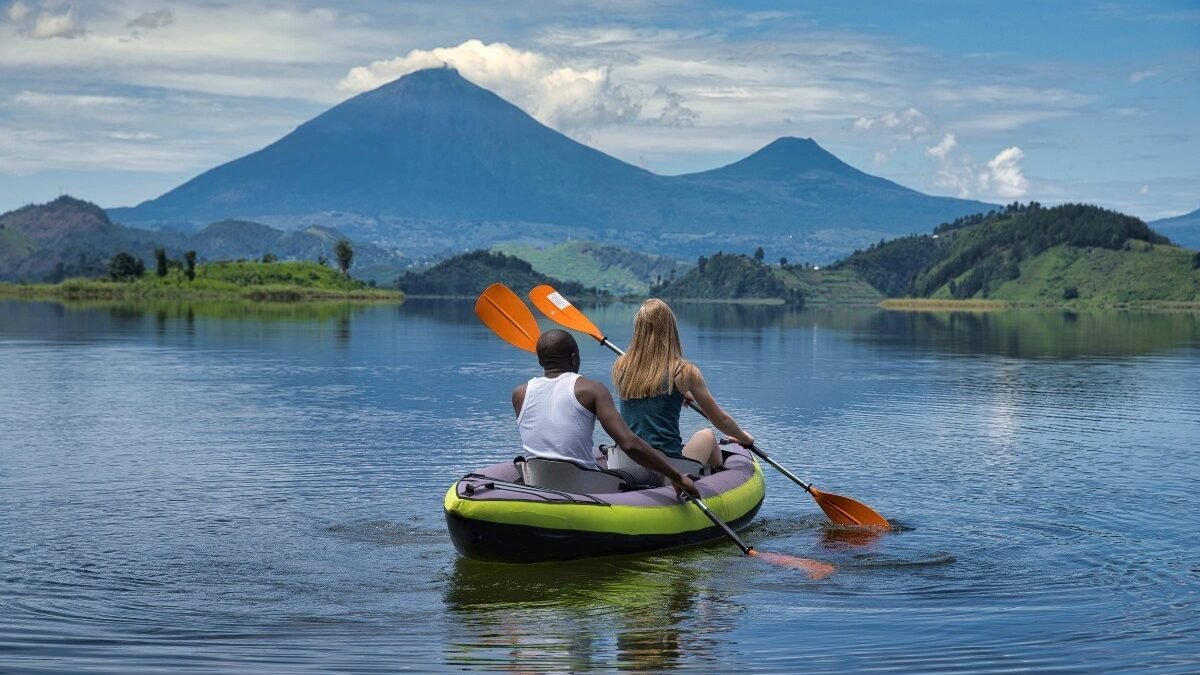
Boat Cruise at Lake Mutanda. After a demanding day of gorilla trekking or volcano hiking in Kisoro district, few experiences match the calm of gliding across Lake Mutanda’s still waters with the Virunga volcanoes rising in the distance. Just a short drive from Kisoro town and close to both Mgahinga Gorilla National Park and the southern sectors of Bwindi Impenetrable National Park, Lake Mutanda has become one of southwestern Uganda’s most popular add-on activities, and one of its most relaxing.
Whether you choose a traditional dugout canoe paddled by a local guide or a more leisurely motorboat cruise, a trip across Lake Mutanda offers island visits, birdwatching, and some of the best volcano views in the region, all at a gentle, unhurried pace. Here’s everything you need to know before you go.
Where Is Lake Mutanda and Why It’s Worth a Stop
Lake Mutanda sits roughly 10 to 20 kilometers north of Kisoro town, nestled at the foot of the Virunga Mountains. Formed by volcanic activity, the freshwater lake covers about 29 square kilometers and sits at an altitude of around 1,792 meters, making it the second-largest lake in the Kigezi region after Lake Bunyonyi. Its shoreline is framed by terraced hillsides, small farming communities, and, on a clear day, direct views of Mount Muhabura, Mount Sabyinyo, and Mount Gahinga.
Because it sits almost directly between Mgahinga Gorilla National Park and Bwindi’s Nkuringo and Rushaga sectors, Lake Mutanda works naturally into almost any Kisoro-based itinerary. Many travelers stop here specifically to unwind after a gorilla trek or volcano climb, while others build in a half or full day dedicated entirely to the lake.
Canoe vs Motorboat: Choosing Your Cruise
Lake Mutanda offers two main ways to get out on the water, and the right choice depends on your pace and interests.
Traditional dugout canoes, paddled by a local captain and guide, offer the more authentic and immersive experience. Guests are welcome to help paddle if they’d like, though it’s entirely optional, and life jackets are provided throughout. Canoe trips tend to move more slowly, giving you more time to take in the scenery, spot birds along the shoreline, and hear the guide’s commentary on the lake’s history and communities.
Motorboat cruises cover more distance in less time and are a good option for travelers with limited time or those who prefer a smoother, faster ride. Most operators offer both 1-hour and 2-hour motorboat options, making it easy to fit a cruise into a tight schedule between other activities.
Both options typically include a guide, and most lodges and community operators around the lake offer either choice depending on availability and group size.
What You’ll See on a Lake Mutanda Boat Cruise
Lake Mutanda is dotted with more than a dozen small islands, several of which are regular stops on a guided cruise.
- Mutanda Island, the largest in the lake, is home to the Abagesera community, a farming clan whose school, church, and daily life visitors can observe up close.
- Punishment Island, one of the more haunting historical stops, was traditionally used to abandon unmarried pregnant girls, a practice tied to the region’s pre-colonial customs.
- Python Island and Forest Island offer quieter, more scenic stops, sometimes with the chance to spot pythons or other wildlife along the shoreline.
Beyond the islands, the lake is a strong destination for birdwatching, with species including the grey crowned crane, pied kingfisher, pink-backed pelican, long-crested eagle, black-headed heron, and glossy ibis regularly spotted from the water. Keep an eye out, too, for the endangered clawless African otter, an elusive but occasional sighting on quieter stretches of the lake.
Cost and Duration of a Lake Mutanda Boat Cruise
Pricing varies depending on the operator and boat type, but as a general guide:
- Shared dugout canoe tours typically run from around $15 to $25 USD per person for a guided trip lasting one to two hours.
- Private canoe hire for a smaller group or solo traveler generally costs more, often in the range of $30 to $80 USD depending on trip length.
- Motorboat cruises tend to run from around $30 to $60 USD per person for one to two hours, with rates often decreasing per person as group size increases.
- Longer combination tours, such as a boat ride paired with a village walk, island hike, or Punishment Island visit, can run three to six hours and are typically priced accordingly.
Most cruises include a guide and often a bottle of water, though it’s worth confirming exactly what’s included when booking, since specifics vary between lodges and independent boat operators.
Best Time of Day (and Year) for a Cruise
Mornings, generally before 9 or 10 AM, are widely considered the best time for a Lake Mutanda cruise. The water tends to be calmer and easier to navigate, birds are more active, and the light is often clearer for photographing the volcanoes. That said, many travelers also enjoy a late-afternoon or sunset cruise, when the lake takes on a golden, still quality as the light fades behind the Virunga peaks.
While boat trips run on Lake Mutanda throughout the year, the dry season months of June to September and December to February offer the most consistently clear skies for volcano views, along with drier access roads leading to the lake’s launch points.
Where to Start Your Cruise
A handful of access points serve as launch sites for boat trips around the lake. The Mutanda Eco Community Centre, on the lake’s southern shore, is a popular starting point for canoe tours run by local guides and community-based operators. On the northern side, lodges such as Mutanda Lake Resort and Chameleon Hill Lodge offer both canoe and motorboat options directly from their own docks, often with flexible booking for guests staying elsewhere in the area, provided you arrange it a day in advance.
Combining a Boat Cruise with Gorilla Trekking and Volcano Hiking
Lake Mutanda’s location makes it an easy and popular addition to a Kisoro itinerary built around wildlife and hiking. A common pattern is to spend the morning gorilla trekking in Mgahinga or Bwindi, or completing a volcano climb such as Mount Muhabura, and then head to the lake in the afternoon to unwind with a relaxed canoe or motorboat ride. Travelers on multi-day itineraries sometimes dedicate an entire rest day to the lake, combining a cruise with a village walk, a hike to a nearby viewpoint, or simply time at a lakeside lodge.
If you’re planning a Kisoro itinerary and want to build in time at the lake alongside trekking or hiking, our safari packages page shows how these activities fit together, and our destinations page covers the wider region around Kisoro and Bwindi.
Other Activities Around Lake Mutanda
Beyond the boat cruise itself, the lake area offers a few additional ways to spend time. Guided nature walks and hikes wind through the surrounding terraced hills and villages, often combined with a short boat ride at the start or end. Mountain biking is available for more active travelers, with bikes available for rent in Kisoro or arranged through nearby lodges. Cultural walks with the Batwa community, offered both around Lake Mutanda and within Mgahinga Gorilla National Park, add historical and cultural depth to a visit focused otherwise on scenery and wildlife.
Planning Your Visit
Lake Mutanda works well as either a standalone half-day excursion or a longer, more immersive stop within a broader southwestern Uganda itinerary. If your schedule is tight, a one to two hour canoe or motorboat trip is enough to take in the islands, birdlife, and volcano views. If you have more time, pairing the cruise with a village walk or an island visit turns it into a fuller day of activity.
For general guidance on licensed tourism operators and attractions across the region, Uganda’s national tourism body, the Uganda Tourism Board, offers useful background on the country’s approach to community-based and nature tourism, of which Lake Mutanda is a strong example.
Ready to add a Lake Mutanda boat cruise to your Uganda itinerary? Contact our team and we’ll help you build the perfect balance of gorilla trekking, volcano hiking, and lakeside relaxation into your trip.