- LET'S PLAN YOUR SAFARI
- +256 200 921 002
- +256 793 194 703
- info@pickandtransfersafaris.com

Bwindi Gorilla Trek from Kigali
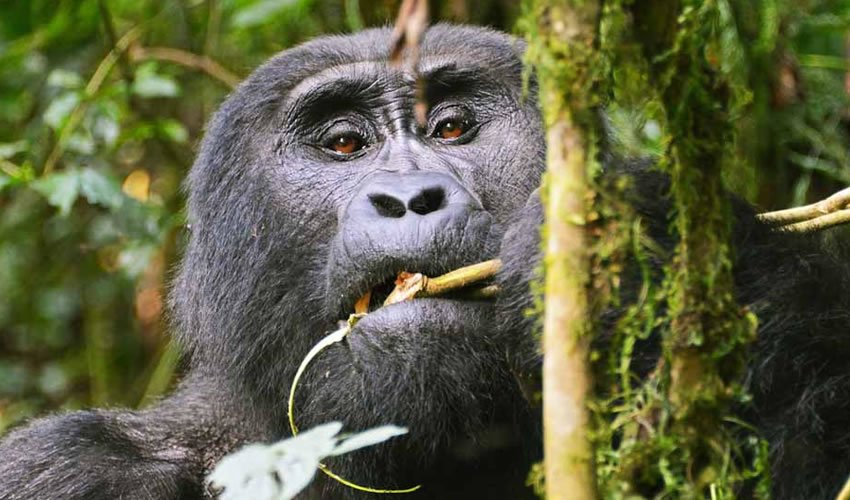
Bwindi Gorilla Trek from Kigali. Of Uganda’s two gorilla parks, Bwindi Impenetrable Forest is the one most people picture when they imagine gorilla trekking — nearly half the world’s remaining mountain gorillas, around twenty habituated families spread across four distinct trekking sectors, and a genuinely ancient rainforest that has stood largely unchanged for more than 25,000 years. What fewer people realise is that Bwindi is entirely reachable as a road trip from Kigali, without ever routing through Uganda’s own capital. The drive takes four to five hours, considerably less than the eight or nine hours it takes from Kampala, which makes Rwanda’s capital the more practical gateway for a large number of travellers heading specifically for Bwindi’s gorillas.
This matters because Bwindi and Rwanda’s Volcanoes National Park are often treated as interchangeable by first-time researchers, when in practice they offer meaningfully different experiences, at meaningfully different prices, both accessible from the same city.
Why Kigali Works as a Gateway to Bwindi
Bwindi sits in Uganda’s far southwest, in the Kisoro and Kanungu districts, close enough to the Rwandan border that the Cyanika crossing near Kisoro is the standard route for travellers coming from Kigali. Once across the border, the drive continues through Uganda’s own scenic southwest — rolling hills, terraced farmland, and the volcanic skyline of the Virunga range visible for much of the journey — before reaching whichever of Bwindi’s four sectors your permit has been allocated to.
The practical upshot is that Kigali International Airport, rather than Entebbe, becomes the natural arrival point for anyone whose Uganda visit is built primarily around gorilla trekking. It’s a well-worn route, not an improvised one, and Ugandan and Rwandan operators alike are set up to handle the cross-border logistics as a matter of routine.
Bwindi’s Four Sectors, and Why It Matters Which One You’re Assigned
Unlike Mgahinga, which has only one habituated gorilla family, Bwindi is divided into four sectors — Buhoma, Ruhija, Rushaga, and Nkuringo — each with its own set of habituated families and its own character. This matters for a Kigali-based trip specifically because of geography: Rushaga and Nkuringo, in Bwindi’s south, are considerably closer to the Cyanika border crossing than Buhoma and Ruhija in the north. Travellers coming from Kigali are typically routed to the southern sectors for exactly this reason, and Rushaga in particular — home to the greatest number of habituated families in the park, and the only sector offering the Gorilla Habituation Experience — tends to be the most common allocation for this route.
That’s a genuine advantage rather than a consolation prize. Rushaga’s concentration of families means permit availability tends to be more flexible here than elsewhere in Bwindi, and its habituation experience option gives travellers who want more than the standard hour a way to get it without adding an entirely separate destination to their trip.
What the Trip Actually Looks Like
A Bwindi trek from Kigali is not a single-day undertaking the way Mgahinga can be — the extra hour or two of driving each way makes a genuine same-day round trip impractical for anyone who also wants a proper trekking experience rather than a rushed one. Most itineraries are built around two days at minimum: travel to a lodge near Rushaga or Nkuringo on day one, an early-morning briefing and the trek itself on day two, followed by the drive back to Kigali.
The trek follows the same format found throughout the Virunga and Bwindi region: an early briefing at the sector headquarters, small groups of up to eight visitors assigned to a habituated family, and a search through the forest that can last anywhere from thirty minutes to several hours depending on where the gorillas have moved since the previous evening. Once located, the standard encounter runs a strict one hour — though travellers who’ve opted for the Habituation Experience in Rushaga can spend as long as four hours with a semi-habituated family, guided by researchers rather than simply rangers.
Bwindi Versus Mgahinga From a Kigali Starting Point
Travellers researching this route inevitably end up comparing Bwindi to Mgahinga Gorilla National Park, Uganda’s other, much smaller gorilla destination and the closer of the two to Kigali. The honest answer is that neither is objectively better — they suit different priorities.
Mgahinga is roughly two to three hours from Kigali, has just one habituated family, and sits within a dramatic, compact volcanic landscape that also offers golden monkey tracking. It’s the natural choice for travellers with limited time who want the shortest possible version of this trip. Bwindi takes longer to reach but offers vastly more choice — around twenty families across four sectors, denser and more varied forest, the option of the Habituation Experience, and a wider range of accommodation from budget to ultra-luxury. For travellers with a bit more time to give the trip, or those who’ve already trekked in Rwanda and want a genuinely different forest and set of families rather than the same landscape from the Ugandan side, Bwindi is usually the stronger pick.
The Cost Case for Choosing Uganda
The single biggest reason travellers choose Bwindi over Rwanda’s Volcanoes National Park, despite the longer drive, is price. A Uganda gorilla permit costs USD 800 per person, against Rwanda’s USD 1,500 — a saving of USD 700 that, for two travellers, comfortably covers the additional lodge night and transport costs this route requires compared with a straight Rwanda-based trek. The trekking experience itself — the species, the forest encounter, the strict one-hour visit — is broadly comparable between the two countries; the price gap reflects Rwanda’s more polished tourism infrastructure and premium positioning rather than a fundamentally different wildlife experience.
Planning the Details
Because this route involves an international border crossing, the paperwork deserves attention well before travel dates are fixed. A valid passport, the correct Uganda visa arrangement for your nationality — whether a standard visa or the East Africa Tourist Visa — and a yellow fever vaccination certificate should all be confirmed in advance rather than assumed at the crossing itself. Gorilla permits, even across Bwindi’s twenty-odd families, are limited and issued by the Uganda Wildlife Authority well ahead of peak season, so booking early matters considerably more during the June-to-September and December-to-February dry seasons, when demand from both countries is at its highest.
Given the number of moving pieces involved — permit booking, sector allocation, cross-border transfer, and lodge reservation — coordinating the whole trip through a single operator rather than arranging each element separately removes most of the risk of something slipping through the gaps, particularly around which sector you’re assigned and how that affects your drive time from the border.
Is Bwindi the Right Choice From Kigali?
If your priority is the shortest, simplest possible gorilla trip from Rwanda’s capital, Mgahinga remains the faster and more compact option. But if you have an extra day to give the trip, want a wider choice of gorilla families, or are drawn to the possibility of the Habituation Experience, Bwindi from Kigali is a genuinely rewarding route — not a compromise made necessary by geography, but a deliberate choice that happens to be more affordable, and only a little further, than trekking on the Rwandan side of the same mountains.
Ready to plan it? Get in touch with our travel experts and we’ll help you choose the right sector, arrange your permits and cross-border transfer, and build in any extra time you’d like for chimpanzee trekking in Kibale or the tree-climbing lions of Queen Elizabeth National Park once you’re already across the border. Our destinations page covers the rest of what’s within reach from here.