- LET'S PLAN YOUR SAFARI
- +256 200 921 002
- +256 793 194 703
- info@pickandtransfersafaris.com

Can book a Uganda Gorilla Safari Now
Every year, thousands of travelers type the same question into Google: “can I book a Uganda gorilla safari now?” The short answer is yes — and this guide walks you through exactly how, when, and why Uganda remains the single best place on earth to stand a few meters from a wild mountain gorilla. Whether you are dreaming of a quick one-day trek from Kigali or a full two-week primates-and-wildlife adventure, Uganda’s gorilla trekking industry is open, well organized, and ready to welcome you into Bwindi Impenetrable Forest and Mgahinga Gorilla National Park. You can book a Uganda Gorilla Safari Now and embark on this unforgettable journey.
This article is written for travelers who are serious about turning that dream into a confirmed booking. We will cover permits, pricing, timing, logistics, packing, health requirements, and the exact steps you need to take to secure your place with a habituated gorilla family. By the end, you will know not just whether you can book a Uganda gorilla safari right now, but precisely how to do it the smart way.
Why Uganda Is the Ultimate Gorilla Trekking Destination
Uganda is often called the Pearl of Africa, and nowhere is that nickname more deserved than in its forested southwest, where more than half of the world’s remaining mountain gorillas live. Unlike many endangered species that exist only in zoos or heavily managed sanctuaries, Uganda’s mountain gorillas roam free in ancient rainforest, and a small number of habituated families allow small groups of visitors to observe them for one unforgettable hour each day.
What makes Uganda stand out from neighboring gorilla destinations is the combination of accessibility, affordability, and biodiversity. Rwanda’s Volcanoes National Park is famous and beautiful, but its permits cost significantly more than Uganda’s. The Democratic Republic of Congo has gorillas too, but ongoing instability makes it a far riskier choice for most travelers. Uganda, by contrast, offers a stable, tourist-friendly environment, two separate gorilla trekking parks, and permit prices that remain within reach of budget and mid-range travelers, not just luxury clients.
Beyond the gorillas themselves, Uganda offers chimpanzee tracking in Kibale Forest, tree-climbing lions in Queen Elizabeth National Park, and the thundering waters of Murchison Falls. Few countries let you combine primate trekking with big-game safaris and boat cruises on the Nile within a single, manageably sized itinerary. If you’re weighing where to spend your gorilla trekking budget, our Uganda Gorilla Safaris collection breaks down the parks, routes, and durations available to you.
Yes, You Can Book a Uganda Gorilla Safari Right Now
Let’s answer the headline question directly: Uganda’s gorilla trekking parks are open year-round, and permits are available for booking today, subject to availability on your preferred dates. There is no closed season, no lottery system, and no need to wait for a special travel window. What does change throughout the year is trekking difficulty (due to rainfall) and how far in advance you need to book to guarantee a specific date, especially during the July–September and December–February high seasons.
So, if you’ve been wondering whether you can book a Uganda Gorilla Safari Now, the answer is a resounding yes!
Because only eight visitors are allowed to visit each habituated gorilla family per day, and Uganda currently manages a limited number of habituated families across Bwindi’s four trekking sectors and Mgahinga, permits sell out during peak months. This is precisely why “can I book now” is such a common search — travelers want reassurance that acting today, rather than waiting, is the right move. In almost every case, it is. Gorilla permits are a finite daily resource, and the earlier you lock in your date, the more flexibility you have over lodges, transport, and the rest of your itinerary.
If your travel dates are flexible, you have even more room to maneuver, since shoulder-season months often have better permit availability alongside slightly quieter trails. Either way, the process of securing a permit today is straightforward once you understand how the system works, which we’ll unpack in the next few sections.
Understanding the Uganda Gorilla Permit System
A gorilla trekking permit is a legal document issued by the Uganda Wildlife Authority (UWA) that grants one visitor access to trek and spend one hour observing a specific habituated gorilla family on a specific date. Permits are not optional add-ons; they are mandatory, non-transferable, and strictly capped at eight trekkers per gorilla family per day. This cap exists to protect the gorillas from stress, disease transmission, and habitat disturbance, and it’s the core reason gorilla tourism has succeeded as a conservation tool rather than a threat to the species.
As of the current pricing structure, a Uganda gorilla permit costs USD 800 for foreign non-residents, a lower rate for foreign residents, and a significantly discounted rate in Uganda shillings for East African citizens. This fee funds park management, ranger salaries, anti-poaching patrols, and revenue-sharing programs that channel a percentage of permit income directly back into the communities living around Bwindi and Mgahinga. When you purchase a permit through a licensed tour operator, you are effectively buying entry into one of the most successful wildlife conservation stories on the continent.
Permits must be booked in advance, and most operators — including Kenlink Tours’ gorilla tour booking service — will handle the UWA reservation process on your behalf once you confirm your dates and pay a deposit. It’s worth noting that permits are allocated to specific sectors of Bwindi (Buhoma, Ruhija, Rushaga, or Nkuringa) or to Mgahinga, so your accommodation choice should be matched to your permit’s trekking sector to avoid long, unnecessary transfers on trekking morning.
Best National Parks for Gorilla Trekking in Uganda
Uganda offers two distinct gorilla trekking destinations, and choosing between them — or combining both — shapes the rest of your itinerary.
Bwindi Impenetrable National Park is Uganda’s flagship gorilla destination, home to roughly half of the world’s mountain gorilla population spread across four trekking sectors. Its dense, ancient rainforest gives the park its name, and the terrain ranges from moderately challenging to genuinely strenuous depending on which sector and family you’re assigned. Bwindi’s sheer scale means it offers the widest range of habituated families and the most flexibility for group bookings.
Mgahinga Gorilla National Park, in Uganda’s far southwest corner within the Virunga Mountains, is smaller and quieter. It typically hosts a single habituated gorilla family, but it comes with a bonus: golden monkey trekking is also available here, giving travelers a two-primate experience in one location. Mgahinga’s proximity to the Rwanda and Congo borders also makes it the natural choice for travelers combining Uganda gorillas with a Volcanoes National Park extension.
For travelers deciding between the two, our Bwindi Impenetrable National Park destination guide and our Mgahinga Gorilla National Park destination guide lay out the trekking sectors, wildlife, and access routes for each, so you can match the park to your fitness level, timeline, and broader itinerary.
Bwindi Impenetrable National Park: The Gorilla Capital
Bwindi earns its “Impenetrable” name honestly. Its 331 square kilometers of tangled, mist-covered rainforest sit on the edge of the Albertine Rift Valley, and the altitude here ranges from around 1,160 to 2,607 meters, meaning trekking conditions vary dramatically depending on which sector your permit is allocated to. Buhoma, in the north, is the most established and accessible sector with a well-developed network of lodges. Ruhija sits at higher altitude and offers cooler treks with excellent birdlife. Rushaga and Nkuringo, in the south, are closer to the Rwanda border and typically favored by travelers approaching Bwindi via Kigali.
Each sector hosts multiple habituated gorilla families, and UWA assigns visitors to a specific family the morning of the trek based on ranger assessments of the gorillas’ likely location. Trekking can last anywhere from one to seven hours round trip, depending on how far the family has moved since the previous sighting. This unpredictability is part of what makes gorilla trekking such a genuine wilderness experience rather than a scripted encounter — you are following wild animals through their own habitat, not visiting a managed enclosure.
Bwindi’s biodiversity extends well beyond gorillas. The forest hosts over 350 bird species, several other primate species, and some of East Africa’s richest plant diversity. Many travelers pair their gorilla trek with a guided forest walk or a visit to the Batwa pygmy community, whose ancestral knowledge of the forest predates the park’s creation by generations.
Mgahinga Gorilla National Park: The Golden Monkey Bonus
While Bwindi tends to dominate the marketing conversation around Uganda gorilla safaris, Mgahinga deserves serious consideration, particularly for travelers arriving via Kigali. Mgahinga sits within the Virunga Conservation Area, the same volcanic mountain range shared with Rwanda’s Volcanoes National Park and Congo’s Virunga National Park, meaning the gorillas here belong to the same broader population as their more famous Rwandan cousins.
Mgahinga’s key advantage is proximity to Kigali. Travelers who land in Rwanda’s capital can reach the Uganda border crossing at Cyanika in a few hours, making Mgahinga the natural choice for short, efficient itineraries. This is exactly why we built shorter options like the 1 Day Uganda Gorilla Safari Starting from Kigali, which lets travelers with limited time trek Uganda’s gorillas without sacrificing an entire week of their trip.
Beyond gorillas, Mgahinga is one of only a handful of places in the world where you can trek golden monkeys, an endangered and strikingly colorful primate species endemic to the Virunga Mountains. Many visitors combine a gorilla trekking day with a separate golden monkey trekking day, creating a compact two-primate wildlife experience that rivals anything available in neighboring countries.
Starting Your Gorilla Safari from Kigali, Rwanda
One detail that surprises many first-time travelers: starting a Uganda gorilla safari from Kigali is often more practical than starting it from Uganda’s own capital, Entebbe. The drive from Entebbe to Bwindi or Mgahinga typically takes nine to eleven hours over Uganda’s southwestern roads. The drive from Kigali to the same parks, by contrast, is considerably shorter, since Kigali sits much closer to the Virunga region than Entebbe does.
This geographic reality has shaped an entire category of gorilla safaris designed specifically for travelers flying into Kigali International Airport rather than Entebbe. These itineraries — ranging from single-day treks to multi-day combinations with Rwanda’s own attractions — let visitors experience Uganda’s more affordable gorilla permits without enduring Uganda’s longer domestic transfer times.
If your flights land you in Kigali, it’s worth exploring our dedicated Uganda Safaris Starting from Rwanda collection, which includes everything from a rapid one-day cross-border trek to five-day combinations pairing Uganda gorillas with Rwanda’s own wildlife and cultural experiences. This routing strategy is one of the most practical ways to save both time and money on a gorilla trekking trip, and it’s a detail many first-time travelers simply don’t discover until they’ve already booked flights into the wrong airport.
Best Time to Book and Trek Uganda Gorillas
Uganda’s gorilla trekking parks operate year-round, but the country’s two dry seasons — roughly December through February and June through September — offer the most favorable trekking conditions. Trails are drier and less slippery, and the physically demanding sections of forest are somewhat easier to navigate. These dry months also coincide with the Northern Hemisphere’s summer and winter holiday periods, which is exactly why permit demand spikes during July, August, September, and the December festive season.
The two rainy seasons, roughly March through May and October through November, bring heavier rainfall and muddier trails, but they are far from off-limits. In fact, many experienced safari travelers deliberately choose the shoulder or rainy seasons because permits are easier to secure on short notice, lodges offer better rates, and the forest itself is lusher and greener. Gorilla trekking during the rains simply requires better rain gear and a realistic expectation that the trek may be more physically demanding underfoot.
In terms of booking timing specifically, if your travel dates fall within peak season, you should aim to secure your permit three to six months in advance. If you’re traveling during shoulder or low season, booking four to eight weeks ahead is often sufficient, though earlier is always safer given Uganda’s limited daily permit allocation. There is genuinely no bad time of year to trek gorillas in Uganda — there is only a difference in how far ahead you need to plan.
How Far in Advance Should You Book?
The honest answer depends on three variables: your travel season, your preferred park sector, and your group size. Solo travelers and couples have more flexibility, since they only need two available permit slots rather than a block for a larger family or friend group. Larger groups traveling together — especially those who want to trek as a unit rather than being split across different gorilla families — need to book earlier to guarantee enough permits in the same sector on the same date.
As a general rule of thumb: for July through September and the December holiday period, aim to confirm your permit at least four to six months ahead. For quieter months like April, May, and November, six to eight weeks is often enough, though popular sectors like Rushaga and Buhoma can still sell out faster than less-visited ones like Ruhija.
It’s also worth remembering that permits are only one piece of the puzzle. Lodges near Bwindi and Mgahinga range from budget guesthouses to high-end eco-lodges, and the better mid-range and luxury properties near the park gates also fill up during peak months. Booking your permit and accommodation together, through an operator who can coordinate both, removes the risk of securing a gorilla permit only to discover your preferred lodge is fully booked on the same date.
Step-by-Step: How to Book Your Uganda Gorilla Safari
Booking a Uganda gorilla safari is more straightforward than most first-time travelers expect, provided you follow a logical sequence rather than trying to arrange every element independently.
The first step is choosing your trekking park and sector, based on where you’re flying into (Entebbe or Kigali), how much time you have, and whether you want to combine gorillas with golden monkeys, chimpanzees, or big-game safaris. Second, decide on your trip length. Uganda gorilla safaris range from single-day treks starting and ending in Kigali to two-week combination safaris covering multiple parks. Our 3 Days Uganda Gorilla Safari is a popular middle-ground option for travelers who want a genuine safari experience without committing a full week.
Third, share your travel dates and group size with a licensed tour operator, who will check permit availability directly with the Uganda Wildlife Authority and confirm a reservation once you pay the required deposit — typically the full permit cost plus a portion of the overall trip cost. Fourth, book your accommodation in the same sector as your confirmed permit to avoid unnecessary transfer time on trekking day. Fifth, arrange your flights and any visa requirements well ahead of departure. Finally, confirm your packing list and any pre-trek health requirements, which we cover in detail below.
Operators like Kenlink Tours’ Uganda safari booking process outline a similar structure: send an inquiry with your dates and group size, receive a tailored itinerary and quote, confirm with a deposit, and receive full trip documentation ahead of arrival. Whichever operator you choose, the underlying sequence — park, dates, permit, accommodation, flights, packing — remains the same, and following it in order prevents the common mistake of booking flights before confirming permit availability.
What to Expect During Gorilla Trekking
Trekking day begins early, typically with a briefing at the park headquarters around 7:00 or 8:00 a.m., where rangers divide visitors into groups of up to eight and assign each group to a specific habituated gorilla family. Before setting off, rangers share updates on the family’s last known location, gathered from trackers who enter the forest ahead of the main group at dawn.
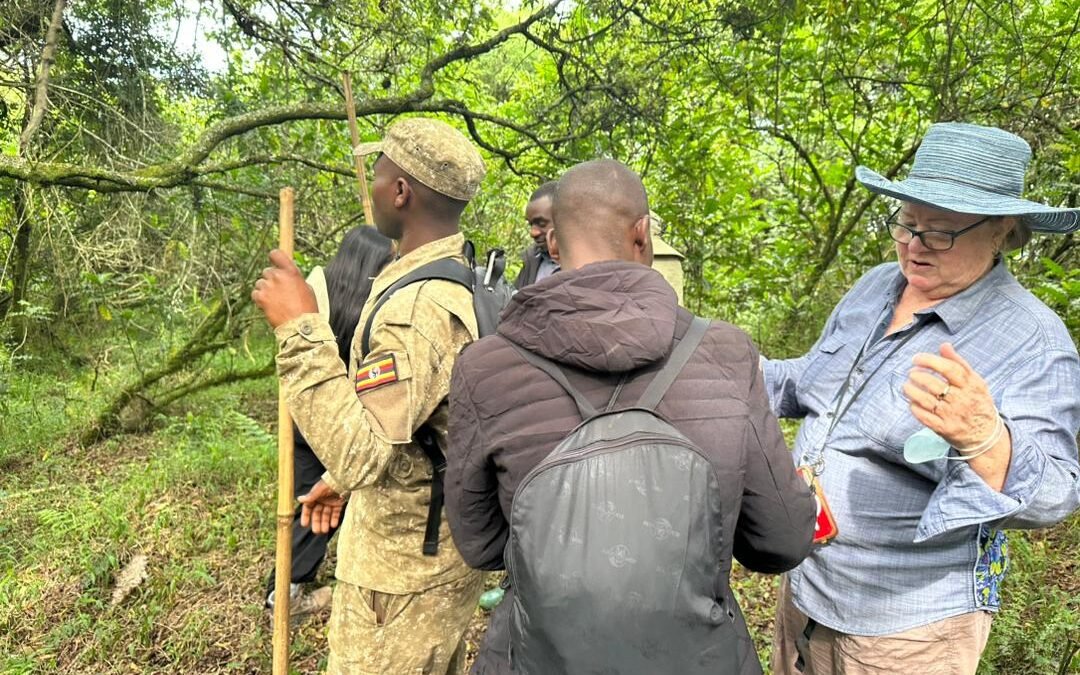
The trek itself can last anywhere from one to seven hours round trip, through dense vegetation, steep slopes, and sometimes muddy or slippery terrain. A walking stick, provided or rented at the trailhead, is genuinely useful rather than optional. Porters are available to carry daypacks and offer a helping hand on tricky sections, and hiring one is both a practical decision and a direct way to support the local community.
Once the trackers locate the gorilla family, visitors leave backpacks and walking sticks behind and approach quietly in single file, maintaining the mandated distance from the animals. What follows is a single hour with the gorillas — watching silverbacks assert their presence, juveniles play, and mothers tend to infants, often at astonishingly close range. Photography is permitted, though flash photography is not, since it can startle the animals. After the hour concludes, rangers guide the group back out of the forest, and most lodges arrange a well-earned hot meal upon return — a moment many travelers extend into a full rest day if their itinerary, like our 5-Day Uganda Gorilla and Chimpanzee Safari, has built in the time for it.
Packing List and Trekking Preparation
Preparing properly for a gorilla trek significantly improves your comfort and safety in the forest. Sturdy, broken-in hiking boots with good ankle support are essential, since trails are uneven and often muddy regardless of season. Waterproof, breathable rain gear is non-negotiable given Uganda’s unpredictable mountain weather, even during the drier months.
Long-sleeved shirts and trousers, ideally in neutral colors, protect against stinging nettles, thorny vegetation, and biting insects along the trail. Gardening gloves or lightweight trekking gloves are a small addition that make a noticeable difference when grabbing onto vegetation on steep sections. A daypack with rain cover, at least two liters of water, energy snacks, and a basic first aid kit rounds out the core essentials.
Insect repellent, sunscreen, and a hat are important even on overcast days, since Bwindi and Mgahinga sit at altitude where UV exposure is stronger than travelers often expect. A good zoom lens or binoculars enhances the gorilla encounter itself, since regulations require maintaining distance from the animals. Finally, cash in small denominations is useful for tipping rangers, trackers, and porters, who rely heavily on tips as part of their income and who make the entire trekking experience safer and more enjoyable.
Combining Gorilla Trekking with Other Uganda Experiences
While gorilla trekking is the headline attraction, most travelers extend their trip to include at least one or two other Uganda highlights, since the country’s national parks are close enough together to combine efficiently. Kibale Forest National Park, known as the primate capital of the world, offers exceptional chimpanzee tracking and pairs naturally with a Bwindi gorilla trek on a longer itinerary.
Queen Elizabeth National Park, famous for its tree-climbing lions and boat cruises along the Kazinga Channel, is another common addition, offering classic big-game viewing alongside primate trekking. For travelers with more time, Murchison Falls National Park delivers dramatic waterfall scenery, boat safaris on the Nile, and excellent game drives across Uganda’s largest protected area.
Travelers who want all three — gorillas, chimpanzees, and classic game viewing — in one trip often choose our 7 Days Uganda Safari, One Week Tour, which was specifically designed to introduce first-time visitors to Uganda’s three signature wildlife experiences without stretching the trip beyond a manageable week. For those with even more time and a desire to see nearly everything Uganda offers, the 10 Days Uganda Primates and Wildlife itinerary remains our most complete option, layering Murchison Falls, chimpanzee tracking, and gorilla trekking into a single grand safari.
Kenlink Tours takes a similar combination approach on the Rwanda side of the border, and their overview of combining gorilla trekking with culture on a Uganda-Rwanda safari is worth reading if you’re weighing how much cultural programming, such as Batwa community visits, to build into your itinerary alongside the wildlife.
Budget vs Luxury: Choosing the Right Safari Package
One of the most common misconceptions about gorilla trekking is that it’s an inherently expensive, luxury-only experience. While the gorilla permit fee itself is fixed regardless of your accommodation choice, the rest of your safari — lodging, transport, and meals — can be scaled to almost any budget.
Budget travelers can stay in comfortable guesthouses near the park gates, travel in shared safari vehicles, and still complete the exact same trek as guests paying five times more for a luxury eco-lodge with a private plunge pool overlooking the forest canopy. Mid-range travelers get the best of both worlds: solid, comfortable lodges with good food and reliable hot water, without the premium price tag of the most exclusive properties. Luxury travelers, meanwhile, can access award-winning eco-lodges built directly into the forest edge, offering exceptional service, gourmet dining, and unmatched views, often at rates that rival top safari lodges anywhere in Africa.
The key is matching your accommodation tier to your overall travel style rather than assuming gorilla trekking requires a luxury budget. This is precisely the philosophy behind our own approach — we design safari packages with budget and mid-range travelers specifically in mind, ensuring that the extraordinary experience of meeting mountain gorillas isn’t limited to the small percentage of travelers who can afford five-star lodges. You can learn more about that mission on our About Us page.
Health, Safety and Travel Requirements
Before booking, it’s worth reviewing Uganda’s entry and health requirements so nothing derails your trip after you’ve already secured a permit. Most nationalities need a visa to enter Uganda, and while online e-visa applications are available, many travelers find it simpler to obtain a visa on arrival at Entebbe International Airport for a set fee — Kenlink Tours’ overview of Uganda safari planning essentials covers this in more detail. If you’re routing through Rwanda first, note that Rwanda and Uganda both participate in the East African Tourist Visa scheme, which can simplify multi-country travel if your itinerary crosses both borders.
A yellow fever vaccination certificate is typically required for entry into Uganda, and travelers should consult a travel health clinic well ahead of departure regarding malaria prophylaxis, routine vaccinations, and any destination-specific health advice. Gorilla trekking itself comes with a few important health rules: visitors displaying symptoms of a cold, flu, or other communicable illness may be asked to skip their trek, since gorillas are highly susceptible to human respiratory illnesses and even a mild cold can pose a serious risk to the population.
Physical fitness matters more than most travelers expect. While trekking difficulty varies by sector and gorilla family location, treks can involve several hours of hiking on steep, uneven terrain at altitude. Travelers with mobility concerns should discuss fitness levels honestly with their operator when booking, since certain sectors and porter arrangements can be tailored to accommodate a wider range of physical abilities.
Why Book with Pick and Transfer Safaris
Pick and Transfer Safaris was built around a simple idea: exploring Uganda and Rwanda’s wildlife shouldn’t be reserved for travelers with unlimited budgets. Our packages are deliberately designed for budget and mid-range travelers, without cutting corners on the elements that matter most — reliable permit bookings, well-maintained vehicles, knowledgeable guides, and accommodation that matches your travel style rather than someone else’s idea of luxury.
We specialize in gorilla safaris starting from both Entebbe and Kigali, which means we can build the most time- and cost-efficient route based on where your flights actually land, rather than forcing every itinerary through Uganda’s capital. For independent-minded travelers, we also offer a self-drive safari option, giving you the freedom to explore at your own pace with a reliable 4×4 and expert route guidance, while our guided packages handle every logistical detail from permit reservation to airport transfers.
Beyond the trekking experience itself, we’re committed to responsible tourism that genuinely benefits the communities surrounding Bwindi and Mgahinga, including ongoing support for local community projects. When you book with us, a portion of the value you’re paying for goes directly back into the region that makes this experience possible in the first place. If you’re ready to start planning, our Contact Us page is the fastest way to reach our team and get a tailored gorilla safari quote based on your dates, budget, and group size.
Gorilla Trekking Rules and Etiquette
Uganda Wildlife Authority enforces a strict code of conduct during gorilla treks, and understanding these rules ahead of time helps first-time trekkers feel prepared rather than caught off guard. Visitors must maintain a minimum distance of seven meters from the gorillas at all times, though the animals themselves are wild and sometimes choose to approach visitors more closely, in which case rangers instruct the group on how to respond calmly.
Loud noises, sudden movements, and flash photography are all prohibited, since they can startle a family and disrupt their natural behavior. Eating, drinking, and smoking are not permitted once you’re in the presence of the gorillas, and visitors are asked to cover their mouths if they need to cough or sneeze, given how easily human respiratory illnesses can transfer to gorillas. Groups are capped at eight visitors per family specifically to minimize stress on the animals and reduce the risk of disease transmission.
Rangers carry the final authority during every trek. If they determine that a situation calls for the group to retreat, wait, or adjust position, visitors are expected to comply immediately and without argument. These rules exist because Uganda’s gorilla tourism model was built from the outset around the principle that tourism revenue should fund conservation, not threaten it, and that balance depends on every visitor respecting the guidelines rangers have spent decades refining.
Comparing Uganda and Rwanda for Gorilla Trekking
Travelers researching gorilla safaris inevitably compare Uganda to Rwanda, since both countries offer access to the same broader mountain gorilla population within the Virunga and Bwindi ecosystems. The most obvious difference is price: Uganda’s gorilla permit costs meaningfully less than Rwanda’s, making Uganda the more budget-friendly choice for travelers who want to allocate more of their budget toward lodges, activities, or a longer overall trip.
Rwanda’s Volcanoes National Park offers shorter, generally less physically demanding treks due to gentler terrain and better road access to the park boundary, along with a well-developed luxury lodge scene. Uganda’s Bwindi, true to its name, tends to involve steeper, denser forest trekking, but this comes with a payoff: a genuinely wilder, less manicured experience, plus access to nearly twice as many habituated gorilla families spread across four distinct sectors, giving Uganda more overall permit availability during peak season.
Many experienced Africa travelers ultimately choose Uganda specifically because it combines gorilla trekking with a far broader range of other wildlife experiences within a single, moderately sized country. Rwanda is compact and gorilla-and-culture focused; Uganda adds savannah game drives, chimpanzee tracking, and Nile boat safaris into the same trip. For travelers who can’t decide, combining both — trekking gorillas in Uganda’s Mgahinga and then crossing into Rwanda for a Volcanoes National Park gorilla trek or Kigali’s cultural sites — is entirely feasible given how close the two countries’ gorilla parks sit to one another. Kenlink Tours’ Gorilla Safari Holidays in Uganda overview offers a useful second perspective on how the two countries’ trekking experiences compare.
A Sample Day-by-Day Gorilla Trekking Itinerary
To make the booking process feel more concrete, it helps to walk through what an actual short gorilla safari looks like on the ground. On day one, most itineraries begin with an early morning departure from Kigali or Entebbe, traveling by road toward Bwindi or Mgahinga. Travelers starting from Kigali typically arrive at their lodge by early afternoon, leaving time to rest, enjoy the lodge’s forest views, and attend a pre-trek briefing about what to expect the following morning.
Day two is trekking day. Guests wake before dawn, enjoy an early breakfast, and arrive at the park headquarters for the 7:00 or 8:00 a.m. briefing, where rangers assign each group to a specific gorilla family. The trek itself follows, lasting anywhere from one to seven hours depending on the family’s location, followed by the treasured hour of observation and the return hike to the trailhead. Most lodges have a hot meal and a hot shower waiting on arrival back, and the afternoon is typically left open for rest or an optional community walk.
For travelers on longer itineraries, day three might involve a transfer toward another park — Queen Elizabeth for game drives, Kibale for chimpanzee tracking, or back across the border toward Kigali for a flight home. Shorter one- and two-day itineraries compress this sequence into a tighter window, which is exactly why routes like our 2 Days Uganda Gorilla Tour Starting from Kigali exist: they give travelers with limited vacation time a realistic, well-paced way to trek gorillas without needing to build an entire week around a single activity.
Cultural Experiences Around Bwindi and Mgahinga
Gorilla trekking is often the headline reason travelers visit southwestern Uganda, but the region surrounding Bwindi and Mgahinga is home to rich cultural traditions worth building into your itinerary. The Batwa people, historically forest-dwelling hunter-gatherers, lived within what is now Bwindi Impenetrable Forest for generations before the park’s creation relocated them to surrounding settlements. Many former Batwa communities now offer guided cultural walks and performances that share their traditional knowledge of forest medicine, hunting techniques, and folklore, providing income that helps sustain community life outside the park boundary.
Beyond the Batwa experience, the terraced hillsides and volcanic landscapes around Kisoro and Kabale offer scenic drives past small farming communities, local markets, and Lake Bunyonyi, often described as one of the most beautiful lakes in Africa. Many travelers extend a short gorilla trek with a night or two at Lake Bunyonyi, enjoying canoe trips between its many small islands and a noticeably slower pace after the exertion of trekking day.
These cultural add-ons rarely require significant extra travel time, since they sit close to the same lodges and roads used for gorilla trekking itself. Building even a half-day cultural visit into your itinerary adds meaningful context to the trip and directly supports the communities whose land and history are intertwined with Uganda’s conservation success story.
How Gorilla Tourism Funds Conservation
It’s worth understanding why gorilla permits cost as much as they do, since the pricing structure is directly tied to one of the most effective conservation funding models in Africa. A significant share of every permit fee goes toward park management, ranger salaries, and anti-poaching patrols that have helped Uganda’s mountain gorilla population grow steadily over recent decades, even as the species remains globally endangered.
A separate portion of permit revenue is channeled into a formal revenue-sharing scheme with communities living around Bwindi and Mgahinga, funding schools, health clinics, and infrastructure projects in areas that might otherwise see little benefit from a national park on their doorstep. This model has helped shift local attitudes toward the park from resentment over lost farmland to active investment in its protection, since community livelihoods are now measurably tied to gorilla tourism’s continued success.
Choosing a responsible tour operator matters here too. Operators who prioritize fair wages for guides and porters, support community projects, and follow UWA’s conservation guidelines closely help ensure that your trekking fee does the maximum possible good. This is part of why we highlight our own community support work, including our ongoing partnership with a local children’s foundation, as a core part of what we do rather than an afterthought.
Common Booking Mistakes to Avoid
A surprising number of gorilla trekking trips run into avoidable problems, almost always because of a handful of predictable mistakes. The most common is booking flights before confirming permit availability, which can leave travelers with a confirmed arrival date in Uganda but no available permit for their preferred park sector. Always confirm your permit reservation, or at minimum verify availability with your operator, before finalizing flights.
A second common mistake is underestimating transfer times between Entebbe and the gorilla parks. Travelers who assume they can land in Entebbe and trek gorillas the following morning are almost always disappointed, since the drive alone can take nine to eleven hours. This is precisely why routing through Kigali, or building in an overnight stop along the way, matters so much for realistic trip planning.
A third mistake is choosing accommodation in the wrong trekking sector. Since Bwindi’s four sectors are spread across a large area, a lodge booked near Buhoma won’t necessarily offer convenient access if your permit ends up assigned to Rushaga. Coordinating your permit sector and lodge booking through the same operator, rather than booking them independently through different websites, is the simplest way to avoid this entirely — our Destinations page is a good starting point for matching parks and sectors to the rest of your route.
Finally, many travelers underestimate the physical demands of trekking and arrive without appropriate footwear, rain gear, or a basic level of trekking fitness. While porters and rangers can help manage a difficult trek, showing up prepared makes the experience significantly more enjoyable and reduces the risk of needing to turn back early.
Photography Tips for Your Gorilla Trek
Capturing the hour you spend with a gorilla family is high on most travelers’ priority lists, and a little preparation goes a long way toward getting shots you’ll treasure. Bwindi’s forest canopy filters most direct sunlight, so conditions are often shadier and lower-contrast than a typical daytime safari scene, meaning a camera capable of performing well at higher ISO settings will serve you better than one optimized purely for bright daylight.
A mid-range zoom lens, roughly in the 100–400mm range, offers a good balance between reach and portability, since you’ll be hiking with your gear for anywhere from one to seven hours before you even reach the gorillas. Image stabilization is genuinely useful here, since you’ll often be shooting handheld in low light through gaps in dense vegetation. Because flash photography is strictly prohibited, it’s worth practicing with your camera’s low-light settings before your trip so you’re not fumbling with menus during your one precious hour with the family.
Beyond gear, patience and awareness matter as much as equipment. Gorillas move, rest, feed, and interact on their own schedule, and some of the most memorable images come from simply waiting quietly rather than chasing the “perfect” shot. Wide-angle shots that capture the gorilla within its forest environment often tell a richer story than tightly cropped portraits alone, so it’s worth alternating between the two approaches during your hour. Finally, remember that regulations require keeping a respectful distance at all times — no photograph is worth compromising the safety of the animals or violating ranger instructions.
Golden Monkey Trekking as an Add-On
Travelers heading to Mgahinga Gorilla National Park have access to an experience found in very few other places on earth: golden monkey trekking. These endangered primates, recognizable by their striking orange-gold fur and expressive faces, live in bamboo forest at higher altitudes within the Virunga Mountains, and habituated troops can number over thirty individuals, making for a lively, high-energy encounter quite different in tone from the calmer, more deliberate pace of a gorilla trek.
Golden monkey permits are considerably less expensive than gorilla permits and require a separate booking, but they can often be combined into the same overall Mgahinga itinerary, sometimes even on consecutive days. Because golden monkeys are more active and move through the bamboo canopy quickly, treks tend to be shorter than gorilla treks, typically wrapping up within two to three hours round trip, making this an efficient addition for travelers with a spare morning or afternoon.
For travelers building a Uganda itinerary that leans into rare wildlife encounters rather than just the headline gorilla experience, adding golden monkey trekking to a Mgahinga-based gorilla safari is one of the easiest ways to add meaningful variety without significant extra travel time. It’s a detail worth discussing directly with your operator when you’re finalizing your itinerary, since not every standard package includes it by default. Travelers planning an especially long, wildlife-packed route can see just how far this kind of layering can go in Kenlink Tours’ 25-Day Wildlife, Gorilla, Chimps and Uganda Adventure, which stacks primates, savannah wildlife, and cultural stops into a single extended safari.
What Previous Travelers Say About Uganda Gorilla Trekking
Ask almost any traveler who has completed a Uganda gorilla trek what stood out most, and a similar theme tends to emerge: the encounter feels far more intimate and unscripted than most wildlife experiences on a conventional safari. Unlike a game drive, where animals are often viewed from a vehicle at a distance, gorilla trekking places you on foot, at close range, in the gorillas’ own habitat, following their movements rather than the other way around.
Many travelers also highlight the physical challenge as part of what makes the experience memorable rather than something to be avoided. The effort required to reach the gorillas, whether it’s a one-hour stroll or a demanding five-hour climb through dense forest, tends to heighten the emotional payoff once the trackers finally locate the family. Reviews consistently mention the professionalism of Uganda’s ranger teams, who balance strict conservation protocols with genuine warmth and patience, particularly for trekkers who find the terrain more demanding than expected.
Word of mouth remains one of the strongest drivers of Uganda’s gorilla tourism sector, and it’s common for travelers to return for a second trek in a different sector, or to bring family members on a future trip after experiencing it themselves. This first-hand enthusiasm is a large part of why demand for Uganda gorilla permits continues to grow year over year, reinforcing the importance of booking early rather than waiting until the last minute.
Frequently Asked Questions
Can I book a Uganda gorilla safari on short notice? Yes, particularly during shoulder or low season, when permit availability is generally better. During peak months, short-notice bookings are still sometimes possible due to cancellations, but you significantly improve your chances by booking further in advance.
How much does a Uganda gorilla safari cost in total? Total cost depends on trip length, accommodation tier, and group size, but travelers should budget for the fixed USD 800 gorilla permit fee per person, plus transport, accommodation, meals, and park entry fees for any additional activities.
Is gorilla trekking safe? Gorilla trekking is conducted under strict ranger supervision, with mandated distances from the animals and clear behavioral guidelines for visitors. Serious incidents are extremely rare, and rangers are trained to manage encounters safely for both visitors and gorillas.
What happens if I don’t see gorillas during my trek? While extremely uncommon given how closely rangers monitor habituated families, UWA does offer a partial refund or a follow-up trek in the rare event that a group fails to locate the assigned gorilla family.
Can children go gorilla trekking in Uganda? Uganda’s minimum age requirement for gorilla trekking is 15 years old, primarily due to the physical demands of the trek and the health risk that younger children can pose to the gorillas.
Do I need a visa for both Uganda and Rwanda? If your itinerary crosses both countries, the East African Tourist Visa can cover both Uganda and Rwanda under a single application, simplifying border crossings for combined itineraries.
Can I trek gorillas more than once on the same trip? Yes. Some travelers choose to purchase two permits, either in the same sector on consecutive days or in two different sectors, to increase their chances of a shorter trek or simply to spend more time observing different gorilla families.
What’s the difference between gorilla trekking and gorilla habituation experiences? Standard gorilla trekking permits one hour with a fully habituated family. A small number of habituation experience permits, priced higher and limited to fewer visitors per day, allow up to four hours with a family that is still in the process of becoming accustomed to human presence, offering a longer, more research-oriented encounter.
Is it better to trek in Bwindi or Mgahinga if I only have one day? For travelers routing through Kigali with only a single day available, Mgahinga is usually the more time-efficient choice due to its shorter transfer distance from the Rwanda border, while Bwindi suits travelers with more flexible timelines who want access to a wider range of trekking sectors.
Can I combine gorilla trekking with a Tanzania or Kenya safari? Yes, though it requires additional flights or overland travel, since Uganda’s gorilla parks sit in the country’s far southwest, well away from Kenya and Tanzania’s northern safari circuits. Most travelers treat a Uganda gorilla safari as a standalone trip or combine it specifically with Rwanda rather than stretching it across all of East Africa in one visit.
Ready to Book Your Uganda Gorilla Safari?
If you’ve made it this far, you already have the answer to the question that brought you here: yes, you can book a Uganda gorilla safari right now, and doing so sooner rather than later gives you the best possible access to your preferred dates, park sector, and accommodation. Uganda’s mountain gorillas are not going anywhere, but the daily permit allocations that make ethical, low-impact trekking possible are strictly limited, and the best trekking windows fill up months ahead of the actual trip.
Whether you’re drawn to a fast one-day trek from Kigali, a focused three-day Bwindi adventure, or a full ten-day combination of gorillas, chimpanzees, and classic African game viewing, the itinerary that fits your timeline and budget almost certainly already exists. Browse our full range of Uganda and Rwanda Gorilla Safaris, or reach out directly through our contact page to start planning your trip today. Your one hour with a wild mountain gorilla family is waiting — the only question left is which date you’ll choose.