- LET'S PLAN YOUR SAFARI
- +256 200 921 002
- +256 793 194 703
- info@pickandtransfersafaris.com

Can i combine tree climbing lions and gorilla in Uganda
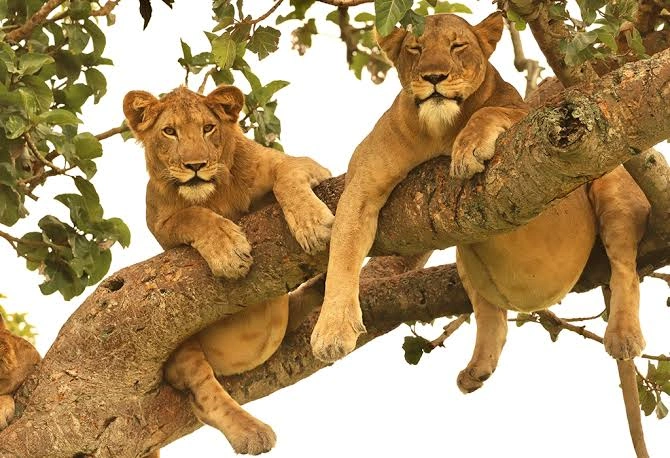
Combining tree climbing lions and gorillas in Uganda is highly recommended for an unforgettable safari experience. Uganda uniquely offers the chance to trek through misty rainforests to see mountain gorillas one day and observe a pride of lions lounging in fig trees the next, all within a few hours’ drive. Travelers who create an itinerary around these experiences often rate it as one of the most memorable safaris in Africa. This guide provides details on how to plan the combination, including time and budget considerations.
Many travelers wonder, Can i combine tree climbing lions and gorilla in Uganda? This unique combination is not only possible but highly recommended for an unforgettable safari experience.
Indeed, many ask if they can combine tree climbing lions and gorilla in Uganda, and the answer is a resounding yes!
Yes, You Can Combine Tree Climbing Lions and Gorillas in Uganda
For those considering this adventure, the question arises: can i combine tree climbing lions and gorilla in Uganda? The answer is undoubtedly affirmative.
When planning your trip, think about how you can combine tree climbing lions and gorilla in Uganda for an enriching experience.
Considering the logistics, can i combine tree climbing lions and gorilla in Uganda? Yes, and it offers a diverse wildlife experience.
To experience both, one must often ask, can i combine tree climbing lions and gorilla in Uganda? It’s essential for a well-rounded safari.
The question on many travelers’ minds is whether they can combine tree climbing lions and gorilla in Uganda. The answer is a definite yes.
For adventure seekers, the query often arises: can i combine tree climbing lions and gorilla in Uganda? This combination is highly recommended.
While planning, one might wonder if they can combine tree climbing lions and gorilla in Uganda. It is entirely feasible and advisable.
Ultimately, the answer to the question, can i combine tree climbing lions and gorilla in Uganda, is a clear yes, allowing for unforgettable wildlife viewing.
Remember, if you’re pondering whether you can combine tree climbing lions and gorilla in Uganda, the answer is yes, creating a memorable safari.
The chance to explore whether you can combine tree climbing lions and gorilla in Uganda is what makes this trip so unique.
Many travelers are curious about how they can combine tree climbing lions and gorilla in Uganda. The logistics are surprisingly simple.
As you plan your itinerary, consider incorporating how you can combine tree climbing lions and gorilla in Uganda.
Can I Combine Tree Climbing Lions and Gorilla in Uganda?
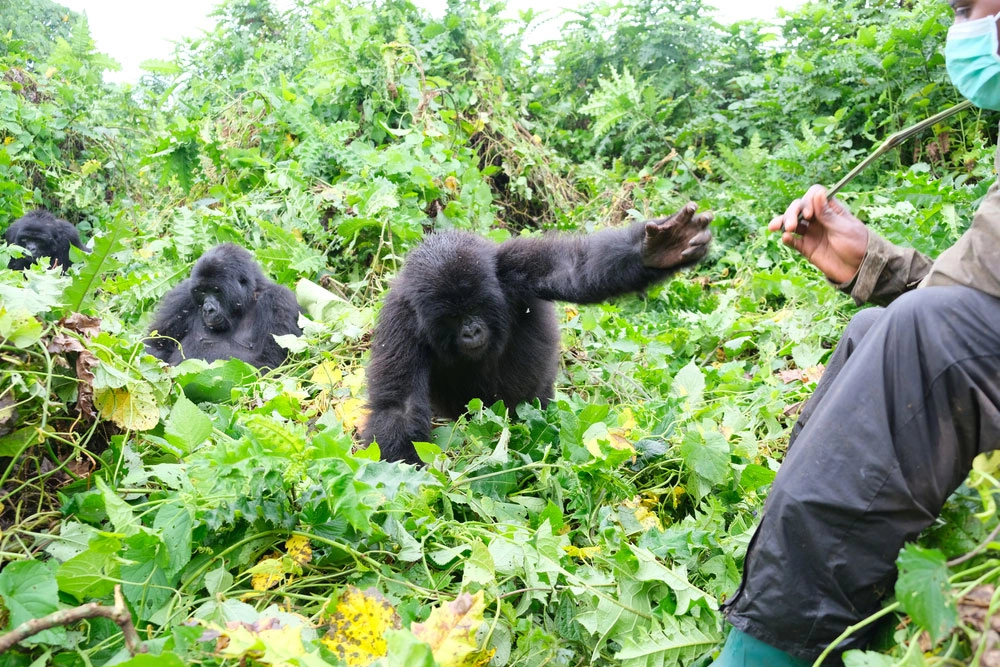
Uganda’s tree climbing lions live in the Ishasha sector of Queen Elizabeth National Park, while the country’s mountain gorillas live primarily in Bwindi Impenetrable National Park, with a smaller population in neighboring Mgahinga Gorilla National Park. These two destinations sit close enough to each other, within the same southwestern corner of Uganda, that a single well-planned itinerary can comfortably include both a gorilla trek and a game drive through Ishasha’s savannah plains in search of tree-climbing lions.
This isn’t a rare or improvised add-on — it has become one of the most commonly requested combinations for travelers visiting Uganda specifically because the two experiences complement each other so well. Gorilla trekking is intimate, physical, and forest-based; tree climbing lions are viewed from the comfort of a safari vehicle across open savannah. Doing both in one trip gives you a genuine cross-section of what makes Uganda’s wildlife so varied, all without needing to fly to a separate country or region to see it.
Where to Find Uganda’s Tree Climbing Lions: The Ishasha Sector
Ishasha is the southern sector of Queen Elizabeth National Park, Uganda’s second-largest park and one of its most biodiverse. Unlike most African lions, which rest on the ground during the heat of the day, the lion prides of Ishasha have developed the unusual habit of climbing into the branches of large fig and acacia trees, where they sprawl out for hours, seemingly unbothered by gravity or the safari vehicles below. There are currently four known prides living across the Ishasha plains, made up of roughly fifty individuals in total, and their tree-climbing behavior is thought to be linked to escaping biting flies and the heat at ground level, along with getting a better vantage point to scan for prey.
Because entire prides tend to spend large parts of the day up in the trees, sightings here are notably reliable compared to many other lion-viewing destinations in Africa, particularly during the drier months when the behavior is most pronounced. Park rangers monitor the prides’ general movements and can often point visiting vehicles toward the right area, though as with all wildlife viewing, no sighting is ever fully guaranteed — it’s wild Africa, not a zoo, and that unpredictability is part of what makes the encounter special when it happens.
Where to Find Mountain Gorillas: Bwindi and Mgahinga
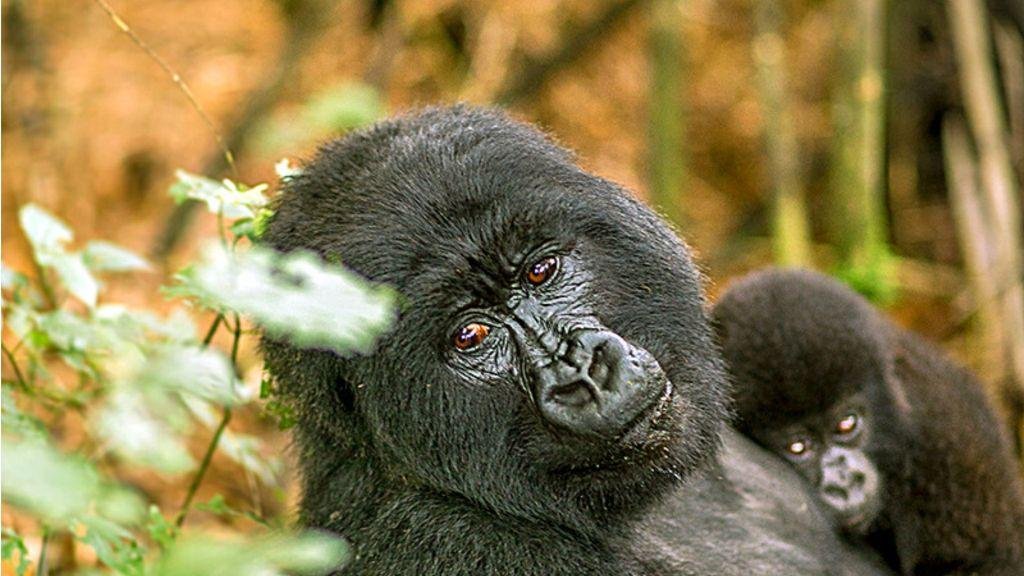
Uganda’s mountain gorillas live in two protected areas: Bwindi Impenetrable National Park, which holds roughly half of the world’s remaining mountain gorilla population across four trekking sectors, and the smaller Mgahinga Gorilla National Park, set within the volcanic Virunga range along the border with Rwanda and the Democratic Republic of Congo. Both parks offer guided treks led by rangers to visit habituated gorilla families, with a strict limit of one hour spent in their presence once located.
For travelers planning to combine gorillas with tree climbing lions, Bwindi is generally the more practical choice, both because it holds a larger number of habituated families spread across multiple sectors, giving more flexibility on permit dates, and because its northern Buhoma sector sits considerably closer to Ishasha than Mgahinga does. That proximity, covered in more detail below, is really what makes this whole combination as smooth as it is.
How Close Are Queen Elizabeth National Park and Bwindi to Each Other
This is the detail that makes the whole combination work logistically, so it’s worth being specific about it. From Bwindi’s Buhoma sector, in the north of the park, the Ishasha sector of Queen Elizabeth National Park is roughly 60 kilometers away, a drive of around two to three hours along a scenic, partly unpaved road that passes through farmland and forest edge, often with good chances of spotting monkeys along the way. From Bwindi’s southern sectors — Rushaga and Nkuringo, more commonly used by travelers arriving via Kigali — the drive to Ishasha is somewhat longer, typically three to four hours, since it involves looping around toward the north of the park first.
Either way, this is a genuinely manageable half-day transfer, not an additional flight or a multi-day detour. It’s this short, scenic connecting drive that turns two separate bucket-list wildlife experiences into a single, coherent safari itinerary, and it’s a large part of why so many travelers choose to combine them rather than picking one over the other.
Why This Combination Works So Well in a Single Trip
Beyond the simple convenience of proximity, there’s a genuine complementary quality to pairing these two experiences. Gorilla trekking is slow, deliberate, and physically engaging — you earn the encounter by hiking, sometimes for hours, through dense, humid forest, and the reward is an intimate hour spent in close proximity to a family of gentle giants. A tree-climbing lion game drive, by contrast, is comfortable and vehicle-based, covering wide stretches of open savannah at a relaxed pace, scanning fig trees and open plains for a completely different kind of predator encounter.
Doing both back to back gives a trip real range — dense rainforest and open grassland, a forest primate and a big cat, a physically demanding day and a more relaxed one. For travelers who only have one shot at a Uganda safari, this kind of variety tends to leave a much fuller impression of the country’s wildlife than a single-focus trip built around gorillas or game drives alone. It’s a large part of why itineraries that combine the two, such as our 4-Day Wildlife and Primate Safari, have become some of our most popular short trips.
How Many Days You Need to Combine Both Experiences
The minimum realistic timeframe to combine a gorilla trek with a tree-climbing lion game drive is four days, though five to seven days allows for a noticeably more comfortable pace. A four-day version typically compresses the trip into arrival and drive on day one, gorilla trekking on day two, transfer to Ishasha and an afternoon game drive on day three, and a final game drive plus return journey on day four. It’s an efficient, well-paced itinerary for travelers with limited time, though it does keep things moving.
A five- to seven-day version gives each element more room to breathe — an extra game drive or two in Queen Elizabeth’s northern Kazinga Channel area, a boat cruise to see hippos and elephants along the water, or simply an unhurried extra night at a lodge rather than a tight same-day transfer. For travelers who can spare the extra two or three days, this longer format is generally the more satisfying way to experience both destinations properly rather than treating either as a quick stop en route to the other.
Sample 4-Day Itinerary: Gorillas and Tree Climbing Lions
To make this concrete, here’s roughly how a compact four-day version of this combination typically unfolds. Day one covers the journey from Entebbe or Kigali to the Bwindi region, arriving at a lodge near your chosen trekking sector with time to settle in before the next day’s trek. Day two is the gorilla trekking day itself — an early briefing at park headquarters, the trek through Bwindi’s forest, and the hour spent with your assigned gorilla family, followed by an afternoon to rest at the lodge.
When it comes to your travel plans, the question often arises: can i combine tree climbing lions and gorilla in Uganda? Definitely!
As you consider your wildlife journey, many ask if they can combine tree climbing lions and gorilla in Uganda, and the answer is yes.
Day three shifts gears entirely: after breakfast, the drive heads north or east toward Ishasha, with the scenic connecting road itself offering wildlife-spotting opportunities, followed by an afternoon game drive scanning the sector’s fig trees for the resident lion prides. Day four typically includes an early morning game drive for a second chance at lion sightings, since dawn and dusk tend to be more active periods, before the return journey to Entebbe or onward to your next destination. This structure keeps the trip efficient without feeling rushed, and it’s the version most travelers choose when time is the main constraint.
Sample 5-7 Day Itinerary for a Fuller Experience
For travelers with a bit more time, extending the same core structure by two or three days opens up a noticeably richer trip. A common approach adds an extra day in Queen Elizabeth National Park beyond Ishasha itself, exploring the Kazinga Channel area with a boat cruise past dense concentrations of hippos, buffalo, and elephants along the water’s edge, plus additional game drives through the park’s northern plains where lions, leopards, and a wide range of plains game can be spotted. Our 5-Day Uganda Gorilla and Chimpanzee Safari and longer combination itineraries follow a similar extended structure.
Some travelers also use the extra days to add chimpanzee tracking in nearby Kibale Forest National Park, sometimes called the primate capital of the world, rounding out the trip with a third primate encounter alongside the gorillas. Whether you extend toward more wildlife viewing in Queen Elizabeth, chimpanzee tracking, or simply a slower pace with more rest days, the additional time turns what’s already a strong itinerary into one of the most complete wildlife experiences available anywhere in East Africa.
What the Drive Between Queen Elizabeth and Bwindi Is Like
The connecting drive between Ishasha and Bwindi is genuinely part of the experience rather than a stretch to endure. The road passes through a landscape that shifts gradually from dense montane forest to open farmland dotted with banana plantations and small trading centers, then opens further into the savannah plains that define Ishasha itself. It’s common to spot vervet monkeys, baboons, and a variety of birdlife along the route, and the drive is typically broken up with a stop for lunch or a scenic viewpoint.
The road itself is a mix of paved and unpaved sections, and a good 4×4 vehicle with an experienced driver-guide makes the journey considerably more comfortable, particularly after rain when the unpaved stretches can get muddy. Most operators plan this leg for the morning or early afternoon specifically to allow enough daylight for game viewing once you arrive in Ishasha, since the light in the late afternoon tends to be especially good for photographing lions up in the trees.
Do You Need Separate Permits and Fees for Each Experience
Yes — gorilla trekking and game drives in Queen Elizabeth National Park are managed and priced separately, and it’s worth understanding both before budgeting your trip. A Uganda gorilla trekking permit currently costs around USD 800 per person, purchased through the Uganda Wildlife Authority, and must be booked well in advance given limited daily availability per gorilla family. Queen Elizabeth National Park charges its own park entry fees per person per day, along with separate game drive and vehicle fees, which are considerably lower than the gorilla permit but still need to be factored into your overall budget.
Because these are two entirely separate booking and fee systems, it’s worth confirming with your operator that both have been secured correctly for your specific dates — a gorilla permit booked for the wrong day relative to your Ishasha leg can throw off the whole itinerary, so this coordination is one of the more important reasons to work with an experienced local operator rather than piecing the trip together independently.
Best Time of Year to See Tree Climbing Lions
Tree-climbing behavior in Ishasha’s lion prides is observed year-round, but it tends to be more pronounced and more frequently seen during the dry seasons, roughly June through September and December through February, when the heat and biting insect activity at ground level are at their peak, giving the lions more incentive to climb. These months also offer firmer roads for game drives and generally clearer skies for photography.
The wetter months, March through May and October through November, still offer good chances of sightings, since the behavior isn’t exclusively tied to the driest weeks, and the park is considerably quieter with fewer vehicles competing for the same sighting. Regardless of season, patience and a good guide familiar with the prides’ recent movement patterns make the biggest difference to your chances of a strong sighting.
Best Time of Year for Gorilla Trekking
Gorilla trekking in Bwindi happens year-round as well, and the same broad dry-season windows — June through September and December through February — offer the firmest trail conditions for the trek itself. These months are also the busiest for permit demand, so booking three to six months ahead is strongly advised for travel during these windows specifically.
The wetter months bring muddier, more challenging trail conditions but also fewer crowds and occasionally better lodge availability and pricing. Because Bwindi’s dense rainforest holds moisture regardless of season, some rain is always a possibility on any trekking day, so packing for it is sensible advice no matter when you travel.
Can These Two Seasons Overlap for One Trip
Conveniently, yes — the dry seasons for gorilla trekking and for tree-climbing lion viewing are the same months, since both destinations sit in the same general climate zone in southwestern Uganda. That means a single trip timed for June through September or December through February gives you good conditions for both experiences simultaneously, rather than requiring a compromise between the two. It’s one more reason this particular combination works so naturally as a single itinerary rather than two separate trips scheduled for different times of year.
What a Game Drive for Tree Climbing Lions Actually Looks Like
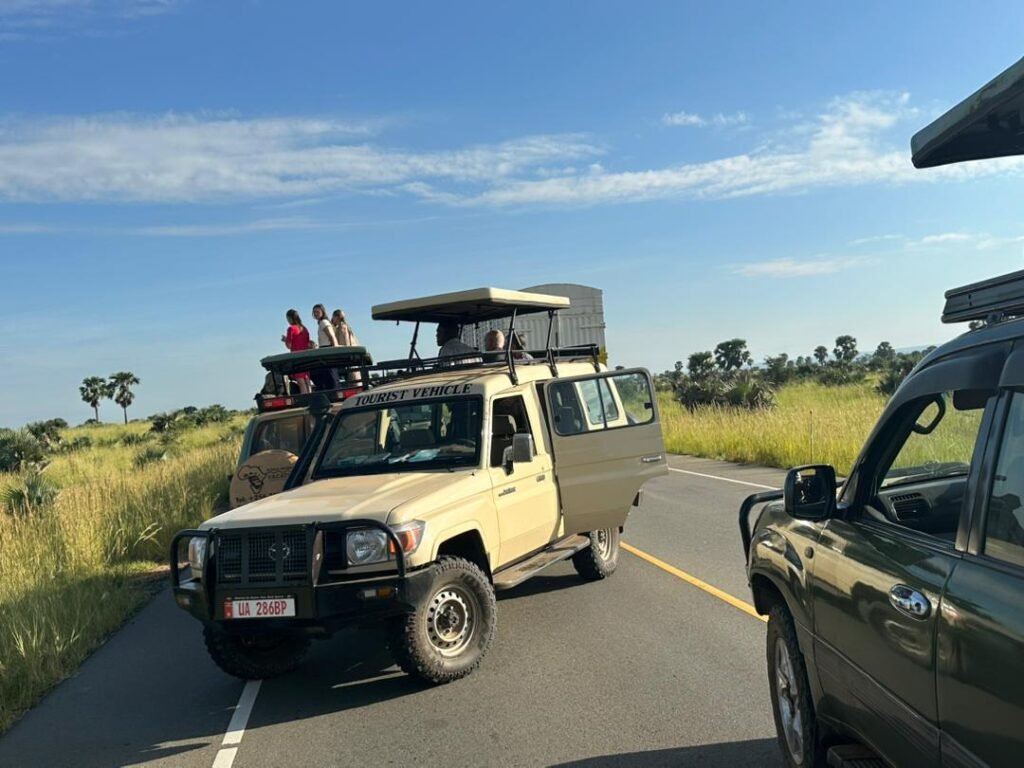
For travelers who haven’t experienced a savannah game drive before, it’s worth setting expectations. Game drives in Ishasha typically run in an open-sided 4×4 safari vehicle, moving slowly along the sector’s network of tracks while your guide scans the horizon and the tree line for movement or telltale silhouettes draped across branches. Morning and late-afternoon drives tend to offer the best light and the most active wildlife behavior, and a typical drive lasts two to four hours depending on how far you range and how quickly you find a pride.
Once a sighting is made, vehicles typically park a respectful distance from the tree and allow as much time as guests want to watch, photograph, and simply take in the sight of lions draped over branches many meters off the ground — a genuinely unusual behavior that surprises most first-time visitors regardless of how many photos they’ve seen of it beforehand. Unlike gorilla trekking, there’s no strict time limit on viewing, so a good sighting can be enjoyed at a relaxed pace before moving on to explore the rest of the sector.
Other Wildlife You’ll See Along the Way in Queen Elizabeth
Tree climbing lions are the headline attraction in Ishasha, but they’re far from the only wildlife on offer in Queen Elizabeth National Park more broadly. Elephants, buffalo, Uganda kob, topi, waterbuck, and warthogs are all commonly seen across the park’s open plains, and the Kazinga Channel, connecting Lake Edward and Lake George in the park’s northern section, holds one of Africa’s densest concentrations of hippos alongside regular sightings of crocodiles, elephants, and abundant birdlife along its banks.
For travelers extending their itinerary beyond a same-day Ishasha visit, a boat cruise along the Kazinga Channel is one of the most consistently rewarding wildlife activities in the entire park, and pairs naturally with a day or two of game drives through the park’s varied habitats. Combined with the tree-climbing lions of Ishasha, it rounds out Queen Elizabeth’s reputation as one of Uganda’s most biodiverse and rewarding parks to explore alongside a gorilla trek.
Combining This with a Kigali or Entebbe Arrival
This combination works well regardless of which international airport you fly into. Travelers arriving through Entebbe typically build the itinerary as a loop — Entebbe to Bwindi, Bwindi to Ishasha and Queen Elizabeth, and back to Entebbe, often adding Kibale Forest chimpanzee tracking along the return route, as covered in itineraries like our 7-Day Uganda Safari, one-week tour, which follows a similar multi-park structure.
Travelers arriving through Kigali, drawn by the shorter drive into Bwindi’s southern sectors, can still combine both experiences, though it’s worth accounting for the slightly longer connecting drive from Rushaga or Nkuringo to Ishasha compared to the Buhoma route. Either way, discussing your preferred entry airport with your operator early in the planning process helps shape the most efficient overall route through both destinations, rather than backtracking unnecessarily.
Why Do Ishasha’s Lions Climb Trees in the First Place
The tree-climbing behavior itself is worth understanding a little, since it’s one of the more genuinely unusual sights in African wildlife viewing and adds real context to what you’re seeing during the game drive. Most lion populations across Africa rest on the ground, and tree-climbing is documented in only a handful of places worldwide, with Ishasha and Tanzania’s Lake Manyara National Park being the two most famous examples. Several theories exist for why Ishasha’s prides developed this habit: escaping the heat and biting tsetse flies at ground level, catching cooling breezes higher up, gaining a better vantage point to scan the open plains for prey and rival predators, and simple learned behavior passed down within specific prides over generations.
What makes Ishasha particularly rewarding for visitors is that this isn’t occasional or isolated behavior — it’s a consistent habit across the sector’s resident prides, which is part of why sightings here are considered more reliable than in most other tree-climbing lion locations. Rangers and experienced guides who work the sector regularly develop a strong sense of which trees particular prides favor and how their movements shift with the seasons, which is exactly the kind of local knowledge that makes a good guide worth having for this leg of the trip.
Photography Tips for Capturing Lions in the Trees
Photographing lions draped across tree branches presents a different challenge than typical ground-level wildlife photography, and a little preparation goes a long way. Because the lions are often elevated and partially obscured by branches and leaves, a zoom lens or a camera with strong optical zoom makes a real difference compared to a standard phone camera, particularly for capturing detail on a distant sighting. Shooting from slightly below the tree, when the vehicle’s position allows it, often produces more dramatic images than a flat, head-on angle.
Early morning and late afternoon light — the same golden hours favored across African wildlife photography generally — tend to produce the richest color and the most flattering light on the lions’ tawny coats against the surrounding foliage. Because game drives allow more flexible viewing time than the strict one-hour gorilla trekking limit, it’s worth being patient at a good sighting rather than rushing off immediately, since lions occasionally shift position, stretch, or interact with each other in ways that produce far better photos than the initial static pose.
It’s worth pondering, can i combine tree climbing lions and gorilla in Uganda? This combination is a highlight for many visitors.
Where to Stay: Lodges Near Ishasha and in Bwindi
Accommodation options differ meaningfully between the two legs of this trip, and it’s worth understanding what to expect from each. Near Bwindi, lodges range from simple, budget-friendly guesthouses to comfortable mid-range properties with forest views, up to high-end luxury lodges for travelers wanting to extend their stay, generally clustered close to whichever trekking sector your gorilla permit is booked for.
In and around Ishasha and the wider Queen Elizabeth National Park, lodge options range from rustic tented camps set within the park itself, offering an immersive bush experience with wildlife sometimes passing close to camp at night, to more established mid-range and luxury lodges along the Kazinga Channel or overlooking the park’s crater lakes. Because Ishasha itself is a fairly remote, less-developed part of the park, options directly within the sector are more limited than in the park’s northern Mweya area, so many itineraries base travelers slightly further north and simply drive into Ishasha for game drives, or stay at one of the more basic tented camps directly within the sector for a more immersive experience.
Family Travel: Is This Combination Suitable for Children?
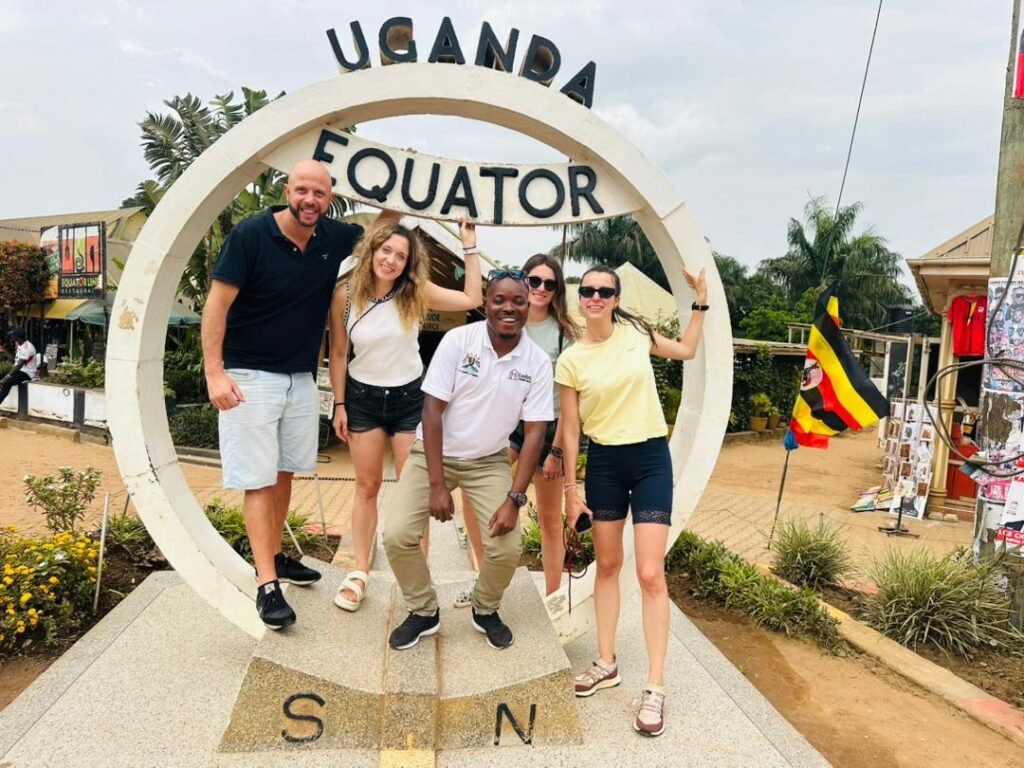
Families considering this combination should be aware of one firm rule: the Uganda Wildlife Authority sets a minimum age of fifteen for gorilla trekking, so younger children cannot participate in that portion of the trip regardless of fitness or maturity. Game drives, however, have no minimum age restriction, and Queen Elizabeth National Park’s Ishasha sector is a genuinely rewarding, comfortable experience for children of nearly any age, since it involves no strenuous walking and offers a good chance of memorable sightings from the safety and comfort of the vehicle.
For families with a mix of older teenagers who can trek and younger children who cannot, some operators offer supervised activities near the gorilla trekking lodge, such as guided nature walks or community visits, for the non-trekking members of the family while others complete the gorilla trek. It’s worth discussing your family’s specific age range with your operator during planning so the itinerary can be adjusted to make sure everyone has a meaningful, age-appropriate experience across both legs of the trip.
Combining a Third Primate Experience: Chimpanzee Tracking in Kibale
Travelers with enough time sometimes extend this combination even further by adding chimpanzee tracking in Kibale Forest National Park, often described as the primate capital of the world for its exceptionally high density of habituated primate species. Kibale sits a reasonable drive north of Queen Elizabeth National Park, making it a natural extension for travelers already in the area for tree-climbing lions, and it adds a third distinct wildlife encounter to a trip that already features gorillas and lions.
Chimpanzee tracking follows a broadly similar format to gorilla trekking — a guided walk through forest terrain in search of a habituated group, followed by a period of observation, though typically shorter and less physically demanding than most gorilla treks. For travelers building a longer itinerary of a week or more, adding Kibale to a gorillas-and-lions combination rounds out an already exceptional trip into one of the most complete primate-and-predator wildlife experiences available anywhere in Africa, and it’s a structure reflected in longer combination itineraries across the region.
Money and Budget Breakdown for the Combined Trip
Combining gorilla trekking with a tree-climbing lion safari adds cost compared to a gorilla-only trip, primarily through the additional park entry fees, an extra day or two of accommodation and transport, and the fuel and vehicle time for the connecting drive. That said, it’s a genuinely efficient way to see considerably more of Uganda’s wildlife without the cost of a separate standalone safari trip, since the core transport and guide costs are shared across the whole itinerary rather than duplicated.
As with any Uganda safari, the biggest single cost remains the gorilla permit at around USD 800 per person, with Queen Elizabeth’s park fees and game drive costs adding a more modest amount on top. Accommodation costs vary considerably by lodge choice in both Bwindi and Queen Elizabeth, and a good operator will help balance your budget across both legs of the trip rather than over-spending on one destination at the expense of the other.
What to Pack for Both a Game Drive and a Forest Trek
Packing for this combination means preparing for two quite different environments. For the gorilla trek, sturdy hiking boots, long trousers and sleeves, a rain jacket, and gardening gloves for grabbing vegetation on steep sections are all essential, along with a daypack for water and snacks. For the game drive portion in Ishasha and the wider Queen Elizabeth area, lighter, breathable clothing in neutral colors works well, along with a hat, sunglasses, and sunscreen for long stretches in an open vehicle under strong equatorial sun.
Binoculars are worth packing for both legs of the trip, and a camera with a reasonable zoom lens is especially useful for the game drive portion, where lions in trees are often spotted from a greater distance than the intimate proximity of a gorilla encounter. A light jacket or fleece is also worth having for early morning game drives, when temperatures can be noticeably cooler before the sun is fully up.
Choosing the Right Operator for a Combined Itinerary

Because this combination involves coordinating two separate permit and booking systems, a longer overall route, and a connecting drive between two different park regions, choosing an experienced operator matters more here than for a simpler single-destination trip. Look for an operator who can clearly explain how they’ll sequence the gorilla trek and the Ishasha game drive, which Bwindi sector they’d recommend given the connecting drive distance, and how they build in timing buffers to protect against delays affecting either leg.
It’s also worth asking how they handle the specific logistics of moving between forest trekking gear and savannah game-drive routines within the same short trip — a detail that experienced local operators handle smoothly as a matter of routine, but which can catch out less experienced planners. A transparent, itemized quote covering permits, park fees, transport, and accommodation for both destinations is a good sign of an operator who genuinely understands how to run this specific combination well.
Why This Combination Is One of Uganda’s Best Safari Experiences
Ask experienced Uganda safari guides which combination they’d recommend to a first-time visitor with limited time, and gorillas plus tree-climbing lions comes up again and again. It captures two of the most distinctive, hard-to-find wildlife experiences on the entire continent — an intimate primate encounter and an unusual predator behavior found almost nowhere else in Africa — within a single, well-connected corner of one country. Few destinations anywhere offer this kind of range within such a short, manageable distance.
For travelers weighing how to spend a limited number of vacation days in East Africa, this combination consistently delivers some of the best value in terms of memorable experiences per day of travel. It avoids the need for additional flights or major detours, it fits comfortably into itineraries as short as four days, and it leaves travelers with a genuinely varied picture of Uganda’s wildlife rather than a single, narrow encounter.
Health and Safety Considerations Across Both Legs of the Trip
Both legs of this combination come with their own, quite different safety considerations worth knowing in advance. Gorilla trekking involves genuine physical exertion at altitude on uneven, sometimes steep terrain, and travelers should be reasonably fit and comfortable walking for several hours; anyone feeling unwell, particularly with a respiratory illness, is asked not to trek that day to protect the gorillas themselves from human-transmitted disease. Standard trekking precautions — sturdy boots, a walking stick if needed, and hiring a porter for extra support — apply here as they would on any Bwindi trek.
Game drives in Ishasha and the wider Queen Elizabeth National Park carry a different, much lower risk profile, since wildlife is viewed entirely from within the safari vehicle, and guides are trained to maintain safe distances at all times. The main practical considerations for this leg are sun exposure during open-vehicle game drives and standard road safety on the connecting drive between the two parks, particularly during wetter months when unpaved sections can be more challenging. As with any Uganda safari, comprehensive travel insurance covering both trekking activities and general travel is recommended for the full combined trip.
A Trip Travelers Consistently Describe as the Highlight of Their Africa Journey
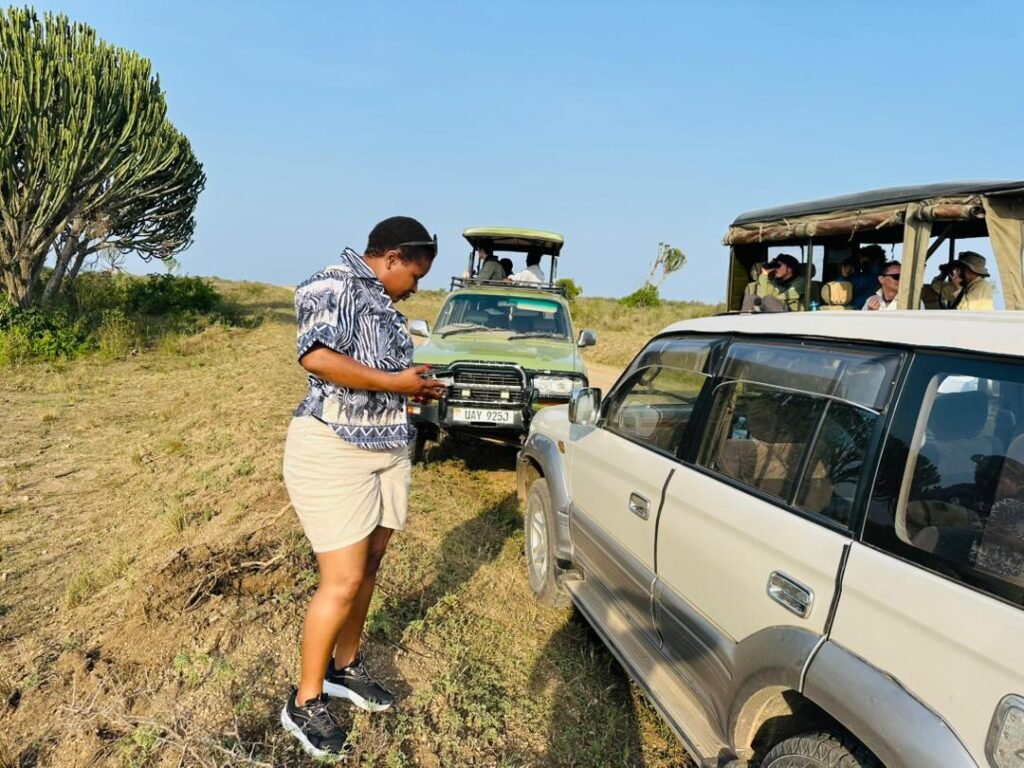
It’s worth ending with a simple observation drawn from years of running this exact combination: travelers who do both gorillas and tree-climbing lions on the same trip consistently describe the pairing, rather than either single element, as the highlight of their entire Africa journey. There’s something about experiencing both the intimacy of the forest encounter and the surreal spectacle of lions draped across branches within the same short trip that sticks with people longer than either activity does on its own. It offers a sense of Uganda’s genuine range as a wildlife destination — not just one famous animal, but an entire, varied ecosystem worth exploring properly.
For an operator, that’s exactly why this combination has become such a consistent recommendation for first-time visitors weighing how to spend a limited number of days in the region. It doesn’t require compromise between two great experiences — it simply requires a well-planned few extra hours of driving between two destinations that happen to sit remarkably close to each other for what they each offer.
At Pick and Transfer Safaris, This Is a Trip We Know Well
At Pick and Transfer Safaris, combining gorilla trekking with tree-climbing lion game drives in Ishasha is one of the itineraries we plan most often, precisely because it delivers such strong value for travelers on a moderate timeline. Our Gorilla Safaris and Wildlife Safaris collections both include itinerary options built around this exact combination, and our team can help sequence your trip around the Bwindi sector and travel dates that work best for your schedule and budget.
We handle the coordination that makes a combined itinerary run smoothly — securing your gorilla permit for the correct sector and date, planning the connecting drive to Ishasha with realistic timing, and matching lodges in both regions to your comfort level and budget. As a locally rooted operator focused on mid-range and budget travelers, we keep this kind of multi-destination itinerary genuinely affordable, and part of our proceeds support local community and orphan-care projects in the areas we operate. You can learn more about how we work on our About Us page.
For travelers researching this combination more broadly, it’s worth noting how established the pairing has become across the industry — Kenlink Tours’ 7-Day Gorilla and Wildlife Safari follows a similar structure combining primate trekking with broader wildlife viewing, and their 3-Day Queen Elizabeth National Park itinerary is a useful reference for what a standalone Ishasha-focused leg looks like if you’re piecing together the wildlife side of your trip separately.
How Uganda Compares to Other Destinations Offering Similar Combinations
In conclusion, for those eager to explore, can i combine tree climbing lions and gorilla in Uganda? The answer is a definitive yes, making for a unique safari adventure.
Uganda’s pairing of mountain gorillas and tree-climbing lions is genuinely rare on a global scale, and it’s worth understanding why it stands out even among Africa’s other celebrated wildlife destinations. Mountain gorillas exist in the wild in only three countries worldwide — Uganda, Rwanda, and the Democratic Republic of Congo — and nowhere else on Earth. Tree-climbing lion behavior, meanwhile, is reliably observed in just two locations: Uganda’s Ishasha sector and Tanzania’s Lake Manyara National Park, with Ishasha generally considered the more consistent and rewarding of the two for regular sightings.
No other country offers both of these specific experiences within a single, connected region reachable by a half-day drive. Rwanda has its own mountain gorillas but no tree-climbing lion population. Tanzania has Lake Manyara’s climbing lions but no gorillas at all. This combination of geography — both rarities sitting within the same corner of one country — is precisely what makes Uganda’s pairing of gorillas and tree-climbing lions such a distinctive, hard-to-replicate itinerary anywhere else on the continent, and it’s a large part of why Uganda has built such a strong reputation among serious wildlife travelers despite being smaller and less internationally known than destinations like Kenya or Tanzania.
What Guides and Rangers Say About This Combination
Ask any experienced driver-guide who’s spent years running safaris across southwestern Uganda which combination they recommend most often to first-time visitors, and gorillas paired with Ishasha’s tree-climbing lions comes up again and again — not as a sales pitch, but as a genuine professional opinion shaped by watching thousands of travelers react to both experiences over the years. Guides frequently note that gorilla trekking tends to be the experience travelers arrive most excited about, having read and dreamed about it for months or years in advance, while the tree-climbing lions are often the pleasant surprise — an experience many visitors didn’t fully appreciate until they saw it with their own eyes.
That contrast is part of what makes the combination work so well from a guiding perspective too: pacing a trip around one intensely anticipated, physically demanding highlight followed by a more relaxed, visually surprising one tends to produce a well-balanced overall itinerary rather than two experiences competing for the same kind of attention. Rangers at both Bwindi and Queen Elizabeth National Park, meanwhile, consistently point out that the short distance between the two parks is a genuine geographic advantage unique to this part of Uganda, one they actively encourage visiting travelers to take advantage of rather than choosing only one destination.
Practical Planning Tips Before You Book
A few final practical points are worth keeping in mind as you put this itinerary together. Book your gorilla permit as early as possible, since it’s the fixed point around which the rest of the trip has to be scheduled, and confirm with your operator exactly which Bwindi sector it’s tied to, since that determines your connecting drive time to Ishasha. Build at least one buffer day into a four-day itinerary if your schedule allows it, since a delay on either leg — a late flight, a muddy road, a slow border crossing if arriving via Kigali — has less room to cause problems on a five-day trip than on a tightly packed four-day one.
It’s also worth discussing lodge choice for the Ishasha or Queen Elizabeth leg specifically, since accommodation options in this more remote part of the park are less numerous than in Bwindi, and popular tented camps can book up during peak season. Finally, pack for both environments from the outset rather than assuming you’ll sort it out along the way — forest trekking gear and savannah game-drive clothing are different enough that having both ready before you leave home makes each leg of the trip noticeably more comfortable. Comparing structured itineraries such as Kenlink Tours’ 4-Day Uganda Primate Tour alongside your own planning can be a useful way to sanity-check pacing and inclusions before you commit to a final itinerary.
Frequently Asked Questions
Can I see tree-climbing lions on the same day as my gorilla trek? No — gorilla trekking is a full-day activity on its own, and Ishasha is several hours away, so the two are best planned as separate days connected by a half-day transfer drive.
Is four days really enough to do both properly? It’s enough to experience both meaningfully, though it keeps a brisk pace. Five to seven days allows for a noticeably more relaxed trip with time for additional game drives or a Kazinga Channel boat cruise.
Do I need a different vehicle for the game drive portion? No — the same 4×4 safari vehicle used for the drive to Bwindi and the trekking transfers works equally well for game drives in Queen Elizabeth National Park, so there’s no need to switch vehicles or operators mid-trip.
Is it safe to view lions from the vehicle? Yes — game drives keep a safe, respectful distance from wildlife at all times, and lions in Ishasha are generally undisturbed by vehicles moving slowly along the park’s designated tracks.
Can this combination be added to a Kigali-based gorilla trip? Yes, though it adds an extra day or two of driving compared to an Entebbe-based loop, given the additional distance between Kigali’s typical entry point and Queen Elizabeth National Park. Your operator can help plan the most efficient route based on your specific entry airport.
Conclusively,
Combining tree-climbing lions and gorillas in Uganda isn’t a stretch or a logistical workaround — it’s one of the most naturally complementary safari pairings available anywhere in Africa, made possible by the simple fact that both experiences sit within a few hours’ drive of each other in the same corner of the country. Whether you have four tightly packed days or a more relaxed week, this combination delivers a genuinely complete picture of what makes Uganda’s wildlife so remarkable: dense rainforest and open savannah, gentle primates and climbing predators, a physically demanding trek and a relaxed game drive, all within one well-planned trip.
If you’re ready to start planning your own combined gorilla trekking and tree-climbing lion safari, our team can help design an itinerary around your available time, preferred entry airport, and budget — reach out through our contact page and we’ll put together a route that makes the most of both experiences.