- LET'S PLAN YOUR SAFARI
- +256 200 921 002
- +256 793 194 703
- info@pickandtransfersafaris.com

Can i do a self drive safari in Uganda
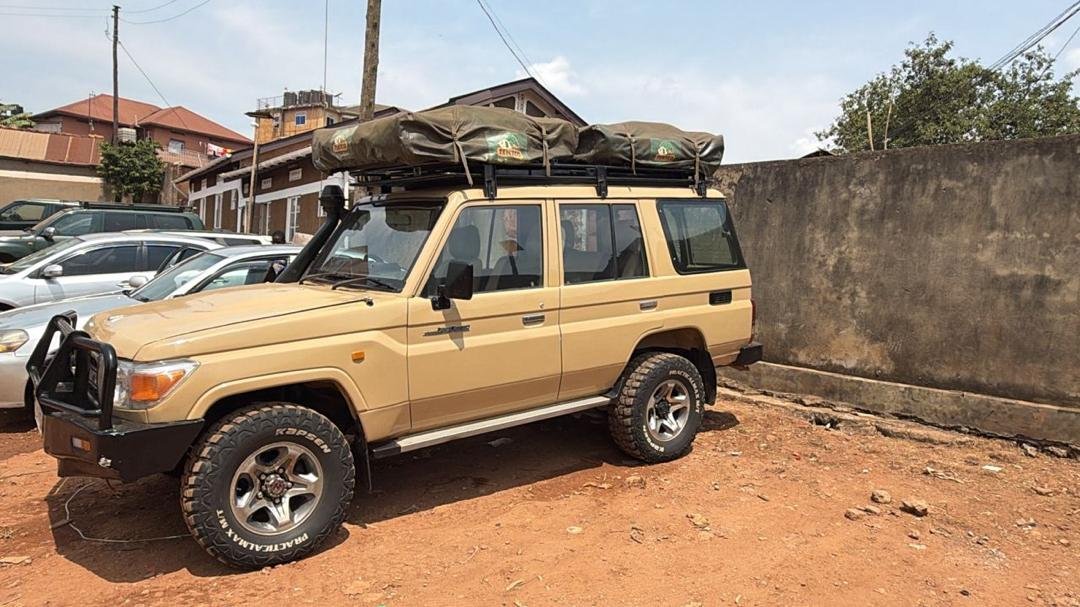
Can i do a self drive safari in Uganda. Short answer: yes. Uganda is one of the more self-drive-friendly safari destinations in East Africa, with a genuine road network connecting Kampala to its major parks, rental companies that specialize in fully-equipped 4x4s, and national parks that permit visitors to drive their own game-viewing circuits. That said, “can I” and “should I” are two different questions, and the answer depends heavily on your driving experience, comfort with rough roads, and how much of your trip you want to spend behind the wheel versus watching wildlife.
This guide covers everything you need to know before deciding whether a self-drive Uganda safari is right for you: road conditions, vehicle requirements, park rules, permit logistics, and how a self-drive trip compares to booking a guided safari through an established operator.
Quick Answer: Yes, You Can Self-Drive in Uganda
Uganda allows independent travelers to rent a vehicle and drive themselves between cities, to national park gates, and along most designated game-viewing tracks inside parks like Queen Elizabeth and Murchison Falls. Kenlink Tours has a dedicated page on running a self-drive gorilla safari that confirms this is a real, workable option for confident, experienced drivers — not a theoretical one.
What self-drive does not mean is trekking gorillas or chimpanzees unaccompanied. Once you reach the trailhead, you’ll always join a Uganda Wildlife Authority ranger-led group on foot; the “self-drive” part refers strictly to how you get yourself and your vehicle to the park, not the trek itself.
Is Uganda Safe and Feasible for Self-Driving?
Uganda’s main highways connecting Kampala, Mbarara, Kabale, and Fort Portal are tarmacked and generally well maintained, making the first several hours of most safari routes straightforward driving. The complexity increases once you turn off the highway toward a specific park gate, where roads shift to graded murram (compacted gravel and laterite) that can turn slippery and rutted during the rainy seasons of March–May and September–November.
Feasibility really comes down to experience. Drivers comfortable with manual transmissions, unpaved surfaces, and sharing the road with pedestrians, boda-bodas (motorcycle taxis), and livestock will generally find Uganda manageable. First-time visitors to East Africa who’ve never driven outside their home country sometimes find it easier to start with a chauffeur-driven vehicle and build up to self-drive on a return trip.
Book Your Safari
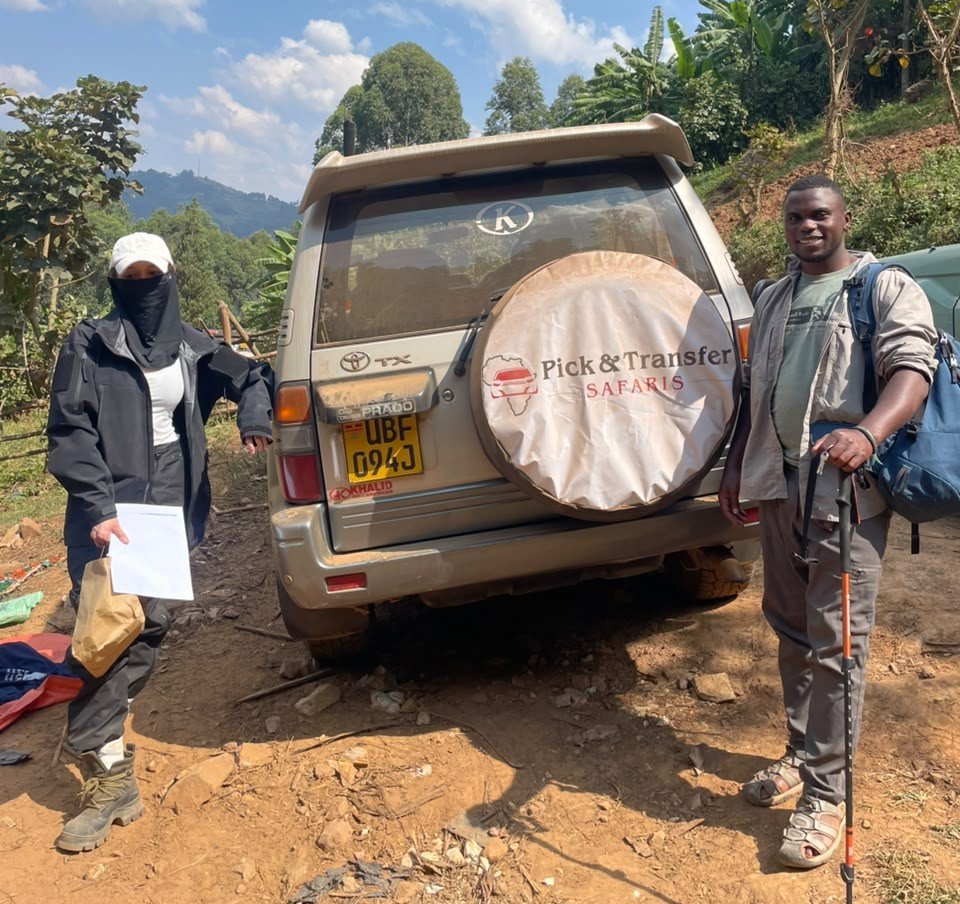
7 Days Uganda Safari – One week tour
This 7-day itinerary is the classic one-week introduction to Uganda, covering the country’s three most iconic wildlife experiences: chimpanzee tracking in Kibale Forest National Park, Big Five game drives and a boat cruise in Queen
Tour Details →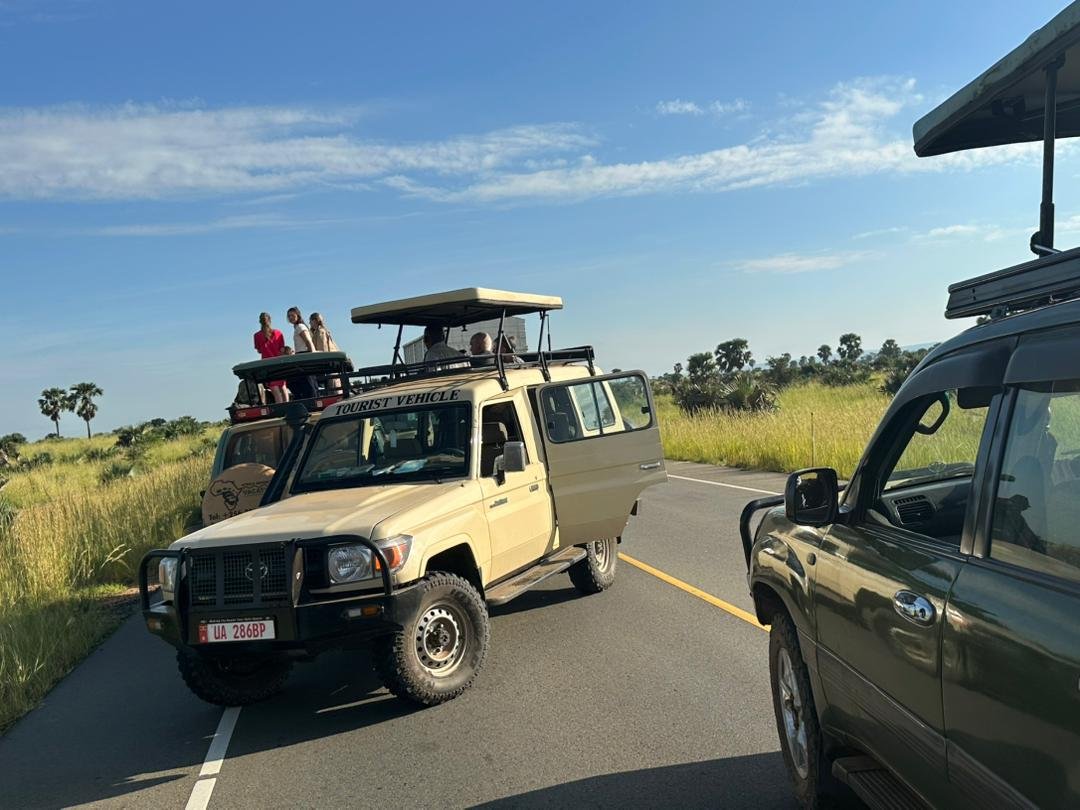
10 Days Uganda Primates and Wildlife
This 10-day Uganda Grand Safari is the most complete Uganda itinerary we offer at Pick and Transfer Safaris. It begins with a scenic northward drive from Entebbe to the vast open plains of Murchison
Tour Details →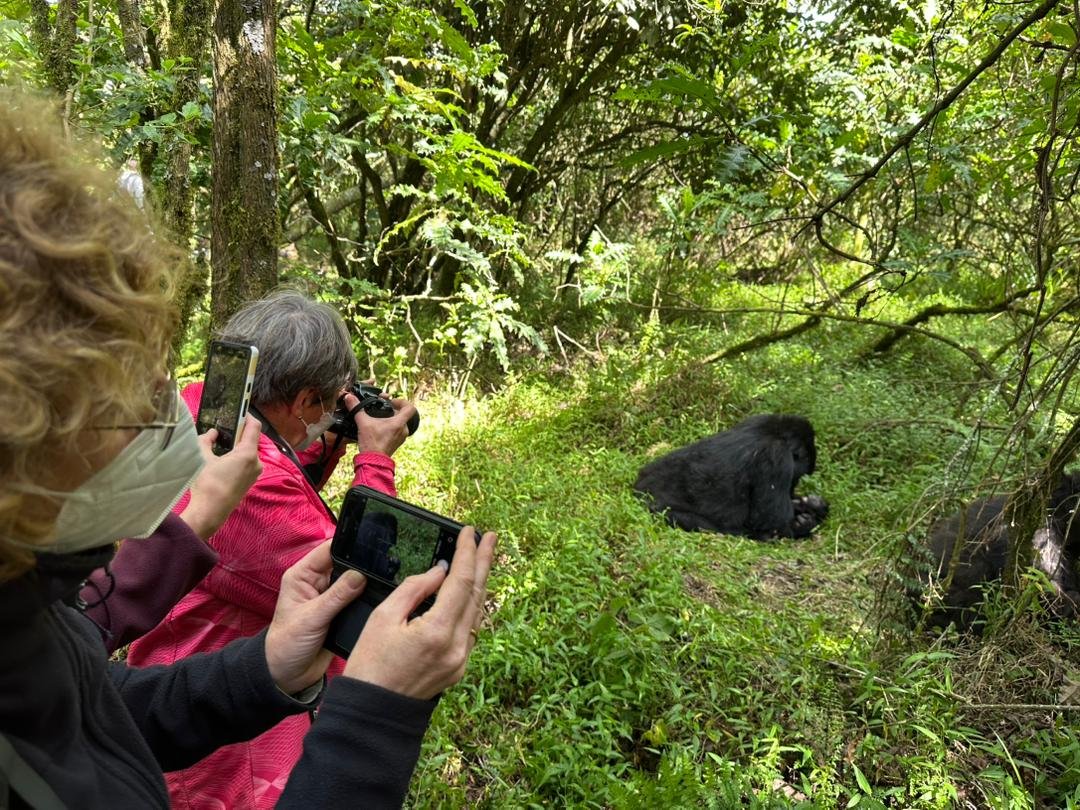
2 Days Uganda Gorilla Tour Starting from Kigali
This is the gentler cousin of our 1-Day Uganda Gorilla Safari Starting from Kigali — same idea, twice the breathing room. Instead of squeezing a 3,000-metre forest trek and two border crossings into a single very long day
Tour Details →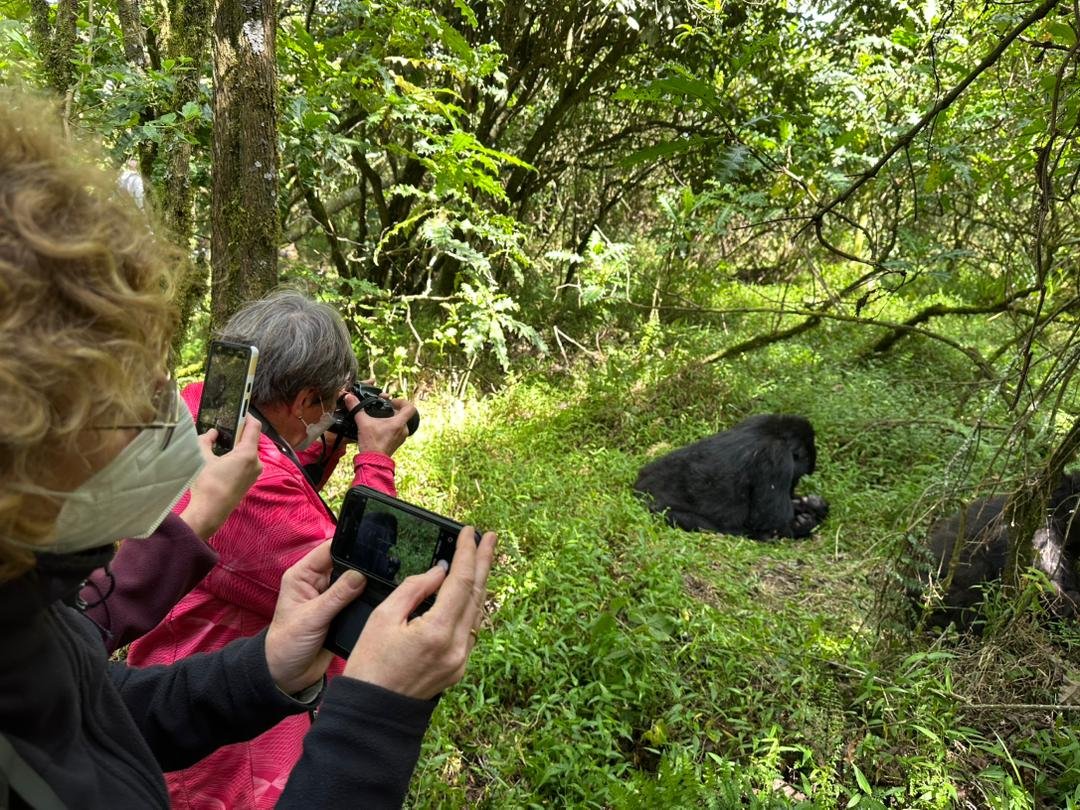
5-Day Uganda Gorilla and Chimpanzee Safari
This itinerary can be combined with a Rwanda extension or a wildlife-focused add-on through Queen Elizabeth National Park — browse our Uganda & Rwanda Safaris and Primate Safaris collections for ideas.
Tour Details →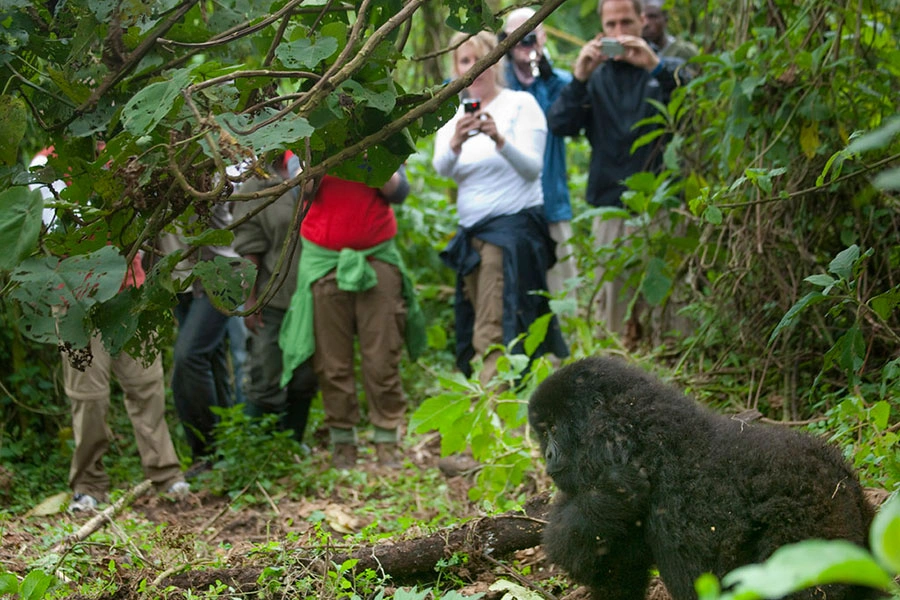
5 Days Rwanda Wildlife and Gorillas
This 5-day itinerary brings together Rwanda’s two flagship wildlife experiences: open savannah game drives and a boat safari in Akagera National Park, followed by a face-to-face encounters
Tour Details →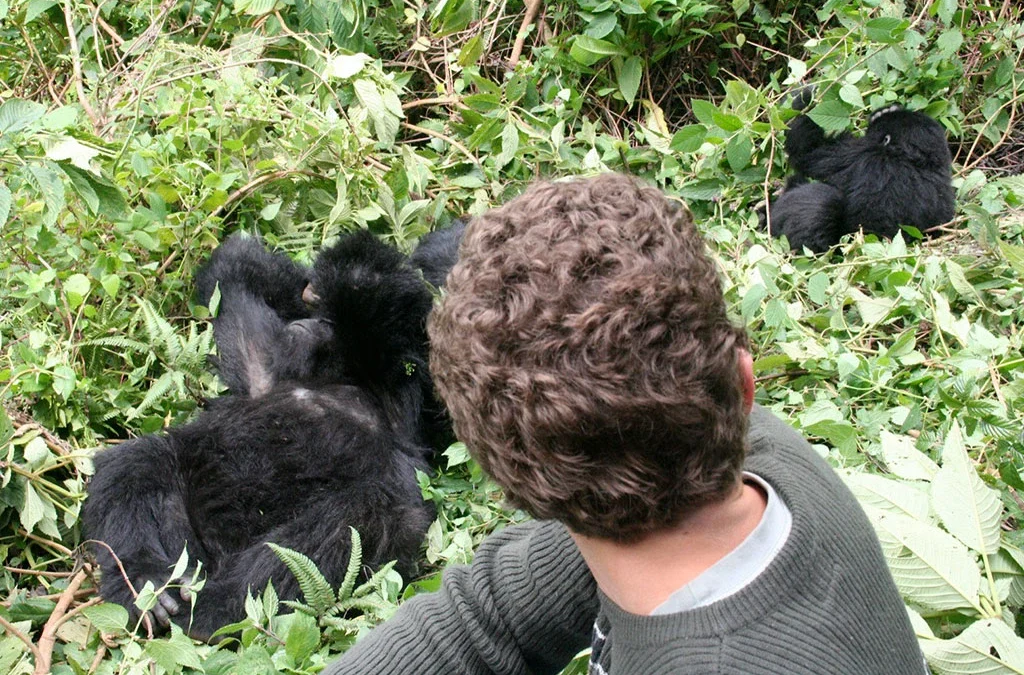
3 Days Uganda Gorilla Safari
For travelers who arrive in Entebbe with a tight schedule and a clear ambition, a 3-day gorilla safari to Bwindi Impenetrable Forest National Park is the most focused and rewarding short trip the country has to offer.
Tour Details →Which Side of the Road Does Uganda Drive On?
Uganda drives on the left-hand side of the road, a holdover from British colonial administration, with the steering wheel on the right side of the vehicle. If you’re used to driving on the right (as in the US, most of continental Europe, and much of East Asia), budget an extra day of low-stakes driving around Kampala’s outskirts before committing to a multi-hour highway or park drive, since the muscle-memory adjustment takes most people longer than they expect.
Do You Need an International Driving Permit?
Most foreign visitors need a valid International Driving Permit (IDP) alongside their home country’s driver’s license to legally rent and drive a vehicle in Uganda. Requirements can shift, so confirm current rules with your rental company and, if possible, your home country’s automobile association before you travel — an IDP is inexpensive and far easier to arrange before departure than after you’ve landed.
What Kind of Vehicle Do You Need?
A 4×4 is strongly recommended for any Uganda self-drive itinerary that includes a national park, and effectively mandatory during the rainy seasons when murram roads turn to mud. Kenlink Tours’ car hire page lists a range of options including Land Cruisers in both automatic and manual configurations, which are the standard choice for self-drive safari-goers because of their ground clearance, reliability on rough tracks, and widespread familiarity among Ugandan mechanics if something needs servicing along the way.
Smaller sedans and compact cars, also available through the same page, work fine for city driving and paved-highway routes between towns, but they’re a poor choice once you leave tarmac, and most park authorities will expect (if not formally require) a higher-clearance vehicle on the tracks inside game reserves.
Where to Rent a Self-Drive Vehicle in Uganda
Kenlink Tours offers both self-drive and driver-inclusive rental arrangements out of Uganda, with vehicle options ranging from small automatic cars up to full-size Land Cruisers suited to national park terrain. If you’d rather not handle the driving yourself for the park sections specifically, the same company’s Uganda private tours page offers chauffeur-driven alternatives that let you keep your own schedule without taking the wheel.
Whichever option you choose, book your vehicle well ahead of peak season (June–September and December–January), since availability for well-maintained 4x4s tightens considerably during Uganda’s busiest travel months.
Road Conditions: What to Expect Kampala to the Parks
The drive from Kampala to Bwindi Impenetrable National Park, the country’s premier gorilla trekking destination, covers roughly 500 kilometers and typically takes 8 to 10 hours, following tarmac as far as Kabale before the final stretch turns to murram. Most self-drive itineraries break this into two days with an overnight stop around Mbarara or Kabale rather than attempting the full drive in one push, both to reduce fatigue and to avoid arriving at unfamiliar rural roads after dark.
Routes toward Murchison Falls National Park in the north and Queen Elizabeth National Park in the west follow a similar pattern — solid highway driving for the majority of the trip, with the final approach roads inside park boundaries requiring more caution and a slower pace, particularly where wildlife may be crossing.
Can You Self-Drive to Gorilla Trekking? (Bwindi/Mgahinga)
Yes, and it’s one of the more popular self-drive routes in the country. You can drive yourself to Bwindi Impenetrable National Park or Mgahinga Gorilla National Park, park at the designated trailhead, and join your scheduled ranger-guided trekking group there. Gorilla trekking permits currently cost $800 per person in Uganda, issued by the Uganda Wildlife Authority, and should be booked several months in advance for peak season dates regardless of whether you’re self-driving or traveling with a guide.
If you’d rather compare a fully organized version of the same route, Kenlink Tours’ 3-Day Best of Uganda Gorilla Safari and 5-Day Gorilla and Wildlife Safari both cover this same corridor with a driver-guide included, which is worth reviewing even if you ultimately choose to self-drive, just to see how the pacing and stops typically work.
Insurance and Breakdown Coverage for Self-Drive Rentals
Before you drive off with a rental vehicle, confirm exactly what your insurance covers — many standard policies exclude off-highway damage, tire punctures, or windscreen chips, all of which are common on murram roads near the parks. Ask specifically whether the rental includes 24-hour breakdown support and how far that support actually reaches once you’re inside a national park, since response times in remote areas can run into hours rather than the minutes you might expect closer to Kampala.
It’s also worth photographing the vehicle thoroughly at pickup, checking that a spare tire, jack, and basic tool kit are actually present rather than just listed on the rental agreement, and keeping the rental company’s emergency contact number saved somewhere that doesn’t depend on having phone signal. Kenlink Tours’ car hire page is a good starting point for confirming what’s included before you commit to a specific vehicle.
What Happens If You Encounter Wildlife on the Road
Elephants, buffalo, and antelope crossing rural roads near the parks are common enough that self-drivers should plan for it rather than treat it as a rare surprise. The standard advice is straightforward: slow down well before you reach the animal, never sound your horn to move it along, keep a generous distance (especially from elephants, which can charge if they feel crowded), and simply wait for the road to clear rather than trying to drive past. Night driving significantly raises the risk of a sudden wildlife encounter you don’t have time to react to safely, which is one more reason daylight-only driving is the standard recommendation.
Inside the parks themselves, rangers will brief you at the gate on any specific wildlife activity to watch for that day, including whether particular tracks are temporarily closed because of an animal sighting close to the road.
Common Self-Drive Mistakes First-Timers Make
A few mistakes account for most of the trouble self-drive visitors run into in Uganda. Underestimating drive times is the most common — treating the Kampala-to-Bwindi distance as a single comfortable day rather than the two-day trip most experienced self-drivers recommend leads to rushed, fatigued driving on unfamiliar roads after dark. Skipping the offline map download is another, since visitors who rely entirely on live data coverage often lose signal exactly where they need directions most, on the unmarked murram roads near park gates.
Renting a vehicle without adequate ground clearance for the season is a third common error, particularly among travelers who book during the dry season and then hit an unexpected early rain. And underestimating cash needs catches out visitors who assume card payment will be available at fuel stations or park gates near remote parks, when in practice cash remains the safer default outside major towns.
Step-by-Step: How to Book a Self-Drive Uganda Trip
Start by deciding your route and confirming which parks you’ll visit, since this determines the vehicle type you need and how many days to budget for driving alone. Next, book your rental — ideally 4×4, ideally through an established company like Kenlink Tours — well ahead of peak season, confirming insurance coverage, included equipment, and cross-border terms if a Rwanda extension is part of your plan.
If your route includes gorilla trekking, book your Uganda Wildlife Authority permits separately and as early as possible, since permits for peak months can sell out three to six months in advance regardless of how you’re getting to the trailhead. Arrange your International Driving Permit before departure, download offline maps for your full route, and book accommodation for each overnight stop rather than assuming you’ll find something on arrival, particularly in smaller towns along the way. Finally, build a conservative daily driving schedule with buffer time for weather, wildlife crossings, and the occasional wrong turn — self-drive trips that go smoothly are almost always the ones that didn’t over-plan the driving portion.
Sample Self-Drive Budget Breakdown
A rough self-drive budget for a 7-day Uganda loop covering Bwindi and Queen Elizabeth might include: 4×4 rental at a daily rate that varies by vehicle class and season, fuel (Uganda’s fuel prices fluctuate, so budget generously for a route covering roughly 700-900 kilometers round-trip), park entry and vehicle fees at each gate, a gorilla trekking permit at $800 per person, accommodation for six nights, and a contingency fund for the unexpected — a flat tire, an extra night if a road becomes temporarily impassable, or a missed turn that costs you extra fuel.
When self-drive travelers add up all of these line items honestly, the total is often closer to the cost of a guided safari than the sticker price of “just” a rental car suggests, since the guided version bundles fuel, driver costs, and local knowledge into one predictable figure. Kenlink Tours’ guide to typical Uganda safari costs is a useful reference point for that comparison.
Self-Drive Game Drives in Queen Elizabeth National Park
Queen Elizabeth National Park is one of Uganda’s most self-drive-accessible parks, with a network of maintained game-viewing tracks around the Kasenyi plains and the Kazinga Channel area that visitors can drive independently after paying park entry and vehicle fees at the gate. The park’s tree-climbing lions and channel-side hippo and buffalo concentrations make it a rewarding stop whether you’re driving yourself or joining an organized game drive.
Kenlink Tours’ Queen Elizabeth National Park page gives a sense of what a typical multi-day visit here looks like, including the boat cruise along the Kazinga Channel, which isn’t something you can self-drive — it’s a separately booked activity regardless of how you arrived at the park.
Self-Drive Game Drives in Murchison Falls National Park
Murchison Falls, Uganda’s largest national park, similarly permits self-drive game viewing along its main circuits north and south of the Nile, giving independent travelers a chance to spot elephant, giraffe, buffalo, and lion at their own pace. The park is large enough that a full day of self-driven exploration barely covers a fraction of its tracks, so most visitors plan at least two nights nearby to make the most of the trip.
As with Queen Elizabeth, certain activities inside Murchison Falls — the boat cruise to the base of the falls, and any guided walking activities — are separate bookings that happen alongside, not instead of, your self-driven game viewing.
Regional Differences: North vs. West Uganda Self-Drive
Not every part of Uganda presents the same self-drive experience. Western Uganda — the corridor covering Queen Elizabeth National Park, Bwindi, and Mgahinga — sees the heaviest tourist traffic, which in practice means better-maintained access roads, more frequent fuel stations, and more established rest stops along the route from Kampala. This is generally the more forgiving region for a first self-drive trip.
Northern Uganda, home to Murchison Falls and the more remote Kidepo Valley National Park, involves longer stretches between towns and, in Kidepo’s case, a drive so long (10+ hours from Kampala) that many self-drive travelers choose to fly into Kidepo instead and reserve their self-driving for Murchison Falls or the western circuit. If your itinerary includes Kidepo, it’s worth weighing a self-fly-in, self-drive-locally hybrid rather than committing to the full overland route in a rental vehicle.
Month-by-Month: When Self-Drive Roads Are at Their Best
December through February is widely considered the most reliable self-drive window, combining dry roads with relatively mild temperatures across most of the country. June through August offers similar road conditions and coincides with a popular travel season, so book vehicles and permits early if you’re targeting these months. September sits in a transitional period — often still workable, but with an increasing chance of early rains toward the month’s end.
March through May and October through November are Uganda’s two rainy seasons, and while self-drive trips absolutely still happen during these windows, they demand a properly serviced 4×4, more conservative daily driving distances, and a mindset that’s genuinely flexible if a particular murram stretch becomes temporarily impassable after a heavy storm. Travelers who can only visit during the rains shouldn’t necessarily cancel self-drive plans, but should budget extra contingency days into the itinerary.
National Park Entry Fees and Vehicle Fees for Self-Drivers
Self-drive visitors pay the same Uganda Wildlife Authority park entry fees as guided visitors, plus a separate vehicle entry fee based on your car’s registration (foreign-registered rental vehicles typically pay a different rate than Uganda-registered ones). Fees vary by park and by nationality category (East African citizen, foreign resident, foreign non-resident), so confirm current rates directly with UWA or your rental company before budgeting your trip, since these figures are adjusted periodically.
Rules You Must Follow While Self-Driving in Parks
Uganda’s national parks enforce a consistent set of rules for self-drive visitors: stay on designated tracks (off-road driving is prohibited and damages the ecosystem), observe posted speed limits (usually 40 km/h or lower), never approach wildlife on foot from your vehicle, and respect gate opening and closing times, since driving inside most parks after dark without special permission isn’t allowed. Rangers at entry gates will typically brief self-drive visitors on the day’s specific conditions and any temporarily closed tracks.
Radio-tracked predator sightings and certain sensitive wildlife areas may require a ranger escort even for self-drive visitors — this varies by park and by season, so it’s worth asking at the gate rather than assuming full independence once you’re inside.
Fuel, Cash, and Connectivity on a Self-Drive Trip
Fuel stations are reliable in major towns but can be sparse in rural stretches near the parks, so top up whenever you pass a station with a comfortable margin rather than waiting until the tank runs low. Card acceptance is limited outside cities, so carry sufficient Ugandan shillings in cash for park fees, fuel, and roadside purchases. Mobile data coverage thins out considerably inside and around the parks, so download offline maps before you leave Kampala — relying on live GPS routing once you’re off the highway is a common and avoidable mistake.
Safety Tips for Self-Driving in Uganda
Drive only during daylight hours wherever possible, since unlit roads, unmarked potholes, and pedestrians or animals on rural roads are far harder to spot after dark. Keep a conservative buffer in your daily driving schedule rather than planning back-to-back long drives, and build in flexibility for weather delays during the rainy seasons. If you’re not confident about a particular stretch of road (river crossings after heavy rain are a common trouble spot), it’s always worth asking locally before attempting it rather than guessing.
Vehicle Inspection Checklist Before You Leave Kampala
Before you pull out of the rental yard, walk through a short checklist rather than assuming everything is in order. Confirm the spare tire is actually inflated (not just present), check that the jack and wheel wrench are in the vehicle, test the headlights and indicators, and make sure the fuel tank is filled to the level stated on your rental agreement so there’s no dispute at return.
Ask your rental provider to show you how to engage 4×4 low range before you need it in an actual muddy stretch — this is not the moment to be reading a manual for the first time. Save the rental company’s after-hours emergency number in your phone under a name you’ll actually remember, and photograph the odometer reading and any existing scratches or dents before you drive away. None of this takes more than fifteen minutes, and all of it saves real trouble later in the trip.
Self-Drive vs. Guided Safari: Which Should You Choose?
Self-driving gives you full control over your pace, unlimited stops for photography, and a genuine sense of independence that some travelers find rewarding in its own right. It also means you’re responsible for navigation, vehicle troubleshooting, and all the logistics a driver-guide would otherwise handle, on top of missing out on a local guide’s wildlife-spotting expertise and cultural knowledge.
Kenlink Tours has written directly about this trade-off in the context of another self-drive destination — their comparison of self-drive versus guided safaris in Namibia and their breakdown of self-drive safari costs in Namibia lay out the same considerations that apply in Uganda: self-drive tends to suit returning safari travelers and confident drivers, while guided safaris tend to suit first-time visitors, travelers short on planning time, or anyone who’d rather watch the wildlife than the road.
Sample Self-Drive Itinerary: Kampala to Bwindi and Back
A realistic 7-day self-drive loop looks like this: Day 1, pick up your vehicle in Kampala and drive to Lake Mburo area or Mbarara as a breaking point; Day 2, continue to Bwindi, arriving in the afternoon with time to settle in before trekking; Day 3, gorilla trekking day; Day 4, drive to Queen Elizabeth National Park via the scenic Ishasha route, known for its tree-climbing lions; Day 5, full day of self-driven game viewing and a Kazinga Channel boat cruise; Day 6, drive back toward Kampala with an overnight stop; Day 7, return the vehicle in Kampala. Kenlink Tours’ 7-Day Gorilla and Wildlife Safari follows a comparable route if you’d like a benchmark itinerary to adapt for self-drive pacing.
Combining Self-Drive with a Rwanda Extension
Some self-drive travelers extend their Uganda loop into Rwanda for a second gorilla trekking experience or a stop in Kigali, though crossing an international border with a rental vehicle requires specific permission from your rental company and additional cross-border paperwork that isn’t always included in standard rental agreements. If a Rwanda extension interests you, it’s often simpler to self-drive within Uganda and arrange separate ground transport or a short flight for the Rwanda leg — Kenlink Tours’ Rwanda safaris page and their 3-Day Rwanda Gorilla Safari outline what that side of the trip typically involves.
Best Time of Year for a Self-Drive Safari in Uganda
The driest, most self-drive-friendly months run from December to February and June to September, when murram roads are firmer and river crossings are less likely to be impassable. The rainy seasons of March–May and September–November aren’t off-limits, but they demand more caution, a properly serviced 4×4, and a willingness to adjust your schedule if a particular road becomes temporarily unusable after heavy rain.
What to Pack for a Uganda Self-Drive Trip
Beyond standard safari packing, self-drivers should carry a paper map or downloaded offline map as a GPS backup, a basic tool kit and tire repair supplies (many rentals include a spare tire and jack, but confirm before you leave), extra drinking water, a phone charger with a car adapter, and enough cash for several days of fuel and park fees at once, since ATMs are scarce outside major towns.
What If Something Goes Wrong Mid-Trip?
Even well-planned self-drive trips occasionally hit a snag — a flat tire on a remote stretch, a missed turn that adds two hours, or a road temporarily closed after heavy rain. Having a plan for this before it happens makes a real difference. Keep your rental company’s emergency line saved, know the nearest town with a mechanic along each leg of your route, and build enough slack into your schedule that a half-day delay doesn’t cascade into missing a gorilla trekking permit slot, since permit times are fixed and generally non-refundable if you arrive late.
If you’re self-driving without a satellite communicator or reliable phone signal for long stretches, tell someone your planned route and expected arrival times before you set off each day, and check in when you reach each overnight stop. It’s a simple habit that costs nothing and matters a great deal if a problem does arise somewhere between towns.
Why Consider a Guided Alternative Instead
If the logistics above sound like more than you want to manage on a first trip to Uganda, a guided safari removes nearly all of it: a driver-guide handles navigation, vehicle issues, border paperwork if relevant, and brings wildlife-spotting knowledge that’s hard to replicate as a first-time visitor. Kenlink Tours’ Uganda safaris page lists their full range of guided itineraries, from short 3-day gorilla treks to longer multi-country combinations, and their group tours option is worth a look if you’d also like to share the trip (and the cost) with other travelers. Their page on typical Uganda safari costs is a useful reference for comparing guided pricing against what a self-drive budget would look like once you add up vehicle rental, fuel, and your own time.
Self-Drive for Solo Travelers, Couples, and Families
Solo travelers weighing a self-drive trip should factor in the mental load of navigating, watching for wildlife, and managing logistics all at once, with no second person to share the driving or double-check a turn. It’s doable — Kenlink Tours’ guide to the best Uganda tours for solo travelers and their broader piece on the best safaris for solo travelers in Africa both cover the trade-offs — but many solo travelers find a guided or small-group option less taxing for a first Uganda trip, saving self-drive for a return visit once they’re familiar with the roads.
Couples and small families often find self-drive more comfortable, since driving duties can be shared and there’s built-in company for the long stretches between parks. Families traveling with young children should weigh the extra hours in the vehicle against a driver-guide option that frees up an adult to sit with the kids rather than focus on the road, particularly on the longer Kampala-to-Bwindi leg.
How Self-Drive Fits Into a Longer East Africa Trip
If Uganda is one stop on a longer East Africa itinerary that also includes Rwanda, Kenya, or Tanzania, it’s worth thinking about where self-drive fits best. Self-driving works well for the Uganda-only portion of a trip — Kampala, Queen Elizabeth, and Bwindi form a natural, well-signed loop — but becomes considerably more complex once international borders, differing driving-side conventions, and cross-border rental paperwork enter the picture. Kenlink Tours’ 14-day East Africa safari combining Uganda’s gorillas with Serengeti wildlife shows how a multi-country trip like this is typically handled with a guide and pre-arranged transfers rather than a single self-driven vehicle for the whole route.
A common hybrid approach: self-drive the Uganda portion of the trip where the roads and logistics are most manageable, then hand off to flights or a guided transfer for the international legs, rather than trying to keep one rental vehicle for an entire multi-country journey.
Frequently Asked Questions
Can tourists legally self-drive in Uganda? Yes. Foreign visitors can rent vehicles and self-drive in Uganda provided they hold a valid driver’s license along with an International Driving Permit where required.
Do I need a 4×4 to self-drive in Uganda’s national parks? It’s strongly recommended and, in practice, close to essential for reaching most parks and driving their internal tracks, especially during the rainy seasons when murram roads become difficult for standard sedans.
Can I self-drive to gorilla trekking in Uganda? Yes, you can drive yourself to the Bwindi or Mgahinga trailheads and join your scheduled ranger-led trekking group there. The trek itself is always on foot with a Uganda Wildlife Authority ranger, regardless of how you reached the park.
Is self-drive cheaper than a guided safari in Uganda? Not always. Once you factor in vehicle rental, fuel, an International Driving Permit, and the extra days some drivers need to travel more cautiously, the cost gap between self-drive and a guided safari is often smaller than expected, particularly for shorter trips.
Is it safe to self-drive in Uganda as a first-time visitor to Africa? It’s possible but demands confidence with unpaved roads and left-hand driving. Many first-time visitors choose a guided or chauffeur-driven option for their first Uganda trip and consider self-drive on a return visit once they’re familiar with the roads.
Which parks in Uganda are best suited to self-drive game viewing? Queen Elizabeth National Park and Murchison Falls National Park are the two most self-drive-friendly savanna parks, both offering extensive, well-marked game-viewing track networks that independent visitors can drive after paying entry and vehicle fees at the gate.
Can I drive a self-drive rental across the border into Rwanda? Sometimes, but not automatically — most rental agreements require specific advance permission and additional cross-border paperwork for taking a vehicle out of Uganda. Confirm this directly with your rental company well before your trip if a Rwanda extension is part of your plan, since not every vehicle or policy allows it.
How many days should I budget for a Uganda self-drive safari? Most self-drive itineraries covering Bwindi and Queen Elizabeth run 7 to 10 days once you account for the long Kampala-to-Bwindi drive, an overnight stop each way, and at least a full day of unhurried game viewing in each park rather than rushing between stops.
Final Thoughts
A self-drive safari in Uganda is genuinely achievable for the right traveler: confident with left-hand driving and rough roads, comfortable navigating with offline maps, and drawn to the independence of setting your own pace. For everyone else, a driver-guide removes the logistics without removing any of the wildlife, and often turns out to cost less of a premium than people assume once fuel, rental fees, and planning time are factored in.
Whichever route you choose, Kenlink Tours can help — whether that means arranging a self-drive rental through their car hire service, or building a fully guided itinerary via their about us page and safari planning team. And if your Uganda trip has room for a Rwanda add-on, Pick and Transfer Safaris specializes in exactly that kind of cross-border extension, with real itineraries covering both countries’ gorilla trekking parks.
For travelers weighing a Rwanda extension after their Uganda self-drive leg, Pick and Transfer Safaris’ gorilla safaris and wildlife safaris pages outline their guided options, while their Bwindi Impenetrable National Park, Queen Elizabeth National Park, Murchison Falls National Park, Mgahinga Gorilla National Park, and Kibale Forest National Park destination pages are useful reading if you want to compare a self-drive route against a fully organized one before committing. Their 7-day Uganda safari and 3-day Uganda gorilla safari itineraries, along with their extended safaris options and contact page, round out the picture if a hybrid trip — part self-drive, part guided — ends up being the right fit for your travel dates.