- LET'S PLAN YOUR SAFARI
- +256 200 921 002
- +256 793 194 703
- info@pickandtransfersafaris.com

Can i take a 1 day Gorilla trek in Uganda when from Kigali?
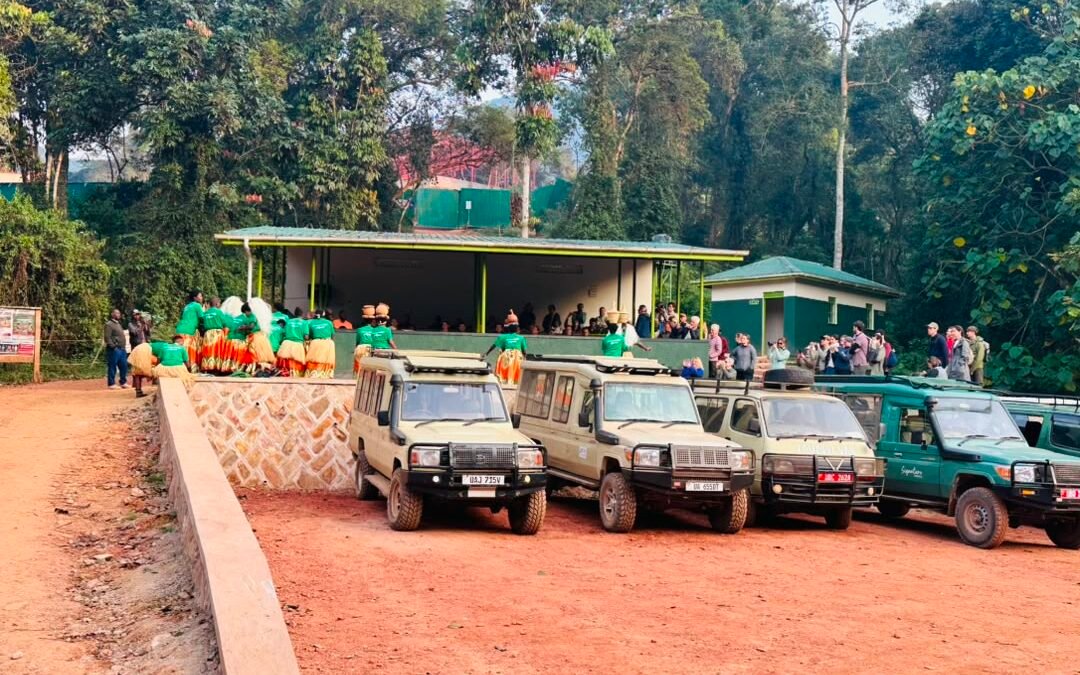
Can i take a 1 day Gorilla trek in Uganda when from Kigali? Yes, it is possible to trek mountain gorillas in Uganda in a single day starting and ending in Kigali, and it is one of the questions our team at Pick and Transfer Safaris hears most often from travelers with limited time or a tight layover in Rwanda. It is also one of the more physically demanding days you can build into an East Africa trip, involving a pre-dawn departure, an international border crossing, a genuine forest trek, and a long drive back, all inside roughly eighteen to twenty hours.
This guide answers the question honestly and in full detail: exactly how far Uganda’s gorilla parks sit from Kigali, what the day actually looks like hour by hour, how much it costs compared to trekking in Rwanda, and, just as importantly, who this option genuinely suits and who would be better served by a two-day version instead. Our own 1-day Uganda gorilla safari starting from Kigali package is built around exactly this itinerary, so everything below reflects how we actually run this trip for guests.
The Short Answer
Yes, a one-day Uganda gorilla trek from Kigali is possible, but it is a long, demanding day rather than a relaxed outing. You will leave your Kigali hotel around 3:00 to 3:30 AM, cross the Rwanda-Uganda border at Cyanika, drive roughly four hours total to reach either Mgahinga Gorilla National Park or the southern sectors of Bwindi Impenetrable Forest, trek and spend an hour with a gorilla family, then make the same drive back to Kigali, typically arriving in the evening in time for a late flight.
It works best for travelers with an evening or late-night departure from Kigali, a reasonable level of fitness, and realistic expectations about spending most of the day in a vehicle. For anyone with a bit more flexibility, breaking the trip into two days is almost always the more comfortable choice, and we cover that alternative in detail further down this guide.
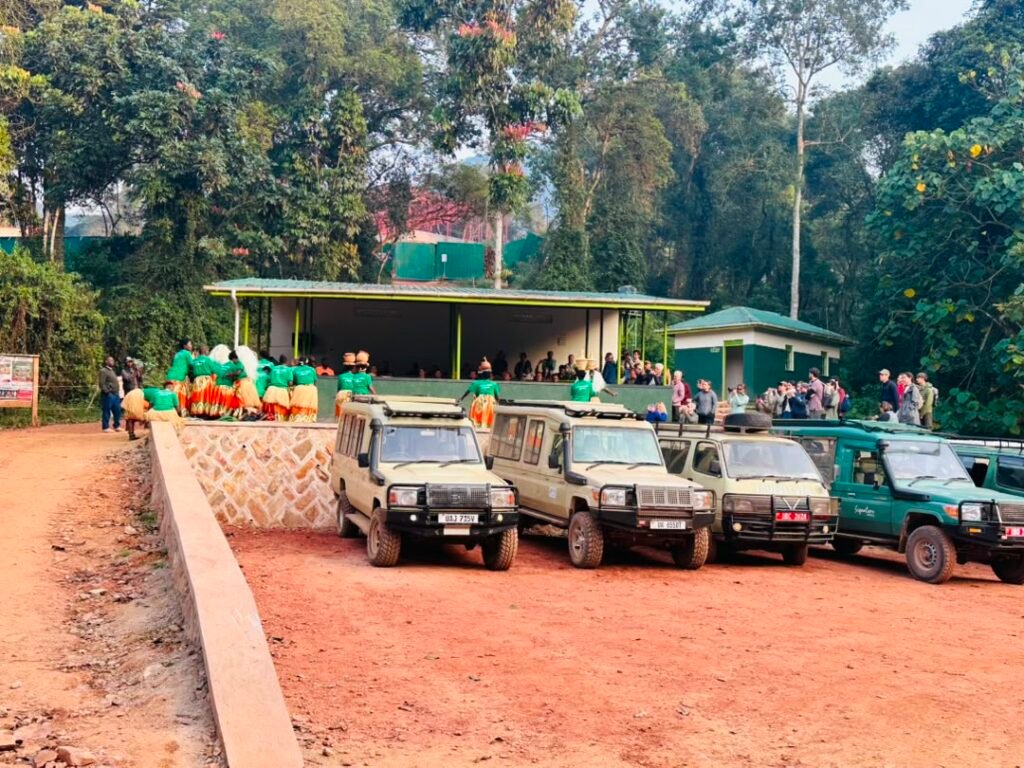
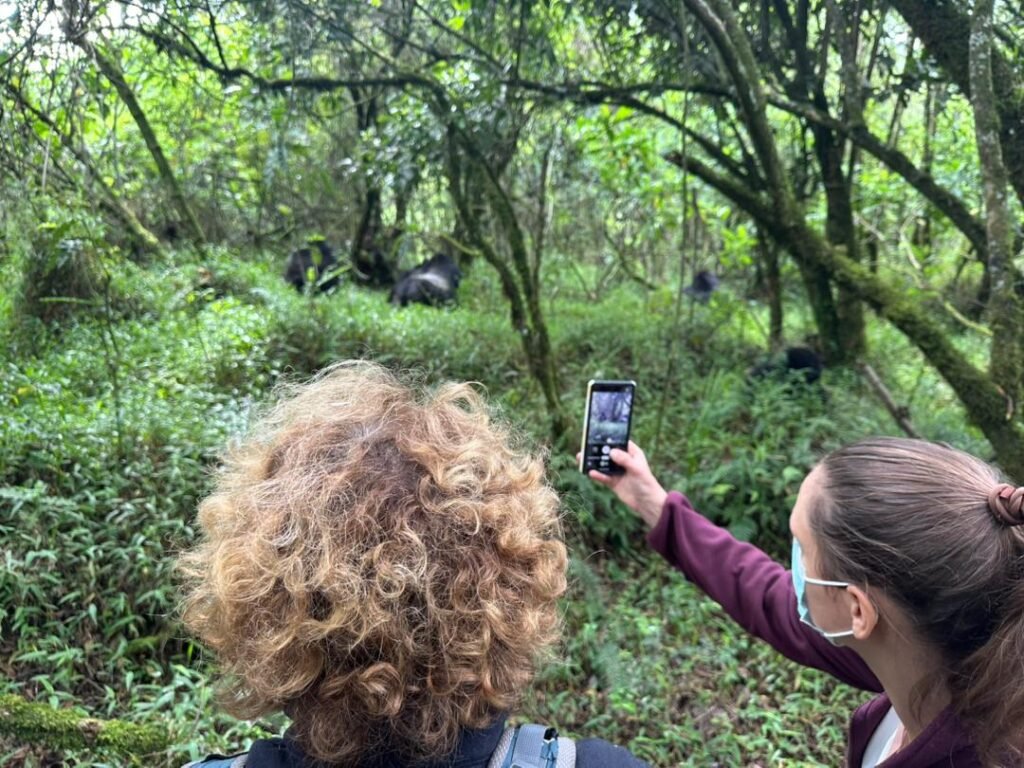
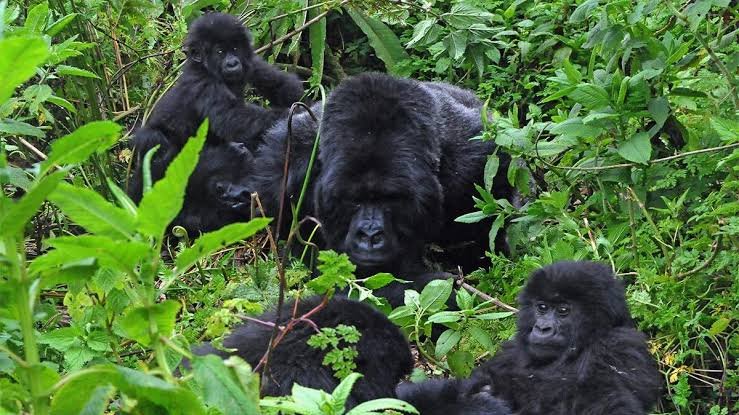
How Far Is Uganda’s Gorilla Trekking Area from Kigali?
The two Uganda parks realistically reachable from Kigali in a single day are Mgahinga Gorilla National Park and the southern sectors of Bwindi Impenetrable Forest National Park, Rushaga and Nkuringo, both accessed via the Cyanika border crossing in Uganda’s Kisoro district. Mgahinga sits less than four hours from Kigali by road, making it the closer of the two options and, notably, home to gorilla groups that share the same Virunga volcanic range as Rwanda’s own Volcanoes National Park.
Bwindi’s southern sectors sit slightly further, with the full journey from Kigali typically taking four to six hours depending on traffic, road conditions, and time spent at the border, out of a total driving distance of roughly 160 to 200 kilometers. Both routes are entirely feasible as a same-day round trip, but the extra driving time to Bwindi’s Rushaga or Nkuringo sectors means Mgahinga is generally the more comfortable choice for travelers determined to keep the day as short as possible.
The Cyanika Border Crossing: What to Expect
Nearly every one-day itinerary from Kigali uses the Cyanika border post, a small, well-organized crossing roughly two and a half hours from Kigali that connects directly into Uganda’s Kisoro district, the gateway to both Mgahinga and southern Bwindi. The crossing itself is usually straightforward for travelers with the correct visa documentation already arranged, typically taking somewhere between twenty minutes and an hour depending on how busy the post is at the time you arrive.
Because most one-day trips depart Kigali in the very early hours of the morning, travelers often cross Cyanika while it is still dark, which has the practical advantage of avoiding queues but means having your passport, visa, and yellow fever certificate easily accessible and ready to present without digging through luggage in the dark. Your driver-guide handles the logistics of the crossing itself, but travelers should always confirm their visa situation well before travel day, since border delays are one of the few variables that can meaningfully disrupt a tightly scheduled one-day trip.
What a 1-Day Trip Actually Looks Like, Hour by Hour
Understanding the real shape of this day helps set expectations before you commit to it. Pickup from your Kigali hotel happens around 3:00 to 3:30 AM, deliberately early to allow time for the border crossing and the remaining drive while still reaching park headquarters in time for the standard morning briefing. Most itineraries aim to arrive at Mgahinga or Bwindi’s Rushaga sector by roughly 7:30 to 8:00 AM, in line with the same registration and briefing process every gorilla trekking day follows.
The trek itself then unfolds exactly as it would on any standard gorilla trekking day, an unpredictable walk of thirty minutes to several hours depending on where the gorilla family has moved, followed by a full hour observing the gorillas once contact is made. After the return trek and a short certificate ceremony, your vehicle departs immediately for the drive back to Kigali, retracing the same route through Cyanika. Depending on how long the trek itself took, most travelers arrive back in Kigali sometime in the early evening, which is why this option is realistically only comfortable for travelers with a flight departing later that night or the following morning.
Mgahinga vs Bwindi: Which Is Better for a Day Trip
For travelers determined to keep driving time as short as possible, Mgahinga Gorilla National Park has a clear advantage, sitting closer to the Cyanika border than Bwindi’s southern sectors and offering a genuinely comparable experience to gorilla trekking in Rwanda, since its gorilla groups range across the same volcanic terrain as Volcanoes National Park just across the border. The trade-off is that Mgahinga has fewer habituated gorilla families than Bwindi, so permit availability can be more limited on short notice.
Bwindi Impenetrable Forest National Park’s Rushaga and Nkuringo sectors, while a little further from the border, offer a significantly larger number of habituated gorilla families and a denser, more classically “impenetrable” rainforest setting that many travelers find visually spectacular. For a one-day trip specifically, most operators, including our own team, default to Mgahinga or Rushaga first when availability allows, purely to minimize the total driving time within an already long day.
Uganda Gorilla Permit Cost vs Rwanda
One of the strongest arguments for a Uganda gorilla trek, even as a rushed single-day trip from Kigali, is cost. A standard Uganda gorilla trekking permit currently costs approximately $800 per person for foreign non-residents, issued by the Uganda Wildlife Authority, compared to Rwanda’s $1,500 permit for the same basic experience, an hour with a habituated gorilla family. This roughly 47 percent difference in permit price is a major reason travelers already based in Kigali sometimes choose to cross the border for a Uganda trek rather than trekking in Rwanda itself, even accounting for the added transport cost and long travel day.
It is worth noting that permit price is not the only consideration; Rwanda’s Volcanoes National Park sits far closer to Kigali, which is why many travelers with more flexible schedules choose our 2-day Volcanoes gorilla trek from Kigali instead, trading a higher permit cost for a dramatically shorter and more comfortable travel day. For a deeper cost comparison between the two experiences, Kenlink Tours’ guide on how far Bwindi Impenetrable National Park is from Kigali is a useful independent reference point.
Visa Requirements for Crossing into Uganda
Travelers planning a one-day Uganda gorilla trek from Kigali need valid Ugandan entry documentation, and the most convenient option for most nationalities is the East Africa Tourist Visa, a multi-entry visa covering Rwanda, Uganda, and Kenya on a single application. This visa is specifically designed for exactly this kind of cross-border day trip, since a standard single-entry Rwanda visa alone does not permit re-entry into Rwanda after crossing into Uganda without additional paperwork.
Travelers who already hold a single-entry Rwanda visa and did not apply for the East Africa Tourist Visa in advance should confirm with their operator well before travel day whether same-day dual entry is possible at Cyanika, since visa policy and enforcement can vary. Our team at Pick and Transfer Safaris checks visa requirements as a standard part of booking any cross-border itinerary, precisely because getting this wrong can derail an otherwise well-planned one-day trip.
Is a 1-Day Trip Physically Realistic? An Honest Assessment
It is important to be candid about what this day actually demands. Between the 3:00 AM wake-up, roughly eight hours of driving split across the outbound and return journeys, a gorilla trek that can itself last anywhere from one to eight hours round trip depending on the family’s location, and the border crossing twice in one day, total time away from your hotel commonly runs sixteen to twenty hours. This is a significantly more demanding day than a standard gorilla trekking day within Rwanda, where the entire activity, door to door, typically wraps up by early afternoon.
Travelers in good general health and fitness handle this day without major issue, but anyone prone to motion sickness on long drives, managing a chronic health condition, or simply hoping for a relaxed, unhurried gorilla encounter should think carefully before booking this option. We are always straightforward with guests about this trade-off, since a rushed, exhausting day is not what most people picture when they imagine their gorilla trekking experience.
Who Should Attempt This, and Who Should Choose a Different Option
The one-day option genuinely suits a specific kind of traveler: someone with an evening or late-night flight out of Kigali on the same day, limited additional time in the region, strong general fitness, and a clear-eyed understanding that the day will be long and largely spent in a vehicle. Business travelers extending a Kigali trip by a single day, or travelers on a tight, multi-country itinerary who specifically want a lower-cost Uganda permit without adding an extra overnight stay, are the most common guests who choose this format.
Travelers with even one additional day to spare are almost always better served by our 2-day Uganda gorilla tour starting from Kigali, which spreads the same border crossing and trek across two days with an overnight stay near the park, removing the pre-dawn departure and same-day return entirely. Families, travelers over 60, or anyone who prefers to enjoy the trek without racing back to a vehicle immediately afterward should strongly consider this alternative.
What Happens If the Trek Runs Long or Gorillas Are Hard to Find
Because gorilla families move freely through the forest overnight, there is no way to guarantee in advance how long a trek will take on any given day, and this uncertainty matters more on a one-day itinerary than it does on a longer trip with built-in flexibility. If your assigned gorilla family has moved to a distant part of the park, the trek itself can extend well beyond the typical two to four hours, pushing your return departure later than planned and, in a worst-case scenario, threatening a same-day flight connection.
Experienced operators mitigate this risk by requesting, where possible, a gorilla family known to be closer to the trailhead on trekking day and by building a reasonable buffer into the return schedule, but travelers booking a one-day trip should always share their exact flight departure time with their operator in advance and understand that, in rare cases, a very late return is possible. This is one of the strongest practical arguments for choosing the two-day version whenever your schedule allows even a small amount of flexibility.
Comparing This Trip to Trekking Entirely Within Rwanda
It is worth weighing a one-day Uganda trek directly against simply trekking gorillas in Rwanda itself. A standard Rwanda gorilla trekking day at Volcanoes National Park involves a much shorter transfer, roughly two and a half hours each way rather than four, no international border crossing, and a trekking day that reliably wraps up by early afternoon rather than stretching into the evening. The trade-off is the permit price difference, $1,500 in Rwanda versus roughly $800 in Uganda, a gap of $700 per person that some travelers find well worth the additional logistics of crossing into Uganda, while others prefer to pay the premium for a dramatically more comfortable day.
There is no universally correct answer here; it genuinely depends on how much a traveler values a lower permit cost against a shorter, less exhausting day. Travelers who have already trekked gorillas in Rwanda on a previous trip and specifically want a second, different population and a lower price point on a return visit are often the most natural fit for the Uganda day-trip option, since the novelty of a new experience offsets the added effort.
Health and Safety Considerations for a Long Single Day
A sixteen-to-twenty-hour day built around pre-dawn travel, an international border crossing, and strenuous trekking at altitude calls for a bit more preparation than a standard trekking day. Travelers prone to motion sickness on long, winding mountain roads should carry appropriate medication, since a significant portion of this day is spent in a moving vehicle on roads that climb and descend continuously through Rwanda’s northern highlands and Uganda’s Kisoro district. Staying well hydrated throughout the day, rather than only during the trek itself, helps considerably given the combination of early waking, physical exertion, and long hours of travel.
Travel insurance covering medical evacuation is particularly important for this itinerary, given how far the route travels from major medical facilities at various points in the day. Travelers with any respiratory symptoms in the days beforehand should notify their operator, since both Uganda and Rwanda enforce strict health rules around gorilla trekking to protect the animals from human illness, and a rescheduled trek is far more disruptive to plan around on a tightly timed single-day itinerary than on a longer trip.
Group Size and Cost Sharing on a One-Day Trip
Because private vehicle and driver-guide costs are fixed regardless of how many people are traveling together, group size has an outsized effect on the per-person cost of a one-day trip. A solo traveler booking this itinerary privately pays considerably more per person for transport than a group of four to six travelers splitting the same vehicle and driver-guide fee, which is one reason many operators, including Pick and Transfer Safaris, encourage solo travelers to check for joined-group departures before booking a fully private one-day trip.
Because the entire day depends on tight, reliable coordination, however, larger groups can sometimes introduce their own complications, particularly if group members have different fitness levels that affect trekking pace. Most operators cap one-day trip groups at a manageable size specifically to keep the day’s tight schedule realistic for everyone involved.
Weather and Seasonal Timing for a One-Day Trip
Rwanda and Uganda’s dry seasons, roughly June through September and December through mid-February, offer firmer trekking trails and more predictable driving conditions along the mountainous Cyanika route, both meaningful advantages on a day with essentially no slack built into the schedule. Attempting a one-day trip during the heavier rains of March through May or October through November adds real risk, since muddy roads can slow the drive itself and muddy trails can extend trekking time exactly when a fast turnaround matters most.
Travelers set on attempting this itinerary during the wetter months should build in extra buffer time before any onward flight and discuss the added risk candidly with their operator beforehand. This seasonal sensitivity is another reason we generally steer guests toward the two-day version whenever a trip falls outside the reliable dry-season windows.
A Better Alternative: The 2-Day Uganda Gorilla Trek from Kigali
For nearly every traveler weighing this decision, our 2-day Uganda gorilla tour starting from Kigali delivers the same Uganda permit savings and the same gorilla encounter without the exhausting single-day structure. The itinerary simply spreads the trip across two days: an afternoon drive and border crossing on day one, an overnight stay near Bwindi or Mgahinga, a full, unhurried gorilla trekking day on day two, and a comfortable return to Kigali that evening rather than racing the clock immediately after the trek.
This small adjustment removes the pre-dawn 3:00 AM departure entirely and gives travelers a proper night’s rest before the physically demanding trekking day itself, which most guests find makes an enormous difference to how much they actually enjoy the experience. Kenlink Tours’ own 2-day Uganda gorilla safari starting from Kigali follows a very similar structure, a useful comparison if you want to see how another established regional operator frames this same two-day format.
Extending Further: 3-Day and Longer Cross-Border Options
Travelers with even more flexibility often extend the trip further, combining a Uganda gorilla trek with additional time in Bwindi or a stop at Lake Bunyonyi, one of the most scenic spots in southwestern Uganda. Our 3-day Uganda gorilla safari from Rwanda builds in this extra breathing room, while travelers wanting to see chimpanzees alongside gorillas can consider our 5-day Uganda gorilla and chimps safari starting from Rwanda, which adds a chimpanzee trekking day to the same cross-border route.
For travelers who eventually want to trek gorillas in both countries during the same trip, comparing the Uganda-only leg against a combined circuit is worthwhile; Kenlink Tours’ 3-day Bwindi gorilla safari starting from Kigali and their longer double gorilla trekking itinerary across Rwanda and Uganda both illustrate how these extended cross-border routes are typically structured by another regional operator.
Cost Breakdown for the 1-Day Option
A one-day Uganda gorilla trek from Kigali involves several cost components worth understanding before booking. The Uganda gorilla permit itself runs approximately $800 per person, and private 4×4 transport with an experienced driver-guide for the full round trip, covering fuel, the driver’s own long day, and vehicle costs, typically adds $150 to $350 per person depending on group size, since these costs are shared across everyone traveling together.
Because the itinerary does not include an overnight stay, accommodation costs are avoided entirely, which is one of the reasons this option can work out more economical overall than the two-day alternative despite the added physical demands. All together, most travelers should budget somewhere between $950 and $1,200 per person for a complete one-day trip, permit, transport, park fees, and a packed breakfast and lunch included. Our team at Pick and Transfer Safaris provides a full itemized quote before booking so there are no surprises on the day itself.
Currency, Connectivity, and Cross-Border Practicalities
Crossing into Uganda for the day means dealing with a second currency, the Ugandan shilling, alongside the Rwandan franc, though US dollars remain widely accepted for permit fees and tips on both sides of the border. It is worth carrying a small reserve of US dollars specifically for this trip, since exchanging currency at the border itself is possible but rarely offers a favorable rate, and neither Mgahinga nor Bwindi’s remote park headquarters has reliable ATM access.
Mobile phone coverage typically switches networks as you cross into Uganda, so travelers relying on a Rwandan SIM card for data or calls should expect a gap in connectivity around the border and potentially throughout the day in more remote sections of the drive. This is generally not a significant issue for a single, tightly guided day trip, but it is worth mentioning to family or contacts expecting to reach you, given how much of the day unfolds outside normal network coverage. For travelers curious how this cross-border logistics picture compares to a Rwanda-only itinerary, our 3-day Rwanda gorilla tracking and cultural tour covers the equivalent details for trekking entirely within Rwanda without crossing any border at all.
What to Pack and Prepare for a Long Single Day
Because this itinerary compresses an entire cross-border gorilla trek into one long day, preparation matters more here than on almost any other Rwanda or Uganda itinerary. Waterproof hiking boots, a rain jacket, long trousers, and gardening gloves remain essential for the trek itself, exactly as they would for any gorilla trekking day, but travelers should also pack snacks, a refillable water bottle, and any personal medication within easy reach in a daypack rather than checked luggage, since there is no opportunity to access a hotel room again until very late in the day.
A phone or camera with a fully charged battery and a portable power bank is worth having, given how much of the day involves photography opportunities both at the gorilla encounter and along the scenic drive itself. Comfortable, breathable clothing for the long vehicle journey, on top of proper trekking gear for the forest portion, makes the many hours of driving considerably more bearable.
Booking Timing: Permits, Flights, and Advance Planning
Uganda gorilla permits, like Rwanda’s, are limited and should be booked well in advance, ideally two to six months ahead for travel during the peak June-to-September and December-to-mid-February seasons. Because a one-day trip depends entirely on tight timing, we strongly recommend sharing your exact outbound and, if applicable, return flight details with your operator at the time of booking, so the itinerary can be built around realistic buffers rather than the absolute minimum possible schedule.
Travelers should also confirm their visa arrangements at this same stage, since a same-day cross-border trip leaves little room to resolve a visa issue discovered at the Cyanika border itself. Kenlink Tours’ guide on how many hours you need to get from Kigali to Bwindi National Park offers a further independent breakdown of the timing involved, useful reading alongside this guide when finalizing your own schedule. Their broader Uganda safaris portfolio and 3-day Uganda gorillas safari are also worth reviewing if you want a second reference point on how another established regional operator structures Uganda-side permit bookings and timing around this same border crossing.
Independent travelers arranging their own transport rather than booking a full package can compare vehicle hire options through Kenlink Tours’ car hire page, though a self-drive approach is generally not recommended for this specific itinerary given the tight timing, unfamiliar mountain roads, and the added complexity of a same-day international border crossing.
Common Mistakes Travelers Make Booking This Trip
A few recurring mistakes show up when travelers arrange a one-day cross-border trek without enough advance planning. The most common is booking a flight departure too close to the expected return time, leaving no buffer if the trek runs long or the border crossing takes longer than usual; a same-day evening flight with at least a few hours of cushion is far safer than a tight connection immediately after the trip is scheduled to end. Another frequent issue is arriving in Rwanda without confirming visa arrangements for the Uganda crossing in advance, only to discover at Cyanika that additional paperwork or fees are required, which can delay the entire day’s schedule.
Underestimating the physical toll of the day is another common misstep; travelers who treat this as a casual add-on rather than the demanding day it actually is sometimes find themselves exhausted well before the trek even begins. Finally, booking independently without a driver-guide experienced on this specific route can lead to unnecessary delays at the border or on unfamiliar mountain roads, which is why nearly every operator recommends a private vehicle with a guide who has made this exact crossing many times before.
Why Book This Cross-Border Trip With a Local Specialist
A one-day cross-border gorilla trek has essentially no margin for logistical error, given the tight sequencing of an early departure, a border crossing, a variable-length trek, and a hard deadline to return to Kigali. Pick and Transfer Safaris coordinates this entire itinerary directly, securing your Uganda permit, handling the border logistics, and providing an experienced driver-guide who has made this specific route many times, rather than leaving any part of the day to chance.
Because permits are limited and the itinerary depends on tight, reliable timing, we recommend reaching out through our contact page with your exact travel dates and flight details as early as possible. Explore our full range of Rwanda and Uganda safari packages, including longer, more relaxed Uganda-Rwanda combined itineraries and 7-day Uganda-Rwanda safari adventures, if a single rushed day turns out not to be the right fit once you see the full picture. Travelers researching independently are also welcome to compare notes against Kenlink Tours’ about us and Rwanda safaris pages, both useful references when weighing operators for a cross-border gorilla trekking trip.
Frequently Asked Questions About a 1-Day Uganda Gorilla Trek from Kigali
Is it actually possible to trek gorillas in Uganda and return to Kigali the same day? Yes, this is a well-established itinerary offered by operators on both sides of the border, though it involves a very early departure, around 3:00 to 3:30 AM, and a long day of roughly sixteen to twenty hours total.
Which is closer to the border for a day trip, Bwindi or Mgahinga? Mgahinga Gorilla National Park is generally the closer option, sitting less than four hours from Kigali, while Bwindi’s southern Rushaga and Nkuringo sectors typically require a slightly longer drive of four to six hours total.
How much cheaper is a Uganda gorilla permit than a Rwanda permit? Uganda’s standard gorilla permit costs approximately $800 per person compared to Rwanda’s $1,500, a difference of roughly 47 percent for essentially the same core experience, an hour with a habituated gorilla family.
Do I need a special visa to cross into Uganda for the day? The East Africa Tourist Visa, covering Rwanda, Uganda, and Kenya, is the most convenient option for this kind of same-day cross-border trip, since a standard single-entry Rwanda visa may not permit smooth re-entry after crossing into Uganda.
What if the gorilla trek takes longer than expected? Trekking time varies daily based on where the gorilla family has moved, and a longer-than-expected trek can push your return to Kigali later than planned, which is why sharing your exact flight time with your operator in advance is essential for this itinerary specifically.
Would a 2-day trip be a better option? For most travelers, yes. A 2-day Uganda gorilla tour from Kigali offers the same permit savings without the exhausting same-day round trip, and is generally recommended unless your schedule genuinely only allows for a single day.
Can I book this trip if I already have a confirmed morning flight the next day? It is possible but tight, since the return drive alone can take four to six hours and the trek’s length is never fully predictable in advance; travelers in this situation should discuss a realistic worst-case timeline with their operator before committing to a same-day return.
Is Mgahinga or Bwindi more likely to have gorilla permits available on short notice? Availability varies by season and by how far in advance you book, but because Bwindi has more habituated gorilla families spread across several sectors, it generally offers more permit flexibility than Mgahinga, which has fewer groups overall.
Do children under 15 have any alternative activities during a one-day trip? Gorilla trekking’s minimum age of fifteen applies in Uganda just as it does in Rwanda, so this specific one-day itinerary is not suitable for younger children; families in this situation are better served by a longer trip that allows non-trekking activities to be scheduled separately.
Can i take a 1 day Gorilla trek in Uganda when from Kigali?
A one-day Uganda gorilla trek from Kigali is a genuinely achievable, well-tested itinerary, and for the right traveler, someone with a late flight, good fitness, and a clear understanding of what the day involves, it delivers real savings on permit cost alongside an unforgettable encounter with mountain gorillas. It is not, however, a relaxed day, and being honest about that trade-off upfront leads to a far better experience than discovering it partway through a 3:00 AM wake-up call.
If you are weighing whether a one-day trip or a more relaxed two-day version is right for your own schedule, the team at Pick and Transfer Safaris can walk through both options against your exact flight times and fitness level. Browse our full gorilla safaris collection, or reach out through our contact page to start planning your own cross-border gorilla trekking day.
7 Days Uganda Safari – One week tour
This 7-day itinerary is the classic one-week introduction to Uganda, covering the country’s three most iconic wildlife experiences: chimpanzee tracking in Kibale Forest National Park, Big Five game drives and a boat cruise in Queen
Tour Details →
10 Days Uganda Primates and Wildlife
This 10-day Uganda Grand Safari is the most complete Uganda itinerary we offer at Pick and Transfer Safaris. It begins with a scenic northward drive from Entebbe to the vast open plains of Murchison
Tour Details →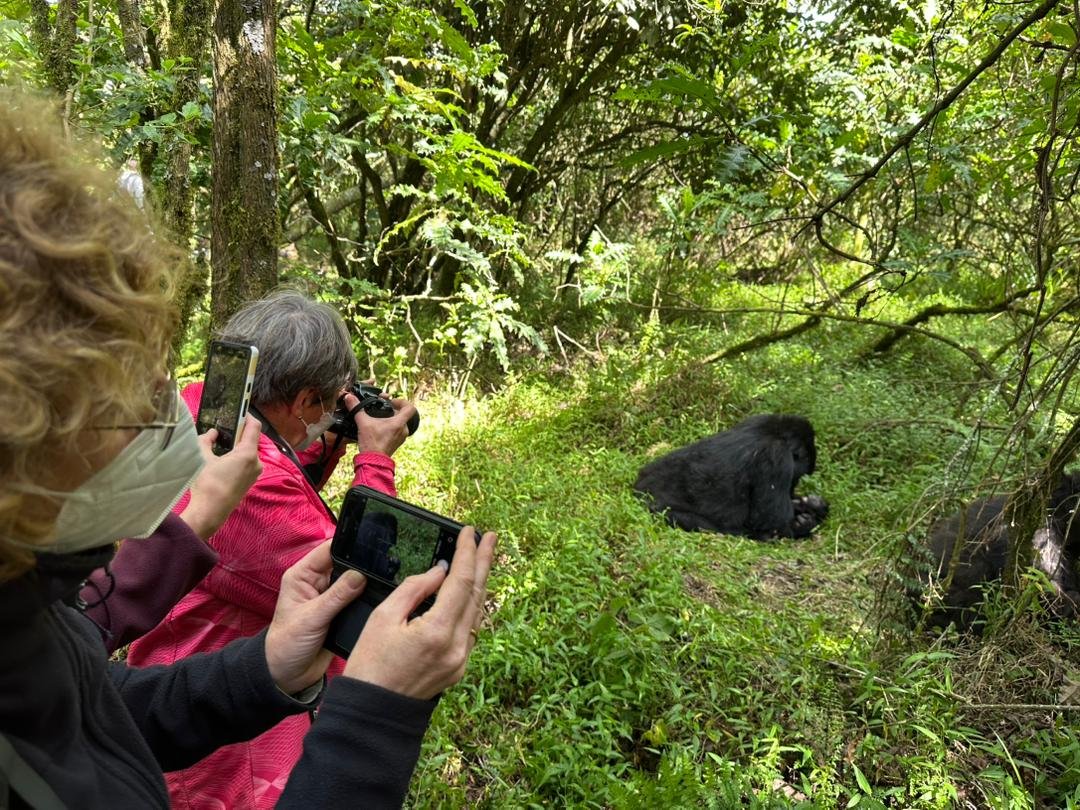
2 Days Uganda Gorilla Tour Starting from Kigali
This is the gentler cousin of our 1-Day Uganda Gorilla Safari Starting from Kigali — same idea, twice the breathing room. Instead of squeezing a 3,000-metre forest trek and two border crossings into a single very long day
Tour Details →
5-Day Uganda Gorilla and Chimpanzee Safari
This itinerary can be combined with a Rwanda extension or a wildlife-focused add-on through Queen Elizabeth National Park — browse our Uganda & Rwanda Safaris and Primate Safaris collections for ideas.
Tour Details →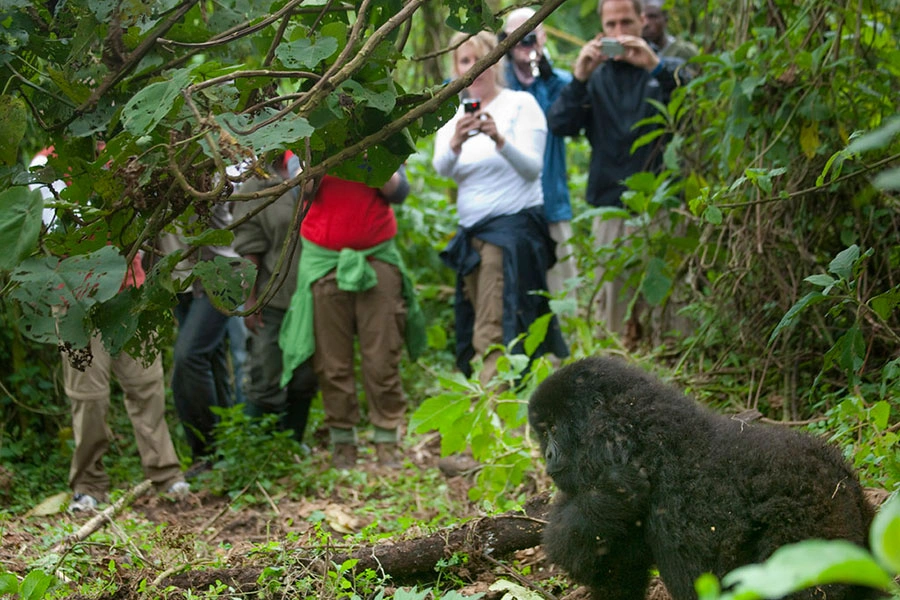
5 Days Rwanda Wildlife and Gorillas
This 5-day itinerary brings together Rwanda’s two flagship wildlife experiences: open savannah game drives and a boat safari in Akagera National Park, followed by a face-to-face encounters
Tour Details →
3 Days Uganda Gorilla Safari
For travelers who arrive in Entebbe with a tight schedule and a clear ambition, a 3-day gorilla safari to Bwindi Impenetrable Forest National Park is the most focused and rewarding short trip the country has to offer.
Tour Details →