- LET'S PLAN YOUR SAFARI
- +256 200 921 002
- +256 793 194 703
- info@pickandtransfersafaris.com

Can You Do a Gorilla Trek in 1 day from Rwanda?
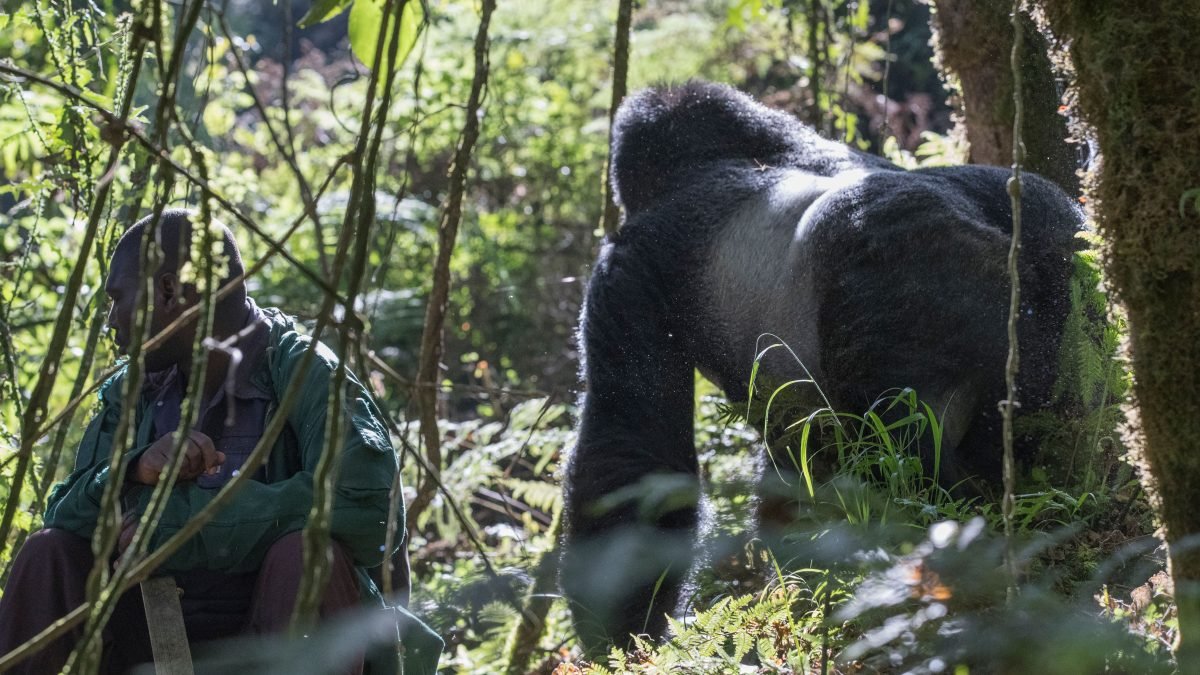
You can do a one-day gorilla trek from Rwanda by crossing into Uganda to visit Bwindi Impenetrable National Park or Mgahinga Gorilla National Park, allowing for a return to Kigali the same day. While it’s technically possible to trek in Rwanda’s Volcanoes National Park and return on the same day, few operators offer this due to permit and lodge logistics. This guide outlines how to make a one-day trek feasible, the associated costs, and the ideal audience for this experience. Ultimately, the question remains: Can You Do a Gorilla Trek in 1 day from Rwanda?
The Direct Answer, Explained Properly
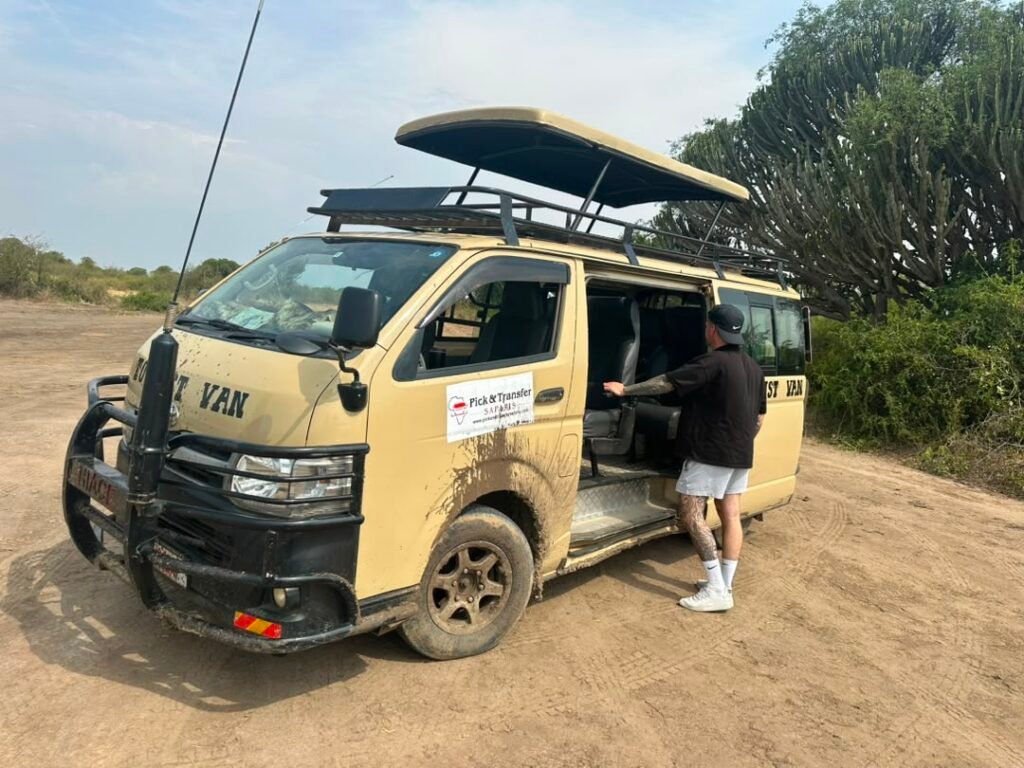
A lot of travelers searching this question are picturing something specific: land in Kigali, see a gorilla, don’t lose a night of the trip. That’s achievable, but the details matter more than the headline.
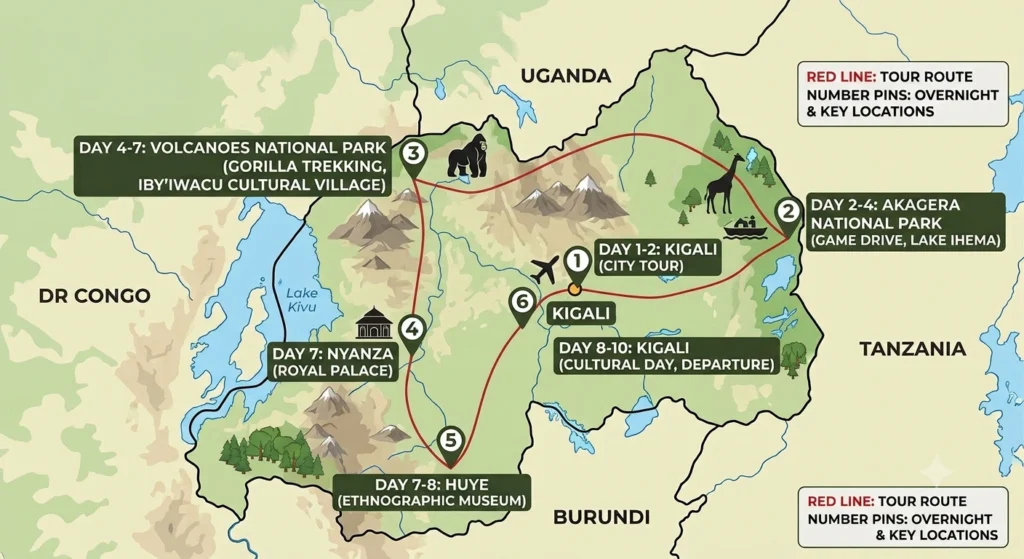
Within Rwanda alone, Volcanoes National Park sits roughly two to three hours from Kigali — close enough, in theory, for a same-day trek. In practice, almost no operator markets a true one-day Rwanda-only gorilla trip, for a simple reason: Rwanda’s permit system and its cluster of nearby lodges are built around an overnight stay in Musanze, and the USD 1,500 permit price tends to be booked as part of a two-day-minimum package rather than a rushed single day.
Crossing into Uganda, on the other hand, is where the genuine one-day gorilla trek exists as an established, regularly run itinerary. Uganda’s gorilla parks sit close enough to the Rwandan border — 2.5 to 4.5 hours depending on the park and sector — that a same-day round trip from Kigali, including the trek itself, is both physically possible and something operators run routinely. This is what most people actually mean when they ask this question, and it’s the version this guide focuses on.
If you’d like the complete hour-by-hour breakdown of how this day runs, we cover it in full on our Express Gorilla Trek guide and matching itinerary page.
Why Uganda, Not Rwanda, Is the Realistic One-Day Option
The core reason comes down to permit price and how each country’s tourism infrastructure is built around it. A Uganda gorilla trekking permit costs USD 800 per person through the Uganda Wildlife Authority, compared with USD 1,500 for Rwanda’s equivalent permit in Volcanoes National Park. Because Uganda’s permit is significantly cheaper, and because the parks themselves sit close enough to the border to make a round trip work, an entire category of short, efficient itineraries has grown up specifically around Kigali-to-Uganda day trips — something that simply hasn’t developed the same way around a Kigali-to-Volcanoes day trip, since the cost and logistics don’t create the same incentive.
There’s also a practical infrastructure difference: Uganda Wildlife Authority is accustomed to issuing permits for trekkers arriving same-day from across the border, and the road network and border posts connecting Rwanda to Bwindi and Mgahinga are well-established tourist routes used daily for exactly this purpose. Our full breakdown of why Kigali has become the preferred starting point for Uganda gorilla trekking generally is covered in our Uganda Gorilla Trekking Safaris from Kigali guide, if you’d like the broader context beyond just the one-day question.
How the One-Day Uganda Gorilla Trek From Rwanda Actually Works
The process for gorilla trekking begins with an early morning pickup in Kigali and a drive to the border, either at Cyanika for Mgahinga or Katuna for Bwindi, arriving in Uganda before the usual park briefing at 7:30 to 8:00 AM. The trekking experience mirrors that of longer treks, including a ranger briefing, tracking the gorilla family’s location, and a one-hour encounter at a minimum distance of seven meters. After the encounter, participants retrace their steps back to Kigali, completing the journey by the same evening.
The honest total is roughly 16 to 18 hours door to door, depending on how long the trek itself takes (which varies daily, since gorilla families move through the forest overnight and trackers don’t know exactly where they’ll be found until that morning). It’s a genuinely demanding day, but it delivers the complete, unshortened gorilla trekking experience — nothing about the encounter itself is abbreviated to fit the schedule.
Which Park Makes the One-Day Trip Easiest: Bwindi or Mgahinga?
Mgahinga Gorilla National Park, reached via the Cyanika border roughly 2.5 to 3 hours from Kigali, is generally the better fit for a one-day itinerary, simply because the shorter drive leaves more buffer in an already tight schedule. Its single habituated gorilla family sits within the Virunga volcanic range, the same chain that continues into Rwanda’s own Volcanoes National Park.
Bwindi Impenetrable National Park, specifically its southern Rushaga and Nkuringo sectors, is reached via the Katuna border roughly 3.5 to 4.5 hours from Kigali — still workable in a single day, but tighter, and best attempted with an operator experienced on this exact route and with a confirmed early trek assignment. Bwindi’s advantage is a much larger number of habituated families, which matters if Mgahinga’s permits happen to be sold out on your travel date.
We match travelers to whichever park offers the most realistic timing for their specific date, since permit availability at each park shifts throughout the year.
What a One-Day Trek Costs
A one-day trip to see Uganda’s gorillas from Kigali is the most cost-effective option, eliminating overnight expenses. The main costs include an USD 800 gorilla permit per person, private 4×4 transportation for the round trip, an experienced driver-guide, border-crossing assistance, and meals, including a packed lunch. Without the cost of lodging, this itinerary is cheaper than longer alternatives, though it’s advisable to budget separately for porter and guide tips (USD 10–20 each), Uganda visa fees, and travel insurance.
Is a One-Day Trek the Right Choice for You?
This is really the question underneath the search query, and it deserves a direct answer rather than a purely logistical one.
It’s the right choice if: you have exactly one open day and no flexibility to add a night, you’re a fit, well-rested traveler comfortable with a long day involving a pre-dawn start and a late return, or you’re specifically trying to minimize total cost by avoiding an overnight stay.
It’s probably not the right choice if: you’re arriving in Kigali on a long-haul flight with no chance to rest first (jet lag stacked on top of a 16 to 18-hour trekking day is genuinely rough), you have any health condition that makes early starts or long days difficult, or you’d simply prefer to enjoy the experience at a more relaxed pace rather than treat it as a logistical challenge to be solved.
For travelers in that second group, the good news is that the trek itself — the permit, the forest, the hour with the gorillas — is identical whether you do it in one day or three. Our 2-Day Bwindi Gorilla Safari from Kigali delivers the same encounter with a full night’s rest built in before the trek, and our 3-Day Rwanda to Uganda Gorilla Express adds a further night and room for a scenic or cultural stop, both for a modest increase in cost and time over the one-day version.
What About Trekking Gorillas Inside Rwanda in a Single Day?
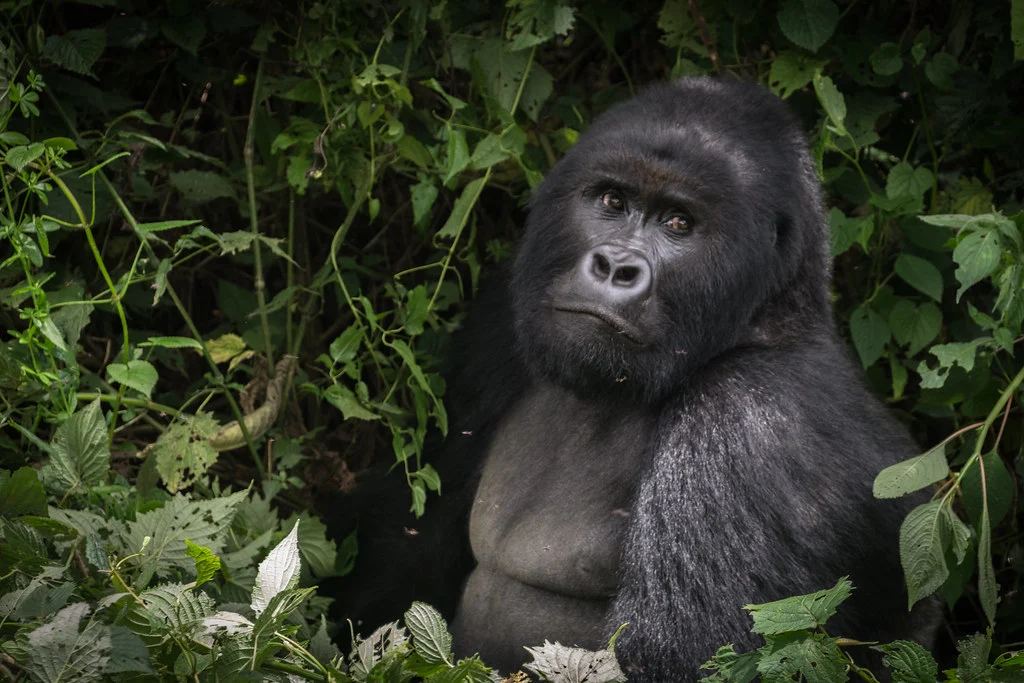
While often compared to Uganda, a same-day trek from Kigali to Volcanoes National Park in Rwanda is closer, taking about two to three hours each way. However, true one-day packages are rare due to the tourism structure in Musanze, where most lodges and tour packages are designed for overnight stays. With permits costing USD 1,500, travelers usually prefer the more comprehensive two-day experience that the higher price supports, rather than a rushed single day.
That said, if a same-day Rwanda-only trek is genuinely what you’re after, it’s worth raising directly with an operator rather than assuming it isn’t possible — the geography supports it even if it isn’t a commonly advertised package. For most travelers asking this question, though, the well-established, regularly run one-day option remains the Uganda route described throughout this guide, not because Rwanda can’t work, but because Uganda’s shorter permit cost and established day-trip infrastructure make it the itinerary operators actually build and run at scale.
Fitness and Physical Demands of a Single Long Day
It’s worth being direct about what a one-day trek actually asks of your body. The trek itself takes place on Bwindi or Mgahinga’s steep, often muddy terrain at elevations between roughly 1,400 and 2,700 meters — physically demanding on any itinerary, but noticeably more so after a 3:30 or 4:00 AM wake-up and several hours of driving rather than a full night’s rest beforehand. A reasonable baseline fitness, comfortably walking briskly uphill for an hour without stopping, makes a meaningful difference here, and hiring a porter at the trailhead — genuinely worth doing on every gorilla trek — becomes especially valuable on the one-day version, where fatigue is more of a factor by the time the trek begins.
Visa and Document Requirements for a Same-Day Crossing
Because this trip crosses the Rwanda-Uganda border twice within a single day, document preparation matters more here than on longer itineraries with more schedule flexibility. Most nationalities can obtain a Uganda visa on arrival, but applying through Uganda’s e-visa portal in advance is strongly recommended for a same-day itinerary specifically, since any delay at either crossing has a direct, compounding effect on an already tight schedule. A yellow fever vaccination certificate is mandatory for entry into both Rwanda and Uganda and is checked at the border — keep the physical certificate with your passport, not just a photo on your phone.
What to Pack for a One-Day Round Trip
- Waterproof hiking boots with solid ankle support, already broken in.
- Long trousers and a long-sleeved shirt in neutral colors, tucked into boots and gloves against nettles and safari ants.
- Gardening gloves for gripping vegetation on steep sections.
- A lightweight rain jacket, regardless of season.
- A spare shirt and socks for the long drive home after a physically demanding trek.
- Snacks and a refillable water bottle for the drive, beyond the packed lunch provided during the trek.
- A camera or phone with a capable low-light lens — flash photography is prohibited near the gorillas.
- Cash in small denominations for porter tips.
- Passport, Uganda visa confirmation, yellow fever certificate, and printed permit confirmation, kept easily accessible for both border crossings.
Comparing Operators for a One-Day Trek
Because timing is so unforgiving on a single-day itinerary, the choice of operator matters more here than on any longer, more flexible trip. A private vehicle with a driver-guide genuinely experienced on the exact Kigali-Cyanika-Mgahinga or Kigali-Katuna-Bwindi route, comfortable with both border crossings, and able to build realistic buffer into the schedule is close to a requirement rather than a nice-to-have. For a sense of how a comparable one-day-adjacent itinerary is priced and structured elsewhere, Kenlink Tours’ 2 Days Rwanda to Uganda Gorilla Trekking Safari is a useful reference point, since it covers much of the same route with one added night of buffer built in.
Best Time of Year to Attempt a One-Day Trek
Because a one-day itinerary has essentially no buffer day to fall back on, seasonal timing matters more here than on any longer trip. June to September and December to February, Uganda’s two dry seasons, offer firmer trails and generally faster, more predictable trekking times — a real advantage when the whole day’s schedule depends on the trek not running unexpectedly long. March to May and October to November bring more rainfall, usually as short, heavy afternoon showers, which can extend trekking time and put pressure on an already tight schedule. Travelers considering a one-day trek during the wetter months should build extra flexibility into their evening plans in Kigali, in case the return drive runs later than usual.
Managing Energy Through a Long Single Day
Mental preparation is crucial for travelers facing the challenging pre-dawn drive to the border, which is best used for rest rather than catching up on messages, as it’s the last chance for downtime before a demanding day. Proper breakfast and hydration help counter mid-morning energy dips, but adrenaline often sustains travelers through the trek and gorilla encounter. Fatigue typically sets in during the return drive, making it wise to plan a quiet evening in Kigali instead of late-night activities.
Common Mistakes Travelers Make When Planning a One-Day Trek
Assuming “one day” means a shortened trek. It doesn’t — the permit, the forest trek, and the one-hour gorilla encounter are identical to any longer itinerary. What’s compressed is everything around the trek, not the trek itself.
Booking it immediately after a long-haul flight. Jet lag stacked on a 16 to 18-hour day is a common source of regret; even a single rest day beforehand helps considerably.
Underestimating driving time. Road conditions on the Ugandan side, particularly the final stretch into Bwindi’s southern sectors, can run slower than GPS estimates suggest — an experienced local driver-guide accounts for this when building the day’s schedule.
Choosing a shared vehicle or an operator unfamiliar with both border crossings. Given how little slack a one-day schedule has, this is the itinerary where a private, experienced driver-guide matters most, not least.
Not preparing documents in advance. With two border crossings in a single day, any delay at either one has a compounding effect on the schedule — having visas, yellow fever certificates, and permit confirmation ready and accessible before departure protects the whole day.
Frequently Asked Questions
So — can you actually do it, yes or no? Yes, provided you’re trekking in Uganda rather than Rwanda’s own Volcanoes National Park; the route from Kigali across the border and back within a single day is an established, regularly run itinerary.
Is it safe to cross an international border twice in one day for tourism? Yes — Cyanika and Katuna are both well-established, frequently used tourist crossings, and experienced driver-guides cross them routinely as part of scheduled one-day itineraries.
Will I miss out on anything by doing the one-day version instead of a longer trip? Not in terms of the gorilla encounter itself — the permit, the trek, and the one-hour visit are identical regardless of itinerary length. What you give up is the rest and buffer time that a two or three-day version builds in around the trek.
Is one day enough time if the gorillas are hard to find that morning? Trek duration varies daily and can occasionally run four hours or more each way; experienced operators build reasonable buffer into a one-day schedule, but travelers should understand that an unusually long trek could push the return to Kigali later into the evening.
Do I need to book anything differently for a one-day trip versus a longer one? The permit booking process itself is identical; what changes is the transport and timing plan around it, which is where an operator experienced with this specific route adds the most value.
Is this a good idea right after a long-haul flight into Kigali? Generally not recommended — stacking jet lag on top of a 16 to 18-hour trekking day significantly increases the risk of an exhausting, poorly enjoyed experience. A short rest beforehand, even a single day, makes a real difference.
Planning Your One-Day Gorilla Trek From Kigali
So — can you do a gorilla trek in one day from Rwanda? Yes, by routing across the border into Uganda, where the shorter distance to the trekking sectors and the significantly lower USD 800 permit make a genuine same-day round trip both possible and, for the right traveler, genuinely worth doing. At Pick and Transfer Safaris, we run this exact itinerary regularly, with an experienced driver-guide who knows both border crossings and builds the most realistic possible schedule around your specific travel dates.
To see the complete hour-by-hour itinerary, visit our 1 Day Uganda Gorilla Safari Starting from Kigali page, compare it against our 2-Day and 3-Day alternatives if you’re not sure the one-day pace is right for you, or reach out through our contact page with your travel dates and we’ll confirm permit availability and build your schedule around it.