- LET'S PLAN YOUR SAFARI
- +256 200 921 002
- +256 793 194 703
- info@pickandtransfersafaris.com

Chimpanzee Trekking Rwanda Cost: What Tourists Should Budget
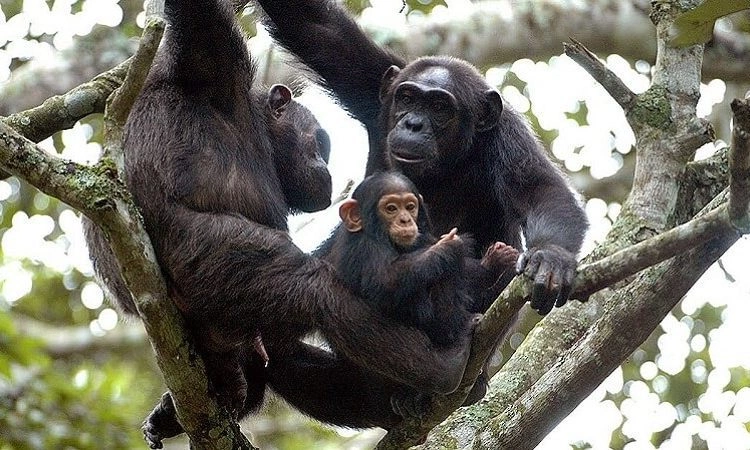
Chimpanzee Trekking Rwanda Cost: What Tourists Should Budget. Chimpanzee trekking in Rwanda is often described as the more affordable, less crowded cousin of gorilla trekking, and in many ways that reputation is well earned. Watching a wild chimpanzee community move through the ancient canopy of Nyungwe Forest National Park costs a fraction of what a gorilla permit does, yet the experience of hearing a chimp “pant-hoot” call echo through the forest is every bit as unforgettable. Still, “cheaper than gorilla trekking” does not mean “cheap,” and travelers planning their first trip to Rwanda deserve a realistic, line-by-line picture of what a chimpanzee trekking day actually costs from permit to plate.
At Pick and Transfer Safaris, we build chimpanzee trekking budgets for guests every week, from independent backpackers piecing together a shoestring itinerary to travelers combining chimps with a full Rwanda primate safari. This guide breaks down every cost category you should plan for, permits, transport, accommodation, meals, tips, and visas, so you can build an accurate budget before you book your chimpanzee tracking trip to Rwanda.
A Typical Chimpanzee Trekking Budget at a Glance
Before diving into every line item, it helps to see the full shape of the budget. A foreign non-resident traveler doing a standard two-day chimpanzee trekking trip to Nyungwe from Kigali should generally expect to budget somewhere between $400 and $1,200 per person all-in, depending on accommodation standard and group size, with the permit itself, currently around $250 per person, forming the single largest fixed cost. Transport, whether a shared 4×4 with driver-guide or a self-drive rental, typically adds $150 to $400 per person for the round trip from Kigali, while accommodation near Nyungwe ranges from roughly $30 a night at a basic guesthouse to $400-plus a night at a luxury forest lodge.
On top of the permit and logistics, budget-conscious travelers should also set aside money for meals (roughly $15–$40 per day depending on where you eat), tips for your ranger guide and porter (around $10–$20 each), and, if you are trekking on a Rwanda-only trip, a Rwanda entry visa. Every one of these categories is explored in detail below.
Chimpanzee Trekking Permit Cost in Nyungwe National Park
The permit is the anchor cost of any chimpanzee trekking budget, and in Rwanda’s flagship chimp destination, Nyungwe Forest National Park, the current rate charged by the Rwanda Development Board sits at approximately $250 per person for foreign non-residents. This single fee covers your ranger guide, park entry for the activity, tracker support, conservation and community contribution, and up to one hour observing the chimpanzee community once contact is made, with the actual trek itself typically lasting between two and four hours depending on where the community has moved that morning.
Permit rates are set and periodically revised by the Rwanda Development Board, so travelers should always confirm the current price with their operator before finalizing a budget, since fees can shift from one season to the next. Unlike gorilla permits, which are strictly capped at eight visitors per habituated family per day, chimpanzee trekking groups in Nyungwe can be somewhat larger, since chimpanzee communities themselves are bigger and more mobile than gorilla family groups, though operators still keep group sizes manageable for a good viewing experience. Travelers booking through Pick and Transfer Safaris have their permits reserved and paid for as part of a complete package, removing the guesswork of dealing with RDB booking systems directly.
Chimpanzee Permits at Gishwati-Mukura National Park: A Cheaper Alternative
Travelers looking to trim their chimpanzee trekking budget further should look closely at Gishwati-Mukura National Park, Rwanda’s newest and smallest national park, tucked between Volcanoes and Nyungwe. Because Gishwati-Mukura’s chimpanzee community is still undergoing habituation rather than being fully open to the same volume of daily visitors as Nyungwe, permit pricing here tends to be noticeably lower and more flexible than Nyungwe’s standard rate, though it is not always published as a fixed, universal figure the way Nyungwe’s is.
For budget-conscious travelers, this makes Gishwati-Mukura worth asking your tour operator about directly, since a lower permit cost combined with the park’s proximity to the Musanze area, only about a ninety-minute drive from the gorilla trekking hub, can make it easy to fit into a broader Rwanda itinerary such as a 5-day Rwanda gorilla and chimpanzee safari without adding a second long transfer to Nyungwe in the south.
Colobus Monkey Trekking and Canopy Walk Fees
Nyungwe offers more than chimpanzees, and many budget-conscious travelers choose to pair a lower-cost primate activity with, or instead of, a full chimp trek. Tracking the park’s habituated troop of Angolan colobus monkeys, some of the largest primate troops in Africa with groups exceeding 300 individuals, typically costs around $60 per person for foreign non-residents, a fraction of the chimpanzee permit price, and involves a much gentler walk.
The Nyungwe canopy walkway, a suspended bridge strung high above the forest floor, is priced separately at roughly $60 per person and can be combined with a nature walk for a half-day activity that costs far less than a full chimpanzee trek while still delivering spectacular views over the forest canopy. Many travelers on a tighter budget build their Nyungwe day around the canopy walk and colobus tracking rather than the full chimpanzee permit, particularly if they have already budgeted for a gorilla trek at Volcanoes National Park elsewhere on their trip.
Getting to Nyungwe: Transport and Fuel Costs
Nyungwe Forest National Park sits roughly five to six hours by road from Kigali, which makes transport one of the largest variable costs in a chimpanzee trekking budget. Travelers booking an organized safari typically pay for a 4×4 vehicle with a professional driver-guide as part of their package price, which covers fuel, driver accommodation, and vehicle wear for the full round trip; this usually works out to somewhere between $150 and $400 per person depending on group size, since costs are shared across everyone traveling together.
Independent travelers renting a self-drive vehicle can compare rates through operators such as Kenlink Tours’ car hire page, which lists vehicle and driver options for getting between Kigali and Rwanda’s national parks. Budget travelers sometimes use RDB-approved public buses partway to Huye or Rusizi and arrange a shorter transfer from there, which can lower transport costs but adds significant travel time and requires more careful planning around trekking start times.
Travelers short on time, or those who simply prefer to avoid a full day of driving each way, can also look into domestic charter flights connecting Kigali to an airstrip near Nyungwe, though this option sits well above ground transport in cost and generally only makes financial sense for groups splitting the charter fee or travelers for whom time savings outweigh budget savings. Whichever option you choose, it is worth requesting a full, itemized transport quote from your operator, whether that is Pick and Transfer Safaris or Kenlink Tours’ Rwanda safaris team, so fuel, driver fees, and any park vehicle fees are clearly separated from your overall package price.
Accommodation Costs Near Nyungwe Forest
Accommodation is where a chimpanzee trekking budget can swing the most dramatically. Basic guesthouses in Kitabi or Gisakura, the two main gateway areas to Nyungwe, start from around $25 to $40 per night for a simple room with breakfast, making them a solid choice for backpackers and budget-focused travelers. Mid-range lodges and hotels, offering en-suite rooms, hot water, and often a restaurant on site, typically run $80 to $180 per night per room.
At the top end, luxury forest lodges overlooking the Nyungwe canopy can charge $350 to $600 or more per night, usually on a full-board basis that includes all meals. Because Nyungwe has fewer accommodation options than the Volcanoes or Akagera areas, availability tightens quickly during peak season, so travelers working with a set budget should book several weeks ahead to secure the accommodation tier that fits their spending plan. Operators such as Pick and Transfer Safaris can recommend properties across every price tier based on your overall trip budget.
Meals and Daily Food Budget
Most mid-range and luxury lodges near Nyungwe include breakfast, and many offer full-board packages covering all three meals, which simplifies budgeting considerably since your food cost is folded into your nightly accommodation rate. Travelers staying at budget guesthouses without meal plans should expect to pay roughly $8 to $15 for a simple local meal at a nearby restaurant, or $20 to $35 for a Western-style meal at a lodge restaurant.
Packed lunches for trekking day, usually prepared by your lodge or included in your safari package, typically add another $10 to $15 per person if not already bundled into your accommodation cost. Bottled water, snacks, and the occasional coffee or beer add a modest but real daily cost that budget travelers often forget to include, generally another $5 to $10 per day.
Guide Fees, Porters, and Tipping Etiquette
Your park ranger guide’s fee is included within the chimpanzee permit price itself, so there is no separate charge to budget for accessing a qualified guide during your trek. Porters, who carry bags and assist on steeper or muddier sections of trail, are optional at Nyungwe but well worth hiring both for convenience and as a direct contribution to the local economy; expect to pay $10 to $15 for a porter’s services.
Tipping is customary throughout Rwanda’s tourism industry and forms a meaningful part of guides’ and porters’ income, so it deserves its own line in your budget. Most travelers tip their ranger guide between $10 and $20 per person after a chimpanzee trek, and their porter, if hired, a similar amount. Drivers on multi-day safaris are typically tipped $10 to $15 per day of service. None of this is mandatory, but it is a widely observed norm that reputable operators, including Pick and Transfer Safaris, are happy to advise on if you are unsure of local customs.
Rwanda Visa and Entry Costs
Most nationalities can now obtain a Rwanda visa on arrival or through the country’s online e-visa portal, and pricing depends heavily on nationality and visa type. Many African Union member state citizens enter visa-free or pay a reduced fee, while most other international visitors pay a standard single-entry visa fee, generally in the range of $30 to $50, though this should always be confirmed against the current Rwanda Directorate General of Immigration and Emigration rates before travel, since visa policy changes periodically.
Travelers combining Rwanda with a Uganda gorilla or chimpanzee trek can also look into the East Africa Tourist Visa, a multi-entry visa covering Rwanda, Uganda, and Kenya, which can work out cheaper than purchasing separate single-country visas if your itinerary crosses borders, such as on a combined trip built around Kenlink Tours’ 10-day Rwanda-Uganda combining safari.
Travel Insurance and Health-Related Costs
Comprehensive travel insurance that includes medical evacuation coverage is strongly recommended for any chimpanzee trekking trip, given Nyungwe’s remote, mountainous setting and the physical nature of the activity. Policies suited to East African primate trekking typically cost $50 to $150 depending on trip length and coverage level, and this should be treated as a non-negotiable line item rather than an optional extra.
Travelers should also budget for routine pre-trip health costs such as a yellow fever vaccination, required for entry from certain countries, and any recommended malaria prophylaxis for the duration of the trip, both of which are best arranged through a travel clinic several weeks before departure.
The Chimpanzee Habituation Experience: A Pricier Add-On
Beyond the standard one-hour chimpanzee trek, some travelers opt for a chimpanzee habituation experience, a longer, more immersive activity where visitors join researchers and rangers for several hours observing a community still in the process of becoming accustomed to human presence. This extended format is priced above the standard permit and typically limited to a much smaller number of participants per day, so it needs to be booked well in advance and budgeted for separately if it interests you.
Because habituation experiences are less standardized and less widely available than the regular one-hour trek, pricing and availability are best confirmed directly with your operator at the time of booking. Travelers comparing this option against Uganda’s better-known chimpanzee habituation programs, offered at parks such as Kibale, may find it useful to review Kenlink Tours’ Uganda safaris portfolio, which outlines how the two countries’ extended primate experiences differ in structure and price.
Currency, Cash, and Payment Tips for Your Trip
Rwanda’s national currency is the Rwandan franc, but most tourism-related costs, permits, park fees, and many lodge rates, are quoted and paid in US dollars. It is worth carrying a supply of clean, newer-series US dollar bills, since older or visibly worn notes are sometimes refused by banks and exchange bureaus in Rwanda. Cash tips for guides and porters are almost always given in US dollars or Rwandan francs at the trailhead, so setting aside small denominations before your trekking day saves an awkward scramble for change.
Credit cards are increasingly accepted at mid-range and luxury lodges in Kigali and around the major parks, but budget guesthouses, local restaurants, and roadside stops typically operate cash-only, so travelers should factor a reasonable cash buffer into their trip budget rather than relying on cards throughout. ATMs are readily available in Kigali and larger towns like Huye, but far less common near Nyungwe itself, so withdrawing cash before heading south is a sensible precaution.
Hidden Costs Travelers Often Forget to Budget
A handful of smaller costs regularly catch first-time visitors off guard. Rain gear, gaiters, and sturdy trekking boots are essential for Nyungwe’s consistently wet forest floor, and travelers who need to buy this gear locally often pay a premium compared to sourcing it at home before departure. Porter fees and guide tips, while modest individually, add up across a multi-day trip and are easy to underestimate if you only budget for the headline permit price.
International roaming charges or the cost of a local SIM card for navigation and photo-sharing, park entrance fees at any additional stops along the drive south, such as the Nyanza King’s Palace Museum or Butare’s National Museum, and the cost of bottled or purified water throughout a multi-day trip are all modest but real expenses. Building a small contingency of an extra 10 to 15 percent on top of your calculated budget is a sensible habit for any Rwanda safari, chimpanzee trekking included.
Sample Budget Breakdown: Budget, Mid-Range, and Luxury Travelers
Putting these categories together, a budget traveler doing a lean two-day, one-night chimpanzee trekking trip from Kigali, staying in a basic guesthouse, sharing transport costs across a small group, and skipping optional extras, can realistically expect a total of roughly $400 to $550 per person, permit included. A mid-range traveler staying in a comfortable ensuite lodge, traveling in a private vehicle with a driver-guide, and adding the canopy walk as a second activity, should budget closer to $700 to $950 per person.
Luxury travelers staying at a premium forest lodge on full board, with a private vehicle and guide for the entire trip and no compromises on comfort, can expect total costs in the $1,200 to $1,800-plus per person range for the same two-day window. In every tier, the $250 chimpanzee permit remains a fixed cost; the variation comes almost entirely from accommodation standard and how transport costs are shared.
How Group Size Affects Your Per-Person Cost
One of the simplest ways to lower your chimpanzee trekking budget is traveling with a larger group, since the fixed costs of vehicle hire, driver-guide fees, and fuel are shared across everyone in the vehicle rather than paid individually. A solo traveler booking a private vehicle for a Nyungwe trip will pay significantly more per person for transport than a group of four or six sharing the same 4×4 and driver-guide.
This is one reason joining a scheduled group departure, rather than booking a fully private trip, can meaningfully reduce costs for solo travelers and couples. Operators such as Pick and Transfer Safaris and Kenlink Tours, which lists options like its scheduled departure safaris, regularly run joined-group departures specifically to help travelers on a tighter budget split transport and guide costs without sacrificing the quality of the trek.
What Chimpanzee Trekking for Families Costs
Traveling with teenagers old enough to meet the minimum age requirement adds a straightforward line to your budget, since children who qualify to trek generally pay the same permit rate as adults. Families with younger children who cannot yet join the chimpanzee trek itself often budget separately for a guided nature walk or the Nyungwe canopy walkway instead, both priced well below the full chimpanzee permit, so the whole family can still spend the morning in the forest together.
Family groups also tend to benefit disproportionately from the group-size savings described above, since a family of four or five sharing one vehicle and driver-guide brings the per-person transport cost down substantially compared to a couple or solo traveler. Lodges around Nyungwe increasingly offer family rooms or interconnecting rooms at a lower combined nightly rate than two separate standard rooms, which is worth asking about directly when budgeting a family trip.
What Is Not Included in the Chimpanzee Permit
It is worth being explicit about what the $250 permit fee does not cover, since this is where first-time budgeters most often underestimate their total trip cost. The permit does not include park entrance fees for non-trekking activities, transport to and from the trailhead, accommodation of any kind, meals, bottled water, tips for your guide or porter, travel insurance, or your Rwanda entry visa. It also does not include a porter, which remains an optional add-on paid separately at the trailhead.
In practical terms, this means the permit typically represents somewhere between a fifth and a half of your total per-person trip cost, depending on which accommodation tier and transport arrangement you choose, rather than the bulk of it. Building your budget around the full list of categories covered in this guide, rather than the permit price alone, is the single best way to avoid an unpleasant surprise once you arrive in Rwanda.
Best Time to Trek for Value
Rwanda’s dry seasons, roughly June through September and December through mid-February, are the most popular months for chimpanzee trekking, which means accommodation rates near Nyungwe tend to sit at their highest and rooms book out furthest in advance. Traveling during the shoulder or wetter months, particularly March through May or October through November, often unlocks lower accommodation rates and more room availability, even though permit prices themselves generally stay consistent year-round.
The trade-off is that trails through Nyungwe’s rainforest can be considerably muddier and the trekking more physically demanding during the rains, so travelers weighing cost against comfort should factor this into their decision. Chimpanzees also range more widely in search of fruiting trees during and just after the rains, which can occasionally mean a longer trek to reach them, though this does not change the permit cost itself.
Combining Chimpanzee Trekking With Gorilla Trekking: Budgeting for Both
Many travelers visiting Rwanda want to experience both chimpanzees and mountain gorillas in a single trip, and understanding how these two costs stack together is essential for an accurate overall budget. Adding a gorilla trek to your itinerary means budgeting an additional $1,500 per person for the gorilla permit alone, on top of everything already outlined for chimpanzee trekking, plus the extra transport and accommodation nights needed to cover both Nyungwe in the south and Volcanoes National Park in the north.
Rather than budgeting for two entirely separate trips, most travelers find it more cost-effective to book a single combined itinerary that bundles transport and guiding across both parks, such as the 5-day Rwanda gorilla and chimpanzee safari or the more complete 7-day best of Rwanda safari, both of which are priced to reflect shared logistics rather than two disconnected bookings. Kenlink Tours’ 5-day Volcanoes gorillas and Akagera wildlife safari offers a useful comparison point for how a combined multi-park itinerary is typically priced and structured by another established local operator.
Money-Saving Tips for Chimpanzee Trekking in Rwanda
A few practical decisions can meaningfully lower your total chimpanzee trekking budget without cutting corners on safety or the quality of the experience. Traveling in a group of four to six people rather than as a solo traveler or couple spreads transport and guide costs considerably. Choosing Gishwati-Mukura over Nyungwe, where budgets and schedules allow, can also reduce permit costs, while booking accommodation several months in advance, particularly for the June-to-September and December-to-February peak seasons, tends to secure better rates before rooms sell out and prices climb.
Packing your own snacks, a reusable water bottle, and basic first-aid supplies from home rather than buying them in Rwanda’s smaller towns, where selection is limited and prices for imported goods run higher, is another small but real saving. Finally, booking your permit, transport, and accommodation as a single bundled package through an established operator such as Pick and Transfer Safaris often works out more economical, and far less stressful, than arranging every element separately.
Comparing Rwanda vs Uganda Chimpanzee Trekking Costs
Travelers weighing where to trek chimpanzees often compare Rwanda’s Nyungwe Forest against Uganda’s Kibale Forest National Park, widely regarded as one of the best chimpanzee trekking destinations in Africa. Uganda’s standard chimpanzee permit is generally priced lower than Rwanda’s, making it an appealing option for travelers whose primary goal is stretching their primate-trekking budget as far as possible, though Uganda also charges separately for its sought-after chimpanzee habituation experience, a longer, more immersive full-day activity priced above the standard permit.
Travelers curious about the Uganda side of this comparison can review Kenlink Tours’ 3-day chimpanzee tracking safari or their dedicated Kibale National Park chimp tracking safari for a sense of how pricing and itinerary length compare, and Pick and Transfer Safaris’ Uganda chimpanzee tour offers a similar Uganda-side benchmark. For travelers with time for both countries, a combined itinerary such as the 10-days Uganda primates and wildlife package spreads fixed transport and guiding costs across two countries’ worth of primate encounters.
Why Book Your Chimpanzee Trekking Budget Trip With a Local Specialist
Building an accurate chimpanzee trekking budget requires current, on-the-ground knowledge of permit pricing, seasonal accommodation rates, and transport logistics, all of which change more often than most travelers expect. Pick and Transfer Safaris works directly with Rwanda Development Board booking systems and a trusted network of lodges across every price tier near Nyungwe, Gishwati-Mukura, and Volcanoes National Park, so every quote we provide reflects real, current pricing rather than outdated averages.
Because permits are limited and popular travel dates fill up months ahead, we recommend reaching out through our contact page as early as possible once you have a target budget and travel window in mind, so our team can build an itinerary, whether a lean two-day chimpanzee trek or a full Rwanda wildlife and gorillas circuit, that fits comfortably within it. Travelers who want a second point of comparison before booking are welcome to review how another established regional operator, Kenlink Tours, structures its own Nyungwe itineraries such as the 3-day Nyungwe Forest National Park tour, which can help confirm that the quote you receive reflects fair, current market pricing.
Why the Cost Is Worth It: Where Your Permit Money Goes
Understanding where chimpanzee permit revenue actually goes can make the $250 fee feel less like a simple entry ticket and more like a direct investment in conservation. A significant share of Rwanda’s park revenue is channeled into anti-poaching patrols, habitat protection, and veterinary monitoring for the park’s primate populations, while a mandated portion also flows directly into community projects, schools, health posts, and small business support, in villages bordering Nyungwe and Gishwati-Mukura.
This revenue-sharing model is a major reason Rwanda’s forest parks have seen chimpanzee and colobus monkey populations remain stable even as the surrounding human population has grown, and it is part of why local communities increasingly see the forest as an asset worth protecting rather than land to be cleared for farming. Guides at Pick and Transfer Safaris are happy to walk guests through exactly how their trekking fees support this cycle, since understanding the bigger picture tends to make travelers feel the cost is money well spent rather than simply an expensive line item.
A Closer Look at Accommodation Choices and What You Get
Choosing where to stay near Nyungwe is as much about trekking-day logistics as it is about budget. Properties clustered around Kitabi, near the park’s southern trailheads, tend to sit closer to Kigali on the drive south, while those around Gisakura, near the park’s main reception and the canopy walk trailhead, put you within a shorter morning transfer of the chimpanzee trekking meeting point itself, which can matter if your trek starts particularly early.
Budget guesthouses generally offer simple rooms with shared or basic ensuite bathrooms, cold or solar-heated water, and a straightforward local menu, adequate for travelers who plan to spend most of their time in the forest rather than at the lodge. Mid-range properties add hot showers, more reliable electricity, a proper restaurant and bar, and often a scenic terrace overlooking the forest. Luxury lodges layer in features such as glass-walled rooms facing the canopy, guided nature walks included in the rate, and full-board dining built around the trekking schedule, all of which justify their higher nightly rate for travelers prioritizing comfort after a physically demanding morning in the forest.
Frequently Asked Questions About Chimpanzee Trekking Costs in Rwanda
How much does a chimpanzee trekking permit cost in Rwanda? The standard Nyungwe National Park chimpanzee permit currently costs approximately $250 per person for foreign non-residents, though rates are set by the Rwanda Development Board and can change, so always confirm current pricing before booking.
Is chimpanzee trekking cheaper than gorilla trekking in Rwanda? Yes, significantly. At roughly $250 versus $1,500 for a gorilla permit, chimpanzee trekking costs about one-sixth of a gorilla trek, making it a popular choice for budget-conscious primate enthusiasts.
What is the total budget needed for a two-day chimpanzee trekking trip? Depending on accommodation standard and group size, expect a realistic range of $400 to $1,800-plus per person, with the permit as a fixed cost and accommodation and transport driving most of the variation.
Are there cheaper chimpanzee trekking options in Rwanda? Yes. Gishwati-Mukura National Park generally offers lower permit costs than Nyungwe, and travelers on a tight budget can also substitute the lower-cost colobus monkey tracking or canopy walk for the full chimpanzee permit.
Does the chimpanzee permit include transport and accommodation? No. The permit covers only your ranger guide, park access for the activity, and up to one hour with the chimpanzees. Transport, accommodation, meals, and tips are all separate costs that need to be budgeted individually or through a packaged safari.
Is it worth combining chimpanzee and gorilla trekking in the same trip? For travelers who can afford the additional $1,500 gorilla permit, combining both activities in one itinerary, such as a 5-day Rwanda gorilla and chimpanzee safari, is more cost-efficient than two separate trips, since transport and guiding costs are shared across the whole journey.
Do children pay the same chimpanzee permit price? Chimpanzee trekking has a minimum age requirement, generally around 12 to 15 years old depending on the park and current park regulations, and where children are permitted to trek, the same standard permit rate typically applies since pricing is not usually adjusted by age.
Can I pay for my chimpanzee permit in local currency? Permit fees are set and generally paid in US dollars, either directly through the Rwanda Development Board or via your tour operator, though some payment channels also accept the Rwandan franc equivalent at the prevailing exchange rate.
Final Thoughts on Chimpanzee Trekking Rwanda Cost: What Tourists Should Budget
Chimpanzee trekking in Rwanda offers one of the best value-to-experience ratios of any wildlife activity in East Africa, delivering an intimate, thrilling encounter with our closest living relatives for a fraction of the cost of a gorilla permit. The key to a stress-free trip is treating your budget as a complete picture, permit, transport, accommodation, meals, tips, and visa costs together, rather than focusing on the permit price alone.
If you are ready to start planning, the team at Pick and Transfer Safaris can build a chimpanzee trekking itinerary tailored to your exact budget, whether that means a lean, backpacker-friendly two days at Nyungwe or a fully bundled primate circuit across our range of Rwanda safari packages. Reach out through our contact page with your travel dates and budget, and we will handle the rest.
7 Days Uganda Safari – One week tour
This 7-day itinerary is the classic one-week introduction to Uganda, covering the country’s three most iconic wildlife experiences: chimpanzee tracking in Kibale Forest National Park, Big Five game drives and a boat cruise in Queen
Tour Details →
10 Days Uganda Primates and Wildlife
This 10-day Uganda Grand Safari is the most complete Uganda itinerary we offer at Pick and Transfer Safaris. It begins with a scenic northward drive from Entebbe to the vast open plains of Murchison
Tour Details →
2 Days Uganda Gorilla Tour Starting from Kigali
This is the gentler cousin of our 1-Day Uganda Gorilla Safari Starting from Kigali — same idea, twice the breathing room. Instead of squeezing a 3,000-metre forest trek and two border crossings into a single very long day
Tour Details →
5-Day Uganda Gorilla and Chimpanzee Safari
This itinerary can be combined with a Rwanda extension or a wildlife-focused add-on through Queen Elizabeth National Park — browse our Uganda & Rwanda Safaris and Primate Safaris collections for ideas.
Tour Details →
5 Days Rwanda Wildlife and Gorillas
This 5-day itinerary brings together Rwanda’s two flagship wildlife experiences: open savannah game drives and a boat safari in Akagera National Park, followed by a face-to-face encounters
Tour Details →
3 Days Uganda Gorilla Safari
For travelers who arrive in Entebbe with a tight schedule and a clear ambition, a 3-day gorilla safari to Bwindi Impenetrable Forest National Park is the most focused and rewarding short trip the country has to offer.
Tour Details →