- LET'S PLAN YOUR SAFARI
- +256 200 921 002
- +256 793 194 703
- info@pickandtransfersafaris.com

Chimps Tracking Safaris in Uganda
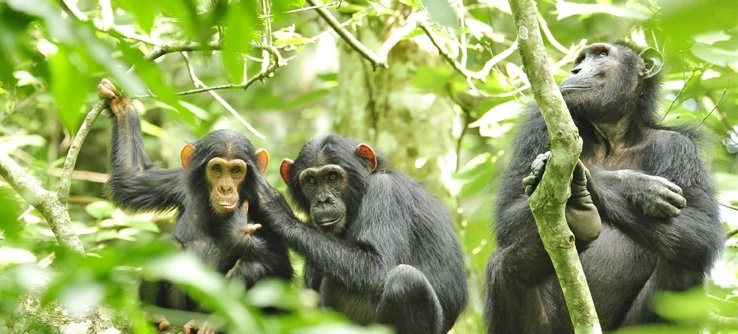
Where to choose Chimps Tracking Safaris in Uganda. Uganda holds one of the largest wild chimpanzee populations left on the planet, and unlike gorilla trekking, which is confined to just two parks, chimpanzee tracking here can be done in half a dozen different forests, each with its own character, cost, permit rules, and level of difficulty. That range is a genuine advantage for travelers, since it means chimp tracking can be built into almost any Uganda itinerary rather than forcing a detour, but it also raises a question we hear constantly at Pick and Transfer Safaris: with so many options, where should you actually go? This guide walks through every major chimp tracking site in Uganda in depth, explains what makes each one different, and gives you a practical framework for matching a site to your schedule, budget, and travel style.
Why Uganda Is a Chimpanzee Tracking Destination
Chimpanzees are found across a wide belt of forest in western Uganda, from the shores of Lake Albert in the north down through the Rift Valley escarpment toward the Rwanda border in the south. This distribution exists largely because the region sits along the Albertine Rift, a geologically active zone where ancient rainforest has survived in fragmented pockets for thousands of years, protected in places by steep terrain and volcanic soils that resisted large-scale clearing far longer than the surrounding lowlands. Uganda’s chimpanzee population is estimated in the thousands, spread across several of these forest blocks, and a number of them now have habituated communities, meaning the chimps are accustomed to the presence of quiet human observers and can be reliably approached on foot with a trained ranger guide.
That habituation process is the foundation of chimp tracking as a tourism activity, and it is worth understanding briefly because it explains why different forests feel so different to visit. Habituating a wild chimpanzee community is slow, painstaking work, often taking years of daily contact by researchers and trackers before a group becomes comfortable enough with human presence to be approached at a safe, non-disruptive distance. Some of Uganda’s habituated communities, particularly in Kibale, have been under near-continuous observation for more than three decades, which means trackers there know individual chimpanzees by name, understand their social dynamics, and can predict their movements with real confidence. Other communities are more recently habituated, or are habituated to a lesser degree, which makes tracking there a touch less predictable but, for many travelers, no less rewarding — and often quieter, since fewer visitors know about them.
Beyond the chimps themselves, Uganda’s forest tracking sites tend to offer outstanding secondary wildlife: other primate species, exceptional birdlife, and, in several cases, striking landscapes that make the walk itself worthwhile even before the chimps are found. This combination of reliable habituated tracking, genuine ecological diversity, and multiple distinct sites is what sets Uganda apart from neighboring countries as a chimpanzee tracking destination in its own right, not simply as an add-on to a gorilla trip.
Kibale Forest National Park — The Primate Capital of Africa
If you only track chimpanzees in one place in Uganda, most guides and repeat visitors will point you toward Kibale Forest National Park. According to Uganda Wildlife Authority’s park profile, Kibale holds an estimated 1,500 wild chimpanzees across at least 12 distinct communities, making it home to Uganda’s largest chimpanzee population by a wide margin. Its habituated Kanyantale community has been open to visitors since 1993, making it one of the longest-running chimp tracking programs anywhere in the world, and that long history shows in how the activity is run: trackers know their chimpanzee groups intimately, sighting success rates are consistently very high, and the infrastructure around the park, from ranger stations to nearby lodges, is the most developed of any chimp tracking site in the country.
For those interested in adventure and unforgettable experiences, Chimps Tracking Safaris in Uganda offer an exceptional way to connect with nature and observe these incredible creatures in their natural habitat.
What Makes Kibale Different
Kibale is not only a chimpanzee destination — it is widely regarded as the primate capital of Africa, hosting 13 primate species within a relatively compact, accessible forest block. Alongside chimpanzees, trackers regularly encounter red colobus monkeys, black-and-white colobus, L’Hoest’s monkeys, grey-cheeked mangabeys, and blue monkeys, often within the same morning walk. The forest itself is a mix of moist evergreen and semi-deciduous woodland, with a well-maintained network of trails that makes movement considerably easier underfoot than in some of Uganda’s steeper, muddier tracking sites.
Standard Tracking Versus the Habituation Experience
Many travelers find that the Chimps Tracking Safaris in Uganda are both enlightening and exhilarating, providing insight into the lives of chimpanzees while enjoying the stunning landscapes of Uganda.
Kibale offers two distinct ways to encounter its chimpanzees, and choosing between them is one of the more important decisions travelers make when planning a visit. Standard chimpanzee tracking runs as a morning or afternoon session, typically lasting one to three hours in the forest before the group is located, with a strictly enforced one-hour viewing window once contact is made. This is the option most travelers choose, and it fits comfortably into a broader multi-activity itinerary.
For travelers who want something deeper, Kibale also runs the Chimpanzee Habituation Experience, a considerably more immersive option that allows a small group, capped at just a handful of participants, to join researchers and trackers before dawn and follow a semi-habituated community for most of the day as they wake, forage, groom, and move through their territory. Unlike standard tracking, there is no strict one-hour limit here — visitors effectively spend the day alongside the research team, observing behavior in far greater depth. It is more physically demanding, generally costs more, and requires an earlier start, but for wildlife enthusiasts, photographers, and repeat visitors who have already done standard tracking elsewhere, it is often described as the single best primate experience available in Uganda.
Sample Day at Kibale
A typical Kibale chimp tracking day begins with an early briefing at the park headquarters in Kanyanchu, where visitors are organized into small groups and assigned a ranger guide. From there, the walk into the forest can be short or long depending on where the chimpanzees were last located, though Kibale’s high habituation success rate means most groups make contact within one to two hours. After the encounter, many visitors spend the afternoon on a guided nature walk through the nearby Bigodi Wetland Sanctuary, a community-run reserve just outside the park boundary known for excellent birding and additional primate sightings, rounding out a full day of forest wildlife.
Best for: first-time trackers, primate enthusiasts, birders, photographers, and anyone wanting the highest-probability, best-organized chimp tracking experience in the country. Kibale pairs naturally with a broader western Uganda circuit and works especially well as part of a route that also includes gorilla trekking or a Big Five safari, since it sits roughly midway between Queen Elizabeth National Park and the northern parks. We build it into itineraries like our 3 Days Chimpanzee Tour in Uganda, which is designed specifically around this forest and gives travelers enough time for both a standard trek and, if desired, an upgrade to the Habituation Experience.
Kyambura Gorge — Chimp Tracking Inside Queen Elizabeth National Park
Tucked into the eastern edge of Queen Elizabeth National Park, Kyambura Gorge is a narrow, steep-sided riverine forest carved into the surrounding savannah by the Kyambura River, often nicknamed the “Valley of Apes.” It is a striking landscape in its own right: descending into the gorge feels like dropping into a different ecosystem entirely, with a dense, humid canopy replacing the open grassland above almost immediately.
A Smaller, More Unpredictable Community
Kyambura Gorge holds a smaller and somewhat more mobile chimpanzee community than Kibale, and because the gorge forest is a relatively narrow, isolated strip rather than a large contiguous block, the resident chimps sometimes range beyond the immediate tracking area in search of food, which can occasionally reduce sighting odds compared with Kibale. This unpredictability is worth being upfront about, since it is the honest trade-off for what makes Kyambura genuinely unique among Uganda’s tracking sites.
The Real Draw: Combining Chimps with Big Five Game
What makes Kyambura Gorge worth choosing, even with a slightly lower guaranteed sighting rate, is its location. This is the only place in Uganda where chimpanzee tracking happens inside a savannah Big Five park, meaning travelers can combine an early-morning trek into the gorge with a Big Five game drive across the open plains of Queen Elizabeth National Park and an afternoon boat cruise along the Kazinga Channel, all on the very same day, without ever leaving the park boundary or adding an extra travel day to the itinerary. For travelers whose priority is efficiency — seeing the widest possible range of wildlife in the fewest number of days — this single-park combination is hard to beat anywhere else in the country.
Terrain and Practical Notes
Because the gorge cuts down into a canyon rather than spreading across flat forest, the terrain here is distinct from Kibale. Expect a genuine, sometimes steep descent to the gorge floor and a corresponding climb back out, on trails that can be slippery after rain. Trekkers should be reasonably fit and prepared for a more physical morning than a flat forest walk would require.
Best for: travelers whose itinerary already centers on Queen Elizabeth National Park and who want to add chimp tracking without a separate detour to Kibale, or anyone who specifically wants the novelty of tracking chimps and Big Five game in the same park on the same trip. This is also a strong option for travelers with tight schedules who cannot spare an extra day for a Kibale-specific stop.
Budongo Forest — Chimps Alongside Murchison Falls
Budongo Forest Reserve sits just south of Murchison Falls National Park and is one of Uganda’s largest natural mahogany forests, with a chimpanzee research history dating back to the 1960s, among the longest continuous chimpanzee studies in Africa outside of Kibale itself. Its habituated Kaniyo Pabidi chimpanzee community offers a genuinely good chance of sightings in a quieter, considerably less-visited setting than Kibale, and because Budongo lies directly on the route most travelers already take to or from Murchison Falls National Park, it functions as an easy, low-effort addition to a northern Uganda itinerary rather than a separate trip requiring its own logistics.
The Royal Mile
Budongo’s other major draw is the Royal Mile, a striking stretch of old-growth forest lined with towering mahogany and ironwood trees that is considered by many serious birders to be one of the finest birding walks in the entire country, independent of the chimp tracking activity. Species associated with this stretch of forest include several sought-after Albertine Rift specialties, and the mile’s flat, well-shaded trail makes for pleasant, relatively easy walking compared with steeper tracking sites elsewhere in Uganda.
Fitting Budongo into an Itinerary
Because Budongo requires essentially no detour for travelers already routed through Murchison Falls National Park, it is one of the most efficient ways to add chimp tracking to a northern circuit. A typical pattern involves stopping at Budongo for a morning tracking session either on the way north into Murchison Falls or on the way back south, without adding an extra overnight to the trip.
Best for: travelers already heading to or from Murchison Falls National Park who want to add chimp tracking without lengthening their route, and birders who want a forest walk with strong independent birding value alongside the primate encounter.
Kalinzu Forest Reserve — The Budget-Friendly Option
Kalinzu Forest Reserve, located between Queen Elizabeth National Park and Bwindi Impenetrable National Park, is Uganda’s most budget-friendly chimp tracking destination, and it deserves more attention than it typically gets. The reserve holds over 300 chimpanzees, with around 40 individuals in a habituated community that was originally established through the work of Japanese researchers beginning in the late 1990s. Because Kalinzu falls under the jurisdiction of the National Forestry Authority rather than Uganda Wildlife Authority, its permit structure and fee schedule differ from the national park sites, and this generally translates into a meaningfully lower cost per person than tracking at Kibale, Kyambura Gorge, or Budongo, while sighting rates remain strong given the number of habituated individuals relative to the size of the reserve.
A Convenient Stop, Not a Detour
Kalinzu’s real advantage is its location directly on the road between Queen Elizabeth National Park and Bwindi, which is a route the vast majority of travelers combining gorilla trekking with a Big Five safari already drive. This makes Kalinzu a natural, no-detour stop: rather than adding a separate day and a separate destination to the itinerary, chimp tracking here is simply slotted into a transfer day that was happening anyway.
What to Expect on the Trail
Kalinzu’s forest is denser and less manicured than Kibale’s trail network, which some travelers find adds to the sense of genuine wilderness, though it also means a slightly more physically involved walk. Because group sizes and visitor numbers here tend to be lower than at the more famous sites, travelers often describe Kalinzu as a quieter, more personal experience, even if the surrounding infrastructure is more modest.
Best for: budget-conscious travelers, and anyone already driving between Queen Elizabeth National Park and Bwindi who wants to slot chimp tracking into that transfer day rather than add an extra stop, extra permit cost, or extra night elsewhere in the itinerary.
Semuliki National Park and Toro-Semliki Wildlife Reserve
On Uganda’s western edge, near the base of the Rwenzori Mountains and close to the border with the Democratic Republic of Congo, Semuliki National Park and the neighboring Toro-Semliki Wildlife Reserve offer a lower-traffic, more off-the-beaten-path chimp tracking option than any of the sites described above. This is lowland tropical forest, ecologically more closely related to the great Congo Basin forests than to the highland forests further south and east in Uganda, and it supports a genuinely different mix of wildlife as a result, including species found nowhere else in the country.
A Different Kind of Forest
Because Semuliki sits at a lower altitude than Kibale, Kalinzu, or Bwindi, the climate here is warmer and more humid, and the forest itself has a distinctly different feel — taller canopy trees, hot springs at Sempaya within the park, and a birdlife list studded with Central African species that reach the very edge of their range in this corner of Uganda. Toro-Semliki Wildlife Reserve, just outside the national park, adds savannah wildlife to the mix, including some plains game more typical of Uganda’s Rift Valley floor parks.
Why Fewer Travelers Go Here
Semuliki and Toro-Semliki draw a smaller number of visitors than any other site on this list, partly because of their remote location relative to the main Uganda safari circuit, and partly because they are simply less well known. For most travelers, this means it works best as part of a longer, more adventurous itinerary rather than a quick add-on squeezed between two better-known parks, since reaching the area does require dedicated travel time.
Best for: experienced Africa travelers looking for a quieter, genuinely less-visited alternative to Uganda’s more famous sites, or those combining chimp tracking with Rwenzori Mountains hiking, hot springs, or birding-focused itineraries that already have this corner of the country on the route.
Ngamba Island — Not Tracking, But Worth Knowing About
Ngamba Island Chimpanzee Sanctuary, a short boat ride from Entebbe on Lake Victoria, is not a wild tracking site, and it is important to be clear about that distinction upfront — it is a sanctuary for orphaned and rescued chimpanzees who cannot be returned to the wild, managed by the Chimpanzee Sanctuary and Wildlife Conservation Trust. The island itself covers around 100 acres of secondary forest and is home to chimpanzees rescued from the illegal pet trade and bushmeat trade across East Africa, many of whom would not have survived reintroduction to the wild given the trauma of their early lives.
Why It Is Worth Including in This Guide
Ngamba Island solves a specific problem that none of the wild tracking sites can. Travelers with very limited time near Entebbe on either end of their trip, those whose flights do not allow for the multi-day detour a proper forest trek requires, or anyone unable to manage the physical demands of a forest walk for health or mobility reasons, can still have a close, meaningful chimpanzee encounter without the logistics or physical exertion of tracking. Visits typically include an introduction to the sanctuary’s history and conservation mission, a guided walk with a caregiver, and the chance to observe a supervised feeding from a raised viewing platform.
An Ethical, Accessible Alternative
It is worth understanding that Ngamba is not a substitute for the wild forest experience — the chimpanzees here live in a managed sanctuary setting rather than a fully wild forest, and the encounter is structured very differently from a trek through Kibale or Kalinzu. But as a half-day option bookended around a flight, or as an ethical, accessible alternative for travelers who cannot trek, it fills a real gap in Uganda’s primate tourism offering. The Jane Goodall Institute, a long-standing global partner in chimpanzee conservation and research across Africa, was among the founding organizations behind the trust that manages the island, reflecting the broader network of international conservation expertise involved in its establishment and ongoing work.
Best for: travelers with very limited time in the Entebbe area, families with young children too young for forest trekking, anyone with mobility limitations, and travelers who want to understand the conservation and rescue side of chimpanzee protection alongside, or instead of, a wild tracking experience.
Comparing the Sites at a Glance
With six meaningfully different options now covered in detail, it helps to step back and compare them side by side across the factors that matter most when planning a trip.
On reliability of sightings: Kibale offers the highest overall success rate, owing to its size, its long habituation history, and the density of chimpanzees within the tracking area. Budongo and Kalinzu both offer strong, reliable sightings as well, though with slightly smaller habituated communities than Kibale. Kyambura Gorge and Semuliki are more variable, given smaller or more widely ranging communities.
On cost: Kalinzu is consistently the most affordable wild tracking option, followed by Budongo and Kyambura Gorge, with Kibale’s standard tracking priced above these and its Habituation Experience priced highest of all, reflecting its longer duration and smaller group size.
On convenience within a broader itinerary: Kyambura Gorge wins for anyone already visiting Queen Elizabeth National Park, since it requires zero additional travel. Kalinzu and Budongo both slot into transfer days that most itineraries already include. Kibale, while requiring a dedicated stop, sits centrally enough in western Uganda that it rarely adds significant extra driving time to a broader circuit. Semuliki requires the most deliberate detour of any site on this list.
On depth of experience: the Kibale Chimpanzee Habituation Experience stands alone as the most immersive option, offering hours rather than a single strictly timed hour with the chimpanzees. For travelers who have already done a standard trek elsewhere and want something more research-oriented, this is the natural next step.
On accessibility: Ngamba Island is the only site on this list that does not require a forest trek at all, making it the appropriate choice for travelers with time constraints, mobility limitations, or young children.
How to Choose the Right Site for Your Itinerary
Bringing all of this together, the decision usually comes down to three practical questions.
How much time do you have? If chimp tracking is a standalone priority and your schedule is flexible, Kibale offers the strongest overall experience and the option to upgrade to a full-day Habituation Experience for a genuinely unforgettable day in the forest. If you are already committed to a route through Queen Elizabeth National Park, Murchison Falls, or the Bwindi corridor, Kyambura Gorge, Budongo, or Kalinzu let you add tracking without meaningfully lengthening your trip or adding an extra overnight stay.
What is your budget? Kalinzu offers the lowest permit cost among the wild tracking sites, making it the natural choice for budget-conscious travelers who still want a genuine forest trekking experience rather than a scaled-back alternative.
What else do you want from the day? Travelers who want to combine primates with Big Five game viewing on the same day should look closely at Kyambura Gorge inside Queen Elizabeth National Park. Those prioritizing birding alongside chimps tend to prefer Kibale or Budongo, both of which offer exceptional independent birding value. Travelers chasing a quieter, more remote experience should consider Semuliki. And anyone short on time, traveling with very young children, or physically unable to trek can still get a genuine chimpanzee encounter at Ngamba Island.
Best Time of Year for Chimpanzee Tracking
Unlike some wildlife activities that are tightly seasonal, chimpanzee tracking in Uganda is possible year-round, since chimps do not migrate and remain within their forest home ranges throughout the year. That said, timing still affects the experience in a few meaningful ways.
The dry seasons, roughly June through September and December through February, offer easier underfoot conditions across all of Uganda’s tracking sites, since forest trails become considerably muddier and more slippery during the rains. These months are also when most international travelers visit Uganda, so permit demand at the more popular sites, particularly Kibale, is higher, and advance booking becomes more important.
The wetter months, March through May and October through November, bring lush, dramatically green forest scenery and typically thinner crowds, along with the trade-off of muddier trails and a higher chance of rain interrupting or extending a trek. Chimpanzees themselves are not deterred by rain, and sightings remain reliable throughout the year, so travelers with flexible dates who prioritize lower costs and quieter forests over dry underfoot conditions may find the shoulder seasons genuinely appealing rather than simply a compromise.
Chimpanzee Tracking Permits and Practical Tips
Chimpanzee tracking permits in Uganda are issued daily and are limited in number per site, following the same conservation logic that governs gorilla permits at Bwindi and Mgahinga — fewer visitors per day means less stress and lower disease risk for habituated communities that live in close proximity to trackers, researchers, and tourists throughout the year. Chimpanzees share a very high percentage of human DNA, which makes them susceptible to many of the same respiratory illnesses that affect people, and this is precisely why permit numbers, minimum viewing distances, and health screening on the morning of a trek are all taken seriously across every site described in this guide.
Permits should be booked well in advance, particularly for Kibale during peak travel months, and are usually best arranged through a local operator who can match your permit date to a habituated community with strong recent sighting activity, since chimp movements can shift with the fruiting season as groups follow the availability of ripe fruit through their home range. According to the official guidance published by the Uganda Wildlife Authority, which manages tracking activity at Kibale, Kyambura Gorge, and Budongo, visitors should be prepared for treks that can run from under an hour to several hours depending on where the community has moved that morning, and should follow the ranger guide’s instructions closely throughout the encounter.
A few additional practical points are worth knowing before you go. Group sizes for standard tracking are capped, typically at a modest number of visitors per habituated community per session, to limit the cumulative disturbance on any one group of chimpanzees. A minimum age requirement, generally around 12 years old, applies at most sites, somewhat lower than the age restriction for gorilla trekking, since chimp tracking is considered less physically and behaviorally demanding for younger participants, though this still varies by site and should be confirmed when booking. And as with gorilla trekking, anyone showing symptoms of a cold, flu, or other contagious illness on the morning of a scheduled trek will typically be asked not to join that session, both to protect the chimpanzees and to protect the rest of the group.
What to Pack for Chimpanzee Tracking
Packing for chimp tracking mirrors what you would bring for gorilla trekking, with a few adjustments given the generally faster pace and lower altitude of most chimp tracking sites.
Footwear matters more than almost anything else on this list. Sturdy, closed hiking boots or shoes with good grip are essential, since forest trails at every site described here can be uneven, root-covered, and slippery, particularly after rain.
Clothing should include long trousers and long sleeves in neutral, muted colors, both for protection against stinging nettles, thorny vegetation, and biting insects, and because bright colors can be more disruptive to wildlife in a forest setting. A lightweight, packable rain jacket is worth carrying regardless of season, since forest weather can shift quickly even outside the official rainy months.
Gear should include a daypack with water and snacks, a hat, insect repellent, and, if photography is a priority, a camera with a reasonably fast lens given the low light levels common under dense forest canopy. Because chimpanzees move quickly and can break into a run through the branches, a lighter, more maneuverable camera setup is often more practical than a large, heavy telephoto rig better suited to open savannah photography.
General essentials carried over from any Uganda safari, including sunscreen, a basic first-aid kit, and any personal medication, remain relevant here as well, along with a reasonable buffer of memory cards and battery power, since charging opportunities can be limited at lodges near some of the more remote tracking sites like Semuliki.
Physical Demands and Fitness Considerations
Chimpanzee tracking is generally considered less physically demanding than gorilla trekking, largely because most of Uganda’s chimp tracking sites sit at lower altitude and involve gentler terrain than the steep volcanic slopes of Bwindi or Mgahinga. That said, fitness requirements vary meaningfully across the sites covered in this guide. Kibale’s well-maintained trail network makes for comparatively easy walking, while Kyambura Gorge’s steep descent and climb, and Kalinzu’s denser, less manicured forest floor, both call for a somewhat higher baseline level of fitness and comfort with uneven terrain.
One factor unique to chimp tracking, rather than gorilla trekking, is pace. Chimpanzees are considerably more active, vocal, and mobile than gorillas, who tend to spend long periods resting, feeding in place, or grooming. Trackers should be prepared to move briskly, and occasionally quite quickly, to keep up with a chimpanzee group on the move through the canopy and undergrowth — a genuinely thrilling, if occasionally strenuous, part of what makes the experience distinct from other primate encounters in the region. Travelers with significant mobility limitations who still want a meaningful chimpanzee encounter are better served by Ngamba Island than by any of the wild forest tracking sites.
Combining Chimp Tracking with the Rest of Your Uganda Trip
Because chimp tracking sites are spread across so much of western and southwestern Uganda, the activity slots naturally into almost any broader itinerary rather than requiring its own dedicated trip.
Travelers building a route around gorilla trekking in Bwindi will typically pass directly through or near Kalinzu on the drive between Queen Elizabeth National Park and Bwindi, making it easy to add chimp tracking to that transfer day without extending the overall trip length. Travelers centering their itinerary on Queen Elizabeth National Park for Big Five game viewing can add Kyambura Gorge as a single-park combination that requires no extra driving at all. Those heading north to Murchison Falls National Park for its Nile boat cruise and waterfall views can stop at Budongo Forest along the way, again without a meaningful detour. And travelers who want chimp tracking to be a genuine centerpiece of their trip, rather than an add-on to something else, are best served by building an itinerary specifically around Kibale, where the option to upgrade to the full-day Habituation Experience makes the most of a dedicated visit.
For travelers with very tight schedules or unusual flight timings that leave only a few free hours near Entebbe, Ngamba Island remains the practical fallback that lets almost anyone leave Uganda having had a genuine chimpanzee encounter, even without the time for a proper forest trek.
Responsible Chimpanzee Tourism
The same conservation principles that govern gorilla trekking across the border in Bwindi and Mgahinga apply equally to chimpanzee tracking, and they are worth taking seriously rather than treating as bureaucratic formality. Minimum viewing distances, capped group sizes, limited daily permits, and health screening before treks all exist because chimpanzees, like gorillas, are genetically close enough to humans to be vulnerable to many of the same illnesses, and because sustained tourism pressure on a habituated community can meaningfully affect its behavior and wellbeing if left unmanaged.
Choosing operators, lodges, and tracking sites that visibly support these standards, and that channel a share of tourism revenue back into the communities living alongside these forests, compounds into a more sustainable model over time. This is part of why sites like Ngamba Island, run by an established conservation trust with deep roots in chimpanzee welfare and research, are worth supporting even for travelers whose main priority is the wild forest tracking experience elsewhere in the country.
What to Expect During the Encounter Itself
Regardless of which site you choose, the actual encounter with a habituated chimpanzee community follows a broadly similar rhythm, and understanding this in advance helps set the right expectations. Once trackers locate the group, rangers typically position visitors at a respectful distance and allow the chimps to continue their natural behavior — feeding, grooming, resting, or interacting with infants — with minimal interference. Unlike the relatively calm, still presence of a gorilla family, a chimpanzee community is often loud and highly active even at rest, with pant-hoots, screams, and drumming on tree buttresses carrying through the forest well before the group itself comes into view. This vocal, kinetic energy is part of what many first-time trackers describe as the most memorable aspect of the experience, distinct from the quieter, more contemplative feeling of a gorilla encounter.
Because chimpanzee social structure is fluid — communities split into smaller foraging parties and regroup throughout the day — it is common for a tracking group to encounter only part of the wider community at first, sometimes just a handful of individuals feeding in a fruiting tree, before others arrive or the group moves on to rejoin a larger gathering. Rangers experienced with a particular community can often anticipate these movements, but a degree of unpredictability remains part of the experience at every site, even the most reliable ones like Kibale. This is also, in a sense, part of the appeal: no two chimp tracking days play out quite the same way, even for repeat visitors tracking the same community.
Assuming all chimp tracking sites are interchangeable. As this guide has laid out in detail, the six main sites differ meaningfully in cost, terrain, sighting reliability, and how well they fit into a broader itinerary. Choosing based on convenience alone, without considering these differences, can lead to a less satisfying experience than a small amount of upfront planning would have produced.
Underestimating the pace of a chimp trek. Because chimpanzees move faster and more unpredictably than gorillas, travelers sometimes arrive expecting a slower-paced walk similar to gorilla trekking and are caught off guard by how briskly a group can move once contact is made.
Booking Kibale permits too late during peak season. As Uganda’s most popular and highest-capacity chimp tracking site, Kibale can still sell out on specific dates during peak travel months, and last-minute travelers sometimes find themselves redirected to a less convenient site as a result.
Overlooking Ngamba Island as an option. Travelers occasionally assume that if they cannot manage a forest trek, they simply cannot have a chimpanzee encounter in Uganda at all. Ngamba Island exists precisely to solve this problem and is worth considering by name rather than dismissed by default.
Not confirming minimum age or health requirements in advance. Age minimums and same-day health screening rules vary slightly by site and can catch families or travelers with mild illness off guard if not checked ahead of time.
Frequently Asked Questions
Which chimp tracking site has the highest chance of a sighting? Kibale Forest National Park consistently offers the highest overall sighting success rate, owing to its large habituated population and decades of tracking experience, though Budongo and Kalinzu both offer strong, reliable sightings as well.
Can I do chimp tracking and gorilla trekking on the same trip? Yes, and it is one of the most popular combinations in Uganda. Kalinzu Forest Reserve sits directly on the road between Queen Elizabeth National Park and Bwindi, making it especially easy to combine both activities without significant extra driving.
Is chimp tracking harder than gorilla trekking? Generally, chimp tracking involves gentler terrain and lower altitude than gorilla trekking, but chimpanzees move faster and more unpredictably once located, which can make the encounter itself feel more physically active, even if the approach hike is often easier.
What is the Chimpanzee Habituation Experience, and is it worth it? It is an extended, full-day version of chimp tracking offered at Kibale, allowing visitors to follow a semi-habituated community alongside researchers for most of a day rather than the standard one-hour viewing window. For travelers who have the time and budget, and who want the deepest possible chimpanzee encounter available in Uganda, it is widely considered worth the additional cost.
Can children track chimpanzees in Uganda? Most sites set a minimum age of around 12 years for standard chimp tracking, lower than the minimum age for gorilla trekking. Families with younger children can still visit Ngamba Island Chimpanzee Sanctuary, which has no equivalent age restriction.
Do I need a separate permit for each chimp tracking site? Yes. Permits are specific to each site and each date, and cannot be transferred between locations, so it is important to confirm which site your permit covers when booking, particularly if your itinerary includes multiple parks.
Is chimp tracking possible in the rainy season? Yes. Chimpanzees do not migrate and remain within their home ranges year-round, so tracking continues throughout the rainy season, with the main trade-off being muddier trails rather than reduced sighting chances.
Concusively
There is no single “best” chimp tracking site in Uganda — there is only the best site for your specific trip. Kibale remains the benchmark for reliability, scale, and depth of experience, and the only site offering the full-day Habituation Experience for travelers who want to go further than a standard trek. Kyambura Gorge is unmatched for combining primates with Big Five game viewing in a single park and a single day. Kalinzu is the smart, low-cost choice for travelers already driving between Queen Elizabeth National Park and Bwindi. Budongo suits anyone already routed through Murchison Falls National Park who wants excellent birding alongside their chimp encounter. Semuliki rewards those chasing something quieter and further off the beaten path. And Ngamba Island ensures that even travelers with limited time, young children, or mobility considerations can still walk away from Uganda having had a genuine, memorable chimpanzee encounter.
If you would like help matching one of these forests to your dates, budget, and the rest of your Uganda itinerary, get in touch with our team and we will build a route around the chimp tracking experience that fits you best, whether that means a focused few days centered entirely on Kibale, a seamless add-on to a Big Five safari in Queen Elizabeth National Park, or a full circuit that brings chimpanzees, gorillas, and the Big Five together in a single, well-paced trip.