- LET'S PLAN YOUR SAFARI
- +256 200 921 002
- +256 793 194 703
- info@pickandtransfersafaris.com

Combing Gorilla Trekking in Both Uganda and Rwanda
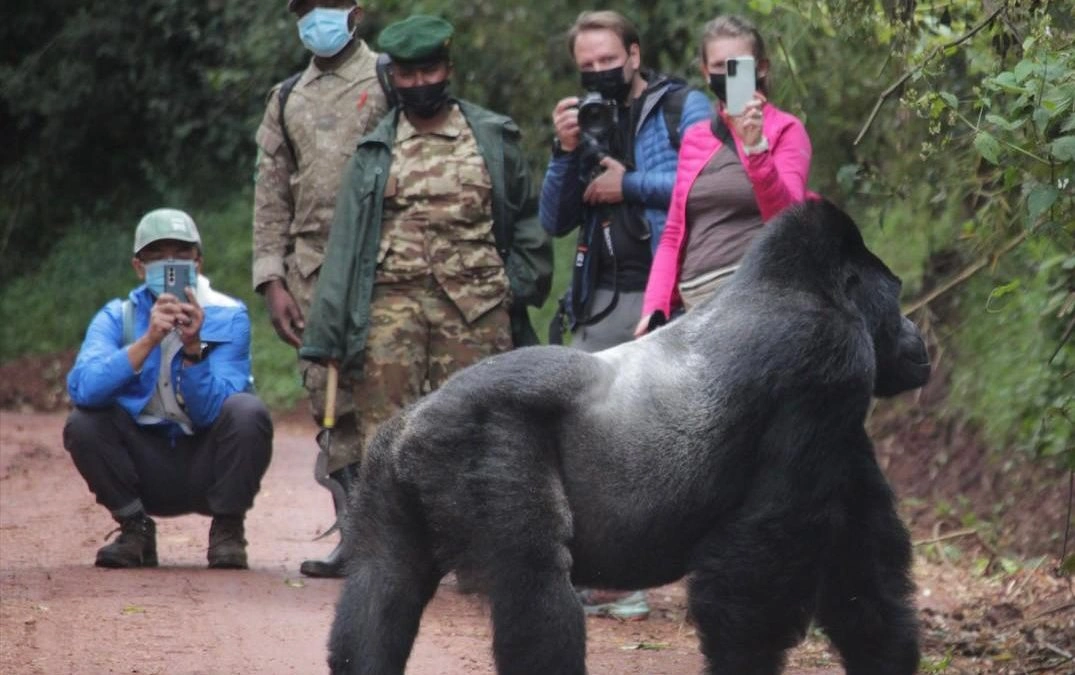
Combing Gorilla Trekking in Both Uganda and Rwanda. For travelers who can’t decide between Uganda and Rwanda for their mountain gorilla trekking experience, there’s a simple answer: do both. Thanks to the short, easy border crossing between the two countries, combining gorilla trekking in Uganda’s Bwindi Impenetrable National Park with a second trek in Rwanda’s Volcanoes National Park has become one of the most popular ways to experience mountain gorillas twice, with two different families, two different forests, and two genuinely distinct trekking experiences, all in a single trip.
Why Combine the Two Countries?
Mountain gorillas live in three places on earth: Bwindi and Mgahinga in Uganda, Volcanoes National Park in Rwanda, and Virunga National Park in the Democratic Republic of Congo. Uganda and Rwanda sit right next to each other, connected by well-maintained roads and a straightforward border crossing, which makes pairing the two far more practical than most travelers initially assume. Rather than choosing one country and wondering about the other, a combined itinerary lets you experience both trekking environments directly, Bwindi’s dense, ancient rainforest against Volcanoes National Park’s more open bamboo and volcanic slopes, and decide for yourself which you prefer, or simply enjoy both for what they are.
It also means two separate gorilla families, two separate one-hour encounters, and two genuinely different forest ecosystems within the same trip, something no single-country itinerary can offer.
How the Two Trekking Experiences Differ
Bwindi Impenetrable National Park, Uganda, is a UNESCO World Heritage Site and one of Africa’s oldest rainforests, home to nearly half the world’s remaining mountain gorillas across four sectors, Buhoma, Ruhija, Rushaga, and Nkuringo. Trekking here tends to be steeper and more physically demanding, through dense, tangled vegetation, but it rewards you with a genuinely wild, untouched rainforest atmosphere and a wider range of habituated families to choose from.
Volcanoes National Park, Rwanda, sits on the lower slopes of the Virunga volcanoes and offers a different kind of trek, often shorter and somewhat gentler, through bamboo forest and open volcanic terrain, with the dramatic backdrop of the Virunga mountain range itself. Rwanda’s park is smaller and more exclusive, with fewer daily permits, giving treks here a quieter, more curated feel.
Doing both means you get the raw, expansive wilderness of Bwindi and the polished, scenic intensity of Volcanoes National Park in the same week, two completely different gorilla trekking stories.
A Typical Combined Itinerary
Most combined Uganda-Rwanda gorilla treks run somewhere between five and ten days, depending on how much time you’d like to spend in each park and whether you add other activities along the way. A common structure looks like this:
Days 1–2: Arrive in Kigali, transfer to Volcanoes National Park, and trek your first gorilla family in Rwanda.
Days 3–4: Cross the border into Uganda via Cyanika, head to Bwindi’s southern sectors, Rushaga or Nkuringo, and trek your second gorilla family.
Remaining days: Return to Kigali for departure, or extend with chimpanzee trekking in Rwanda’s Nyungwe Forest National Park, wildlife viewing in Uganda’s parks, or a relaxed stop in Kisoro or Kabale along the way.
Because the Cyanika border crossing connects Rwanda directly to Bwindi’s southern sectors in just a few hours, this back-and-forth doesn’t require the long, exhausting drives you might expect, as we’ve outlined in our 7 Days Uganda Rwanda Safari Adventure, which follows a similar two-country structure.
Permits: What You Need for Both Countries
This is the part that requires the most advance planning, since you’ll need two separate permits, issued by two separate authorities.
Uganda gorilla permits are issued by the Uganda Wildlife Authority (UWA) and currently cost USD 800 per person for foreign non-residents, with a discounted rate of USD 600 available during the low-season months of April, May, and November.
Rwanda gorilla permits are issued by the Rwanda Development Board (RDB) and currently cost USD 1,500 per person for foreign non-residents, reflecting Rwanda’s premium positioning, something we cover in more detail in our guide on Why Rwanda Gorilla Trekking Is More Expensive Than Uganda.
Combined, you’re looking at a total permit cost of roughly USD 2,300 per person for both treks at standard pricing. Both permits are limited in number and release daily, with high demand during the June–September and December–February peak seasons, so we recommend booking both permits together at least three to six months in advance. Pick and Transfer Safaris manages both bookings as a single coordinated process, so your dates, sectors, and border crossing all line up correctly.
Visa and Border Crossing Tips
Crossing between Rwanda and Uganda is straightforward at the Cyanika or Katuna/Gatuna border posts, both well-connected to Bwindi’s trekking sectors. To simplify travel between the two countries, we strongly recommend applying for the East Africa Tourist Visa, which covers Rwanda, Uganda, and Kenya on a single visa, removing the need to apply separately for each leg of your trip. Keep printed copies of your visa approval and yellow fever vaccination certificate on hand, as both are commonly checked at the border.
Is It Worth the Extra Cost and Time?
For most travelers who do it, yes, unreservedly. Two gorilla treks in two different countries isn’t simply “more of the same experience twice.” Each trek is its own distinct encounter, a different family, different terrain, different forest, and often a genuinely different emotional experience depending on how the gorillas behave that day. For dedicated wildlife travelers, primatologists, photographers, or anyone for whom this is likely a true once-in-a-lifetime trip, the chance to compare both countries directly, rather than wonder what the other might have been like, is hard to put a price on.
That said, it’s a meaningful investment of both money and time, so it’s worth being honest about whether a single-country trek, whether in Bwindi or Volcanoes National Park, might satisfy what you’re actually looking for before committing to the full combined itinerary.
What to Pack for Both Treks
Since you’ll be trekking in two different forest environments, pack for both:
- Sturdy, broken-in hiking boots with good ankle support
- Long trousers and long-sleeved shirts for both Bwindi’s dense undergrowth and Volcanoes’ bamboo forest
- A lightweight rain jacket, since weather can shift quickly in both parks
- Gardening gloves for gripping vegetation
- A daypack with water, snacks, and your camera
- Passport, visa documentation, and yellow fever certificate for the border crossing
We recommend hiring a porter for both treks, both for practical support on steep terrain and because the fee directly benefits local communities in each park.
Why Book This Combined Safari With Pick and Transfer Safaris
Few operators manage the logistics of a genuine two-country gorilla trekking itinerary as smoothly as we do. We handle both permit bookings, coordinate your border crossing, and build your full itinerary around the most efficient possible route between Volcanoes National Park and Bwindi, so you spend your time trekking and experiencing the gorillas, not navigating logistics. If you’d like to extend the trip further, ask us about adding chimpanzee trekking in Nyungwe Forest National Park or wildlife game drives in either country.
For official information on permits and park regulations, visit the Uganda Wildlife Authority and the Rwanda Development Board.
Contact us to start planning a combined gorilla trekking safari across Uganda and Rwanda.