- LET'S PLAN YOUR SAFARI
- +256 200 921 002
- +256 793 194 703
- info@pickandtransfersafaris.com

Combining Gorilla Trekking with Golden Monkeys in Mgahinga
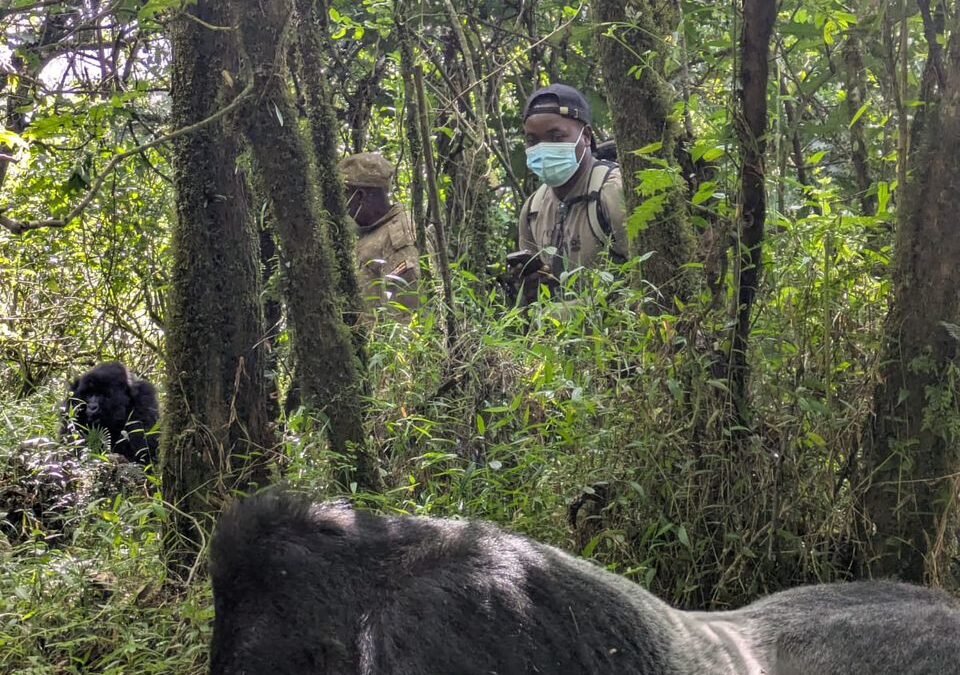
Combining Gorilla Trekking with Golden Monkeys in Mgahinga. Most travelers who make the journey to Mgahinga Gorilla National Park come for one reason: to spend an hour with the Nyakagezi gorilla family in the shadow of the Virunga volcanoes. Fewer realize that the same park offers a second, equally rewarding primate encounter just a short walk away. Mgahinga is Uganda’s only home to the endangered golden monkey, and because both activities depart from the same park headquarters, combining gorilla trekking with golden monkey trekking is one of the easiest and most rewarding additions you can make to a Mgahinga itinerary. At Pick and Transfer Safaris, we build this combination into many of our Mgahinga itineraries, and this guide explains how it works, what it costs, and how to plan it well.
Why Mgahinga Is the Only Place in Uganda to Do Both
Uganda has two gorilla trekking parks, Bwindi Impenetrable National Park and Mgahinga Gorilla National Park, but golden monkeys are found in only one of them. According to the Uganda Wildlife Authority, Mgahinga is Uganda’s smallest national park, covering roughly 33.7 square kilometers within the Virunga volcanic range shared with Rwanda and the Democratic Republic of Congo, and it protects both the Nyakagezi gorilla family and a population of habituated golden monkeys. This makes Mgahinga the only Ugandan destination where a single trip to one park headquarters can include two distinct primate treks, something not possible in Bwindi, where golden monkeys are absent, or in Rwanda’s Volcanoes National Park, where the two activities are also both available but at considerably higher permit costs.
What Makes Golden Monkeys Worth Trekking
Golden monkeys are smaller, more numerous, and considerably more active than mountain gorillas, which gives the two treks a genuinely different character. They live in troops that can number in the dozens, moving quickly through the bamboo forest as they feed on shoots, leaves, and fruit, so a golden monkey trek tends to be lively and fast-paced compared to the calmer, more contemplative hour typically spent with a gorilla family. Their bright orange-gold coats stand out vividly against the green bamboo, making them a rewarding subject for photography as well.
Beyond the visual appeal, golden monkeys are themselves an endangered species, found only in the Virunga Massif and one other forest in Rwanda, so trekking them contributes directly to their conservation in the same way gorilla permits fund ranger patrols and habitat protection.
How the Two Treks Differ in Cost and Demand
The financial gap between the two activities is significant, and understanding it helps with planning. A standard gorilla trekking permit for Mgahinga costs 800 US dollars per person, in line with Bwindi’s pricing, and includes park entry, a ranger guide, and one hour with the gorillas. A golden monkey trekking permit, by comparison, costs around 60 US dollars for foreign non-residents, with a golden monkey habituation experience, offering closer, extended observation, available for roughly 100 US dollars. This means adding a golden monkey trek to a gorilla trekking trip increases the overall cost only modestly, while adding a genuinely different wildlife experience.
Demand also differs sharply between the two permits. Gorilla permits for Mgahinga are limited, since only one habituated family is available, and should be booked three to six months ahead for peak season travel. Golden monkey permits are far less competitive, since the monkeys live in larger troops and more visitors can be accommodated per day, and they can often be arranged with only a few weeks’ notice, or occasionally even on arrival at the park headquarters, though booking ahead is still recommended for a guaranteed slot.
Structuring the Two Treks Together
Both activities begin at the same location, the Ntebeko park headquarters, with a briefing around 7:00 to 8:00 AM before trekkers head out with their ranger guides. Because gorilla trekking can take anywhere from one to several hours depending on the family’s location the previous night, and typically leaves visitors physically tired by early afternoon, most itineraries schedule the two treks on separate days rather than attempting both in a single morning.
A typical two-day structure looks like this: gorilla trekking on the first day, followed by rest and recovery at your lodge in the afternoon, then golden monkey trekking on the second morning before departing the park. This pacing respects how demanding the gorilla trek can be on steep, sometimes muddy terrain at altitude, while still making efficient use of your time at Mgahinga rather than requiring a separate trip to the park later. Our Mgahinga Gorilla National Park destination page has more detail on the park itself, and our Gorilla Safaris collection includes itinerary options that build in both activities.
Combining This with a Kigali-Based Trip
Because Mgahinga sits close to the Cyanika border, this combination works particularly well for travelers starting their safari from Kigali rather than Kampala or Entebbe. A private transfer from Kigali reaches the park in roughly three to four hours, which means a traveler can realistically fly in, transfer to Mgahinga, spend two full days trekking gorillas and golden monkeys, and return to Kigali within a short, focused trip. This is the structure behind our Uganda Gorilla Safaris Starting from Kigali, which can be extended to include the golden monkey trek as an add-on day.
Travelers who are also visiting Bwindi can fold this combination into a longer itinerary, trekking gorillas in one of Bwindi’s sectors before transferring to Mgahinga for a second gorilla encounter, golden monkeys, or both.
Physical Demands and What to Expect
Golden monkey trekking is generally considered less strenuous than gorilla trekking, since the monkeys tend to occupy lower-altitude bamboo forest rather than the steep, high-altitude terrain gorillas often favor. That said, the trek itself can still take anywhere from 30 minutes to three hours depending on where the troop is feeding that day, since golden monkeys move frequently in search of bamboo shoots. Trekkers should still come prepared with sturdy hiking boots, a rain jacket, and layers suited to Mgahinga’s cool, high-altitude climate, since conditions in the forest can shift quickly.
As with gorilla trekking, groups are limited in size and accompanied by an experienced park guide, and visitors spend a fixed one hour observing the troop once located, whether trekking the standard experience or the more immersive habituation option.
Visa and Border Requirements for This Trip
Since most travelers combining these two activities are arriving via Kigali, the same entry requirements apply as for any Rwanda-to-Uganda gorilla safari. Most opt for the East African Tourist Visa, which permits multiple entries across Uganda, Rwanda, and Kenya over 90 days for 100 US dollars, processed through Uganda’s official immigration portal. A standard single-entry Uganda Tourist Visa is also an option for those not planning to re-enter Rwanda. Either way, a valid yellow fever vaccination certificate is required for entry into Uganda, and documents should be arranged several working days ahead of travel.
Why This Combination Is Worth Building Into Your Itinerary
Given that gorilla and golden monkey trekking depart from the same park headquarters, use the same access road, and can be arranged through the same permit process, there is little practical reason to visit Mgahinga for gorillas alone. The additional cost is modest relative to the gorilla permit itself, the golden monkey trek adds a genuinely different wildlife experience, and the logistics of adding a second day at the same park are far simpler than adding an entirely separate destination to your trip.
Planning Your Mgahinga Gorilla and Golden Monkey Trip with Pick and Transfer Safaris
Combining gorilla trekking with golden monkeys in Mgahinga is one of the most efficient ways to get more out of a single park visit, particularly for travelers already making the journey from Kigali. If you would like help booking both permits, structuring the two-day itinerary, or arranging your private transfer from Kigali or elsewhere in the region, get in touch through our Contact Us page. We’ll coordinate your permits with the Uganda Wildlife Authority, recommend the right lodge near Ntebeko gate, and make sure your travel documents are in order well before you set off.