- LET'S PLAN YOUR SAFARI
- +256 200 921 002
- +256 793 194 703
- info@pickandtransfersafaris.com

Drive from Kigali to Bwindi for Gorilla Trek
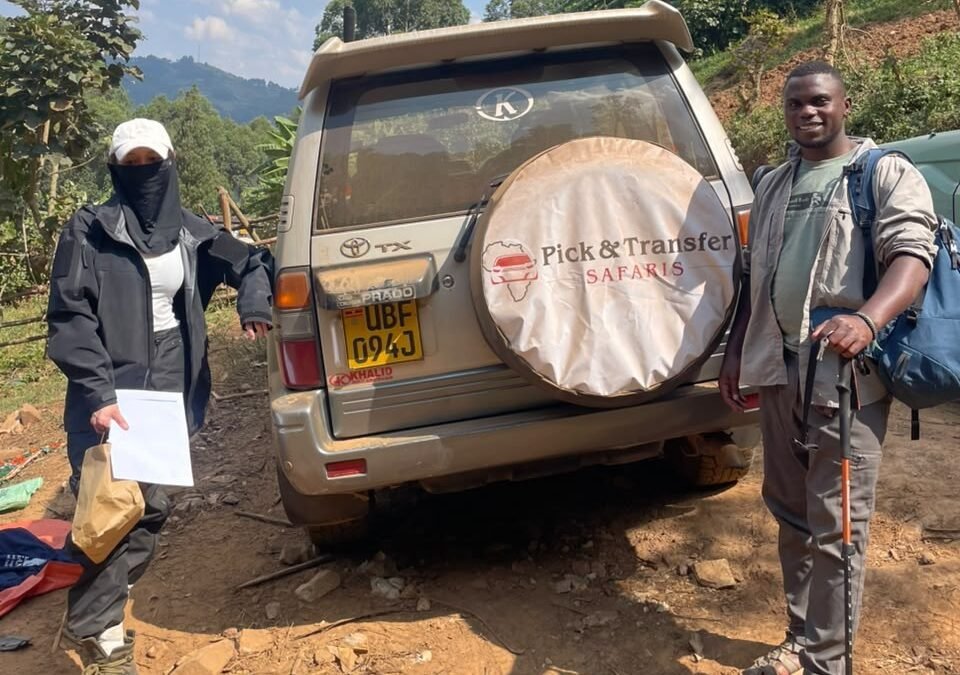
Drive from Kigali to Bwindi for Gorilla Trek. There is a moment on the road from Kigali to Bwindi when the tarmac ends, the air turns cool, and the hills ahead disappear beneath a blanket of ancient rainforest. Somewhere inside that forest, a family of mountain gorillas is going about its day. For thousands of travellers each year, the drive from Kigali to Bwindi for a gorilla trek is the bridge between landing in Rwanda and one of the most moving wildlife encounters on earth.
This journey has become the preferred way to reach Uganda’s gorillas because it is short, scenic and efficient. Yet it also involves an international border, a change in driving side, mountain roads and a trekking schedule that leaves no room for lateness. Planning the drive properly is the key to arriving relaxed and ready for the trek.
In this guide, the drivers and planners at Pick and Transfer Safaris walk you through every part of the journey: the routes to each Bwindi sector, how long the drive really takes, which border to use, what the roads are like, how to time your arrival around your permit, what to pack, what happens on trekking day, and how to make the return trip. Whether you plan to drive yourself or travel with a professional driver, this is your road map.
Why Drive from Kigali to Bwindi Instead of Entebbe?
Bwindi Impenetrable National Park lies in the far southwest of Uganda, right up against the borders of Rwanda and the Democratic Republic of Congo. That location means it is actually much closer to Kigali than to Uganda’s own capital. From Entebbe or Kampala, the road journey to Bwindi typically takes eight to ten hours. From Kigali, the drive to Bwindi’s southern sectors takes roughly four to five hours.
Saving that much time changes the whole shape of a gorilla trip. Instead of spending two full days on the road, you can fly into Kigali, drive to Bwindi the same day or the next morning, trek, and be back in Kigali within forty-eight hours. Travellers also benefit from the lower price of Uganda gorilla permits, at $800 per person for foreign non-residents, compared with $1,500 in Rwanda. Kenlink Tours explains the trade-off clearly in its comparison of landing in Kigali or Entebbe for a gorilla safari.
On top of that, the drive itself is beautiful. You pass through Rwanda’s manicured terraced hills, see the Virunga volcanoes rise on the horizon, and climb into Uganda’s misty highlands, all within a single morning.
Understanding Bwindi Before You Plan the Drive
Bwindi is not a single destination with one gate. It is a large, rugged park with four separate trekking sectors, each with its own headquarters, gorilla families and lodges. The sector named on your gorilla permit decides your route, your drive time and even which border post you cross.
- Rushaga in the south has the largest number of habituated gorilla families and hosts the Gorilla Habituation Experience. It is one of the quickest sectors to reach from Kigali.
- Nkuringo in the southwest is known for steep trekking and breathtaking views of the Virunga volcanoes. It is approached via Kisoro.
- Ruhija in the east sits at high altitude and is a favourite with birdwatchers. It is reached via Kabale.
- Buhoma in the north is the park’s oldest trekking area and has the widest range of lodges, but it is the furthest from Kigali by road.
Never book your drive before you know your sector. Driving between sectors can take several hours on winding mountain roads, so a lodge in the wrong part of the park can make it impossible to reach your briefing on time.
Route One: Kigali to Bwindi via the Cyanika Border
The Cyanika route is the most popular way to drive from Kigali to Bwindi’s southern and southwestern sectors, and it is the classic choice for Nkuringo and Rushaga.
Kigali to Musanze: You leave Kigali heading northwest on a smooth, well-maintained tarmac highway. The road winds through rolling green hills, small trading centres and tea and banana plantations. After about two hours you reach Musanze, a busy town surrounded by the Virunga volcanoes and the base for Rwanda’s Volcanoes National Park.
Musanze to the Cyanika border: From Musanze, the road continues north for a short stretch to Cyanika. Here you exit Rwanda and enter Uganda.
Cyanika to Kisoro: Just beyond the border lies Kisoro, a small but lively town at the foot of the volcanoes. Many travellers stop here for lunch or to stretch their legs.
Kisoro to Nkuringo or Rushaga: The final leg leaves the tarmac and climbs into the hills on murram roads with steep gradients and tight bends. This section typically takes around one to one and a half hours, and it is where a capable 4×4 and an experienced driver really prove their worth. The views over Lake Mutanda and the volcanoes along the way are among the finest in Uganda.
Route Two: Kigali to Bwindi via the Gatuna/Katuna Border
The Gatuna/Katuna route heads north from Kigali on the main highway towards Uganda and Kabale. It is the standard route for Ruhija and an alternative approach to Rushaga.
Kigali to Gatuna: The drive north from Kigali follows a major highway through hilly farmland to the Gatuna border post, where you cross into Uganda at Katuna.
Katuna to Kabale: On the Ugandan side, the road continues a short distance to Kabale, a regional town set among steep terraced hills. Kabale is the gateway to Lake Bunyonyi, a stunning lake of islands and terraces that makes a perfect stop on the way in or out.
Kabale to Ruhija or Rushaga: From Kabale, the road climbs into the mountains. The journey to Ruhija is slow and steep, with high-altitude forest scenery, while the route to Rushaga passes through rural villages and cultivated hillsides before reaching the edge of the forest.
Your driver will choose between Cyanika and Gatuna based on your sector, your lodge and current road conditions. For a closer look at distances on each route, Kenlink Tours’ guide to how far Bwindi is from Kigali is a helpful reference.
Reaching Buhoma from Kigali
Buhoma, in the north of the park, is the most distant sector from Kigali. Travellers usually cross at Gatuna/Katuna, pass through Kabale, and then continue north through the hills towards Kanungu district before reaching Buhoma. The drive can take most of a day, so it is best treated as a full travel day with no other activities planned.
Many travellers heading to Buhoma choose to break the journey, spending a night at Lake Bunyonyi or in Kabale before continuing. Others combine Buhoma with Queen Elizabeth National Park, since the Ishasha sector of Queen Elizabeth lies relatively close to Buhoma. If you are flexible about where you trek, choosing Rushaga or Nkuringo instead of Buhoma will greatly shorten the drive from Kigali.
How Long Is the Drive from Kigali to Bwindi?
Here is a realistic summary of drive times from Kigali, including the border crossing and a short comfort stop:
- Kigali to Rushaga: around four to five hours.
- Kigali to Nkuringo: around four to five hours, depending on the final mountain section.
- Kigali to Ruhija: typically longer than the southern sectors because of the steep climb from Kabale.
- Kigali to Buhoma: the longest drive, often most of a day.
These timings can stretch in the rainy season, when the unpaved sections become slippery, or if there are queues at the border. Kenlink Tours offers more detail in its article on how many hours you need from Kigali to Bwindi National Park. The golden rule is simple: plan to arrive at your lodge the afternoon before your trek, never on the morning itself unless you have booked a dedicated same-day trip.
What the Roads Are Really Like
Understanding road conditions helps you choose the right vehicle and set realistic expectations.
In Rwanda: Roads are generally excellent. The highways from Kigali to Musanze and to Gatuna are paved, well marked and well maintained. Rwanda drives on the right, and speed limits are strictly enforced with cameras and police checks, so drivers keep to the limits.
From the border to Kisoro or Kabale: After crossing into Uganda, you drive on the left. The main roads to Kisoro and Kabale are tarmac and in good condition, though you will share them with minibuses, trucks, motorbikes, pedestrians and occasional livestock.
The final approach to Bwindi: This is where the adventure begins. Roads to the trekking sectors are mostly murram, a compacted red earth surface. They are narrow, steep and full of hairpin bends, with dramatic drops on one side in places. In dry weather they are dusty but manageable; after rain they can become muddy and slippery. A 4×4 with good tyres and high ground clearance is essential.
Self Drive or Travel with a Professional Driver?
Some travellers enjoy the freedom of driving themselves from Kigali to Bwindi. It is possible with a cross-border-authorised rental vehicle, but there are important challenges to consider.
Self drivers must switch from right-hand to left-hand driving at the border, navigate unmarked rural roads where mobile signal often drops out, handle border paperwork for the vehicle, and tackle steep murram roads that can be difficult even for experienced drivers. Mistakes on the final approach can lead to getting stuck, losing time, or arriving late for your briefing.
Travelling with a professional driver removes these concerns. A local driver knows the fastest route to every sector, understands how weather affects the roads, handles the border smoothly and gets you to the briefing on time. Most first-time visitors choose this option, and many seasoned travellers do too. If you would like to compare the options in depth, our team can advise on the best fit for your group. You can contact Pick and Transfer Safaris for advice and a free quote.
The Best Vehicle for the Kigali to Bwindi Drive
The right vehicle makes the journey safer and far more comfortable. For the drive from Kigali to Bwindi, the most suitable options are:
- Toyota Land Cruiser Prado for couples and small groups, offering power, comfort and excellent ground clearance.
- Extended safari Land Cruiser with a pop-up roof for groups of up to six or seven, ideal if your trip continues to a savannah park.
- 4×4 safari van for larger groups with plenty of luggage, as long as it is genuine four-wheel drive.
Avoid saloon cars and two-wheel-drive minivans for the final leg to Bwindi. Even if they can manage the tarmac sections, they are not suitable for steep, wet murram roads.
Crossing the Border on the Way to Bwindi
Both the Cyanika and Gatuna/Katuna borders are busy, well-organised crossings used by gorilla trekkers every day. The process follows a familiar pattern: you exit Rwanda through Rwandan immigration, walk to Ugandan immigration, complete entry formalities, and rejoin your vehicle once the driver has cleared it.
You will need a passport valid for at least six months, the correct visas, and any health documents required for entry, such as proof of yellow fever vaccination. Many travellers use the East Africa Tourist Visa, which allows multiple entries between Uganda, Rwanda and Kenya and is perfect for a Kigali-to-Bwindi round trip. Always check the latest rules with official sources before travelling. Kenlink Tours’ visa and border crossing guide for Uganda and Rwanda walks through the process step by step.
Keep your documents in your hand luggage, carry printed copies, and allow extra time in peak season when queues can be longer.
Timing Your Drive Around Your Gorilla Permit
Gorilla trekking starts early. Trekkers must report to their sector headquarters for a briefing, usually around 7:30 a.m., before being assigned to a gorilla family and setting off into the forest. Permits are valid for one date and one sector only, and they are generally non-refundable if you miss the briefing.
That is why the safest plan is to drive from Kigali the day before your trek, arriving at your lodge in the afternoon. This gives you time to settle in, enjoy the scenery, prepare your gear and sleep well. On trekking morning, the drive from your lodge to the briefing point should be short.
Our 2 Days Uganda Gorilla Tour Starting from Kigali follows exactly this rhythm, and the 3 Days Uganda Gorilla Safari from Rwanda adds a relaxed extra day for a cultural visit or a lake stop. Kenlink Tours outlines similar planning in its guide to a Uganda gorilla safari starting from Kigali, Rwanda.
Can You Drive from Kigali and Trek on the Same Day?
Yes, but only with a very early start and careful planning. Same-day trips usually leave Kigali between 2:00 and 3:00 a.m. so that you reach Rushaga or Nkuringo in time for the morning briefing. After the trek and a late lunch, you drive back to Kigali, arriving in the evening.
This option works for travellers on tight schedules, and it is available on our 1 Day Uganda Gorilla Safari Starting from Kigali. However, it makes for a very long day: several hours of night driving, a demanding trek, and several more hours on the road afterwards. If your schedule allows even one night near Bwindi, you will enjoy the experience far more and protect yourself against border or road delays.
A Sample Two-Day Drive and Trek Plan
To give you a clear picture, here is how a typical two-day trip from Kigali unfolds.
Day 1, Kigali to Bwindi: Your driver collects you from your Kigali hotel or the airport in the morning. You head northwest to Musanze, stopping for coffee and photographs of the volcanoes, then cross at Cyanika and continue through Kisoro. After lunch, you climb into the hills towards Rushaga or Nkuringo, arriving at your lodge in the afternoon. The evening is free to relax, enjoy the forest views and prepare for the trek.
Day 2, gorilla trek and return: After an early breakfast, your driver takes you to the sector headquarters for the briefing. You trek into the forest with rangers and trackers, spend an unforgettable hour with the gorillas, and return to the lodge for lunch. In the afternoon, you drive back to Kigali, arriving in the evening.
A Sample Three-Day Plan with Lake Bunyonyi or Lake Mutanda
Adding a third day turns a quick trip into a relaxed mini-safari.
Day 1: Drive from Kigali to your lodge near your trekking sector, arriving in the afternoon.
Day 2: Gorilla trekking in the morning, followed by an afternoon community walk or Batwa cultural experience.
Day 3: A slow morning with a canoe ride on Lake Mutanda or a visit to Lake Bunyonyi, followed by a scenic drive back to Kigali.
This pace leaves room for weather delays and turns the return drive into part of the experience rather than a rush. Travellers who want to stay in Kisoro along the way can read our guide to Ikoro Hotel in Kisoro, and Kenlink Tours lists further options among the best hotels in Kisoro.
What Happens on Gorilla Trekking Day
After the long drive, trekking day is the reward. Here is what to expect.
The briefing: At the sector headquarters, rangers welcome visitors, check permits and passports, and explain the rules for visiting the gorillas. Trekkers are divided into small groups, each assigned to a habituated gorilla family.
The trek: Your group sets off into the forest with an armed ranger and trackers who have located the gorillas earlier in the morning. Trails can be steep, muddy and dense with vegetation, which is why the park is called Impenetrable. Depending on where the family is, the trek can take anywhere from under an hour to several hours.
The encounter: Once you reach the gorillas, you spend one magical hour watching them feed, play, rest and interact. Seeing a silverback at close range, or a young gorilla tumbling through the undergrowth, is an experience few travellers ever forget.
The return: After the hour is over, you hike back to the trailhead, where trekking certificates are often presented. Your driver will be waiting to take you back to the lodge or straight onto the road.
Gorilla Trekking Rules Every Visitor Should Know
To protect the gorillas and keep visitors safe, the Uganda Wildlife Authority enforces clear rules. Rangers explain them at the briefing, but it helps to know them in advance:
- The minimum age for gorilla trekking is 15 years.
- Visitors who are sick, especially with a cold, flu or other contagious illness, should not trek, as gorillas are vulnerable to human diseases.
- Keep a distance of several metres from the gorillas at all times, as instructed by your ranger.
- Flash photography is not allowed.
- Do not eat, drink or smoke near the gorillas.
- Speak quietly and stay with your group.
- The time with the gorillas is limited to one hour.
Following these rules ensures the gorillas remain healthy and that future visitors can enjoy the same privilege.
How Fit Do You Need to Be?
Gorilla trekking in Bwindi is physically demanding, but most reasonably fit people can do it. The terrain is hilly, the altitude is moderately high, and trails can be slippery. Some treks are short; others last much of the day.
Preparing with regular walks, hill climbs or stair workouts in the weeks before your trip will make the experience more enjoyable. At the trailhead, you can hire a porter to carry your bag and help you on steep sections. Porters are local community members, and hiring one supports families living around the park. A walking stick, usually provided at the headquarters, also helps a great deal. If you have concerns about your fitness, let the rangers know at the briefing, as they try to match visitors with gorilla families that suit their ability.
What to Pack for the Drive and the Trek
Packing well makes both the drive and the trek far more comfortable. Bring:
- Passport, visas, gorilla permit and printed copies of key documents.
- Sturdy, waterproof hiking boots with good grip.
- Long trousers and long-sleeved tops to protect against nettles and insects.
- Gardening gloves for gripping vegetation.
- A lightweight rain jacket.
- Warm layers for cool mornings and evenings at altitude.
- A small daypack with water, snacks and a packed lunch.
- Insect repellent and sunscreen.
- A camera with spare batteries and memory cards.
- Motion sickness tablets if you are sensitive to winding roads.
- Some cash in small notes for snacks, tips and porters.
Stops Worth Making on the Drive to Bwindi
Although the main goal is to reach Bwindi in good time, a few well-placed stops make the drive far more enjoyable and break up the hours in the vehicle.
On the Cyanika route, Musanze is the natural halfway point. It has cafés, banks and supermarkets, and on a clear day the views of the Virunga volcanoes from the town are superb. Just beyond the border, Kisoro is a good place for lunch before the final climb. As the road winds towards Nkuringo or Rushaga, there are viewpoints over Lake Mutanda where the water mirrors the volcanoes behind it, a scene that many travellers rank among the most beautiful in Uganda.
On the Gatuna/Katuna route, Kabale offers fuel, shops and restaurants, and Lake Bunyonyi lies only a short detour away. Even a brief stop at a Bunyonyi viewpoint gives you a glimpse of its terraced hillsides and scattered islands. If you have extra time, a night on the lake is a peaceful way to break the journey to Ruhija or Buhoma. Let your driver know which stops interest you, so the schedule still gets you to your lodge before dark.
Planning the Drive for the Gorilla Habituation Experience
For travellers who want more than one hour with the gorillas, the Gorilla Habituation Experience in Bwindi’s Rushaga sector allows a small group to spend up to four hours with a gorilla family that is still being habituated to human presence. It is a longer, more immersive day, often involving more time in the forest than a standard trek.
Because the habituation experience takes up most of the day, it is especially important to arrive in Rushaga the evening before and to avoid planning a long drive back to Kigali on the same afternoon. Most travellers book an extra night near the park so they can return to Kigali the next morning, rested and with time to reflect on the experience. Permits for the habituation experience are very limited, so book well in advance.
Money, Mobile Data and Connectivity on the Road
Rwanda uses the Rwandan franc and Uganda uses the Uganda shilling, though US dollars are widely accepted for tourism services. It is worth carrying small amounts of both local currencies for snacks, tips and porters, along with some clean, recent US dollar notes. ATMs are easy to find in Kigali, Musanze, Kisoro and Kabale, but scarce near Bwindi itself.
Local SIM cards are inexpensive and easy to buy in Kigali, and many travellers pick up a Ugandan SIM after crossing the border. Expect mobile signal and data to drop out on parts of the mountain roads and in some lodges near the forest. Download offline maps and share your itinerary with someone at home before setting off, so you are not reliant on a connection during the drive.
Best Time of Year to Drive from Kigali to Bwindi
Gorilla trekking is possible all year round, and the drive from Kigali runs in every season. The difference lies in road and trail conditions.
The drier months, from June to August and December to February, bring firmer roads, shorter driving times and easier forest trails. They are also the busiest months, so permits and transport should be booked well in advance.
The wetter months, roughly March to May and October to November, bring muddier roads and trails, which can slow the final approach to Bwindi and make trekking more strenuous. On the plus side, the forest is lush and green, there are fewer visitors, and some lodges offer better rates. Whatever the season, build in extra time for the drive.
Where to Stay Near Bwindi After the Drive
Choosing a lodge close to your trekking sector is one of the smartest decisions you can make. It turns trekking morning into a short, stress-free drive and gives you time to enjoy breakfast without rushing.
Each sector offers a range of options, from budget community campsites and guesthouses to mid-range lodges and luxurious forest retreats with spectacular views. When choosing, check how far the lodge is from the sector headquarters and whether the access road is suitable in wet weather. Kenlink Tours profiles one well-known property in its review of Ichumbi Gorilla Lodge, a popular choice for travellers trekking in the southern sectors.
Making the Most of the Return Drive
The drive back to Kigali does not have to be a rush to the airport. With a little planning, it can be one of the highlights of your trip. Many travellers stop at Lake Bunyonyi for lunch with views across the islands, or break the journey in Musanze to visit the twin lakes of Burera and Ruhondo or track golden monkeys in Volcanoes National Park the next day.
If you have an international flight from Kigali, allow plenty of time. Aim to reach the airport at least three hours before departure, and avoid trekking on the same day as an evening flight if possible. A night in Kigali or Musanze after trekking gives you a comfortable buffer and a chance to explore Rwanda’s capital before flying home.
Extending Your Trip Beyond Bwindi
Once you have made the drive to Bwindi, it is worth considering what else is within reach. Popular extensions include:
- Queen Elizabeth National Park for game drives, boat cruises and tree-climbing lions. Our 3 Days Safari to Queen Elizabeth National Park is a natural add-on.
- Kibale Forest for chimpanzee tracking, as on our 5 Days Uganda Gorilla and Chimps Safari starting from Rwanda.
- Volcanoes National Park in Rwanda for golden monkeys and Rwandan culture, as featured on our 3 Days Rwanda Gorilla Tracking and Cultural Tour.
- A one-way journey to Entebbe, continuing north through Uganda’s parks and flying home from Uganda. Our article on whether you can begin your tour at Kigali Airport and end in Entebbe Airport explains how this works.
For more ideas, read our guide to what to do after your gorilla tour in Bwindi, or browse Kenlink Tours’ collection of Uganda safaris and its page on combining Rwanda and Uganda gorilla trekking and culture.
How Much Does the Drive from Kigali to Bwindi Cost?
The cost of driving from Kigali to Bwindi depends on whether you self drive or travel with a driver, the vehicle type, the sector, and how many days you need the vehicle. Private transport is normally priced per vehicle, so sharing the journey with friends or family greatly reduces the cost per person.
When comparing prices, check whether quotes include fuel, the driver’s allowance and accommodation, cross-border vehicle fees and insurance. Ask for everything in writing so you can compare like with like. Budget-conscious travellers can find more money-saving ideas in Kenlink Tours’ guide on how to do a cheap gorilla safari in Uganda, and its comparison of travel time and cost from Kigali vs Kampala shows why starting in Kigali often saves money overall.
Safety Tips for the Kigali to Bwindi Drive
- Drive in daylight. Mountain roads are best tackled when you can see bends, drops and other road users clearly.
- Choose a well-maintained 4×4 with good tyres, a spare wheel and a first aid kit.
- Wear seat belts throughout the journey.
- Watch for pedestrians, cyclists and livestock, especially near villages and schools.
- Keep valuables out of sight when the vehicle is parked.
- Carry water and snacks in case of delays.
- Buy travel insurance that includes medical evacuation, given the remote location of the park.
Why Travel from Kigali to Bwindi with Pick and Transfer Safaris
At Pick and Transfer Safaris, the drive from Kigali to Bwindi is the journey we know best. Our experienced drivers travel this road regularly, know both the Cyanika and Gatuna/Katuna borders inside out, and understand exactly how long it takes to reach each Bwindi sector in every season. Our 4×4 vehicles are licensed and insured for both Rwanda and Uganda, so your journey flows smoothly from one country to the next.
We offer airport pickups in Kigali, hotel collections, one-way and return transfers, same-day gorilla trips and complete packages that include permits, lodges and transport. Explore our short gorilla safaris starting from Kigali for quick trips, or longer journeys such as the 7 Days Uganda Safari – One Week Tour, the 10 Days Uganda Rwanda Safari and the 14-Day Uganda Primates and Safari Adventure.
Travellers starting in Uganda can also choose our 3 Days Uganda Gorilla Safari or 5-Day Uganda Gorilla and Chimpanzee Safari, and you can see every park we cover on our destinations page.
Frequently Asked Questions About Driving from Kigali to Bwindi
How long is the drive from Kigali to Bwindi?
Around four to five hours to the southern sectors of Rushaga and Nkuringo, including the border crossing. Ruhija takes longer, and Buhoma is the furthest sector from Kigali.
Which border should I use to drive from Kigali to Bwindi?
Cyanika, via Musanze and Kisoro, is best for Nkuringo and Rushaga. Gatuna/Katuna, via Kabale, is used for Ruhija and as an alternative route to Rushaga and Buhoma.
Is the road from Kigali to Bwindi paved?
Most of it is. The roads in Rwanda and the main Ugandan roads to Kisoro and Kabale are tarmac, but the final approach to each Bwindi sector is mostly unpaved murram road.
Do I need a 4×4 to drive from Kigali to Bwindi?
Yes. A 4×4 with good ground clearance is strongly recommended for every sector and is essential in the rainy season.
Can I drive from Kigali and trek gorillas on the same day?
Yes, with a departure between 2:00 and 3:00 a.m. However, most travellers prefer to drive the day before and spend a night near the park.
Is it safe to drive from Kigali to Bwindi?
Yes. The route is widely used by tourists. The main challenges are mountain roads and weather, which is why many travellers choose a professional driver.
What documents do I need for the drive?
A valid passport, visas for Rwanda and Uganda (or an East Africa Tourist Visa), your gorilla permit, and any required health documents. Your transport provider handles the vehicle paperwork.
Can I continue to Entebbe after trekking in Bwindi?
Yes. Many travellers drive from Kigali to Bwindi, trek, and then continue through Queen Elizabeth or Kibale to Entebbe, flying home from Uganda.
How far in advance should I book my drive from Kigali to Bwindi?
Book your transport as soon as your gorilla permit and lodge are confirmed. For the busy months of June to September and December to February, booking several months ahead secures the best vehicles and drivers. At quieter times of year, a few weeks’ notice is usually enough.
Drive from Kigali to Bwindi for Gorilla Trek
The drive from Kigali to Bwindi for a gorilla trek is one of East Africa’s great journeys: short enough to fit into a weekend, beautiful enough to remember for a lifetime, and the fastest way to reach Uganda’s mountain gorillas. With the right route for your sector, a capable 4×4, a well-timed arrival the day before your trek, and an experienced driver who knows the borders and mountain roads, the journey becomes as rewarding as the destination.
When you are ready to plan your trip, get in touch with Pick and Transfer Safaris. Tell us your travel dates, permit sector and group size, and we will arrange a safe, comfortable drive from Kigali to Bwindi, so you can focus on the hour you will never forget.