- LET'S PLAN YOUR SAFARI
- +256 200 921 002
- +256 793 194 703
- info@pickandtransfersafaris.com

Fly into Kigali Trek Gorillas in Bwindi Uganda
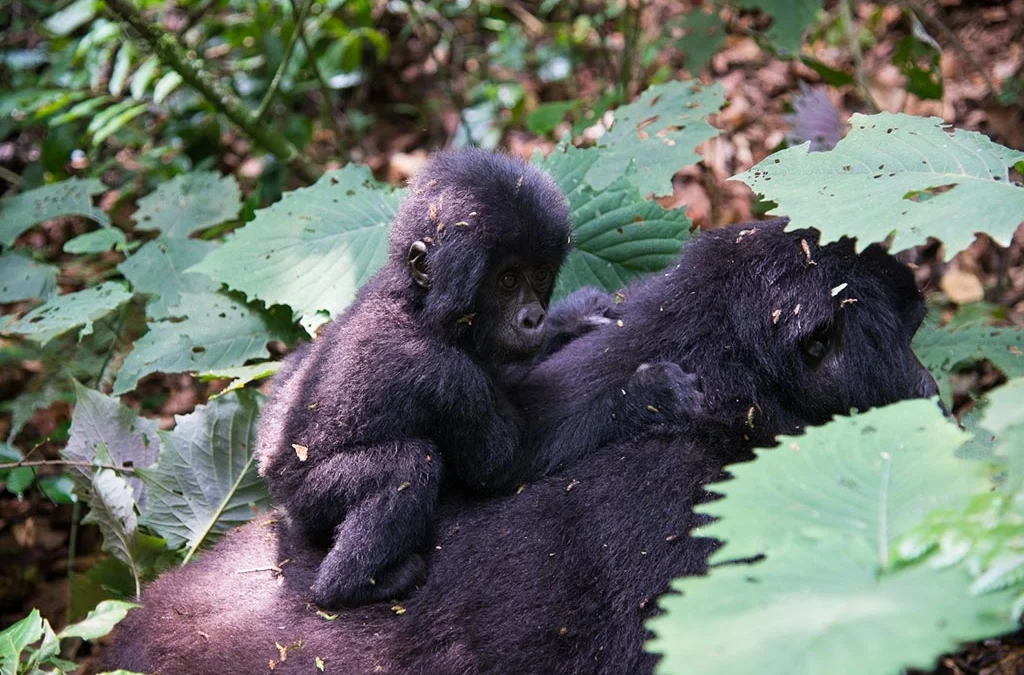
Fly into Kigali Trek Gorillas in Bwindi Uganda. Fly into Kigali, Rwanda, to access Uganda’s mountain gorillas more efficiently than through Uganda’s international airport. A short drive across a scenic border leads you to Bwindi Impenetrable National Park, home to nearly half of the world’s mountain gorillas, avoiding the longer domestic transfers in Uganda. This guide details the journey and offers essential planning tips from your arrival at Kigali International Airport to encountering a silverback gorilla in the forest.
Why Fly Into Kigali At All
At first glance, it might seem strange to fly into one country to visit gorillas in another. But once you look at the logistics, the appeal becomes obvious. Kigali International Airport is one of the best-connected, most efficient airports in East Africa, with excellent direct and one-stop connections from Europe, the Middle East, and increasingly from North America. Rwanda’s immigration process is fast, its roads leading out of the capital are some of the best-maintained in the region, and the drive from Kigali to the southwestern corner of Uganda, where Bwindi Impenetrable National Park sits, takes just three to five hours depending on which border crossing you use.
Compare that to the alternative: flying into Entebbe, Uganda’s main international gateway, and then driving anywhere from nine to eleven hours south-west to reach Bwindi, or booking a costly domestic flight to a nearby airstrip. For travelers with limited time, arriving via Kigali simply removes a full day of driving from the itinerary. Many of our short gorilla safaris are built around exactly this route — our 2 Days Uganda Gorilla Tour Starting from Kigali and 1 Day Uganda Gorilla Safari Starting from Kigali exist because of just how much time this routing saves.
There’s also a financial logic that makes the Kigali route especially compelling. A standard gorilla trekking permit in Uganda costs USD 800 per person, while the equivalent permit in Rwanda’s Volcanoes National Park costs USD 1,500 — nearly double. Flying into Kigali and crossing into Uganda lets travelers combine Rwanda’s superior air connectivity with Uganda’s significantly lower permit cost, which is exactly why this cross-border route has become one of the most popular ways to see mountain gorillas in Africa.
Kigali International Airport: What to Expect on Arrival
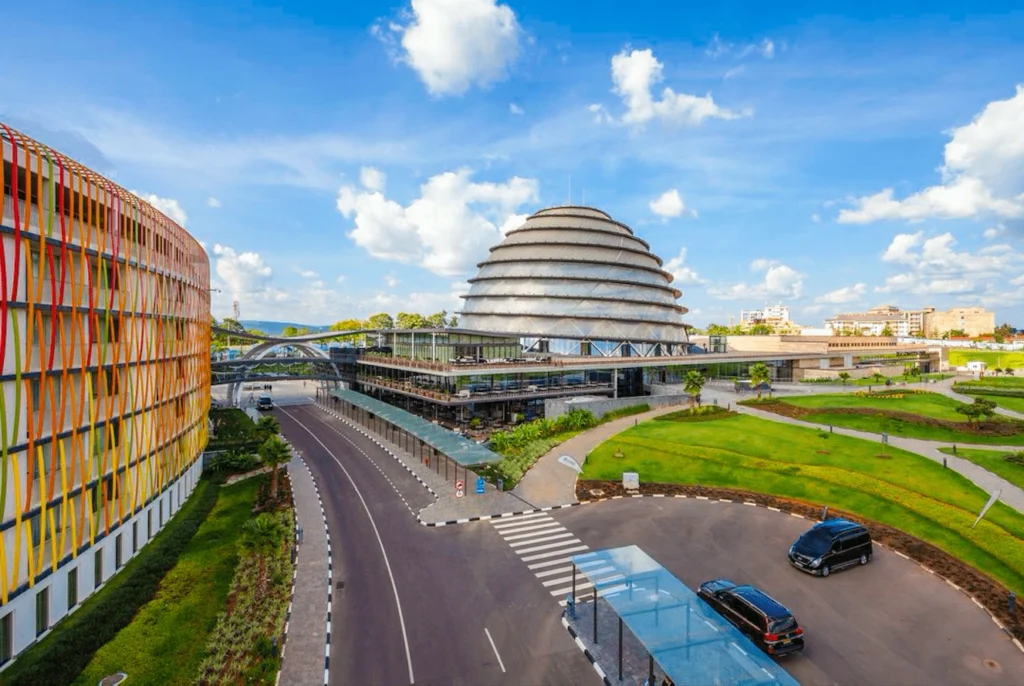
Kigali International Airport, also known as Kanombe International Airport, is compact, modern, and efficient by regional standards. Immigration processing is generally quick, particularly for travelers holding the East Africa Tourist Visa, which we’ll cover in more detail below. Baggage claim and customs are straightforward, and licensed taxis and pre-arranged private transfers are readily available just outside the arrivals hall.
Most travelers spend at least one night in Kigali before continuing on to Uganda, both to recover from international travel and to take advantage of the city’s genuinely excellent restaurants, the moving Kigali Genocide Memorial, and its reputation as one of the cleanest, safest capital cities in Africa. Our Kigali City page covers what to see and do if you’d like to build in an extra day or two before heading onward to the gorillas.
If your schedule is extremely tight, it’s technically possible to land in Kigali and drive straight to the border the same day, provided your flight arrives early enough and you’ve arranged a private transfer in advance. Most operators, however, recommend against this, since flight delays are common on international routes and a rushed first day increases the risk of missing your scheduled trek the following morning.
Choosing Your Border Crossing: Cyanika or Katuna
Once you’re ready to leave Kigali, there are two main options for crossing into Uganda, and which one you use depends heavily on which sector of Bwindi you’re trekking in.
Cyanika: The Direct Route to Southern Bwindi
The Cyanika border post, connecting Rwanda’s Burera district to Uganda’s Kisoro district, is the crossing of choice for travelers heading to the southern Bwindi sectors of Rushaga and Nkuringo, as well as to Mgahinga Gorilla National Park. From Kigali, the drive to Cyanika takes roughly three to four hours through Musanze, with the dramatic silhouette of the Virunga volcanoes visible for much of the route. Once across the border, southern Bwindi is a further one to two hours away, making Cyanika the faster overall option for most gorilla trekking itineraries.
Cyanika is a relatively quiet crossing, without the heavy commercial traffic seen at Uganda’s larger border posts, which generally makes for a smoother, faster immigration process. It does have more limited operating hours than some other crossings, generally opening around 5:00–6:00am and closing by 9:00–10:00pm, so it isn’t suited to a very early or very late crossing.
Katuna/Gatuna: The Route to Northern Bwindi
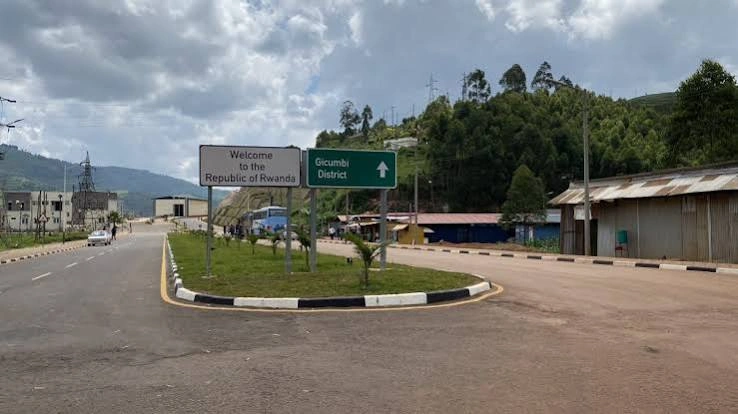
The Katuna crossing, known as Gatuna on the Rwandan side, connects Rwanda’s Gicumbi district to Uganda’s Kabale district, and is the busier, more direct route between Kigali and Kampala. It’s the natural choice for travelers heading to the northern Bwindi sectors of Buhoma and Ruhija, or continuing on to Lake Bunyonyi, which sits less than an hour from the border. Katuna carries significantly more cargo and commercial traffic than Cyanika but has been modernized under the One Stop Border Post system, which has meaningfully sped up processing times in recent years.
Whichever crossing you use, both are considered safe, efficient, and well-regulated border posts, and thousands of leisure travelers pass through each of them every year without incident.
Documents You Need Before You Fly
Before booking flights, it’s worth confirming you have every document in order, since a missing certificate or visa can genuinely disrupt an otherwise smooth trip.
Passport and Visa
A passport valid for at least six months beyond your travel dates is required for both Rwanda and Uganda. The most practical visa option for this route is the East Africa Tourist Visa, which costs USD 100, covers Rwanda, Uganda, and Kenya, and permits multiple entries over a 90-day period — ideal for a trip that crosses this specific border. It must be applied for through the country of first entry, so if Kigali is your point of arrival, apply through Rwanda’s immigration portal before you travel. Standalone single-country visas are also available for eligible nationalities at roughly USD 50 each.
Yellow Fever Vaccination Certificate
A valid Yellow Fever Vaccination Certificate is mandatory for entry into Uganda when arriving from Rwanda, and border officials do check for it. Travelers without a certificate risk being denied entry or required to be vaccinated on the spot, so this is worth sorting out well before departure.
Gorilla Trekking Permit
Your gorilla trekking permit, either printed or saved digitally, should be carried with you throughout the journey. Permits are non-transferable and tied to a specific date, sector, and gorilla family, so it’s worth double-checking these details match your itinerary before you fly. Our team can help confirm permit availability and handle the booking directly — get in touch as early as possible, particularly if you’re targeting the busier June-to-August or December-to-February dry seasons.
The Drive From Kigali to Bwindi: What the Journey Actually Looks Like
The road from Kigali toward the Uganda border is genuinely one of the most scenic drives in the region. Leaving the capital, the route climbs through Rwanda’s terraced hillsides, past small trading towns and tea plantations, with the volcanic peaks of the Virunga range rising in the distance as you approach Musanze. This stretch of road is fully paved and well-maintained, making for a comfortable ride regardless of season.
After crossing into Uganda, the character of the drive shifts. The road winds through the Kigezi highlands, an area often nicknamed the “Switzerland of Africa” for its terraced, mountainous scenery, passing small trading centers, subsistence farms, and glimpses of Lake Bunyonyi along certain routes. The final approach to Bwindi’s various sectors involves narrower, occasionally unpaved roads climbing through dense forest, particularly for the more remote sectors like Ruhija and Nkuringo.
Most private transfer vehicles used on this route are 4×4s suited to the terrain, and an experienced driver-guide familiar with current road and border conditions makes a meaningful difference in comfort, particularly during the wetter months. Our 3 Days Uganda Gorilla Safari from Rwanda itinerary is built around exactly this drive, with enough buffer time to enjoy the scenery rather than rushing straight through it.
Timing Your Arrival Before a Trek
Because gorilla trekking begins with an early-morning briefing at the park headquarters, most travelers plan to arrive at their Bwindi lodge the evening before their scheduled trek. This gives you time to settle in, enjoy dinner, and get a full night’s rest before an early wake-up call. Arriving with daylight to spare rather than after dark also makes for a considerably more relaxed final stretch of driving, particularly on the winding mountain roads leading into the park.
Building in a buffer day is a sensible precaution for any itinerary using this route, particularly during Uganda’s wetter months, when localized flooding or reduced visibility on mountain roads can occasionally slow the journey. A day of contingency between your flight arrival and your scheduled trek significantly reduces the stress of any unexpected delay along the way.
Choosing the Right Bwindi Sector for a Kigali-Based Trip
Bwindi Impenetrable National Park is divided into four main trekking sectors, and choosing the right one has a real impact on your overall journey time from Kigali.
Rushaga, in the far south of the park, is the closest sector to the Rwanda border and the natural choice for most Kigali-based travelers. It also hosts the largest number of habituated gorilla families of any sector in Bwindi.
Nkuringo, also in the south, offers dramatic views over the Virunga volcanoes and a similarly short transfer from Cyanika, though its trails are known to be some of the steepest in the park.
Buhoma, in the north, is more comfortably reached via the Katuna crossing and offers gentler trails and well-established lodges, though it requires a longer overall drive from Kigali.
Ruhija, the highest-elevation sector, delivers cooler temperatures and outstanding birdwatching alongside gorilla trekking, but its remoteness makes it the least convenient option for a Kigali-based itinerary.
For most travelers flying into Kigali specifically to trek gorillas, Rushaga offers the best combination of accessibility and gorilla family availability. Our Bwindi Impenetrable National Park destination page has more detail on the park as a whole, and operators such as Gorilla Tracking Tours offer a useful second perspective on how each sector compares for travelers weighing their options.
What a Gorilla Trekking Day Actually Involves
Understanding what happens on trekking day itself helps set the right expectations for your Kigali-based itinerary. The day begins early, typically around 7:00–7:30am, with registration and a safety briefing at the park headquarters, where rangers organize trekkers into groups of up to eight people and assign each group to a specific habituated gorilla family.
From there, groups set out into the forest accompanied by an armed ranger, a guide, and often a tracker who has already located the general area where the assigned gorilla family was last seen. The hiking portion of the day is genuinely unpredictable — it can take as little as thirty minutes or stretch to five or six hours, depending entirely on where the gorillas have moved since the previous evening. Once the group reaches the gorillas, everyone is given exactly one hour to observe them at a safe distance before beginning the return hike, which generally takes a similar amount of time to the walk in.
Because trek length can’t be predicted in advance, it’s best to treat the entire day as reserved for the activity rather than planning anything else around it. Most travelers find that the physical effort, whatever its length, fades quickly into the background once they’re actually in the presence of a gorilla family.
Gorilla Permit Costs and Booking Timelines
As of 2026, a standard Uganda gorilla trekking permit costs USD 800 per person, covering registration, park entry, ranger and tracker fees, and one hour with a habituated gorilla family. This compares to USD 1,500 for the equivalent permit in Rwanda’s Volcanoes National Park, which is the central reason so many Kigali-based travelers choose to cross into Uganda rather than trek in Rwanda itself.
Booking timelines for permits vary by season, with high demand during the peak dry months of June to August and the December holidays requiring reservations six to twelve months in advance. In contrast, wetter months like April, May, and November offer more flexible availability, often bookable just weeks ahead, with potential discounts from the Uganda Wildlife Authority. Regardless of the season, permits are non-transferable and capped at eight trekkers per gorilla family daily, making early booking through a reliable operator essential. For a comparison, Kenlink Tours’ 2 Days Rwanda to Uganda Gorilla Trekking Safari provides insights into similar short itineraries.
What to Pack for a Kigali-to-Bwindi Trip
Packing for this specific route means preparing for two distinct environments: Kigali’s relatively mild city climate and Bwindi’s high-altitude rainforest conditions. For Kigali itself, light, breathable clothing is sufficient, along with a light jacket for cooler evenings.
For the trekking portion of the trip, pack a waterproof, breathable rain jacket regardless of season, since Bwindi’s weather can shift quickly even in the dry months. Sturdy, well broken-in waterproof hiking boots are essential, along with a warm mid-layer for cool mornings at altitude. Gardening gloves are a small but genuinely useful addition, since Bwindi’s forest floor includes stinging nettles that trekkers often grab for balance, and long trousers tucked into socks help guard against both nettles and safari ants.
Beyond clothing, bring more water than you think you’ll need, energy-dense snacks, a dry bag for your camera and phone, a printed or digital copy of your permit and visa documents, and cash in small US dollar denominations for porter tips and any incidental costs along the route.
Health and Safety Considerations for This Route
Beyond the mandatory yellow fever certificate, travelers on this route are generally advised to be up to date on routine vaccinations and to consider malaria prophylaxis, since Bwindi sits within a malaria zone, albeit one with somewhat lower risk at higher elevations. Comprehensive travel insurance that explicitly covers cross-border travel, trekking activities, and medical evacuation is strongly recommended, since standard travel policies don’t always include these activities by default.
Anyone showing symptoms of a cold, flu, or other contagious illness is required to sit out their scheduled trek, since mountain gorillas are highly susceptible to human respiratory infections. Reputable operators build flexibility into their itineraries to accommodate this rule if it arises, so it’s worth discussing rescheduling options with your operator before you travel.
Both the Cyanika and Katuna border crossings are considered safe and well-regulated, and the roads on both sides of the border are well-traveled by tourists and commercial traffic alike. As with any international travel, keeping valuables secure, avoiding unofficial money changers, and traveling with a reputable driver-guide rather than arranging ad-hoc transport at the border are all sensible precautions.
Best Time of Year for This Specific Route
While gorilla trekking itself happens year-round, the Kigali-to-Bwindi route is at its most pleasant during Uganda’s two dry seasons: June through August, and December through February. Roads on both sides of the border are at their firmest during these months, reducing the chance of delays, and Bwindi’s trails are noticeably easier underfoot.
The wetter months of March through May, and to a lesser extent October and November, bring lower prices and quieter trails, but also a higher chance of localized flooding slowing the mountain roads leading into Bwindi’s more remote sectors. If you’re traveling during these months, building in extra buffer time is a wise precaution rather than a mere suggestion. Our 5-Day Uganda Gorilla and Chimpanzee Safari intentionally includes this kind of flexibility, regardless of the season you travel in.
Combining Gorilla Trekking in Both Countries
Because Volcanoes National Park in Rwanda sits just under two hours from Kigali, a growing number of travelers choose to trek gorillas in both Rwanda and Uganda on a single trip, taking advantage of Rwanda’s proximity to the capital and Uganda’s lower permit cost for a second trek a day or two later. This kind of two-country itinerary works particularly well during the dry seasons, when road conditions on both sides of the border are at their most predictable.
Our 2 Days Volcanoes Gorilla Trek from Kigali is a natural complement to a Uganda-focused trip, allowing travelers to compare Rwanda’s more open bamboo-forest trekking conditions against Bwindi’s denser rainforest terrain within the same week. For a broader Rwanda-first itinerary, Volcanoes National Park offers a fuller picture of what the Rwandan side of this experience involves.
Extending Your Trip Beyond Gorilla Trekking
Many travelers extend their trips beyond a single gorilla trek in southwestern Uganda and northern Rwanda due to the accessible road network. Lake Bunyonyi, renowned as one of Africa’s most beautiful lakes, is less than an hour from the Katuna border, serving as a great stop before or after a trek. Additionally, Queen Elizabeth National Park offers Big Five game drives and a boat cruise on the Kazinga Channel, while chimpanzee tracking in Kibale Forest National Park complements gorilla trekking for those seeking a more comprehensive primate experience.
On the Rwanda side, Nyungwe Forest National Park offers chimpanzee tracking and a celebrated canopy walk through one of Africa’s oldest rainforests, while Akagera National Park delivers classic savannah game drives and Big Five sightings within a few hours of Kigali. Our 4 Days Wildlife and Primate Safari and 3 Days Nyungwe Safari are both designed for travelers looking to build a longer, richer itinerary around a Kigali arrival.
Accommodation Options Along the Route
Where you stay along this route depends on your pace and budget. Most travelers spend their first night in Kigali, choosing anywhere from mid-range guesthouses to internationally branded hotels depending on budget, before continuing on to a lodge near their chosen Bwindi sector. Lodges near Rushaga and Nkuringo range from simple, community-run guesthouses to more upscale properties with views over the forest canopy and, in some cases, the distant Virunga volcanoes.
During the peak dry season months, particularly July, August, and the December holidays, the most popular lodges near southern Bwindi book out well in advance, making early reservations just as important as securing your gorilla permit itself. During the wetter shoulder months, the same properties often drop their rates substantially, making it a good opportunity to book a higher standard of accommodation on a more modest budget.
Sample Five-Day Itinerary: Fly Into Kigali, Trek in Bwindi
Day One: Arrive at Kigali International Airport, transfer to your hotel, and spend the afternoon exploring the city or resting after your flight.
Day Two: Depart Kigali in the morning, cross the border at Cyanika, and continue on to your lodge near Rushaga, arriving with daylight to spare for an early night ahead of trekking.
Day Three: Gorilla trekking day. An early registration and briefing at the park headquarters, followed by the hike itself, the hour with the gorillas, and the return to your lodge by afternoon or early evening.
Day Four: A flexible day, ideal for a Batwa cultural visit, a community walk, or simply resting before beginning the return journey, or for continuing on to a second activity such as a Volcanoes National Park gorilla trek in Rwanda if your itinerary includes both countries.
Day Five: Return drive to Kigali via your chosen border crossing, with time built in for the flight home or an onward connection.
This structure forms the backbone of several of our own itineraries, including the 3 Days Uganda Gorilla Safari from Rwanda for a more condensed version, and the 5 Days Uganda Gorilla and Chimps Safari starting from Rwanda for travelers wanting to add chimpanzee tracking to the same trip.
Independent Travel vs. Booking With an Operator
While it’s technically possible to arrange this entire route independently — booking your own flights, hiring a taxi to the border, and arranging onward transport into Uganda — the majority of travelers find it considerably simpler to book the whole journey through a single operator who provides a private vehicle and driver-guide from the moment you land in Kigali until you’re dropped back at the airport. This approach removes the need to negotiate transport at the border itself, ensures your driver understands current border procedures, and typically includes support if any questions arise with your visa or permit documents along the way.
For travelers who prefer more independence, self-drive options are also available for those comfortable navigating East African roads, though most first-time visitors to the region find a guided transfer considerably less stressful, particularly given the mix of paved and unpaved roads on the Uganda side of the border.
Flight Connections Into Kigali
Kigali International Airport has grown into one of the best-connected hubs in East Africa, with RwandAir operating an expanding network of direct flights from Europe, the Middle East, and several African cities, alongside connections from major international carriers routing through hubs such as Addis Ababa, Nairobi, Doha, Istanbul, and Brussels. For travelers coming from North America, a one-stop connection through Europe or the Middle East is currently the most common routing, though direct services continue to expand as demand for Rwanda and Uganda travel grows.
Because this route depends on a tight connection between your international arrival and your onward drive to Bwindi, it’s worth booking flights that land in Kigali with at least one full day of buffer before your scheduled trek, rather than attempting a same-day turnaround. This is especially important during the Northern Hemisphere summer and the December holiday period, when both flight schedules and border crossings tend to be busier than usual.
A Realistic Cost Breakdown for This Route
Understanding where your money goes on a Kigali-to-Bwindi trip helps with both budgeting and expectations. The single largest fixed cost is the gorilla trekking permit itself, at USD 800 per person for Uganda’s Bwindi or Mgahinga parks. International flights to Kigali typically represent the second-largest expense and vary considerably by origin and season, generally cheaper outside the June-to-August and December peak periods.
Ground transport between Kigali and Bwindi typically includes a private vehicle, an experienced driver-guide, fuel, and border-crossing assistance, priced per vehicle to benefit small groups or families. Accommodation options vary from simple guesthouses to upscale lodges with scenic views, with lower rates during the wetter shoulder months. Additional expenses include meals, porter tips, park entrance fees, and incidental costs like visa fees and currency exchange. Booking permits, transport, and accommodation through a single operator is often more cost-effective than arranging each component separately, as it avoids last-minute markups at the border.
Currency, Cash, and Payments Along the Route
It’s worth carrying cash in US dollars in small denominations for this trip, since visa fees, park-related costs, porter tips, and small purchases near the border posts are usually easiest to settle in cash, and card payment infrastructure at land borders and rural lodges can be unreliable. Rwandan francs are useful for smaller purchases in Kigali and Musanze, while Ugandan shillings become more practical once you’re across the border and in Kisoro or near the park. Currency exchange is available informally near both border posts, though rates tend to be better once you reach a larger town such as Musanze or Kisoro rather than exchanging directly at the crossing itself.
Altitude and Physical Preparation
Because Bwindi sits at elevations between 1,160 and 2,607 meters, and Kigali itself sits at roughly 1,500 meters, most travelers on this route won’t experience significant altitude-related discomfort, though some may notice mild effects such as shortness of breath during the more strenuous stretches of a trek. Staying well hydrated throughout the journey, pacing yourself on steeper sections of trail, and allowing at least one full day in Kigali to adjust before continuing on to higher elevations in Bwindi are all sensible precautions, particularly for travelers arriving from low-lying regions.
Physical preparation in the weeks before your trip is genuinely worthwhile regardless of your general fitness level. Regular walking or hiking, ideally on hilly or uneven terrain, helps condition the legs and cardiovascular system for a potentially long trekking day, and travelers who arrive at least moderately prepared consistently report an easier, more enjoyable experience than those who don’t.
Traveling With Children and Age Restrictions
Uganda Wildlife Authority regulations require trekkers to be at least 15 years old for gorilla trekking to ensure the safety of young children and the wellbeing of the sensitive gorillas. Families with younger children often arrange alternative activities like nature walks or cultural visits while older members trek. It’s advisable to plan ahead as not all lodges provide childcare or supervised activities, and assistance can be offered in finding family-friendly properties.
Sustainable and Responsible Travel Considerations
Gorilla trekking tourism plays a genuinely significant role in mountain gorilla conservation, and choosing to travel this route responsibly extends that positive impact. A meaningful share of every gorilla permit fee is channeled into ranger salaries, anti-poaching patrols, and community revenue-sharing programs around Bwindi and Mgahinga, which has helped mountain gorillas become one of the only great ape populations in the world with a growing rather than shrinking population.
Beyond the permit itself, small choices along the route make a difference. Hiring a porter at the trailhead, even if you don’t feel you need one, puts income directly into the hands of the local community and is one of the most direct ways travelers support the people living around the park. Purchasing locally made crafts, respecting the one-hour viewing limit and the recommended seven-meter distance from the gorillas, and choosing operators who visibly reinvest in the surrounding community are all meaningful ways to ensure your trip benefits the region long after you’ve returned home.
Weather and Seasonal Planning for This Specific Route
Because this journey spans two countries and a range of elevations, weather plays a role at several points along the way. Kigali enjoys a relatively mild, temperate climate year-round, with daytime temperatures typically between 20°C and 27°C regardless of season, making the city itself comfortable to explore at any time of year. The more significant seasonal variation comes once you reach Uganda’s southwest, where Bwindi’s two dry seasons, June through August and December through February, offer the firmest trails and most predictable road conditions for the drive itself.
The wetter months of March through May and, to a lesser extent, October and November, bring lower prices and quieter trails, along with a higher likelihood of afternoon showers that can occasionally affect road conditions on the Uganda side of the border. Even during these months, a typical wet-season day often includes long stretches of sunshine broken up by a concentrated afternoon downpour rather than continuous rain, so a wet-season trip is far from a washout — it simply calls for a bit more flexibility and the right rain gear.
Comparing This Route to Other Ways of Reaching Bwindi
Travelers exploring their options for reaching Bwindi typically weigh three main routes: flying into Kigali and driving across the border, flying into Entebbe and driving the full length of Uganda, or flying into Entebbe and taking a domestic flight to an airstrip near the park. Each has trade-offs. The Entebbe overland route, while requiring nine to eleven hours of driving, allows travelers to see much more of central and western Uganda along the way, including stops at Lake Mburo or other parks. The domestic flight option from Entebbe is the fastest overall but comes at a significantly higher cost and depends on flight schedules that can be limited outside peak season.
The Kigali route sits as a genuine middle ground: faster than the Entebbe overland drive, considerably less expensive than a domestic flight, and paired with the added bonus of experiencing Rwanda’s capital along the way. For travelers whose primary goal is gorilla trekking specifically, rather than a broader tour of Uganda’s other parks, the Kigali route consistently comes out as the most time-efficient and cost-effective option.
What Past Travelers Commonly Ask Before Booking
Beyond the core logistics already covered, a handful of practical questions come up repeatedly from travelers planning this specific route. Many ask whether it’s possible to combine this trip with a stop at Lake Bunyonyi, which sits conveniently close to the Katuna border and makes an easy, relaxed addition for travelers heading to Buhoma or Ruhija. Others ask about connectivity along the route: mobile data coverage is generally reliable in Kigali and along the main roads, though it becomes patchier once you’re deep within Bwindi itself, which many travelers actually come to appreciate as a welcome disconnect from routine communication during the trek itself.
A further common question concerns group size and privacy: because gorilla trekking groups are capped at eight visitors per gorilla family regardless of how you book your trip, solo travelers, couples, and larger groups all experience broadly the same intimate encounter with the gorillas, even though the vehicle and driver-guide portion of the journey can be entirely private if arranged that way.
Photography and What to Capture Along the Way
This route offers photographers two very different landscapes worth preparing for. Kigali and the drive toward the border showcase Rwanda’s terraced hillsides, tea plantations, and the volcanic skyline near Musanze, all best captured in the soft morning or late-afternoon light typical of the region. Once inside Bwindi itself, the dense, multi-layered rainforest calls for a different approach entirely: lower light levels beneath the canopy generally require a wider aperture and higher ISO, and a lens in the 100–400mm range strikes a good balance between capturing full-body gorilla shots and closer behavioral details without needing to physically approach the recommended seven-meter viewing distance.
A dry bag or rain sleeve for camera equipment is worth carrying regardless of season, since Bwindi’s weather can shift quickly even during the drier months, and the humidity within the forest itself can affect lenses if equipment isn’t given time to acclimatize. Many photographers find that the hour spent with the gorillas passes remarkably quickly, so deciding in advance whether you’re prioritizing photography or simply being present with the animals helps make the most of the limited time.
A Closer Look at Bwindi’s Gorilla Families
Bwindi is home to dozens of habituated gorilla families spread across its four trekking sectors, each with its own dynamics, dominant silverback, and often a few playful juveniles that tend to be trekkers’ favorite part of the encounter. Families are reassigned to trekking groups each morning based on ranger assessments of accessibility and group fitness, so it isn’t possible to request a specific family in advance, though operators can sometimes pass along fitness-level information that helps rangers make an appropriate assignment.
Because gorilla families are wild and free-ranging within the park, their size, composition, and location shift gradually over time as young males mature and sometimes leave to form their own groups, or as neighboring families interact. This natural fluidity is part of what makes each trek unique, even for guides and rangers who visit the forest daily. Regardless of which family you’re assigned, Uganda Wildlife Authority’s careful, decades-long habituation process means virtually every visitor encounters a family that is calm, accustomed to human presence at a respectful distance, and remarkably unbothered by the small group of quiet, awestruck visitors watching them for that single hour.
Packing Checklist at a Glance
For quick reference, a well-prepared Kigali-to-Bwindi packing list includes: a valid passport and printed visa confirmation, your yellow fever vaccination certificate, printed or digital gorilla permit confirmation, a waterproof rain jacket, sturdy waterproof hiking boots, a warm mid-layer for cool mornings, gardening gloves for the forest’s nettles and undergrowth, long trousers to tuck into socks, a wide-brimmed hat and sunscreen, insect repellent, a reusable water bottle, energy snacks, a basic first-aid kit, a dry bag for electronics, cash in small US dollar denominations, and a camera with a versatile zoom lens if photography is a priority. Packing light but complete makes the transition between Kigali’s city environment and Bwindi’s forest trails considerably smoother.
Common Mistakes to Avoid on This Route
Fly into Kigali Trek Gorillas in Bwindi Uganda
A handful of avoidable missteps come up repeatedly among first-time travelers on this route, and knowing them in advance makes for a considerably smoother trip. The most common is cutting the schedule too tight: booking a flight that lands in Kigali the same day as a scheduled trek leaves no room for delays, whether from the flight itself, immigration processing, or road conditions, and a missed trek due to a tight connection is rarely recoverable given how far in advance permits are typically booked.
A second common mistake is misjudging which border crossing suits the itinerary. Travelers heading to Rushaga or Nkuringo who accidentally route themselves via Katuna, or vice versa for Buhoma and Ruhija, can add several unnecessary hours to their journey. Confirming your sector and matching border crossing with your operator well before departure avoids this entirely.
A third frequent issue is arriving without the correct visa or yellow fever documentation, both of which are checked at the border and can result in delays or, in rare cases, denied entry. Sorting these out weeks in advance, rather than assuming they can be handled on arrival, removes this risk completely. Finally, some travelers underestimate the value of a buffer day between arrival and trekking, or between trekking and departure, both of which meaningfully reduce stress if any part of the journey runs long. Building in this flexibility from the outset, rather than trying to add it in later, is one of the simplest ways to protect the trip you’ve already paid for.
Why Travelers Keep Choosing This Route Year After Year
Travelers increasingly find that the best way to see Uganda’s mountain gorillas begins in Kigali, Rwanda, due to its excellent international connections, well-kept roads, easy border crossing, and lower gorilla permit costs in Uganda. This route requires some initial planning, including the right visa and documents, but offers a more efficient gorilla trekking experience without compromising the quality of the encounter. Regardless of the travel season or the Bwindi sector chosen, the process remains consistent: fly into Kigali, cross the border, and within a day, be in the rainforest awaiting a glimpse of mountain gorillas.
Frequently Asked Questions
Is it really faster to fly into Kigali than Entebbe for Bwindi gorilla trekking? Yes, for most Bwindi sectors. The drive from Kigali to southern Bwindi takes roughly four to six hours total, compared to nine to eleven hours from Entebbe, making Kigali the significantly faster option for travelers focused specifically on gorilla trekking.
Do I need a Uganda visa if I fly into Rwanda? Yes, you need either a standalone Uganda visa or the East Africa Tourist Visa, which covers Uganda, Rwanda, and Kenya under one application and is generally the more practical option for this specific route.
How much does the whole trip typically cost? Costs vary by itinerary length and accommodation standard, but the core expenses are the USD 800 Uganda gorilla permit, international flights to Kigali, ground transport between Kigali and Bwindi, and accommodation, which together are still typically lower than the equivalent trip built entirely around a Rwanda-based gorilla trek.
Can I do this as a very short trip, like two or three days? Yes. Our 2 Days Uganda Gorilla Tour Starting from Kigali and 3 Days Uganda Gorilla Safari are both built specifically for travelers with a tight schedule, though a slightly longer trip generally allows for a more relaxed pace and a buffer day in case of delays.
Is the drive from Kigali to Bwindi safe? Yes. Both the Cyanika and Katuna routes are well-traveled by tourists and commercial traffic, and the roads on the Rwandan side in particular are consistently well-maintained. Traveling with an experienced driver-guide is the most comfortable and reliable way to make the journey.
What happens if my flight into Kigali is delayed? Building at least one buffer day into your itinerary before your scheduled trek is the best protection against flight delays. Most operators can also adjust ground transport timing if you notify them of a delay as early as possible.
What happens if it rains on the day of my scheduled trek? Treks proceed as scheduled regardless of rain, since gorilla permits are not weather-dependent and are non-refundable for rain alone. Rangers and guides are experienced at adjusting pace and route for wet conditions, and porters are available at the trailhead to assist with balance on slippery sections.
Can I combine this trip with Rwanda’s own gorilla trekking in the same week? Yes, and many travelers do exactly this. Because Volcanoes National Park sits under two hours from Kigali, it’s entirely possible to trek in Rwanda first, then cross into Uganda a day or two later for a second, lower-cost trek in Bwindi or Mgahinga.
Is travel insurance genuinely necessary for this route? While not legally required to enter either country, comprehensive travel insurance covering trekking activities, medical evacuation, and trip interruption is strongly recommended given the remote setting, the physical demands of the trek, and the multi-country nature of the journey.
How much luggage should I bring? Pack light where possible, since transfer vehicles have limited space and lodges near Bwindi generally offer laundry service, making it unnecessary to pack for every day individually. A daypack for the trek itself, separate from your main luggage, is worth carrying to hold water, snacks, and camera gear during the hike.
Planning Your Trip
Flying into Kigali to trek gorillas in Bwindi isn’t just a clever workaround — for many travelers, it’s simply the better route: faster, often cheaper overall, and bookended by one of Africa’s most pleasant capital cities on one side and one of the world’s most extraordinary wildlife encounters on the other. With the right documents in hand, a sensible buffer for border crossings and mountain roads, and an operator who knows the route well, this journey comes together with far less friction than it might first appear.
For a second opinion on route planning and current border conditions, Kenlink Tours also publishes detailed guidance on combining Rwanda and Uganda itineraries, and Gorilla Tracking Tours offers a useful comparison of short Kigali-based gorilla safari options if you’d like to weigh several operators before booking.
Continue planning your trip with more of our Kigali-based safaris: 3 Days Uganda Gorilla Safari from Rwanda, 5 Days Uganda Gorilla and Chimps Safari starting from Rwanda, our full Gorilla Safaris collection, and Mgahinga Gorilla National Park if you’d like to add golden monkey trekking to your Kigali-based itinerary. You can also get in touch with our team to build a custom route around your preferred border crossing, sector, and travel dates.