- LET'S PLAN YOUR SAFARI
- +256 200 921 002
- +256 793 194 703
- info@pickandtransfersafaris.com

Gorilla Habituation and Chimpanzee Trekking in Uganda
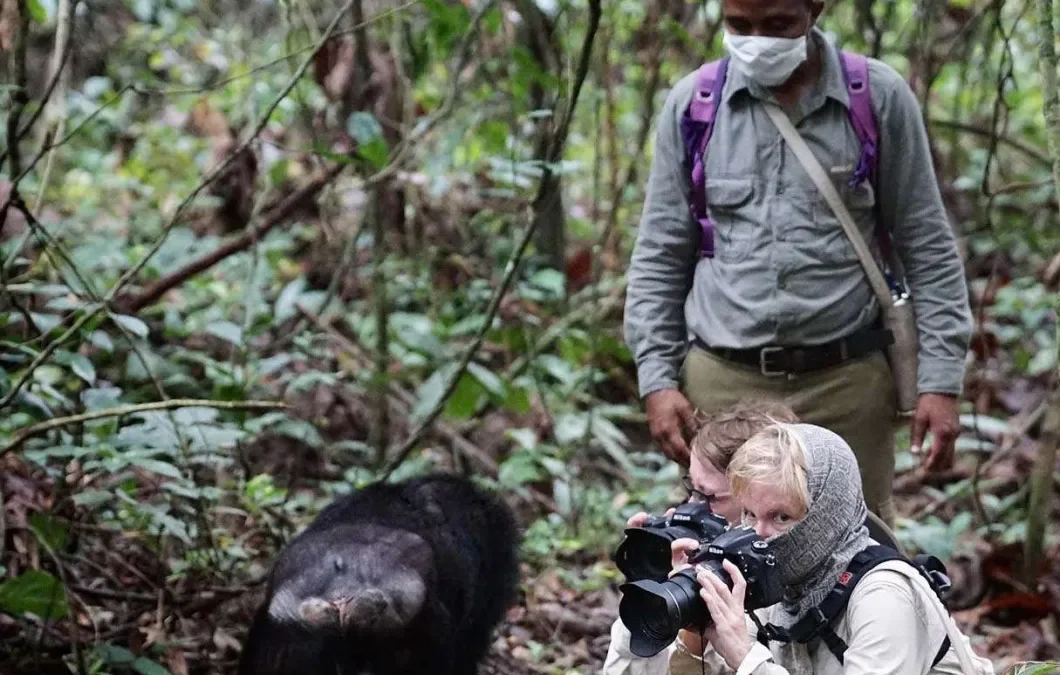
Gorilla Habituation and Chimpanzee Trekking in Uganda. Uganda is one of the only places on earth where a single trip can reasonably include extended time with both mountain gorillas and chimpanzees, our two closest living relatives, in their natural forest habitats. Pairing the Gorilla Habituation Experience in Rushaga with chimpanzee trekking in Kibale National Park gives travelers a genuinely complete primate circuit, combining the deepest gorilla encounter available anywhere in the world with one of Africa’s most reliable chimpanzee sightings. At Pick and Transfer Safaris, we help travelers piece this combination together, and this guide walks through how the two activities fit together logistically and why they complement each other so well.
Two Very Different Primate Encounters
The Gorilla Habituation Experience places visitors alongside a semi-habituated gorilla family in Rushaga for up to four hours, working directly with the researchers and trackers involved in acclimating the group to human presence, a slow, quiet, deliberate encounter. Chimpanzee trekking in Kibale National Park is a different kind of experience entirely: chimpanzees are considerably more active and vocal than gorillas, moving quickly through the canopy in noisy, dynamic troops, and the standard one-hour trek often feels more energetic and unpredictable than the calmer gorilla encounter.
For travelers who want to understand the genuine range of what primate trekking in Uganda offers, doing both activities on the same trip provides a natural contrast: the patient, immersive stillness of a Rushaga forest day against the fast-paced, high-energy character of a Kibale chimp trek.
Where Chimpanzee Trekking Happens in Uganda
Kibale National Park, in western Uganda near Fort Portal, is widely regarded as the country’s premier chimpanzee destination, home to an estimated 1,500 individuals and offering one of the highest sighting success rates on the continent. A standard trekking permit costs 250 US dollars per person for foreign non-residents and grants one hour with a habituated community. For travelers who want an experience closer in spirit to the Gorilla Habituation Experience, Kibale also offers a Chimpanzee Habituation Experience, a full day from dawn to dusk with a semi-habituated group, limited to just four visitors and priced at around 300 US dollars per person, a genuinely comparable structure to Rushaga’s gorilla equivalent at a fraction of the cost.
Chimpanzee trekking is also available at Kyambura Gorge within Queen Elizabeth National Park, at a considerably lower permit cost of around 100 US dollars, though with a smaller resident chimpanzee population and less predictable sightings than Kibale specifically. Other, less commonly visited options include Budongo Forest near Murchison Falls National Park and Kalinzu Forest, both offering permits at intermediate price points, though neither typically features in a Rushaga-and-chimpanzee combination given their distance from Bwindi.
Sequencing the Two Activities
Because Kibale sits roughly 350 kilometers from Bwindi, connected via Queen Elizabeth National Park, most itineraries treat the two primate activities as bookends of a broader circuit rather than a single consecutive block. A common structure has travelers beginning in Kibale for chimpanzee trekking, continuing south through Queen Elizabeth National Park, roughly a three-hour drive from Kibale, for a day or two of savanna game drives and a Kazinga Channel boat cruise, then continuing on to Rushaga via the Ishasha sector, another four-to-six-hour leg, for the Gorilla Habituation Experience.
This sequencing has a practical benefit beyond logistics: chimpanzee trekking, while still active, is considerably less physically demanding than a four-hour Gorilla Habituation Experience day, making it a sensible warm-up activity earlier in the trip rather than something to attempt immediately after the more taxing Rushaga forest day.
Building This from a Kigali Start
For travelers beginning their trip in Rwanda rather than Uganda, this combination requires a bit more route planning, since Kibale sits considerably further from the Cyanika border than Rushaga does. One workable structure has travelers crossing into Uganda via Cyanika directly to Rushaga first for the Gorilla Habituation Experience, then continuing north through Queen Elizabeth National Park to Kibale for chimpanzee trekking, before returning to Kigali or continuing on to Entebbe for departure. This reverses the more common Uganda-first sequencing but keeps the overall route efficient for travelers whose trip is anchored in Rwanda.
Given the added distance and multiple park transitions this combination involves, it generally suits travelers with a week or more available rather than a tightly compressed long weekend.
Permit Booking for Both Activities
Both primate experiences require permits booked well in advance, though the urgency differs considerably between them. The Gorilla Habituation Experience remains the tighter constraint by far, with only eight permits available per day across Rushaga’s two habituating families, and full payment required at booking. Kibale’s standard chimpanzee trekking permits are comparatively more available, with around 56 morning and 36 afternoon permits issued daily, though the Chimpanzee Habituation Experience shares Rushaga’s small-group structure, limited to four visitors per day, and should be booked with similar urgency if that’s the version you’re planning.
Given the gorilla permit’s tighter constraints, it makes sense to confirm your Rushaga date first and build the Kibale leg, standard trek or habituation, around it, rather than the reverse.
Cost Comparison Across the Two Experiences
The financial gap between the two parks is significant and worth understanding before budgeting the trip. A standard Kibale chimpanzee permit at 250 US dollars costs roughly a third of the standard 800 US dollar Bwindi gorilla trek, and considerably less than the Gorilla Habituation Experience’s premium pricing. For travelers balancing cost against experience depth, combining a standard chimpanzee trek with the Gorilla Habituation Experience, rather than the more expensive Chimpanzee Habituation Experience on top of it, is often the more budget-conscious way to get one deep, extended primate encounter alongside a shorter, still rewarding second one.
What Each Trek Demands Physically
Kibale’s chimpanzee trekking generally involves less demanding terrain than Rushaga’s steep forest trails, with treks typically lasting one to four hours depending on the community’s location that day, and much of Kibale’s forest sitting at a gentler, lower elevation than Bwindi’s mountainous terrain. This makes it a genuinely accessible activity even for travelers who find the extended Gorilla Habituation Experience physically taxing, and a sensible complement for less experienced hikers who still want a primate encounter alongside their gorilla trek. Both activities require a minimum age of 15, and moderate fitness is recommended for either, though the Gorilla Habituation Experience’s four-hour duration in Rushaga’s steeper terrain remains the more demanding of the two by a clear margin.
Travelers planning both activities on the same trip should ideally schedule the more demanding Rushaga day with a rest day either side of it, and treat the Kibale leg as the less taxing bookend rather than trying to compress both into back-to-back forest days.
Visa and Border Requirements
Since this combined circuit typically crosses between Rwanda and Uganda, or covers considerable ground within Uganda alone, the East African Tourist Visa tends to be the most convenient option, covering multiple entries across Uganda, Rwanda, and Kenya over 90 days for 100 US dollars through Uganda’s official immigration portal. A standard single-entry Uganda Tourist Visa works well for travelers staying entirely within Uganda for the full circuit. A valid yellow fever vaccination certificate is required for entry into Uganda regardless of route.
Planning Your Combined Gorilla and Chimpanzee Trip with Pick and Transfer Safaris
Combining the Gorilla Habituation Experience with chimpanzee trekking gives travelers a genuinely complete picture of Uganda’s primate wildlife, from the patient intimacy of a semi-habituated gorilla family to the fast-paced energy of a Kibale chimp troop. If you would like help sequencing this circuit, securing both permits in the right order, or arranging transfers between Rushaga, Queen Elizabeth, and Kibale, get in touch through our Contact Us page. We’ll help you build a route that respects the physical demands of each activity while making the most of your time in Uganda.