- LET'S PLAN YOUR SAFARI
- +256 200 921 002
- +256 793 194 703
- info@pickandtransfersafaris.com

Gorilla Habituation Experience in Rushaga
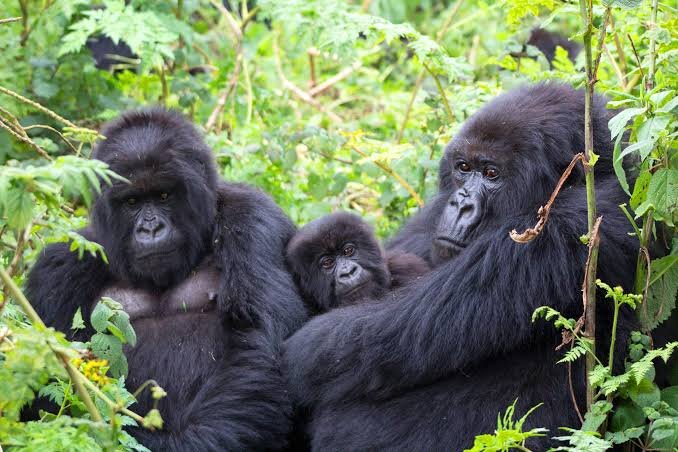
Gorilla Habituation Experience in Rushaga. Most travelers who trek gorillas in Uganda spend a single hour with a habituated family before heading back out of the forest. Fewer know that Bwindi Impenetrable National Park offers a longer, deeper alternative, the Gorilla Habituation Experience, available exclusively in the Rushaga sector in the park’s south. For travelers who want more than a snapshot encounter, this is one of the most distinctive wildlife activities in East Africa. At Pick and Transfer Safaris, we help travelers plan and reach this experience, particularly those routing through Kigali, and this guide explains what it involves, what it costs, and how to prepare.
What the Gorilla Habituation Experience Actually Is
Standard gorilla trekking gives visitors one hour with a fully habituated family, a group of gorillas that has already been fully acclimated to human presence over years of gradual, careful contact. The Gorilla Habituation Experience is different: it places visitors alongside a semi-habituated family, one still in the process of becoming accustomed to people, and extends the time spent with them to up to four hours instead of one.
Rather than simply observing, participants join the park’s researchers, trackers, and rangers as part of the ongoing habituation process itself, learning how gorillas are gradually acclimated to human presence, how their individual behavior and family dynamics are monitored, and what daily habituation work actually looks like on the ground. It’s a genuinely different experience from standard trekking, closer to a working conservation encounter than a wildlife viewing.
Why It Only Happens in Rushaga
According to multiple operators working directly with the Uganda Wildlife Authority, the Gorilla Habituation Experience is only available in Bwindi’s southern sectors, and Rushaga in particular hosts the families currently undergoing this process. This is because habituation is a slow, resource-intensive undertaking, often taking two to three years of consistent daily contact before a gorilla family is considered ready for standard one-hour tourist treks, and the families selected for this process are specifically managed and monitored in Rushaga’s forest blocks.
This is also why the experience cannot be added onto a standard trekking permit booked in Buhoma, Ruhija, or Nkuringo. If a Gorilla Habituation Experience is part of your plan, your entire itinerary needs to be built around Rushaga from the start, including your lodge choice and transfer route.
What a Typical Day Looks Like
Like standard gorilla trekking, the day begins early with a briefing at the park headquarters, typically around 7:00 to 8:00 AM, where rangers and researchers explain the rules, safety protocols, and what to expect. From there, the group treks into the forest with an experienced guide and the research team assigned to the specific semi-habituated family for that day.
Once the gorillas are located, participants spend up to four hours in their presence, considerably longer than the standard one-hour trek, observing feeding, movement, and social behavior while researchers continue their habituation work. Because the gorillas are not yet fully accustomed to people, the experience can feel more unpredictable and immersive than a standard trek, and guides pay close attention to the family’s reactions throughout. The extended time in the forest also means it’s a more physically demanding day overall, so a reasonable level of fitness is worth having going in.
How Many People Can Join
Access is deliberately limited to protect the gorillas from stress during this sensitive stage of habituation. Only four visitors are permitted per group per day, and typically only eight Gorilla Habituation Experience permits are issued daily across the two families currently undergoing habituation in Rushaga. This is considerably smaller than the standard trekking group size of eight people per family, which reflects how much more sensitive semi-habituated gorillas are to human presence compared to fully habituated ones.
What It Costs
Pricing for the Gorilla Habituation Experience has been a moving target through 2026, so it’s worth confirming the current rate directly with the Uganda Wildlife Authority or a licensed tour operator before booking. For most of the current tariff period, the permit has been priced at 1,500 US dollars per person for foreign non-residents, considerably more than the 800 US dollar standard trekking permit, but industry sources indicate the Uganda Wildlife Authority has been reviewing this rate as part of its periodic tariff adjustments, with figures as high as 1,800 US dollars reported for later in 2026 and into 2027. Given this uncertainty, confirming the exact price at the time of booking is essential, since permits are non-refundable once purchased.
Even at the higher end of these figures, the value proposition holds up reasonably well against the alternative: matching four hours with gorillas through Rwanda’s standard trekking permits, priced at 1,500 US dollars per hour-long trek, would require four separate permits across four separate days, a considerably higher total cost and time commitment than a single day in Rushaga.
Booking and Timing
Because only eight permits are available per day, Gorilla Habituation Experience slots are in high demand and should be booked well in advance, generally two to three months ahead at minimum, and considerably earlier for peak season travel in June through September and December through February. Permits are booked by sector rather than by specific gorilla family under current Uganda Wildlife Authority procedures, and full payment is now required at the time of booking rather than through a temporary hold, so travelers should be certain of their dates before committing.
Given how far in advance these permits sell out, it’s worth deciding early in your trip planning whether the Gorilla Habituation Experience is a priority, since it shapes not just your permit booking but your lodge selection and transfer route from the outset.
Reaching Rushaga from Kigali
For travelers starting their trip in Rwanda, Rushaga is one of the more convenient Bwindi sectors to reach, since it sits close to Kisoro town and the Cyanika border crossing, roughly four to five hours by road from Kigali. This makes Rushaga a natural choice not only for the habituation experience itself but for travelers who want to minimize overland travel time before a physically demanding day in the forest. Because Cyanika keeps limited operating hours, it’s worth timing your departure from Kigali carefully to arrive within the crossing’s operating window, and allowing a night’s rest near Rushaga before the habituation day itself rather than attempting the border crossing and forest visit on the same day.
Combining the Experience with a Wider Safari
Because a Gorilla Habituation Experience day is physically longer and more demanding than a standard trek, most travelers pair it with additional rest time or a lighter activity the following day rather than stacking it against another trek immediately. Some extend their Rushaga stay with the Batwa cultural walk, offered in parts of southern Bwindi, or continue on to Mgahinga Gorilla National Park for golden monkey trekking as a lower-intensity primate activity later in the trip. Our Gorilla Safaris collection includes itinerary options that can be adapted to build the Gorilla Habituation Experience into a longer Kigali-based circuit.
Visa and Border Requirements
As with any Kigali-based trip into southwestern Uganda, travel documents should be arranged before departure. Most travelers use the East African Tourist Visa, permitting multiple entries across Uganda, Rwanda, and Kenya over 90 days for 100 US dollars through Uganda’s official immigration portal, particularly useful if your itinerary involves crossing back into Rwanda. A standard single-entry Uganda Tourist Visa works just as well if you won’t be returning to Rwanda. A valid yellow fever vaccination certificate is required for entry into Uganda regardless of visa type.
Planning Your Rushaga Gorilla Habituation Experience with Pick and Transfer Safaris
The Gorilla Habituation Experience is one of Uganda’s most distinctive wildlife encounters, but its limited availability and Rushaga-only location mean it needs to be planned deliberately from the start rather than added on as an afterthought. If you would like help confirming permit availability, choosing the right lodge near Rushaga, or arranging your private transfer from Kigali, get in touch through our Contact Us page. We’ll coordinate your permit timing with your travel dates and make sure your route, border documentation, and accommodation are all aligned well before you set off.