- LET'S PLAN YOUR SAFARI
- +256 200 921 002
- +256 793 194 703
- info@pickandtransfersafaris.com

Gorilla Tracking in Rushaga Starting from Kigali
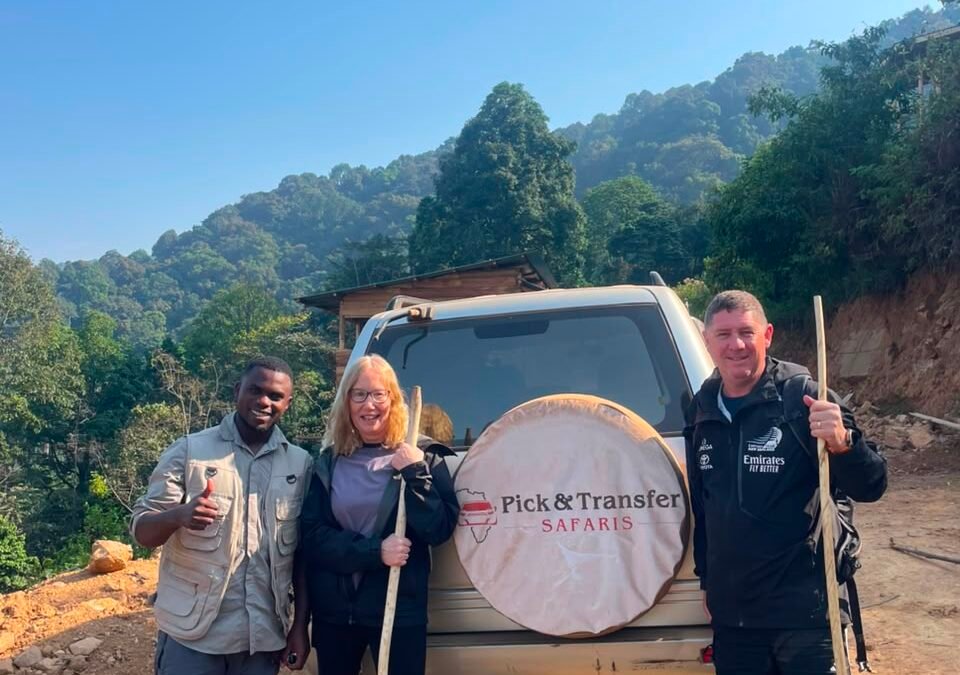
Gorilla Tracking in Rushaga Starting from Kigali. Few wildlife experiences on earth compare to standing a few metres from a wild mountain gorilla family in the misty hills of southern Uganda. For travellers landing in Rwanda, the single best way to have that encounter is gorilla tracking in Rushaga starting from Kigali — a route that trades Uganda’s long 9–11 hour drive from Entebbe for a much shorter, more scenic crossing through the Virunga foothills. At Pick and Transfer Safaris, this is one of the journeys we plan more than any other, and this guide walks you through everything you need to know: where Rushaga is, how to get there from Kigali, what a trekking day looks like, permit costs, the best time to go, where to sleep, and how to turn a single gorilla trek into a full East African adventure.
Whether you are a first-time safari traveller with three days to spare or a seasoned wildlife photographer chasing your fourth gorilla encounter, Rushaga sector rewards the effort of getting there. It has the largest number of habituated gorilla families of any sector in Bwindi Impenetrable Forest National Park, some of the most dramatic ridge-top scenery in the region, and — thanks to its proximity to Rwanda — it is the sector every Kigali-based traveller should be looking at first.
This guide draws on years of running exactly this route, and it’s designed to answer the questions we hear most from travellers planning their first gorilla trek: how the border crossing actually works, what it costs, how physically demanding the trek really is, when to go, where to stay, and how to fold a single day in the forest into a fuller East African itinerary. For a deeper technical breakdown of Bwindi’s four sectors, permit structure, and the park’s conservation story, our colleagues at Gorilla Tracking Tours maintain one of the more detailed reference guides available online, and we’ll point to it throughout where it adds useful depth.
Why Start Your Gorilla Trekking Safari from Kigali, Not Entebbe
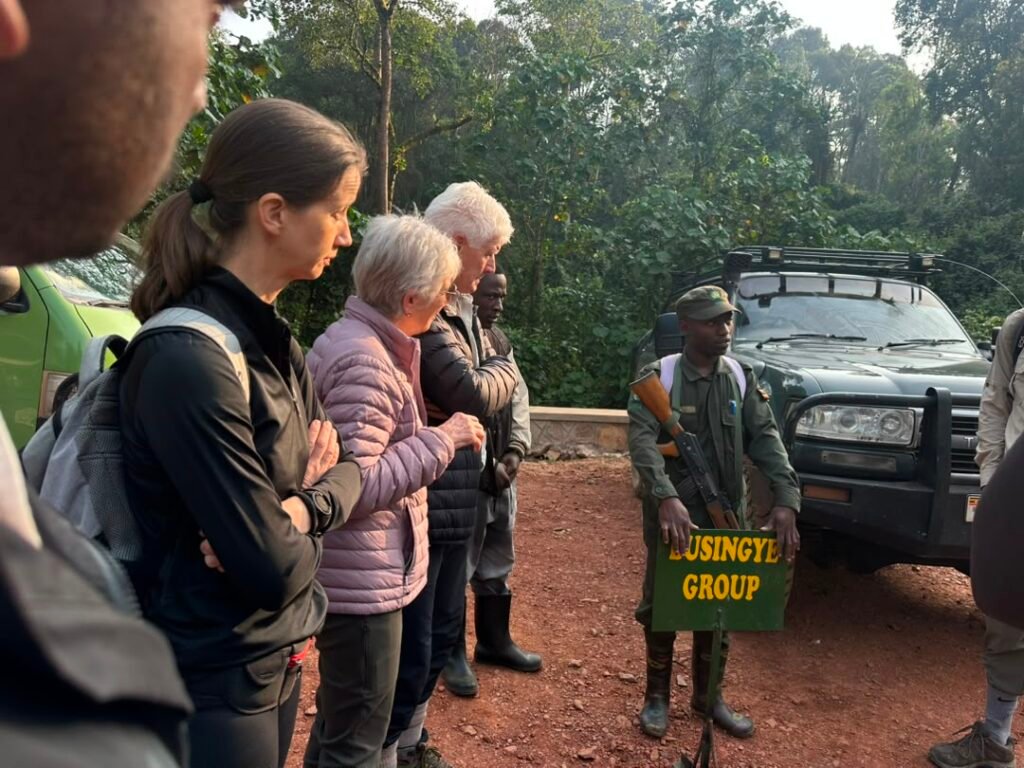
Gorilla Tracking in Rushaga Starting from Kigali: An Unforgettable Experience
Most people assume that gorilla trekking in Uganda has to begin in Entebbe. It doesn’t have to, and for a large share of travellers it shouldn’t. Bwindi Impenetrable Forest National Park sits in Uganda’s extreme southwest, tucked against the border with Rwanda and the Democratic Republic of Congo. Kigali International Airport is, in practice, closer to Bwindi’s southern sectors than Uganda’s own capital is.
Flying into Kigali and driving to Rushaga rather than flying into Entebbe cuts your travel day roughly in half. Instead of an 9–11 hour haul across the length of Uganda, you cover a much shorter distance through Rwanda’s Northern Province and across the Cyanika border post into Kisoro district. That difference is the entire reason Rushaga has become the preferred trailhead for travellers based in Kigali, and it’s why we built our short Gorilla Safaris Starting from Kigali collection specifically around this route.
There’s a second advantage too. Gorilla permits in Rwanda’s Volcanoes National Park cost USD 1,500 per person, while a standard Uganda gorilla permit for Bwindi costs USD 800. Many travellers who are already flying into Kigali for a Rwanda safari choose to cross into Uganda for a day or two specifically to track gorillas in Rushaga at a lower cost, without sacrificing the ease of a Kigali-based itinerary. It is, quite simply, the most efficient and most affordable way to combine “I flew into Rwanda” with “I want to see mountain gorillas.”
There’s also a practical airport argument that rarely gets mentioned. Kigali International Airport is a smaller, faster, and generally more relaxed arrival experience than Entebbe, with shorter immigration queues and a more compact terminal. Combined with the shorter onward drive, most travellers who fly into Kigali specifically for gorilla trekking find they lose far less of their trip to transit than they would flying into Uganda directly — a meaningful difference on a short itinerary where every day counts. It’s also worth noting that Kigali sits at a comfortable altitude and mild climate year-round, so travellers arriving after a long-haul flight tend to acclimatise faster before tackling Bwindi’s steep, high-altitude trails a few days later.
Where Is Rushaga Sector and Why It’s Uganda’s Top Gorilla Trekking Destination
Rushaga is one of four official gorilla trekking sectors inside Bwindi Impenetrable Forest National Park, alongside Buhoma in the north, Ruhija in the east, and Nkuringo to the west. Of the four, Rushaga sits furthest south, perched on a ridge in Kisoro district with sweeping views over terraced hillsides and, on a clear day, the volcanic cones of the Virunga range in the distance.
What sets Rushaga apart is simple: it has more habituated gorilla families available for daily trekking than any other sector in Bwindi, and it is the only sector in Uganda offering the extended Gorilla Habituation Experience. Bwindi itself protects 321 square kilometres of ancient montane and lowland rainforest, home to nearly half the world’s remaining mountain gorillas, more than 350 bird species, and well over 120 mammal species. Within that vast forest, Rushaga’s cluster of gorilla families sits close enough to the trailhead that trek times here are often shorter and more predictable than in some of Bwindi’s more remote sectors.
Just as importantly for Kigali-based travellers, Rushaga is the closest sector to Rwanda. That single fact — proximity — is what has quietly turned Rushaga into Uganda’s busiest and most in-demand gorilla trekking destination over the last several years, and it’s why our Bwindi Impenetrable National Park destination page leads with Rushaga for travellers coming from Rwanda.
The sector sits within Kisoro district, a part of Uganda defined by volcanic soil, terraced hillsides, and a cooler climate than much of the rest of the country thanks to its elevation. The Rushaga trailhead itself functions as the headquarters for the sector — the gathering point each morning where rangers, trackers, and porters assemble before groups head into the forest. Unlike some of Bwindi’s more remote corners, Rushaga’s location on a ridge means the surrounding landscape is visible and dramatic even before you set foot on a trail: layered hills, patchwork farmland, and the forest itself rising up behind the settlement like a green wall. Bwindi has stood largely unchanged for more than 25,000 years, which is part of what makes the encounter feel less like a wildlife sighting and more like stepping into a genuinely ancient ecosystem.
Kigali to Rushaga: The Complete Route and Border Crossing Guide
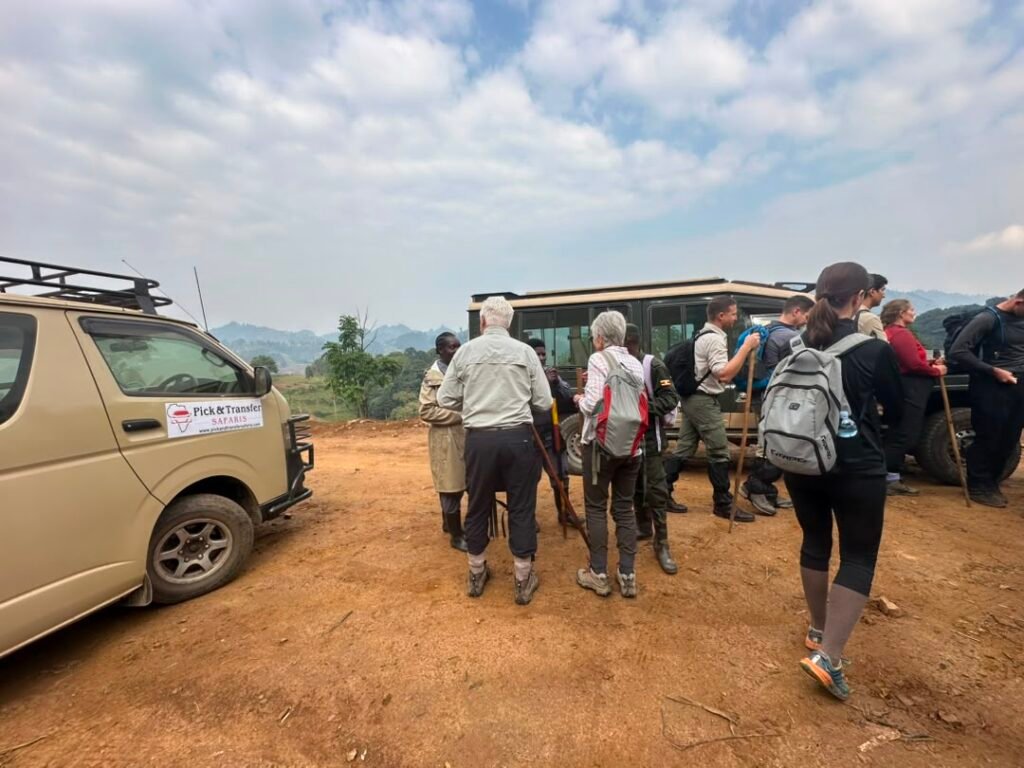
The overland journey from Kigali to Rushaga follows one of the most scenic road routes in the Great Lakes region. From Kigali, the road heads north-west through Rwanda’s Northern Province, past rolling tea plantations and terraced hillsides, toward the town of Musanze — the gateway to Rwanda’s own Volcanoes National Park. From Musanze, the road continues toward the Cyanika border post, the official crossing point between Rwanda and Uganda’s Kisoro district.
Cyanika is a small, relatively quiet border compared to the larger Gatuna/Katuna crossing further north, and it is the crossing every Rushaga-bound traveller should use. Formalities are usually straightforward: an exit stamp on the Rwandan side, a short walk or drive across the frontier, and an entry stamp into Uganda. Most nationalities can obtain a Uganda visa on arrival or should arrange an East Africa Tourist Visa in advance, which conveniently covers travel between Uganda, Rwanda, and Kenya on a single visa.
Once through Cyanika, it’s a short further drive into Kisoro town and up into the hills toward Rushaga. The final stretch climbs steadily, with switchback roads offering views back over the valley and, weather permitting, the volcanoes fading into the distance behind you. This is a route best done with an experienced local driver-guide who knows the border procedures, the road conditions, and the timing needed to reach Rushaga’s lodges comfortably before dark — which is exactly the kind of transfer we handle at Pick and Transfer Safaris.
How Long Does It Take to Get to Rushaga from Kigali
Plan for approximately four to five hours of driving time between Kigali and the Rushaga trailhead, depending on road conditions, border processing time, and your exact lodge location. This makes Rushaga easily reachable in a single morning, which is precisely why so many short itineraries — including our own 1 Day Uganda Gorilla Safari Starting from Kigali — are built around it.
For comparison, a self-drive or private transfer from Entebbe to Bwindi covers roughly 530 kilometres and takes eight to nine hours via Mbarara and Kabale. The Kigali route is dramatically shorter, which is why we always recommend it to clients who are already going to be in Rwanda, or who are simply looking for the fastest, least exhausting way to reach a gorilla family.
If you’d rather not spend a full day on the road at all, chartered flights are also an option. Small aircraft connect Entebbe to Kisoro airstrip, which serves both Rushaga and Nkuringo sectors, in around an hour — useful if you’re combining a Uganda-wide itinerary with a short Rushaga add-on rather than approaching purely from Kigali.
One Day, Two Days, or Longer: Choosing the Right Itinerary Length
How much time you dedicate to Rushaga depends on your travel style and how much of the drive you want to do in a single stretch. We offer a few different structures for exactly this reason.
Our 1 Day Uganda Gorilla Safari Starting from Kigali is built for travellers with a tight schedule: an early departure from Kigali, the border crossing, the trek itself, and a return to Kigali the same night. It is a long day, but it is entirely achievable and extremely popular with travellers who have limited time in the region.
For a more comfortable pace, our 2 Days Uganda Gorilla Tour Starting from Kigali breaks the journey into two more relaxed days, with an overnight near the park so you’re rested and ready before the trek rather than arriving at the trailhead straight off a long drive. This is the option we recommend most often, since it removes the fatigue factor entirely and leaves room to actually enjoy the Kisoro landscape along the way.
Travellers wanting to see more of the region can extend further still with our 3 Days Uganda Gorilla Safari from Rwanda or the 5 Days Uganda Gorilla and Chimps Safari Starting from Rwanda, which pairs Rushaga’s gorillas with chimpanzee tracking or additional wildlife viewing before returning to Kigali.
Gorilla Families You Can Track in Rushaga Sector
Rushaga’s biggest single advantage over the other three Bwindi sectors is choice. There are more habituated gorilla families here than anywhere else in the park, which means a higher volume of daily permits, more flexibility if a particular trek is fully booked, and a genuinely wide variety of family dynamics to encounter.
Among the habituated groups regularly trekked from the Rushaga trailhead are the Busingye family, led by a silverback whose name translates to “peace” and who is known for having expanded his group by drawing in members from rival gorillas; the Nshongi family, historically one of the largest groups ever recorded in Bwindi; the Mishaya family, known for lively and active behaviour that often makes for memorable sightings; the Kahungye family; the Bweza family; the Bikingi family; the Rwigi family; and the Mucunguzi family, formed after a breakaway silverback split from an existing group — an interesting case study in gorilla social dynamics for anyone interested in primate behaviour.
Family assignments are made by park rangers on the morning of your trek, based on trekker fitness, group size, and current gorilla locations, so you won’t know in advance exactly which family you’ll meet. What you can count on is that every one of Rushaga’s families is fully habituated to human presence, meaning the encounter is calm, safe, and remarkably close — usually within seven metres under normal circumstances.
It’s worth understanding what “habituation” actually means, because it’s the entire foundation of a safe, ethical gorilla trekking industry. Wild mountain gorilla families are naturally wary of humans, and the habituation process — gradually and patiently exposing a family to the quiet, non-threatening presence of trackers and researchers over a period of roughly two to three years — is what eventually allows tourists to approach at close range without the encounter causing the family distress. Every family currently open to trekking in Rushaga has been through this process, monitored continuously by dedicated teams who track their health, movements, and social dynamics daily, permit visits or not. In a very real sense, when you trek in Rushaga you’re stepping into an ongoing, decades-long relationship between these specific gorilla families and the humans who study and protect them, rather than a one-off tourist encounter with an unfamiliar wild animal.
Group sizes within Rushaga’s families vary considerably, from smaller units of five or six individuals to some of the largest gorilla groups recorded anywhere in Bwindi, occasionally exceeding twenty members including multiple silverbacks, adult females, juveniles, and infants. This variation is part of what makes repeat visits to Rushaga worthwhile for enthusiasts — no two families, and often no two days with the same family, offer quite the same dynamic.
Gorilla Permit Costs and How to Book
A standard gorilla trekking permit for Bwindi Impenetrable Forest National Park, including the Rushaga sector, currently costs USD 800 per person for foreign non-residents, USD 700 for foreign residents, and UGX 300,000 for East African Community citizens. This fee is set and collected by the Uganda Wildlife Authority and covers park entry, ranger and tracker guidance, and a guaranteed hour with a habituated gorilla family once located.
Permits are limited — only eight visitors are allowed per gorilla family per day — which means Rushaga’s popularity, and its higher number of families, translates directly into more available permits on any given date compared with smaller sectors. Even so, booking three months or more in advance is strongly recommended, particularly for travel during the June–September and December–February peak seasons.
At Pick and Transfer Safaris, we handle permit booking as part of every Rushaga itinerary, securing your date with the Uganda Wildlife Authority, coordinating the paperwork, and confirming everything before you travel — so the only thing you need to plan is your flight into Kigali.
Permits are non-transferable and tied to the specific date and sector booked, so changes close to your travel date can be difficult or impossible depending on availability. Payment is typically required in full to confirm and hold a permit, given the limited daily allocation, and cancellation policies vary depending on how far in advance you cancel. We always walk clients through these terms clearly before booking, along with sensible travel insurance options that cover trip interruption, since weather, flight delays, or unexpected circumstances can occasionally affect timing on a tightly scheduled itinerary. Group bookings for families or friends travelling together are worth arranging as early as possible too, since the Uganda Wildlife Authority allocates permits per family group rather than guaranteeing that a party can be kept together if booked separately closer to the date.
The Gorilla Habituation Experience in Rushaga
Rushaga is the only sector in Bwindi that offers the Gorilla Habituation Experience, and it’s worth understanding the difference before you book, because it changes the entire nature of your day in the forest.
A standard trek permits a group of up to eight visitors a strict sixty minutes with a fully habituated gorilla family, once the trackers have located them. The Habituation Experience, by contrast, limits each group to just four people and extends the visit to as much as four hours, spent alongside the same researchers and trackers who are still in the process of acclimatising a semi-habituated family to human presence. Rather than a fixed hour, you follow the family’s natural rhythm — resting when they rest, moving when they move — while trackers explain the behavioural cues, feeding patterns, and social hierarchy unfolding in front of you.
The trade-off is cost: the Habituation Experience is priced at USD 1,500 per person, nearly double the standard permit. For photographers, researchers, repeat visitors, or anyone who wants a genuinely immersive four-hour encounter rather than a fast-paced sixty minutes, it is widely considered worth the difference. For most first-time trekkers, a standard permit already delivers an unforgettable, deeply personal encounter — the Habituation Experience is simply the deeper option for those who want it.
What a Day of Gorilla Tracking in Rushaga Looks Like
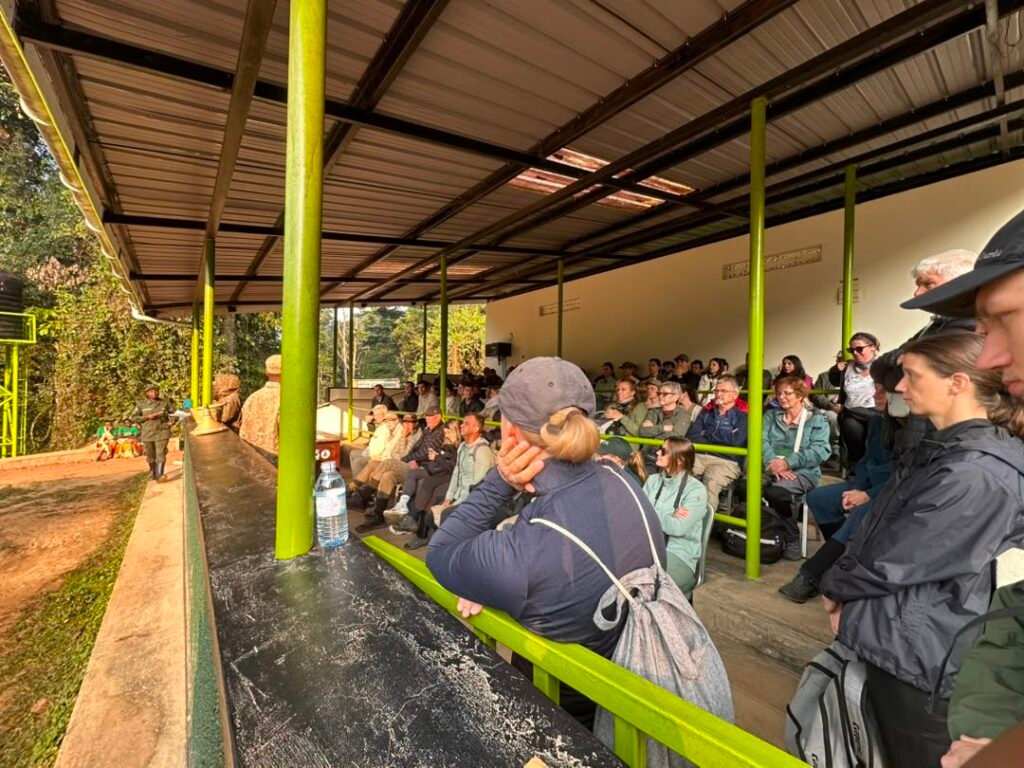
Trekking days in Rushaga begin early. You’ll typically leave your lodge before sunrise to reach the Rushaga park headquarters for registration, usually around 7:30am. Here, rangers divide the day’s trekkers into groups of up to eight, assign each group to a specific gorilla family based on that morning’s tracker reports, and deliver a briefing on gorilla etiquette — how to behave if a gorilla approaches, why flash photography is prohibited, the minimum seven-metre distance rule, and basic hygiene precautions taken to protect the gorillas from human-borne illness, since they share around 98% of our DNA and are susceptible to many of the same diseases.
From there, an armed ranger and experienced trackers lead your small group into the forest. Trek duration varies enormously depending on where the assigned family was last seen — sometimes as little as thirty minutes, sometimes as long as five or six hours through Rushaga’s characteristically steep, hilly terrain. Porters are available to hire at the trailhead and are genuinely worth the modest fee, both for the practical help on Bwindi’s slopes and because it directly supports the local community.
Once trackers locate the family, you’ll leave heavier bags behind and approach quietly with your guide, spending a full hour observing the gorillas at close range: watching silverbacks assert quiet authority, juveniles play in the undergrowth, and mothers tend to infants just metres away. It is, without exaggeration, one of the most emotionally powerful wildlife encounters available anywhere in the world. Afterward, the same trackers guide you back out of the forest, and you’re usually back at your lodge or vehicle by early-to-mid afternoon.
Trek difficulty in Rushaga tends to run slightly steeper than in some other sectors, owing to the hilly terrain that gives the sector its dramatic ridge-top views in the first place. That said, difficulty is highly variable day to day and family to family — some groups stay close to the trailhead in relatively gentle terrain, while others may have moved deep into a valley overnight, requiring a longer and steeper approach. Trackers are typically dispatched into the forest before dawn specifically to locate each family’s overnight nesting site, radioing updates back to the rangers at headquarters so your guide has a reasonably accurate starting picture before your group even sets off. This system is a large part of why Rushaga treks, despite the terrain, tend to be efficient — the guesswork has usually already been done by the time you start walking.
Along the way, an experienced guide will also point out details easy to miss on a first visit: gorilla nesting sites from previous nights, feeding trails through wild celery and bamboo, and the calls of forest birds overhead. Even setting the gorillas aside entirely, the walk through Bwindi’s ancient forest interior — dense, layered, and alive with sound — is a memorable experience in its own right.
Best Time to Visit Rushaga for Gorilla Tracking
Rushaga can be trekked year-round, and gorilla families are present in the forest in every season, but the timing of your visit shapes the experience in a few practical ways.
The dry seasons, running roughly June to September and December to February, bring firmer, less slippery trails, which makes the trek physically easier on Bwindi’s steep hillsides, along with clearer skies for photography. These are also the busiest months, with higher demand for both permits and lodge availability, so early booking matters even more during this window.
The wetter months, March to May and October to November, bring a different but equally compelling set of advantages. The forest is at its most lush and vividly green, migratory birds arrive in force for anyone combining gorilla tracking with birding, trails are quieter, permits are easier to secure on shorter notice, and lodge rates across Rushaga typically drop. Rain showers tend to be short and localised rather than constant, and many experienced trekkers actually prefer the atmosphere of a misty, dripping rainforest for the authenticity it adds to the encounter.
For photographers specifically, April and May often deliver the most dramatic light — deep greens, drifting mist, and soft diffused sun filtering through the canopy — while June through September offers brighter, more open conditions for capturing gorillas in clearer forest settings.
There is no genuinely bad month to trek in Rushaga, which is one of the underappreciated advantages of gorilla tourism compared with, say, a migration-dependent safari elsewhere in Africa. The gorillas are resident year-round, not seasonal visitors, so the decision really comes down to your personal priorities: firmer trails and social buzz in peak season, or a quieter, greener, more atmospheric forest with easier last-minute bookings outside of it. Many of our most satisfied clients have trekked in what’s technically the “wet” season and come away insisting it was the more beautiful, more memorable version of the experience.
Where to Stay Near Rushaga Sector
Accommodation near Rushaga has expanded considerably in recent years, now spanning the full range from simple budget guesthouses to genuinely luxurious forest lodges, most positioned within a short drive of the trailhead so you’re not adding unnecessary travel time to an already early morning.
Budget and mid-range travellers will find comfortable guesthouses and community-run lodges scattered around Rushaga and nearby Kisoro town, offering warm hospitality, simple but hearty meals, and easy access to the trailhead. Mid-range properties typically add private cottages, better dining, and views over the surrounding hills. At the top end, luxury lodges bordering the park offer panoramic forest views, open-air decks, guides who can identify individual gorillas and families by name, and full-service comfort after a demanding day on the trails — with rates typically ranging from around USD 400 to USD 1,200 per person per night depending on exclusivity and season.
We generally recommend spending at least one, and ideally two, nights near Rushaga rather than attempting to trek and return to Kigali the same day where fatigue can be a real factor. If your schedule allows more flexibility, our 2 Days Uganda Gorilla Tour Starting from Kigali and longer itineraries are built specifically to allow for a proper night’s rest before and after the trek.
Well-known properties in and around the sector include Gorilla Safari Lodge, sitting just minutes from the Rushaga trailhead itself; Rushaga Gorilla Havens Lodge and Rushaga Gorilla Camp, both offering solid mid-range comfort; and Four Gorillas Lodge and Gorilla Valley Lodge for travellers wanting a step up in exclusivity and setting. Most of these properties are built specifically to serve the trailhead, with staff experienced in early trekking departures, packed breakfasts, and hot water bottles waiting for you after a long day in the forest. For a broader look at how lodge pricing and positioning works across all four Bwindi sectors, the accommodation breakdown on Gorilla Tracking Tours’ Bwindi guide is a useful cross-reference alongside our own recommendations.
What to Pack for Gorilla Tracking in Rushaga
Bwindi’s name is not a decoration — the “Impenetrable” Forest earns it, and Rushaga’s terrain in particular is steep, often muddy, and physically demanding regardless of season. Packing correctly makes a real difference to how much you enjoy the day.
Sturdy, well broken-in waterproof hiking boots with good ankle support are essential, as are long trousers and a long-sleeved shirt to protect against stinging nettles, thorny undergrowth, and biting insects. A lightweight rain jacket is worth carrying even in the dry season, since mountain weather changes quickly. Gardening-style gloves help when grabbing vines and branches on steep sections, and a wide-brimmed hat plus sunscreen and insect repellent round out the essentials.
Bring more drinking water than you think you’ll need, energy snacks for longer treks, and a daypack to carry it all — ideally handed to a porter rather than carried yourself, both for comfort and to support the local trekking economy. A good camera without flash is essential for capturing the encounter (flash photography is strictly prohibited, as it can startle and distress the gorillas), along with a spare battery, since treks can run long. Binoculars are a worthwhile addition for the birding and forest wildlife along the trail itself.
Rushaga vs Other Bwindi Sectors: Buhoma, Ruhija, and Nkuringo
Understanding how Rushaga compares to Bwindi’s other three sectors helps explain why it is so consistently recommended for Kigali-based travellers.
Buhoma, in the north of the park, is Bwindi’s original and most developed sector, home to the Mubare family — Uganda’s first ever habituated gorilla group — along with well-established trails and the widest range of long-standing lodges. It’s an excellent choice for travellers approaching from Entebbe or Kampala, but it sits considerably further from the Rwandan border than Rushaga does.
Ruhija, to the east, offers Bwindi’s highest-altitude forest and is widely regarded as the park’s best birding sector, including the renowned Mubwindi Swamp trail. Nkuringo, to the west, is famous for the most dramatic terrain and the most physically demanding treks in the park, rewarded with sweeping views over the Virunga volcanoes — it shares Rushaga’s southern location and proximity to Rwanda, and is sometimes trekked as a slightly wilder alternative.
Rushaga distinguishes itself from all three with its sheer number of habituated families — more than any other sector — its exclusive access to the Gorilla Habituation Experience, and, decisively for Kigali-based travellers, its position as the closest trailhead to the Rwandan border via Cyanika. For anyone weighing which sector to choose starting from Kigali, Rushaga is very often the clear and practical answer.
Combining Rushaga Gorilla Tracking with Other Experiences
One of the advantages of approaching Bwindi through Kigali is how easily a Rushaga gorilla trek folds into a broader regional itinerary. Rwanda’s own Volcanoes National Park, home to the mountain gorillas made famous by Dian Fossey and the playful golden monkeys of the Virunga range, sits just a scenic drive from Kigali in the opposite direction — meaning a single trip can realistically include gorilla encounters in both countries, each with its own character and terrain.
Travellers with a little more time often add Mgahinga Gorilla National Park, Uganda’s smallest national park and home to both mountain gorillas and golden monkeys within the same dramatic Virunga backdrop, or continue on to Uganda’s Queen Elizabeth National Park for tree-climbing lions and boat safaris along the Kazinga Channel. Closer to home, Kigali City itself is well worth a day either side of your gorilla trek — widely regarded as one of Africa’s cleanest and most welcoming capitals, with the Kigali Genocide Memorial, vibrant craft markets, and a fast-growing food scene.
For travellers who want a structured way to combine several of these pieces, our 3 Days Rwanda Gorilla Tracking and Cultural Tour is built around exactly this kind of layered itinerary, pairing gorilla tracking with cultural encounters closer to Kigali. If a two-country gorilla combination appeals to you, the 2 Days Volcanoes Gorilla Trek from Kigali is a useful reference point for how a Rwanda-side trek is typically structured alongside a Rushaga itinerary.
Further afield, Uganda’s Queen Elizabeth National Park is a natural extension for travellers with a week or more to spend, known for its tree-climbing lions in the Ishasha sector and boat cruises along the wildlife-rich Kazinga Channel. It sits close enough to Bwindi that a Rushaga gorilla trek and a Queen Elizabeth game drive can realistically be combined in a single loop before returning to Kigali, giving you both a primate encounter and a classic savannah safari on one trip.
A Sample Two-Day Rushaga Itinerary from Kigali
To make the logistics concrete, here’s roughly how our most popular two-day itinerary unfolds in practice. On Day One, you’re collected from your Kigali hotel or the airport in the mid-morning, giving you time to settle in the night before rather than rushing straight off a long-haul flight. The drive heads north-west through Musanze toward the Cyanika border, with a stop along the way to stretch, take photos of the terraced hillsides, and clear customs and immigration. By late afternoon, you arrive at your lodge near Rushaga, with the rest of the day free to rest, enjoy the views, and prepare gear for the following morning.
Day Two begins early, typically before 6am, with breakfast and a short transfer to Rushaga park headquarters for the 7:30am registration and briefing. The trek itself follows, lasting anywhere from one to several hours depending on your assigned family’s location, followed by the hour of observation once located and the return hike out of the forest. After a late lunch back at the lodge, the afternoon is spent on the return drive to Kigali, arriving back in the city by early evening — tired, muddy, and, almost universally, already talking about when to come back.
This same structure scales easily. Add a day either side for the Batwa cultural experience or a visit to Lake Bunyonyi en route, and you have the basis of our 3 Days Uganda Gorilla Safari from Rwanda; extend it further with chimpanzee tracking and you’re looking at our 5 Days Uganda Gorilla and Chimps Safari Starting from Rwanda.
Our Gorilla Safari Packages Starting from Kigali
We’ve designed a full range of itineraries around the Kigali-to-Rushaga route, so travellers can choose based on time available rather than trying to force a single template to fit every schedule.
For the tightest schedules, the 1 Day Uganda Gorilla Safari Starting from Kigali delivers the full trekking experience in a single very long but genuinely achievable day. The 2 Days Uganda Gorilla Tour Starting from Kigali adds an overnight near the park, removing the fatigue of a same-day return and giving you a more relaxed pace. The 3 Days Uganda Gorilla Safari from Rwanda builds in additional time to enjoy the Kisoro region and the drive itself, while the 5 Days Uganda Gorilla and Chimps Safari Starting from Rwanda pairs your gorilla trek with chimpanzee tracking for a fuller primate-focused safari.
For travellers wanting the broadest possible view of what the region offers, our full Gorilla Safaris collection lists every Kigali-starting itinerary alongside our Uganda and Rwanda primate packages, and our Destinations page maps out how Bwindi, Mgahinga, Volcanoes National Park, and Kigali City fit together for a longer regional trip.
Tips for a Successful Gorilla Trek in Rushaga
A handful of practical habits make a real difference to how the day unfolds. Book early — ideally three months or more ahead — since Rushaga’s popularity as the Kigali-friendly sector means permits move quickly during peak months. Get an honest sense of your fitness level and communicate it to your guide before the trek begins; rangers use this information to assign you to a gorilla family whose current location matches what you can comfortably manage, so there’s no benefit to overstating your fitness.
Hire a porter. It is inexpensive, genuinely useful on Rushaga’s steep trails, and puts money directly into the local community that lives alongside the park. Keep your voice low and movements slow once you’re near the gorillas — sudden noise or motion is the one thing that can disrupt an otherwise calm encounter. Maintain the required seven-metre distance at all times, and if you’re feeling unwell, especially with any respiratory symptoms, tell your guide in advance rather than on the trail, since gorillas are highly susceptible to human illness.
Finally, build in a buffer day either side of the trek where possible. Weather, gorilla movement, and border processing can all shift timing slightly, and a same-day dash back to Kigali immediately after a long trek is far more enjoyable with a little breathing room built in.
A few smaller details are easy to overlook but genuinely useful. Bring a change of clothes to leave in the vehicle, since trekkers often return muddy regardless of season. Carry small denomination US dollars for tipping guides, trackers, and porters — a customary and appreciated part of the local trekking economy, though never obligatory beyond your comfort level. And if you wear glasses or use a specific camera setup, do a short practice walk with your full daypack before the trip; Bwindi’s trails are not the place to discover an uncomfortable strap or an awkward lens change for the first time.
Responsible and Sustainable Tourism in Rushaga
Every gorilla permit purchased in Rushaga does real conservation work. Revenue from Uganda Wildlife Authority permits funds ranger patrols, anti-poaching efforts, and community development programmes in the villages bordering the park — the same communities whose former hunting and farming pressure on the forest has, over decades, been steadily replaced by tourism-based livelihoods as guides, trackers, porters, and lodge staff.
At Pick and Transfer Safaris, we prioritise partners who take this seriously: lodges and operators who employ locally, support Batwa community initiatives, and treat conservation as a genuine operating principle rather than a marketing line. Choosing to trek in Rushaga, rather than simply viewing gorillas from a distance in a sanctuary setting, is one of the most direct ways a traveller can contribute to the survival of a species that, within living memory, was on a steep path toward extinction. Mountain gorilla numbers have climbed steadily in recent decades precisely because trekking tourism made their survival economically valuable to the people who share their forest — a rare conservation success story that every visitor becomes part of.
Photography Tips for a Rushaga Gorilla Encounter
Photographing gorillas in Rushaga’s forest interior is a genuine technical challenge, and a little preparation goes a long way toward coming home with images that do the encounter justice. Bwindi’s canopy is dense, so light levels drop fast even at midday — a camera capable of shooting comfortably at higher ISOs without excessive noise will serve you far better than one that performs best only in bright, open light. A fast lens in the 70–200mm range is a reliable general-purpose choice, giving you the reach to fill the frame from the required seven-metre distance without needing to move closer than permitted.
Flash photography is strictly prohibited, both because it can startle the gorillas and because repeated close-range flash exposure is genuinely harmful to their eyes, so plan your settings around available light rather than counting on artificial light to compensate. Shoot in bursts during moments of activity — feeding, play between juveniles, a silverback shifting position — since gorilla behaviour changes quickly and the best expressions often last only a second or two. A rain cover for your gear is worth carrying regardless of season, given how quickly Bwindi’s weather can shift, and a spare battery and memory card are essential since treks can run several hours longer than expected.
Meeting the Batwa: Cultural Encounters Near Rushaga
The forests of southwestern Uganda were, for centuries, home to the Batwa people, traditionally forest-dwelling hunter-gatherers whose way of life was closely tied to Bwindi’s ecosystem long before it became a national park. When Bwindi was gazetted as a protected area, the Batwa were relocated outside the forest boundary, and many communities near Rushaga and the park’s other sectors now offer guided cultural visits as both a livelihood and a way of preserving traditional knowledge for future generations.
A Batwa cultural encounter typically includes traditional dance and music performances, demonstrations of forest skills such as fire-making and honey-gathering, and storytelling from elders who recall life inside the forest before the park’s creation. For many travellers, adding a half-day cultural visit either before or after a gorilla trek rounds out the experience in Rushaga considerably, offering context for the human history layered beneath the wildlife story that draws most visitors here in the first place. It also directs tourism income straight into a community with a genuinely direct and personal connection to the land the gorillas now call home.
Health and Safety Guidelines for Gorilla Trekking in Rushaga
Because mountain gorillas share close to 98% of human DNA, they are highly susceptible to many of the same illnesses we carry, and a handful of health protocols exist specifically to protect them. Anyone showing symptoms of a cold, flu, or other communicable illness on the morning of a trek will be asked to sit that day out — a precaution taken seriously by the Uganda Wildlife Authority, since even a mild human cold can be dangerous to a gorilla family with no natural immunity to it. If you’re feeling unwell in the days before your trek, it’s worth mentioning to your guide as early as possible so alternative arrangements can be discussed.
On the trekking side, a walking stick (provided free at the trailhead) helps considerably on Rushaga’s steep, sometimes slippery sections, and staying close to your assigned ranger and tracker group is both a safety measure and a park regulation. Rangers carry rifles as a precaution against forest elephants and other wildlife, not the gorillas themselves, who pose essentially no threat to a calm, quiet, correctly-behaved trekking group. Basic travel insurance covering medical evacuation is strongly recommended for any Bwindi trek, given the remote setting, and is something we always confirm with clients before departure.
Frequently Asked Questions About Gorilla Tracking in Rushaga from Kigali
Is it cheaper to trek gorillas in Rushaga than in Rwanda’s Volcanoes National Park? Yes. A standard Uganda gorilla permit for Rushaga costs USD 800 per person, compared with USD 1,500 for a Rwanda gorilla permit, which is a major reason so many Kigali-based travellers cross the border specifically for Rushaga.
How long is the drive from Kigali to Rushaga? Approximately four to five hours, via Musanze and the Cyanika border crossing into Uganda’s Kisoro district.
Do I need a visa to cross from Rwanda into Uganda for gorilla trekking? Most travellers use either a Uganda visa on arrival or an East Africa Tourist Visa, which covers travel between Uganda, Rwanda, and Kenya. Requirements vary by nationality, so it’s worth checking current rules before you travel.
What is the minimum age for gorilla trekking in Rushaga? Fifteen years old. This age limit applies across all of Bwindi’s sectors and is set by the Uganda Wildlife Authority.
How fit do I need to be for a Rushaga gorilla trek? A reasonable level of fitness is recommended, since Bwindi’s terrain is steep and treks can range from thirty minutes to several hours depending on where the gorilla family is located that day. Porters are available and worth hiring for extra support.
Can I do a same-day gorilla trek from Kigali and return the same night? Yes, this is possible via our 1 Day Uganda Gorilla Safari Starting from Kigali, though it is a long day. For a more relaxed pace, a two-day itinerary with an overnight near the park is generally more comfortable.
What’s the difference between standard trekking and the Gorilla Habituation Experience? Standard trekking allows groups of up to eight people a strict sixty minutes with a fully habituated family for USD 800. The Habituation Experience, available only in Rushaga, limits groups to four people and extends the visit to as much as four hours for USD 1,500.
How many gorilla families live in Rushaga sector? Rushaga is home to more habituated gorilla families than any other Bwindi sector, including the Busingye, Nshongi, Mishaya, Kahungye, Bweza, Bikingi, Rwigi, and Mucunguzi groups, though ranger assignments on the day determine exactly which family you meet.
Can I combine gorilla trekking in Rushaga with a Rwanda gorilla trek in the same trip? Yes. Because Volcanoes National Park is only a scenic drive from Kigali in the opposite direction, many travellers combine both countries in a single itinerary, tracking gorillas in Rwanda and Uganda on the same trip for two distinct encounters.
What currency should I bring for gorilla trekking in Rushaga? US dollars are the most widely accepted currency for permits, lodges, and tips throughout the Bwindi region, though Uganda shillings are useful for smaller local purchases. Notes should ideally be newer than 2013 and in good condition, as older or damaged bills are often refused.
Final Thoughts: Book Your Rushaga Gorilla Trek Starting from Kigali
Gorilla tracking in Rushaga, approached from Kigali, is one of the most efficient and rewarding wildlife journeys available anywhere in East Africa — a shorter drive, a lower permit cost than Rwanda, and access to the largest number of habituated gorilla families in Bwindi Impenetrable Forest National Park. Whether you have a single day to spare or want to build a full week around it with chimpanzee tracking, cultural experiences, and time in Kigali itself, the route from Rwanda’s capital into Rushaga’s forested hills delivers an encounter that stays with travellers long after they’ve left the mountains behind.
At Pick and Transfer Safaris, we’ve built our short Kigali-starting itineraries specifically around this journey, handling permits, border logistics, transfers, and lodge bookings so the only thing left for you to do is meet the gorillas. Get in touch with our team to start planning your Rushaga gorilla trek from Kigali.