- LET'S PLAN YOUR SAFARI
- +256 200 921 002
- +256 793 194 703
- info@pickandtransfersafaris.com

Gorilla Trek in Mgahinga or Bwindi
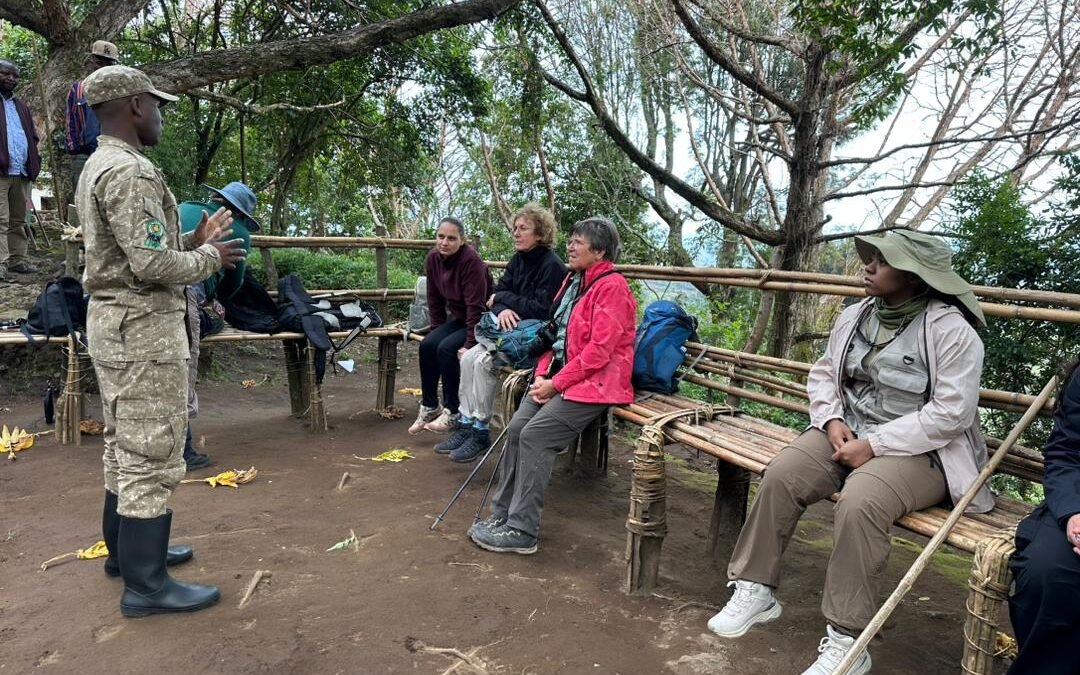
If you are planning a gorilla trekking safari in Uganda, one question will inevitably come up before everything else: should you trek in Bwindi Impenetrable Forest National Park or Mgahinga Gorilla National Park? It sounds like a straightforward question, but it is anything but. The two parks share a border, sit within an hour’s drive of each other in Uganda’s mountainous southwest, charge the same permit price, and both offer the same fundamental promise: one hour face-to-face with wild mountain gorillas in their natural habitat.
This guide exists to give you the honest, detailed comparison that most tour operators gloss over because they would rather just sell you whichever park has permit availability on your chosen date. We will take you inside both parks with the depth you need to make an informed decision, covering everything from the specific gorilla families available, the terrain of each trekking route, permit availability and booking logistics, access from Kigali and Entebbe, what to pack, the best time to go, the cultural experiences available alongside the trek, and the specific circumstances in which one park is clearly the better choice for a particular traveler.
When considering the best experience, it is crucial to focus on the factors that influence your decision, such as Choosing Gorilla Trek in Mgahinga or Bwindi.
One major consideration when planning your trip is Choosing Gorilla Trek in Mgahinga or Bwindi for an unforgettable experience.
Choosing Gorilla Trek in Mgahinga or Bwindi: Making the Right Choice
To truly enjoy your journey, it’s essential to consider Choosing Gorilla Trek in Mgahinga or Bwindi carefully.
Choosing Gorilla Trek in Mgahinga or Bwindi: Key Considerations
By the end of this guide, you will not only know which park is right for you. You will understand why, and you will know how to book it.
At Pick and Transfer Safaris, we have been running gorilla trekking safaris to both Bwindi and Mgahinga from Entebbe, Kampala, and Kigali for years. What follows is a distillation of everything we have learned from those trips, combined into a single, practical resource for travelers who want to get this decision right.
Understanding the Mountain Gorilla: Why This Trek Matters
Before comparing the two parks, it helps to understand what you are actually coming to see, because the mountain gorilla’s story is one of the most improbable conservation success stories in modern history, and knowing it makes the trekking experience considerably more meaningful.
Ultimately, the decision of Choosing Gorilla Trek in Mgahinga or Bwindi will significantly impact your adventure.
The process of Choosing Gorilla Trek in Mgahinga or Bwindi is crucial for a fulfilling wildlife experience.
The recovery that followed is remarkable. A sustained combination of anti-poaching enforcement, veterinary intervention programs, community engagement, and — critically — well-managed gorilla trekking tourism reversed the decline. The revenue generated by gorilla permits funded conservation directly while giving local communities a powerful economic reason to protect the forest rather than clear it. The population has now surpassed 1,000 individuals and is still growing, making the mountain gorilla the only great ape whose wild population is currently increasing. You are not visiting a species on the brink. You are visiting a species that is, slowly and against considerable odds, coming back.
Both Bwindi Impenetrable Forest National Park and Mgahinga Gorilla National Park are central to that story. They hold the majority of Uganda’s mountain gorilla population, and the permit fees paid by every trekker contribute directly to the ongoing conservation work that made the recovery possible. Choosing between the two parks is a pleasantly difficult decision. The gorillas themselves, in both places, are worth every kilometre of the journey to reach them.
The Mountain Gorilla’s Range: Where Uganda Fits In
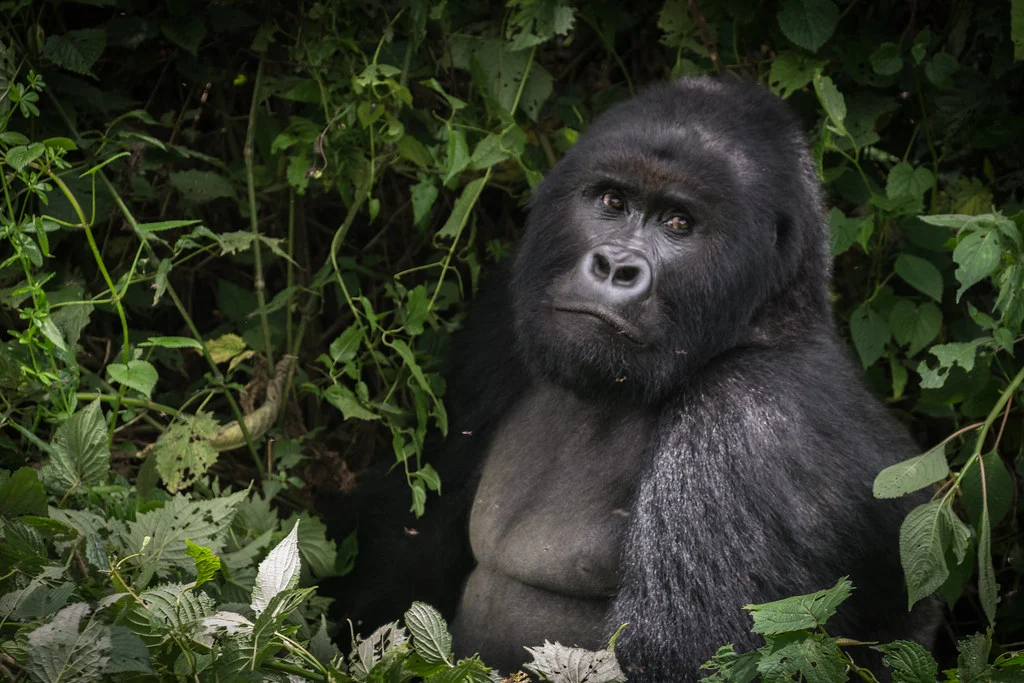
Mountain gorillas exist in only three countries: Uganda, Rwanda, and the Democratic Republic of Congo. Uganda’s contribution to the global population is the largest of the three, with Bwindi alone housing nearly half of all remaining mountain gorillas in the world. Rwanda’s Volcanoes National Park, which shares the Virunga volcanic chain with Mgahinga, holds a separate population, and the Congolese Virunga National Park holds additional groups across the border.
What makes Uganda unique is the scale of its trekking infrastructure. Bwindi Impenetrable Forest National Park alone has more than nineteen habituated gorilla families available for tourism across four distinct trekking sectors. Mgahinga Gorilla National Park has one habituated family. Together, they represent the most accessible gorilla trekking destination in East Africa, with more permit options, more sector choices, and a more affordable permit price than Rwanda’s equivalent experience at Volcanoes National Park, where permits cost $1,500 per person — nearly double Uganda’s rate. For travelers comparing Uganda and Rwanda, see our Rwanda gorilla trekking tours for a side-by-side overview.
Overview of the Decision: Two Parks, One Question
Here is the essential difference between the two parks in a single paragraph, before we go into detail: Bwindi is bigger, older, more biologically complex, more physically demanding in some sectors, and considerably more flexible when it comes to permit availability and family choice. Mgahinga is smaller, more visually dramatic, more accessible from Kigali, home to a single gorilla family that includes three silverbacks (an unusual and compelling detail), and the only place in Uganda where you can do both gorilla trekking and golden monkey tracking in the same park on the same trip.
That paragraph captures the core of the choice. What follows expands on every element of it in the detail you actually need to make a decision.
Bwindi Impenetrable Forest National Park: The Full Picture
Bwindi Impenetrable Forest National Park sits in the Kigezi Highlands of southwestern Uganda, straddling the districts of Kanungu, Rukungiri, Kabale, and Kisoro. At 331 square kilometres, it is not a large park by East African standards, but what it contains is extraordinary: an ancient, closed-canopy tropical rainforest that has survived continuously since before the last ice age, making it one of the oldest forests in Africa and one of the most biodiverse protected areas on the continent.
Choosing Gorilla Trek in Mgahinga or Bwindi allows you to immerse yourself in the heart of Uganda’s wilderness.
The Four Trekking Sectors of Bwindi
Bwindi’s nineteen habituated gorilla families are spread across four geographically separate trekking sectors, each with its own character, accessibility, and lodge infrastructure. Understanding the sectors is essential for anyone choosing Bwindi, because the sector you are assigned to shapes the entire experience of your trekking day.
Buhoma Sector (northern Bwindi): The oldest and most established trekking zone, Buhoma was where gorilla tourism in Uganda began in the 1990s and remains the most popular sector today. It is the most accessible from Entebbe and Kampala by the northern route, has the widest range of accommodation options from budget guesthouses to mid-range lodges and high-end forest camps, and the trails here are generally considered moderate in difficulty. The gorilla families available include the Mubare group, Uganda’s first habituated gorilla family, which began receiving visitors in 1993.
Ruhija Sector (eastern Bwindi): The highest of the four sectors, at over 2,300 metres above sea level, Ruhija offers the coolest temperatures, the most dramatic highland scenery, and the best birdwatching of any sector in the park. It is less visited than Buhoma, which makes for a quieter, more intimate trekking atmosphere. Gorilla families here include the Bitukura, Oruzogo, Mukiza, and Kyaguliro groups. The roads into Ruhija can be challenging after heavy rain, but the effort is rewarded with a distinctly remote, highland feel.
Rushaga Sector (southern Bwindi): Home to the greatest number of habituated gorilla families in all of Bwindi, Rushaga is the most permit-rich sector and the one most commonly used for travelers coming from or going to Rwanda via the Katuna border crossing. It is also the only sector in Uganda offering the Gorilla Habituation Experience, a four-hour upgrade that takes a small group to spend extended time with a semi-habituated family. Rushaga’s trails are varied in difficulty, and the sector has seen rapid growth in lodge development over the last decade.
Nkuringo Sector (southwestern Bwindi): The most dramatic and physically demanding sector, Nkuringo is perched on the rim of a deep valley, and most trekking routes here involve either a steep descent into the gorge to find the gorillas or a steep climb back out. It produces some of the most spectacular scenery in the entire park and some of the most memorable trekking experiences, but it is best suited to fit, motivated trekkers who are prepared for the terrain. Nkuringo is also convenient for travelers coming from Rwanda via the Cyanika border crossing, putting it roughly three to four hours from Kigali.
Choosing Gorilla Trek in Mgahinga or Bwindi: Factors to Consider
Bwindi’s forest is one of the defining features of the trekking experience, and it is unlike any other forest in Uganda. The trees are enormous, the canopy is closed and dense, the understorey is thick with ferns and vines, and the light that filters through to trail level has a particular quality, green, diffuse, and constantly shifting, that is unique to old-growth rainforest. The name “Impenetrable” was not given casually: the vegetation in Bwindi is so dense that off-trail movement is genuinely difficult without a machete. The trails themselves can be steep, narrow, and slick with mud. This is not a walk in a manicured park. It is a hike through one of Africa’s last great forests, guided by rangers who know its interior with extraordinary intimacy.
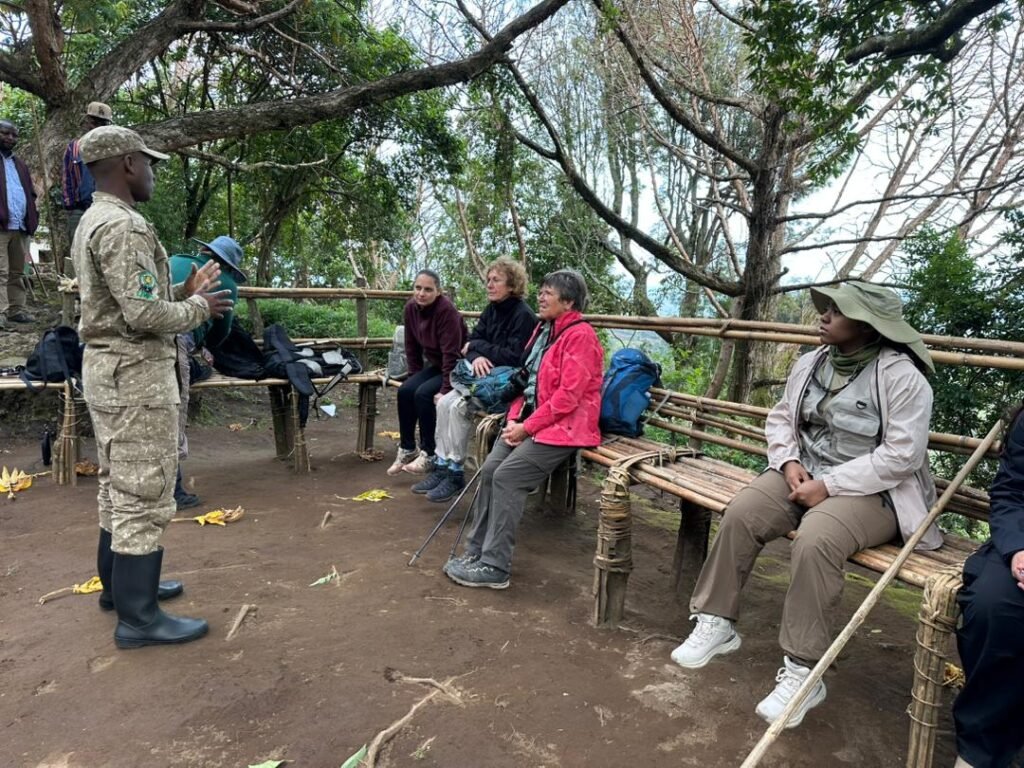
Mgahinga Gorilla National Park: The Full Picture
By carefully considering Choosing Gorilla Trek in Mgahinga or Bwindi, you’ll connect more deeply with nature.
Mgahinga Gorilla National Park is Uganda’s smallest national park, covering just 33.7 square kilometres at the foot of three extinct Virunga volcanoes: Mount Muhavura (4,127 metres), Mount Gahinga (3,474 metres), and Mount Sabinyo (3,645 metres), whose multiple summits mark the convergence point of Uganda, Rwanda, and the Democratic Republic of Congo. The park is part of the larger Virunga Conservation Area, a transboundary ecosystem shared with Rwanda’s Volcanoes National Park and Congo’s Virunga National Park, and it protects the northern slopes of the Ugandan Virungas in a narrow band of bamboo forest, heath zone, and subalpine moorland.
The park was established in 1991, making it one of Uganda’s younger protected areas, and it is managed by the Uganda Wildlife Authority in the same framework as Bwindi, with the same permit structure and the same trekking regulations. What it lacks in size and biodiversity compared to Bwindi, it more than compensates for in drama: the backdrop of three snow-capped volcanoes, the clean, cold air of high altitude, and the spectacle of trekking through dense bamboo forest before emerging onto volcanic slopes with views across the border into Rwanda creates an atmosphere that is genuinely different from anything in Bwindi.
The Nyakagezi Gorilla Family
Mgahinga has one habituated gorilla family available for trekking: the Nyakagezi group, a family of approximately ten gorillas that ranges across the bamboo and mixed forest zones of the park. What makes the Nyakagezi family particularly notable is its composition: it currently includes three silverbacks, a remarkable concentration of dominant males within a single group that is found in very few gorilla families anywhere in the world. Having three silverbacks in one family is not simply an interesting detail. It changes the dynamics of the encounter significantly, producing a trekking experience where the sheer physical presence of multiple dominant males and their interactions with each other and with the rest of the group adds a layer of complexity and drama that a single-silverback family rarely provides.
The family has been reliably resident in Mgahinga for a number of years, having previously had a habit of crossing into Rwanda and the Democratic Republic of Congo that caused occasional frustration for permit holders. That cross-border movement has largely stabilised, though it is worth noting when you book: on the rare occasions when the Nyakagezi family crosses into Rwanda overnight and has not yet returned by trekking time, your trek may be cancelled or rescheduled. This is an extremely rare occurrence in practice, but it is the single logistical uncertainty that Bwindi, with its much larger number of families in a defined forest, does not share.
As Kenlink Tours emphasizes, the choice of Choosing Gorilla Trek in Mgahinga or Bwindi can shape your entire safari experience.
The Volcanic Landscape of Mgahinga
Where Bwindi is about forest, Mgahinga is about volcanoes. The park’s trekking terrain passes through a progression of ecological zones as you gain altitude: cultivated land at the park boundary gives way to dense bamboo forest, bamboo gives way to Hagenia-Hypericum mixed forest, and above that lies heath zone and then subalpine moorland, with the crater lake of Mount Gahinga accessible on longer walks. The views on clear mornings, when the volcanoes are free of cloud and the Rwandan hills stretch away to the south, are among the most spectacular in Uganda.
The bamboo forest is a particular highlight of Mgahinga’s trekking experience. Mature bamboo here grows densely enough to create a cathedral-like tunnel effect along the trail, the light filtering green through towering stems that click and sway in the wind, creating an atmosphere that is completely different from Bwindi’s heavy, ancient canopy. For the gorillas, the bamboo zone is a primary food source: mountain gorillas eat bamboo shoots enthusiastically, and the chance of finding the Nyakagezi family feeding in the bamboo is high when the shoots are in season, producing a close, unhurried encounter at relatively low altitude.
Comparing Bwindi and Mgahinga: The Key Differences
Now that both parks have been introduced fully, the direct comparison becomes more meaningful. Here are the key differentiating factors between the two, examined honestly.
Every traveler’s experience will vary, and it often hinges on Choosing Gorilla Trek in Mgahinga or Bwindi.
Gorilla Family Choice and Permit Availability
This is the most significant practical difference between the two parks. Bwindi has nineteen habituated gorilla families spread across four sectors, with eight permits available per family per day. That gives Bwindi a total daily capacity of over 150 gorilla permits across the entire park. Mgahinga has one family, one sector, and eight permits per day. Bwindi’s permit availability is therefore substantially greater, and for travelers booking at short notice or during peak season, Bwindi is far more likely to have permits on your preferred dates. If flexibility is important to your itinerary, Bwindi is almost always the safer choice.
The single-family structure at Mgahinga is not necessarily a disadvantage: on the contrary, some travelers prefer the simplicity of knowing there is only one family in the park, and the fact that every Mgahinga trekker is going to the same destination gives the experience a focus that Bwindi’s sector-divided structure does not always have. But if permits are unavailable at Mgahinga on your dates, there is no alternative within the park.
Trek Difficulty and Physical Demands
Bwindi’s four sectors vary significantly in difficulty. Buhoma is generally moderate, Ruhija is cool and highland but not excessively steep on most routes, Rushaga offers mixed terrain, and Nkuringo is widely considered the most demanding trekking sector in Uganda. The key variable in any Bwindi sector is how far the gorillas have moved overnight: a family that is close to the trailhead produces a short, easy trek, while a family that has ranged far can produce a four-or-five-hour hike in either direction. Trekking time in Bwindi ranges from under an hour to a full day, with the gorilla family’s location being the primary variable, not the sector.
Mgahinga’s terrain is consistently steep and volcanic, with an initial climb through bamboo before the trek levels slightly in the mixed forest zone. The altitude is higher than most Bwindi sectors, which means the air is thinner, mornings are colder, and the physical effort is slightly greater for travelers not acclimatised to high elevation. However, because there is only one family in a relatively small park, the Nyakagezi group is often found within two to four hours, and the trek rarely extends to the extremes that Nkuringo or a deep Bwindi forest hike can produce.
Hiring a porter is strongly recommended at both parks. At Mgahinga in particular, where the volcanic terrain produces long, steep sections, a porter carrying your day bag makes a significant difference to how enjoyable the experience is.
Landscape and Scenic Experience
If you are choosing primarily based on landscape, Mgahinga has the edge for sheer visual drama. The three Virunga volcanoes, visible throughout much of the trek on clear days, and the progression through distinct vegetation zones from bamboo to heath create a backdrop that Bwindi’s enclosed forest cannot match for open, sweeping scenery.
Bwindi, on the other hand, wins on forest character. The ancient, multilayered canopy, the density of the understorey, and the atmosphere of walking through one of Africa’s oldest rainforests is an experience that Mgahinga’s younger, more open bamboo forest does not replicate. For travelers who want to feel immersed in primordial forest, Bwindi delivers that more fully. For travelers who want drama, altitude, and volcanoes, Mgahinga is the answer.
Cost Considerations
Both parks charge the same Uganda Wildlife Authority permit price: $800 per person for foreign non-residents in 2026, reduced to $600 per person during the officially designated low-season months of April, May, and November. There is no difference in permit cost between Bwindi and Mgahinga, regardless of sector.
Where costs can differ is in accommodation and transport. Mgahinga, being closer to Kigali via the Cyanika border crossing, can be more economical for travelers arriving from Rwanda, as the shorter transfer reduces both driving time and fuel costs. Bwindi’s accommodation options span a wider range from budget campsites to luxury lodges, giving more flexibility across price brackets. Mgahinga’s accommodation infrastructure, while growing, is more limited in range, with most mid-range options in or near Kisoro town, approximately 14 kilometres from the park headquarters.
For travelers seeking budget-friendly gorilla trekking from Kigali, our 1-Day Uganda Gorilla Safari Starting from Kigali and 2-Day Uganda Gorilla Tour Starting from Kigali offer the most cost-effective access to both parks.
Reasons to Choose Bwindi Impenetrable Forest National Park
Bwindi is the right choice in the following situations and for the following types of traveler.
You Want Maximum Permit Flexibility
If you are booking late, traveling in peak season (June to September or December to February), or have fixed travel dates that cannot move, Bwindi’s nineteen families and four sectors give you the greatest chance of securing a permit on your preferred date. Mgahinga’s eight daily slots fill up quickly and are unavailable in advance for significant portions of peak season. A good gorilla safari operator like Pick and Transfer Safaris can often find Bwindi permits on shorter notice than Mgahinga, because the sheer scale of the park’s permit supply is greater.
You Want to Trek in Ancient Rainforest
The experience of walking through Bwindi’s forest is unlike anything else in East Africa. The density of the vegetation, the age of the trees, the variety of bird sound, the way the forest closes around you as you move deeper in, all of this is specific to old-growth tropical rainforest of the kind that Bwindi has been for tens of thousands of years. Travelers who care about the forest as much as the gorillas will find Bwindi more rewarding.
You Are Combining Gorilla Trekking with Chimpanzees or Other Wildlife
Bwindi’s location in southwestern Uganda places it on the natural circuit toward Kibale Forest National Park for chimpanzee trekking and Queen Elizabeth National Park for game drives and the Kazinga Channel cruise. Our 5-Day Uganda Gorilla and Chimpanzee Safari and 10 Days Uganda Primates and Wildlife both route through Bwindi as part of a broader western Uganda circuit. If you want gorilla trekking to be one stop among several, Bwindi integrates into longer itineraries more naturally than Mgahinga.
You Want Sector Choice and Trek Variety
With four sectors available, Bwindi allows you to choose based on what matters most: the easiest walk (Buhoma), the best birdwatching (Ruhija), the most permit availability (Rushaga), or the most dramatic terrain (Nkuringo). Mgahinga offers no such choice. For travelers who have done gorilla trekking before and want to try a different experience within Bwindi, the sector variety makes a repeat visit feel genuinely new.
You Are Arriving from Entebbe
If you are flying into Entebbe International Airport and making Bwindi your primary destination, the northern and eastern sectors of Bwindi (Buhoma and Ruhija) are accessed via a more direct southwestern route that bypasses Kisoro entirely. Our 3-Day Uganda Gorilla Safari covers this route from Entebbe with two nights near the park and a comfortable return drive, structured to avoid the exhaustion of a same-day arrival and trek.
Reasons to Choose Mgahinga Gorilla National Park
Mgahinga is the right choice in the following situations and for the following types of traveler.
You Are Starting from Kigali, Rwanda
This is perhaps the single most compelling practical reason to choose Mgahinga over Bwindi for a specific group of travelers. From Kigali, the drive to Mgahinga via the Cyanika border crossing takes approximately two to two and a half hours, making it one of the most accessible gorilla trekking experiences on the continent for travelers based in or transiting through Rwanda’s capital. Bwindi’s Nkuringo sector is around three to four hours from Kigali via the same crossing, and Rushaga is slightly longer. For a short trip from Kigali, Mgahinga’s proximity is a genuine and significant advantage.
As Kenlink Tours’ Uganda Rwanda gorilla safaris page notes, Mgahinga’s location just across the border from Rwanda’s Volcanoes National Park makes it the natural choice for a one-day or two-day gorilla safari from Kigali, offering a comparable forest experience at Uganda’s lower permit price.
You Want to See Multiple Silverbacks
The Nyakagezi family’s three silverbacks are not simply a statistical curiosity. They produce a dynamically different trekking encounter than most gorilla families, where a single dominant silverback presides over a more settled family structure. Multiple silverbacks within the same group means active social dynamics, periodic displays of dominance, and the kind of tension and energy within the family that creates exceptional wildlife observation opportunities. If you want to see how silverbacks interact with each other as well as with the rest of the family, Mgahinga is the only place in Uganda that offers this consistently.
You Want Volcano Scenery and High-Altitude Drama
The three Virunga volcanoes that frame every aspect of the Mgahinga experience create a trekking backdrop that is simply not available in Bwindi’s enclosed rainforest. Trekkers who have done Bwindi often describe Mgahinga as feeling more open, more exposed to the sky, and more dramatically situated, and many rate the scenery as part of what made Mgahinga memorable in a way that a purely forest-based trek cannot replicate.
You Want to Combine Gorillas with Golden Monkey Tracking
Golden monkeys (Cercopithecus kandti) are a critically endangered Albertine Rift endemic found only in the Virunga Mountains, and Mgahinga is one of the only places in the world where you can track them. The experience is completely different from gorilla trekking: golden monkeys move fast, leap between bamboo stems in bursts of orange and gold, and vocalize constantly, producing an encounter that is energetic, colourful, and often joyful in a way that the quiet gravity of gorilla trekking is not. Doing both activities in the same park on consecutive days, gorilla trekking on day one and golden monkey tracking on day two, is a combination unique to Mgahinga and one of the most rewarding two-day wildlife experiences available in Uganda. According to Kenlink Tours’ guide on gorilla trekking in Uganda, Mgahinga’s dual primate experience, where “silver meets gold,” is one of the defining reasons to choose the park over Bwindi for travelers with an extra day.
You Value a Less Crowded, More Intimate Experience
With only eight permits per day available for the Nyakagezi family, Mgahinga has a natural ceiling on the number of visitors in the park on any given day that Bwindi, with its multiple families and higher total capacity, cannot match. On days when permits are available, Mgahinga feels quieter, more removed from the tourist trail, and less like an established safari destination. For travelers who find the idea of sharing a trekking experience with a large number of other tourists uncomfortable, Mgahinga’s limited capacity is a feature rather than a limitation.
The Gorilla Permit System: What You Need to Know for Both Parks
Whether you choose Bwindi or Mgahinga, the permit system is the same. Gorilla trekking permits in Uganda are issued by the Uganda Wildlife Authority and cost $800 per person for foreign non-residents in 2026. During the officially designated low-season months of April, May, and November, permits are available at the reduced rate of $600 per person, a saving of $200 per trekker that makes these months genuinely attractive for budget-conscious travelers who are comfortable with the wetter conditions.
Full payment is now required at the time of booking, with no soft-hold reservations. This policy change, introduced by the Uganda Wildlife Authority in 2025 and 2026, means that both the permit fee and your accommodation must be confirmed and paid before your trek is secured, and cancellation policies apply from the point of payment. We always advise travelers to confirm their health, travel insurance, and dates carefully before making payment.
Booking lead time matters significantly in both parks. For Bwindi, permits for the most popular families and sectors during peak season (June to September and December to February) book out three to six months in advance. For Mgahinga, with only eight permits per day, lead times are similarly long in peak season and the permit supply is even more limited in total. The practical advice is the same for both: book as early as your dates allow.
As a fully licensed Uganda safari company, Pick and Transfer Safaris secures gorilla permits directly through the Uganda Wildlife Authority on behalf of all clients. Our team monitors permit availability across all Bwindi sectors and Mgahinga simultaneously, and can often advise on which park or sector has availability when specific dates are requested. Contact us here to confirm permit availability for your preferred dates.
Best Time to Trek in Bwindi and Mgahinga
Gorilla trekking is available year-round in both parks, and gorillas are always present regardless of season. The question is not whether you can trek, but what the conditions will be like.
Dry Season Trekking (June to September and December to February)
The dry seasons are the most popular months for gorilla trekking in both parks, and for good reason: trails are firmer, the risk of rain during the trek is lower, and the roads into both parks are at their most reliable. In Mgahinga, the dry season also tends to offer clearer views of the three volcanoes, which can be obscured by cloud for days at a time during the wet months. In Bwindi, particularly in the steep Nkuringo sector, dry trails make a meaningful difference to the physical difficulty of the descent after the gorilla encounter.
The trade-off in peak season is permit competition and lodge pricing. Both parks see their highest visitor numbers in June, July, August, and September, and accommodation around Bwindi’s Buhoma and Rushaga sectors in particular fills up quickly. Book both permits and lodges as early as possible for dry-season travel.
Wet Season Trekking (March to May and October to November)
The wet months are often undervalued. In both Bwindi and Mgahinga, the forest is at its most lush and vibrant in the wet season, the birdwatching is exceptional, and the gorillas are generally easier to find because they tend to range less when food is abundant after rain. Trails can be muddy and slippery, making a good pair of waterproof boots and a walking stick essential, but most trekkers find the wet-season encounter every bit as rewarding as the dry-season equivalent.
It’s wise to think deeply about Choosing Gorilla Trek in Mgahinga or Bwindi to enhance your adventure.
The low-season permit pricing in April, May, and November ($600 instead of $800) makes these months particularly attractive for budget-conscious travelers. Accommodation prices also tend to be lower, and the parks are quieter, adding to the overall atmosphere.
Getting There: Accessing Bwindi and Mgahinga
From Entebbe or Kampala
The drive from Entebbe or Kampala to Bwindi takes approximately eight to ten hours depending on the sector and route, on roads that are mostly tarmac until the final approach to the park. The most commonly used route to the southern sectors (Rushaga, Nkuringo) passes through Masaka, Mbarara, and Kabale, while the northern route to Buhoma goes via Mbarara and Ntungamo. Mgahinga is approximately the same driving distance from Entebbe, with the final approach going through Kisoro town.
For travelers starting from Entebbe, the length of this drive is a significant planning consideration: arriving the evening before your trek is strongly recommended over a same-day drive-and-trek structure, which is exhausting. Our 3-Day Uganda Gorilla Safari is specifically designed around this reality, with a full day of comfortable driving on day one and the trek beginning after a proper night’s sleep.
From Kigali, Rwanda
For travelers based in Kigali, the access picture is completely different. The Cyanika border crossing in Rwanda connects directly to Uganda’s Kisoro-area parks via a well-maintained road. Mgahinga is approximately two to two and a half hours from Kigali via Cyanika, making it the closest gorilla trekking destination to Rwanda’s capital. Bwindi’s Nkuringo sector is around three to four hours from Kigali via the same crossing, and Rushaga is slightly longer via the Katuna crossing.
For any traveler flying into Kigali and wanting to trek in Uganda, Mgahinga’s proximity is a genuine advantage that should factor heavily into the park choice. Our 1-Day Uganda Gorilla Safari Starting from Kigali to Mgahinga is one of the shortest-haul gorilla experiences available anywhere in East Africa, making mountain gorilla trekking accessible even to travelers with very limited time.
Kenlink Tours, another experienced regional operator, offers a detailed gorilla trekking from Kigali overview that also covers the Mgahinga routing for travelers comparing options from Kigali.
The Batwa Cultural Experience: A Profound Add-On at Both Parks
Both Bwindi and Mgahinga border land that was historically inhabited by the Batwa, the indigenous forest-dwelling people of the Great Lakes region, who lived inside the forests for tens of thousands of years before the national parks were established and the Batwa were relocated to the park boundaries. The Batwa’s story is one of the most complex and ethically significant aspects of gorilla conservation in Uganda, and visiting a Batwa community as part of your trekking trip adds depth and context to the experience that many visitors find profoundly moving.
At Bwindi, the Batwa Cultural Trail is available in several sectors and is operated by community organisations that channel the income directly to Batwa families. The trail includes demonstrations of traditional fire-lighting using sticks, honey gathering from wild beehives, medicinal plant identification, hunting techniques, and traditional music and dance, presented by Batwa community members who share their history and their knowledge of the forest with visitors.
At Mgahinga, the Batwa Trail is one of the park’s most celebrated cultural experiences, recognised internationally for both its authenticity and its community development impact. As Kenlink Tours notes in their guide on combining gorilla trekking with culture, the Mgahinga Batwa Trail is particularly compelling because it takes place within the forest that the Batwa themselves once inhabited, giving the experience a physical rootedness in place that a separate cultural centre cannot replicate.
Whether you choose Bwindi or Mgahinga, the Batwa cultural experience is one of the most honest and meaningful add-ons available in either park, and we recommend it highly to any traveler with the time to include it.
Golden Monkey Tracking in Mgahinga: The Silver and Gold Experience
No comparison of Bwindi and Mgahinga would be complete without addressing the golden monkey tracking available exclusively in Mgahinga. Golden monkeys (Cercopithecus kandti) are among the rarest primates in Africa, found only in the Virunga Mountains and the Gishwati Forest in Rwanda, and Mgahinga’s habituated troops offer one of the only places in the world where you can observe them at close range.
The golden monkey trekking experience at Mgahinga begins with a briefing at the park headquarters and proceeds through the bamboo forest zone, where troops of up to 80 golden monkeys move in spectacular, energetic groups through the stems. The animals are named for the golden-orange patches on their backs, flanks, and cheeks, set against a deep black coat, and seeing a large troop moving through the bamboo in the early morning light is a genuinely beautiful wildlife encounter, quite different in mood from the gravitas of gorilla trekking.
A permit for golden monkey tracking in Mgahinga costs $60 per person, a fraction of the gorilla permit price, and the combination of gorilla trekking on one day and golden monkey tracking on the next makes Mgahinga a spectacularly efficient destination for a two-day primate visit. This dual-primate combination is one of the strongest arguments for choosing Mgahinga over Bwindi for travelers with a specific interest in primates beyond the gorillas, and it is unique to Mgahinga in Uganda.
Combining Both Parks: Can You Trek in Bwindi and Mgahinga on the Same Trip?
Yes. Bwindi and Mgahinga are separated by approximately 85 kilometres of road through the Kisoro highlands, a drive of two to three hours. Combining both parks in a single trip, with one gorilla trekking day in each, is entirely feasible for travelers with enough time, and the contrast between the two experiences, one in a deep ancient rainforest and one on volcanic slopes with three silverbacks and the option of golden monkey tracking, is rewarding precisely because they are so different.
A typical combined itinerary would allocate two nights at Bwindi (with your gorilla trekking day in the middle) followed by two nights at or near Mgahinga (with gorilla trekking and golden monkey tracking on successive days), before driving back to Entebbe or Kigali. This constitutes roughly a five-to-six-day gorilla safari and requires two separate gorilla permits. Our team at Pick and Transfer Safaris can arrange this as a combined package.
Gorilla Trekking from Kigali: The Smart Starting Point
For a very specific and growing category of Uganda gorilla safari traveler, the comparison between Bwindi and Mgahinga is not primarily about the forest or the gorilla families. It is about a simple geographical truth: the closest gorilla trekking to Rwanda’s capital Kigali is in Uganda, not Rwanda, and it costs roughly half the price.
Rwanda’s Volcanoes National Park gorilla permit costs $1,500 per person in 2026, and it sits approximately two to three hours from Kigali. Uganda’s gorilla parks, both Bwindi and Mgahinga, charge $800 per person, and Mgahinga is approximately two and a half hours from Kigali via the Cyanika crossing. For travelers in Kigali who want to trek gorillas on a budget, crossing into Uganda for either Mgahinga or Nkuringo/Rushaga at Bwindi saves $700 per person on the permit alone, often covering the cost of the transport, accommodation, and guide for the trip.
This is why our Kigali-based gorilla safari packages are among our most popular products. Our 1-Day Uganda Gorilla Safari Starting from Kigali to Mgahinga is designed specifically for travelers who want to fit a gorilla trek into a single day from Rwanda’s capital, while our 2-Day Uganda Gorilla Tour Starting from Kigali adds an overnight for a more relaxed version of the same experience. For Bwindi from Kigali, our 3-Day Uganda Gorilla Safari Starting from Rwanda covers Rushaga or Nkuringo with two nights at the park.
Kenlink Tours also operates a variety of Kigali-start gorilla packages for both parks, as detailed on their Uganda safaris from Kigali page.
What to Pack and Expect on Trek Day
Regardless of whether you choose Bwindi or Mgahinga, the practical preparation for trek day is similar.
What to Wear
Long-sleeved shirts and long trousers protect against nettles, insects, and the scratching vegetation that lines most trekking trails in both parks. Waterproof, ankle-supporting hiking boots are essential: the trails in both parks can be muddy, steep, and uneven, and low-cut shoes or sandals are entirely unsuitable. A light rain jacket is necessary year-round, even in the dry season, because forest weather in both Bwindi and Mgahinga is unpredictable and afternoon rain is possible in any month. Gardening gloves are strongly recommended for gripping vines, branches, and the stems of vegetation on steep sections. Pack light: everything on your back makes the walk heavier, which is why hiring a porter is so strongly advised.
Camera and Electronics
Cameras, including smartphones, are welcome on the trek and produce some of the most extraordinary wildlife photographs available in Africa. Flash must not be used near the gorillas, as it agitates them and disrupts their behaviour. A camera with a good optical zoom helps for photographs when the gorillas are in the canopy, but many encounters happen at such close range that even a smartphone produces excellent images. Bring spare batteries or a fully charged power bank, as cold temperatures at altitude drain batteries more quickly than expected.
Physical Preparation
Neither Bwindi nor Mgahinga requires elite fitness, but a reasonable level of physical conditioning makes both experiences more enjoyable. If you are not a regular hiker, some preparation in the weeks before your trip, particularly practice with hills and uneven terrain, will make the trekking day noticeably more comfortable. Altitude is a factor at both parks, particularly Mgahinga, where the trek begins at around 2,400 metres and the thin air adds to the effort of climbing. Drink plenty of water the day before and on trek day, and tell your ranger guide honestly if you need rest breaks during the walk.
Frequently Asked Questions: Bwindi vs Mgahinga
Is a gorilla sighting guaranteed?
In practical terms, yes. Both parks have habituated families that are tracked every day by advance rangers, and sightings are achieved on the vast majority of trek days. The Uganda Wildlife Authority’s policy is to offer a rescheduled trek or a refund of the permit fee if no gorillas are found, though this outcome is rare at both parks.
Can I choose which gorilla family I trek to?
At Bwindi, your family assignment is made by the park rangers at the briefing, based on a combination of group size, trekking fitness, and family location on the day. You cannot usually request a specific family, though experienced operators can sometimes factor in preferences when booking. At Mgahinga, there is only one family, so no choice is involved.
Is Mgahinga really safe?
Your journey will be enriched by the thoughtful decision of Choosing Gorilla Trek in Mgahinga or Bwindi.
Embarking on Choosing Gorilla Trek in Mgahinga or Bwindi opens doors to incredible wildlife encounters.
Yes. As Kenlink Tours explains in their safety guide for Mgahinga, the park is well-managed by the Uganda Wildlife Authority with armed ranger escorts on all trekking routes, and the local communities around the park are actively engaged in and benefiting from tourism. General travel precautions apply, as with any safari destination, but Mgahinga has a strong safety record for visitors.
Can I do both gorilla and golden monkey tracking in Mgahinga on the same day?
Not on the same morning session, as both activities are organised separately. However, golden monkey tracking sometimes takes place in the afternoon at Mgahinga, allowing a motivated trekker who completes gorilla trekking in the morning to potentially attend both on the same day. Confirm this with your guide and the park on arrival, as scheduling depends on the day’s tracker arrangements.
Ultimately, Choosing Gorilla Trek in Mgahinga or Bwindi is about finding the perfect adventure for you.
Which park is better for photography?
Both offer outstanding photographic opportunities. Bwindi’s forest light and the proximity of encounters produce exceptional portraits of gorillas in their natural setting. Mgahinga’s open volcanic landscape gives photographers more ambient light and the opportunity to capture gorillas with the backdrop of the Virunga peaks. Golden monkey tracking at Mgahinga adds a vivid, colourful photography subject not available at Bwindi.
Does Pick and Transfer Safaris operate in both parks?
In conclusion, Choosing Gorilla Trek in Mgahinga or Bwindi is fundamental to creating lasting memories.
Yes. Pick and Transfer Safaris operates gorilla trekking safaris to all four sectors of Bwindi and to Mgahinga, from both Entebbe/Kampala and Kigali. Browse our complete gorilla safari packages for a full range of itineraries, or contact our team to discuss which park best suits your dates, budget, and starting point.
Which Park Should You Choose? A Practical Summary
At the risk of oversimplifying a decision that genuinely depends on individual circumstances, here is the clearest possible summary of when each park is the right choice.
Choose Bwindi if: You are flying into Entebbe and making gorilla trekking your primary Uganda destination. You want flexibility in permit dates and the broadest possible selection of gorilla families. You care about the forest experience as much as the gorillas. You are combining gorilla trekking with other Uganda parks like Kibale or Queen Elizabeth. You want the option of the Gorilla Habituation Experience. You have done Mgahinga before and want to try a different trekking environment.
Choose Mgahinga if: You are flying into Kigali and want the most cost-effective and time-efficient gorilla trek from Rwanda. You want to see a gorilla family with three silverbacks and genuinely complex social dynamics. You want volcano scenery and a high-altitude trekking experience. You want to combine gorilla trekking with golden monkey tracking in the same park. You value a quieter, less-visited park atmosphere. You have a short trip and Mgahinga’s proximity to Kigali makes the logistics significantly simpler.
Neither park is objectively better than the other. They are different in ways that matter to different travelers, and the most common mistake is choosing one without understanding what makes the other worthwhile. The second most common mistake is not booking your permit early enough, which takes the choice entirely out of your hands.
Book Your Gorilla Trek with Pick and Transfer Safaris
Whether you choose Bwindi or Mgahinga, the logistics of securing a permit, arranging accommodation, organising transport from Entebbe or Kigali, and ensuring everything runs on time for a 7:00 am trekking briefing in a remote mountain park are easier, more reliable, and often more affordable with an experienced local safari company handling the details.
At Pick and Transfer Safaris, we operate gorilla trekking safaris to both parks year-round, including our popular short packages from Kigali and our longer multi-park circuits from Entebbe. We book permits directly through the Uganda Wildlife Authority, work with lodges in both park areas across budget, mid-range, and luxury categories, and use experienced, English-speaking driver-guides who know both the Cyanika border crossing and the internal park roads as thoroughly as anyone in the region.
A share of our proceeds supports community projects through the Kigezi Foundation, ensuring that your safari contributes directly to the communities living alongside both parks.
Browse our complete collection of Uganda gorilla safaris for all available packages, from a single-day Kigali-to-Mgahinga trip to a multi-week Uganda Rwanda primate circuit. Or get in touch directly with your preferred dates, group size, and starting point, and we will check permit availability at both parks and send you a personalised quote within 24 hours.
The gorillas are waiting, in both parks, all year round. The only question left is which forest you want to find them in.